This post contains affiliate links. We may earn a small commission when you buy through our links — at no extra cost to you.
Every lightweight backpacking bag is a trade-off you agree to before you leave the trailhead: shed ounces and you usually give up warmth, and buying that warmth back costs money and pack space. The right one gives up the least — warm enough for a frosty morning, small enough to disappear into a 40-liter pack, and sturdy enough that the loft survives a few seasons of being stuffed and unrolled. What you’re buying is a night you don’t have to think about.
My team and I have spent the past eight months sleeping in 12 of them, from swampy summer overnights to a frost-on-the-tent morning at 9,500 feet, and the pattern held: the warmest bags were rarely the lightest, and the featherweights asked more of the rest of your kit. Something worth knowing before you scroll — the number on the tag reads more like a survival limit than a comfort rating, so give yourself about 10 degrees of headroom. Below are the ones worth the space in your pack.


Best for Summer Backpacking
Naturehike Lightweight Compact
Key Features
- Fill: Synthetic
- Size: 80.7" x 33.5"
- Weight: 1.67 lb
- Price: Midrange
Plenty of bags get under two pounds by cutting the pattern down to a tube, and you spend the night pinned to one side. The Naturehike is 33.5 inches across and 80.7 inches long, wider and longer than the other sub-two-pound bags we compared it with, and that room is the reason it’s our top pick. It doesn’t buy its low weight from your comfort.
What we don’t trust is the headline temperature, which pairs a comfortable figure with something close to freezing. That second number is a limit figure at best and not a night to plan around. Shop the first one, take a liner when the forecast is hedging, and expect the difference between a good night and a cold one to come down to your pad.
The details hold up in the ways that matter day to day. The lining feels soft rather than slick, the zipper runs clean, and the stuff sack has enough give that getting the bag back inside isn’t a fight on the second morning, which is exactly when it’s raining. Taller and broader sleepers should start here.
Pros
- Roomiest cut here at 1.67 lb
- Stuffs back into its sack easily
- Soft lining and a zipper that runs clean
Cons
- Warmth ends well before freezing
Our default for three-season backpacking: the roomiest 1.67-pound bag here, soft against the skin and easy to pack, for a little more than the budget picks.
Best for Budget First Setup
REDCAMP Ultra Lightweight
Key Features
- Fits: Up to 6 ft
- Size: 75" x 32.5"
- Weight: 1.5 lb
- Comfort rating: 59°F to 77°F
- Price: Budget
There’s a version of this hobby where you spend a lot before you know whether you’ll stick with it, and this is the bag for that version. It weighs 1.5 pounds, rolls down to a bundle that tucks into the bottom of a pack beside your stove, and carries a comfort rating of 68°F. The two-way zipper is the detail we appreciate most: it lets you join two bags into a double, or open this one flat as a quilt when the night is warmer than you planned for.
Where it gives ground is the pattern. At 75 inches it’s one of the two shortest bags here, and it’s cut close through the shoulders, so if you’re near six feet or broad across the back you’ll feel both. For everyone else it’s the value pick of the group: light, small, honestly rated, and backed by a one-year warranty, which is more than several pricier bags here offer.
Pros
- 1.5 lb at a budget price
- Two-way zip joins two bags
- Stated one-year warranty
Cons
- Rated only down to 59°F
The value pick we keep coming back to: 1.5 pounds, a workable summer rating, and a two-way zipper that turns two bags into one.
Best for Three-Season Trips
Naturehike Ultralight Down
Key Features
- Fill: 650 fill power duck down
- Weight: 1.68 lb
- Packed size: 13.8" x 7.1"
- Comfort rating: 40.4°F
- Price: Premium
The number that matters on this bag is 40.4°F, the comfort figure Naturehike publishes. That’s a real step warmer than the synthetic bags here, and it comes from 650 fill power duck down rather than a thicker layer of polyester.
Down is also why it packs to 13.8 by 7.1 inches and weighs 760 grams, and why the shape is a hybrid: mummy through the shoulders to hold heat, rectangular at the feet so you can open the bottom and let your feet out on a mild night. The hood cinches down properly, which is more than the envelope bags here can offer.
Where it earns its price is the trip where you’re carrying everything and the nights are colder than July. Below 40°F it wants a liner and a good pad, and it’s the wrong bag for a wet, near-freezing trip, which is a job for synthetic fill. For spring through fall with a dry forecast, it’s the one we hand over.
Pros
- 40.4°F comfort rating in down
- Packs to 13.8 by 7.1 inches
- Foot of the bag opens up
Cons
- Zipper catches if pulled at an angle
- The priciest bag in this group
We think the down premium is worth it here: 40.4°F of comfort at 760 grams, and a packed size that leaves room for the rest of your kit.
Best for Frosty Nights
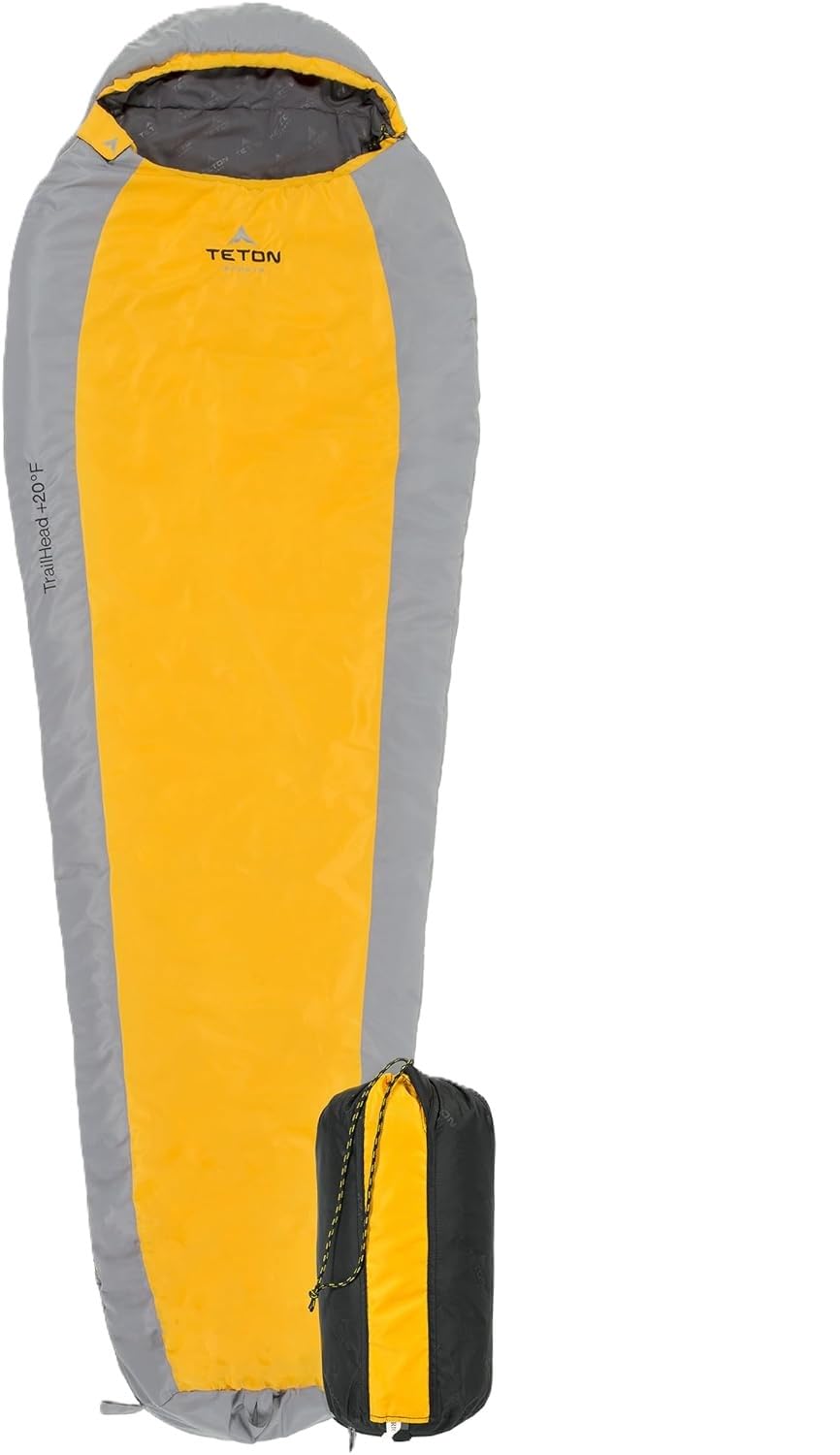
Teton 20F Mummy
Key Features
- Size: 87" x 32"
- Shape: Mummy
- Weight: 2.9 lb
- Temperature rating: +20°F
- Price: Premium
Every other bag here is aimed at mild nights, whatever the label claims. The Teton is the exception: a mummy rated to +20°F, with a draft tube behind the zipper and a footbox you can actually move your feet in. If your trips run into frost, this is the bag that lets them.
The shape does a lot of the work. A mummy is warmer per ounce than a rectangular bag because there’s less dead air to heat, and Teton’s cut follows the body closely enough that the warmth is real rather than marketing. You’re carrying insulation instead of hoping for it, and the soft liner makes the trade easier to live with.
The zipper is the one part that worries us. It snags around the shoulders, and a snag that jams at 2 a.m. leaves you with an open bag on the coldest night of the trip. Run it the full length a few times before you leave and pull straight rather than at an angle.
Pros
- Rated to +20°F, properly cold
- Draft tube and a roomy footbox
- Costs less than the down bags here
Cons
- Heaviest bag here, at 2.9 lb
- Snug mummy cut through the shoulders
Our cold-weather pick: a real 20°F mummy with a draft tube and a roomy footbox, for the trips that run into frost.
Best for Minimal Pack Space
BORULL 1.5 lb

Key Features
- Size: 79" x 30"
- Weight: 1.5 lb
- Packed size: 4.7" x 7.9"
- Comfort rating: 50°F to 80°F
- Price: Budget
Packed, this bag measures about 4.7 by 7.9 inches, smaller than the stuff sack on any other bag we’re recommending and small enough to drop into a pack that’s already full.
It’s also 79 inches long, longer than the REDCAMP and the NewDoar. The number that matters more is BORULL’s own guidance: under 165 pounds. That tells you this is a narrow bag, and the six-foot-seven height claim assumes a lean build.
Warmth is the soft spot. The range is 50 to 80°F on a light 100 GSM polyester fill, and the three-to-four-season label on the listing is generous for a bag this thin. The nylon shell is soft rather than crinkly, though, and it comes through a machine wash without complaint.
What we kept coming back to is the packed size. This is the bag that keeps the sleep system from deciding which pack you carry, and for summer trips with a reliable forecast it’s the most space-efficient thing here.
Pros
- Smallest packed size here
- Long 79-inch body
- Soft shell that takes a wash
Cons
- No stated warranty
Our pick when pack volume is the binding constraint: the smallest packed size here, on a bag that is honest about being a summer one.
Best for Bigger Sleepers
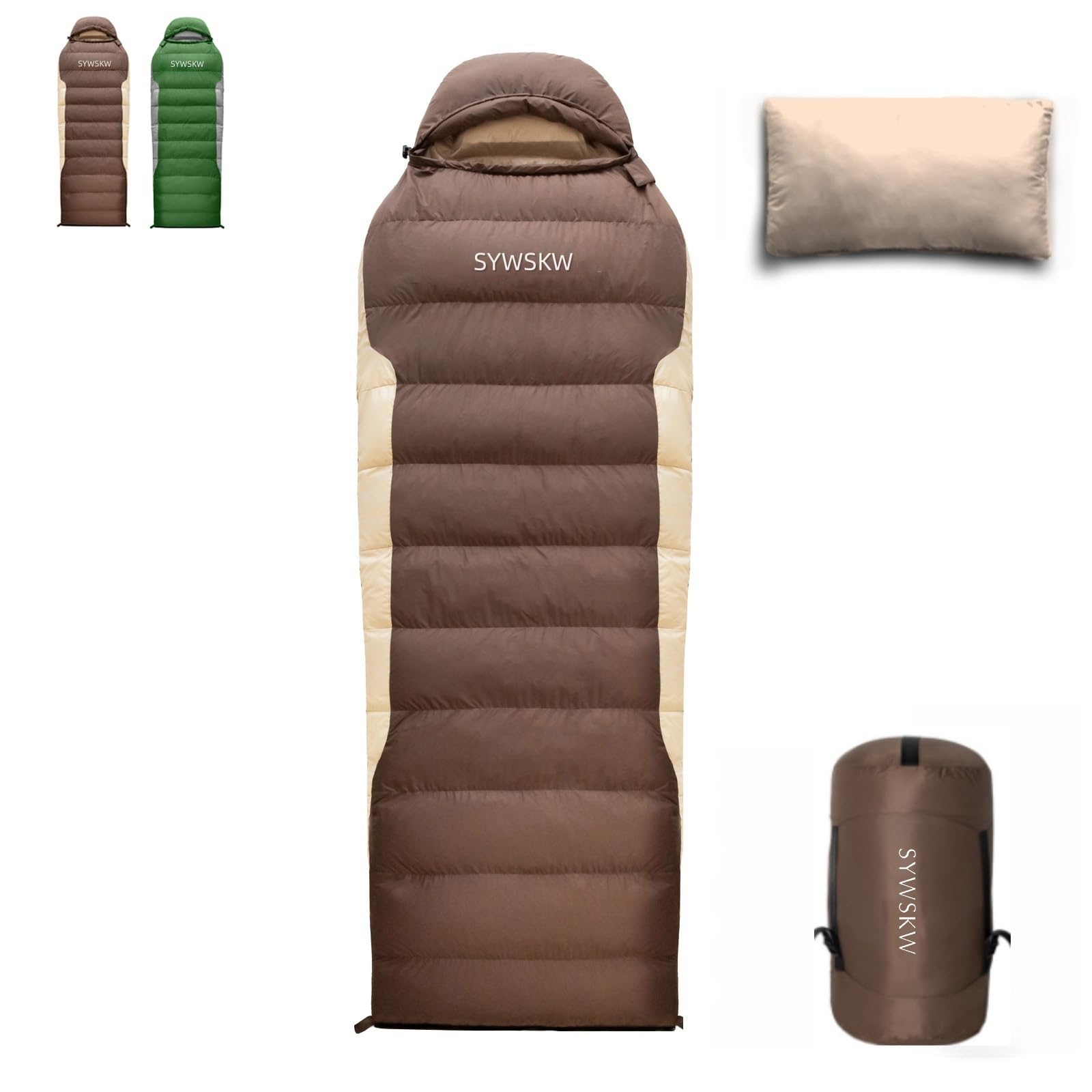
SYWSKW Down with Pillow
Key Features
- Fill: 680 fill power duck down
- Size: 86.6" x 32.28"
- Weight: 2.6 lb
- Comfort rating: 32°F to 45°F
- Price: Premium
The shoulder width is the first thing you notice: 32.28 inches across, wider than the mummy-cut bags here and enough that a bigger sleeper can turn over without taking the bag with them. It’s a semi-rectangular down bag with two separate zippers, a foot vent, and a small pillow sewn in at the head, a detail that sounds gimmicky until you’re the one who forgot theirs.
Where we part company with the listing is the temperature. It carries more than one rating and they don’t agree, and the 32°F to 45°F comfort range is the one to plan around, which makes this a mild-weather bag rather than the cold-weather one the bullet points imply. The case for it is room and a lower price than our down pick, not a wider comfort window.
Pros
- Widest cut here at 32.28 inches
- Down fill with a sewn-in pillow
- Foot zipper for warm nights
Cons
- Weighs 2.6 lb, close to a synthetic bag
We recommend it for bigger sleepers who want down and a wide cut, at a lower price than our down pick, on mild-weather trips.
Best for Smaller Sleepers
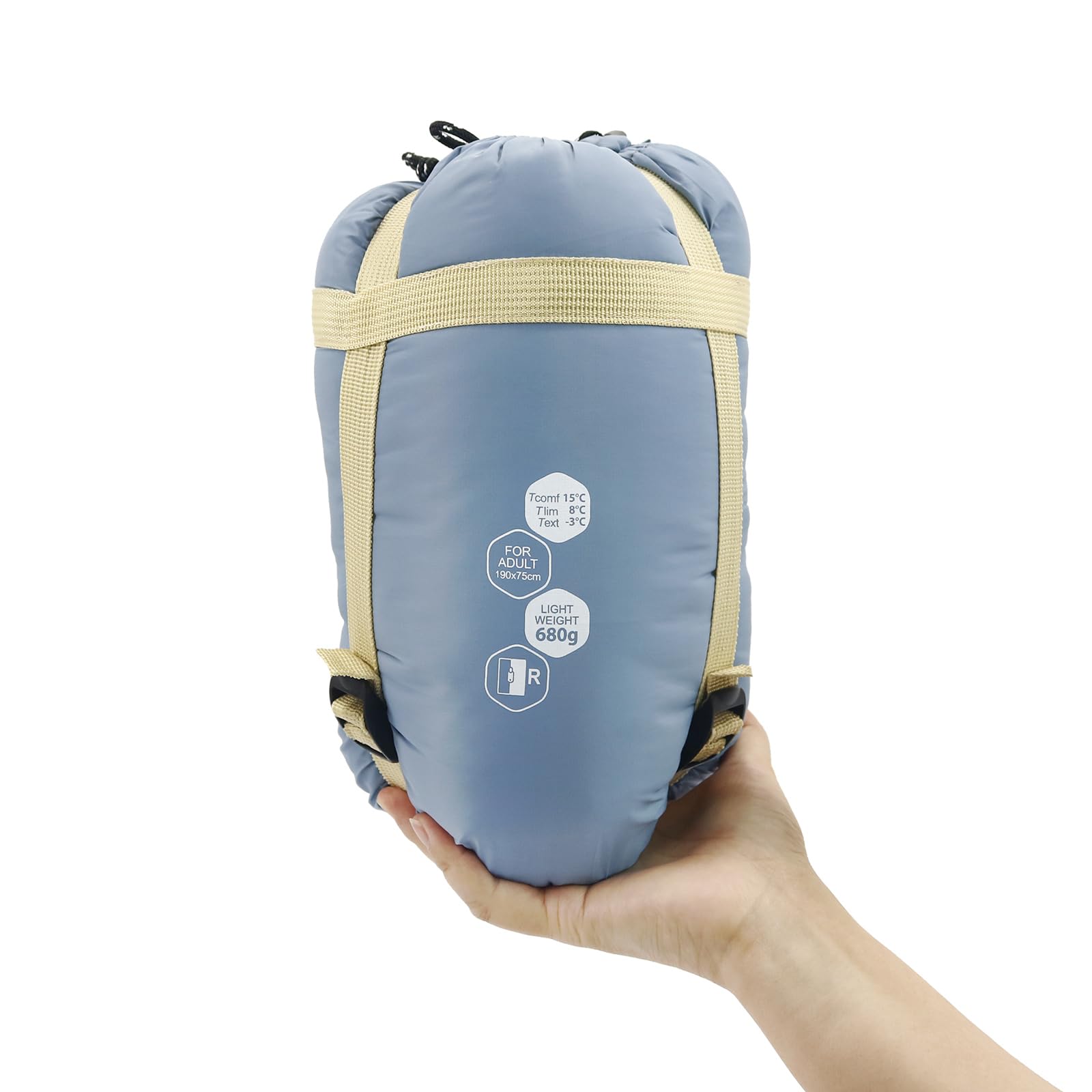
NewDoar Ultralight
Key Features
- Size: 74.8" x 29.5"
- Weight: 1.5 lb
- Packed size: 11.8" x 6.5"
- Comfort rating: 50°F to 70°F
- Price: Budget
At 74.8 inches, this is the shortest bag in the group, and NewDoar’s own listing caps it at 5-foot-7. If you’re taller, there’s nothing here for you. If you’re not, the short body is part of why it weighs 1.5 pounds and packs to 11.8 by 6.5 inches.
The warm-weather design is neatly thought out. A two-way zipper lets two of these splice into a double bag, the shell unzips flat into a blanket for hot nights, and the fabric goes through a machine wash, which is worth knowing for a bag that will spend as much time in a hostel or a van as in a tent.
The width is where we hesitate. At 29.5 inches it’s the narrowest bag here, and the same trim pattern that packs small is unforgiving for anyone with broad shoulders. For a smaller adult, a teenager, or a hot-weather overnight where you want a blanket more than a bag, it earns its place.
Pros
- 1.5 lb and packs to 11.8 by 6.5
- Two-way zip splices two bags
- Unzips flat into a blanket
Cons
- Warm-weather only, 50°F to 70°F
We like it for a smaller sleeper on hot-weather trips: light, packable, and it unzips into a blanket when the night stays warm.
How We Tested 12 Lightweight Backpacking Bags
We started by pulling every bag marketed as lightweight — roughly under 3 pounds — from the major brands, then filtered by temperature rating, packed volume, and price until 12 remained. Over eight months we weighed each one on a kitchen scale, stuffed it into its included sack, and packed it beside a standard 40-liter load to see how much room it actually stole.
Then we slept in them. That meant overnight trips, a few backyard nights where I could bail out if something went wrong, and one memorably damp 38-degree night that separated the genuinely warm bags from the optimistic ones. I noted whether I woke at 3 a.m. with cold shoulders, whether the hood and draft collar stayed put when I rolled over, and whether condensation left the shell clammy by morning.
Fit got its own pass: our testers run from 5-foot-4 to 6-foot-2, so we checked shoulder and hip room, whether tall sleepers’ toes pressed the footbox, and whether the regular size matched the height chart on the box. Zippers we worked one-handed in the dark, counting the snags where fabric caught at the top curve and noting which pulls we could find by feel alone. A couple of bags went through the wash on the care label’s instructions so we could see whether the loft came back.
We also weighed warmth against weight and price — a 2-pound bag that sleeps cold is worse value than a 2.5-pound one you never think about — and measured stuffed size in liters rather than trusting the claim.
How to Choose a Lightweight Backpacking Sleeping Bag
The weight on the label is the least useful number in the shop; what decides whether you sleep is the comfort rating, the packed volume, and whether the cut fits your body.
Read the rating, not the adjective
Almost every bag here is a summer bag, and the numbers on the label need decoding before you spend anything. A listing usually carries a comfort figure you’ll actually sleep at, a limit figure you’ll survive at, and sometimes an extreme number that means nothing for planning. Shop the comfort figure and add a margin for a cold sleeper or a damp night. If frost is likely, the Teton’s 20°F mummy is the only bag in this group rated for it; the rest want a liner and a warm pad.
Down or synthetic
Down buys warmth per ounce and, just as importantly, packed volume: the Naturehike down bag holds a 40.4°F comfort rating at 760 grams, while the synthetic bags here need about a pound and a half to cover the fifties and sixties. Synthetic costs less, shrugs off damp, and keeps some insulation if it gets wet. Our rule is down for dry three-season trips, synthetic for summer, wet climates, and anyone who doesn’t want to baby a bag. Neither choice rescues a rating that doesn’t match your trip.
Packed size is the number your pack feels
Half a pound is easy to notice in your hand and hard to notice on your back; volume is what changes which pack you can take. The bags here run from the BORULL’s 4.7 by 7.9 inches to the Naturehike down’s 13.8 by 7.1, and that spread is the difference between a 30-liter pack working and not working. The trap is the listing that calls a three-pound rectangular bag ultralight. Check the packed dimensions and the fill weight before you believe the adjective.
Fit is width as much as length
Length gets the attention and width is what wakes people up at 2 a.m. The bags here run from 29.5 to 33.5 inches across, and a 30-inch cut is snug for a broad-shouldered sleeper no matter how tall they are. Height ratings assume a lean build too: the BORULL is rated to 6-foot-7 but recommended under 165 pounds, which tells you which dimension is really being limited. If you roll over in the night, pay for the wider bag.
The zipper is what fails first
Run a zipper the full length, open and closed, before you commit to a bag, and watch the fabric at the shoulder where snags start. Thin shells on the lightest bags catch on watch bands, pack buckles, and the bag’s own lining more easily than heavier fabric, and a snag that jams at 2 a.m. leaves you with an open bag on the coldest night of the trip. A straight, deliberate pull and thirty seconds of checking before you leave is cheap insurance.
Frequently Asked Questions
Do I need a sleeping pad under a backpacking bag?
Yes. The insulation under your body compresses flat, so the bag contributes almost nothing beneath you and the pad does that work. A thin summer pad is fine on warm ground; for shoulder-season nights choose a higher R-value, and remember that any temperature rating assumes you’re on a pad in the first place.
Can you wash a down sleeping bag at home?
Yes, if you’re careful. Use a front-loading machine on a gentle cycle with a detergent made for down, then dry it on low heat with a couple of dryer balls, stopping only when there are no clumps left. Skip dry cleaning, which strips the oils that keep down lofty.
Is a sleeping bag liner worth packing?
Often, yes. A silk or synthetic liner adds a few degrees of warmth, keeps body oils off the bag so you wash it less often, and weighs only a few ounces. On a lightweight summer bag it’s the cheapest way to make a marginal night comfortable without buying a second sleeping bag.
How do I fit a bag and pad into a 50-liter pack?
Bag first, at the bottom, in its compression sack — the bags here pack to anything from roughly 5 by 8 inches to 14 by 7 — then load the heavy items against your back. The pad usually goes outside, strapped under the lid or across the base, which frees several liters inside the pack.
Final Verdict
Most backpackers should buy the Naturehike Lightweight Compact. It pairs the widest cut here with a weight under two pounds, and it packs down without a fight, so the sleeping bag stops being the thing that dictates your pack. The trade is warmth: this is a bag for nights in the fifties and sixties, not for frost.
When the trip runs cold, take the Teton’s 20°F mummy instead and accept the weight. And if pack volume is the scarce resource, the down Naturehike buys 40.4°F of comfort in a smaller bundle, a premium that gets easier to justify with every trip.