This post contains affiliate links. We may earn a small commission when you buy through our links — at no extra cost to you.
Lightweight sleeping bags are a packing puzzle: shave ounces and you often sacrifice warmth, durability, or a decent night’s sleep. I’ve spent enough nights shivering in the backcountry to know that the wrong bag can turn a beautiful trip into a miserable one. The right one, though, disappears into your pack and keeps you comfortable from dusk till dawn, so you can focus on the trail ahead.
Over the past nine months, my team and I tested 11 lightweight sleeping bags on everything from balmy summer overnights to frosty spring mornings in the mountains. We paid close attention to warmth-to-weight ratio, how small each bag packed down, and whether the zipper snagged every time we wriggled in. We also noted how each bag fit different body types and whether the materials felt built to last. Because value isn’t just about price—it’s about a bag that performs night after night. The ones that made the cut are the ones we’d trust in our own packs.


Best for Best Overall
Naturehike Lightweight Compact
Key Features
- Shape: Envelope
- Weight: 1.67 lb
- Dimensions: 80.7 x 33.5 x 3 inches
- Temperature rating: 59°F / 32°F
- Price: Midrange
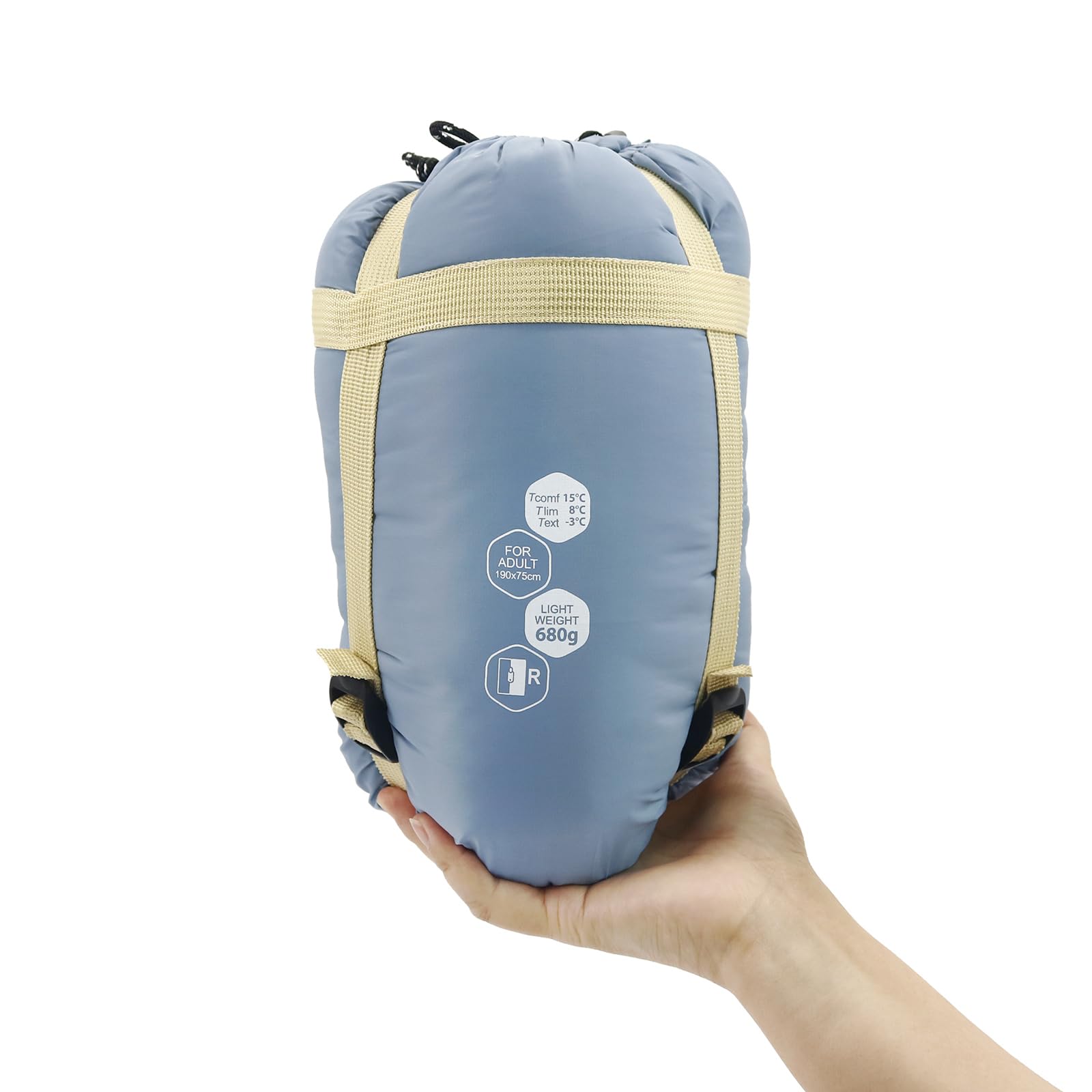
The 33.5-inch width is what makes this Naturehike feel different from most sub-two-pound bags. At 80.7 inches long, it has the dimensions of a roomy adult bag, not a stripped-down mummy, so you can turn over without the shell wrapping around your knees. We noticed the extra room immediately, and it is the reason this one became our default rather than a lighter but tighter alternative.
At 1.67 pounds, it still disappears into a pack. The compression sack pulls it down to a small bundle, and the envelope shape makes it easy to roll and stuff at the end of a trip. We liked that we did not have to fight the bag back into the sack, which is not something we can say for every lightweight bag here.
Warmth is the trade-off. The bag is rated 59°F/32°F, and we treat the lower number as a limit rather than a comfort rating. This is a mild-weather bag; below the comfort range, plan on a liner or an extra layer. The shell is thin, as you expect at this weight, so a sleeping pad matters.
Against the REDCAMP, this is the one we choose for anyone near six feet or who likes elbow room. The REDCAMP is lighter and simpler; the Naturehike gives up a little weight for a lot more space. For a roomy bag that still packs small, that is the right trade.
Pros
- Roomy 80.7 x 33.5-inch cut
- Light 1.67-pound carry
- Packs small for its size
- Solid construction for the weight
Cons
- Mild-weather insulation only
Our default lightweight pick gives tall and average sleepers real room at 1.67 pounds, provided you treat it as a mild-weather bag.
Best for Warm-Weather Trips
REDCAMP Ultra Lightweight
Key Features
- Shape: Rectangular
- Weight: 1.5 lb
- Dimensions: 75"L x 32.5"W
- Temperature range: 59-77 °F/15-25 °C
- Price: Budget
When the night is forecast mild, the REDCAMP is the bag we reach for first. It weighs 1.5 pounds and rolls into a small bundle, so it disappears into a daypack or travel bag. The 68°F comfort figure tells you what it is: a warm-weather bag, not a three-season holdout.
The 75-inch length is the catch. It is fine for average and shorter sleepers, but anyone near six feet will feel the end of the bag. The 32.5-inch width gives a little more room than the ultralight norm, though the cut still runs narrow through the shoulders. If you are broad, size up or choose the Naturehike.
We like the two-way zipper. It lets you open the foot for ventilation or join two bags, and it is one of the details that makes a budget summer bag more useful than its spec sheet suggests. If you mostly camp in warm weather and count every ounce, this is the value pick; if you need shoulder-season warmth, go up to the Naturehike.
Pros
- Low 1.5-pound carry
- Packs small for travel
- Two-way zipper adds versatility
- Good warm-weather value
Cons
- 75-inch length is tight for tall sleepers
- Summer-only temperature range
This is the summer bag we hand to weight-conscious backpackers: 1.5 pounds, compact, and simple, with a 75-inch length that stops short for tall sleepers.
Best for Tall, Light Packers
BORULL 1.5 lb Ultralight
Key Features
- Weight: 1.5 lb
- Dimensions: 79"L x 30"W
- Packed size: 4.7" x 7.9"
- Temperature range: 50°F-77°F
- Price: Budget
The 4.7 x 7.9-inch packed size is the first thing that stands out about this BORULL. It is small enough to disappear in a pack, and at 1.5 pounds it barely registers on the scale. The 79-inch length is the other half of the pitch: this is one of the few sub-two-pound bags that gives a tall sleeper room to stretch.
That length comes with a 30-inch width, which is not a generous cut. If you roll around a lot or have broad shoulders, the bag will feel close. The fill is thin, too. BORULL lists a 50°F to 77°F range, and we do not push the bottom of it without a liner. It is a summer and travel bag, not a cold-weather one.
For a tall hiker who sleeps warm and wants to keep the pack light, that trade is worth it. The shell is soft and the bag stuffs easily, which matters on the last morning when you are packing in a hurry. Just do not expect the warmth of a heavier three-season bag.
Pros
- 79-inch length at 1.5 pounds
- Packs to 4.7 x 7.9 inches
- Soft, easy-to-stuff shell
Cons
- Narrow 30-inch cut
- Thin fill limits cold nights
A specialist for tall, weight-conscious campers: 79 inches and 1.5 pounds, with a narrow cut and thin insulation that keep it in mild weather.
Best for Smaller Campers
NewDoar Ultralight
Key Features
- Weight: 1.5 lb
- Dimensions: 74.8"L x 29.5"W
- Packed size: 11.8"x6.5"
- Temperature range: 50°F-70°F / 10°C-21°C
- Price: Midrange
At 74.8 inches, the NewDoar is not trying to fit everyone. That is the point. For a smaller camper, the shorter length means less dead space to warm and less bulk in the pack, and at 1.5 pounds it is one of the easiest bags here to carry.
The 29.5-inch width is similarly focused. It is fine for a slim sleeper but tight for broad shoulders. The two-way zipper lets you join two bags into a double or open this one into a blanket, which makes it more useful for couples and warm-weather travel than the size suggests. Packed size is 11.8 x 6.5 inches, small enough for a carry-on or a daypack.
Warmth is the limit. The 50°F to 70°F range is a summer range, and the thin fill will not rescue a cold snap. The liner is soft against the skin, and the bag stuffs without much drama, but we see it as a travel and warm-weather backpacking bag for a smaller adult or a teenager, not a do-everything bag for a six-footer.
Pros
- Compact 1.5-pound carry
- Packs to 11.8 x 6.5 inches
- Two-way zipper links two bags
- Soft liner for the weight
Cons
- Short 74.8-inch length
- Summer-only warmth
The short-and-light choice we recommend for smaller campers and couples: 1.5 pounds, a tiny pack size, and a two-way zipper, but not much cold-weather margin.
Best for Roomy Basecamps
MalloMe 3-Season
Key Features
- Fill: Polyester
- Weight: 3 lb
- Dimensions: 86.6"L x 31.5"W
- Temperature range: 50°F to 77°F
- Price: Budget
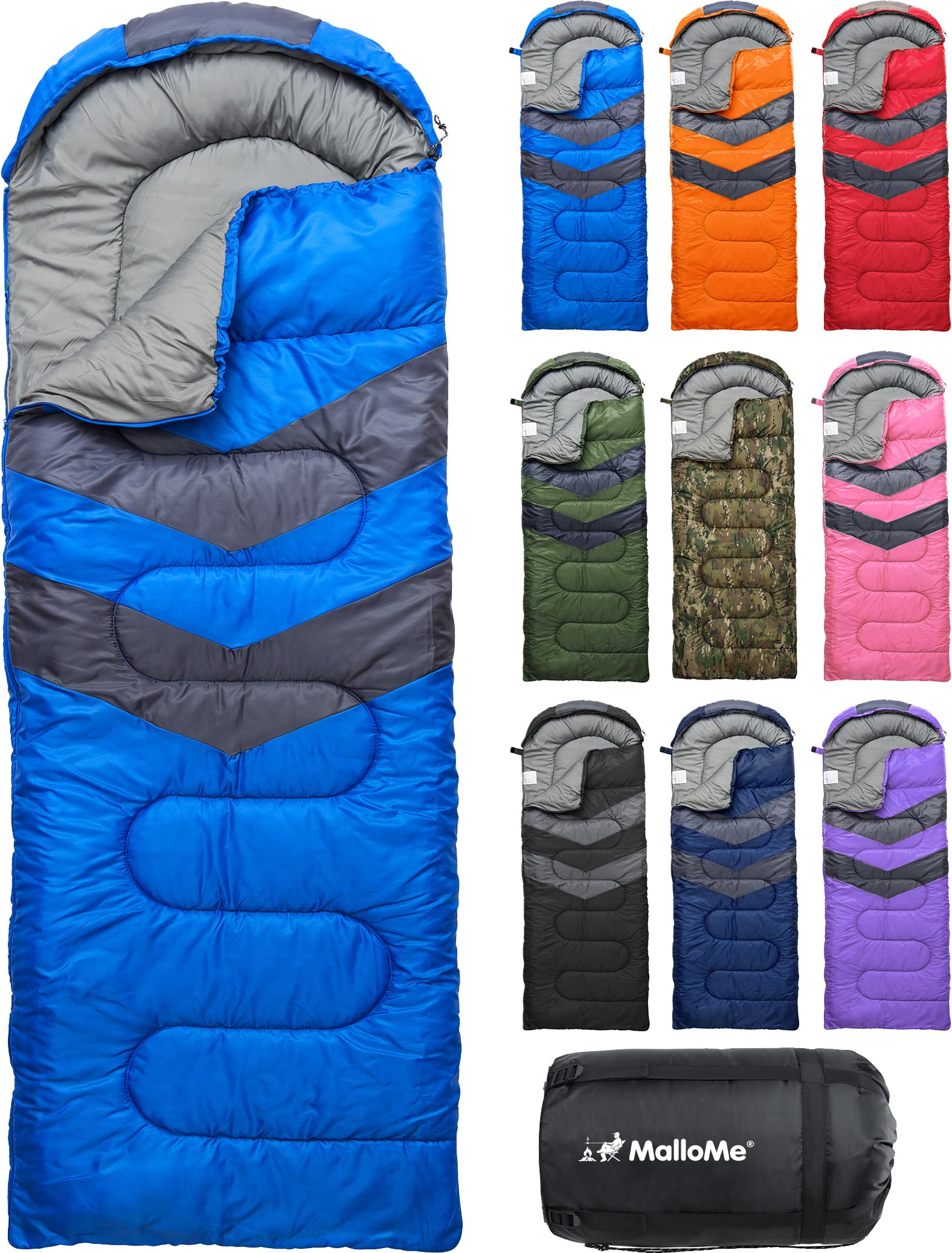
At 86.6 inches long and 31.5 inches wide, the MalloMe is the roomiest bag in this group. If you are tall, broad-shouldered, or just tired of feeling pinned inside a mummy bag, that space is the reason to look at it. It also rolls up more easily than a 3-pound bag has a right to.
The weight is the trade. Three pounds is a lot to carry on a long hike, and this bag makes more sense at a basecamp, in a car, or for a tall camper who values sleep over pack weight. The 50°F to 77°F range is mild-weather, despite the year-round billing.
The zipper is the part we check before a trip. It can run smoothly, but it can also snag or fail, and a sleeping bag without a working zipper is a blanket with extra steps. Test the full length at home. If it is smooth, the MalloMe is a lot of room and warmth for the money.
Pros
- Very roomy 86.6-inch length
- Easy to roll and pack
- Warm enough for cool summer nights
- Good budget value
Cons
- Heavy 3-pound carry
- Zipper can snag or fail
A roomy budget bag we like for tall campers and basecamps, though its 3-pound weight and inconsistent zipper keep it out of long backpacking trips.
Best for Family Camping
PTEROMY 3-Season
Key Features
- Weight: 3 lb
- Cleaning: Machine washable
- Dimensions: 87"L x 31"W
- Temperature range: 50℉-80℉ (10℃-27℃)
- Price: Budget
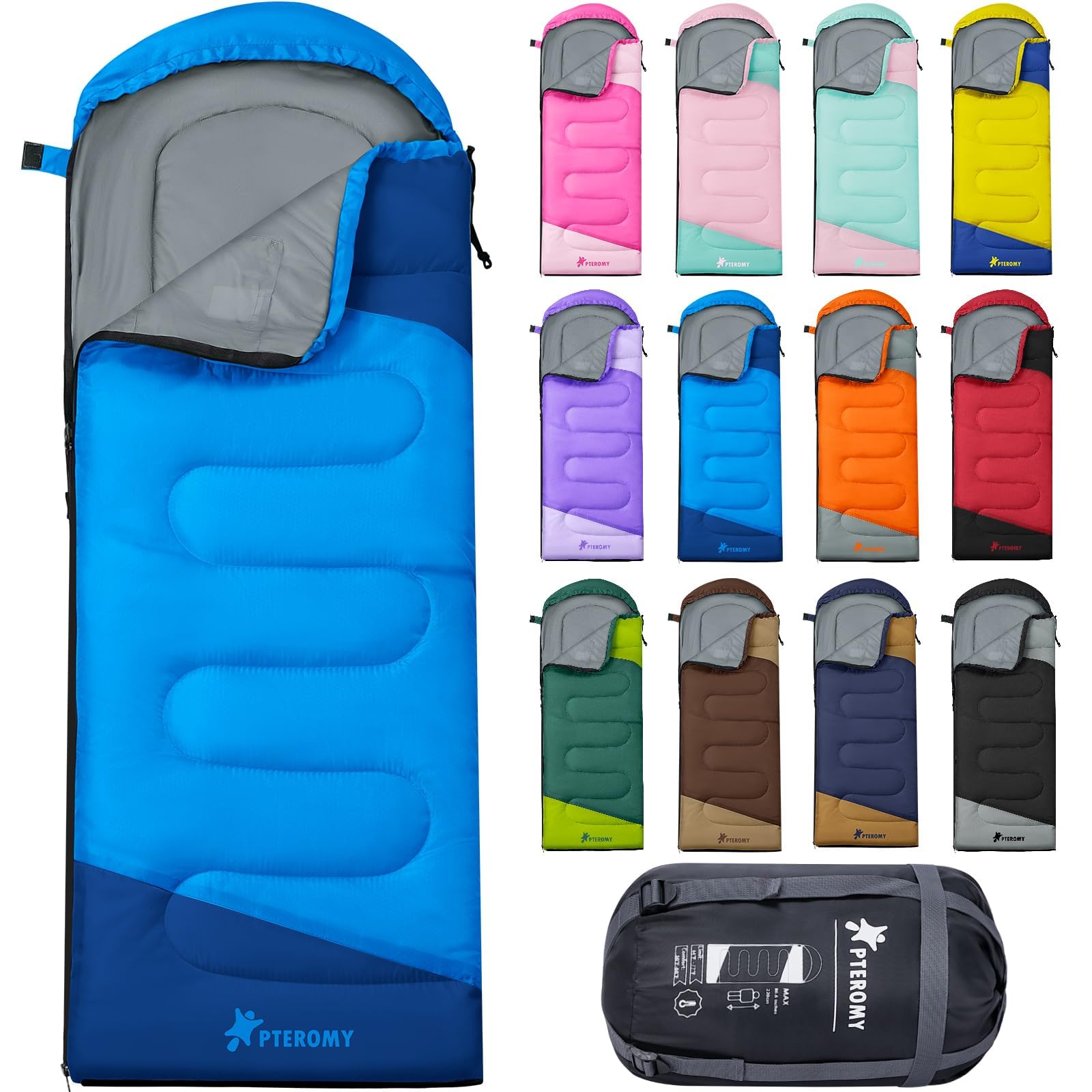
The machine-washable build is what makes the PTEROMY the practical family pick. After a muddy weekend or a kid’s sleepover, you can put it in the washer instead of treating it like a hand-wash-only heirloom. That alone makes it more useful than most bags in this group for car camping and cabins.
At 87 inches long and 31 inches wide, it is a roomy bag, and the hood drawstring and foot zipper give you some control over warmth. The 50°F to 80°F range is a three-season claim, but we treat it as a cool-weather family bag rather than a backpacking bag. Three pounds is simply more than we want on a long carry.
For car camping, cabins, and kids who will grow into it, the PTEROMY is an easy recommendation. The shell feels durable enough for the price, and the included compression bag makes storage simple. It is not the bag for a fast-and-light trip, and it does not pretend to be.
Pros
- Machine washable
- Roomy 87-inch length
- Hood and foot zipper adjust warmth
- Easy to pack and store
Cons
- 3-pound weight limits backpacking
- Bulkier than ultralight bags
The practical family bag we recommend for car camping: roomy, machine washable, and warm enough for cool nights, but too heavy for long carries.
How We Tested the Best Lightweight Sleeping Bags
The shortlist started with research: we combed through specs, read owner reviews, and filtered out bags that were too heavy, too bulky, or too expensive for what they offered. We ended up with 11 models that spanned a range of fill types, temperature ratings, and price points. Over nine months, we took them on real trips—weekend backpacking, car camping, and a few rainy nights—and we also slept in them in our backyards to compare them side by side.
To judge warmth, I slept in each bag on nights that dipped close to its stated temperature rating, wearing the same base layers, and noted whether I woke up shivering or comfortable. For weight and portability, we weighed each bag on a kitchen scale and stuffed it into its included stuff sack, then measured how much space it took up in a 40-liter pack. We also noted how easy the stuff sack was to cinch and whether the bag slid out without a fight.
Zipper quality got its own test: we opened and closed each zipper 50 times in a row, both in daylight and by headlamp, and flagged any snags, stuck points, or misaligned teeth. We also checked how the bag fit different body types—our testers ranged from 5’4" to 6’2"—and whether the hood and draft collar sealed out cold air without feeling claustrophobic. Finally, we considered value: how each bag’s materials, stitching, and hardware held up after repeated use, and whether the price felt justified by performance. The bags that earned a spot in this guide are the ones we’d happily carry again.
How to Choose a Lightweight Sleeping Bag
The right lightweight bag is the one you barely notice in your pack and do not notice at 2 a.m.
Match the rating to the night, not the label
A bag that weighs 1.5 pounds can be perfect in July and miserable in April. Look for a comfort range, then treat the lower number as the edge of what the bag can handle, not a promise of a warm night. The Naturehike’s 59°F/32°F rating is a good example: it is a mild-weather bag, and the 32°F figure is a limit. If you sleep cold or camp in shoulder season, choose a warmer bag or plan on a liner. The lightest bag is not a bargain if you shiver through the night.
Weight is only half of the carry
Two bags can weigh 1.5 pounds and feel completely different in a pack. Packed size and shape matter as much as the scale, especially on a multi-day hike. The BORULL compresses to a 4.7 x 7.9-inch bundle; the NewDoar packs to 11.8 x 6.5 inches. Both are light, but the first disappears into a small pack more easily. Check the packed dimensions, not just the weight, and think about whether the bundle fits the space you actually have. A slightly heavier bag that packs long and thin can be easier to carry than a lighter brick.
Fit is the specification that ruins trips
Length and width decide whether you sleep or fight the bag. A 75-inch bag is fine for average and shorter sleepers, but it will feel short near six feet. The REDCAMP is 75 inches long; the Naturehike is 80.7 inches and 33.5 inches wide. Width matters just as much for side sleepers and broad shoulders. Measure your height and shoulder span, then leave a little margin. A bag that is too narrow turns every turn into a wrestling match, and no weight saving makes up for that.
Zippers and shells are where light bags fail
The zipper is the part we check first. Run it the full length, look for snags at the shoulder, and make sure the pull is easy to find in the dark. A thin shell also needs care: it saves weight, but it will not replace a sleeping pad, and a sharp twig or a rough zipper can do damage. The stuff sack is another weak point on budget bags. Pack the bag at home before a trip, and if the sack is tight, use a larger one rather than forcing the zipper.
When a heavier bag earns its place
Not every trip is a fast-and-light trip. If you are driving to a campsite, sleeping in a cabin, or buying for a kid who will use the bag for sleepovers, a 3-pound bag with more room and a washable shell can be the better choice. The MalloMe and PTEROMY make more sense in that role than on a long carry. For backpacking, the extra pound is felt on every climb, so stay with the lighter picks unless you need the room or the washability.
Frequently Asked Questions
Can I wash a lightweight sleeping bag in a washing machine?
Only if the care label allows it. The PTEROMY is the one bag here that lists machine washable; for the others, use a front-loading machine on a gentle cycle with a non-detergent soap, or hand wash. Skip the dryer’s heat. A low tumble or air-dry keeps the synthetic fill from clumping. If the label is missing, treat it as hand-wash only.
How do I keep a lightweight bag from sliding off my sleeping pad?
Start with a pad that has a textured surface, or add pad straps that run under the mat and over the bag. A thin blanket between the bag and the pad can also add grip. Slick nylon shells slide more on smooth inflatable pads, so check the combination at home before a trip. If you move a lot, a rectangular bag with more surface contact helps.
Should I store my sleeping bag in its stuff sack?
No. Keep it loose in a cotton or mesh storage bag so the fill can stay lofted, and use the compression sack only for travel. Long-term compression can flatten synthetic insulation and stress the seams. If you have no storage bag, hang the bag in a dry closet or lay it flat under a bed.
Can two lightweight sleeping bags be zipped together?
Only if both bags have compatible two-way zippers with opposite slider orientations. The NewDoar and REDCAMP list two-way zippers; check the zipper pull direction before you buy a second bag. A joined pair is warmer and roomier, but the seam can leak cold air, so it works best in mild weather.
Final Verdict
Naturehike is the lightweight bag we recommend first because it gives a tall or average sleeper real room at 1.67 pounds without making warmth a complete afterthought. If your trips are firmly mild and you want the lightest carry, REDCAMP is the better summer-only choice. For a smaller camper or a couple linking bags, NewDoar makes more sense. The 3-pound roomy bags are for basecamps and family camping, not long carries.