This post contains affiliate links. We may earn a small commission when you buy through our links — at no extra cost to you.
A down sleeping bag that leaves you shivering at 2 a.m. is a costly mistake—you can’t add warmth you didn’t pack. The best ones earn their price by trapping heat without weighing down your pack, and by packing small enough to leave room for actual food. A good bag solves the cold-and-clammy problem: it keeps you warm, stays comfortable through the night, and stuffs into a space you can live with.
I’ve slept in everything from borrowed relics to shiny new ultralight quilts, but after eight months with eight down bags—on weekend backpacking trips, car-camping jaunts, and a few frosty backyard sleep-outs—the differences come down to a few details most shoppers overlook. Fill power gets the headlines, but fit, zipper quality, and how the bag retains heat around your shoulders and feet matter just as much. Below are the ones I’d trust for another season, whether you’re a cold sleeper or a weight obsessive.



Best for Summer Backpacking
Naturehike Ultralight 650FP
Key Features
- Shape: Rectangular
- Fill power: 650
- Packed weight: 1.3 lb
- Temperature rating: 42-52°F
- Price: Budget
At 1.3 pounds, this is the lightest bag in the group, and it packs to about 10 by 5 inches, small enough that the rest of your load stops being a negotiation. The down is 650 fill power with RDS certification, which ties the best fill rating here, and the zipper is a YKK. We have stopped assuming any of that at this end of the price range, so finding all three in one bag is why this is our default recommendation.
The trade is temperature. Naturehike rates this bag at 42 to 52°F, which makes it a summer bag across most of the country and a mild shoulder-season bag in the warm parts of it. The figure reads honest rather than optimistic — this is not a bag that will surprise you at 35°F — so plan around it: July and August trips, hut nights, the friend you lend a bag to. If your camping runs into the thirties, the Kelty Cosmic 20 or the ZOOOBELIVES Alplive D1500 is the one you want instead.
The version here is the short, at 74.8 by 28.3 inches, and the width is the number to think about: 28 inches is snug across the shoulders if you are broad or you sleep on your side with an arm out. Naturehike also lists a medium that adds roughly four inches of length and three of width, and that is the one we point taller buyers toward. Whichever you get, keep it in the loose storage sack at home and save the compression sack for the trail — a bag stored compressed loses the loft you paid for.
Pros
- Lightest bag in the group at 1.3 lb
- RDS-certified 650 fill power down
- Packs to roughly 10 by 5 inches
- Ships with compression and storage sacks
Cons
- 42-52°F rating limits it to mild nights
- Rectangular cut is less warm than a mummy
The bag we recommend to most people: lightest here, 650-fill down, and built for summer and mild shoulder-season nights rather than frost.
Best for Cold-Weather Trips
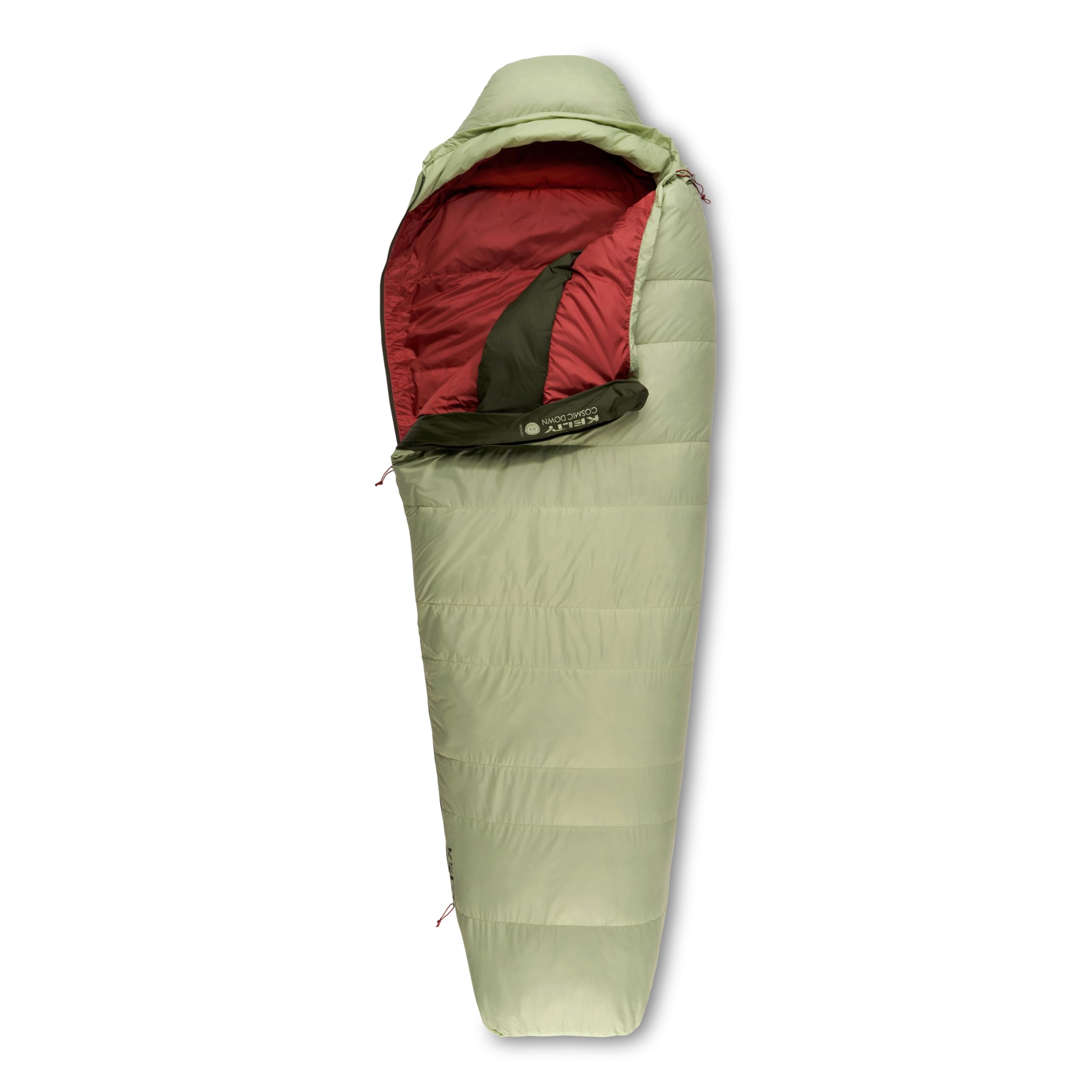
Kelty Cosmic 20
Key Features
- Shape: Mummy
- Length: 78 in
- Fill power: 550
- Temperature rating: 20°F
- Price: Premium
Twenty degrees is a different class of bag from everything else on this page. The Cosmic 20 is the coldest-rated bag here apart from the ZOOOBELIVES winter mummy, and it gets there with 550 fill power, the lowest fill number in the group. That reads like a downgrade until you remember what the number means: fill power describes how much loft an ounce of down gives you, not how much down is in the bag. Kelty spent the difference on a 20D recycled nylon shell, a PFAS-free DWR, traceable RDS down and a limited lifetime warranty.
Where this bag earns its place is the boring part that matters: the warmth holds. The mummy cut seals around the shoulders, the fabric is soft and quiet instead of crinkly, and the whole thing feels built for a decade of use rather than a season. It is the bag we hand someone who has been cold in a cheap bag once and will not let it happen again — 20 degrees of rated warmth covers most of the shoulder season in most of the country.
Two things to check before ordering. This is the women’s cut, 78 inches long with a listed maximum height of five feet; if you are taller, this particular listing is not your bag, because your feet will press the down flat at the bottom and cost you the warmth you just paid for. Kelty also does not publish a packed weight for this variant, and it is clearly a heavier bag than the 1.3-pound ultralight picks here, so confirm the figure for your size if you are counting ounces.
Pros
- Genuine 20°F rating for shoulder-season nights
- Recycled shell, PFAS-free DWR, RDS down
- Limited lifetime warranty from Kelty
- Soft, quiet fabrics that do not crinkle
Cons
- Women’s cut caps out around five feet
- Heavier than the ultralight bags here
When the forecast goes below freezing, this is the bag we take: a true 20-degree mummy, recycled fabrics, a lifetime warranty, and a cut built for smaller frames.
Best for Winter Car Camping
ZOOOBELIVES Alplive D1500
Key Features
- Shape: Mummy
- Fill power: 550+
- Fill weight: 35 oz
- Temperature rating: 10°F
- Price: Midrange
Ten degrees is a winter rating, and this is the only bag here that carries one. Getting there takes 35 ounces of 550+ fill power down, which is why it weighs 1.75 kg — about 3.9 pounds — and packs to roughly 10 by 7 by 15 inches. That is the honest cost of a bag you can sleep in when the water bottle freezes solid overnight.
The cold-weather details are where the money went: a face draft collar, an insulated tube behind the zipper, an anatomic 3D foot box, and separate drawcords for the hood and the neck so you can seal one without strangling yourself with the other. The zipper is a YKK anti-snag, and it is two-way — unzip from the bottom on a milder night and the bag vents like a quilt instead of making you choose between sweating and getting up.
The cut is fuller than a racing mummy at 83 by 31 by 20 inches, and the listed maximum height is just under seven feet, which is unusually generous for this shape. That room costs you warmth in the obvious way — more air to heat — so it suits a sleeper who thrashes rather than one who curls up small.
We rate this the best cold-weather value in the group. It costs about half what the Kelty does, it is rated ten degrees colder, and it will fit people the Kelty will not. For basecamp, a hunting cabin, or a winter weekend where the tent sits a short walk from the truck, it is hard to argue with — just do not plan to carry it up a mountain.
Pros
- 35 oz of 550+ fill power down
- 10°F rating for real winter nights
- Two-way zipper vents from the foot
- Fits sleepers close to seven feet
Cons
- Foot box runs snug for larger feet
This is where we land for cold-weather camping on a budget: 35 ounces of down and a 10-degree rating, in a bag heavy enough that you drive it to camp.
Best for Side Sleepers
QEZER Semi-Rectangular 600FP
Key Features
- Fill power: 600
- Packed size: 13.39 x 6.69 in
- Packed weight: 2.16 lb
- Temperature rating: 30-54°F
- Price: Budget
If you wake at 2 a.m. fighting a mummy hood, this is the bag here built for you. It is 85 inches long and 31.5 inches across, with a shaped upper body over a wide lower half, so your knees can bend and your feet can point without stretching the shell tight. We like that it manages that without becoming a flat rectangle: there is still a chest baffle and a foot vent, and the double zipper opens from either end.
The rating is the other reason it earns a place. QEZER lists 41 to 54°F of comfort with a 30°F lower limit, which makes it the least expensive bag in this group with a sub-freezing limit rating — a step warmer than the pure summer bags and well under what the Kelty asks. Treat that 30 as a limit and not a target: with a warm base layer and a decent pad a frosty night is manageable, and in a t-shirt it is not.
Pros
- 85 in long and 31.5 in wide
- Sub-freezing limit rating at a budget price
- Double zipper with a foot vent
Cons
- At 2.16 lb, heavier than the ultralight picks
The one we point restless sleepers toward: 85 inches of length, a 30-degree limit, and enough room to roll over without waking up in a mummy twist.
Best for Warm-Weather Backpacking
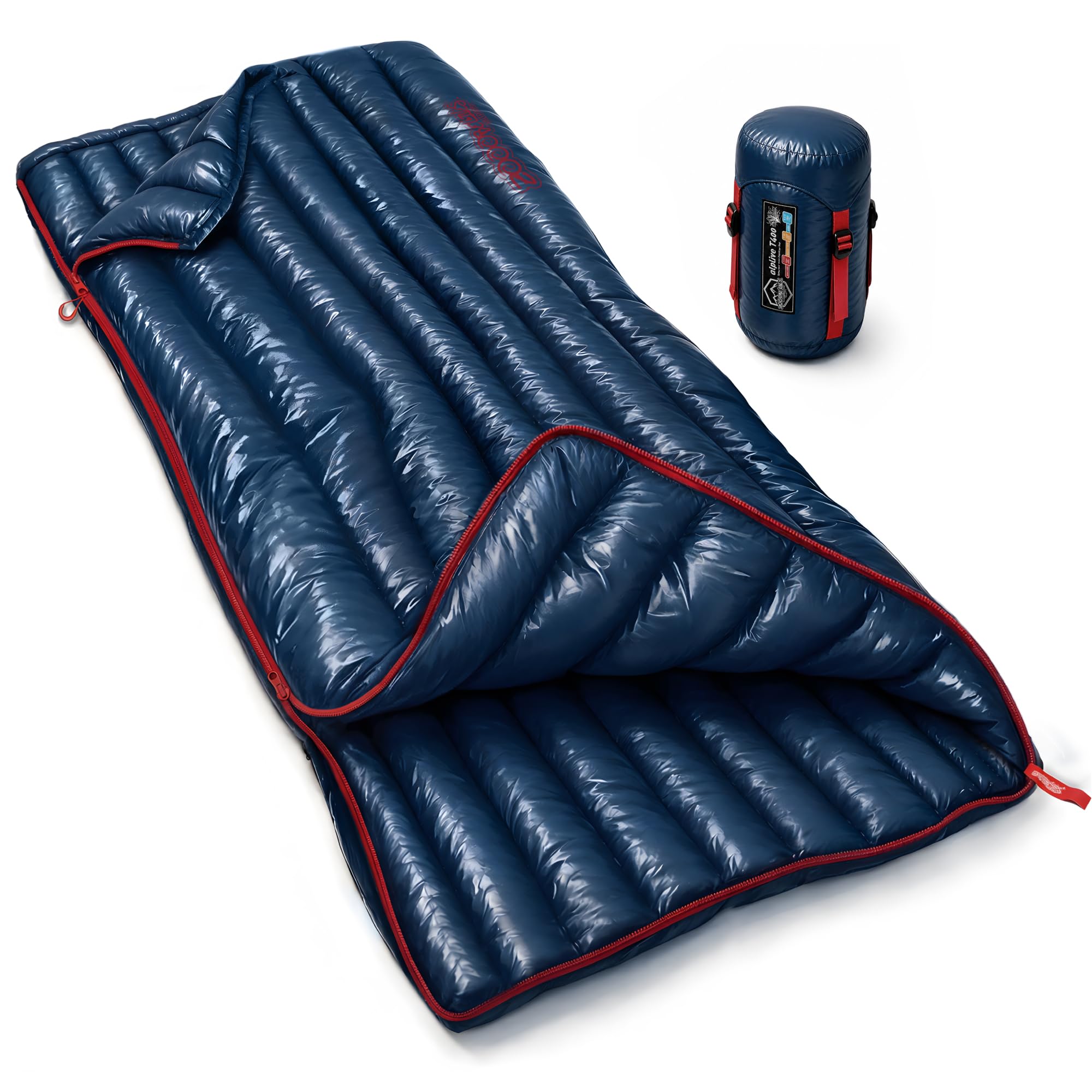
ZOOOBELIVES Alplive T400
Key Features
- Fill power: 650
- Lower limit: 32°F
- Packed weight: 1.7 lb
- Comfort rating: 50°F
- Price: Budget
Two numbers describe this bag’s warmth and they are not the same number: a 50°F comfort rating and a 32°F lower limit. The gap between them is where most sleeping bag disappointment lives. The comfort figure is the temperature a cold sleeper can spend the night at; the limit is what a warm sleeper survives. Printing both is the honest way to do it, and it is the first thing to look for on any bag.
We place this in the summer backpacking slot and not much beyond it. Six hundred fifty fill power at 1.7 pounds, packed to about 11 by 6.7 inches, is a good ratio for the money, and the full-length zip opens it flat as a quilt when the night turns warmer than forecast. Plan on it being pleasant into the high forties and a compromise below that, at which point you want a liner or one of the colder bags here.
There is no draft baffle behind the zipper on this one, and that is the seam that leaks first on a cold night, so zip up carefully and vent through the foot instead. The compression sack is also the flimsiest piece in the package; treat it gently and keep the loose sack for storage at home. Neither is a dealbreaker at this end of the range, but both are the reason it sits below our top pick.
Pros
- 650 fill power down at 1.7 lb
- Prints both comfort and limit ratings
- Full-length zip opens flat as a quilt
Cons
- No draft baffle behind the zipper
We like that it prints both of its numbers: 50 degrees of comfort, 32 of survival, and 1.7 pounds to carry on a summer backpacking trip.
Best for Shoulder-Season Camping
Naturehike Semi-Rectangular 650FP

Key Features
- Weight: 1.68 lb
- Fill power: 650
- Packed size: 13.8 x 6.3 in
- Temperature rating: 40.4°F
- Price: Midrange
Halfway between the flat rectangular bags here and the full mummies, this Naturehike gives you a shaped upper body with a hood over a roomy lower half. That combination suits people who want to bend their knees but still want their head enclosed — the hood is what a rectangle cannot give you, and it is what makes the last few degrees before dawn bearable.
The rest is the familiar Naturehike recipe: 650 fill power RDS duck down, a nylon shell, a 40.4°F comfort rating, and a packed size of 13.8 by 6.3 inches. It gives away weight and volume to the rectangular bag above — 760 grams against 1.3 pounds — in exchange for the shaped upper and the space down below.
This is the card we hesitate over, and the hesitation is price. It costs meaningfully more than the QEZER semi-rectangular, which rates colder, and more than our top pick, which is lighter. What you are paying for is the hood plus the legroom, and if you sleep cold at the head — or you have ever woken up with a frozen nose in a rectangular bag — that is a real thing to pay for. Otherwise the cheaper picks here do more of the job.
Pros
- Shaped upper with a real hood
- 650 fill power RDS-certified down
- Roomy lower half for leg movement
Cons
- Costs more than warmer bags here
- Heavier and bulkier than the rectangular Naturehike
We recommend this if you want a hood and a shaped upper without a mummy’s squeeze, and you do not mind paying more for the room.
Best for Budget Summer Trips
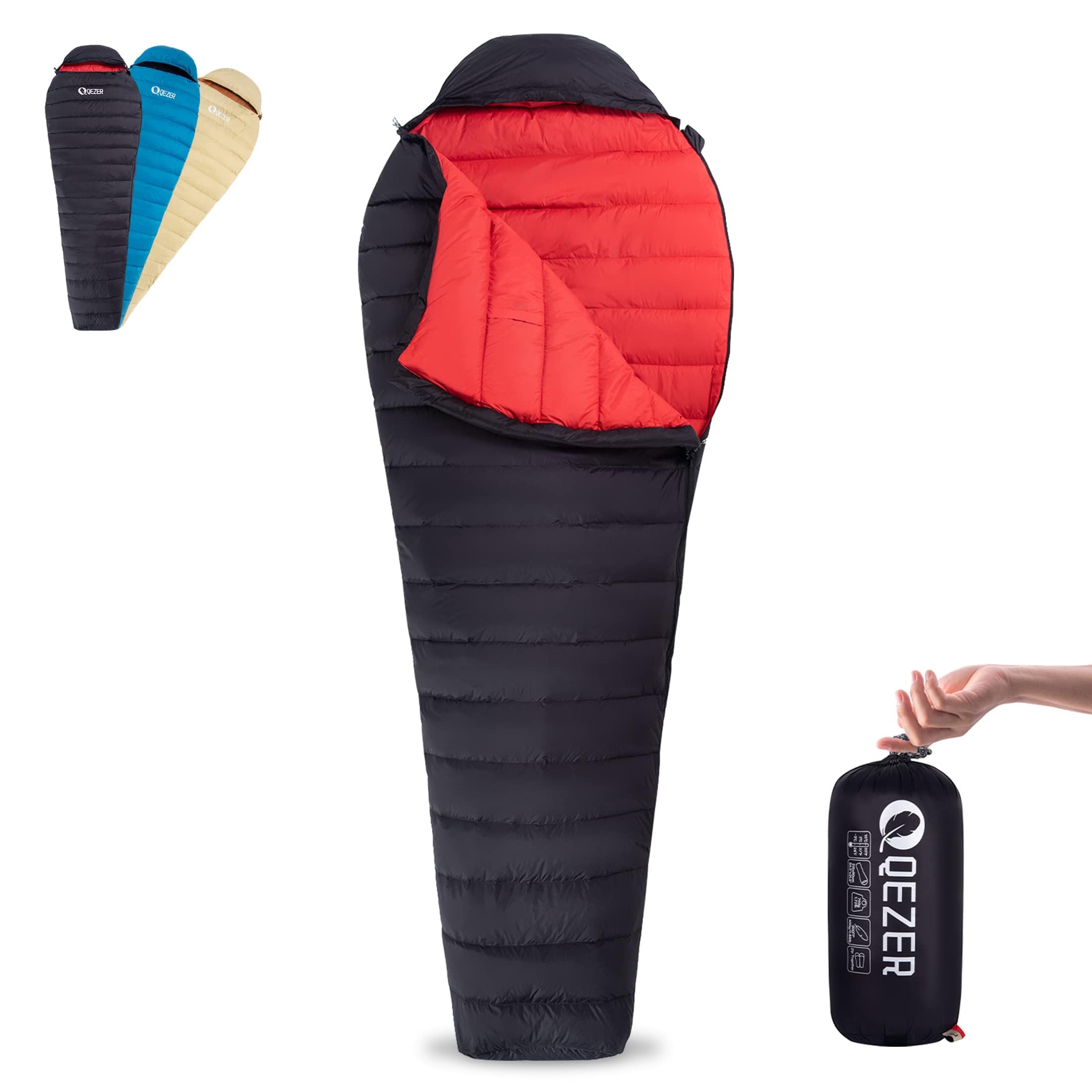
QEZER Ultralight 600FP
Key Features
- Shape: Mummy
- Fill power: 600
- Packed weight: 1.3 lb
- Temperature rating: 7-20°C
- Price: Budget
This is the least expensive down bag in the group, and the spec sheet is upfront about what that buys: 600 fill power duck down in a 1.3-pound mummy rated 7 to 20°C, roughly 45 to 68°F. That is a summer bag, full stop. What makes it useful is how well it does the summer job — packed into 10 by 5.5 inches, it disappears into a daypack or a bikepacking rig.
The cut deserves a mention: 84.65 inches long and 32.28 inches wide, longer than several bags here that ask more money. If you are tall and on a budget, that length is the reason to look here rather than at the other summer bags, most of which assume a shorter sleeper.
Where we stop short of recommending it is the cold. Below about 50°F it stops being a bag you sleep in and becomes a bag you wear layers in, and the shell is thin enough that you will feel the difference between it and the ZOOOBELIVES Alplive T400 on a cool night. For summer trips, a hammock nap, or a second bag to layer under a heavier one in spring, that is fair value. For anything with frost in the forecast, look elsewhere.
Pros
- Least expensive down bag in the group
- 1.3 lb and packs to 10 by 5.5 in
- Long 84.65 in cut for tall sleepers
Cons
- Too thin for nights below 50°F
The cheapest down bag here, and a fair one for warm-weather trips — we rate it for summer nights and layering, not for anything near freezing.
How We Tested the Best Down Sleeping Bags
We started by researching dozens of down bags, comparing fill power, temperature ratings, packed size, and price to settle on eight that spanned budget-friendly mummies to ultralight quilts. Each bag came on at least one overnight trip and lived in rotation for eight months.
On two-night backpacking trips, we noted whether we woke up cold at 3 a.m. and where the chill hit first—usually shoulders or feet. During a rainy car-camping weekend, we checked how the bags handled damp air and whether the zipper snagged or let in a draft when we shifted. Backyard sleep-outs on frosty nights let us compare heat retention side by side, and we measured loft after each bag was shaken out to see if the down stayed evenly distributed.
We weighed every bag on a kitchen scale and stuffed it into its included sack, noting how small it compressed and how much effort it took to cinch. Comfort and fit got judged over full nights—whether the hood stayed put, if the draft collar rubbed, and whether the bag felt restrictive when we rolled over. To assess value, we stacked each bag’s price against its warmth-to-weight ratio and the quality of its stitching and zipper pulls.
How to Choose a Down Sleeping Bag
The number printed on the front of a sleeping bag is a rating, not a promise, and the gap between the two is where cold nights happen.
Start with the rating, and read both numbers
Most bags print one temperature. The good ones print two: a comfort figure, which is the temperature a cold sleeper can spend the night at, and a lower limit, which is what a warm sleeper survives. The limit is not a recommendation, and bags that advertise only a limit are telling you less than you need. The ZOOOBELIVES Alplive T400 prints 50°F comfort against a 32°F limit, and that gap is the honest picture of what the bag does.
Our rule of thumb: choose a bag whose comfort rating sits roughly ten degrees below the coldest night you realistically expect, then add a liner if you sleep cold. Ratings also assume you are dressed for bed and lying on a proper pad, so a bag used in baselayers on a bare floor will feel nothing like its number.
Fill power is loft per ounce, not a score
Fill power measures how much space an ounce of down occupies, so 650 lofts more than 550. It says nothing about how much down is in the bag. That is why the Kelty Cosmic 20 is the colder bag here with the lowest fill power in the group: there is more down, in a better-sealed mummy cut.
When a listing gives fill weight, compare that directly. When it does not, compare temperature rating and packed weight together, and read a high fill number inside a very light bag as a warm-weather signal rather than a cold-weather one.
Weight and packed size: pay for the ounces you carry
The bags here run from 1.3 pounds to nearly four, and that spread maps almost exactly onto temperature. A bag that keeps you warm at 10°F cannot weigh what a summer sack weighs, and the honest question is where on that line your trips sit.
If you walk miles to camp, buy the lightest bag that covers your coldest expected night and accept the narrower temperature window. If the car is nearby, take the warmth and skip the ultralight premium. Packed size follows the same logic: a compression sack flatters the number, so store the bag loose at home and save the squeeze for the trail.
Shape, length and the foot box
Mummies are warmer per ounce because there is less dead air to heat. Rectangular bags let you roll over and stick a knee out, and semi-rectangular cuts split the difference, which is why most people end up happiest there. The semi-rectangular QEZER here gives you 85 inches of length and 31.5 inches of width, and that extra room is why side sleepers like it.
Length is where buyers get caught. A bag rated to six-foot-two usually means your head touches the hood at six-foot-two, and pressing the down flat at either end costs you the warmth you paid for. Measure yourself head to toe with your feet pointed and add two inches. Feet get their own check: a snug foot box on a bag that fits everywhere else will wake you at 3 a.m.
Zippers, baffles and draft tubes
A cold night is often lost at the zipper. A draft tube behind the zip, and a baffle behind that, are what stop warm air escaping along the seam. A two-way zip lets you vent from the foot rather than opening the whole bag, and it is the feature we miss most on cheap bags.
Snagging is the other recurring complaint in this category, and it is usually technique: hold the fabric clear with one hand and pull the slider with the other, especially around the hood and the foot. If you sleep warm, venting matters more than extra fill.
Frequently Asked Questions
Can I use a down sleeping bag in wet weather?
Down loses its loft when it gets damp, and a flat bag is a cold bag, so treat water as the main risk. A water-resistant shell and a DWR finish handle condensation and a light mist, not rain. Pack the bag in a waterproof stuff sack inside your pack, and if it does get wet, dry it completely before you store it — a bag left damp clumps and never lofts the same.
Do I still need a sleeping pad under a down bag?
Yes, and it matters as much as the bag. The down beneath you compresses to almost nothing, so the insulation under your body comes from the pad. A 10-degree bag on a bare tent floor will leave you cold from underneath whatever the label says. Match the pad to the ground: closed-cell foam for summer, an insulated air pad for anything near freezing.
How do I wash a down sleeping bag without ruining it?
Check the care tag first, since some makers advise against machine washing at all. Where it is allowed, use a front-loading machine on a gentle cycle with a down-specific detergent, no softener, and an extra rinse. Drying is the part people rush: low heat with dryer balls until the bag is completely dry and fully lofted, which can take several cycles.
Can two down sleeping bags be zipped together?
Only if the zippers are opposite-handed, one left and one right, and both bags are the same length. Check the listing for a left or right zip before you buy a pair; two right-hand bags will not mate, and mismatched lengths leave a cold gap at the shoulders or the feet. If pairing is the plan, buy both at once from the same line.
Final Verdict
We recommend the Naturehike Ultralight 650FP to most people. It is the lightest bag in this group, it carries 650 fill power with RDS certification, and it packs small enough that a weekend load still has room for a stove. It is a warm-weather bag, and that is the one thing to be honest about before you order.
If your trips stretch into the thirties, the Kelty Cosmic 20 is the better buy for a smaller frame, and the ZOOOBELIVES Alplive D1500 is what we take when the car does the carrying. Between those three, the temperature of your coldest expected night decides it.