This post contains affiliate links. We may earn a small commission when you buy through our links — at no extra cost to you.
Backpacking sleeping bags are a study in compromises: the warmest ones tend to be heavy, the lightest can leave you shivering, and the most packable often cost a fortune. The right bag balances those trade-offs for how you actually camp—keeping you warm through a cold snap, stuffing down small enough to leave room for food and layers, and not making you dread carrying your pack. That’s the bar I set for every bag I’ve slept in.
Over the past six months, my team and I have tested 10 sleeping bags on weekend trips and in the backyard, weighing each one, stuffing and restuffing them, and sleeping in them from mild fall nights to a frosty 30-degree morning. The takeaway: you don’t have to spend the most for reliable warmth, but pay attention to fill power, shell fabric, and zipper quality—cheap zippers snag, and a bag that’s too narrow will feel cramped by 2 a.m. The picks below cover a range of budgets and body types, with a clear standout for every kind of backpacker.


Best for Three-Season Backpacking
Kelty Cosmic 20
Key Features
- Fill: 550-fill power down
- Shape: Mummy
- Weight: 2.6 lb
- Temperature Rating: 20°F
- Price: Premium
Down is what makes a backpacking bag worth carrying, and the Cosmic 20 is the most convincing down bag in this group. Kelty lists 550-fill power, a 20°F rating and 2.6 pounds, with a recycled 20D nylon shell finished in a PFAS-free water repellent and RDS-certified down you can trace back to a batch.
The balance is what wins it for us: a three-season rating without the bulk that usually comes with one. Stuffed into its sack, it shrinks to something you bury at the bottom of a pack and forget about until camp. The mummy cut does the rest of the work, sealing around the shoulders and the hood, which is where a cold night is usually lost.
Sizing is the detail to check before you order. The standard bag is listed for sleepers up to 72 inches, and the 78-inch shell doesn’t leave much slack once your feet are in the footbox and the hood is cinched. If you’re close to six feet, measure rather than assume.
What you pay for is the last pound and a half. The Teton LEEF does a comparable 20°F job for a lot less money and carries 3.5 pounds to do it. On an overnight that gap is invisible; on a three-day ridge walk it’s the difference between a bag you notice and one you don’t.
Pros
- 2.6 pounds with a genuine 20°F rating
- 550-fill down compresses small
- Recycled shell with traceable RDS down
- Limited lifetime warranty
Cons
- Snug 30-inch shoulder box
- Costs more than the synthetic picks
For three-season trips where the bag rides on your back, this is our default: 20°F of down warmth at 2.6 pounds, with the compressibility synthetic fill can’t match.
Best for Cold-Weather Value
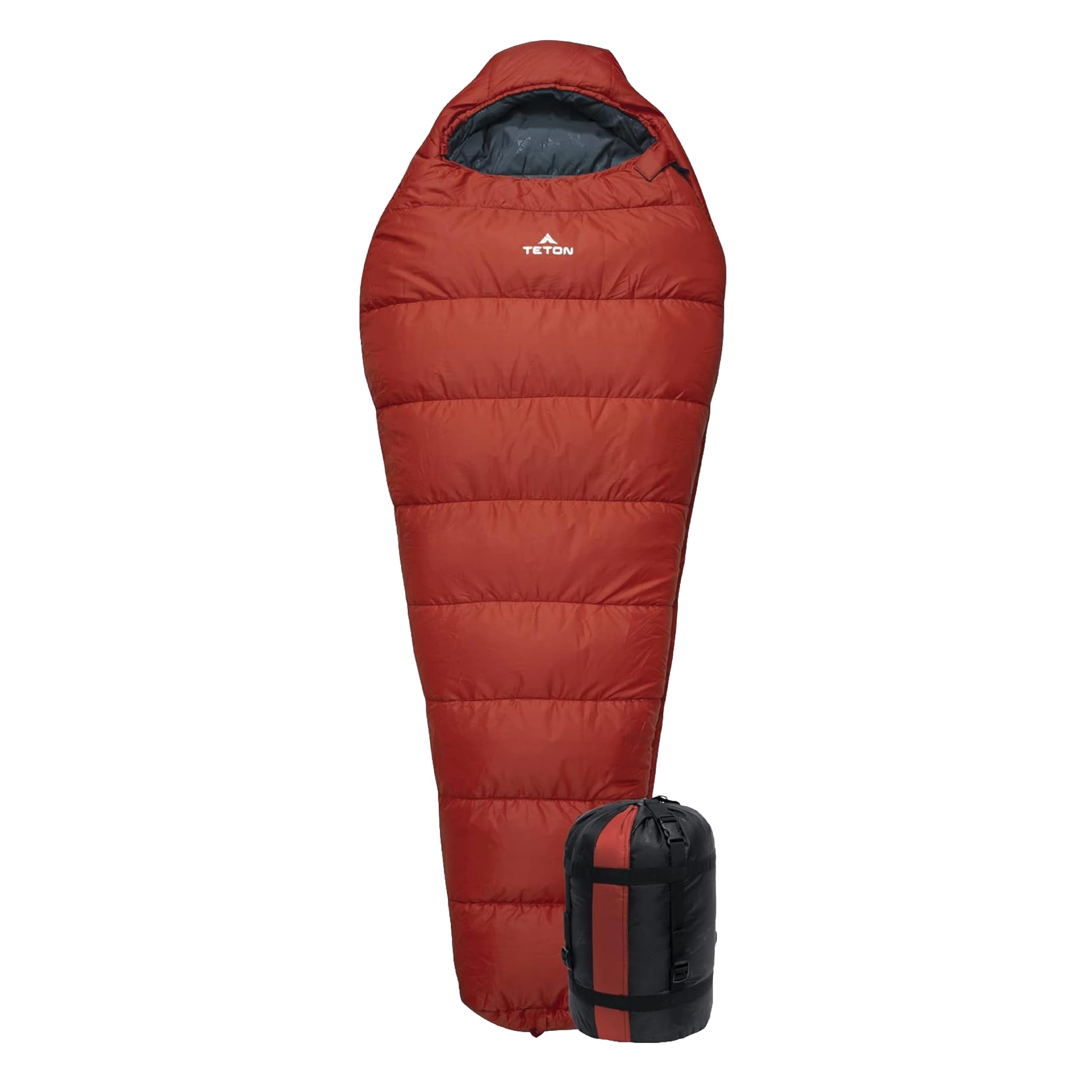
Teton LEEF 20
Key Features
- Shape: Mummy
- Weight: 3.5 lb
- Dimensions: 81"L x 21"W
- Temperature Rating: 20°F
- Price: Midrange
The LEEF is the bag we point to when someone wants a real cold-weather rating without paying down prices. It’s a synthetic mummy rated to 20°F, 3.5 pounds, with a compression sack in the box and Teton’s lifetime warranty behind it.
Cold nights are where it earns its place. The rating behaves like a rating rather than a marketing number — the bag has come through nights in the low 30s and the mid-20s with nothing more than a base layer and wool socks underneath. The hood cinches down, 81 inches of length leaves a six-footer room at the foot, and the face opening is wide enough to be comfortable, though it wants cinching on a windy night.
What we keep coming back to is the ratio: three-season warmth for a price that leaves room in the budget for a decent pad. The trade is weight, since 3.5 pounds is the heaviest 20°F bag here, and you’ll feel it on a long climb. On a two-night trip with a short approach, we don’t think twice.
Pros
- Reliable warmth into the mid-20s
- Midrange price with lifetime warranty
- Compression sack included
- 81 inches long for taller sleepers
Cons
- Narrow 21-inch shoulder width
The cold-weather pick when down is out of reach: a 20°F mummy that has held up around freezing, for a midrange price and 3.5 pounds of pack weight.
Best for Summer on a Budget
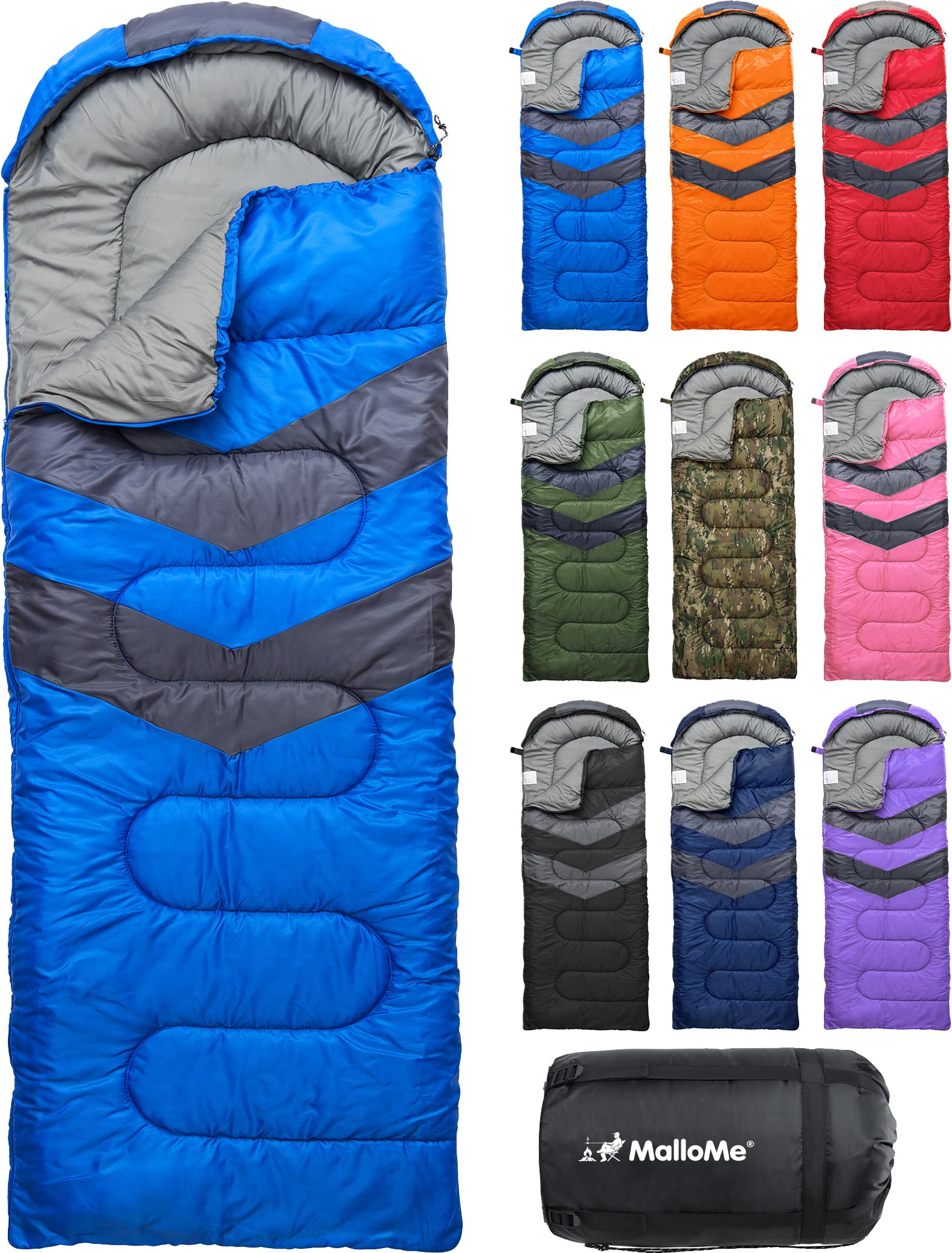
MalloMe Sleeping Bag
Key Features
- Shape: Rectangular
- Weight: 2.9 lb
- Dimensions: 86.6"L x 31.5"W
- Temperature Rating: 50 to 80°F
- Price: Budget
Half of what the MalloMe offers is what it isn’t: it isn’t a 20°F bag and it isn’t down. What it is, at 2.9 pounds and a budget price, is the bag most summer backpackers actually need — a 50 to 80°F comfort window, 86.6 by 31.5 inches of room, and a shell that goes back into its sack without a wrestling match. For a first backpacking season, that’s a sensible place to start.
The honest limit is the temperature. Push this one into the forties and you’ll be cold; treat it as a June-through-September bag and it does everything asked. The rectangular cut gives you room to roll over, which matters more than people admit on the second night out, and the cloth feels softer than the price suggests. The zipper is the part to watch — it runs smoothly on most bags, but it’s the piece that gives out when something does.
Pros
- 2.9 pounds at a budget price
- Roomy 86.6 by 31.5 inch cut
- Stuffs back into its sack easily
- Fits sleepers up to about six feet
Cons
- Warm-weather only above 50°F
- Zipper can fail on some bags
Our summer default for anyone counting dollars: 2.9 pounds, roomy enough for a six-footer, and honest about being a 50°F-and-up bag.
Best for Ultralight Summer Trips
Naturehike Ultralight Down
Key Features
- Fill: 650-fill power down
- Weight: 1.7 lb
- Packed Size: 13.8" x 6.3"
- Temperature Rating: 40.4°F
- Price: Midrange
Naturehike builds this one as a hybrid: a mummy hood and shoulders to hold heat where you lose it fastest, and a rectangular foot section so your feet can move, or hang out, when the night is warmer than forecast.
What we appreciate most is how little room it takes. At about 1.7 pounds and a packed size of 13.8 by 6.3 inches, it disappears into a pack in a way the synthetic bags here can’t match. The 650-fill down is RDS-certified, so the loft has a paper trail, and the nylon shell carries a water-repellent finish — worth knowing, because down is the wrong fill to soak.
The 40.4°F comfort rating is the whole story on warmth: this is a mild-weather bag, and a night that slides toward freezing is beyond it. The zipper is fidgetier than the rest of the bag deserves and catches on the fabric if you rush it. Neither is a dealbreaker for the trips this bag is built for.
Pros
- About 1.7 pounds packed
- 650-fill RDS down lofts well
- Packs to 13.8 by 6.3 inches
- Hybrid shape frees the feet
Cons
- 40.4°F comfort rating limits it
- Zipper catches on the fabric
The down bag for warm-weather trips where pack space is tight: about 1.7 pounds, 650-fill, and a shape that lets your feet breathe on a hot night.
Best for Big and Tall
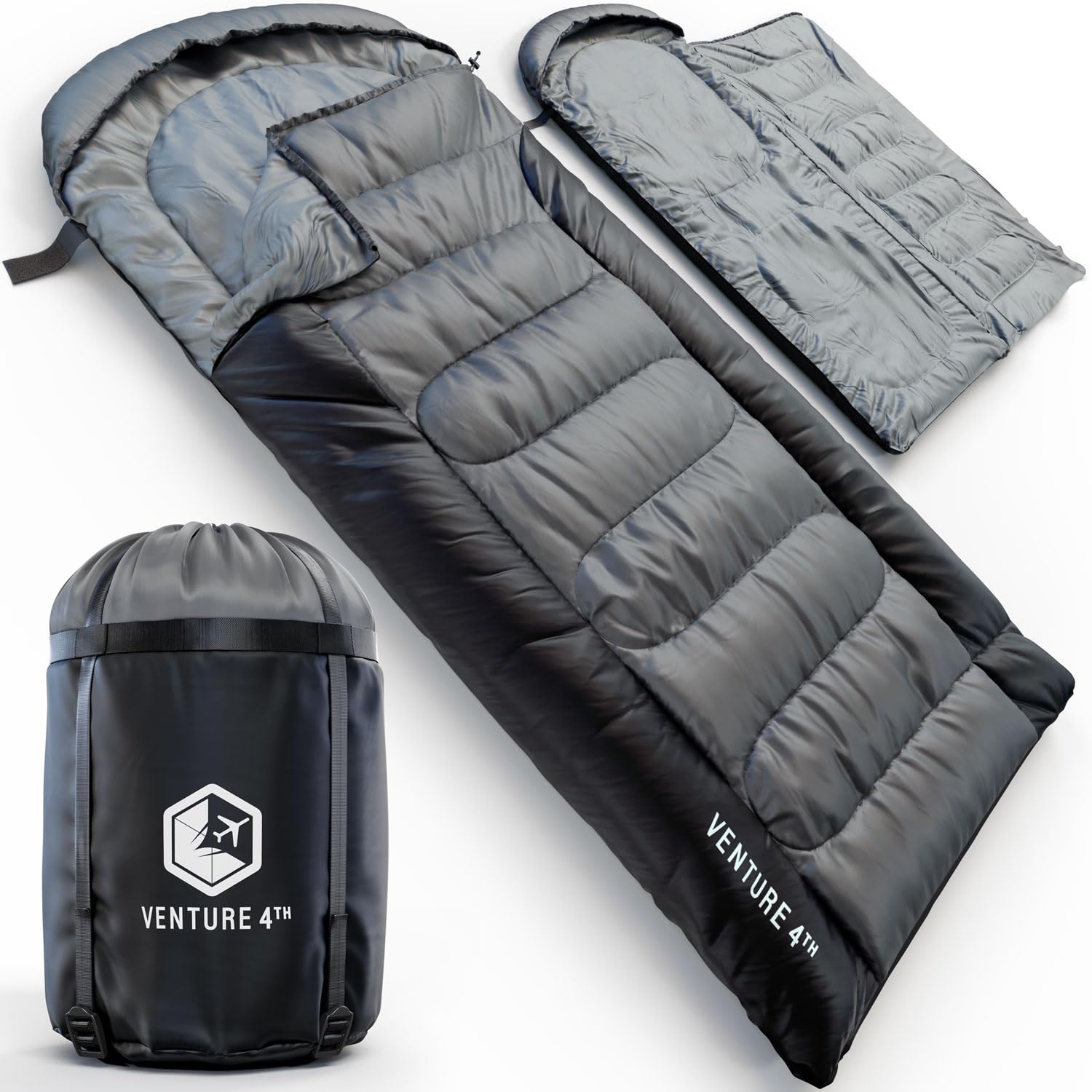
VENTURE 4TH XXL
Key Features
- Shape: Envelope
- Weight: 4.4 lb
- Dimensions: 90"L x 39"W
- Temperature Rating: 30°F to 70°F
- Price: Midrange
Ninety inches long and thirty-nine wide, the VENTURE 4TH is the only bag here built for sleepers that mummy bags treat as an afterthought. It’s sized for campers a standard bag can’t accommodate — broad shoulders, wide hips, or a habit of sleeping spread out — and it’s the one bag in this group where turning over inside it isn’t a negotiation. At 4.4 pounds it isn’t what we carry on a long approach, but for a big or tall backpacker it solves a problem nothing else here does.
The rest is straightforward: a 30 to 70°F window, a water-resistant 210T polyester shell, hollow-fiber fill, and a compression bag that gets it down to a manageable bundle. The zipper is the weak point — it can stick, and it has come apart in spots — so unzip and re-zip the bag a few times before your first trip and exchange it if it catches.
Pros
- 90 by 39 inches of room
- Rated 30°F to 70°F
- Compression carry bag included
- Water-resistant 210T shell
Cons
- 4.4 pounds to carry
- Zipper can stick or separate
For anyone a mummy bag has ever squeezed, this is the fix: 90 by 39 inches, a 30°F rating and enough room to turn over without waking up.
Best for Cheap Cold Nights
Teton 20F Mummy

Key Features
- Shape: Mummy
- Weight: 2.9 lb
- Dimensions: 87"L x 32"W
- Temperature Rating: +20°F
- Price: Midrange
The odd thing about the two Teton bags in this roundup is that the cheaper one is the lighter one. The standard 20°F mummy weighs 2.9 pounds against the LEEF’s 3.5, and at 32 inches across it’s closer to a rectangular bag than the race-cut mummy most brands sell at this rating.
It’s built for three-season use with a mummy hood, a zipper draft tube and a compression sack, and the warmth holds up on cool nights, though 20°F is a limit rather than a comfort promise. Ripstop polyester and microfiber fill aren’t glamorous, but they’re the reason the price is what it is, and the lifetime warranty covers defects in materials and workmanship.
Where it lands for us: the value pick for someone who wants a real mummy shape without spending much. It sits in the also-consider tier rather than higher up for one reason — the zipper, which snags around the shoulders and, on some bags, fails outright. Treat the zip gently and it does the job of bags that cost considerably more.
Pros
- 2.9 pounds with a 20°F rating
- 32-inch width is roomy for a mummy
- Lifetime warranty
- Compression stuff sack included
Cons
- Zipper snags and can fail
The cheapest way here to get a genuine 20°F mummy under three pounds, and a good bag as long as you go in knowing the zipper needs care.
Best for Warm-Weather Minimalism
BORULL Ultralight

Key Features
- Weight: 1.5 lb
- Dimensions: 79"L x 30"W
- Packed Size: 4.7" x 7.9"
- Temperature Rating: 50°F to 77°F
- Price: Budget
One and a half pounds, packed to 4.7 by 7.9 inches: the BORULL is the lightest and smallest thing here, and that’s the entire reason to consider it. If pack weight is what you argue about, this saves you a pound and a half over the synthetic three-season bags most people start with.
The catch is warmth. It’s sold as a three-to-four season bag with a 50 to 77°F window, and 50°F is the honest floor — there simply isn’t much fill between you and a cold night. The nylon shell and liner feel softer than the price suggests, and the 79-inch length covers a six-footer, though the 30-inch width is the figure to check if you sleep on your side. It’s a warm-weather specialist and a good one; just don’t ask it to stretch into October.
Pros
- 1.5 pounds packed
- Packs to 4.7 by 7.9 inches
- 79-inch length fits taller sleepers
- Soft nylon shell and liner
Cons
- 50°F floor limits it to summer
- No stated warranty
The lightest bag in this roundup by a wide margin — 1.5 pounds and small enough to forget — for summer nights and not much else.
Best for Hut and Hostel
Naturehike Envelope

Key Features
- Shape: Envelope
- Weight: 1.67 lb
- Dimensions: 80.7"L x 33.5"W
- Temperature Rating: 59°F/32°F
- Price: Budget
Strip away the marketing and this is a zippered blanket: 80.7 by 33.5 inches, 1.67 pounds, and not much between you and the night air.
That’s not a criticism. As a summer bag, a hostel sheet or a liner inside a colder bag, it earns its place — the 33.5-inch width gives you room to turn, the envelope shape opens flat when it’s too hot to be enclosed, and it packs to almost nothing. The zipper runs cleanly, which is more than several budget bags here manage.
Warmth is where the figures get muddled: both 59°F and 32°F appear, and the bag behaves like the first number rather than the second. Nights in the fifties and sixties are its territory; below that you’ll want a liner, a better pad or a different bag.
Pros
- 1.67 pounds
- Roomy 33.5-inch width
- Opens flat as a blanket
- Budget price
Cons
- Quoted ratings overstate its warmth
A zippered blanket that weighs almost nothing: 1.67 pounds for hostel beds, summer bivvies and warm nights when a real bag is overkill.
How We Tested Backpacking Sleeping Bags
To build our shortlist, we researched more than 40 backpacking sleeping bags, filtering by temperature rating, fill type, packed size, and price. We prioritized bags from established brands with consistent customer reviews, then narrowed to 10 models that represent a range of budgets—from entry-level synthetic bags to premium down options—and body types.
Over six months, we took those 10 bags on weekend backpacking trips in varied terrain, slept in them in the backyard during a cold snap, and used them on a few car-camping weekends for good measure. Each bag was assigned to a tester who used it exclusively for the duration, so we could track wear and tear, zipper performance, and comfort over repeated use.
We weighed every bag on a kitchen scale and compared it to the manufacturer’s claim, then stuffed each one into its included stuff sack five times, timing the process and measuring the final packed size. Warmth was assessed by sleeping in each bag down to its rated temperature—and sometimes below—noting whether we woke up shivering, sweating, or just right. Comfort meant sleeping on different pads and noting pressure points, roominess at the shoulders and hips, and whether the hood and draft collar actually kept cold air out. We also paid close attention to zippers: how smoothly they glided, whether they snagged on the shell fabric, and if they stayed put during the night. Finally, we considered value by weighing each bag’s performance against its price.
How to Choose a Backpacking Sleeping Bag
The number printed on the bag is where most buying decisions go wrong: a temperature rating is a limit, not a promise of comfort, and everything else — fill, weight, cut — follows from the nights you actually plan to sleep out.
Read the rating as a limit, not a comfort promise
Most bags are rated to the lowest temperature at which a healthy sleeper survives the night, not the temperature at which they sleep well. A 20°F bag is a three-season bag for plenty of people; a 50°F bag is a summer bag, full stop. Pick for the coldest night you’ll realistically meet, then add roughly ten degrees of margin if you sleep cold.
This is why the Kelty and the Teton LEEF can both claim 20°F and feel different in the field. Budget for a base layer and a hat, and treat the figure as the floor of what the bag will do rather than the middle of its range.
Down or synthetic
Down packs smaller and lighter for the warmth it delivers, which is why the Kelty and the Naturehike bags here are the easiest to carry. Synthetic fill costs less and keeps more of its insulating ability if the bag gets damp, which is why we point wet, cold, budget-minded trips at the Teton LEEF.
For sustained rain, synthetic plus a dry sack is the forgiving combination. If you count ounces and can keep the bag dry, down and a dry sack is the light one. Neither choice makes a bag waterproof; a sleeping bag is not a shelter.
Weight, packed size and the stuff-sack trap
Two bags can weigh the same and take up wildly different space, and packed size is what decides whether a pack carries well. Compare packed dimensions rather than trusting the sack. The trap is assuming a small bundle means a warm bag: the BORULL packs to 4.7 by 7.9 inches largely because there isn’t much fill inside it.
Work out your total pack weight and your bag compartment’s size before you shop, then pick the warmest bag that fits both. Half a pound saved on a bag is worth very little if it costs you twenty minutes of wrestling every morning.
Fit: length, shoulders and shape
Mummy cuts save weight and trap heat around the body; rectangular cuts let you roll over. Both matter less than the two figures people skip: the listed length and the shoulder width. A 21-inch mummy will feel like a straitjacket to a broad-shouldered side sleeper, while the VENTURE 4TH’s 39-inch cut exists for exactly that person.
Add a few inches to your height when checking length, and remember the bag only insulates the top of you — the pad underneath is what keeps the ground from pulling heat out of your back.
The zipper is what fails first
Most long-term trouble with a sleeping bag comes back to the zip: snagging at the shoulders, a slider that separates, a coil that gives out. A draft tube behind the zipper helps, but the habit matters more — hold the fabric clear with one hand while you pull with the other.
Check the zip the day the bag arrives. If it catches on the first night, use the warranty rather than fighting it for a season, because a bag you can’t close on a cold night is a bag that stays home.
Frequently Asked Questions
Do I need a sleeping pad with a backpacking sleeping bag?
Yes. The fill underneath you compresses flat, so the pad is what stops the ground from pulling heat out of your back. For three-season use, look for an insulated pad with a real R-value — 3 or higher is the usual starting point — and don’t count on closed-cell foam alone below freezing.
A 20°F bag on a bare tent floor sleeps like a summer bag. If you’re buying one thing at a time, buy the pad first.
How do I pack a sleeping bag in a backpack?
Use the compression sack, not the storage bag: stuff it in from the bottom, tighten the straps, and put it low in the pack where the weight sits against your hips. Check the packed dimensions against your bag compartment before the trip — a 4.4-pound bag needs noticeably more room than a 1.5-pound one.
Store it loose and uncompressed between trips so the loft recovers.
Can I machine wash a down sleeping bag?
Usually, with care: a front-loading machine on a gentle cycle with a down-specific detergent, then a low tumble with a couple of clean dryer balls to break up the clumps. Follow the care label first, and don’t dry-clean down.
Wash when the bag stops lofting rather than every season — each wash costs a little loft, and a clean bag insulates better than a grubby one.
Final Verdict
The Kelty Cosmic 20 is the bag we point most backpackers toward: real down warmth at 2.6 pounds, a 20°F rating, and a packed size that leaves room for the rest of your kit. It’s the pick that makes the carrying easier without making the sleeping worse.
If down isn’t in the budget, the Teton LEEF 20 handles cold nights for less and asks you to carry an extra pound. If your trips are all summer, the MalloMe does the job for very little. Buy for the coldest night you’ll actually meet.