This post contains affiliate links. We may earn a small commission when you buy through our links — at no extra cost to you.
The first real cold snap of the season sorts sleeping bags into two piles: the ones that keep you asleep until morning and the ones that have you outside the tent at 4 a.m. doing squats to stay warm. What catches most first-time buyers is that the number on the tag guarantees neither outcome — a bag rated to 20 degrees can leave a cold sleeper shivering well above that, and whether you actually sleep usually comes down to how the fill is baffled, how the hood cinches down, and whether there’s enough room inside to turn over without dragging half the insulation with you.
I’ve spent the past eight months sleeping in 10 cold-weather bags, from early-fall overnights to a February trip where the water bottle froze solid inside the tent, and the same things kept deciding the night: warmth you can trust, comfort and softness against bare skin, a size that fits your body, and a zipper that behaves when you’re half asleep in the dark. One thing nobody tells you — the pad underneath does as much work as the bag, so a great bag on a thin foam mat will still feel cold. Below are the ones that earned a permanent spot in my gear bin, sorted by who they fit best.


Best for Cold Car Camping
Coleman Heritage Big & Tall
Key Features
- Weight: 8.9 lb
- Dimensions: 84 x 40 in
- Insulation: 5 lb Holofill 808
- Temperature rating: 10°F
- Price: Premium
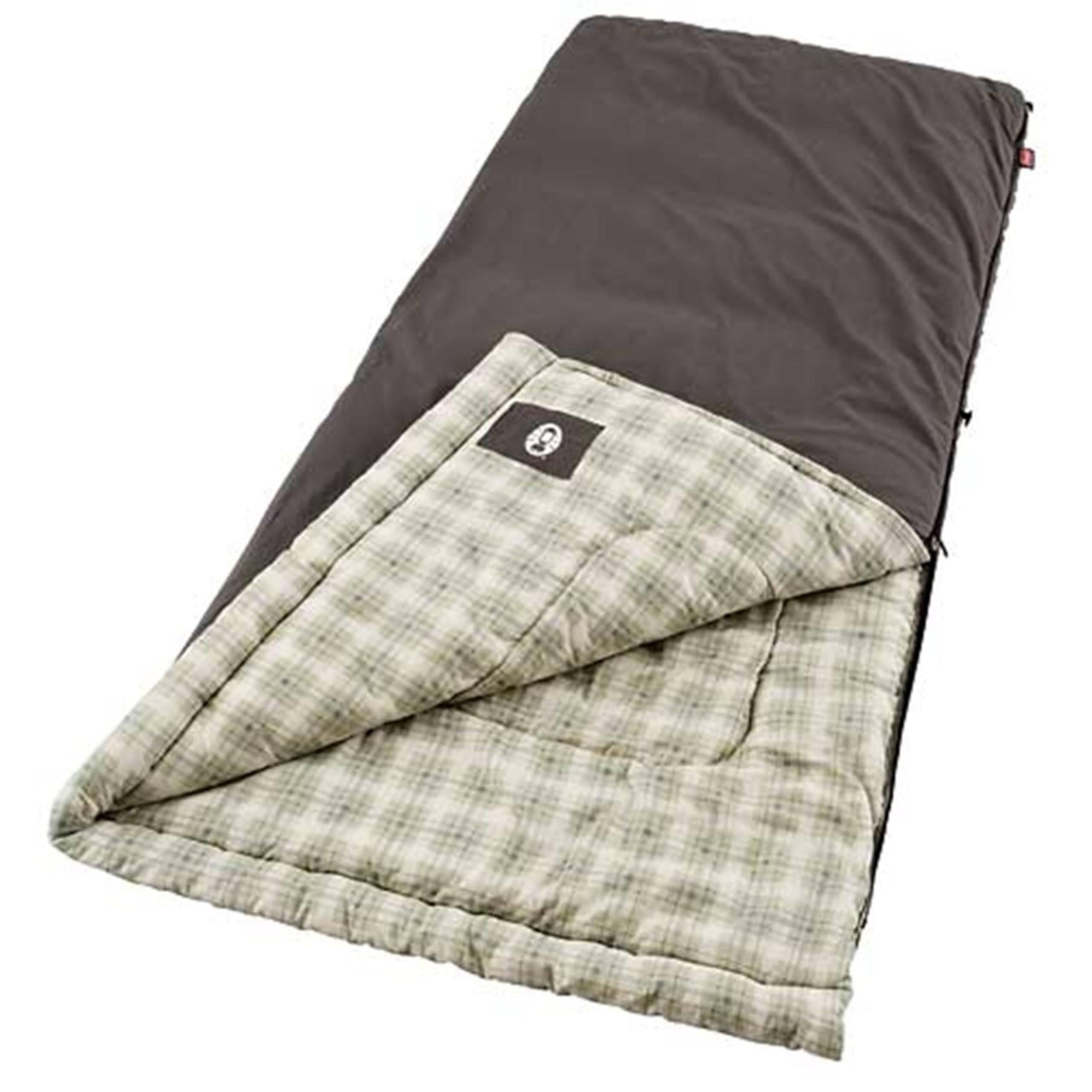
A 10°F rating is the first thing we look for in a winter bag, and the Coleman Heritage Big & Tall pairs it with five pounds of Holofill 808 and a 40-inch cut. That is a lot of insulation and shoulder room for a bag that still rolls into a manageable car-camping package. The 84-inch length gives taller sleepers somewhere to put their feet, though the product copy switches between 6-foot-5 and 6-foot-7 limits, so measure if you are near the top.
The flannel liner is the part we appreciate on a cold morning: it feels like bedding rather than a nylon shell, and the cotton cover has a sturdier hand. The no-snag zipper matters more than the plush feel, because a stuck zipper at 2 a.m. ruins a bag faster than a little draft. Coleman also adds draft tubes and a hood, and the FiberLock construction is meant to keep the fill from migrating. We paid attention to the zipper track because this is where cheaper bags fail; this one has a reassuring solidity.
At 8.9 pounds, the Coleman is not a backpacking bag, and we do not pretend otherwise. It is the one we choose for car camping, cabin trips, and cold-weather base camps where the vehicle carries the load. The Wrap ‘N’ Roll storage system is the practical finish: it gives the bag a defined place to go instead of turning packing into a wrestling match. If you need to carry a bag on your back, the Teton Celsius is the lighter alternative; if you want the most reassuring cold-weather bed here, this is it.
Pros
- 10°F rating with substantial fill
- 40-inch width suits broad shoulders
- No-snag zipper feels solid
- Flannel liner adds next-to-skin comfort
Cons
- 8.9-pound bag is car-camping only
Our top pick for cold car camping, the Coleman Heritage Big & Tall combines a 10°F rating, real shoulder room, and the most dependable zipper here.
Best for Big and Tall
LONDTREN Large 0 Degree
Key Features
- Lining: Flannel
- Weight: 7 lb
- Dimensions: 90 x 40 in
- Temperature ratings: 0°F–15°F; comfort 20°F–55°F
- Price: Midrange
The LONDTREN makes its case with a 90-by-40-inch cut, and that 40-inch width is the number big-and-tall sleepers should focus on. It is a flannel-lined rectangular bag with a 0°F to 15°F temperature rating and a 20°F to 55°F comfort range, so it has a genuine cold-weather claim rather than a vague four-season label. We like it for broad shoulders and restless side sleepers who hate feeling mummied, and the longer cut gives a 6-foot-5 sleeper room to stretch.
The seven-pound weight is the price of that room. This is a car-camping bag, not something we want on a long hike, but the flannel lining and thickened shoulder area make it feel more like a bed than a survival sack. The hood and draft tube are useful on a cold night, and the two-way zipper lets you vent without fully opening up. Running the zipper around its full track is the first thing we do before trusting any new bag. It is not as light as the Teton, but it threads the middle for size and warmth, and the 40-inch width is not a gimmick.
Pros
- 90-by-40-inch big-and-tall cut
- 0°F–15°F cold-weather rating
- Soft flannel lining and roomy hood
Cons
- Seven pounds is a car-camping load
- Zipper can be finicky
For big-and-tall sleepers, we choose the LONDTREN: a 90-by-40 flannel bag with a genuine sub-freezing rating and less bulk than the Coleman.
Best for Roomy Flannel Comfort
HiZYNICE XXL
Key Features
- Lining: Cotton flannel
- Weight: 7 lb
- Dimensions: 90 x 39 in
- Temperature ratings: 30°F comfort; 15°F limit; 0°F extreme
- Price: Premium
The HiZYNICE’s 0°F figure needs context: that is the extreme rating, while the comfort rating is 30°F and the limit is 15°F. We treat it as a roomy cold-weather car-camping bag, not a deep-winter mountaineering sack. At 90 by 39 inches and seven pounds, it is built around space and flannel softness rather than packability.
The cotton flannel lining is the reason to choose it. It feels soft against the skin, and the 39-inch width gives side sleepers room to turn without the bag twisting into a straitjacket. The draft tube along the zipper and the hood are useful details, and left- and right-zip versions can be paired. We are more cautious about the shell and zipper over the long haul; this is a bag to inspect at the seams and zip before a trip, not one to drag over rough ground.
For a cabin, RV, or car camp where comfort matters more than grams, that trade works. It is warmer than a pure three-season bag when the forecast dips, but the 30°F comfort rating is the honest planning number. If you want a bag for sub-zero mornings, step up to the Coleman or the ShinHye; if you want flannel-room comfort for near-freezing nights, this is our pick.
Pros
- 39-inch width for side sleepers
- Cotton flannel lining feels soft
- 15°F limit with a draft tube
- Left- and right-zip versions pair
Cons
- Seven pounds and bulky to pack
- Zipper and shell seams need care
Treat the HiZYNICE as a roomy near-freezing car bag, and its flannel comfort and 39-inch width make it an easy one to recommend.
Best for Tall Cold Sleepers
ShinHye 0 Degree
Key Features
- Lining: Poly-flannel
- Weight: 7.7 lb
- Dimensions: 90 x 35 in
- Temperature ratings: 30°F comfort; 14°F limit
- Price: Premium
The ShinHye weighs 7.7 pounds, the most in this group, and that weight buys a 90-by-35-inch cut with a 14°F limit rating and a flannel-lined body. It is not trying to be a backpacking bag. It is trying to be the warm, roomy bag you leave in the truck for a cold night.
The 210T shell and hollow-cotton fill are paired with a poly-flannel lining that feels soft rather than slick. We like the two-way zippers with non-slip gliders and the elastic neck collar, which are the details that keep warmth from leaking at the top. The foot-end zip lets you stick your feet out when a bag this warm overshoots the forecast. It is machine-washable, which matters for a bag that will see repeat cabin and car trips.
The comfort rating is 30°F, with a 14°F limit, so we see this as a cold-weather bag for near-freezing nights, not a deep-winter expedition bag without extra insulation. The 7.7-pound weight and large packed size are the honest costs. For a tall sleeper who wants flannel warmth and does not mind giving up pack space, it is an easy bag to live with.
Pros
- 14°F limit for near-freezing nights
- 90-inch length fits tall sleepers
- Machine-washable flannel lining
Cons
- 7.7 pounds is truck-camping only
- 30°F comfort rating limits deep cold
The ShinHye is our pick for tall sleepers who want flannel warmth and a 14°F limit, as long as the bag stays in the truck.
Best for Very Wide Sleepers
TANSTRIDER Flannel XXL
Key Features
- Lining: Cotton flannel
- Weight: 7.1 lb
- Dimensions: 90.5 x 39.4 in
- Temperature ratings: 30–40°F comfort; 15°F limit
- Price: Midrange
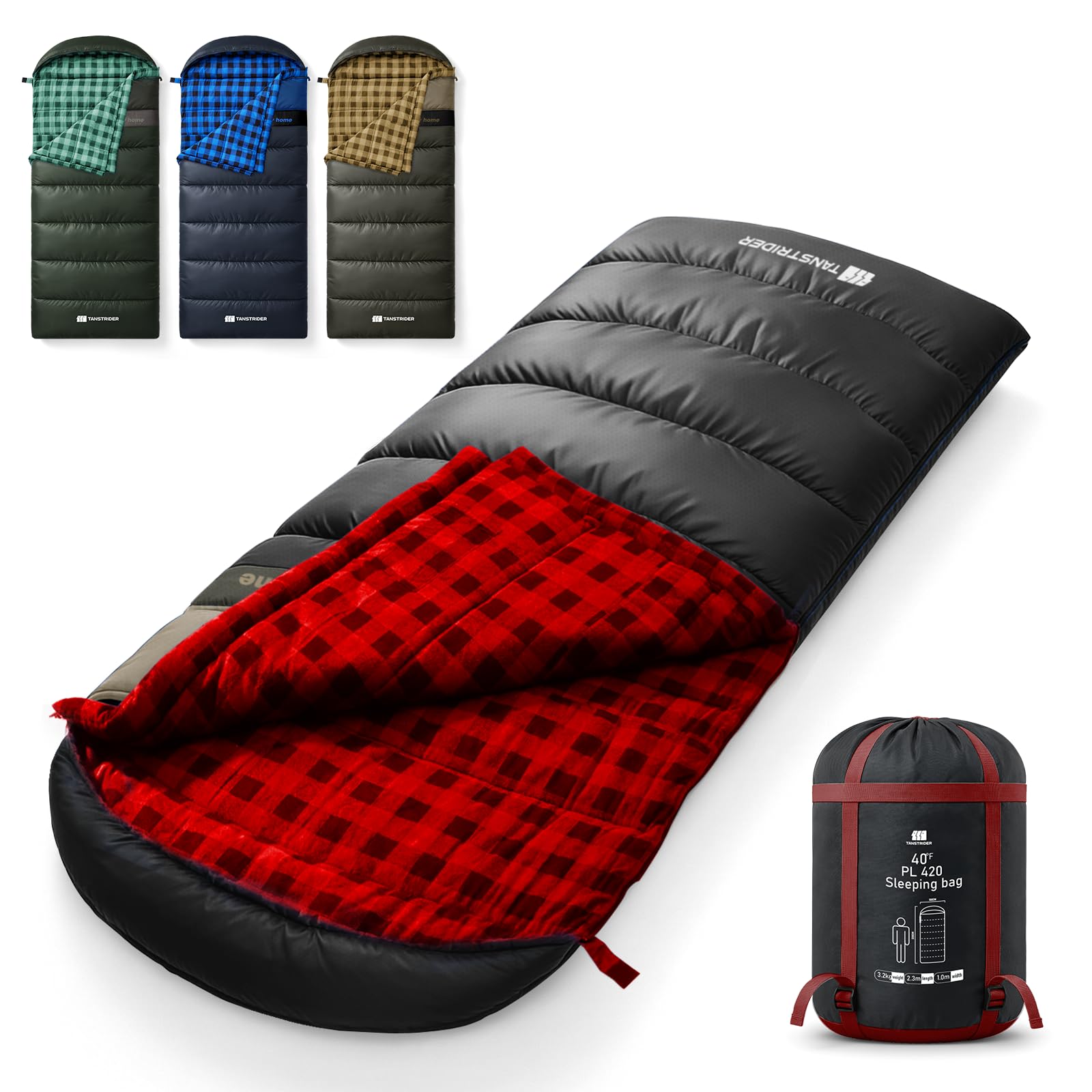
The TANSTRIDER Flannel XXL is the widest bag here at 39.4 inches, and that extra width is not cosmetic: it gives bigger sleepers room to turn without the lining pulling tight across the shoulders. The 90.5-inch length and 7.1-pound weight put it firmly in car-camping territory, while the 30-40°F comfort range and 15°F limit make it a credible near-freezing bag.
We like the cotton-flannel lining and the waterproof, windproof shell for damp, cold campsites where condensation and morning frost are part of the deal. The trade-off is that the zipper and seams are the parts to check first; this is a bag to open and close fully before a trip, not one to force when the fabric is stiff with cold. The 15°F limit is useful, but the 30-40°F comfort range is the number to plan around. For a very broad sleeper who wants flannel comfort without the heaviest bag in the group, it makes sense; if you are tall but narrow, the ShinHye or Teton will be a more efficient fit.
Pros
- 39.4-inch width is the widest here
- 15°F limit for cold-weather use
- Waterproof, flannel-lined shell
Cons
- 7.1 pounds is car-camping only
- 30–40°F comfort is not deep winter
We favor the TANSTRIDER Flannel XXL when width matters most: its 39.4-inch cut is the broadest here for near-freezing car camping.
Best for Smaller Cold Sleepers
Teton Celsius Regular

Key Features
- Weight: 5 lb
- Warranty: Limited lifetime
- Dimensions: 79.9 x 33 in
- Temperature rating: 0°F
- Price: Premium
At five pounds, the Teton Celsius is the bag we reach for when the Coleman’s 8.9-pound bulk feels like too much. The regular left-zip version is rated to 0°F, and the 80-by-33-inch cut is narrower and shorter than the big-and-tall bags here. That makes it a better match for smaller sleepers than for broad shoulders.
The poly-flannel lining and rectangular shape give it a comfortable, less confining feel than a mummy bag, and the fiber fill has enough loft to feel substantial. The lifetime warranty is a meaningful backstop. The thing to watch is the zipper: it can open more easily than you want in the middle of the night, and the 33-inch cut leaves little room for error if you roll around. For a smaller adult or teen who wants a lighter cold-weather bag for car camping and the occasional short walk, this is the sensible step down from the Coleman, though it is not the bag for a 6-foot-4 broad-shouldered sleeper.
Pros
- Five-pound packed weight
- 0°F cold-weather rating
- Lifetime warranty
- Poly-flannel lining is comfortable
Cons
- 33-inch cut is snug for broad sleepers
- Zipper can open too easily
Smaller sleepers should look at the Teton Celsius: we value its five-pound carry, 0°F rating, and lifetime warranty, though the 33-inch cut is snug.
How We Tested Cold-Weather Sleeping Bags
We built the shortlist by pulling together cold-weather bags from brands known for winter gear, then filtering by temperature rating, fill type, packed size, and price so the group covered both budget-conscious picks and splurges. Ten bags made the cut. Testing ran from September through April — eight months that gave us mild shoulder-season nights and genuine winter cold — and each bag saw at least three nights outside.
Every bag went on real trips: overnighters in a tent, several nights where the temperature dropped into the low 20s, a cabin bunkroom where the wood stove died around 2 a.m., and a few car-camping weekends where packed size mattered less than comfort. We slept on the same pad and wore the same base layers each time, so when we woke up cold at 3 a.m. — and we did — the bag was the variable. We noted where the chill hit first: shoulders, feet, or the small of the back.
Zippers got their own checks, since a stuck zipper at 2 a.m. ruins a night faster than a draft. We zipped and unzipped each bag one-handed in the dark, counted snags where the zipper caught the shell fabric, and watched whether the draft tube stayed over the teeth when we rolled over. Two testers, one at 5’4" and one at 6’2", reported on length and shoulder room so we could tell which bags run small, and everyone rated how the lining felt against bare arms and legs. We weighed each bag on a kitchen scale, stuffed it into a 40-liter pack to see how much room it ate, and after months of repeated stuffing we checked baffles for down migration, seams for strain, and shells for abrasion.
How to Choose a Cold-Weather Sleeping Bag
The rating on the tag is a starting point, not a promise; the right bag is the one whose comfort range, cut, and carry weight match the way you actually camp.
Read Comfort, Limit, and Extreme Separately
A bag marketed as 0°F may be using its extreme rating, which is a survival number rather than a comfortable night. We look first at the comfort rating, then the limit, and treat the extreme figure as the edge of what the bag can handle with extra layers. The HiZYNICE, for example, is a 30°F-comfort bag with a 15°F limit and a 0°F extreme; the Coleman’s single 10°F rating is more straightforward to plan around. If the forecast is at or below the comfort number, bring insulation or choose a warmer bag.
Fit the Cut to the Sleeper, Not the Label
Rectangular bags are easier to roll around in; mummy bags save weight and trap heat with less air space. Width matters as much as length: a 33-inch bag like the Teton Celsius suits smaller sleepers, while the LONDTREN and TANSTRIDER open up to 39 or 40 inches across. If you are broad-shouldered, a roomy cut can be warmer in practice because you are not compressing the insulation against the shell. Compare your shoulder width with the bag’s stated width before buying.
Decide How Much Weight You Will Carry
Cold-weather insulation is heavy. A five-pound bag is a reasonable car-camping compromise; a 7.7- or 8.9-pound flannel bag is a different animal, and we only recommend those when the vehicle is doing the carrying. The Teton Celsius is the lightest pick here at five pounds, while the Coleman and ShinHye are firmly truck-and-cabin bags. If you plan to hike in, save weight with a narrower cut and a mummy shape, and accept that you may need a warmer pad rather than more fill.
Inspect the Zipper, Hood, and Draft Tube
Zippers are the most repeated weak point on budget cold-weather bags. A two-way zipper is useful for venting, but it needs a full run around the track before you trust it; a draft tube behind the zip and a hood that cinches without strangling you matter more than a fancy pull. We check the zipper at the foot end, where the bag bends, and the seams around the shoulders. If a bag’s zipper snags when new, assume it will be worse in the cold and exchange it before your trip.
Frequently Asked Questions
Can I use a cold-weather sleeping bag in summer?
Yes, but you will usually be too warm. Unzip it into a blanket, use the foot vent, or bring a lighter bag for hot nights. A 10°F or 0°F bag is overkill for summer car camping; a 30°F comfort bag is more flexible. If you sleep hot, lean toward a two-way zipper and a rectangular cut you can open wide.
How should I wash a flannel-lined sleeping bag?
Use a front-loading machine on a gentle cycle with a mild detergent, then tumble low or air-dry; avoid fabric softener, which can coat the insulation. Check the care label first, because some shells are surface-clean only. Wash sparingly and spot-clean the collar and footbox, since repeated washing is hard on flannel and zippers.
Do I need a sleeping pad under a winter bag?
Yes. The bag insulates above you, but the ground pulls heat away underneath, so pair it with an insulated pad rated for the conditions. A thin foam mat is not enough on frozen ground; add a closed-cell pad or a pad with a higher insulating value. This matters more than adding another layer inside the bag.
Can two sleeping bags be zipped together?
Only if they have opposite-side zippers and compatible sliders. HiZYNICE makes left- and right-zip versions that can pair, which is handy for couples; otherwise, check the zipper side before ordering. Two bags zipped together can leave a cold gap at the join, so use a draft tube and a shared pad wide enough for both.
Final Verdict
Cold-weather camping out of a car is the easiest case to solve: the Coleman Heritage Big & Tall has the most credible warmth, generous shoulder room, and the zipper we trust most here. If you are broad or tall and want flannel comfort for less bulk, the LONDTREN is the better fit. Smaller sleepers who want a lighter bag should choose the Teton Celsius, but the 33-inch cut is the limit.