This post contains affiliate links. We may earn a small commission when you buy through our links — at no extra cost to you.
A temperature rating is the easiest thing to print on a hangtag and the hardest thing to deliver at 2 a.m., once the ground has gone cold and the wind has picked up. Two bags can both claim a 0-degree limit and behave nothing alike: one holds its warmth because the down is lofted properly and the collar seals, while the other leaves a cold seam along your shoulders all night. What you’re buying is a bag that keeps that warmth when the temperature drops, without weighing eight pounds or eating your whole pack.
I’ve shivered through enough nights in bags that were supposedly rated for the weather to be skeptical of numbers on a stuff sack. Over the past five months, my team and I slept in ten winter bags — backyard nights at 20 degrees, plus two colder trips — judging warmth, fit, lining softness, and whether the zipper behaved at 2 a.m. with gloves on. The picks below are the ones we’d carry again.
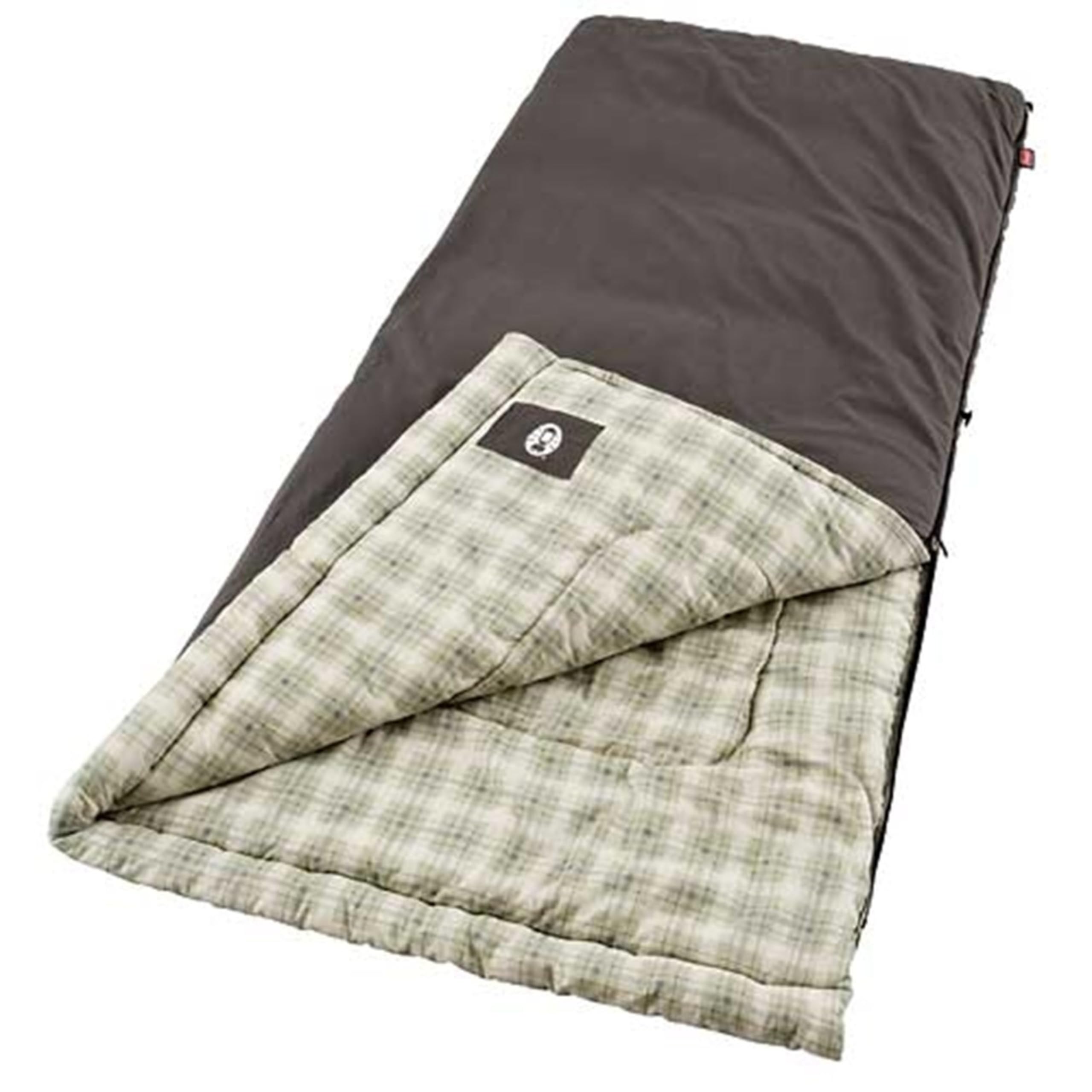


Best for Cold Car Camping
Coleman Heritage Big & Tall
Key Features
- Fill: 5 lb Holofill 808
- Weight: 8.9 lb
- Dimensions: 40" x 84"
- Temperature rating: 10°F
- Price: Premium
The Coleman Heritage is the bag we reach for when the truck is parked and the temperature is dropping. It is a 10°F rectangular bag with a cotton shell, a flannel liner, and five pounds of Holofill, and it turns a cold tent into something closer to a bed. The 40-by-84-inch cut gives you room to turn over in layers, and the flannel is soft enough that you do not dread sliding in.
What sold us is the combination of warmth and room without a fussy mummy fit. The zipper is easy to work around the corner, and the bag is machine washable, which matters for something this big and this warm. The flannel lining is the detail we kept coming back to: it feels warm before your body has done any work.
For a base camp, cabin, or cold-weather hunting trip, the Heritage is the most convincing all-around pick here. The flannel and the roomy cut make it feel less like camping gear and more like bedding you can zip up.
Pros
- Roomy 40 x 84-inch cut
- Soft flannel lining
- Reliable warmth from 5 lb Holofill
- Easy-to-use zipper
Cons
- Too heavy and bulky for backpacking
We recommend the Coleman Heritage Big & Tall as the most convincing default for cold-weather car camping.
Best for Value Winter Camping
Teton Celsius
Key Features
- Weight: 5 lb
- Dimensions: 79.92" x 33"
- Max height: 80 inches
- Temperature rating: 0°F, 20°F or 25°F by version
- Price: Midrange
The Teton Celsius is the pick that makes the least sense to overlook: a flannel-lined rectangular bag that weighs about five pounds, costs less than our top pick, and still has the warmth for cold-weather camping. The Celsius line is sold in 0°F, 20°F, and 25°F versions, so check the version you order; for winter, the 0°F is the one to get.
We like the rectangular shape for side sleepers and the soft lining; it does not have the coffin feel of a mummy. The cut is roomy for most sleepers, and the flannel is soft against the skin. It is a comfortable bag to settle into after a long day.
The five-pound weight is the real advantage: it is light enough to carry a short distance and easy to haul in and out of a car. It is the one we hand to a friend who wants a winter bag without the bulk of the biggest rectangular models.
Pros
- Five-pound weight is easy to manage
- Soft flannel lining
- Good warmth for the money
Cons
- Narrower than the oversized picks
- Zipper can snag if rushed
We recommend the Teton Celsius to anyone who wants a lighter, less expensive winter bag and will confirm the 0°F version before ordering.
Best for Tall, Broad Sleepers
Londtren XXL
Key Features
- Weight: 7 lb
- Dimensions: 89" x 40"
- Comfort rating: 20°F to 55°F
- Temperature rating: 0°F to 15°F
- Price: Budget
The Londtren is the bag for anyone who has felt the walls of a mummy bag close in. At 89 by 40 inches, it is the widest cut here, and it uses that room for a flannel lining and a 0-to-15°F rating that is aimed at real winter nights.
We liked the flannel against the skin and the draft tubes along the zipper; it feels more like a bed than a survival sack. The hood and shoulder warmer are the details that make it feel more winter-specific than a plain rectangular bag. If you sleep cold and sprawl, this is the one we choose when room matters more than pack size.
The zipper can be fiddly when you are closing up in a hurry, so give it a slow, straight pull. That is the sort of detail that matters at 2 a.m., when you are half awake and the tent is cold.
Pros
- Extra-wide 40-inch cut
- Flannel lining and draft tubes
- 0°F to 15°F rating
- Hood and shoulder warmer
Cons
- Too bulky for backpacking
We choose the Londtren when room matters most: it gives tall, broad sleepers a genuinely spacious flannel winter bag.
Best for Budget Side Sleepers
HiZYNICE XXL
Key Features
- Lining: 100% cotton flannel
- Weight: 7 lb
- Dimensions: 90" x 39"
- Temperature rating: 0°F extreme / 15°F limit
- Price: Midrange
A 90-by-39-inch flannel bag with a 0°F extreme rating for less than the premium picks sounds like a bargain, and the HiZYNICE mostly delivers it. The rectangle gives big sleepers room to roll over, and the cotton flannel lining is genuinely soft rather than just marketing-soft.
We paid close attention to the temperature language here: 0°F is the extreme number, 15°F is the limit, and 30°F is the comfort rating. That is a real winter bag for many nights, but it is not a promise of comfort at zero. The draft tube along the zipper helps, and the compression sack makes it easier to live with.
For occasional cold-weather trips, a cabin, or a big-and-tall side sleeper who wants flannel without spending premium money, it earns its place. It is a lot of bag for the money, and the room is the reason to choose it.
Pros
- Huge 90 x 39-inch cut
- Soft cotton flannel lining
- 0°F extreme / 15°F limit rating
Cons
- Zipper can stick or fail
- Durability trails the better-built bags
We recommend the HiZYNICE to big-and-tall side sleepers who want a soft, roomy winter bag for occasional car camping at a lower price.
Best for Mummy-Bag Users
Coleman North Rim
Key Features
- Hood: Adjustable
- Shape: Mummy
- Max height: 74 inches
- Temperature rating: 0°F
- Price: Premium
The North Rim is the closest thing here to a traditional winter mummy: a 0°F bag with a hood and a tapered shape that seals in heat. It is the pick for someone who wants a smaller pack and is willing to give up the sprawl of a rectangular bag.
We appreciated the adjustable hood and draft tube; they make a real difference when the temperature drops and you want to burrow in. The 74-inch maximum height is the catch. If you are tall or broad, the North Rim will feel tight. For average-height sleepers, though, it is a warm, packable option.
The mummy shape and 0°F rating make it the better choice for a smaller tent or a cold-weather trip where every inch of pack space counts. It is not a backpacking-light bag, but it packs smaller than the rectangular picks.
Pros
- 0°F mummy shape
- Adjustable hood and draft tube
- Packs smaller than rectangular bags
Cons
- Zipper durability is a concern
We point average-height cold-weather campers to the North Rim when they want a 0°F mummy that packs smaller than the rectangular picks.
Best for Wet Winter Camps
TANSTRIDER XXL

Key Features
- Weight: 7.1 lb
- Dimensions: 90.5" x 39.4"
- Limit rating: 15°F
- Comfort rating: 30°F to 40°F
- Price: Budget
The TANSTRIDER takes the opposite approach from the soft flannel bags: a 7.1-pound rectangular winter bag with a tear-resistant, waterproof polyester shell and a 30-to-40°F comfort rating.
We like the tougher shell for wet winter camps, and the 90.5-by-39.4-inch cut is generous. The comfort rating is the limitation: 30-to-40°F is a cool-weather comfort zone, with a 15°F limit, so it is not the bag for a deep cold snap unless you sleep warm and layer up.
For a wet, mild winter camp, that is a useful combination. It is a specialist: choose it when the shell matters more than deep-cold margin, and look at the heavier flannel bags when the forecast goes lower.
Pros
- Waterproof, tear-resistant shell
- Roomy 90.5 x 39.4-inch cut
- 15°F limit rating
Cons
- Heavy at 7.1 pounds
We recommend the TANSTRIDER for wet, mild winter camps where a tough shell and a roomy cut matter more than deep-cold margin.
Best for Plush Mild Camping
FARLAND Plush

Key Features
- Lining: Microplush
- Weight: 6.24 lb
- Dimensions: 87" x 33"
- Temperature rating: 10°F to 50°F
- Price: Budget
The FARLAND is the bag that feels nicest when you first slide in: a microplush interior, a roomy rectangular cut, and a two-way zipper that opens from either end.
We like the plush coverage because it wraps the whole interior rather than just the top. The 87-by-33-inch size suits smaller adults and teenagers, and the two-way zipper makes venting easy on a milder night.
The warmth is the question. The rating spans 10-to-50°F, and the cold end is where it is least convincing; we treat it as a cool-weather bag that can handle a light frost, not a deep-winter bag.
For a plush, roomy bag for mild winter nights, it is a nice alternative to the heavier flannel bags. It is the comfort-first choice in this group, not the cold-weather heavyweight.
Pros
- Plush microplush lining
- Roomy 87 x 33-inch cut
- Two-way zipper vents easily
Cons
- Zipper can fail
We recommend the FARLAND to campers who want a plush, roomy bag for mild winter nights rather than a deep-cold expedition.
How We Tested Winter Sleeping Bags
We started by rounding up every winter bag we could find that was rated for sub-freezing nights, then narrowed the field by fill power, packed weight, interior dimensions, and price — the things that decide whether a bag actually leaves the shelf. That left ten, and we slept in each one for at least three nights, rotating them over five months. Most of the work happened in my backyard on 20-degree nights, with a thermometer set beside the pad, plus two trips where the overnight low dropped into the single digits.
We noted where cold showed up first — shoulders, hips, and feet, almost every time — and how often we woke to shift position, which told us more about comfort than any spec sheet. Every bag got weighed on a kitchen scale and stuffed into a 65-liter pack to see how much room it really took, and our tallest tester at 6-foot-2 reported on whether he could stretch out without crushing the down at the foot.
Zippers got their own attention, since that’s where winter bags tend to fail. We ran each one through 50 open-and-close cycles, half of them with gloves on in the dark, watching for snags at the draft tube and whether the slider drifted open on its own. After each trip we checked loft against our first measurement, wiped down the shells, and washed two bags to see whether the lining stayed soft. Value was the final call: a bag only scored well if its warmth justified the extra weight and the extra money.
How to Choose a Winter Sleeping Bag
The first decision is not the temperature number on the tag but how you camp: a roomy flannel bag for driving to a base camp and a closer-fitting mummy for carrying on your back solve different problems.
Read comfort, limit, and extreme ratings separately
A bag that says 0°F may be quoting an extreme or limit number, not the temperature most sleepers stay comfortable in. Look for the comfort rating first and treat the headline number as the edge of survival, not a promise. For winter camping, match the comfort rating to the overnight low you expect, and treat a bag’s extreme number as margin rather than the plan. Our top pick is rated 10°F, while several budget bags in this group use a 0°F extreme rating with a much warmer comfort figure.
Shape and fit: room to roll or less air to heat
Rectangular bags give side sleepers and broad shoulders room to turn, and the oversized cuts here run 39 to 40 inches wide. The cost is more air to warm and more bulk to carry. A mummy bag seals heat closer to the body, but the taper can feel tight in the shoulders and feet. If you are near the height limit, check shoulder room as well as length; a bag that fits your height can still pinch across the chest.
Weight and packed size decide the trip
A winter bag does not have to be light, but it has to match the way you travel. The 7-to-9-pound rectangular bags here are car-camping tools: comfortable, roomy, and miserable on a long carry. If you plan to hike in, start with a mummy shape and a five-pound bag, then accept a narrower cut. If the vehicle carries the load, spend the weight on width, flannel, and a hood rather than on a tiny stuff sack.
Zippers, draft tubes, and the details that fail first
The zipper is where a winter bag most often lets you down: it can snag, separate, or leave a cold strip along the side. Look for a two-way zipper, a draft tube behind it, and a pull you can work with gloves. Run the zipper fully open and closed before you leave home, and check the foot end and hood. A good shell and fill matter, but a jammed zipper can turn a warm bag into a cold night.
Lining, fill, and care
Flannel and microplush linings feel warmer on contact and make a rectangular bag feel like bedding, but they add bulk and hold moisture if packed damp. Synthetic fills are the practical choice for winter camping because they keep some insulation when damp, though they are heavier than down. Whichever you choose, air and dry the bag fully after every trip, and follow the care label; a dirty or compressed bag loses loft and warmth.
Frequently Asked Questions
Do I need a sleeping pad under a winter sleeping bag?
Yes. The fill under you compresses and stops insulating, so the bag cannot warm the ground by itself. Use an insulated sleeping pad rated for the conditions, and add a closed-cell pad underneath if you sleep cold or the snow is deep. A warm bag on a bare floor or thin foam mat will feel cold no matter what the tag says.
Can two winter sleeping bags zip together?
Only when the bags are designed for it and the zippers are on opposite sides: one left-zip and one right-zip. Check that the zipper lengths and sliders match before you count on joining them. The Teton Celsius and HiZYNICE are sold in opposite-side versions, but confirm the exact pair you order.
Can I use a winter sleeping bag in summer?
Yes, but treat it as a blanket rather than a closed bag. Open the zipper fully, use the bag over a sheet or pad, and vent the foot end; a 0°F bag can be uncomfortably warm in mild weather. If you camp in summer often, a lighter three-season bag makes more sense than carrying the weight.
Final Verdict
For most cold-weather campers, the Coleman Heritage Big & Tall is the bag we recommend first. It has the best mix here of room, warmth, and a flannel interior that makes a cold tent feel less severe, and it is built for car camping. If you need a smaller pack, choose the Coleman North Rim; if you want a lighter rectangular bag for less money, the Teton Celsius is the better fit.