This post contains affiliate links. We may earn a small commission when you buy through our links — at no extra cost to you.
Every sleeping bag is a deal you make with yourself: warmth on one side, weight and pack size on the other, price in the middle. Push one and the others move. I’ve shivered through a 40-degree night in a bag rated for 30, and I’ve hauled a wonderfully warm bag up a hill and resented every step. The gap between the tag and the real night is where people end up cold.
I spent ten months sleeping in 14 of them — backyard, drive-in campsites, one wet weekend I’d rather forget — and the winners weren’t the ones with the best numbers on paper. It came down to a zipper that didn’t snag at 2 a.m., enough shoulder room to roll over, and a shell that still looked new after being stuffed, sat on, and washed. One thing to know: most temperature ratings describe survival, not comfort, so treat them as a floor. The picks below are grouped by who each bag fits and how you’ll sleep in it.



Best for First Camping Bag
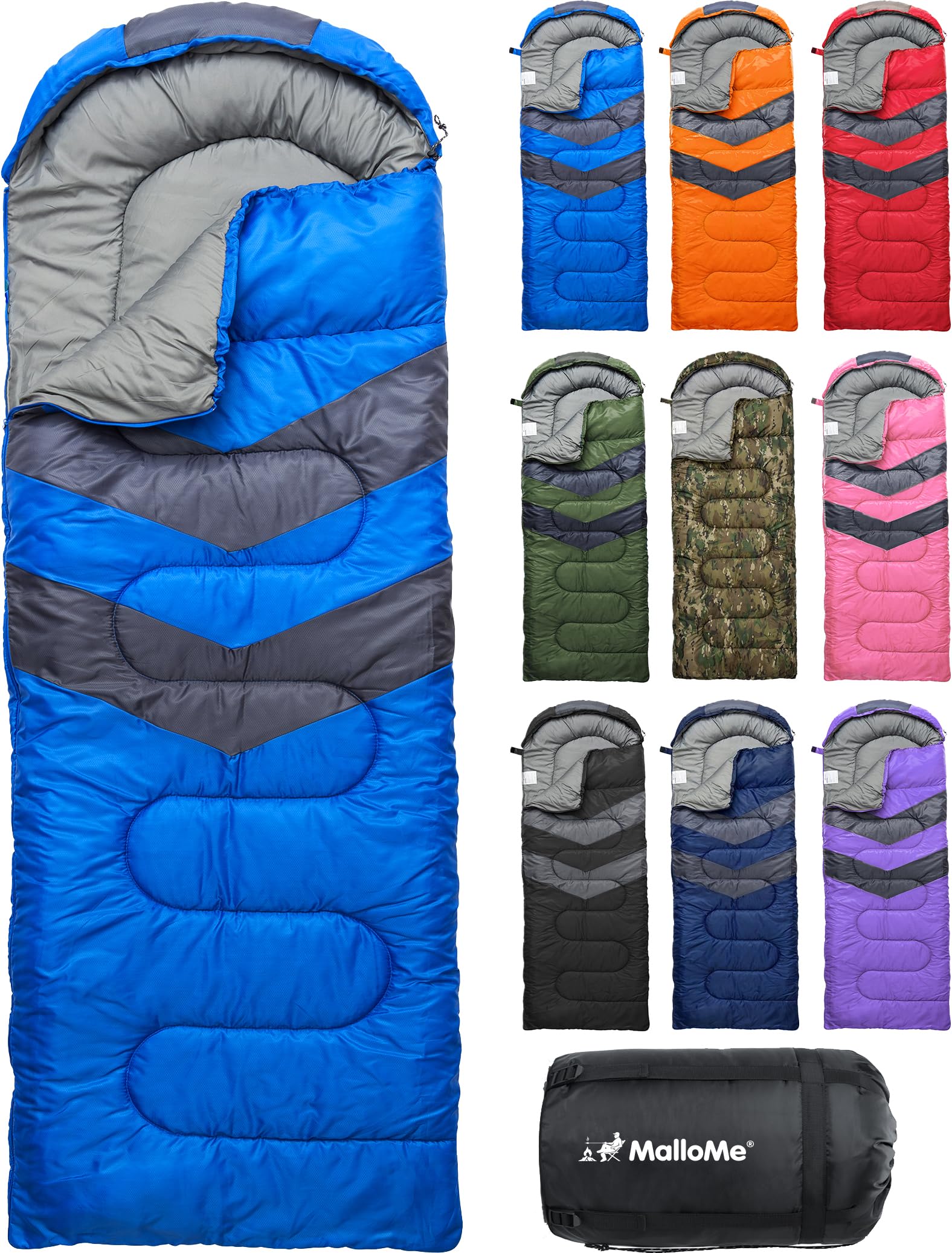
MalloMe Sleeping Bag
Key Features
- Shape: Rectangular
- Weight: 1.3 kg (about 3 lb)
- Dimensions: 86.6 x 31.5 in
- Temperature rating: 50-80°F
- Price: Budget
At 1.3 kilograms, about three pounds, this is the lightest bag we recommend, and it rolls back into its stuff sack without the wrestling match cheaper bags usually demand. For a first camping bag that combination matters more than any single feature: light enough to carry on a hike, forgiving enough that you can pack it badly at seven in the morning in the rain.
The listing rates it for 50 to 80°F, and that is the window where we trust it — spring nights, summer tent camping, early fall. Below 50°F you want a liner or a warmer pad under you. It is not a frosty-October bag, whatever the word cold in the product title suggests, and the warmth it does deliver is the reason it beats bags that cost more.
Thirty-one and a half inches across is a standard taper rather than a generous one. Broad-shouldered sleepers will find the seam against a shoulder by two in the morning, and anyone who rolls a lot will notice the snugness before that. The zipper is the other part to watch. It is the component that decides whether a budget bag is a bargain or a frustration, and it is where this one is weakest in the set. Ours ran clean through a season of use, but the failure that shows up here is a slider that separates early. Unzip and rezip it a dozen times the day it arrives; a return is easier from your living room than from a campsite.
So why is it the pick? Because it handles the camping most people actually do — a weekend here, a week there, three seasons a year — without asking you to think about it, and it packs smaller than anything else we recommend. If your shoulders need more room, move up to the Venture 4th. If you want a hood and a draft collar for less money, the Tanstrider is the cheaper call. Everyone else can start here and stop shopping.
Pros
- Lightest bag we recommend at about three pounds
- Packs back into its sack without a fight
- Warm enough for spring through early fall
- Inexpensive enough to pair with a good pad
Cons
- 31.5-inch cut runs narrow for broad shoulders
We recommend it as the bag most people should buy first: light, inexpensive, and warm enough for three seasons, as long as you are not broad across the shoulders.
Best for Big and Tall
Venture 4th XXL
Key Features
- Weight: 4.4 lb
- Warranty: Lifetime replacement
- Dimensions: 90 x 39 in
- Temperature rating: 30-70°F
- Price: Midrange
Thirty-nine inches of width is the whole argument, and it is a good one. Most bags here are 31 to 33 inches across the shoulders; this one is 39, and the difference is being able to roll over at three in the morning without waking up pinned. If you are broad, tall, or a committed side sleeper, this is where we start you.
The rest of the package holds up better than the price suggests. The shell is a breathable, water-resistant 210T polyester over hollow-fiber fill, the rating runs from 30 to 70°F — a wider window than the budget bags here, which mostly stop at 50 — and it ships with a real compression sack rather than a drawstring bag. The lifetime replacement guarantee is the detail that sticks with us, because it covers exactly the part most likely to give trouble.
What the width costs you is weight: 4.4 pounds and a pack that takes up real space in a 40-liter bag. That is fine for a hike in, less fine for a long carry, and it is why the MalloMe is still our default. The zipper is the part that can let you down, particularly if the draft tube catches the teeth, so keep the fabric clear as you close it and you will avoid most of the trouble.
Pros
- 39-inch cut gives broad sleepers room to turn
- 30-70°F rating covers more of the year
- Lifetime replacement guarantee backs the purchase
- Compression sack actually compresses
Cons
- Heavy and bulky for long carries
- Zipper is the component to watch
This is the one we point broad-shouldered and tall sleepers to: 39 inches of width, a 30°F rating, and a lifetime replacement guarantee behind it.
Best for Cold-Weather Camping
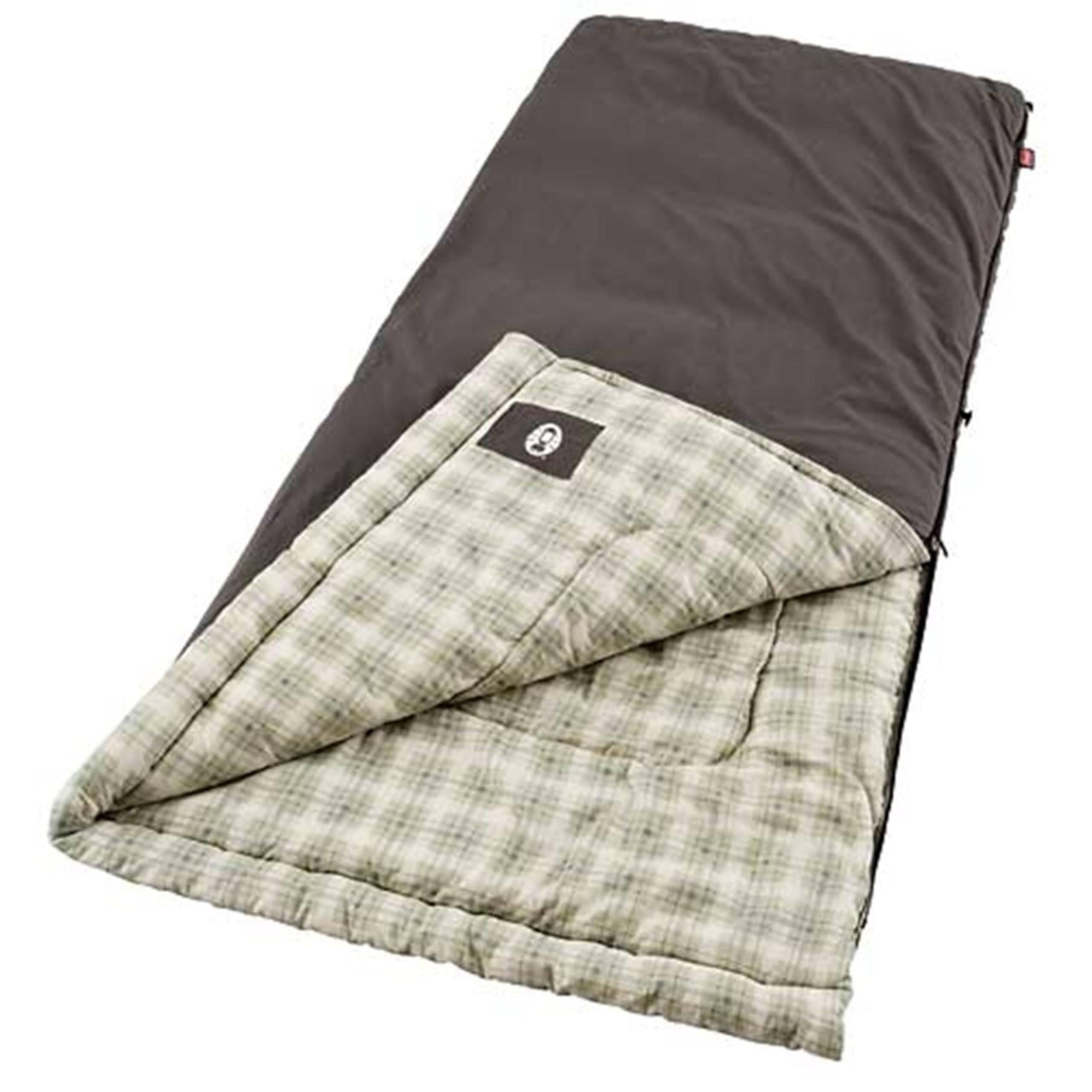
Coleman Heritage Big & Tall
Key Features
- Lining: Cotton flannel
- Weight: 8.9 lb
- Dimensions: 84 x 40 in
- Temperature rating: 10°F
- Price: Premium
Eight point nine pounds is the first thing to know about this bag, and it is not a criticism — it is why the Coleman Heritage is the warmest thing we recommend. Five pounds of Holofill 808 insulation, a heavy cotton cover, and a flannel liner add up to a bag that weighs about as much as a small toddler and sleeps like a bed.
The 10°F rating is genuine cold-weather territory, and the flannel is the detail we keep coming back to. It feels like bedding rather than like a tent, and it does not give you that cold, slick shock when you climb in at the end of a long day. At 40 by 84 inches it fits sleepers up to 6 feet 7, and it is one of the few bags here that a genuinely large person can turn over inside.
Coleman has been getting the hardware right for a long time and it shows: a no-snag zipper along a Thermolock-style draft tube, FiberLock construction to stop the insulation sliding into the corners, and the Wrap ‘N’ Roll system, which straps the bag into a roll instead of asking you to fight it into a sack. Machine washable matters more with a flannel liner than with a nylon one, and the five-year limited warranty is longer than most here.
Where it loses is anywhere more than a few dozen yards from the car, and in a warm room it is simply too much bag. For a cabin, a hunt camp, a guest bed, or a cold-weather basecamp, though, nothing in this group is warmer or more comfortable to get into. Bring a truck and a reason to be cold.
Pros
- 10°F rating for genuine winter nights
- Flannel lining feels like home bedding
- Fits large sleepers to 6 ft 7 in
- Wrap ‘N’ Roll packing and a five-year warranty
Cons
- 8.9 pounds rules out backpacking
- Far too warm for summer use
For cold-weather car camping we have not found a warmer or roomier bag in this group; just do not plan to carry it anywhere.
Best for Budget Camping
Tanstrider Sleeping Bag
Key Features
- Shape: Rectangular with hood
- Weight: 3 lb
- Dimensions: 87 x 31 in
- Temperature rating: 55-60°F comfort, 40°F limit
- Price: Budget
A draft collar is the feature we did not expect at this price. It is the tube of fabric that seals around your neck, and it is the difference between a warm bag and a bag with a permanent cold spot at the shoulders; here it comes with a drawstring hood as well, on a three-pound bag near the bottom of the price range.
For mild-weather camping this is the value pick we keep coming back to: 87 by 31 inches, a 40°F limit, a zippered foot box you can open when your feet cook, and a compression sack that does its job. We like it for exactly what it is — a summer and shoulder-season bag for someone who camps a handful of nights a year and does not want to find out how much they love camping by spending a lot of money.
The limits are honest ones. Comfort is listed at 55 to 60°F with a 40°F limit, so this is not a frosty-night bag, and 31 inches is a standard cut rather than a roomy one. The only real question is how it holds up over several seasons, because it has not been out there as long as the bags above it. What we saw was clean: the zipper runs, the hood draws down, and it folds without a fight.
Pros
- Hood and draft collar at the lowest price here
- Three pounds with a working compression sack
- Zipper and hood drew no complaints
- Fits most campers to about 6 ft 1 in
Cons
- Cool-weather warmth only, with a 40°F limit
- 31-inch cut is snug for broad sleepers
Spend the least and still get a hood and a draft collar; we think it is the smartest cheap bag here for mild-weather camping.
Best for Cabin and Rv
HiZYNICE XXL
Key Features
- Lining: 100% cotton flannel
- Weight: 7 lb
- Dimensions: 90 x 39 in
- Temperature rating: 30°F comfort, 0°F extreme
- Price: Midrange
The flannel is what makes this bag worth knowing about. A 100% cotton flannel lining feels like a duvet cover rather than a sleeping bag, and on a cold night that matters more than it sounds — you get in instead of bracing. At 90 by 39 inches it is also one of the biggest bags here, with enough room to pull your knees up and turn over without a fight.
The numbers say 30°F comfort, 15°F limit, and 0°F extreme, at seven pounds. We treat the first figure as the real one: this is a bag for frosty spring and fall nights, cabins, and RVs, not for a winter mountaineering trip. The flannel is warmer and softer than the polyester linings on everything else here, and it is slower to dry if it gets damp, which is the trade you accept for the feel.
Two things to go in with your eyes open. Seven pounds and a pack the size of a small suitcase mean it lives in the car rather than on your back. And the zipper and the shell are where this bag is weakest: the zipper can stick or separate, and the shell can tear with hard nightly use. For a cabin, a guest room, or a cold-weather basecamp, that trade is worth making; if you need a bag to survive a hundred nights a season, the Coleman Heritage is the tougher buy.
Pros
- Cotton flannel lining is genuinely cozy
- 90 x 39 in fits big sleepers and side sleepers
- 30°F comfort rating for cold nights
Cons
- Seven pounds and bulky to pack
- Zipper can stick and the shell can tear
If you want a sleeping bag that feels like bedding, this flannel-lined XXL is the one we take to a cabin or an RV.
Best for Casual Camping
JEAOUIA Sleeping Bag

Key Features
- Weight: 3.3 lb
- Dimensions: 86.6 x 31.5 in
- Maximum height: 5 ft 11 in
- Temperature rating: 50-68°F
- Price: Budget
This is the middle child of the budget group: 3.3 pounds, 86.6 by 31.5 inches, a 50 to 68°F rating, and a hollow-fiber fill that feels plumper than the price suggests. It is a perfectly ordinary three-season bag, and ordinary is fine when the money is small.
Where it earns attention is packing. It rolls up small, the compression bag has room to spare, and it carries easily in one hand or strapped to a pack. For casual camping — a weekend at a state park, a scout trip, a festival — that is most of what you need, and the hood and foot zipper give it a little more range than the rating alone implies.
Two things hold it behind our top pick. The cut is 31.5 inches, the same standard taper, and it runs small on larger frames; if you are over six feet or broad in the shoulders, spend the difference on the Venture 4th. And the zipper is the weak part of the bag, with a slider that can come undone or jam, which is the classic budget-bag failure. Buy it for mild weather and light use and it will do the job for years.
Pros
- Light at 3.3 pounds
- Packs small and carries easily
- Plump fill for the price
Cons
- Zipper can jam or come undone
- Runs small for taller, broader sleepers
Light and inexpensive enough for casual camping, but the narrow cut and the zipper keep it behind our top pick.
Best for Kids and Teens
Borull 3-Season

Key Features
- Weight: 3 lb
- Dimensions: 86.6 x 33 in
- Packed size: 8 x 14 in
- Temperature rating: 50-80°F
- Price: Budget
Thirty-three inches of width and a drawstring hood on the least expensive bag in the group is a combination worth a second look. It also has a foot zipper that opens for ventilation, which sounds like a gimmick until you have spent a warm night with your feet cooking. At three pounds with an 8 by 14 inch packed size, it disappears into a daypack.
What gives us pause is not a fault but a gap: this is the least familiar name here, and a bag you will rely on for a decade is a different purchase from a bag you will use eight nights a year. The 50 to 80°F rating puts it in the same mild-weather window as the MalloMe, so it is a summer and shoulder-season bag whatever the family-friendly sizing suggests. Buy it as a kid’s first bag, a guest bag, or a spare that lives in the car, and it is excellent value.
Pros
- 33-inch width at the lowest price here
- Hood and foot vent add usable range
- Packs to 8 x 14 inches at three pounds
Cons
- Rated for mild weather only
We prefer the Tanstrider’s build, but nothing here beats this bag’s width for the money.
Best for Cool-Weather Car Camping
Coleman Brazos

Key Features
- Weight: 5.2 lb
- Closure: No-snag zipper
- Warranty: 5-year limited
- Temperature rating: 30°F
- Price: Midrange
Thirty degrees Fahrenheit, a five-year warranty, and a price well below the Heritage is the pitch, and Coleman delivers on it: five pounds of bag with a draft tube along the zipper, a FiberLock build that keeps the fill where it belongs, and the same no-snag zipper as the flagship. For cool-weather car camping it is a sensible middle rung.
The problem is packing it. The bag is 5.2 pounds of lofty synthetic, and getting it back into the sack it came in is a genuine fight — several attempts, a lot of rolling, and not much help from the strap system. At home that is an annoyance. At the end of a wet morning with the car waiting, it is the thing you remember about the bag.
None of that matters if the bag lives in the back of the vehicle, which is where most of these end up. It stays warm into the low 30s, the zipper is the best of the budget-adjacent bags here, and the warranty is the same five years Coleman puts on the Heritage. Just do not buy it expecting to walk anywhere with it; at over five pounds it is a car-camping bag, and the Venture 4th is the one to carry.
Pros
- 30°F rating at a middle price
- No-snag zipper works as advertised
- Five-year limited warranty
Cons
- Very hard to get back into its stuff sack
- 5.2 pounds and bulky to carry
A cooler-weather Coleman at a sensible middle price, best kept for car camping where its bulk and tight stuff sack do not matter.
How We Tested 14 Sleeping Bags, Ten Months, and a Lot of Cold Mornings
We started with specs and customer reviews on more than 60 bags, then cut the list to 14 that covered the range shoppers actually buy: budget rectangle bags, mid-range mummies, and a couple of premium down options, in regular, long, and women’s-specific sizes.
Testing happened where bags get used. Each one spent at least four nights outside — backyard overnights on clear, cold nights, a few drive-in campsites, and one memorably wet weekend that tested every shell and every zipper. I slept in each bag in the same base layers, noted the low temperature at 6 a.m. against the bag’s rating, and logged whether I woke cold at the shoulders or the feet, the two places warmth leaks first. We also weighed each bag on a kitchen scale and timed how long it took to stuff back into its sack, which is the number that matters when you’re packing up in the rain.
Zippers got their own attention. Over repeated nights we zipped and unzipped each bag one-handed in the dark, counted snags, and checked whether the draft tube actually stayed over the teeth. Then we abused them: washed every bag per the maker’s instructions, crammed them into their sacks while still warm, and inspected seams and shell fabric afterward for pilling, thin spots, and stray down. Comfort came down to rolling over — whether the bag twisted with me or stayed put on the pad — and on warm nights I slept with each one unzipped as a quilt, which is how a lot of summer camping really goes. We handed the roomier bags to a six-foot-two tester and a broader-shouldered one, since a size chart tells you far less than an actual night. Value got the last word: what each bag delivered versus what it cost.
How to Choose a Sleeping Bag
The right bag comes down to three things the listing will not decide for you: the temperature you actually sleep in, the width you actually are, and the distance you actually carry it.
Read the rating as a comfort figure, not a promise
Every bag here carries a temperature, and almost none of those numbers means what a shopper assumes. A 30°F bag is normally a comfort rating for a warm sleeper on a decent pad in a base layer; the limit rating, usually 10 to 15 degrees lower, is where a cold sleeper starts shivering. The 0°F extreme figures on some listings describe survival, not sleep.
The practical rule is to pick a bag rated about 10 degrees colder than the coldest night you expect, then carry a liner for the trips that surprise you. A 50°F bag is a summer bag however the title reads, and the MalloMe’s own label is the clearest example here of a warm-weather bag that a title calls cold weather.
Width decides comfort more than length does
Length gets the headlines, but width is what wakes people up at two in the morning. Most bags here run 31 to 33 inches across the shoulders, which is fine for an average sleeper and snug for anyone broad or anyone who rolls. The 39-inch cuts, the Venture 4th and the HiZYNICE, are the ones to look at if you have ever woken up pinned.
Two details are worth checking before you order. The stated maximum height is usually optimistic, so a 6-foot rating on an 86-inch bag leaves little room for a pillow, and the side the zipper runs on matters if you plan to pair two bags.
Weight and packed size decide which trips it goes on
Under about 3.5 pounds is a bag you can carry; over 5 pounds is a bag you drive to. That line matters more than any other for a backpacker and it is the first thing to check if you plan to walk in more than a mile. Packed size is the other half of the same decision: a compression sack turns a bulky bag into a manageable one, and a plain drawstring stuff sack does not.
Budget bags are where the trap sits. The MalloMe and the Borull go back into their sacks easily, the JEAOUIA has room to spare in its compression bag, and the Coleman Brazos takes several attempts and a bad mood.
Expect the zipper to be the weak point
If one component decides whether a cheap bag lasts a season or five, it is the zipper. It is the part that snags on the draft tube, separates at the slider, and gives out first, and a bag that will not close is a cold night whatever its rating says.
Test it the day the bag arrives: run it a dozen times, check the draft tube is not caught in the teeth, and send it back inside the return window if it sticks or splits. A two-way zipper and a foot vent are worth having, since they let you dump heat in the middle of the night instead of throwing the whole bag off.
Lining and fill change how it feels, not just how warm it is
Synthetic hollow-fiber fill is the default here and the right one for camping: it keeps some loft when damp and dries much faster than cotton. The flannel-lined bags, the Coleman Heritage and the HiZYNICE, feel like bedding and are lovely in a cabin, but cotton takes longer to dry and adds weight you have to carry.
Polyester taffeta linings feel cooler to the touch and pack smaller. If you sleep hot, that slick lining is a feature rather than a compromise; if you sleep cold and hate the first five minutes, flannel earns its pounds.
Frequently Asked Questions
Do I need a sleeping pad with one of these bags?
Yes. Every temperature rating assumes insulation underneath you, because the fill compresses flat under your body weight and the cold comes up through the ground rather than down from the air. A closed-cell foam pad is the cheapest fix and enough for summer; an insulated air pad is what makes a 30°F bag behave like one in fall. Without a pad, a cold-weather bag performs like a three-season one at best.
Can I wash a sleeping bag in a washing machine?
Check the label first. Several bags here are machine washable, including the flannel-lined Coleman Heritage and the Borull. Use a front-loading machine or a bathtub, a mild detergent with no fabric softener, and dry on low heat with a couple of clean tennis balls to break up clumps of fill.
Store it loose, not compressed. A mesh sack or a shelf keeps the loft alive between trips, and a bag that lives squashed in its stuff sack will sleep colder by its second season.
Can two sleeping bags be zipped together?
Only when the listing says so. A left-side zip pairs with a matching right-side zip from the same line, and the HiZYNICE is sold in both. Two bags with the zipper on the same side cannot be joined, so check the side before you buy the second one.
Expect a joined pair to sleep a touch colder than two separate bags, since there is more air inside to heat and no shared draft tube down the middle.
Final Verdict
The MalloMe is the bag we recommend by default: three seasons, under three pounds, and a price that leaves room for a decent pad alongside it. The one reason to look elsewhere is width, and if you are broad across the shoulders or tall, that reason is a good one.
Go to the Venture 4th for the 39-inch cut and the lifetime guarantee, and to the Coleman Heritage if your camping happens in the cold and never more than fifty yards from the truck.