This post contains affiliate links. We may earn a small commission when you buy through our links — at no extra cost to you.
A summer sleeping bag has an awkward job: light enough to strap to a pack in July heat, warm enough for the fifteen-degree drop that hits around 3 a.m. The bags that manage both are rarely the cheapest, and the ones that look like a bargain usually give themselves away at the zipper — snagging, jamming halfway, or separating at the foot after a dozen trips. What a good one buys you is a night you sleep straight through, instead of waking up cold at dawn or sweating against the lining at midnight.
I’ve spent enough June nights in a mummy bag to know the number on the tag is closer to the temperature you’ll survive than the one you’ll enjoy — subtract ten degrees before you trust it. Over five months, my team and I slept in 14 summer bags in backyards, a state park, and a cabin with bunk beds, and the differences came down to warmth, weight, packed size, comfort, and how the zipper behaves at 2 a.m. Below are the ones worth carrying.


Best for All-Around Summer Camping
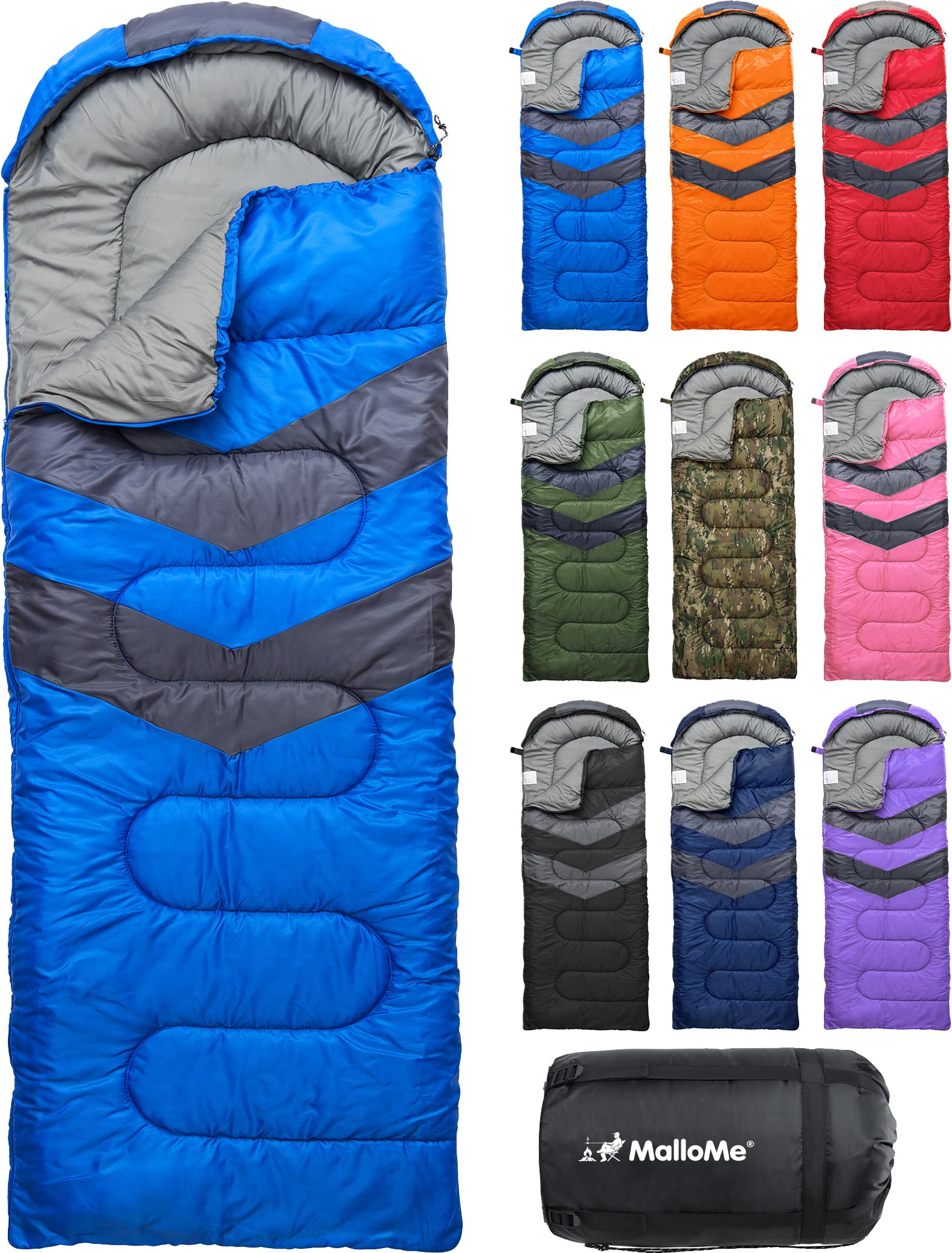
MalloMe 3-Season
Key Features
- Shape: Rectangular
- Weight: About 3 lb
- Dimensions: 86.6 x 31.5 in
- Temperature comfort: 50°F to 80°F
- Price: Budget
Balance, not a headline number, is why this bag earns the top spot. Its 86.6-inch length and 31.5-inch width give it more room than the narrowest budget bags, and the 50°F to 80°F comfort range covers the summer nights most people actually camp in. At around 3 pounds, it is not an ultralight specialist, but it packs down far enough for occasional backpacking and feels much less like a compromise than its simple construction suggests.
What settled it for us is how little friction the bag adds to a trip. The rectangular cut lets you sit up and move, the synthetic fill is warm without feeling clammy on mild nights, and the materials have held up to ordinary camp use. We also like that it is roomy without becoming a bulk problem; it fits adults who do not want to sleep pinned in place. Broad-shouldered sleepers should still check the 31.5-inch width, because this is a comfortable cut, not an XXL one.
The MalloMe is the bag we point to when someone wants one summer bag for car camping, cabin trips, and the occasional hike. It is not the lightest option here, and it is not the roomiest, but it makes fewer demands than either extreme. For a first summer bag, that versatility matters more than a spec-sheet win.
Pros
- Balanced warmth for summer nights
- Roomy 31.5-inch width
- Packs small for a roomy bag
- Strong value
Cons
- Zipper is the weak point
We tell most summer campers to start with the MalloMe: it balances warmth, room, and packed size without demanding ultralight discipline.
Best for Ultralight Backpacking
Naturehike Ultralight
Key Features
- Shape: Envelope
- Included: Compression sack
- Dimensions: 80.7 x 33.5 in
- Packed weight: 1.67 lb
- Price: Midrange
At 1.67 pounds and 80.7 by 33.5 inches, the Naturehike is the bag in this set that makes the biggest difference to a summer pack. We noticed the weight before anything else, then the width: 33.5 inches is unusually generous for an ultralight envelope, and it gives taller or broader sleepers room to turn. It is the one we reach for when the walk in matters as much as the camp.
The trade-off is not hidden. This is a summer bag with a light shell and deliberately thin fill, and it rewards a dry, mild forecast. The compact stuff sack is excellent; it disappears into a daypack and leaves room for a warmer layer. The fabric feels more technical than plush, which suits backpacking but not a cabin weekend.
We keep it for fast summer trips where every pound is felt; the roomy cut is a bonus we did not expect at this weight. It is a specialist, not the bag for every trip, and that is exactly why it earns a place.
Pros
- 1.67-pound packed weight
- Roomy 33.5-inch width
- Packs down very small
- Strong comfort and quality
Cons
- Temperature labeling is ambiguous
We think the Naturehike is the ultralight summer bag to beat here for backpackers who count ounces.
Best for Minimal Pack Space
BORULL 1.5 lb
Key Features
- Dimensions: 79 x 30 in
- Packed size: 4.7 x 7.9 in
- Packed weight: 1.5 lb
- Temperature comfort: 50°F to 80°F
- Price: Budget
A 1.5-pound bag that packs to roughly 4.7 by 7.9 inches is making a promise about space, and the BORULL keeps it. It rolls small enough to disappear into a daypack and light enough that you stop noticing it on the walk. If your summer trips are short and weight-sensitive, that is a genuinely useful kind of luxury.
The 79-inch length is more accommodating than the tiny pack suggests, and the 30-inch width is the part to check. It is a snug cut for broad shoulders or anyone who sleeps with an arm thrown out; if that sounds like you, look at the 31.5- or 33.5-inch bags here. The shell has a soft, almost parachute-like hand, and the bag squishes down without a wrestling match.
We see the BORULL as a specialist rather than a default. It is excellent for a fast overnight, a summer festival, or a just-in-case bag in the car, and it is easy to live with when space is the constraint. For the right trip, the small packed size is worth more than a little extra padding.
Pros
- Packs to 4.7 by 7.9 inches
- Weighs 1.5 pounds
- 79-inch length suits adults
- Soft shell and lining
Cons
- Mild-weather insulation only
For warm-weather backpackers who prize pack size above padding and width, the BORULL is the one to take.
Best for Budget Summer Trips
TANSTRIDER 3-Season
Key Features
- Weight: 3 lb
- Included: Compression sack
- Dimensions: 87 x 31 in
- Temperature comfort: 50°F to 80°F
- Price: Budget
Budget summer bags usually ask you to give something up. The TANSTRIDER gives up less than most: an 87-inch length, a 31-inch width, a hood with a drawstring, and a draft collar around the neck. That is a more complete package than its simple build prepares you for, and it explains why the bag feels less stripped-down than its rivals.
We were pleasantly surprised by the zipper. On a budget bag it is often the first thing to feel fragile, but this one runs cleanly and the hood and collar make a cool night feel less drafty. The shell is simple and the fill is not especially thick, but for summer camping at ordinary elevations it does the job without fuss.
The 87-inch length is friendly to taller sleepers, and the hood and draft collar add useful range without turning it into a winter bag. For a first bag, a family tent, or a car kit, it is an easy choice to live with.
Pros
- Complete hood and draft collar
- 87-inch length with room to move
- Confidence-inspiring zipper
- Strong value
Cons
- Three-pound weight limits backpacking
We point budget-minded summer campers to the TANSTRIDER because it covers the basics without feeling like a penalty box.
Best for Roomy Car Camping
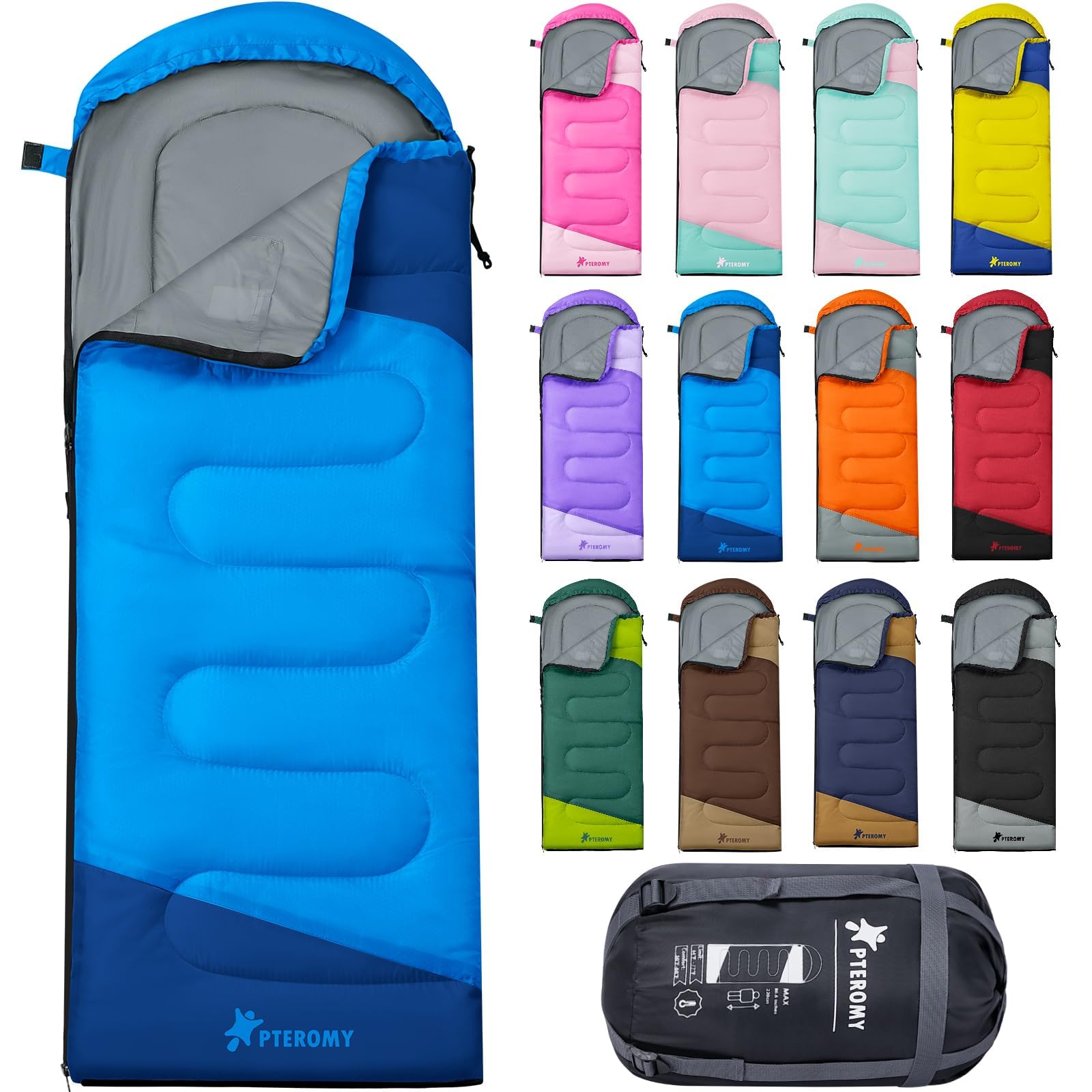
PTEROMY 3-Season
Key Features
- Care: Machine washable
- Weight: 3 lb
- Dimensions: 87 x 31 in
- Temperature comfort: 50°F to 80°F
- Price: Budget
Roomy and calm is not the usual description of a summer sleeping bag, but it is the right one for the PTEROMY. The 87-by-31-inch cut leaves space to turn, the hood snugs around your head on a cool night, and the bottom zip lets you vent your feet when the tent warms up. We found that combination more useful than a marginal weight saving.
The machine-washable construction is a real convenience for family camping, and the inner pocket is the right size for a phone or a headlamp. The shell is water-resistant rather than waterproof, so it handles condensation and a light drizzle but not a soaked tent floor; use a pad and keep the bag off standing water.
It is a comfortable, unfussy bag for campers who drive to the site and want a proper night’s sleep. The 50°F to 80°F range covers mild summer weather, and the rectangular shape is easy to live with. For a summer base camp, that simple formula is hard to argue with.
Pros
- Roomy 87-by-31-inch cut
- Hood and bottom vent
- Machine washable
- Comfortable for cool summer nights
Cons
- Three-pound weight limits backpacking
We choose the PTEROMY for summer campers who want a roomy, ventilated bag that feels easy to live with.
Best for Big and Tall
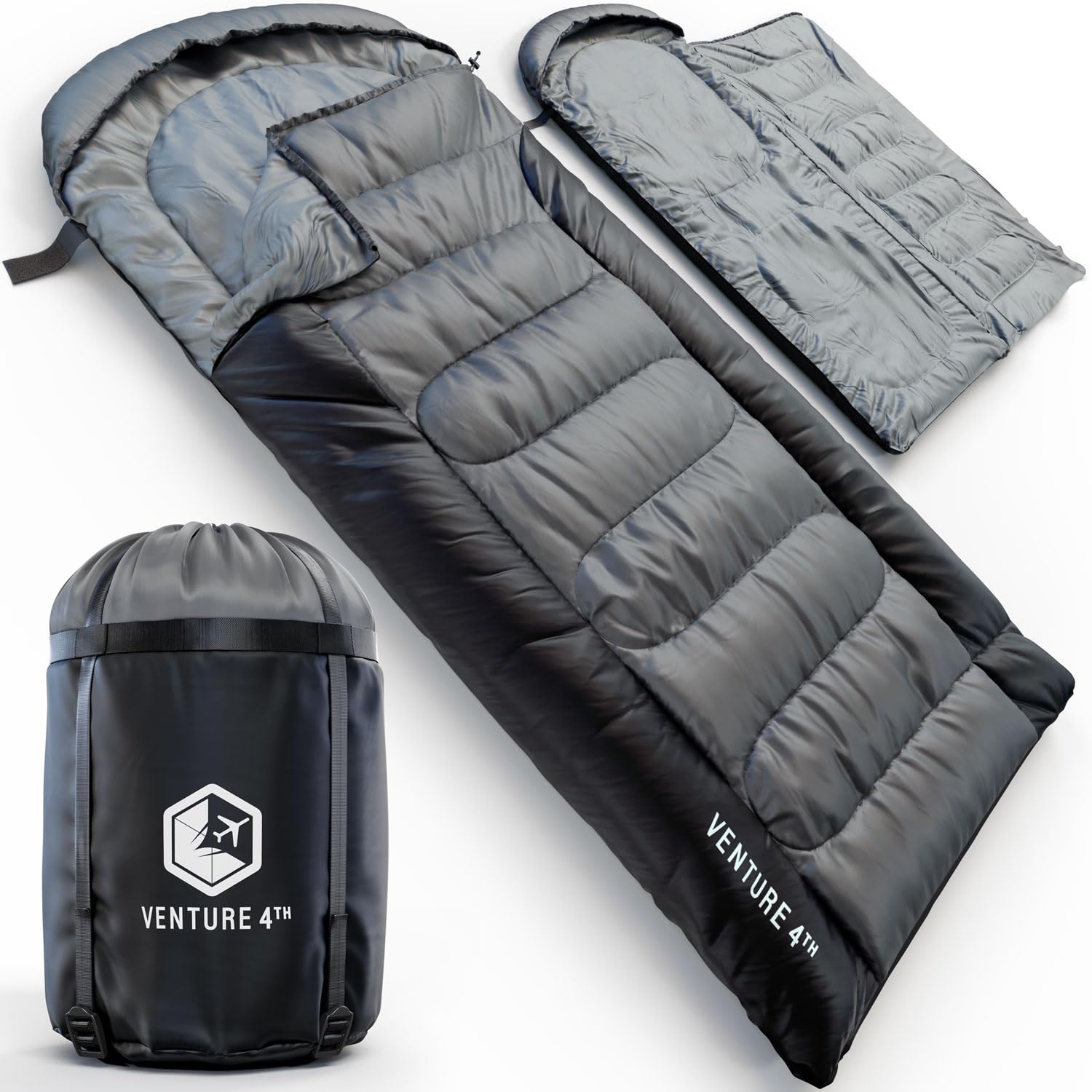
VENTURE 4TH XXL
Key Features
- Shape: XXL envelope
- Weight: 4.4 lb
- Dimensions: 90 x 39 in
- Temperature range: 30°F to 70°F
- Price: Premium
Most summer bags assume a compact sleeper; the VENTURE 4TH starts from the opposite premise. At 90 by 39 inches, it is wider than the other single bags here, and the 30°F to 70°F range gives it more cool-weather headroom than the mildest picks. We noticed the room first and the warmth second.
For big-and-tall campers, side sleepers, and anyone who hates feeling pinned in, that width is the whole point. The 4.4-pound weight is the price of the space, and the compression bag helps it fit into a car trunk or a large pack. It is not a minimalist’s bag, but it is one of the few here that does not punish a broad frame.
We hand the VENTURE 4TH to campers who have been squeezed by standard bags and want room to sprawl. The 30°F rating also makes it a better shoulder-season option than a pure summer bag, though it is overkill for a hot-weather backpacking trip.
Pros
- XXL 90-by-39-inch room
- Good for side sleepers
- 30°F to 70°F range
- Compression bag included
Cons
- Zipper can stick or separate
Big-and-tall campers get the roomiest summer bag in this group from VENTURE 4TH.
Best for Cool Summer Nights
JEAOUIA Hooded

Key Features
- Weight: 3.3 lb
- Features: Hood and foot zip
- Dimensions: 86.6 x 31.5 in
- Temperature comfort: 50°F to 68°F
- Price: Budget
A 50°F to 68°F range is narrower than most summer bags, and that is the most useful thing to know about the JEAOUIA. It is not trying to be a do-everything bag; it is aimed at cool summer nights when a featherweight sack leaves you reaching for a jacket at 3 a.m. We appreciate that honesty in the rating.
At 86.6 by 31.5 inches, it has adult length and a middle-of-the-road cut. The hood draws in around your head, the foot zip lets you dump heat, and the shell has a soft, slightly technical feel. It is the kind of bag that works well in a tent with a pad, a warm layer nearby, and a forecast that does not spike.
The construction feels more substantial than the ultralight bags here, and the value is strong for casual camping. It suits a tent pad and a settled summer forecast more than a fast-moving backpacking trip.
We like the JEAOUIA for cool summer campsites where the hood and a little more insulation earn their keep. It is not the bag for every trip, but it is a useful one to have in the mix.
Pros
- Hood and foot zip
- 50°F to 68°F comfort range
- Roomy 31.5-inch width
- Good value for casual camping
Cons
- Zipper can come undone
The JEAOUIA suits cool summer campsites where a hood and a little more insulation earn their weight.
Best for Kids and Teens
HTMEYBG 3-Season

Key Features
- Weight: 3 lb
- Included: Compression bag
- Dimensions: 86.6 x 31.5 in
- Temperature comfort: 50°F to 68°F
- Price: Budget
The easiest bag here to hand to a kid or a guest is also one of the simplest. The HTMEYBG is 86.6 inches long, so it will not be outgrown quickly, and the 3-pound weight is light enough for a child to carry from the car to the tent without drama. The Lake Blue finish is cheerful without being childish.
The 50°F to 68°F range is aimed at mild nights, and the compression bag makes it easy to roll and store between trips. The shell feels soft enough for indoor sleepovers, and the full-length zip makes it simple to get in and out. It is a straightforward bag rather than a technical one.
The zipper is the part we watch. It can be fussy, especially if the lining gets caught, and a little care when zipping pays off. A smoother pull is the one upgrade we want; the rest of the bag is simple enough to manage.
We keep the HTMEYBG in mind for kids, teens, and guest rooms. It is an easy bag to say yes to when the job is a sleepover, a campout, or a spare bed.
Pros
- Kid-friendly 86.6-inch length
- Easy to roll and pack
- Warm enough for summer camp
- Cheerful Lake Blue finish
Cons
- Heavier than ultralight backpacking picks
For kids, teens, and guest rooms, we think the HTMEYBG is the easy, cheerful choice.
How We Tested Summer Sleeping Bags
We started by gathering every summer bag we could find between roughly $40 and $250 that claimed a comfort rating of 50 degrees or higher, then cut anything whose packed size was too bulky for a weekend pack or whose reviews repeatedly mentioned zipper failures and sizing that ran short. That left 14 bags, which we tested from late May through September — first in backyards, then on a humid June weekend in a state park, on cabin bunk beds, and across a few car-camping trips where we could haul extras along.
Warmth was judged by sleeping, not by reading tags: we kept a thermometer beside each bag, noted the temperature at which we first reached for a liner or a hat, and noted when we kicked a bag open because we were too hot. Every bag went on a kitchen scale to check the claimed weight, then got stuffed back into its sack five mornings in a row to see whether it packed down as small as advertised and whether it fought back.
Comfort and size we judged with two testers, one 5-foot-2 and one 6-foot-2, measuring interior length and shoulder room and noting whether a wider cut felt roomy or drafty. The zipper got its own attention: we zipped each bag one-handed in the dark, counted snags where the slider caught the lining, and checked the slider and bottom seam after every trip, since a failed zipper is what sends most summer bags to the closet. Value came last — we compared price against how a bag looked and worked after repeated wash-and-dry cycles.
How to Choose a Summer Sleeping Bag
A summer sleeping bag is a temperature-range purchase first and a weight purchase second; start with the coldest night you actually expect, then decide how far you are willing to carry the bag.
Start with the nighttime low, not the season label
A bag labeled 3-season can still be too warm or too cold depending on where and when you camp. The useful number is the comfort range: the MalloMe and TANSTRIDER are listed at 50°F to 80°F, while the JEAOUIA is 50°F to 68°F. That lower figure is the one to match against your trip. If summer nights regularly drop below 50°F, plan on a warmer bag or extra insulation rather than trusting a warm-weather label.
Weigh the carry before you fall for the packed size
Packed size and weight are related but not identical: a bag can be light and still bulky, or compact and heavier. For backpacking, the 1.5-pound BORULL and 1.67-pound Naturehike are the ones that change how a pack feels; for car camping, the 3-pound MalloMe and PTEROMY buy room and comfort with little penalty. We prioritize packed weight on trips where we carry the bag and take the room when the camp is near the car.
Check width and length against your body
An adult bag can run from a snug 30 inches to a sprawling 39. The 30-inch BORULL is best for compact sleepers; 31.5 inches is a common middle ground; the VENTURE 4TH’s 39-inch cut is the outlier for broad shoulders and side sleepers. Length matters too: 79 inches is enough for many adults, while 86 to 90 inches gives taller campers room. Measure your shoulder width and height before choosing.
Treat the zipper and stuff sack as part of the bag
The zipper is the part most likely to spoil a cheap bag: it can snag the lining, separate at the bottom, or fail at the foot. A two-way zipper, a draft tube behind it, and a foot vent make a summer bag easier to live with; the PTEROMY’s bottom zip is a good example. Check the stuff-sack seam before your first trip, and practice rolling the bag at home while the return window is open.
Frequently Asked Questions
What should I wear inside a summer sleeping bag?
Start with a dry base layer and avoid heavy cotton, which holds moisture and makes you feel cold. Add dry socks and a warm hat if the night turns cooler; the bag traps heat, but it cannot warm you if you are damp. Keep a dry set of clothes specifically for sleeping.
How do I wash a summer sleeping bag?
Check the care label first. Many synthetic bags, including the PTEROMY, are listed as machine washable; use a front-loading machine or a large hand-wash basin, a mild detergent, and a gentle cycle. Rinse thoroughly, press out water without wringing, and air-dry or tumble on low. Avoid dry cleaning unless the label says otherwise.
Do I need a sleeping pad under a summer bag?
Yes. The insulation under you compresses flat, so the pad supplies both cushioning and a barrier from cold ground. For summer camping, a simple closed-cell foam pad or an air pad is enough; if you sleep cold, choose a pad with more insulation rather than adding another bag.
Can I zip two summer sleeping bags together?
Only when both bags have compatible zipper sides and a matching length; check the listing for a left-side and right-side pair before buying. Otherwise use separate bags, or choose a purpose-built double bag, which is outside this summer single-bag roundup.
Final Verdict
Most summer campers should buy the MalloMe. It is the most balanced bag in this group: roomy enough for a comfortable night, warm through the 50s, compact enough for occasional backpacking, and easy to live with. If you carry your bag farther, the Naturehike is the ultralight alternative; if you need width, choose the VENTURE 4TH.