This post contains affiliate links. We may earn a small commission when you buy through our links — at no extra cost to you.
Most budget sleeping bags advertise a survival temperature that sounds impressive — but comfort at that mark is often 10-20°F higher. A bag rated to 20°F might leave you cold at 40°F. That gap is the single biggest source of buyer regret in this category.
The under-$100 market forces real trade-offs: a 1.5 lb ultralight bag sacrifices warmth and width, while a roomy rectangular bag weighs over 3 lbs. Neither is wrong — but you need to know which trade-off fits your trip.
This guide highlights bags that honestly deliver on their comfort ratings for the money, and flags where the compromises land: narrower cuts, heavier packs, or zippers that need care. No hype, just the right fit for your budget and season.



Best for Warm-Weather Backpacking
ECOOPRO Envelope Lightweight
Key Features
- Comfort Temp Rating: 55-60°F comfort
- Packed Weight & Size: 1.5 lbs
- Shape and Roominess: Envelope, narrow
- Zipper Quality: Adequate
- Fill Material: Polyester
- Price: Budget
Weighing just 1.5 lbs and compressing to the size of a small cantaloupe, this envelope bag is remarkably easy to stash in a pack or strap to a bike frame. The polyester fill balances weight with enough loft for comfortable sleep on summer nights above 55°F. At this price point, no other synthetic bag matches its portability — a clear win for anyone counting grams on a budget.
Real-world warmth aligns with the 55°F–60°F comfort rating. Below 50°F, the thin insulation lets cold seep through, especially for side sleepers or those who toss. The rectangular cut allows some leg movement, but the 30-inch width can feel snug for broader shoulders or taller frames — a tradeoff of the ultralight design rather than a flaw.
This bag is built for ultralight summer backpackers, bike packers, and hammock campers who prioritize weight and pack size over roominess. It also works as an emergency car blanket or sleepover bag. The narrow fit and limited warmth mean it is not suited for cold-weather camping below 50°F or for adults over 6 feet or 200 lbs. For those who fit the profile, the weight-to-price ratio is unmatched.
Compared to slightly heavier envelope bags at the same price, the ECOOPRO shaves off several ounces without sacrificing basic comfort. The included compression sack helps reduce volume further. While the 83-inch length accommodates most adults, the cut is lean — a deliberate choice to keep weight down. For warm-weather trips where every ounce matters, this bag earns its place as the top pick.
Pros
- Extremely lightweight at 1.5 lbs — easy to carry on long hikes.
- Packs down small with included compression sack.
- Comfortable for warm-weather camping above 55°F.
- Good build quality and comfort for the entry-level price.
Cons
- Narrow fit — broader shoulders may find the 30-inch width snug.
- Limited warmth below 50°F — not suitable for cold-weather camping.
For backpackers who count grams and sleep warm on summer nights, the ECOOPRO delivers the best weight-to-price ratio — just note the snug cut.
Best for Hammock & Tent Camping
Naturehike Envelope Compact
Key Features
- Comfort Temp Rating: 59°F comfort
- Packed Weight & Size: 1.67 lbs
- Shape and Roominess: Envelope, moderate
- Zipper Quality: Adequate
- Fill Material: Synthetic
- Price: Budget
The Naturehike sleeping bag gives you a wider envelope cut than the slimmest options in this price range, offering more room for side sleepers and hammock users. It weighs 1.67 lbs and packs into a small compression sack, though it’s a touch heavier than the lightest alternative. The envelope design also makes it easier to unzip fully and use as a blanket.
This bag is built for warm-weather backpackers, hammock campers, and travelers who need a compact emergency bag. Its 59°F comfort rating means it works best when overnight lows stay above 50°F; below that, adding a liner or extra clothing is necessary. Taller users over 6’2′ or those above 220 lbs may find the length and width snug.
The synthetic fill provides adequate warmth in mild conditions, and the fabric feels durable for its weight class. Zippers operate smoothly without snagging, and the compression sack makes packing straightforward. For a budget envelope bag, the build quality holds up well across multiple trips.
Pros
- Roomier envelope shape works well for side sleepers and hammock camping
- Lightweight at 1.67 lbs and compresses into a small pack
- Comfortable in warm to mild conditions with smooth zippers
- Good build quality and fabric feel for the price
Cons
- Not warm enough below 50°F without adding a liner or layers
- Snug fit for users over 6’2′ or above 220 lbs
If the slimmest budget bag feels too tight, the Naturehike offers more room without a major weight penalty, but only for warm-weather trips.
Best for Cold-Weather Backpacking
TETON Sports Mummy 20F
Key Features
- Comfort Temp Rating: 40-50°F comfort
- Packed Weight & Size: 2.9 lbs
- Shape and Roominess: Mummy, narrow
- Zipper Quality: Adequate
- Fill Material: Synthetic microfiber
- Price: Mid-Range
Among budget backpacking bags, the TETON Sports Mummy is the only one with a 20°F survival rating, which opens up shoulder-season camping that lighter, summer-focused bags can’t handle. This makes it a practical choice for hikers who encounter cooler nights without paying for down insulation.
The tradeoff for that warmth is a snug mummy cut designed for slim builds. Side sleepers and broad-shouldered users will find the 32-inch width restrictive. Comfort is realistically around 40-50°F, so this bag suits 3-season use in mild climates or for warm sleepers on a budget.
The synthetic microfiber fill compresses well in the included stuff sack, and at 2.9 pounds it’s light enough for backpacking. Stitch quality holds up for regular use, giving buyers a durable option for the price.
Pros
- Warmth-to-weight ratio suits backpackers who want cold-weather capability without a heavy pack.
- At 2.9 pounds, it’s light enough for backpacking without sacrificing cold-weather capability.
- Stitching and zippers hold up well, and the included stuff sack compresses the bag for packing.
Cons
- Narrow mummy cut can restrict movement for side sleepers and broader shoulders.
- Temperature rating is optimistic; comfort level is closer to 40-50°F.
Best for slim backpackers who need a budget bag for shoulder-season camping and are comfortable with a snug fit and realistic warmth expectations.
Best for Summer Ultralight Backpacking
QEZER Ultralight Down 600FP
Key Features
- Comfort Temp Rating: 59-68°F comfort
- Packed Weight & Size: 1.3 lbs
- Shape and Roominess: Mummy (wide bottom), moderate
- Zipper Quality: Occasional failure
- Fill Material: 600FP Duck Down
- Price: Mid-Range
At 1.3 pounds, this down bag undercuts even the lightest synthetic options in the guide by a noticeable margin. The 600FP down compresses to a size that fits easily inside a compact dry sack, leaving room for other gear. For backpackers who count every ounce and keep trips to balmy climates, this is the most weight-efficient bag in its price tier.
The tradeoff for that weight savings is a narrow temperature window: comfort sits between 60°F and 68°F, and below 55°F the insulation won’t keep most sleepers warm. The mummy cut is snug, so broad-shouldered individuals or restless sleepers may find it restrictive. An occasional zipper bind is possible with rough handling. This bag suits summer ultralight backpackers, bikepackers, and hammock campers who know they won’t encounter cool nights and prioritize minimal bulk over versatility.
Pros
- Extremely lightweight and compresses small for ultralight packing
- 600FP down provides consistent loft at a moderate price
- Comfortable warmth for summer nights without overheating
Cons
- Zipper can bind or break over time with forceful use
- Narrow mummy fit may feel tight for average-sized adults who move during sleep
- Comfort range limited to warm nights above 60°F; not suitable for cool or windy conditions
For summer ultralight hikers who accept a strict warm-weather cap, this is the most packable down bag under $100 and a clear alternative to heavier synthetic options.
Best for Family Car Camping
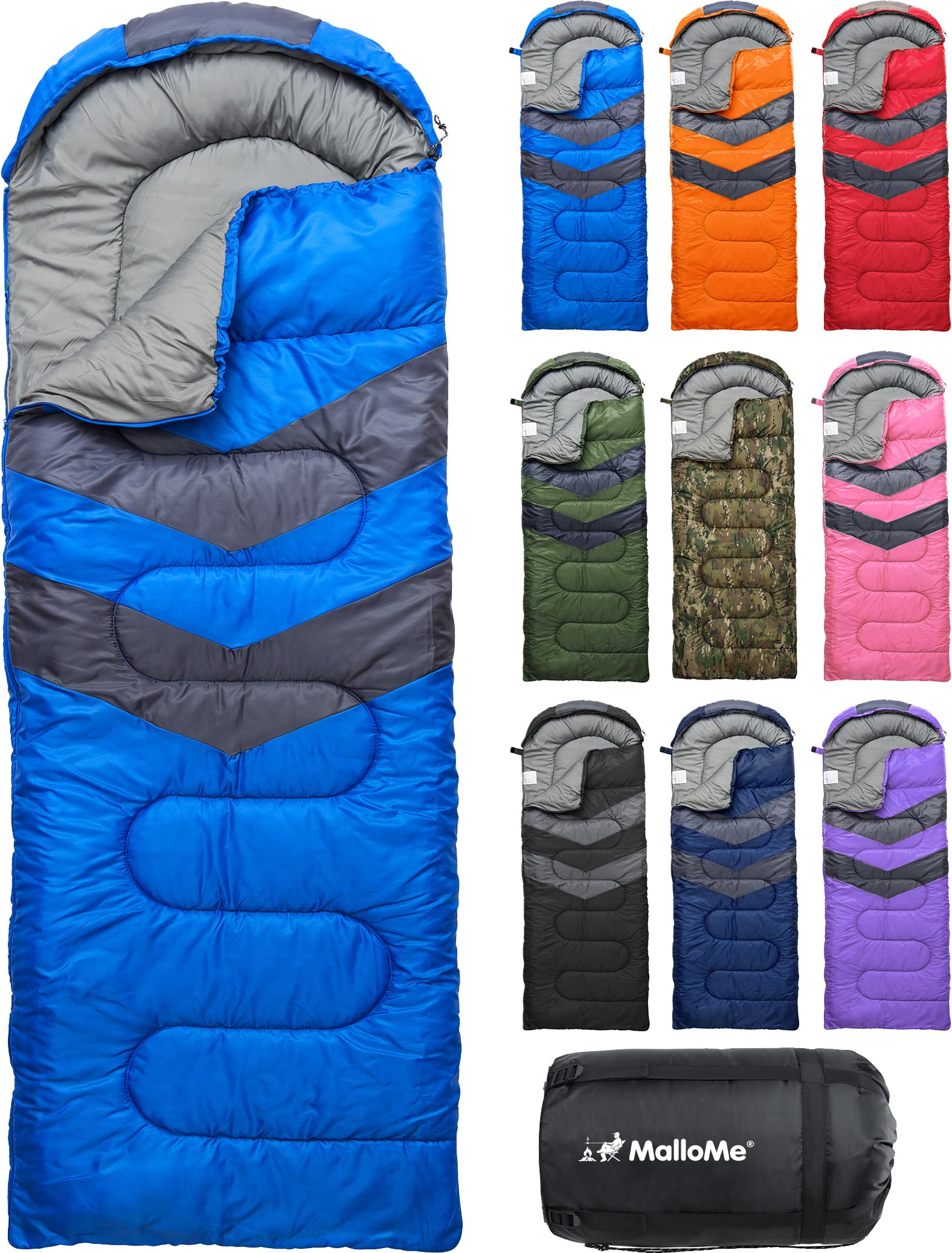
MalloMe Rectangular 3-Season
Key Features
- Comfort Temp Rating: 50-77°F comfort
- Packed Weight & Size: 2.86 lbs
- Shape and Roominess: Rectangular, roomy
- Zipper Quality: Inconsistent
- Fill Material: Synthetic fiber
- Price: Budget
The MalloMe Sleeping Bag’s roomy rectangular shape and high comfort ratings set it apart for family camping and car camping use. Where lighter mummy bags prioritize pack weight, this design gives you space to stretch out and move during sleep.
This bag is a natural fit for families buying multiple bags, kids, youth, and smaller adults. Taller campers over 6 ft may find the length and width snug, and the zipper can snag or break over time — careful alignment when zipping helps. For serious backpackers, the extra weight (2.86 lbs) makes it less practical than lighter alternatives.
In real-world use, the synthetic fill keeps you comfortable from summer through early fall, with enough warmth for mild nights down to about 50°F. The rectangular design allows easy entry and exit, and the bag packs down moderately small for a car trunk or closet. Overall build quality is solid for the price, with soft fabric and durable stitching.
Pros
- Spacious rectangular design provides ample room to move and stretch
- Excellent value for families needing multiple affordable bags
- Lightweight and packable for a rectangular synthetic bag
- Good quality construction for the price
Cons
- Zipper can snag or break with repeated use, requiring careful alignment
- Length and width may be too snug for taller or broader-shouldered users
The MalloMe is a strong choice for families and car campers who value space and comfort over packability; serious backpackers should look to the lighter top pick.
Best for Kids Summer Camp
SWTMERRY 3-Season Lightweight
Key Features
- Comfort Temp Rating: 50-68°F comfort
- Packed Weight & Size: 3 lbs
- Shape and Roominess: Rectangular, narrow
- Zipper Quality: Poor
- Fill Material: Hollow fiber
- Price: Budget
This bag sells at an entry-level price and has attracted a large audience for family camping and sleepovers. Unlike the roomier rectangular option in this guide, the SWTMERRY prioritizes cost savings over fit and durability, making it a common pick for occasional use.
It suits kids and teens for indoor sleepovers, car camping, or as an emergency car blanket. Adults over 5’10" or those who move around at night will find the 29.5-inch width restrictive. The zipper can snag or separate after a few uses, which is acceptable for casual indoor use but a concern for regular outdoor trips.
The hollow fiber fill keeps a child warm in spring and fall conditions down to about 50°F, and the 3-pound weight is easy to carry from car to tent. Stitching may loosen with frequent use, so this bag is best reserved for light, occasional outings rather than repeated trips.
Pros
- Very affordable price makes it accessible for families buying multiple bags.
- Provides warmth and comfort for mild-weather camping and sleepovers.
- Lightweight enough for car camping and easy to pack.
Cons
- Width is narrow; best suited for children and smaller adults.
- Stitching may loosen with repeated use, reducing overall longevity.
- Zipper can snag or separate, requiring careful handling to avoid issues.
This bag works well for kids’ sleepovers and emergency car kits, but anyone needing a reliable backpacking bag should look at lighter, wider options.
Best for Family Camping Trips
JEAOUIA Rectangular 3-Season

Key Features
- Comfort Temp Rating: 50-68°F comfort
- Packed Weight & Size: 3.3 lbs
- Shape and Roominess: Rectangular, moderate
- Zipper Quality: Frequent failure
- Fill Material: Hollow fiber cotton
- Price: Budget
This bag provides good warmth and comfort for casual outdoor use, with a roomy rectangular shape that kids and teens appreciate. The hollow fiber cotton fill keeps users cozy in mild conditions down to the 50°F comfort zone. However, at 3.3 lbs it is too heavy for backpackers looking to shave ounces, and the zipper may snag or separate over time — issues that matter less for occasional car camping or indoor sleepovers. These limitations keep it from being a top pick for the lightweight backpacking shopper.
Pros
- Keeps users warm in mild camping conditions down to about 50°F
- Comfortable rectangular shape appreciated by families and younger campers
Cons
- At 3.3 lbs, the bag is heavier than typical backpacking models — a consideration for hikers counting weight
- Zipper may catch fabric or come undone over time, requiring careful use
Best for family car camping or indoor sleepovers where pack weight and zipper longevity are secondary concerns.
Best for Bushcraft and Field
OneTigris Bushcrafter Mummy

Key Features
- Comfort Temp Rating: 46-59°F comfort
- Packed Weight & Size: 3.1 lbs
- Shape and Roominess: Mummy, narrow
- Zipper Quality: Sticks
- Fill Material: Polycotton
- Price: Mid-Range
The OneTigris Bushcrafter’s Sleeping Bag uses a durable polycotton shell that stands up to rough field use, and with proper layers it keeps you comfortable down to about 40°F. However, the 3.1 lb weight makes it a poor fit for backpacking trips where every ounce counts—this bag is better suited for car camping, military field training, or bushcraft base camps.
The mummy shape runs narrow and short for some users, and the zipper can snag on the fabric occasionally. These quirks are manageable if you don’t need a lightweight, packable design, but they prevent this bag from competing with the slimmer options in this guide for backpacking use.
Pros
- Very warm for mild cold (down to ~40°F with layers)
- Great quality and comfortable
- Good value for a rugged 3-season bag
Cons
- Zipper can snag and stick on the fabric, requiring careful operation
- Fit can be too short or tight for some users, especially those over 6 feet or with broad shoulders
This bag works well for bushcraft, field training, or car camping where weight isn’t a priority, but backpackers should look to lighter options.
Best for Family Summer Camp
HTMEYBG 3-Season Rectangular

Key Features
- Comfort Temp Rating: 50-68°F comfort
- Packed Weight & Size: 3.3 lbs
- Shape and Roominess: Semi-rectangular, moderate
- Zipper Quality: Prone to break
- Fill Material: Hollow microfiber
- Price: Budget
This sleeping bag delivers on warmth and comfort for mild-weather camping, with a roomy semi-rectangular cut that suits kids and average-sized adults. The hollow microfiber fill keeps users cozy in 50°F to 68°F conditions, and the vibrant color options add a bit of fun for younger campers. At 3.3 pounds, it packs easily for car camping or home use but is too heavy for backpacking. It shares the same weight and price tier as the popular MalloMe bag, with a similar vulnerability: the zipper may unzip unintentionally or fail over time, and the included compression bag can feel tight and prone to tearing.
Pros
- Warm and comfortable for three-season family camping in mild weather
- Roomy semi-rectangular shape fits kids and average adults well
- Lightweight enough for casual carry and available in bright colors
Cons
- Zipper may unzip unintentionally or stop working smoothly over time
- Carry bag is undersized and may tear when overstuffed
A solid choice for families who drive to the campsite or set up for sleepovers indoors; just keep an eye on the zipper and consider a separate compression sack if the included bag feels cramped.
Best for Cold-Weather Wide
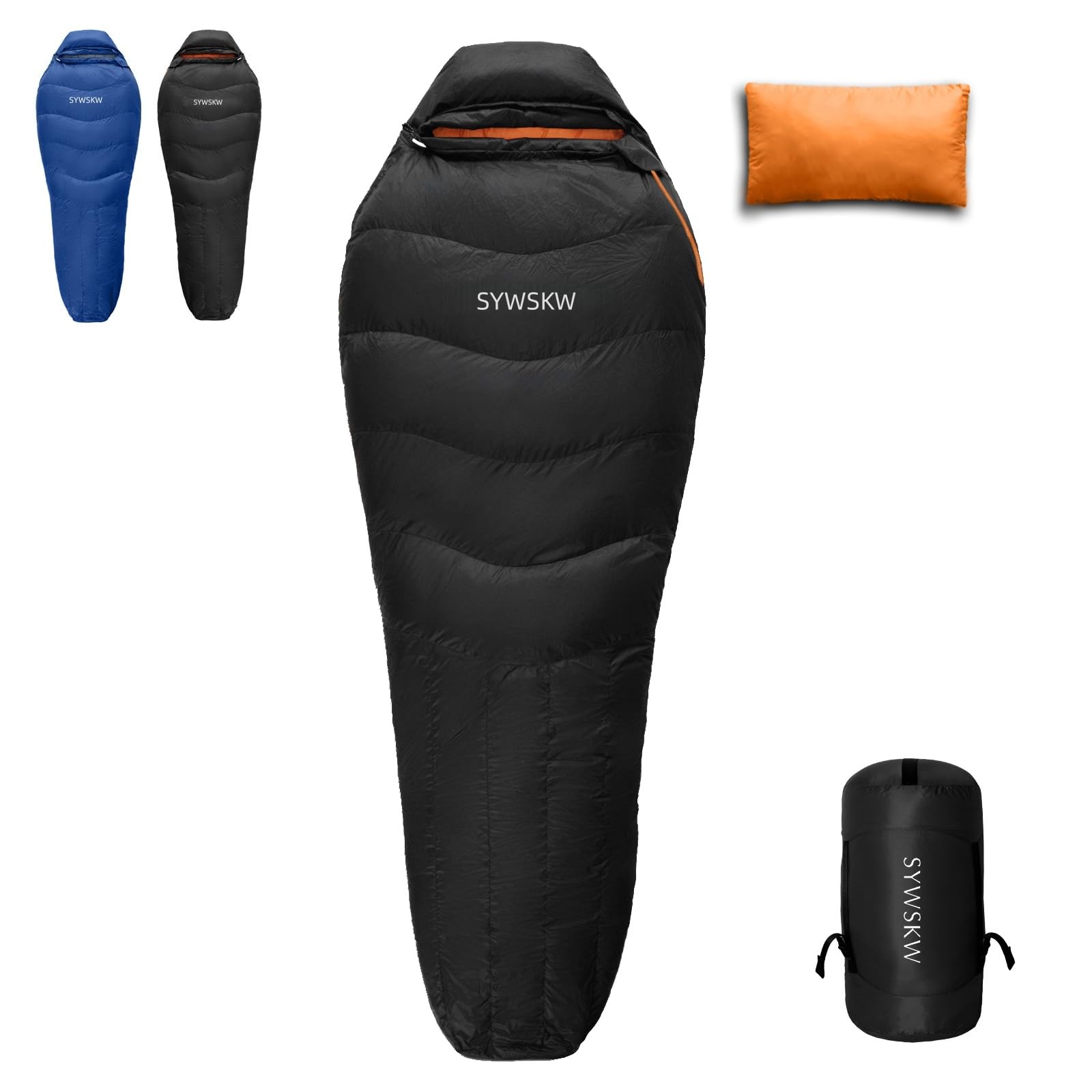
SYWSKW Down Mummy with Pillow
Key Features
- Comfort Temp Rating: 15°F survival
- Packed Weight & Size: 2.38-2.99 lbs
- Shape and Roominess: Mummy wide, roomy
- Zipper Quality: Difficult
- Fill Material: 680FP Duck Down
- Price: Mid-Range
This sleeping bag delivers on its promise of a roomy mummy cut with genuine down insulation at a price that fits a tight budget. The wide 33.5-inch width allows side sleepers and broader shoulders to move comfortably, a rare find under $100. However, the zipper can catch on the fabric, requiring careful attention when closing. For cold-weather backpackers who value extra space over fuss-free operation, this bag is a solid option, but those who prioritize a hassle-free zipper may prefer the narrower budget mummy bag with a better reputation for smooth closure.
Pros
- 680FP down fill provides warmth suitable for freezing conditions.
- Packs down compactly for its size, making it easy to carry in a backpack.
- Detachable pillow adds convenience without requiring extra gear.
Cons
- Zipper can catch on the fabric, requiring careful operation in cold or dark conditions.
Best for backpackers who prioritize a wide fit and down insulation over zipper smoothness — a good mid-range choice for cold-weather trips if you’re willing to work with the zipper.
Best for Ultralight 3-Season
Naturehike Ultralight Down

Key Features
- Comfort Temp Rating: 40.4°F comfort
- Packed Weight & Size: 2 lbs
- Shape and Roominess: Semi-rectangular, moderate
- Zipper Quality: Adequate
- Fill Material: 650FP Duck Down
- Price: Premium
The Naturehike Ultralight Down Sleeping Bag brings genuine weight savings at 2 lbs with 650FP down, packing down small enough for ultralight backpacking trips. However, its $120 price tag places it beyond the under-$100 focus of this guide, and the 40°F comfort rating tends to feel more like 50°F in practice — a point worth noting for cool-weather campers. For backpackers who can stretch their budget and prioritize compressibility over cold-weather performance, this bag delivers on its core promise of lightweight warmth.
Pros
- Lightweight at just 2 lbs with excellent packability
- 650FP down provides good warmth-to-weight ratio
- Roomy semi-rectangular shape offers comfort for side sleepers
Cons
- Premium price exceeds the budget intent of this guide
- Temperature rating can be optimistic; comfort may be closer to 50°F
Best for weight-focused backpackers who can exceed $100 and expect mild nighttime temperatures above 50°F.
How to Choose
The single most important rule when buying a budget backpacking sleeping bag: ignore the survival temperature and focus on the comfort rating.
Comfort Temperature Rating
Every budget bag comes with two numbers: a survival limit (you won’t freeze) and a comfort rating (you’ll sleep warm). Most brands inflate the survival number by 10-20°F. The comfort rating is what actually matters for a good night’s sleep.
For example, a bag rated to 20°F survival is often comfortable only down to 40°F. If you plan to camp near freezing, buy a bag with a comfort rating at least 10°F below the coldest expected temperature.
Packed Weight & Size
Weight is the biggest trade-off under $100. A 1.5 lb synthetic bag packs smaller and is easier to carry but sacrifices warmth and durability. A 3 lb rectangular bag is heavier and bulkier but cheaper and roomier.
Compressed size matters: a bag that packs to the size of a football is much easier to fit in a backpack than one the size of a sleeping pad. Check the compressed dimensions in the specs, not just the weight.
Shape and Roominess
Mummy bags are warmest because they minimize air volume, but they restrict movement. Side sleepers and broad-shouldered individuals often find them uncomfortable. Rectangular or envelope bags offer more space but lose heat faster.
Hybrid shapes (semi-rectangular) strike a middle ground. If you toss and turn, choose a bag with at least 32 inches of shoulder girth. Budget bags often skimp on width, especially for taller users.
Zipper Quality
Zipper failure is the most common complaint across budget sleeping bags. Cheap zippers snag on fabric, self-unzip, or break after a few trips. Look for bags with a zipper guard (a fabric strip between zipper and shell) and large, easy-to-grip pulls.
A broken zipper in the field means either a cold draft or difficulty getting out. If reliability is critical, consider spending a bit more for a bag with better zipper reviews, even if it’s heavier.
Fill Material
Synthetic fill is cheaper, retains warmth when wet, and is easier to wash, but it’s heavier and less compressible than down. Down fill is lighter and packs smaller, but it loses insulation when damp and costs more.
For budget buyers, synthetic is the default. Down bags under $100 are rare and often use lower-fill-power (600-650FP) that compresses well but may not last as long. If you frequently camp in wet conditions, stick with synthetic.
FAQ
Why does my sleeping bag feel colder than the temperature rating?
The survival rating is not the comfort rating. A bag rated to 20°F survival may only be comfortable down to 40°F. Also, ground insulation matters: a sleeping pad with low R-value will suck heat from below, making the bag feel colder than its rating. Always use a pad with an R-value appropriate for the temperature.
How small should a backpacking sleeping bag pack down?
For backpacking, look for a compressed volume of 8-12 liters (about the size of a football). Synthetic bags under 2.5 lbs usually pack to this range. Down bags can compress even smaller. Avoid bags that pack larger than a soccer ball unless you have a spacious pack.
Can I use a summer sleeping bag for 3-season camping?
Only if you camp in mild climates where nights stay above 50°F. Summer bags (comfort 55-60°F) are lightweight but useless in spring or fall. For true 3-season use, aim for a comfort rating of 30-40°F. If you already own a summer bag, pair it with a liner or wear extra layers to extend its range by 5-10°F.
Is a down sleeping bag worth the extra money for backpacking?
Yes, if weight savings and packability are your top priorities and you mostly camp in dry conditions. Down compresses smaller than synthetic and lasts longer with proper care. But it’s more expensive and loses insulation when wet. For budget backpackers, a quality synthetic bag is often the better value unless you can stretch to $120+ for a decent down bag.