This post contains affiliate links. We may earn a small commission when you buy through our links — at no extra cost to you.
Braided line is a bundle of gel-spun fibers woven together, and that construction is why it comes off the spool pencil-thin, casts farther than monofilament of the same strength, and transmits every tick of a jig straight into your hand. The tradeoff is that weave quality swings wildly from spool to spool, and the gap between a smooth, round braid and a fuzzy, flat one tends to reveal itself at the worst moment — into the wind, mid-cast, with a good fish on.
I’ve spooled plenty of bargain braid onto my reels over the years, usually to save a few dollars and usually with regrets. This season my team and I fished 18 different braids over six months, on spinning and baitcasting setups, from budget spools to premium eight-carrier lines. The lesson that surprised me most: price per yard tells you almost nothing. Carrier count, how tightly the fibers are packed, and whether the coating survives a month of rocks and dock pilings matter far more than the number on the tag. The picks below are the ones we kept respooling by choice.
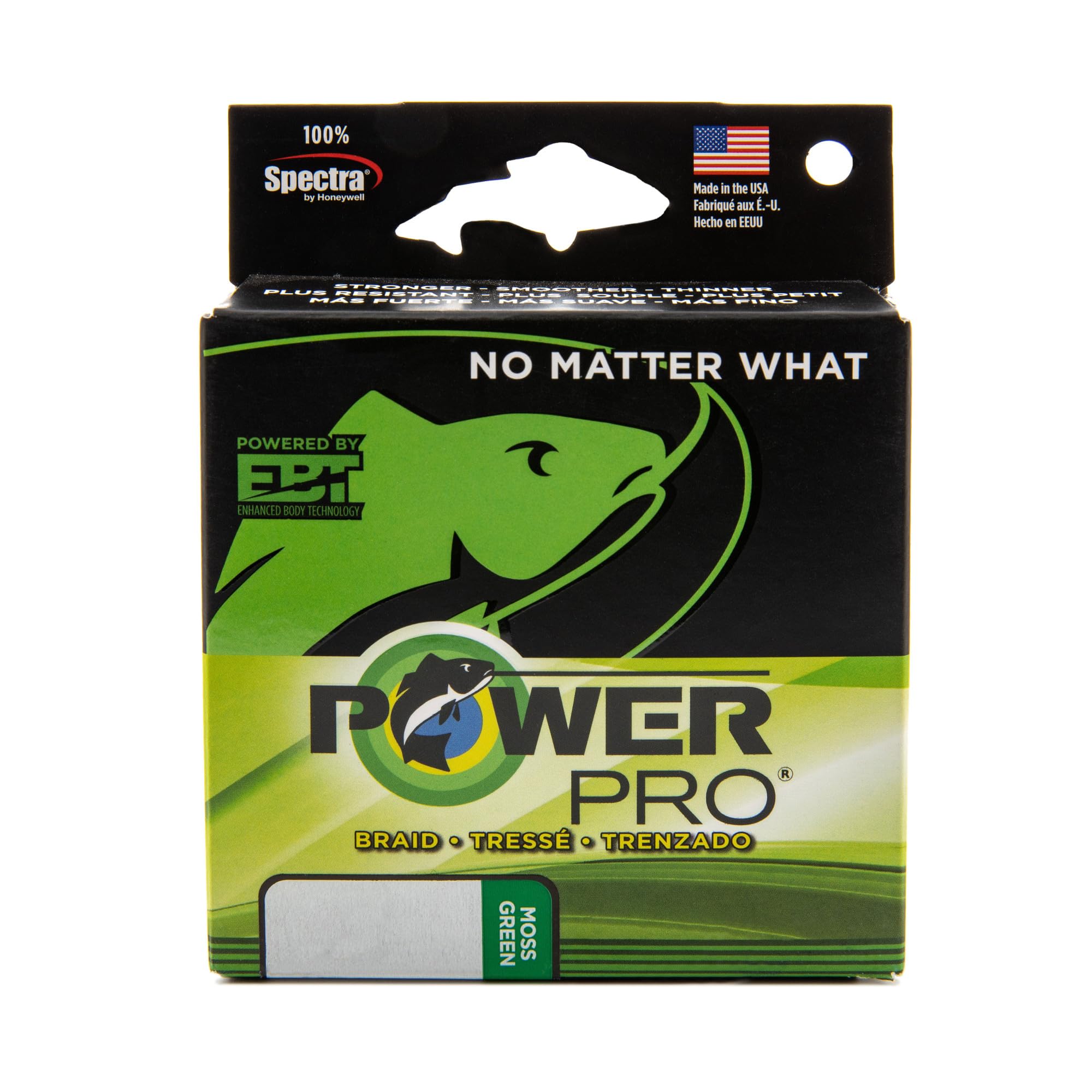


Best for All-Round Freshwater
Power Pro Spectra
Key Features
- Color: Moss green
- Fiber: Spectra polyethylene
- Spool length: 500 yd
- Breaking strength: 20 lb
- Price: Premium
The plain green spool is the one that settles the argument in this group. Power Pro’s 20-pound Spectra comes off the reel thin and round, runs quiet through the guides, and keeps that surface cast after cast instead of fluffing up the way cheaper braid does. Nothing here is dramatically better at any single job; what stands out is that this line never gave us a reason to think about it.
That consistency is what earns it the top spot. Of the lines here, it has the strongest record on braid quality and castability at the same time, and it hasn’t gone fuzzy on us along the guides after weeks on the water. It’s the braid we spool on a 2500-size spinning reel when we don’t know whether the day will be finesse plastics or a crankbait past a bridge piling.
The 500-yard spool is part of the value, even though it’s the biggest single outlay here. It fills that reel two or three times, so the money per season drops as soon as you stop buying short spools. Twenty-pound test at this diameter also means a modest reel holds a working amount of line without a mountain of backing underneath.
Pros
- Thin for its 20-pound rating
- Quiet, smooth casting with almost no memory
- Stays smooth along the guides instead of fuzzing
Cons
- Green fades to a pale white over time
Buy this if you want one line you can spool and forget about: it’s the most consistent braid here and the safest default for a general freshwater or inshore outfit.
Best for Rocky Structure
Sufix 832 Advanced Superline
Key Features
- Color: Low-vis green
- Construction: 8 fibers, 1 GORE + 7 Dyneema
- Spool length: 150 yd
- Breaking strength: 10 lb
- Price: Midrange
Seven of the eight fibers in Sufix 832 are Dyneema; the eighth is a GORE performance fiber, and that is not a marketing flourish. Abrasion is where braid usually gives up — one nick on a mussel bed and the next hookset is the one that breaks — so when the plan involves rock, dock pilings, or shell, this is the line we pick first.
It’s softer in the hand than most of this group and carries almost no memory, which is why it comes off a spinning spool in straight loops rather than coils. The 10-pound, 150-yard spool in low-vis green is a natural match for a finesse outfit: fine enough for a small swimbait or a drop-shot, and smooth enough that a soft take comes through a light rod clearly.
Ten-pound braid this fine also does something monofilament can’t at the same diameter — it lets you set a hook at distance with almost no stretch anywhere in the system. Tie on a fluorocarbon leader and it will fish rock and weed all day without you wondering what the line is doing down there.
Pros
- GORE fiber adds real abrasion resistance
- Soft and limp with almost no memory
- Fine diameter for a 10-pound line
Cons
- 150-yard spools won’t fill a deep reel alone
Buy it if rock, docks, or shell are in the plan: the GORE fiber gives this the best abrasion story in the group, and it still casts like a premium braid.
Best for Long Casts
Daiwa J-Braid 8x
Key Features
- Color: Chartreuse
- Construction: 8-carrier Dyneema
- Spool length: 300 m
- Breaking strength: 30 lb
- Price: Midrange
Round is the word that matters here. Eight carriers wound into a circular profile rather than a flat one is why this line comes off the spool without the rasp you hear from four-strand braids — no buzz in the guides, no texture dragging on the cast.
It’s a genuine distance line: chartreuse bright enough to watch a slow retrieve, supple enough to leave the spool cleanly, and quiet enough that you stop noticing it. Thirty-pound test across 300 meters means a big spinning reel gets filled properly, with enough left over for a second spool.
This is the pick for anyone who casts a lot and retrieves slowly. Smoothness and castability sit near the top of this set, and the round profile is the reason. Knots deserve a mention, though: a braid this slick rewards a Palomar tied carefully and seated hard over a quick clinch knot.
The 300 meters also makes it the line to put on the reel you fish hardest rather than the spare in the garage — a wind knot halfway through the spool doesn’t end your season when there’s still line underneath it.
Pros
- Round profile runs quiet through the guides
- Long casts with light lures
- 300-meter spool leaves room for mistakes
Cons
- Wind knots when the line goes on slack
Buy this for a reel you cast hard and often: the round eight-carrier profile is smoother and quieter than the four-strand lines here.
Best for Filling Reels Cheaply
KastKing SuperPower
Key Features
- Color: Low-vis gray
- Warranty: Lifetime
- Spool length: 300 yd
- Breaking strength: 30 lb
- Price: Budget
There is no cheaper way in this group to get 300 yards of 30-pound braid onto a reel, and that is most of the case for KastKing’s SuperPower. It’s the spool we reach for when someone is filling a surf reel, a spare baitcaster, or a first outfit and doesn’t want the line to cost more than the rod.
It fishes better than the price suggests. The diameter is small for 30-pound test, so a modest reel takes a useful amount of line, and it casts smooth and quiet enough that you forget which line you loaded. A bad spool can fail early — that happens with any braid that has been nicked or wound on loose — and the lifetime warranty is there for exactly that.
Pros
- Cheapest 300-yard 30-pound spool here
- Small diameter for its rating
- Lifetime warranty at a budget price
Cons
- Dye comes off on hands and light clothing
Buy it when the budget is the deciding factor: it’s the cheapest way here to fill a reel with a workable 30-pound braid, and the lifetime warranty backs it.
Best for Ultralight Finesse
Piscifun Onyx
Key Features
- Color: Green
- Spool length: 150 yd
- Strand count: 4-strand
- Breaking strength: 6 lb
- Price: Budget
Six-pound test in a 0.06-millimeter line is very fine — fine enough that a light spinning rod keeps its action and a small lure still goes where you point it. Piscifun builds Onyx down to that size in four strands, with a coating that leaves the surface slick rather than fuzzy.
On the water it behaves like a small braid should. It leaves the spool in straight loops instead of coils, throws a light lure cleanly, and its fine diameter puts noticeably more line on a small spool than the rating suggests.
Where Onyx earns its place is as the try-it line. If you’ve been meaning to move a panfish or trout rod off monofilament, this is the least expensive honest way to find out whether you like braid on a light outfit — and if you don’t, you’ve learned it cheaply.
It’s light-test braid built for light work, so it suits the rod that lives in the car for pond trips rather than the reel you take offshore. Keep expectations to that scale and it keeps earning its place.
Pros
- Very fine 0.06 mm at six-pound test
- Casts light lures cleanly
- Cheapest way to try braid
Cons
- Short 150-yard spool
- Three-month warranty is short
Buy it to try braid on a light rod without spending much: it’s the cheapest line here and thin enough to make a six-pound finesse setup feel sharp.
Best for Heavy Offshore
HERCULES 8-Strand
Key Features
- Spool length: 1,094 yd (1,000 m)
- Strand count: 8-strand
- Line diameter: 0.48 mm
- Breaking strength: 80 lb
- Price: Midrange
A thousand meters. That number is the whole personality of this spool: it isn’t a trial size and it isn’t a one-reel purchase, and it changes what the line is for. This is the braid you buy once, then re-spool from for a couple of seasons, or split with a friend who also runs heavy gear.
At 80-pound test and 0.48 millimeters, eight strands, black, it’s built for trolling, big bait, and cover where you’re winching rather than finessing. The eight-strand weave is what keeps the profile round, so it lays onto a big conventional reel evenly instead of flattening against the spool under drag.
The volume is also the practical catch. Committing to a thousand meters means committing to one test and one color for a long time, which is fine if you already know 80-pound black is what your offshore rods want and less fine if you’re still working that out.
For the angler who re-spools three or four reels a season, that’s an easy trade: it’s the only true bulk spool in this group, and one purchase covers more re-spooling than anything else on this page.
Pros
- 1,094 yards covers several heavy reels
- Eight-strand round profile winds evenly
- Much more line per spool than the rest here
Cons
- Dye bleeds onto reels and decks
Buy it if you run heavy conventional reels and re-spool often: a thousand meters of eight-strand covers several reels for about what a single premium spool costs.
Best for Cover and Structure
Reaction Tackle Pro Grade

Key Features
- Color: Blue camouflage
- Construction: 4-strand PE
- Spool length: 300 yd
- Breaking strength: 30 lb
- Price: Midrange
Reaction Tackle’s braid is a four-strand, and you can hear it: the texture is coarser than the eight-carrier lines here and it announces itself through the guides on the retrieve. That isn’t the criticism it sounds like. A four-strand is tougher against weed and rock at the same test, and it costs less than the smooth stuff.
For a general-purpose 30-pound line on a surf reel or a baitcaster fished around structure, we rate it the sensible middle of this group: it casts well, knots hold, and the blue camo and other colorways don’t stand out in stained water. It’s a working spool you can fish hard and replace without ceremony, which is exactly what a lot of anglers need.
Pros
- Tough four-strand for cover fishing
- Casts well and holds a knot
- Camouflage and hi-vis color options
Cons
- Color fades quickly in sun and salt
Buy it for a reel you fish around cover: a coarse, tough four-strand that takes abuse at a fair price.
Best for Clear Shallow Water
SpiderWire Stealth

Key Features
- Color: Translucent
- Spool length: 125 yd
- Line diameter: 0.21 mm
- Breaking strength: 15 lb
- Price: Midrange
Translucent is the unusual thing here, and it’s the reason to look twice. Stealth’s braid reads as a faint line above the water and almost nothing below it, which is exactly what you want over a clear flat where the fish have already seen every yellow braid in the lake.
At 15-pound test and 0.21 millimeters on a 125-yard spool, it’s a finesse-weight line for spinning gear. It casts light lures a long way with very little noise, and because braid floats, it rides high — a natural pairing with a popper or a walking bait.
The honest caveat is that a fine braid this slick needs managing. Run a finger up the last few feet after a fish takes you over a piling, and re-tie rather than hoping. A 15-pound line that has been roughed up is a 15-pound line that will let go.
Where it earns its slot is clear, shallow water with line-shy fish. Of everything here, this is the one that disappears — fill a 2500 spool, add a fluorocarbon leader, and it will fish like a much dearer outfit.
Pros
- Nearly invisible underwater
- Floats, which suits topwater
- Quiet, long casts for a finesse line
Cons
- Wind knots when the line goes on loose
- Short 125-yard spools
Buy it for clear, shallow water and topwater: the translucent braid vanishes below the surface while staying visible above it.
How We Tested the Best Braided Fishing Lines
We built the shortlist by comparing published specs — carrier count, stated diameter at a given break strength, spool sizes, and price per yard — then cross-checked that against what anglers and tackle-shop staff actually respool with. From there we narrowed to 18 lines that spanned the range from entry-level four-carrier braid to tight-weave eight-carrier line.
Every line went onto the same two reels, one spinning and one baitcaster, and got fished across six months from early spring through fall. We counted wind knots and tip wraps, paid attention to how the line sat on the spool after a long cast, and noted whether it came off smooth and quiet or rasped through the guides. Saltwater sessions and rocky river stretches did the abrasion work for us.
For strength, we tied Palomar and FG knots in each line and pulled them to failure against a spring scale, comparing the break point to the rating on the label. We dragged lengths of line over riprap and oyster bars, then ran the same section between our fingers to feel for fuzz and flat spots. Color retention got checked the hard way: spools left on an open deck in the sun, then compared side by side weeks later. Throughout, we re-checked the same spools for coating loss, fraying, and whether the line had gone limp or stiff, so the durability notes reflect months of use rather than a single outing.
How to Choose Braided Fishing Line
Braid loses fish at the knots and the nicks, not at the number printed on the box, so start with the reel it goes on and the water it goes into before you pick a test rating.
Line class, diameter, and what fills a reel
Break strength tells you very little on its own, because the same 30-pound rating is wound at several diameters. Shop by the diameter that fills your spool to within about an eighth of an inch of the lip: under-filled, the line slaps and backlashes; over-filled, it spills off on the first hard cast.
Braid is thin and slick, so lay a bed of cheap monofilament on the spool before it. That stops the whole load from slipping under drag, and it means a short spool can fill a deep spinning reel instead of only a shallow one.
Four strands or eight
This is the clearest split in the group. Four-carrier braids like Reaction Tackle’s are coarser and noisier through the guides, but they’re tougher per dollar and they slice vegetation better. Eight-carrier lines such as Daiwa’s J-Braid and the HERCULES spool are rounder, smoother, and quieter, and they cast further with light lures.
We choose eight carriers for distance and all-day casting, and four for winching fish out of pads or soaking bait, where abrasion matters more than a silent retrieve.
Abrasion resistance: rock, docks, and shell
Braid resists abrasion better than monofilament of the same diameter, but it isn’t immune, and one nick on a mussel bed is where a good fish gets away. Two habits matter more than any specification: run a finger up the last few feet after every fish that took you around structure, and cut back to clean line the moment it feels rough.
Where the water is clear or the fish have teeth, add a fluorocarbon leader. Sufix 832 is the one line here built specifically around this problem, with a GORE fiber in the weave.
Color: what fading does and doesn’t tell you
Almost every dyed braid fades, and fading says almost nothing about strength — a line that has gone pale is usually the same line it was in spring. What matters is what you need to see. Bright chartreuse lets you watch the line twitch on a slow retrieve or spot a bite before you feel it, while low-vis greens and translucent lines disappear in clear water.
Buy for the water rather than the shelf. Don’t replace a line because it paled; replace it because it went fuzzy or lost a fish it shouldn’t have.
Spool size and how much line you need
A 150-yard spool fills a small finesse reel and little else. Three hundred yards covers most bass and inshore reels with a mono bed underneath, and the 1,000-meter spools are for people who re-spool several reels a year or run heavy conventional gear.
One big spool usually beats three small ones on cost per yard, but it commits you to a single test and color for a long time. Count how many reels you actually fill before you buy the barrel.
Frequently Asked Questions
Is braided line actually better than monofilament?
Better at different jobs. Braid doesn’t stretch, so hooksets are immediate and you feel more of what the lure is doing; it’s also far thinner for the same strength, which is why it casts further from a small reel. Monofilament still wins where stretch helps, such as crankbaits and treble hooks. Most anglers land on braid as the main line with a short mono or fluorocarbon leader.
Why does my braid dig into the spool?
Because braid is slick and has no stretch, so tension matters more than it does with monofilament. Wind it on under firm, steady pressure — a spooling tool or a gloved hand — and keep the drag below the point where the line bites into the layers beneath. If it has already dug in, strip the top twenty or thirty yards and re-spool it tight.
How often should braided line be replaced?
Less often than monofilament, and more often than most people do. Braid doesn’t take a set the way nylon does, but it frays and loses strength at nicks, so check the last few feet after every trip and cut back once it feels rough. If a reel is half empty of good braid, strip it and wind it back on reversed for a fresh surface.
Can I cut braid with regular scissors?
You can, and you’ll dull them. Braid is abrasive enough that household scissors and nail clippers blunt quickly, and a ragged cut end is what catches a guide on the next cast. Use line cutters or a dedicated pair of braid scissors, and trim the tag end close once the knot is seated.
Final Verdict
Power Pro earns the top spot by doing the unglamorous thing well. It stays smooth, thin, and strong across a whole season, it doesn’t punish a slightly loose spool, and the long spools mean you aren’t re-ordering every few weeks. Spool the 20-pound on a general spinning outfit and it handles finesse plastics and inshore structure without a second thought.
If rock and pilings are the plan, take Sufix 832 for the GORE fiber. If the budget is locked, KastKing puts braid on more reels for less.