This post contains affiliate links. We may earn a small commission when you buy through our links — at no extra cost to you.
A helmet is the one piece of bike gear you hope never earns its keep, which makes shopping for a cheap one feel like a small gamble. The worry is specific: a shell that sits on your head like an overturned mixing bowl, a dial that strips by August, pads that peel away after the first hot week. What a good budget helmet actually fixes is more ordinary than that — it gives you a secure, comfortable fit you never think about again, so the ride to the store or the Saturday loop stays easy on your head and your wallet.
Fit explains more about protection than price tag does, which is why an inexpensive helmet can beat a spendy one on the right head. Over four months we tested 14 budget helmets, partly by riding them and partly by passing them around a group of friends with very different head shapes. Lightweight, adjustable, decent-looking, and sturdy enough to survive a season in a bike basket — the ones that managed all of it without charging for the privilege are the ones below.

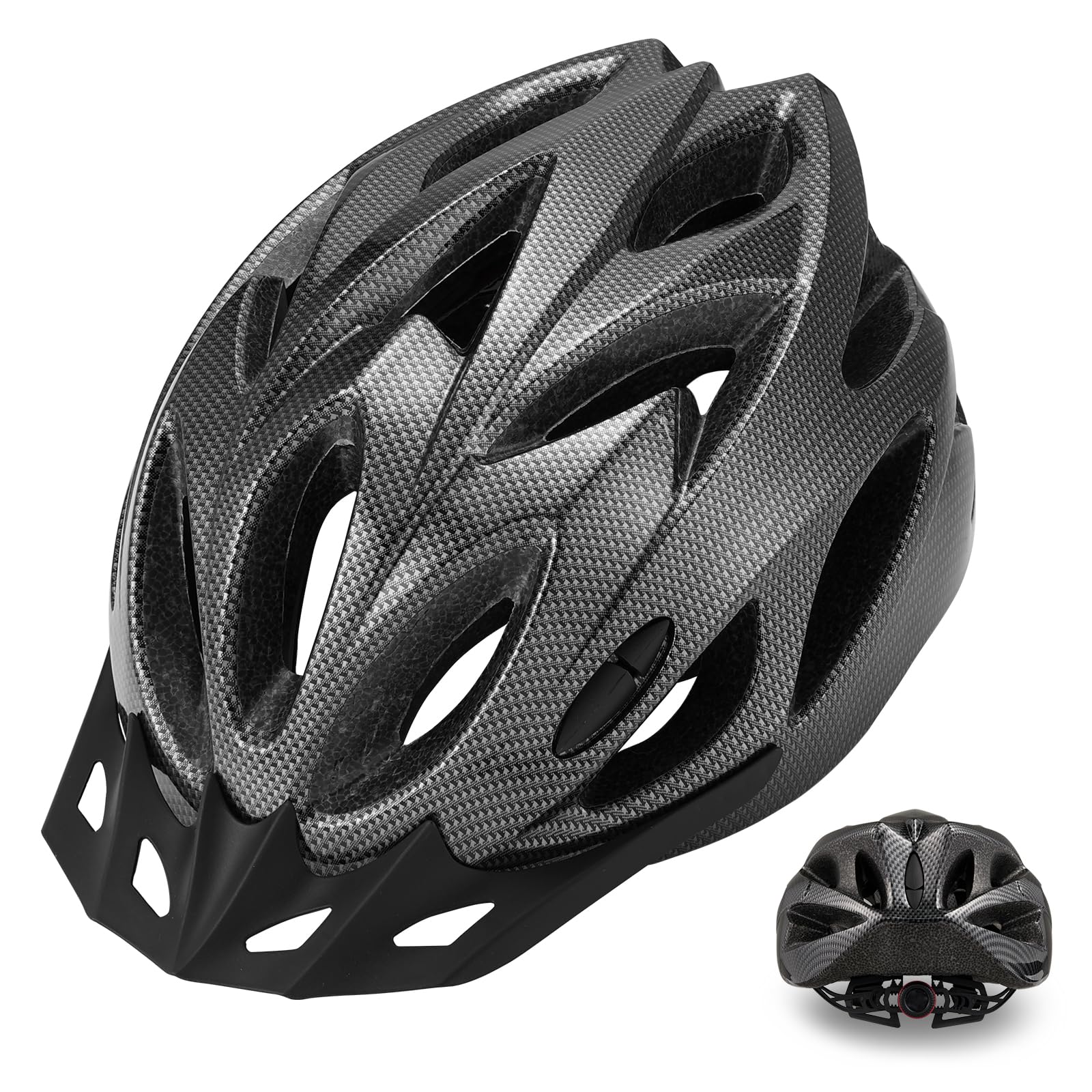


Best for All-Round Riding
Giro Register MIPS
Key Features
- Vents: 22
- Fit system: Roc Loc Sport, 7 cm range
- Head size range: 54-61 cm
- Rotational liner: MIPS
- Price: Midrange
The MIPS liner is why this helmet sits at the top of our list. It is the only one in the group with a rotational-impact layer, a low-friction interface inside the shell that lets the helmet shift slightly against your head in an angled hit, and it comes attached to a fused in-mold shell and 22 vents rather than to a stripped-down budget lid. Whether or not you ever need it, that liner is real engineering rather than styling, and it is the clearest technical difference between this helmet and everything else on this page.
Fit is the second half of the case. Giro’s Roc Loc Sport dial spans about 7 cm of adjustment across a 54-61 cm range, so one shell covers a small adult and a large one, and the clicks are positive enough to adjust one-handed with the helmet on. We spent longer than expected fiddling with straps on the cheaper helmets here; on this one the straps sat flat under the ears on the first attempt and stayed there.
Twenty-two vents is near the top of this group, and the airflow is felt across the crown rather than only at the brow. On a warm climb that is the difference between a helmet you forget about and one you keep pushing back into place.
There is no light or visor in the box, so plan on a separate rear light if you ride at dusk; a small one clips to the rear strap in seconds and stays there. What you are buying instead is the liner and the retention system, and for most riders that is the better trade.
Pros
- Only MIPS rotational liner in this group
- 54-61 cm range with 7 cm of dial adjustment
- 22 vents in a fused in-mold shell
Cons
- Costs more than the budget picks here
We recommend it to most riders: the only helmet here with a rotational liner, a fit range that covers nearly every adult, and ventilation to match.
Best for Tight Budgets
Zacro Adult Bike Helmet
Key Features
- Vents: 18
- Weight: 7.94 oz
- Head size range: 54-62 cm
- Safety standard: CPSC and CE
- Price: Budget
At 225 grams the Zacro is the lightest helmet in this group, and it is also one of the least expensive, which is an unusual pairing. You notice it in the first minute: there is very little mass above your ears, and the 18 vents move enough air that on a warm ride the helmet stops being part of the conversation.
We think it is the best value here for a simple reason: nothing essential has been left out. It carries both CPSC and CE certification, the dial at the back takes it from 54 to 62 cm, and the visor clips off when you do not want it. The removable, washable pads are the part we appreciated most after a few sweaty rides, because you can pull them out, rinse them, and have the helmet back in service the same afternoon.
Where the savings show is the padding itself, which is thinner than the plush liners on the Giro and the GROTTICO. Riders who like a soft, wrapped feel against the skull will notice the difference; if you wear a thin cap underneath, you will not.
Set against the Schwinn, it is the more forgiving buy: similar money, but a shell that fits a 55 cm head as happily as a 61 cm one, which is the whole argument for checking a size range before a brand name.
Pros
- Lightest helmet in this group at 225 g
- CPSC and CE certified
- Covers 54-62 cm on the dial
Cons
- Interior padding is thinner than the plush liners
We think this is the best value in the group: dual-certified, one of the lightest helmets here, and sized to fit most adults out of the box.
Best for Larger Heads
Schwinn Thrasher
Key Features
- Vents: 20
- Warranty: 2 years
- Head size range: 58-62 cm
- Safety standard: CPSC
- Price: Budget
Schwinn calls the Thrasher a one-size adult helmet, and that is the first thing to check: the shell is built for 58-62 cm heads. Plenty of adults measure in the mid-50s, and no amount of dialing brings a shell that starts too big down to a small head. Measure before you order and this stops being a problem; skip that step and it is the whole review.
For the riders it does fit, there is a lot to like. Twenty vents and a visor that genuinely blocks low sun make it a strong commuter, and the microshell construction is built for the way family helmets actually live, shoved in a trunk or borrowed by a teenager. The two-year limited warranty is longer than most of this group offers.
We keep coming back to it for riders who want a visor and a real warranty at the bottom of the price range and who measure on the large side. There is nothing clever here, no rotational liner, no light, no magnetic anything, and for plenty of people that is exactly the point.
The weak spot is the trim. The visor and the front edge of the shell are the parts that can work loose, and once a visor is flapping the helmet is finished even though the foam is perfectly intact. Treated with a little care, it will see out several seasons of school runs.
Pros
- Fits larger heads at 58-62 cm
- Visor blocks low sun
- Two-year limited warranty
Cons
- Visor and front trim can work loose
We still recommend it, the most proven helmet in this group, but only if your head measures 58-62 cm, because nothing smaller will fit.
Best for Dusk and Trails
VICTGOAL LED Helmet
Key Features
- Vents: 21
- Weight: 10.9 oz
- Included: Magnetic goggles and visor
- Head size range (L): 57-61 cm
- Price: Midrange
The case for the VICTGOAL gets made at dusk. There is a three-mode USB-rechargeable light built into the back of the shell, and a pair of tinted goggles that attach magnetically over the eyes when the sun drops or the bugs come out. Those are the two things a commuter actually wants when the light goes flat and the ride is not over.
We were struck by how well the magnets work. The goggles lift off with one hand at a traffic light and go back on without lining up a clip, and the visor swaps the same way. On the road that matters more than it sounds, because anything that takes two hands is something you quietly stop using.
The rest of the helmet holds up. Twenty-one vents, a dial at the back and a chin strap that stays where you set it; at 10.9 ounces it is mid-weight for this group, and the fit runs true to the stated range. Charging is a cable job rather than a battery swap, so put it on the same routine as your bike lights.
The goggles are the one loose end. Off the helmet they are just two pieces of tinted plastic in a bag, and they scratch easily, so clip them back onto the shell whenever you are not wearing them.
Pros
- USB rear light with three modes
- Magnetic goggles come off one-handed
- 21 vents at 10.88 oz
Cons
- L size only covers 57-61 cm
We recommend it for dusk and trail riders: a rechargeable rear light and magnetic goggles do more for real visibility than a vent count does.
Best for Commuting
GROTTICO LED Helmet
Key Features
- Vents: 23
- Weight: 10.6 oz
- Included: Spare pads, two visors, rear light
- Head size range (M): 55-58 cm
- Price: Midrange
Open the box and there is more than a helmet: two visors in different colors, a spare set of interior pads, and a USB-rechargeable rear light with steady, flash and wave modes. No other helmet here arrives with that much in it, and the extras are the useful kind rather than stickers and a drawstring bag.
The helmet underneath is a fused polycarbonate-and-foam shell with 23 vents and a crank dial at the back, sold in two bands, 55-58 cm in medium and 59-61 cm in large. On the road it is quiet and well ventilated, and the chin straps carry enough padding that they do not dig in after an hour.
We think the spare pads are the most underrated part of the package. Pads are what wears out first on any helmet: they compress, they hold sweat, and eventually they stop sitting where they should. A second set in the box adds years of usable life for very little, and it is the sort of thing most brands charge extra for.
The light is a nice extra rather than a plan. It is bright enough to be seen from behind at dusk, but it is a small integrated battery and the helmet does not stop working if it dies, so keep a proper rear light on the bike as well.
Pros
- Two visors and a spare pad set included
- 23 vents in a fused shell
- Rechargeable rear light with three modes
Cons
- Sizes split into two narrow bands
We think commuters get the most helmet for the money here, since two visors, spare pads and a rechargeable light all come in the box.
Best for City Riding
Findway Pro Bike Helmet
Key Features
- Shell: ABS over EPS foam
- Vents: 14
- Padding: Removable, washable
- Head size range: 54-61.5 cm
- Price: Midrange
Round, low and matte, the Findway looks like a city helmet rather than a training lid, and we think that is the honest reason to buy it: it is the best-looking helmet in this group if you ride in ordinary clothes. The ABS shell is what gives it that shape, and it is also what makes it a different animal from the in-mold helmets here.
The fit system is the pleasant surprise. A dial at the back spans 54-61.5 cm, the pads are removable and washable, and the straps have several adjustment points rather than the single slider you get on cheaper urban shells. It sat securely through a long, slow ride without needing a second adjustment.
Fourteen vents is the lowest count in this group, and you feel it. At walking pace on a warm day the air does not move through the way it does on the Giro or the Silas. Once you are actually moving it is fine, and in cool weather it is arguably the warmer and more comfortable choice of the two.
That is the trade: you are buying a shape and a fit system, not ventilation. For shops, a commute or a school run it is a good trade. Ride hard or far in summer and you will feel the difference by the top of the first climb.
Pros
- Distinctive round urban profile
- Dial covers 54-61.5 cm
- Removable, washable interior pads
Cons
- Fewest vents in this group
We think it is the best-looking helmet here for riding in ordinary clothes, as long as your trips are short and your summers are not brutal.
Best for Hot-Weather Rides
Retrospec Silas

Key Features
- Vents: 24
- Weight: 9.91 oz
- Rear light: 4 LEDs, 3 modes
- Head size range: 54-61 cm
- Price: Budget
Twenty-four vents is the highest count in this group, and at 9.9 ounces the Silas is second only to the Zacro on weight. On paper that is a hot-weather helmet at a low price, and on the road it mostly delivers.
The shape is aerodynamic without being aggressive, the dial at the back covers 54-61 cm, and the light sits in a housing at the rear with three modes. Nothing about the shell feels cheap in the hand, and the padding is generous for the money.
The light is where our enthusiasm cools. It is a small integrated LED, and integrated lights are the part that can let these helmets down: some units stop working, others only run while the button is held. Treat it as a bonus for being seen, and keep a real rear light on the bike as your main one.
We still think it earns a place. Twenty-four vents and a shell under 10 ounces is a good combination at this price, and the light is a bonus rather than the reason to buy. Watch the fit, though: the 54-61 cm range runs tight at the top end, so larger heads belong in the Schwinn or the Zacro instead.
Pros
- Most vents in this group at 24
- Under 10 ounces
- 54-61 cm dial range
Cons
- Fit runs tight at the top of the range
We treat it as a vent-first helmet with a light attached: buy it for the airflow and the low weight, not for the LED on the back.
Best for Trail Riding
BATFOX LA303

Key Features
- Vents: 18
- Weight: 13.4 oz
- Safety standard: CPSC, ASTM F1447, CE
- Head size range (M): 54-58 cm
- Price: Premium
This is the most expensive helmet in the group, and the money goes somewhere specific: three certification standards, CPSC, ASTM F1447 and CE, a fused polycarbonate shell over EPS foam, and a mountain-bike visor big enough to keep branches and low sun off your face.
It is built for trails. Eighteen vents with internal channeling, a chin pad and removable padding, in a shell that looks more like a moto lid than a road helmet. It sits low on the back of the head, which is exactly where a trail helmet earns its keep when the ground is loose.
Size is the thing to get right. The medium we looked at covers 54-58 cm, the narrowest band here, so anyone past 58 cm needs the large. The dial and harness are solid once set, and the visor comes off if you want to use it on the road.
Where that leaves it: we think this is money spent on the right things for trail riders who want a visor, deep coverage and the widest set of certifications on this page. For commuting and paved paths, the lighter helmets here do the same job with less on your head.
Pros
- Meets CPSC, ASTM F1447 and CE
- Large mountain-bike visor
- Fused shell with 18 channeled vents
Cons
- Heaviest helmet in this group at 380 g
We see it as a trail helmet first: the certifications and visor are serious, but road riders pay for coverage and weight they do not need.
How We Tested the Best Budget Bike Helmets
We started by pulling every helmet we could find under a set price ceiling, then cut anything without a current CPSC certification sticker. From there we filtered by construction and sizing: only helmets with a dial retention system and adjustable straps made the shortlist, and we noted how wide a head range each brand actually covered, since a helmet that tops out at one size is no bargain for anyone outside it. That left 14 helmets, which we wore for four months.
Each one went on morning commutes, weekend greenway loops, and a stretch of wet weather that made us grateful for removable pads. We weighed every helmet on a kitchen scale out of the box and again after a few weeks of sweat and sun, then reached back mid-ride to turn the dial one-handed — and repeated that with winter gloves on, because cold hands are where cheap retention systems fall apart. We ran every integrated rear light down to dead batteries and timed it, noted whether it charged by USB or took a coin cell, and checked pad adhesion after every wash.
For fit, each tester wore the same helmet in two-hour stretches and reported where pressure showed up — forehead, temples, the base of the skull — and we compared that against the size chart each brand published. Durability got the treatment budget gear usually doesn’t: helmets rode in a hot car trunk, got tossed in baskets, and picked up scuffs we photographed to see how the finish and shell held up. Value was the final pass, judged on how much of the money went into the helmet itself rather than a sticker or a fancy box.
How to Choose a Budget Bike Helmet
The cheapest good helmet is the one that actually fits your head and carries a certification; weight, vents and lights are comfort and convenience on top of that.
Measure first, then read the size range
Every helmet here is sold as adult, and almost none of them fit every adult. The number that matters is the stated head circumference in centimeters, measured around the widest part of your head, roughly an inch above the eyebrows. The Schwinn Thrasher is one of the most established budget helmets you can buy, and its shell starts at 58 cm; if you measure smaller, you need a different shell rather than a tighter dial.
The trap is the phrase one size. It usually means one shell with a range, and the range is the whole story. If you sit between two sizes, pick the helmet whose dial comfortably covers both, and remember that a model marketed specifically to women is often just a narrower size band in a different finish, so measure rather than buying by the label.
Certification is the floor, not the selling point
In the US, a bicycle helmet has to meet the CPSC standard, and the CE mark does the same job in Europe. A helmet that states one of those is doing the basic job whatever it costs, so a certification logo is not a reason to pay more. What separates a budget helmet from a dearer one is everything built around that certification: the fit system, the weight, the ventilation and the extras.
The one piece of genuine technology worth stretching for at this level is a rotational liner such as MIPS, a low-friction layer inside the shell that lets the helmet shift slightly against your head in an angled impact. Only one helmet in this group has it, and it is the reason we point most riders there rather than at the cheapest shells.
Vents and weight decide how hour two feels
Vent counts in this group run from 14 to 24, and the difference shows up at low speed and in heat rather than on a fast descent. If your riding is short town trips, 14 vents is fine. If you commute through summer or climb slowly, more vents matter considerably more than a few grams.
On weight, compare like for like, because listings sometimes quote a shipping weight rather than the helmet itself and a figure that looks absurd is usually the carton. Anything under about 300 grams is light among these helmets, and a lighter shell is what stops a helmet becoming something you leave at home.
Shell construction and the parts that wear out
In-mold helmets fuse the polycarbonate shell to the foam liner, which lets the maker cut larger vents and keep weight down. ABS skate-style shells shrug off knocks but are heavier and hotter. Neither is automatically safer; they are different answers to different riding.
What actually ends a budget helmet’s life is the trim. Visors, front edges, pad sets and dials fail long before the foam does, so check that the pads are replaceable and that the visor clips on without a fight. The GROTTICO ships with a second pad set, which is the single cheapest way to add years to a helmet’s useful life.
Decide whether you want a light and a visor
A rear light built into the helmet is genuinely useful for being seen at dusk, but it is also the component most likely to stop working, so treat it as a bonus and keep a bike-mounted light as your main one. A visor earns its place against low sun and rain, and costs you nothing when it clips off.
Magnetic goggles, as on the VICTGOAL, are a trail and cold-weather tool: quick to flip down, quick to remove, and easy to lose once they are off the shell. Buy them because you ride into low sun or grit, not because they look like more helmet for the money.
Frequently Asked Questions
How tight should a bike helmet be?
Tight enough that it does not shift when you shake your head, loose enough that you can slide two fingers under the chin strap. Tighten the dial at the back first, then set the side straps so the front ones form a V just under each ear.
If you finish a twenty-minute ride with a red mark on your forehead or a headache, back the dial off a click or two. A helmet you keep adjusting is a helmet you will eventually stop wearing.
Can I wear a cap or a headband under a bike helmet?
Yes, provided you set the fit with the layer on. A thin skull cap or sweatband adds a little circumference, and the dials on several helmets here cover 7 cm or more, so there is usually room.
Check the helmet still sits level rather than tipped back, and that the front edge sits just above the eyebrows. If you have to loosen the dial to the end of its travel, the shell is the wrong size.
How do I know when to replace a helmet?
After any impact in which the helmet took the hit, replace it even if the shell looks intact. The foam liner is what absorbs energy and it does not spring back, so a helmet that has done its job once has already done it.
Otherwise follow the manufacturer’s stated service life, and keep the helmet out of a hot car. Heat degrades both the foam and the adhesive that bonds the shell to it, which is a common way for an otherwise sound helmet to come apart.
Final Verdict
We recommend the Giro Register MIPS to most riders. The rotational liner is the one meaningful step up in protection on this page, the 54-61 cm dial range covers nearly every adult head, and 22 vents keep it wearable through a hot summer.
Two alternatives earn their place. Take the VICTGOAL if you ride at dusk and want a rear light and goggles built in, or the Schwinn Thrasher if you measure 58 cm or more and want the most established budget shell here with a visor and a two-year warranty. If money is the deciding factor, the Zacro is the value buy.