This post contains affiliate links. We may earn a small commission when you buy through our links — at no extra cost to you.
Budget sleeping bags are a study in trade-offs: the cheapest ones save money up front, then charge you in cold nights, snagged zippers, and a stuff sack the size of a duffel. What you want is a bag that holds warmth, packs small and stays light enough to carry, and survives real use without a painful price. I’ve spent enough nights in drafty tents to be skeptical, so my team and I tested 14 budget bags over six months. The right one fixes the false choice between saving money and sleeping well.
The surprise wasn’t warmth—it was how often the small details failed first. A zipper that catches on fabric can ruin an otherwise warm bag, and size and fit matter more than the spec sheet admits; a narrow or short bag feels colder than its rating suggests. Value is not just the sticker price but whether the bag still works after a season of weekend trips. Treat the temperature rating as a starting point, not a promise—the picks below are the ones that stayed warm, packed down, and held up.


Best for Three-Season Camping
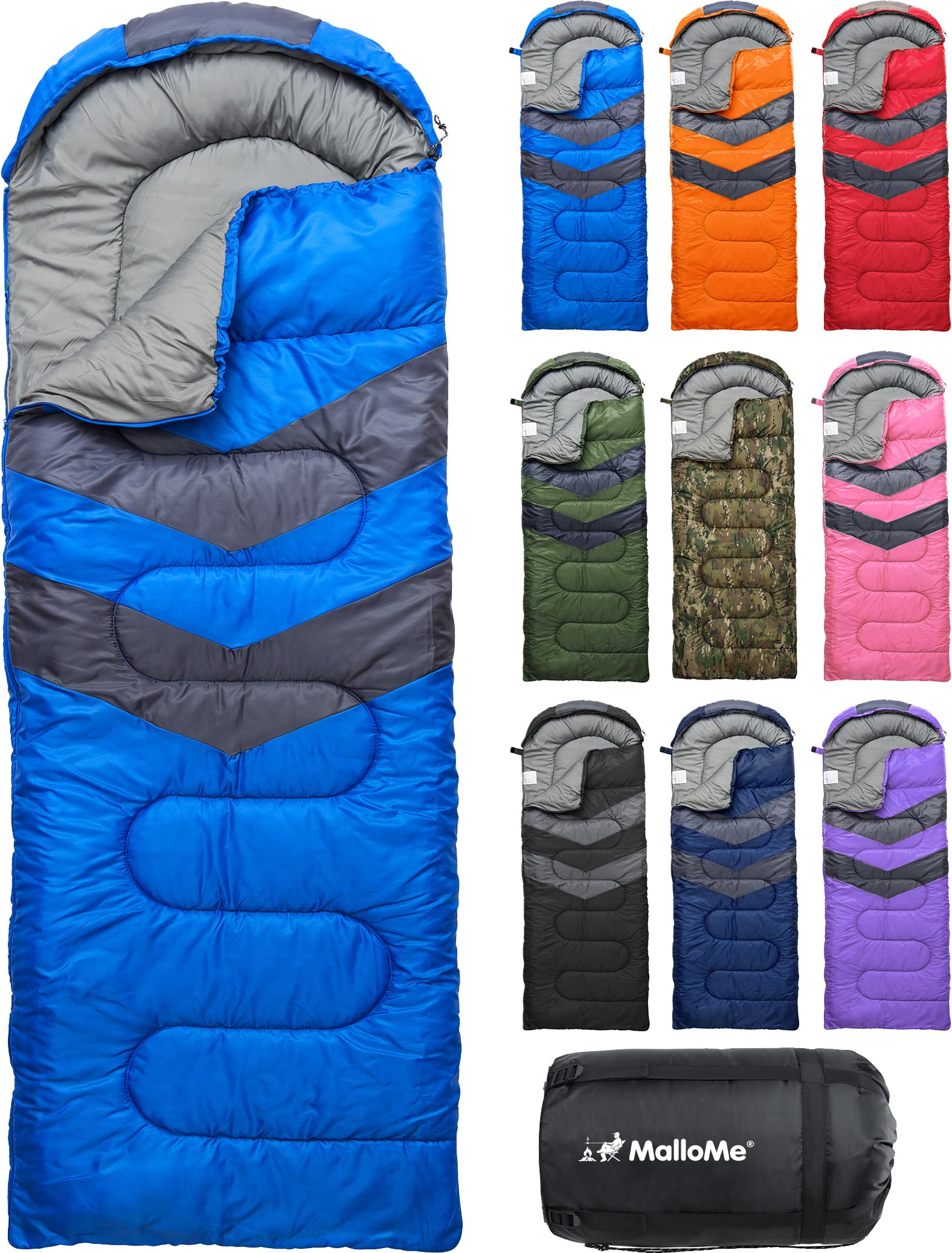
MalloMe Sleeping Bag
Key Features
- Shape: Rectangular
- Weight: 2.87 lb
- Dimensions: 86.6 x 31.5 in
- Temperature rating: 50 to 80°F
- Price: Midrange
At around three pounds and 86.6 inches long, this is the bag we reach for when one sleeping bag has to cover a summer tent, a friend’s floor and the back of the car. The 50 to 80°F comfort range is an honest three-season figure rather than a marketing one, and the compression sack does what a stuff sack is supposed to do: the bag goes back in without a fight. That combination, light enough to carry and warm enough to trust, is why it sits at the top of this list.
Warmth is what keeps it there. The polyester shell cuts a breeze better than the price suggests, and the rating holds up through spring and fall nights in a tent; below 50°F you will want a liner or an extra layer, which is true of nearly every bag here. Where it gives ground is width. At 31.5 inches it is cut like a standard rectangular bag, and if you are broad across the shoulders or sleep with an arm thrown out, you will feel the seam before morning.
The zipper deserves a note, because it is the component that ends a cheap bag’s life. This one rewards a straight, unhurried pull; let it wander and it catches the lining, and the same is true of every bag at this price. Treat that as routine rather than a fault, and the bag will outlast the trips you bought it for.
Look at the SOULOUT if your nights run cold, since that bag is wider and rated lower, or at the PTEROMY if you want something that can go in a washing machine. Otherwise there is little to argue about. The MalloMe does the ordinary job well, and that is most of what a budget bag needs to do.
Pros
- Around 3 lb, light enough to carry
- Honest 50-80°F three-season comfort
- Compression sack packs without a fight
- Good value against the rest of this set
Cons
- Narrow cut through the shoulders
We make this the default budget bag because it is light enough to carry, warm enough for three seasons and stuffs small, as long as you are not broad across the shoulders.
Best for Family Camping
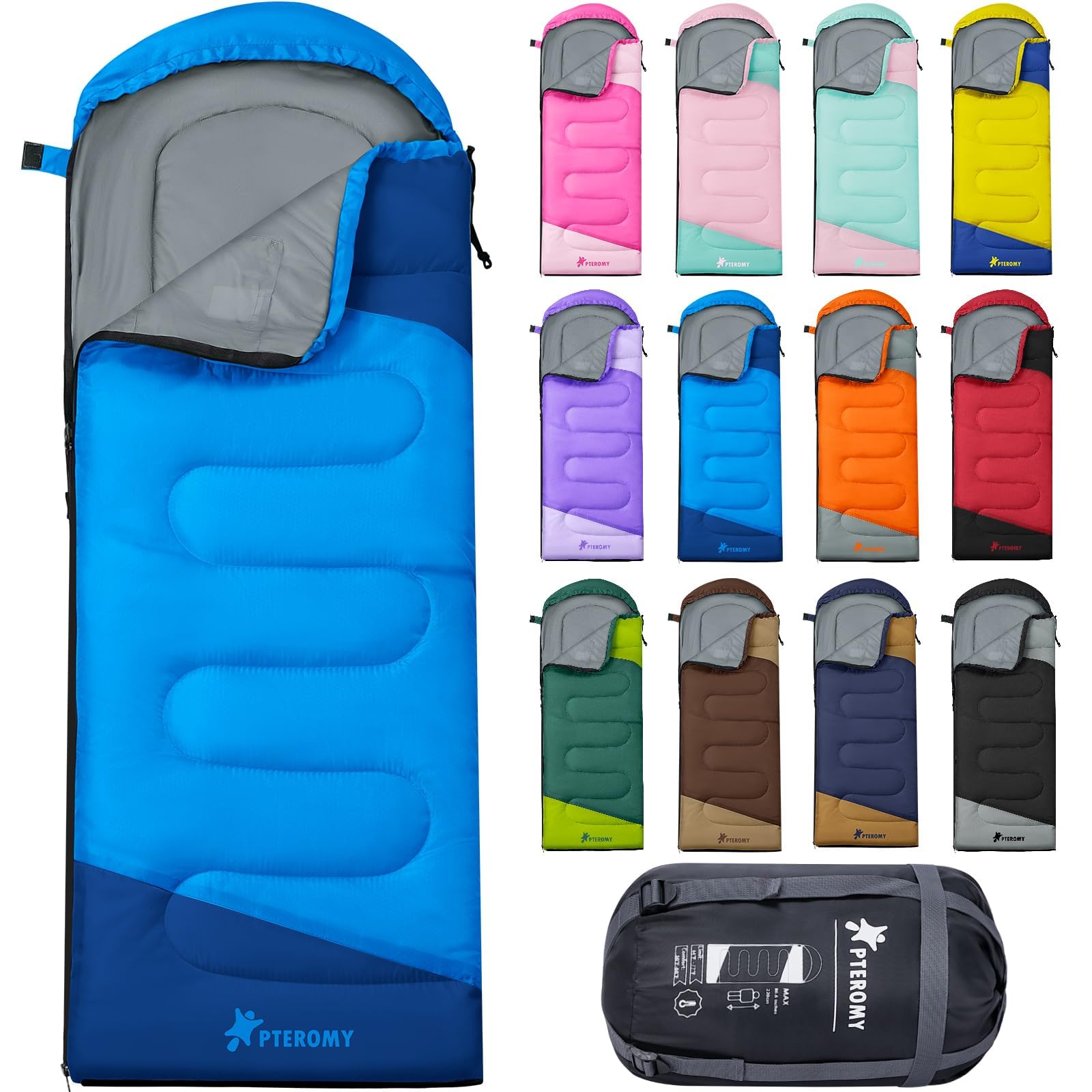
PTEROMY Sleeping Bag
Key Features
- Weight: 3 lb
- Cleaning: Machine washable
- Dimensions: 87 x 31 in
- Temperature rating: 50 to 80°F
- Price: Midrange
The laundry question is the one nobody asks until the third summer, when a bag has absorbed campfire smoke, sunscreen and a spilled cocoa. This is the bag in the group that goes into a washing machine without a fuss, and the hollow-fiber fill is the kind that comes out of a cold wash still lofted rather than clumped into the corners.
Everything else is family-friendly in a quiet way. At 87 inches by 31 there is room to turn over without fighting the seams, the drawstring hood closes around your head on a cold night, and the zip at the foot lets you vent warm toes without undoing the whole bag. The shell is treated to shed a light dew and cut wind, and there is a small Velcro pocket inside for a phone or a headlamp.
We have come to treat washability as the real dividing line at this price. A bag you will actually clean is a bag you keep using, and this one removes the excuse: nothing about it is exotic, but the parts that matter are all here, from a hood that closes to fabric that survives a machine. It is our pick for family camping and for anyone who wants one bag for the tent and the spare room.
Pros
- Machine washable and easy to keep fresh
- Hood and foot vent add real flexibility
- Roomy 87 x 31 in cut
Cons
- Three pounds is car-camping weight
- Comfort rating stops at 50°F
The bag we suggest to anyone camping with kids or lending gear out: roomy, hooded and machine washable, which matters more with every passing season.
Best for First-Time Campers
TANSTRIDER Sleeping Bag
Key Features
- Shape: Rectangular
- Weight: 3 lb
- Dimensions: 87 x 31 in
- Temperature rating: 10 to 20°C
- Price: Budget
Two details do most of the warming in a bag like this, and TANSTRIDER got both right: a draft collar that sits against the back of your neck, and a hood you can cinch down until only your nose is out. On a cool night that collar is the difference between a good sleep and a long one, and it is the sort of thing budget bags usually skip in favor of a bigger number on the label.
For the money, we expected a sack with a zip and not much else. What is here is better made than that: the stitching is neat, the 87-inch length gives a six-footer room to stretch, and the rectangular cut leaves space to turn over instead of pinning you in place. It is the kind of bag that disappears into a trip rather than announcing itself.
What you do not get is anything beyond the basics: a zip, a hood, a collar, a compression sack. That is the trade, and inside a tent you drove to, it does not show. For a first bag, a scout trip or a spare that lives in the car, it earns its place comfortably.
Pros
- Draft collar and cinching hood
- 86.6-inch length suits tall campers
- Well made for the money
Cons
- Mild-weather rating only
A quiet bargain: the draft collar and cinching hood do the warming work of a pricier bag, and the length leaves a teenager room to grow.
Best for Cold Nights
SOULOUT Sleeping Bag
Key Features
- Shape: Rectangular
- Weight: 4.5 lb
- Dimensions: 86.6 x 32.7 in
- Temperature rating: 32 to 77°F
- Price: Premium
Thirty-two degrees is the number that separates this bag from everything else here, and it is not marketing. A 32-to-77°F rating on a 4.5-pound bag is a genuinely different proposition from the 50°F bags most of this list is made of, and it is the one we pack when the forecast is uncertain: a frosty morning at altitude, a shoulder-season trip, a cabin with a temperamental heater.
The fill is a high-loft synthetic, and the bag has the padded, puffed-up feel of something built for a cold floor rather than a summer lawn. Its 32.7-inch width is the roomiest here, which matters more than it sounds: extra shoulder room is what lets you wear a fleece inside without compressing the loft that is keeping you warm. It is rated all-season, which we read as three seasons plus a cold night with a liner.
Check the hardware early. The zip can catch around the shoulder line where the shell takes the most tension, and the plastic buckles on the compression sack are the first thing to give. Both are worth testing in the first week while a return is still straightforward, and the 30-day window here is generous enough to make that a realistic plan.
Pros
- Lowest temperature rating in this set
- Widest cut here at 32.7 in
- Room to wear a layer inside
Cons
- Heavy at 4.5 lb to carry
If you sleep cold, this is the one to buy: the lowest rating here, the widest cut, and enough room to wear a fleece inside.
Best for Summer Camping
JEAOUIA Sleeping Bag

Key Features
- Fill: Hollow fiber
- Weight: 3.3 lb
- Dimensions: 86.6 x 31.5 in
- Temperature rating: 50 to 68°F
- Price: Midrange
The cut is the first thing we noticed. At 31.5 inches wide, this is a bag for slim sleepers; once you are broad across the back the shoulders load the zipper, and a zip under tension is a zip that works loose in the night. If you are narrow-shouldered, none of that applies, and there is plenty of room to turn over.
For warm-weather camping it is a good bag at a fair price. The hood cinches down, the foot zip vents heat without undoing the whole bag, and the shell is a waterproof, breathable polyester that copes with a damp night in a way a plain untreated bag does not. The 50-to-68°F range is the honest part: this is a summer and early-fall bag, and it will not carry you into a cold snap.
Compare it with the MalloMe and the choice comes down to shoulders and weather. They cover the same seasons and the MalloMe’s cut is no narrower, so broad sleepers have no reason to switch. What the JEAOUIA has going for it is a hood that closes properly and a shell that shrugs off wet weather, which is enough to earn a place without displacing the top pick.
Pros
- Hood cinches down properly
- Foot zip vents without opening the bag
- Waterproof, breathable shell
Cons
- Not very compact when packed
Buy it if you are slim and want a hooded warm-weather bag with a weatherproof shell; broad sleepers should start with the wider picks.
Best for Couples Camping
BORULL Sleeping Bag

Key Features
- Weight: 3 lb
- Cleaning: Machine washable
- Packed size: 8 x 14 in
- Temperature rating: 50 to 80°F
- Price: Budget
Two of these zip together into one wide bag. That is the reason to look at it, and it is something the cheaper singles here cannot do: buy a pair and you get a double-wide envelope for a tent you drive to, rather than two separate bags pushed together in the dark.
Beyond that it is a straightforward three-season bag. Thirty-three inches of width is the roomiest here, the hood cinches, a zip at the foot lets heat out, and the 50-to-80°F range covers late spring through early fall. It weighs three pounds and packs to 8 by 14 inches, small enough to live in a duffel between trips.
Machine washable matters more here than usual, because a bag that gets shared, lent and used indoors gets dirty in ways a tent bag does not. The shell carries a water-resistant treatment, the whole thing is simple enough that nothing needs explaining to a guest, and it works as well on a spare bed as it does on a campsite.
What we found is a bag that is easy to underrate on paper and much better in a tent. Two of them together are a car-camping proposition rather than a backpacking one, but as a couple’s setup, or as the thing that turns a spare room into a guest room, it is the neatest answer on this page.
Pros
- Two bags zip into one double
- 33-inch width, the roomiest here
- Machine washable
- Packs to 8 x 14 in
Cons
The pair to buy if you camp as a couple: two of these zip into one wide bag, and each still packs down to a duffel-sized bundle.
Best for Warm-Weather Trips
YANLIFY Sleeping Bag

Key Features
- Shape: Rectangular
- Weight: 2.98 lb
- Packed size: 39 x 26 x 10 cm
- Temperature rating: 50 to 68°F
- Price: Budget
A full-length two-way zip sounds like a small thing until you are camping in July. This bag opens out flat like a quilt, so you can leave the top half undone when the tent is too warm and close it up when the small hours turn cool, which is the sort of flexibility that makes one bag work across a whole summer.
Nothing else about it is fancy. It weighs 1.35 kg and compresses to 39 by 26 by 10 cm, small enough to disappear into a daypack, and the nylon and polyester shell dries quickly if it gets damp. There is a drawstring hood, a separate vent at the foot, and a compression sack that does its job without much ceremony.
On a July trip it is the one we grab: throw it in, unzip it, sleep. If your nights run cold, the SOULOUT earns its extra weight; if you want one bag to carry you from early summer into fall, the MalloMe covers more ground. As a warm-weather bag for a small pack, it is an easy yes.
Pros
- Full-length zip opens flat as a quilt
- Packs to 39 x 26 x 10 cm
- Light at 1.35 kg
Cons
- Comfort range stops at 68°F
The one to grab for warm-weather trips: it unzips flat into a quilt, packs small and costs little, though it will not follow you into the cold.
Best for Small Packs
ECOOPRO Sleeping Bag

Key Features
- Shape: Envelope
- Weight: 1.7 lb
- Dimensions: 83 x 30 in
- Temperature rating: 16 to 30°C
- Price: Midrange
The shell is the first thing you notice: a thin, slightly papery nylon that weighs almost nothing in the hand and makes you wonder how warm it can possibly be. It is a fair question. This is a bag that is honest about what it is, a 16-to-30°C bag for warm weather rather than a three-season workhorse.
What it does better than anything else here is disappear. At 0.77 kg, compressing to about 11 inches, it goes into a daypack, a motorcycle pannier or the bottom of a duffel without a second thought. For a trip where space is the constraint, whether that is a train, a bike or a flight with one bag, that is the whole argument.
It is also the shortest and narrowest of the group: 83 inches long and 30 inches across, cut slim through the upper body. That suits smaller sleepers and pinches anyone broad, and if you are over six feet you should look at the longer bags here instead.
We have been surprised by how often this is the bag that comes out of the closet. It is not the warmest or the most comfortable thing on the page, but it is the one that fits where the others do not, and for a summer trip with a small pack that settles it.
Pros
- 0.77 kg, the lightest here
- Compresses to about 11 inches
- Strong value for the packability
Cons
- Thin shell and stuff sack are the wear points
The bag to take when pack space is the whole problem: under two pounds and about a foot of compressed height, with a thin shell as the trade.
How We Chose and Tested Budget Sleeping Bags
We built the shortlist by scanning budget-priced sleeping bags, reading spec sheets, and comparing stated packed size, weight, fill type, and temperature rating. Bags with vague ratings, no fill weight listed, or a pattern of zipper complaints in reviews were set aside. We ended up with 14 bags and spent six months using them the way a budget bag actually gets used: weekend car camps, a few backyard sleepovers, and guest-room floor duty.
Warmth was judged on cool spring nights, not in a lab. I noted whether cold spots showed up at the shoulders or feet, whether the bag felt drafty along the zipper, and whether the loft bounced back after a night of tossing. We also checked the temperature rating against how the bag actually slept—most budget bags run optimistic, so we treated the label as a starting point.
For portability, we weighed each bag on a kitchen scale, measured its packed size, and timed how long it took to stuff into its sack. Then we carried each one in a daypack on a short hike to see which felt like a brick and which disappeared. Size and fit got the same practical treatment: sleepers of different heights and builds tried each bag, and we noted shoulder pinch, foot room, and whether the hood cinched down without covering the face.
Zippers got their own abuse test. We ran each zipper up and down repeatedly, deliberately tugged at an angle to mimic a middle-of-the-night exit, and watched for snags, skipped teeth, and fabric catching near the draft tube. We inspected seams, stitching, and shell fabric when the bags arrived and again after six months. Value came down to whether a bag still felt warm, packed small, and zipped smoothly after all that—not just what it cost on day one.
How to Choose a Budget Sleeping Bag
The number printed on a cheap sleeping bag is sometimes a comfort rating, sometimes a limit rating and sometimes a marketing decision, and knowing which one you are reading matters more than any other specification here.
Read the rating before you trust it
Almost every bag here quotes a range rather than a single figure, and the two ends mean different things. The high number is where the bag stops being comfortable in heat; the low one is roughly where a warm sleeper in long underwear is still fine. A bag rated 50 to 80°F is a summer and early-fall bag, full stop: the 50 is the edge of warmth, not a promise of it.
Pick for the coldest night you realistically expect, then add margin of about ten degrees, and remember that a bag rated near freezing is the exception here rather than the rule. No amount of fill makes up for a bad night’s sleep on a cold floor, so if the forecast is uncertain, go warmer and unzip.
Room or warmth: choose the shape deliberately
Rectangular and envelope bags give you space to turn over, and they open out for guests and hot nights. Mummy bags cut that space to save weight and trap heat around the head and shoulders, which is why nearly every serious cold-weather bag is shaped that way.
At this price almost everything you find is rectangular, with widths running from about 30 to 33 inches. If you are broad across the shoulders or sleep on your side, take the wider one. An extra inch of shoulder room does more for a night’s sleep than a marginally better fill, and a bag you have to fight stays home.
What weight and packed size actually buy you
Nearly every bag in this roundup sits around three pounds, which is car-camping weight: fine in a duffel, noticeable on a long climb. The genuinely packable ones are the exception, and they charge you elsewhere, with thinner shells, narrower cuts or a shorter comfort range.
If you are carrying the bag more than a mile, weight and packed size should outrank the temperature rating, because a bag you resent carrying is a bag you leave behind. If it lives in the trunk or the spare room, ignore both and buy for comfort.
The zip is what fails first
The zipper is the first thing to go on a budget bag: it catches the lining, works loose at the shoulder or loses teeth, and once it will not close, the bag is finished as a bag. Look for fabric backing behind the teeth so the slider has something to run against, and check that the zip opens at the foot for venting.
The shell matters almost as much. Thin nylon packs small and tears on sharp ground, so match fabric weight to the trip, and treat the stuff sack as the wear item it usually is. Washing matters too: a bag you can put in a machine gets used for years, while one you are afraid to clean gets retired early.
The second job: guest beds and sleepovers
A budget sleeping bag often spends more nights indoors than out: sleepovers, spare beds, a kid’s first camp. If that is your use, weight stops mattering and three things start: whether it can go in a washing machine, whether it opens flat like a quilt, and whether it is wide enough for an adult who is not sleeping in a tent.
Zip-together pairs are worth knowing about if you camp as a couple, since two bags that join beat two bags fought over. It is also the cheapest way to solve a spare-room problem, and it goes back in the closet when the guests leave.
Frequently Asked Questions
Do I need a sleeping pad under a budget sleeping bag?
Yes. The fill under you compresses flat, so a bag insulates from above and does very little about cold coming up through the ground. A closed-cell foam pad is the cheapest fix and enough for summer nights.
For nights near freezing, use an insulated inflatable with a stated R-value of 3 or higher. The pad, not the bag, is what keeps your back warm at 35°F.
How do I get the bag back into its stuff sack?
Stuff it, do not roll it. Start at the foot end, push in handfuls, then tighten the compression straps a little at a time so the air has somewhere to go. Rolling traps air in the fill and usually makes a bigger bundle, not a smaller one.
Practise once at home before the trip, when you are not cold, tired and doing it by headlamp.
How do I wash a sleeping bag without ruining the loft?
Use a front-loading machine on a gentle cycle with a mild detergent, and skip fabric softener and bleach, which coat or break down synthetic fill. Tumble on low or air-dry, breaking up clumps by hand while the bag is still damp.
Store it loose in a cotton sack or a pillowcase rather than compressed in its stuff sack, or the loft will take a set between trips.
Final Verdict
The MalloMe is the bag we point most people toward, because it does the ordinary three-season job without costing much and without asking to be babied.
Two exceptions are worth naming. If you sleep cold or camp where the temperature drops toward freezing, the SOULOUT’s lower rating and wider cut justify its extra weight. And if the bag will be washed, lent and used indoors as often as it is camped in, the PTEROMY is the one to buy.