This post contains affiliate links. We may earn a small commission when you buy through our links — at no extra cost to you.
A budget backpack is easy to buy and easy to regret. The seams that look fine under store lighting are the ones that let go eight miles from the trailhead, and straps that feel plush on the shelf turn to rope by mile four. I’ve had both happen, and what I want now from a cheap pack is unglamorous: light enough that I forget I’m wearing it, roomy enough for layers and lunch, compact enough that it doesn’t smack me in the back of the head on a scramble, and pockets I can reach without taking it off.
Cheap gear has gotten genuinely better, and the gap between a $35 pack and one three times its price is narrower than it used to be. My team and I have spent the past four months hiking, flying, and commuting with 14 budget backpacks, and the ones that held up had a few things in common. One warning before you shop: capacity numbers lie a little. A 28-liter pack from one brand can swallow noticeably less than another’s. The picks below are sorted by how you’ll actually carry them, not by what the spec sheet claims.
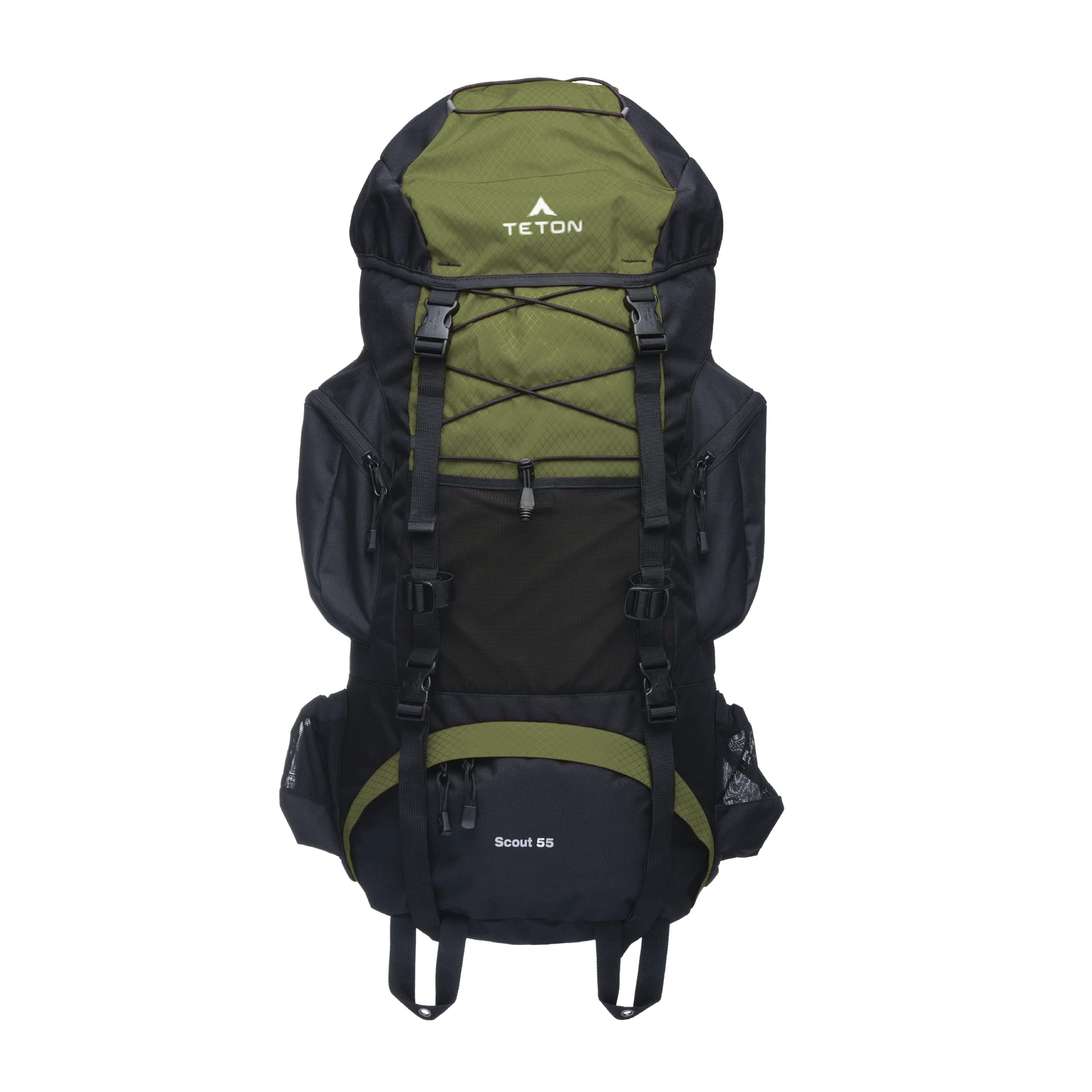


Best for Overnight Backpacking
Teton Scout 55L
Key Features
- Weight: 4.1 lb
- Capacity: 55 liters
- Rain cover: Included
- Carry system: Internal frame
- Price: Premium
An internal frame is what separates a pack you can carry overnight from a sack that hangs off your shoulders, and the Scout is the only framed pack in this roundup. That frame, plus a torso panel that adjusts for medium and tall frames, is why we point first-time backpackers here: load it with a tent, a bag and a few days of food, cinch the hip belt, and the weight settles onto your hips instead of pulling your shoulders back. None of the cheaper packs below can do that.
Teton didn’t strip out the organization to hit the price. There are seven pockets and compartments, a sleeping-bag compartment at the base, a hydration sleeve with a port for the hose, bottle holders on both sides, and a rain cover in the box — that last one is usually the first thing cut on a budget pack. We were also impressed by the limited lifetime warranty, which isn’t something we expect at this end of the range.
Loaded heavy, the compression straps creep and want a second tighten after the first mile. That’s a nuisance rather than a fault, and it’s the kind of habit you pick up in an afternoon. What we’d say plainly is that 55 liters is more pack than a day hike needs — if your walks end back at the car, one of the daypacks here will feel far lighter on your back.
Pros
- Real internal frame puts the load on your hips
- Adjustable torso fits medium and tall frames
- Sleeping-bag compartment and rain cover included
- Limited lifetime warranty at this price
Cons
- Sleeping-bag compartment is snug for bulky bags
- Heaviest pack here at 1.86 kg
If you’re carrying a tent and a sleeping bag, we think the Scout is the one to buy: a real frame, an adjustable torso and a rain cover in the box.
Best for Budget Multi-Day Trips
Esup 50L
Key Features
- Weight: 2.4 lb
- Capacity: 50 liters
- Rain cover: Included
- Water resistance: Waterproof
- Price: Midrange
Two and a half pounds for fifty liters is the figure that makes the Esup worth a look, especially beside our framed top pick, which weighs a good deal more. You get a main compartment, two zipped front pockets, a sleeping-bag compartment at the base, mesh bottle pockets on both sides and a rain cover — the same working layout as the Scout, without the frame.
That’s the trade, and it’s a fair one. This is the pack we hand someone who wants real capacity and doesn’t want framed-pack money or framed-pack weight. Without a frame the load settles into the harness once it gets heavy, so it carries best with a weekend of clothes and a light tent rather than a week of food — but for that job it’s the value pick of this group.
The harness is the thing to check. It runs small: broad shoulders and long torsos can find it tight across the back, and a tall, heavy build may only just get it on. Try it loaded before a trip rather than after, and go in expecting a medium frame rather than a universal one.
Pros
- Fifty liters at 2.4 pounds
- Rain cover and sleeping-bag compartment included
- Padded S-shaped straps with a breathable back panel
Cons
- No frame, so a heavy load sags into the harness
We recommend the Esup to anyone who wants 50 liters of hiking pack without paying for a frame — just check the harness fits you before your trip.
Best for Wet Day Hikes
Maelstrom 40L
Key Features
- Weight: 2.2 lb
- Pockets: 10
- Capacity: 40 liters
- Material: 210D rip-stop nylon
- Price: Midrange
Ten pockets sounds like a marketing line until you’re on a ridge hunting for a headlamp. The Maelstrom’s layout is genuinely easy to live with: a roomy main compartment, seven zippered sections, two bottle holders, a bladder sleeve, and exterior storage for the layers you shed on the climb.
The build is 210D rip-stop nylon with a breathable mesh back panel and padded shoulder straps, and at 2.2 pounds for 40 liters it’s an easy pack to wear from the trailhead to a summit and back. It slides under an airplane seat, and the adjustable harness takes taller walkers as readily as shorter ones.
Where it earns its spot is a day that turns: the rain cover lives in its own pocket rather than in a drawer at home, and the reflective printing is a real help on the walk out after dark. We also appreciate the elastic loops on the sides, which hold trekking poles when a scramble needs both hands — a detail most packs at this end of the range skip.
Pros
- Ten pockets keep small gear findable
- Rain cover and reflective print included
- Fits under an airplane seat
Cons
- Seams are the weak point under a heavy load
For day hikes where the forecast is a coin flip, we reach for the Maelstrom: 40 liters, ten pockets and a rain cover that stays on the pack.
Best for Short Day Hikes
SKYSPER 20L
Key Features
- Weight: 1.1 lb
- Capacity: 20 liters
- Materials: 600D polyester, 210D nylon
- Load limit: 15.4 lb
- Price: Midrange
Seven kilograms — about fifteen pounds — is the load SKYSPER rates the Lantc20 for, and we like that the number is published at all. It tells you exactly what this pack is: a daypack for layers, lunch, water and a camera, not a tent. Judged on that brief it’s a tidy, structured little pack that keeps its shape when it’s half empty, which stuffable bags never do.
At 1.1 pounds it disappears on your back, and the grooved foam panel and mesh keep the sweaty patch smaller than you’d expect from a pack this size. There’s a chest strap and a waist strap, an anti-theft zip for documents, a removable strap system, and fixtures for trekking poles on the front. It slides under an airplane seat and works as a personal item.
The 20 liters is the honest limit: a full day’s essentials and nothing more, so treat this as a second pack for short hikes, theme parks and flights rather than your only bag. The removable strap hardware is the part we didn’t expect — it lets you strip the pack down and repack it flat in a larger bag, which is exactly what a travel daypack should do.
Pros
- Structured shell that holds its shape
- 1.1 pounds with chest and waist straps
- Fits under an airplane seat
Cons
- Stated 7 kg load limit rules out overnight gear
- Stitching at the strap anchors can give way
For short hikes and city days we think the SKYSPER is the small pack to beat here — buy it as a daypack, not as a tent-hauler.
Best for Packable Backup
4Monster 24L
Key Features
- Weight: 3.7 oz
- Capacity: 24 liters
- Packed size: Folds to wallet size
- Water resistance: Water resistant
- Price: Budget
Folded, the 4Monster is about the size of a wallet and weighs under four ounces, which is why we keep one in the bottom of a travel pack and another in the car. Unfolded it’s a 24-liter daypack with a main compartment, a front zip pocket, two mesh bottle pockets and a key clip — enough for a jacket, water, lunch and a camera, and nowhere near enough for a sleeping bag.
That’s the role it earns: the insurance policy of this roundup. It’s the pack you throw in a suitcase for the day you end up walking further than planned, or clip to a bigger pack for a summit push. The 30D rip-stop nylon and reinforced stitching handle a light day’s load without complaint, and at this weight it costs you nothing to carry it anyway.
Two things follow from that weight saving. It’s built for a light day, so load it with more than a jacket, water and lunch and you’ll feel it on your shoulders. And the shell is deliberately thin: after a couple of weeks of daily use, the seams are where wear shows first.
Pros
- Folds to wallet size and weighs 3.7 ounces
- 24 liters holds a full light day out
- Wide straps for a packable this light
Cons
- Seams show stress after weeks of daily use
We rate it the best packable here for keeping in a bag just in case — under four ounces folded, and a real 24 liters when you need one.
Best for Weekend Camping
WoneNice 50L

Key Features
- Weight: 2.56 lb
- Capacity: 50 liters
- Rain cover: Included
- Compartments: 4
- Price: Midrange
Fifty liters, a sleeping-bag compartment, a rain cover and a weight below our framed top pick’s — the WoneNice does most of what the Scout does for a good deal less money. What it doesn’t have is a frame, and that changes who it’s for.
The layout is the familiar one: a main compartment, two zipped front pockets, a base compartment for a bag, mesh bottle pockets on both sides and enough tie-down points to lash a one-person tent and a rolled mat to the outside. The chest and waist belts are adjustable, and the rain cover tucks into its own pocket rather than living loose in the main bag.
For a weekend camper who needs to carry a tent, a bag and a stove but can’t stretch to a framed pack, this is, we think, the sensible buy — and it’s light enough to wear comfortably on the approach. The straps and seams under a full load are the part to watch. Give the webbing at each shoulder anchor a hard pull when it arrives and you’ll know what you’ve got before you leave the driveway.
Pros
- Fifty liters with a sleeping-bag compartment
- Rain cover included and stowed in its own pocket
- Lighter than the framed top pick at 1.16 kg
Cons
- No frame, so a heavy load rides on the shoulders
We think the WoneNice is the right call if you need 50 liters and a framed pack is out of budget — just check the straps before you commit.
Best for Travel Daypack
MIYCOO 35L

Key Features
- Weight: 12.8 oz
- Capacity: 35 liters
- Security: Anti-theft zipper clips
- Water resistance: IPX4
- Price: Budget
A separate compartment for wet gear in a packable bag is the detail that made us look twice at the MIYCOO, and it’s the one thing here that solves a real travel problem: a damp towel, a swimsuit, or a shell that came off in the rain, kept away from everything else in the bag.
The rest of the package is unusually complete for the money. There are 35 liters, three compartments and five pockets including two deep mesh bottle holders, a chest strap, zipper clips that lock the pulls together, and a survival whistle on the sternum strap — the sort of thing you never think about until you’re glad it’s there.
Water resistance is IPX4, which means splashes and a short shower rather than a day of steady rain. Treat the wet pocket as the place for damp kit, and put anything that has to stay dry in a liner bag inside the main compartment.
Where it beats the smaller packables is volume: 35 liters swallows a beach day or a grocery run with room left over, and it still folds into its own pocket when you’re done. It’s the packable we recommend to someone who wants one bag for the flight and the beach rather than two. It also takes a 15.9-inch laptop, which is more than most foldable bags manage.
Pros
- Separate wet compartment keeps damp kit apart
- Folds into its own pocket at 12.8 ounces
- Anti-theft zipper clips and a whistle
Cons
- Unpadded straps dig in when the pack is loaded
We like the MIYCOO as the packable you can actually hike with — 35 liters, a wet pocket, and zipper clips that keep it shut in a crowd.
How We Tested the Best Budget Hiking Backpacks
We started with a long list of roughly 60 packs priced under $125 and cut hard. Anything without a stated fabric weight, a hip belt on packs over 30 liters, or a warranty we could actually track down got dropped, and we read through customer reviews looking specifically for complaints about blown seams, sticky zippers, and straps that gave out in the first season — the failure points that make a cheap pack expensive.
Fourteen made the cut, and each one lived with us for four months. They carried 15 pounds of water, layers, and lunch on day hikes of six to twelve miles, got rained on, went on two overnight trips apiece, and came along on commutes and flights where we shoved them into overhead bins and under the seat in front of us. At the trailhead we weighed every pack empty on a kitchen scale, then loaded it and walked a mile to see how the straps sat once there was real weight in them.
Pockets got the most scrutiny, because that’s where budget packs usually cheat. We counted them, then tried to use them with the pack on: could we pull a water bottle out without unclipping the sternum strap, find a snack without taking the pack off, locate the key clip by feel? Capacity we measured instead of trusting, packing each main compartment with the same bundle of gear to see what actually fit. And we were deliberately rough — overstuffing, dragging packs across rock, yanking zippers — then checking stitching, buckles, and zipper pulls afterward for any sign of strain.
The packs still in rotation four months later are the ones below. We’ll keep loading them and update if anything starts to fray.
How to Choose a Budget Hiking Backpack
The most expensive mistake in this category isn’t buying cheap — it’s buying for the wrong trip, or buying a pack whose straps give out before the season does.
Size the pack to the trip, not to the number
The liter figure is the least useful number on a budget listing on its own. A 55-liter pack with a sleeping bag, a tent and food in it feels nothing like 55 liters of empty space, and a 20-liter daypack swallows a shell, lunch and a camera with almost nothing left over.
Count nights instead. A day out needs 20 to 30 liters, one to three nights want 40 to 55, and a packable 20- or 24-liter bag is a spare rather than a hiking pack. When you’re between sizes, go up: a half-empty 50-liter pack carries better than an overstuffed 30.
Frame and hip belt decide whether you can carry it
Two designs sit in this price range: framed packs that put the weight on your hips, and lighter frameless packs that hang from your shoulders. The Scout is the clearest example of the first and nearly everything else here is the second.
The trap is assuming padded shoulder straps do the work of a hip belt. They spread pressure; they don’t move weight. If you’re carrying a tent and a stove, buy the frame and accept the grams. If you’re carrying lunch and a rain shell, skip it and take the lighter pack.
Weigh the pack, then weigh your kit
A framed pack can eat well over a kilo of your carrying budget before you put anything in it, and a packable weighs almost nothing because it does almost no work. Neither is a fault — they’re different jobs, and the number that matters is the pack’s own weight plus everything you plan to put in it.
Our experience is that a light pack used for heavy loads costs more comfort than a heavier pack used for light ones. Add the two figures up before you fall for a weight claim on its own.
Fit beats every feature on the page
Torso length matters more than your height, and it’s the one thing you can’t upgrade later. An adjustable torso panel, like the one on the Scout, covers medium and tall frames and is worth paying for. A fixed harness that runs small, as the Esup’s does, suits some bodies and not others however you adjust the straps.
Measure from the bump at the base of your neck to the top of your hip bones, compare that with the pack’s stated fit, and buy where you can return it. Then fill it and walk around the block before the tags come off.
Check the zips and the strap anchors first
Fabric is rarely what fails on a budget pack. In this group, zippers and the stitching where the shoulder straps meet the body are what give way, and both announce themselves early.
When the box arrives, pull hard on each shoulder strap and run every zip end to end. A pack that survives that on day one is worth keeping; one that doesn’t goes back inside the return window, which is a much better outcome than finding out on the trail.
Frequently Asked Questions
How do I stop a backpack’s hip belt from slipping while I walk?
Thread the webbing back through the buckle’s second slot after tightening, then pull the free end snug against the strap — most belts that creep are only half threaded. Load the heavy items low and close to your spine, and re-tighten after the first ten minutes, once the load has settled.
If a belt still slips under a full pack, the pack is probably overloaded for its harness rather than badly adjusted.
Can I put a hiking backpack in the washing machine?
No. Most of these packs are hand wash only, and machine agitation is hard on coatings, seam tape and foam padding. Empty every pocket, brush off grit, then sponge the shell with mild soap and lukewarm water and rinse with a hose.
Hang it to dry out of direct sun rather than in a dryer, and store it loose rather than compressed so the padding keeps its shape.
Will a budget pack keep my gear dry in the rain?
For drizzle, water-resistant fabric is usually enough. For steady rain you want a cover, and the Teton, Esup, Maelstrom and WoneNice all include one.
The cheap extra step that actually works is a plastic liner bag inside the main compartment. It weighs nothing and keeps a sleeping bag dry even if water gets past the zip, so put anything that must stay dry in the liner rather than an outside pocket.
Final Verdict
Buy the Scout if you want one budget pack that can carry a real overnight load. The frame, the adjustable torso and the rain cover in the box are what make it the default here, and nothing cheaper in this group moves weight onto your hips the same way.
If your trips are day hikes, drop to the Maelstrom for the pocket layout and the rain cover, or the SKYSPER if you want something small, structured and light. And if you just need a bag that lives in a suitcase until the day you need it, keep the 4Monster packed and forget about it.