This post contains affiliate links. We may earn a small commission when you buy through our links — at no extra cost to you.
A budget trail shoe has one job: convince you it isn’t a budget trail shoe. The good ones bite into loose dirt and survive a few hundred miles; the bad ones squeak, slip on wet roots, or let your heel wander. The right pair fixes all of that without asking you to spend like a sponsored athlete.
Over the past five months, my team and I put 14 pairs of budget trail runners through mud, gravel, and rocky descents. Fit and sizing came first—a few pairs never made it past the driveway—then comfort over long runs, traction on wet roots, and quality by checking seams and outsole wear. We also noted which shoes started squeaking when wet and which still looked presentable after a muddy week. Value came down to price per mile, and the picks below are the ones that earned a spot by the door.



Best for All-Round Trail Running
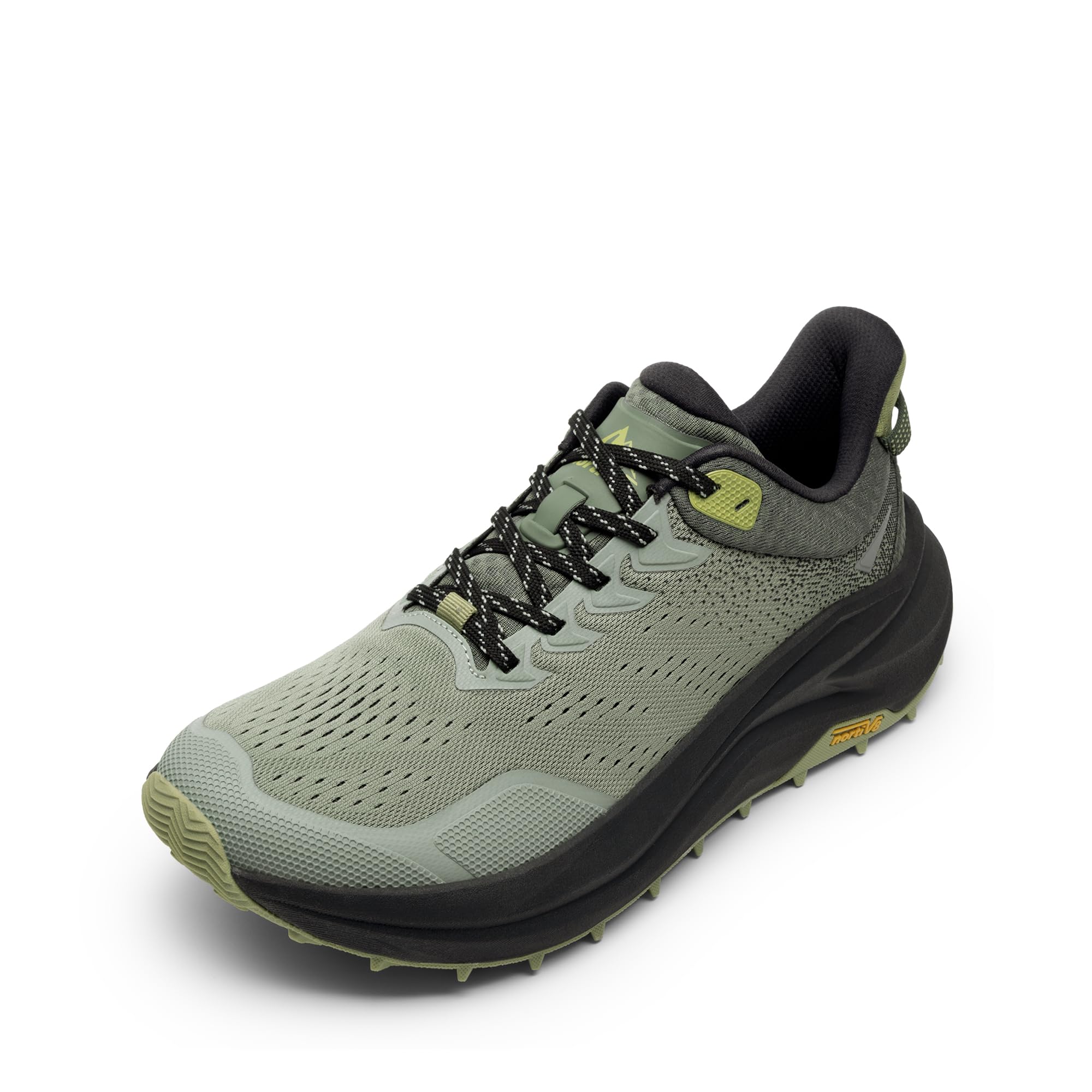
NORTIV 8 Trail Running Shoe
Key Features
- Toe box: Wide
- Shoe type: Trail running
- Department: Men
- Price: Midrange
Wide feet are the first thing cheap trail shoes get wrong, and it is the first thing the NORTIV 8 gets right. The toe box is broad enough that your toes spread on a descent instead of jamming the front, and the cushioning underneath is firm enough that you still read the trail rather than floating over it. Put those two things together at this price and you have the best value in the set.
Grip is good on dry, dusty singletrack, which is what most of us actually run. Where it gives ground is the moment the surface stops being predictable: wet roots and slick rock, where the Excursion TR14 holds on longer. We wish the rubber bit harder in the wet, because everything else about the shoe would happily take a damper climate.
It also works as a walking shoe, which matters if your trail days are half hike, half run – the roomy fit that helps on descents makes standing around comfortable too. Check the volume over your toes before you commit, since the upper sits low there, and go up if you are between sizes.
Pros
- Roomy toe box that suits wide feet
- Cushioned without losing trail feel
- Best value in this set
- Grips dry, dusty trail well
Cons
- Wet roots and rock cut its grip
- Low-volume upper over the toes
Our default pick: we recommend the NORTIV 8 to most budget trail runners because it fits wide feet, cushions without numbing the trail, and is the best value in this set.
Best for Women Runners
Saucony Excursion TR14
Key Features
- Toe box: Roomy
- Shoe type: Trail running
- Department: Women
- Package weight: 1.79 lb
- Price: Midrange
Loose gravel is a good test of a budget outsole, and the Excursion TR14 is the surest-footed shoe in this set on it. The tread bites and then holds, the upper feels more substantial than most of the others here, and the whole thing has a planted, stable quality that we liked on fire roads and groomed trail.
That makes it our pick for women who want one pair for everything: a Tuesday run, a weekend walk, a long day out. The fit is the real draw, with a roomy toe box, genuine support under the arch and no pinching across the forefoot. Sizing is the thing to manage, because the length is not consistent from pair to pair, so order your normal running size, wear them indoors first and keep the box until you have done a short run.
What you give up is a little speed. This is a lot of shoe, and on wet, rooty singletrack it feels heavier and less nimble than the Tracefinder. For most women getting into trail running, that trade is the right one, because the stability and the grip are worth more than the weight.
Pros
- Confident grip on loose gravel
- Roomy toe box with real arch support
- Stable, planted feel underfoot
- Good value for the build
Cons
- Toe area can fray with hard use
For women runners, this is the pair we point to: the surest grip here on loose gravel, a roomy and supportive fit, and sizing worth checking before you commit.
Best for Long Comfortable Miles
New Balance Nitrel V6
Key Features
- Shoe type: Trail running
- Department: Men
- Package weight: 1.79 lb
- Package dimensions: 13.27 x 8.31 x 5.12 inches
- Price: Midrange
Comfort is the whole case for the Nitrel V6, and it makes that case well. It is light enough to forget about on a climb, the midsole has enough give for a couple of hours, and in a wide fitting it is genuinely wide rather than merely roomy. We think it is the most comfortable shoe here over a long day.
The tread punches above the price as well. It holds on forest trail and rock, and it does not feel skittish when the run starts or ends on pavement – a harder balance to hit than it sounds, since most cheap trail rubber is either too smooth for dirt or too clumpy for tarmac. That makes it the pick for the run-from-your-door crowd, the ones whose nearest trail is fifteen minutes of footpath away.
Two things to know before you buy. The length runs about half a size short, so try a half size up before deciding they are too tight, and the heel lining is the first place wear appears, which is where the money saved ends up going. Neither is a dealbreaker, but they are why this is a step up rather than our default pick.
Pros
- Very light on the foot
- Comfortable over long days
- Wide sizes that are actually wide
- Grips trail and pavement alike
Cons
- Heel lining wears early
The most comfortable shoe in this set over a long day, and we think the extra spend is worth it if your runs mix trail and pavement.
Best for Light Trail Days
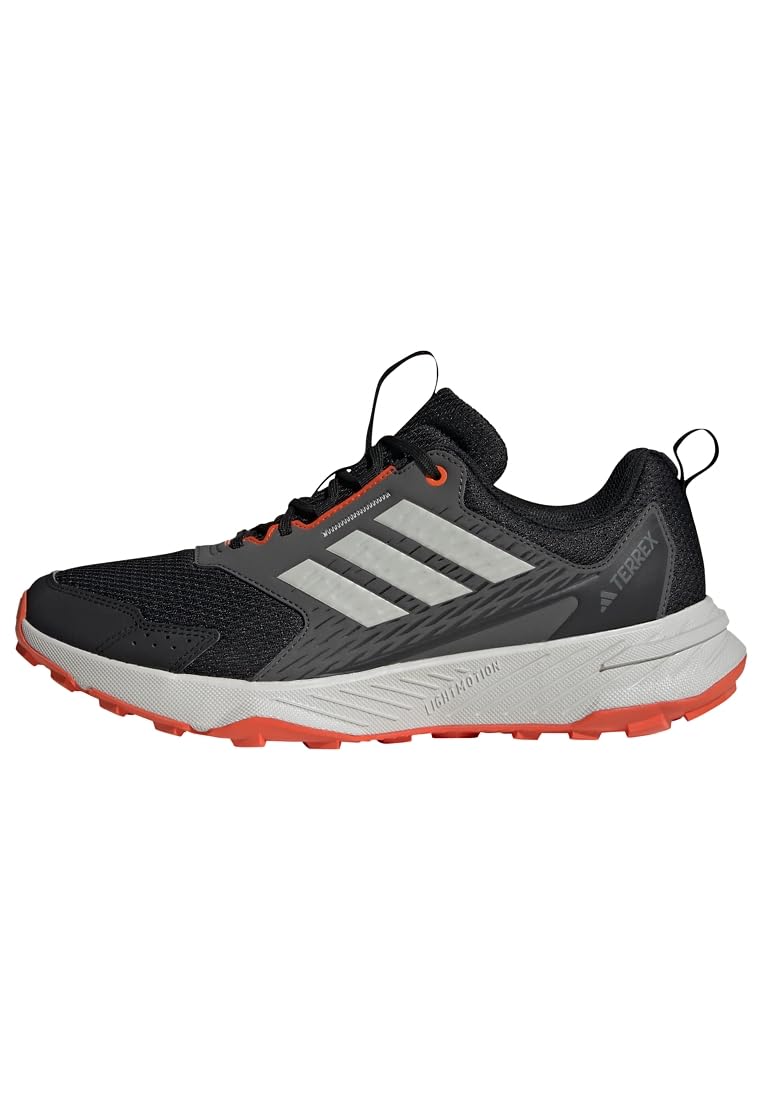
adidas Terrex Tracefinder
Key Features
- Shoe type: Trail running
- Department: Men
- Item weight: 2.13 lb
- Price: Midrange
A squeak is a small thing until you have listened to it for an hour. The Tracefinder develops one in the midsole on some pairs, and it is the sort of flaw that turns a good shoe into one you notice on every run.
Set that aside and there is a lot to like. It is comfortable from the first run with no break-in, the tread grips without feeling like a hiking boot, and it handles pavement, gravel and grass without complaining – a mixed-surface shoe rather than a mud plugger. We also liked how it looks, which is more than most of this list can claim.
So who should buy it? The runner whose trail is a gravel path, a park loop or a canal towpath, and who wants one pair for that and the walk afterwards. We think it is the best light-trail value in this set. If your weekends are steep, wet and rocky, spend more or take the Excursion TR14 instead.
Pros
- Comfortable from the first run
- Tread grips without feeling heavy
- Happy on pavement as well as dirt
- Looks good off the trail
Cons
- Squeaky midsole on some pairs
- Narrow toe box for wide feet
We think this is the best light-trail buy here: comfortable from the first run and happy on pavement, provided your feet are not wide and the squeak does not find you.
Best for Tight Budgets
New Balance 410v9
Key Features
- Shoe type: Trail running
- Cushioning: Fresh Foam
- Department: Men
- Price: Budget
The 410v9 is the least expensive trail-specific shoe in this set, and it does not feel like a punishment. The Fresh Foam midsole is soft underfoot without turning vague, the tread holds on rocky trail and wet surfaces, and the whole shoe has an easy, forgiving ride that suits short, regular outings.
Where it gives ground is fit: the length runs short and the forefoot is narrow, so go up half a size and wear the socks you actually run in. We recommend it to beginners, to anyone building a rotation, and to runners whose trail miles are two or three short runs a week. If you are going long, or you need width, the NORTIV 8 or the Nitrel V6 is worth the extra.
Pros
- Lowest cost of any trail shoe here
- Soft, forgiving ride
- Tread holds on rock and wet ground
Cons
- Runs small and narrow
- Outsole can separate early
If money is the constraint, we point you here: the cheapest trail-specific shoe in this set, with grip that punches above its price and a fit that runs small.
Best for Minimal Running
WHITIN W51 Barefoot

Key Features
- Style: Barefoot
- Toe box: Wide
- Shoe type: Trail running
- Department: Men
- Price: Budget
The W51 is not really a cushioned trail shoe. It is a thin, flat, wide sole under a knit upper, and it lets you feel every rock, root and ridge underfoot. That is not a flaw in the design; it is the entire design.
What you get in return is ground feel and width. The toe box is the widest here, the upper breathes, and the shoe weighs almost nothing – the pair we pack for a trip where running is an afterthought. Comfort is fine for what it is: soft, sock-like, with no pressure points across the forefoot.
Sizing is a lottery, so order down if you are between sizes; these come up larger than a normal running shoe. They also pack flat, which makes them easy to stuff into a bag that is already full.
We recommend the W51 to one kind of runner: the one who already wants a minimal shoe and knows what that means. Build up slowly, with a mile or two on grass and easy dirt before anything long or rocky, and treat it as a second pair rather than your only one. If you want cushioning and grip instead, buy the Caldera 8 or the Nitrel V6.
Pros
- Featherlight and packs flat
- Widest toe box here
- Real ground feel for minimal fans
- Cheap way to try barefoot running
Cons
- Slides on wet, smooth surfaces
- Upper and sole wear quickly
We recommend the W51 to runners who already want a minimal shoe: the widest, lightest and cheapest way to try ground feel, with a slow build-up required.
Best for Long Days on Trail
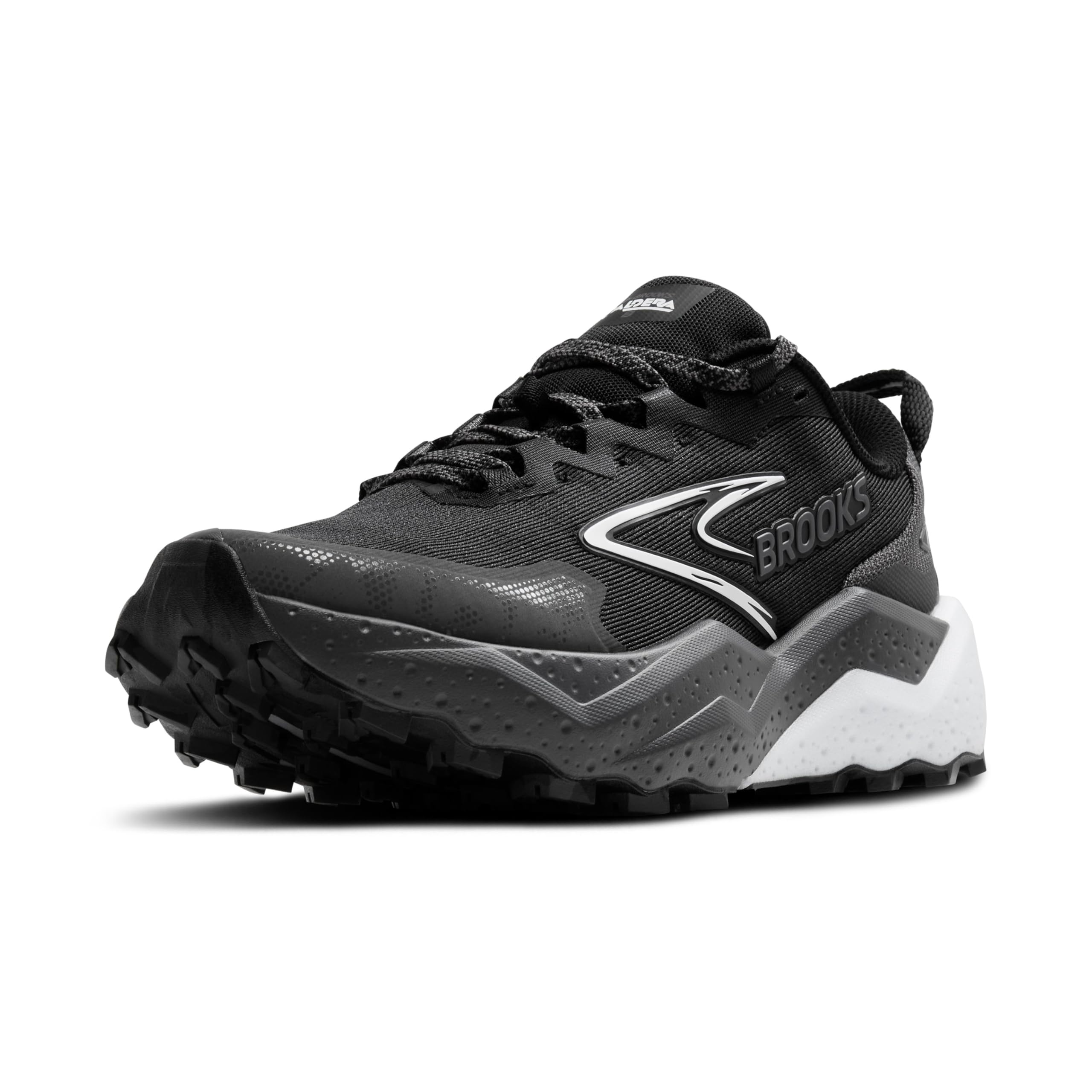
Brooks Caldera 8
Key Features
- Model: Caldera 8
- Shoe type: Trail running
- Department: Women
- Price: Premium
The Caldera 8 is the odd one out here: an ultra-distance trail shoe in a budget roundup, and the only pair priced like a premium one. What that buys is a stable, supportive ride that holds up over hours rather than over miles.
Grip is the best in this set. The tread is sure on loose rock and dry dirt and does not wander on gravel, and there is a nice balance of cushioning and support – soft enough for long descents, firm enough that you are not fighting it on a climb. The ‘Ultra’ in the name is not decoration; this is the women’s shoe here built for hours rather than minutes.
The fit is roomy through the forefoot and comfortable over a long day. If your feet are narrow, lace it down and expect a little extra volume across the instep, because this is not a slipper-fit shoe.
Is the premium worth it? If your trail running means several hours at a time, yes: this is the pair we recommend when comfort over distance matters most. For anything under an hour, the Nitrel V6 does most of the same job for less, and the extra cushioning will not earn its keep.
Pros
- Supportive over long distances
- Best grip in this set
- Roomy, comfortable forefoot
- Stable on long descents
Cons
- Runs about half a size small
Built for long days rather than fast ones, the Caldera 8 is stable, grippy and comfortable over hours, and we think it earns its premium if distance is the goal.
Best for Wet-Weather Runs
FENLERN Trail Shoe

Key Features
- Upper: Waterproof
- Closure: Quick lace
- Shoe type: Trail running
- Department: Men
- Price: Budget
The waterproof upper is the reason to look at this one. It keeps splash, wet grass and road spray out, which is worth something on a winter loop or a muddy towpath run when the alternative is a soaked sock for an hour.
The trade is breathability and drainage: a membrane that keeps water out also keeps it in once it comes over the collar, so this is a cold-and-wet shoe rather than a summer one, and not the pair for a stream crossing. The quick lace system pulls tight in one go and stays put, and comfort holds up for an hour of easy running.
Wide feet should be careful, because the wide fitting does not come up as wide as the label promises, and the length runs short for some. We see it as the second pair you keep by the door rather than the one pair you own, and at this price that is a fair role for it.
Pros
- Waterproof upper for wet weather
- Quick laces are easy on and off
- Comfortable for short outings
- Low-cost second pair
Cons
- Wide sizes are not actually wide
We see the FENLERN as a wet-weather spare: a waterproof upper and quick laces at a low price, with a basic ride suited to short, muddy outings.
How We Tested the Best Budget Trail Running Shoes
We built the shortlist by scanning trail shoes under a sensible budget ceiling, then filtering by available sizes, real trail features—lugged rubber, a firm midsole, a reinforced toe—and review patterns around fit, durability, and squeaking. That left 14 pairs. We ordered each in our testers’ usual size and, where sizing notes looked inconsistent, a half size up as well.
Testing ran for five months, with each pair rotating through at least three runners of different foot shapes. The shoes went on early morning runs on muddy singletrack, long weekend efforts on loose gravel and rocky descents, and the paved connectors between trailheads. We kept a shared log for every run: mileage, terrain, comfort, hot spots, heel slip, and any squeak that appeared once the shoes got wet.
Fit was checked at the driveway—toe box room, heel lock, arch pressure—and again at mile 10, when feet swell. Traction was judged on wet roots, slick rock, and steep loose dirt, uphill and down. After 50 miles, we inspected seams, outsole wear, and midsole compression; after 100 miles, we looked at appearance and whether the shoe had started squeaking. Value came down to price per mile before the first real wear showed.
How to Choose Budget Trail Running Shoes
At this price you are not avoiding compromises, you are choosing which one you can live with: grip, cushioning, fit or lifespan.
Match the tread to the ground you actually run
Lug depth and rubber compound decide where a shoe works, and on a budget you are buying for a surface rather than getting one that does everything. Shallow, closely spaced lugs roll smoothly over gravel, fire road and pavement but skate on wet roots and rock; deep, sticky lugs bite in the wet and feel slow everywhere else.
Be honest about your local loop. If it is dry and dusty most of the year, spend your money on fit and comfort. If it is shaded, rooty and wet for half the year, grip is the one thing worth paying for, and the Saucony Excursion TR14 is the surest pair here.
Treat wide as a claim, not a measurement
Width is the biggest source of returns in this category, and the label does not settle it. A shoe can be wide at the toes and tight across the midfoot, or advertise a wide fitting that measures like a standard one. Measure your feet late in the day, when they are at their largest, and match against the shoe rather than the size you wear in another brand.
If you need real room, the NORTIV 8 and the Nitrel V6 in a wide fitting are the safest bets on this list. The Tracefinder is the narrowest of the group.
Choose cushioning or ground feel, not both
More foam means more protection on rock and less sense of the trail; less foam means feedback and a foot that does more of the work. Neither is better, but they suit different runs. Long days on rough ground call for the Caldera 8 or the Nitrel V6, while short loops on smooth trail are more fun in something lower and lighter such as the 410v9.
Barefoot-style shoes like the WHITIN W51 sit at the far end of that scale. They need weeks of easy miles before your feet and calves adapt, so they are a bad choice for your first trail season.
Accept a shorter life, and plan around it
The money is saved in the rubber, the lining and the overlays, which are the parts you notice last. A cheap pair usually wears through the heel lining or the toe bumper before the tread is gone, especially on rough, gritty ground.
Two less expensive pairs rotated through the week outlast one expensive pair, and each gets a chance to dry between runs. If you run five or six days a week, buy with replacement in mind instead of expecting a full season to be free.
Waterproofing is not the same as wet-weather ready
A membrane keeps water out, but once it comes in over the collar – a puddle, a crossing, a sustained downpour – it stays in. For running, a quick-draining mesh upper is often the better wet-weather choice because the shoe empties itself as you move.
A waterproof upper earns its place for cold, short outings and for splash rather than submersion. If you want one anyway, the FENLERN is the budget option here, and it works as a spare by the door rather than your everyday shoe.
Frequently Asked Questions
What is the difference between trail running shoes and hiking shoes?
Trail runners are lighter, more flexible and dry faster, with a flatter platform that lets you run. Hiking shoes are stiffer, with more toe protection and a firmer base for carrying a pack. If you run most of the time, buy trail shoes; if you carry weight over rough rock, a hiking shoe is the more supportive choice.
How do I know when to replace them?
Two quick checks. Press a thumb hard into the midsole: if it compresses flat with no bounce, the foam is done even when the upper still looks fine. Then look at the heel lugs, and replace the pair once they are smooth. Don’t wait for a hole to appear.
Do budget trail shoes need breaking in?
Most of the shoes here feel fine on the first run, and a couple need a few short outings before they settle. Wear a new pair indoors for an evening, then do one short, easy run before anything long. Keep the box until you have done that, and wear the socks you actually run in.
Final Verdict
Start with the NORTIV 8. It is the pair we point most people to: roomy enough for wide feet, cushioned enough for an hour of dirt, and the best value in this set. Women who want the surest grip should take the Excursion TR14 instead, and anyone whose budget decides the purchase should look at the 410v9 and size up.
Everything else here is a specialist choice. Buy one when its particular strength – ground feel, cushioning, waterproofing or pavement manners – is exactly the thing you need.