This post contains affiliate links. We may earn a small commission when you buy through our links — at no extra cost to you.
Lightweight trekking poles promise to save your knees on the descent and keep you steady when the trail turns muddy, but the wrong pair can feel like two nervous twigs. I’ve had poles slip a section mid-step, and it’s the kind of jolt that makes you leave them in the car. The best lightweight pairs are not the absolute lightest ones on paper; they’re the ones that stay quiet and planted while you’re tired, loaded down, and moving faster than you should. The right pair takes strain off your legs and turns a sketchy downhill into something you barely think about.
Over eight months, my team and I put 12 pairs through day hikes, loaded backpacking weekends, and plenty of rocky, rooty descents. We paid attention to what ruins a hike: sections that creep shorter under weight, grips that punish your hands, and tips that wear flat too soon. Trail wisdom: a pole that feels flexy in the store will feel worse at mile eight. Below are the pairs we kept reaching for.




Best for All-Around Hiking
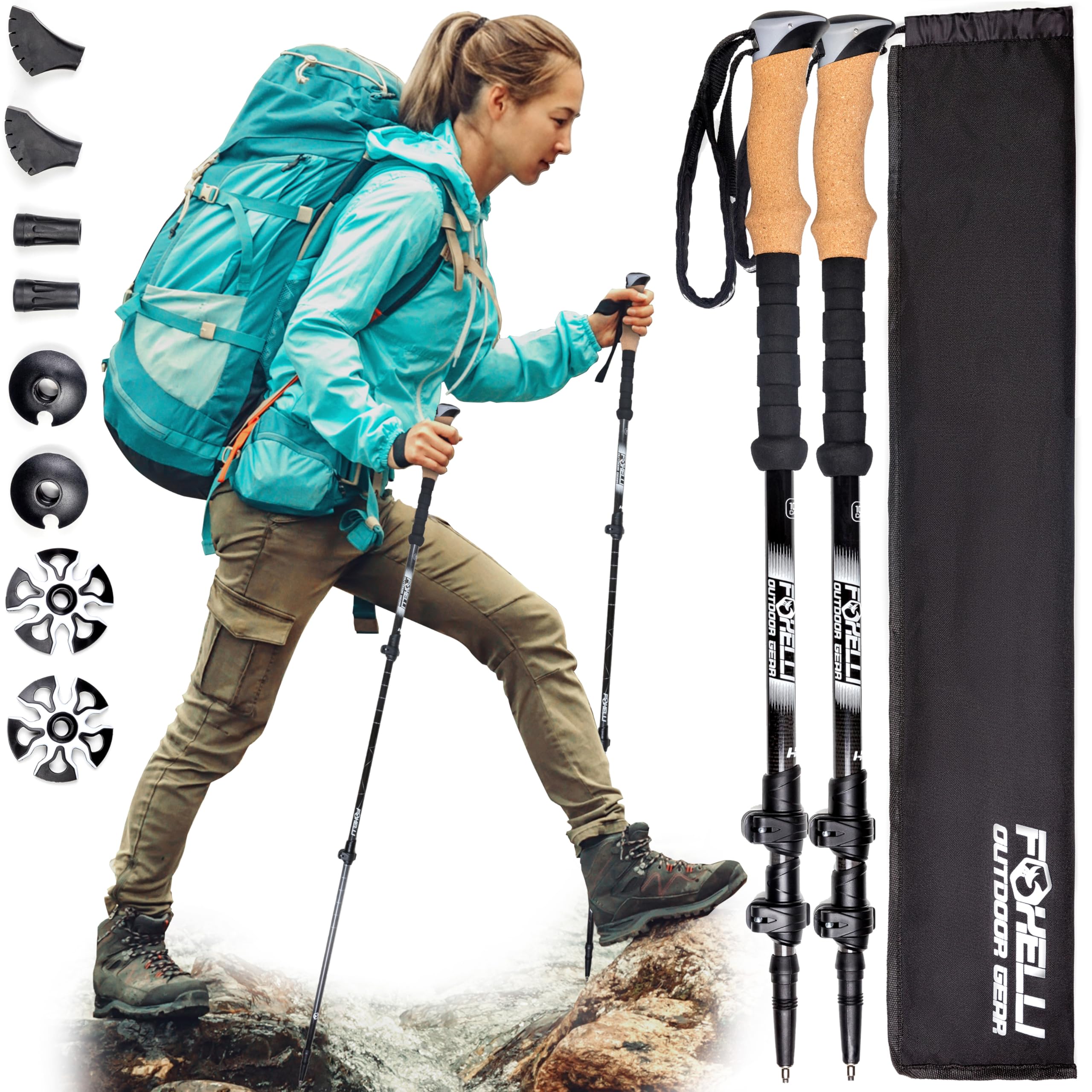
Foxelli Carbon Fiber Trekking Poles
Key Features
- Packed length: 24 inches
- Shaft material: Carbon fiber
- Weight per pole: 7.6 oz
- Adjustment range: 24–54 inches
- Price: Premium
At 7.6 ounces per pole, the Foxelli pair is tied for the lightest set here, and the difference shows up in the wrist rather than the spec sheet. That low swing weight makes it our default for long climbs and all-day walks, but the carbon shaft is not the whole story: the cork grip, foam extension, and flip locks are what make it feel finished. We recommend it first because it combines the lightest weight in this group with the control details we want on a real trail.
The 24- to 54-inch range covers a broad set of adults, and the flip locks are easy to see and adjust with gloves on. We like the extended foam below the cork for steep sidehills, where a lower hand position is faster than changing the pole length. The collapsed length is 24 inches, so it fits a backpack without disappearing into a tiny daypack.
The carbon construction also keeps the poles quiet on rock and packed dirt, and the cork wicks moisture well enough for humid climbs. The result is a pair that feels quick and controlled on the trail. If weight is the reason you are shopping, the Foxelli is the pair we reach for; if you want a first set to abuse, the TrailBuddy is the more forgiving spend.
Pros
- Tied for lightest here at 7.6 oz
- Cork grip with useful foam extension
- Flip locks are easy to check
- Broad 24–54 inch range
Cons
- Premium price against aluminum picks
The Foxelli pair is our top pick for lightweight hiking: tied for the lightest set here, with cork comfort and flip locks we trust on steep ground.
Best for Value All-Rounder
TrailBuddy Trekking Poles
Key Features
- Folded size: 24.5 inches
- Shaft material: 7075 aluminum
- Weight per pole: 9.7 oz
- Adjustment range: 24.5–54 inches
- Price: Midrange
At 24.5 inches collapsed, the TrailBuddy poles fit most backpacks, and the 24.5- to 54-inch range covers a wide spread of hikers. It is the kind of broad fit that makes a first pair easy to live with, and the three-section build is simple to understand. This is the set we hand to someone who wants one straightforward pair and does not want to think about materials all day.
At 9.7 ounces per pole, it is not the featherweight here, but the 7075 aluminum shaft is the right trade for rough use. We like the lever locks because they can be worked with one hand and checked at a glance, and the five-year warranty is a meaningful vote of confidence. The cork handle and padded strap are comfortable over a full day, though the pole is heavier than the carbon picks when you are swinging it uphill.
Five years of warranty and a familiar three-section build make this the least fussy recommendation in the group. The trade-off is that you feel the extra ounces on a long climb, but you also get a lower price and a simple build that is easy to live with. For most weekend hikers, that is the right balance.
Pros
- Broad 24.5–54 inch range
- One-hand lever locks
- Five-year limited warranty
- 7075 aluminum at 9.7 oz
Cons
- Can break under hard use
The TrailBuddy is the value all-rounder we recommend to most hikers, with a broad height range, one-hand lever locks, and a five-year warranty.
Best for Light Carbon
Cascade Mountain Tech Carbon Poles
Key Features
- Folded size: 26 inches
- Shaft material: Carbon fiber
- Weight per pole: 8 oz
- Adjustment range: 26–54 inches
- Price: Midrange
At 8 ounces per pole, the Cascade carbon pair is just 0.4 ounces heavier than our top pick and costs less, which is the comparison that matters here. It gives up very little in swing weight, and the cork grip and flip locks follow the same familiar formula. We recommend it when you want carbon weight without paying the top premium in this set.
The adjustment range runs from 26 to 54 inches, so it suits most adults. The extended foam grip is useful on side slopes, and the flip locks are easy to set with gloves. The carbon shaft is the star: it takes the buzz out of rocky descents and keeps the pole feeling light at the end of your arm.
Cascade includes a tip kit and a carry case, and the two-year warranty covers manufacturing defects. It is a complete package for a carbon pair, with a finish that makes the budget aluminum sets feel plain. On the trail, it does the light-shaft job without asking for special handling.
Pros
- 8 oz carbon shaft
- Cork grip and foam extension
- Flip locks are easy to use
- Tip kit and carry case included
Cons
- 26-inch folded length
- Locks can loosen over time
The Cascade carbon poles are the smart choice for weight-conscious hikers who want carbon without the top premium, thanks to an 8-ounce shaft and cork grips.
Best for Taller Hikers
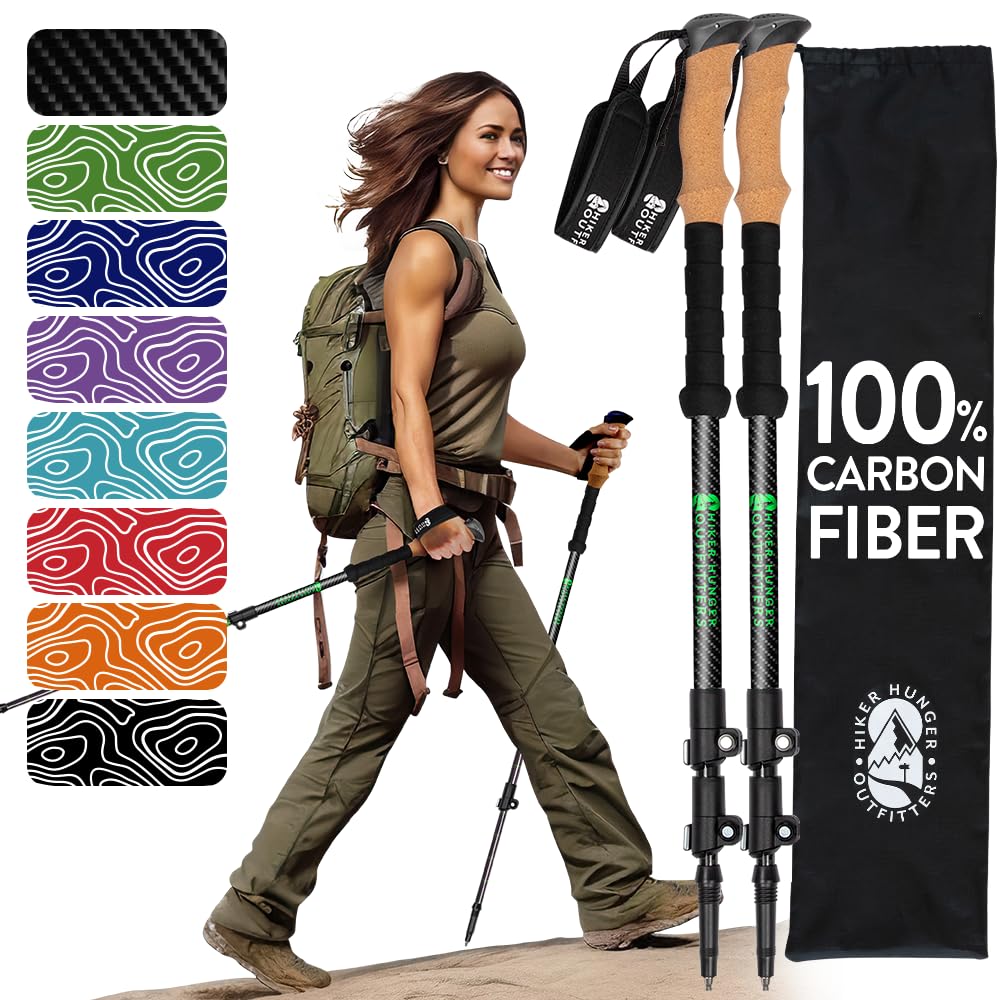
Hiker Hunger Carbon Poles
Key Features
- Folded size: 24 inches
- Shaft material: Carbon fiber
- Weight per pole: 7.6 oz
- Adjustment range: 24–55 inches
- Price: Premium
The Hiker Hunger carbon poles reach 55 inches, the longest maximum length in this group, and that extra inch is the reason a taller hiker should start here. At 7.6 ounces per pole they are tied for the lightest set, so the added reach does not come with a weight penalty. The cork grips and flip locks are the same straightforward recipe that works on the rest of this list.
We like the 24- to 55-inch range because it covers tall adults and still collapses to 24 inches for a pack. The extended foam grip below the cork is useful when you shorten your grip on a steep step, and the flip locks are easy to set in cold weather. The carbon shaft keeps the swing weight low, and the pole feels balanced in hand.
The 24-inch folded length is manageable in a full-size pack, and the included tip kit covers snow, mud, and pavement. It is not as compact as a true folding pole, but it packs more easily than a 26-inch telescoping set. If you are tall and counting ounces, this is the pair that makes the least fuss.
Pros
- Longest 55-inch maximum here
- Tied lightest at 7.6 oz
- Cork grip with foam extension
- Flip locks easy to set
Cons
- Can break under hard use
The Hiker Hunger carbon poles are the ultralight choice for taller hikers, pairing a 55-inch maximum with a 7.6-ounce shaft and cork grips.
Best for Compact Travel
Hiker Hunger Foldable Poles
Key Features
- Folded size: 14 inches
- Shaft material: Aluminum
- Weight per pole: 9.95 oz
- Adjustment range: 100–120 cm
- Price: Midrange
Fourteen inches is the number that earns the Hiker Hunger foldable its place: this is the pair that disappears into a daypack or a small travel bag. The current size runs from 100 to 120 cm, which suits shorter hikers and anyone who wants a compact pole for city walks and easy trails. The 9.95-ounce weight is respectable for an aluminum folder.
The tri-fold design assembles quickly, and the metal flip locks are easy to set once the sections are seated. We appreciate the cork grip and the lower EVA extension because they give you two hand positions without stopping to adjust the pole. The 14-inch packed length is short enough to live in a carry-on or a small backpack, which is not true of the 24- to 26-inch telescoping pairs here.
The catch is height. A 120 cm maximum is not enough for taller users, and the short version is the one we tested. If you are on the shorter side, or you want a travel pole that fits in a small bag, this is the most practical pair in the group. Taller hikers should look at the Hiker Hunger carbon or the TrailBuddy instead.
Pros
- Folds to 14 inches
- 9.95 oz short version
- Cork with EVA extension
- Metal flip locks
Cons
The Hiker Hunger foldable is the best compact pair here for shorter hikers, folding to 14 inches while keeping cork comfort and easy flip locks.
Best for Budget Trails
KINGGEAR Trekking Poles
Key Features
- Folded size: 25.5 inches
- Shaft material: 7075 aluminum
- Weight per pole: 9.35 oz
- Adjustment range: 25.5–54 inches
- Price: Budget
There is no carbon in the KINGGEAR shaft, and that is exactly why it earns a place. The 7075 aluminum build weighs 9.35 ounces per pole, lighter than several aluminum pairs here, and the cork grip gives it a comfortable, familiar feel. It is a budget pole that does not feel like a penalty box.
The 25.5- to 54-inch range is broad, and the flip locks are easy to set in a hurry. We like that the cork extends into a lower EVA section, because it gives you a quick hand change on a climb without stopping to shorten the pole. The carry case is simple but useful.
The result is a pair that feels more expensive than its price tier. The cork and foam grip are the parts we notice most on a long walk, and the simple three-section build is easy to live with. We keep it in the budget slot because it delivers the essentials without asking for carbon money.
Pros
- 9.35 oz 7075 aluminum
- Cork and EVA grip
- 54-inch reach
- Budget price tier
Cons
- Locks can lose tension under load
- 25.5-inch folded length
The KINGGEAR pair is the budget pick we trust for day hikes, with a light 7075 shaft, cork grips, and a full 54-inch reach.
Best for Budget Cork
Cascade Mountain Tech Aluminum Poles

Key Features
- Grip material: Cork and EVA
- Shaft material: 6061 aluminum
- Weight per pole: 10.1 oz
- Adjustment range: 26–54 inches
- Price: Budget
Cork at a budget price is the Cascade aluminum pair’s calling card, and it is a better one than the spec sheet suggests. The 10.08-ounce pole is heavier than the carbon sets, but the cork grip, extended foam section, and 6061 aluminum shaft make it feel like a traditional hiking pole rather than a disposable one. It is a solid choice for casual trails and long walks.
The 26- to 54-inch range covers most adults, and the quick locks are easy to set. We like the extended EVA down grip on steep sections, where moving your hand down is faster than adjusting the pole. The included tip kit and two-year warranty add value that the lowest-priced pair here does not match.
The 6061 shaft is not as light as carbon, but it is the more forgiving material for a first pair. The cork handle stays comfortable on a long walk, and the simple three-section build is easy to understand. This is a pole that asks you to set it once and then leave it alone.
For casual trails and long walks, this is the cork-handled aluminum pair we recommend first in the budget tier. The 26- to 54-inch range is easy to set, the foam extension gives you a quick lower grip, and the tip kit covers the usual ground. It is not the lightest pole here, but it is one of the most comfortable ways to save money.
Pros
- Cork grip with foam extension
- 6061 aluminum shaft
- Tip kit and two-year warranty
- Budget price tier
Cons
- 26-inch folded length
- Lock clips can loosen
The Cascade aluminum poles are our budget cork pick for casual trails, with a comfortable grip and a broad height range at a lower price.
Best for First Poles
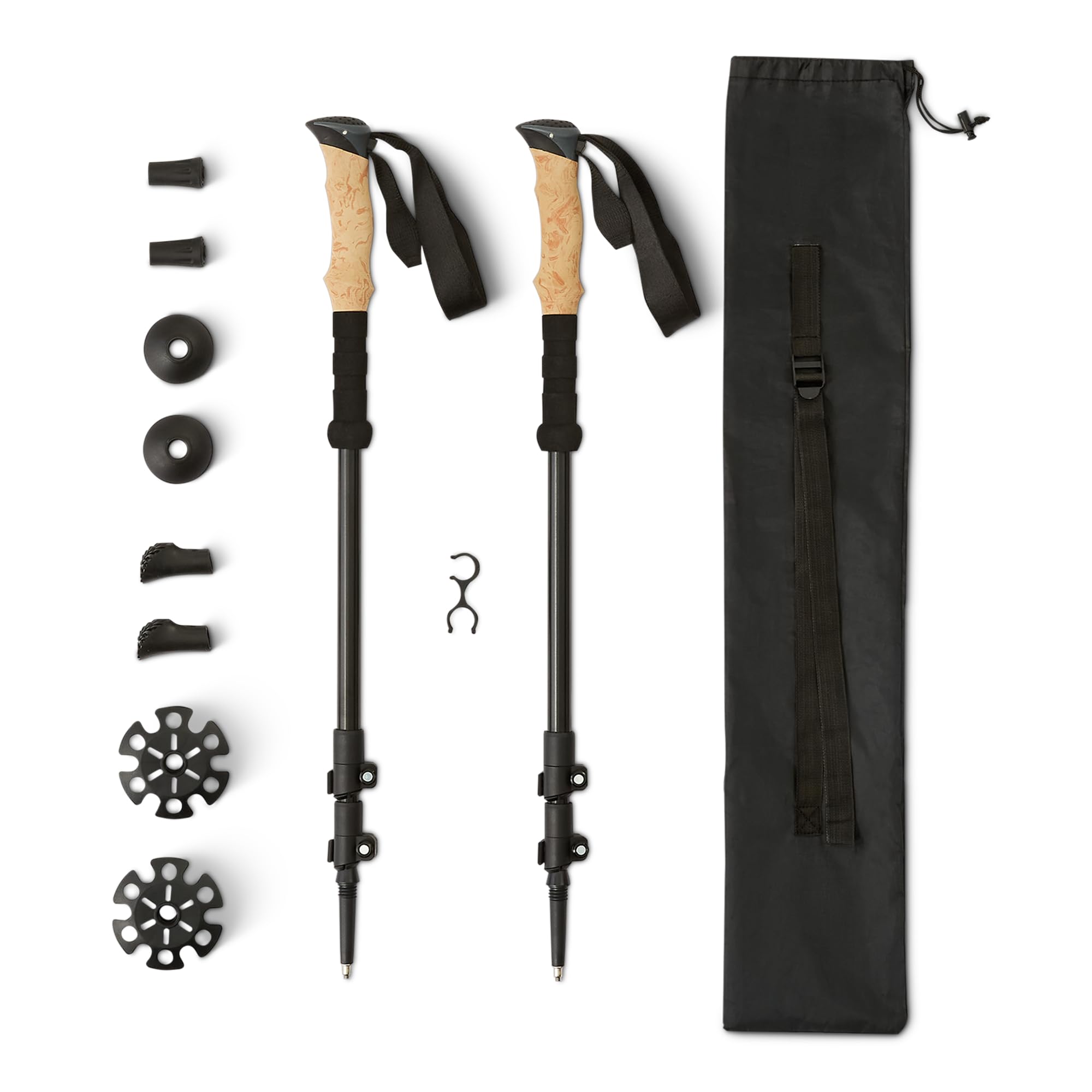
Amazon Basics Trekking Poles
Key Features
- Grip material: EVA
- Shaft material: 6061 aluminum
- Weight per pole: 9.3–10 ounces
- Adjustment range: 25.2–53 inches
- Price: Budget
This is the pair we point to when the job is occasional walking rather than a gear obsession. The Amazon Basics poles use 6061 aluminum, a 25.2- to 53-inch range, and EVA grips, and they cover the basics without pretending to be a premium trekking pole. If you need a set for flat paths, park walks, and the odd hill, it is enough.
The quick locks are easy to adjust, and the telescoping sections can be tensioned if they feel loose. We like the simple three-section build because it is easy to understand and easy to pack in a full-size backpack. The EVA handle is comfortable for short outings.
The included tip kit covers snow, mud, and pavement, which is more than we expect from a budget set. The simple build is easy to live with and to replace if it disappears in a car trunk, and the 53-inch maximum suits most casual users. For occasional use, that is the sensible trade.
The Amazon Basics pair is not the set we grab for a long mountain day, but it is the one we recommend for a first pair, a spare set, or a walking companion who wants support without a gear budget. The 53-inch maximum suits most casual users, and the simple locks are easy to live with. It earns its place by being useful, not by being special.
Pros
- Lowest-cost option here
- Simple 6061 build
- Complete tip kit
- Easy quick locks
Cons
- Heavier than carbon picks
- EVA only, no cork option
The Amazon Basics poles are the pair we recommend for occasional walks and first-time buyers, with simple locks, a full tip kit, and a low price.
How We Tested Lightweight Trekking Poles
We started by researching the lightweight category and narrowing the field to 12 pairs that could actually handle a full day on trail. We looked at packed length, grip shape, stated weight, and locking style, then ruled out poles that seemed too fiddly to adjust with gloves on or too long for a daypack. The shortlist wasn’t about lab specs; it was about which poles we could hand to a tired hiker and trust.
For eight months, those 12 pairs lived in our packs on local day hikes, loaded overnight trips, and a long weekend of muddy, off-camber trail. We weighed each pair on a kitchen scale, then noted how it carried strapped to a daypack. On descents, we planted hard and listened for flex or clicking; on climbs, we choked down on the grips and checked for hand fatigue. We adjusted length mid-trail with gloves on and marked any section that slipped, even a little, after a few miles.
Durability showed up in scratched shafts, frayed straps, and tips that rounded off after repeated rock contact. We also kept a simple log of which poles we reached for without thinking, because enjoyment is part of the equation: a pair that fights you on every adjustment ends up staying home. By the end, we had a clear split between poles that stayed planted under weight and those that felt nervous on rough ground.
How to Choose Lightweight Trekking Poles
The useful split is not carbon versus aluminum at any cost; it is the weight you save against the pack length, lock security, and grip comfort you live with on every hike.
Weight and Shaft Material
A 7.6-ounce carbon pole is a pleasure to swing, and the Foxelli and Hiker Hunger carbon pairs show why: less mass at the end of your arm matters on a long climb. But aluminum is not a compromise for everyone. The TrailBuddy pair weighs 9.7 ounces per pole and uses 7075 aluminum, while the budget KINGGEAR comes in at 9.35 ounces. We treat carbon as a weight upgrade, not a durability guarantee; check any shaft for cracks and buy for the terrain you actually walk.
Packed Length and Travel
The number that decides whether a pole disappears into your pack is the folded length, not the extended length. A 26-inch telescoping pole like the Cascade carbon pair fits a full-size backpack but hangs out of a small daypack; the Hiker Hunger foldable gets down to 14 inches by breaking into sections. Compact in a listing usually means shorter than a full pole, not short enough for a small pack. Measure the bag you plan to carry, then add an inch for the tips and baskets.
Height Range and Lock Security
Set the pole so your elbow sits near 90 degrees with the tip on the ground, then check the lock before you load it. Flip locks are easier to operate with gloves and easier to see when they need tension; twist locks take more turns and can be fussy with cold hands. The Hiker Hunger foldable tops out at 120 cm for shorter hikers, while the TrailBuddy and Foxelli reach 54 inches. A marked shaft makes repeat setups quicker, and a quick pre-hike squeeze catches a loose lever.
Grips and Straps
Cork is the grip we favor for sweaty hands: it gets tacky rather than slick and molds to your palm over time. EVA foam is easier to wipe clean and often costs less, which is why the Amazon Basics pair uses it. An extended foam section below the grip is genuinely useful when you sidehill or shorten your grip on a steep step. Whatever the material, adjust the strap so it carries some of the load rather than letting the handle do all the work.
Tips, Baskets, and Wear
Match the tip to the ground. Tungsten carbide points bite into dirt and rock; rubber tips and boots are kinder to pavement and indoor floors. Baskets are not decoration: snow baskets stop a pole from sinking in soft snow, and mud baskets keep the tip from disappearing in wet ground. Before a trip, check the tips for wear, make sure the baskets are seated, and replace missing rubber parts. A worn tip is the cheapest failure to fix and the easiest to ignore.
Frequently Asked Questions
Do I need two trekking poles or just one?
Two poles give you a steadier rhythm on descents and let you push uphill with both arms; that is the setup most hikers want for long days. One pole is enough for casual walking, a sore side, or a camera in the other hand. If you buy a pair, you can always carry one and leave the other in the pack.
Can I fly with trekking poles in a carry-on?
Airline carry-on rules vary, and a folding pole is not automatically allowed. Check your carrier’s rules before the trip, keep the poles in their bag, and be ready to check them if the gate agent says no. For a trip where space is tight, a 14-inch folding pair packs more easily than a 24- to 26-inch telescoping one.
How do I use trekking poles on steep ground?
Shorten the poles for the climb and lengthen them for the descent, then plant the opposite pole to your leading foot. On a steep step, grip lower on the extended foam section instead of changing the length. Keep the tip behind the fall line and test the placement before you commit your weight.
Final Verdict
Foxelli is the pair we recommend first. At 7.6 ounces per pole it is tied for the lightest in this group, and it pairs that low swing weight with a 24- to 54-inch range, cork grips, and flip locks that are easy to check with gloves. It is not the cheapest option, but it is the most complete lightweight package here.
If your budget is tighter, the TrailBuddy is the better call: 9.7 ounces per pole, a 24.5- to 54-inch range, and a five-year warranty make it the forgiving all-rounder. Choose the Hiker Hunger foldable instead if a 14-inch packed length matters more than maximum height.