This post contains affiliate links. We may earn a small commission when you buy through our links — at no extra cost to you.
A felling axe has a Goldilocks problem: too light and you swing all afternoon without making progress; too heavy and your shoulders quit before the tree does. The tool needs enough weight and the right head shape to bite cleanly, but it also has to feel balanced and stay tight after real work. I’ve spent enough weekends clearing storm-downed limbs to know that a sharp edge out of the box is only half the story—handle fit, steel quality, and durability are what keep an axe useful.
Over the past six months, my team and I put nine felling axes through that kind of use, from bucking a fallen oak on a friend’s storm-damaged property to limbing softwood in a backyard woodlot and clearing brush. We watched cutting performance, weight and balance, head shape, and whether each handle-to-head fit stayed tight, because value isn’t just the sticker—it’s whether an axe keeps working after the edge meets knotty wood. The picks below are the ones that made the most sense in the hand and in the wood.


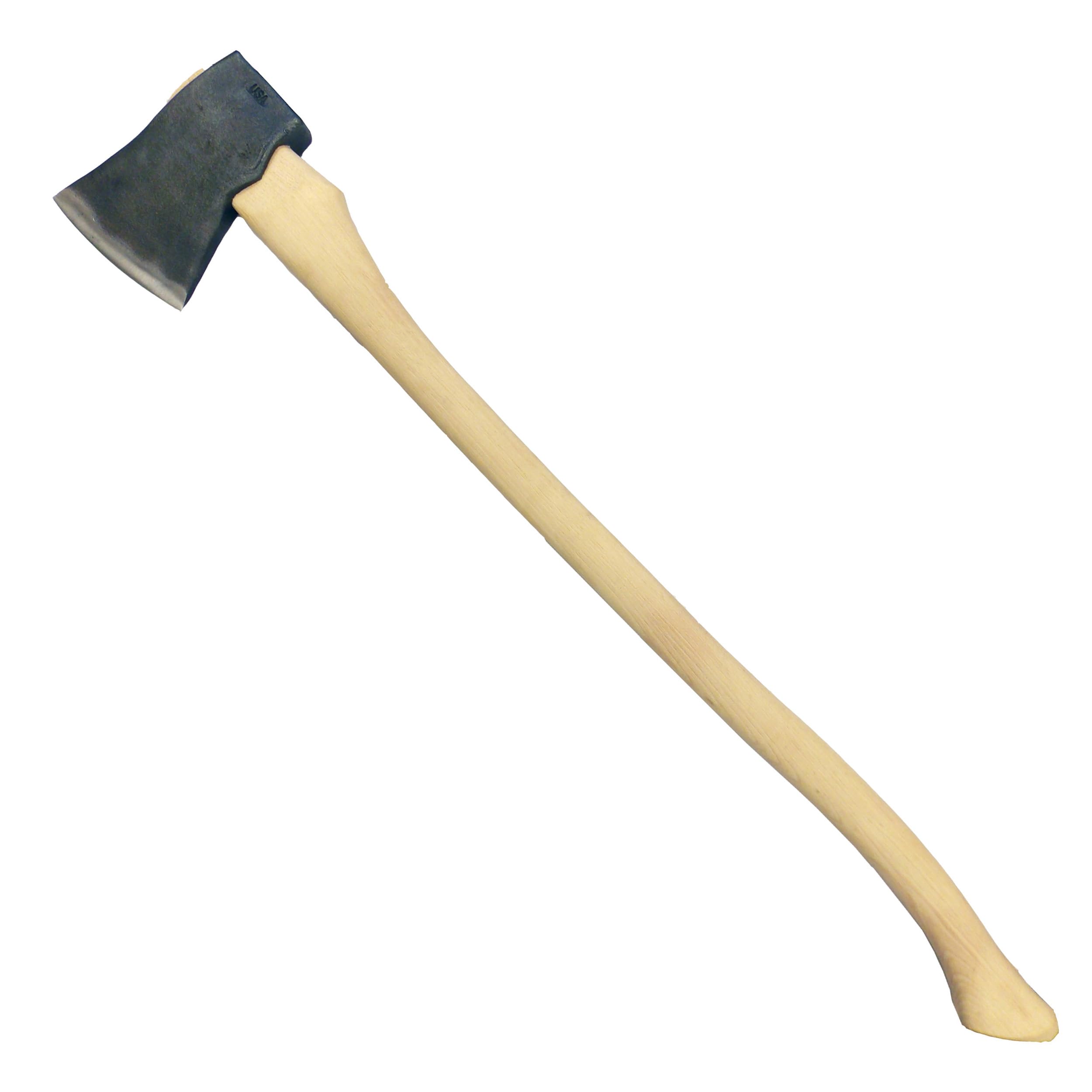


Best for Full-Size Felling
Helko Werk Bavarian Woodworker
Key Features
- Steel: C50 high carbon steel
- Head Weight: 3.5 lb
- Total Weight: 5.5 lb
- Handle Length: 31 in
- Price: Premium
Three and a half pounds of head on a 31-inch handle is the oldest useful ratio in axe making, and the Bavarian Woodworker is built around it. The mass is enough to carry a deep bite into green wood, and the length gives the head room to build speed before the bit lands. That balance of heft and reach is why it is our top pick: it fells like a full-size axe and still lets you put a cut where you meant to.
The head is open-face drop forged from C50 carbon steel, tempered to 53-56 HRC, and finished to a polished black that comes free of a deep cut more easily than a rough forging. The bit arrives sharp, which matters more than it sounds, because a felling axe you have to reprofile before its first tree is a project rather than a purchase. The grade A hickory handle is sanded fine and oiled, smooth in a bare hand and grippy enough that it does not rotate on the swing.
Wood moves, so the head-to-handle fit is the thing to watch on any hickory axe. Wedges lift, and a head can start to ride up after a dry winter in a shed; check the seating when the box arrives and again before each season, because a head that has started to travel is a repair job, not a mystery. The rest of the upkeep is a wipe of oil on the handle and a few passes on the bit.
What the money buys is the forging, the finish, and the leather: a full-grain sheath and a small bottle of axe oil come in the box. If your felling is a handful of small trees a year, the Fiskars further down does it for a fraction of the outlay and asks less of you. This one is for the person who wants a single full-size axe to keep for decades and does not mind learning how to look after a wooden handle.
Pros
- Full-size 3.5 lb head on a 31 in handle
- Sharp, hand-finished edge out of the box
- Grade A hickory handle with leather sheath and oil
- Balanced enough to place a cut precisely
Cons
- Premium price against the budget picks here
Our pick for felling real trees: a full-size German axe with a hand-finished edge that arrives ready to cut and swings with the weight of a proper working tool.
Best for Small Trees, Limbs
Fiskars 28 in Chopping Axe
Key Features
- Weight: 3.8 lb
- Blade Edge: Proprietary grind
- Handle Length: 28 in
- Handle Material: Fiberglass
- Price: Budget
At 3.8 pounds with a 28-inch handle, this is an axe you can swing all afternoon without paying for it the next morning. A light head moving fast does more work than a heavy one that has you resting every ten minutes, and that is the trade Fiskars has made here. For limbing a dropped tree, clearing trail, or taking down the small stuff around a property, it is the easiest axe on this list to pick up and use.
The handle is where the money went. Fiberglass shrugs off the overstrike that dents hickory, the textured grip stays put in wet weather, and there is no grain to read and no wedge to seat: you sharpen it, you use it, you put it away. That is a genuinely different ownership experience from the wooden axes here, and for a tool that lives behind a truck seat it is the right one.
Twenty-eight inches is the honest limit, and it is worth being clear about. Fiskars calls this a chopping axe rather than a full-size feller, and on anything much past a foot across you will be reaching shorter and swinging harder than the person beside you with a 3.5-pound head on a 31-inch handle. For a first axe, or a second one that rides in the truck, that is a limit worth accepting. If your trees run large, spend the length.
Pros
- Light 3.8 lb package for long sessions
- Fiberglass handle survives overstrikes
- Sharp out of the box and easy to touch up
- Outstanding value for small-tree work
Cons
- Fiberglass transmits more sting than hickory
The axe we point most first-time fellers to: light, tough, sharp out of the box, and priced so you can keep it behind the truck seat.
Best for Budget Full-Size
Council Tool 3.5 lb Jersey Axe
Key Features
- Head Weight: 3.5 lb
- Head Pattern: Jersey
- Handle Length: 36 in
- Handle Material: American hickory
- Price: Budget
A 36-inch American hickory handle with a 3.5-pound Jersey head on the end, forged and hung in the USA: on paper this is the most axe per dollar in the group. It also arrives rougher than the German and Swedish tools here. The grind can be uneven and the handle comes in the raw, so budget an hour with a file and sandpaper before the first tree. That prep is part of what you bought.
The Jersey pattern is the reason to bother. Sometimes called Baltimore Jersey, it has lugs that widen the contact between head and handle and a long, thin bit meant for cutting across the grain rather than splitting down it. That is the right geometry for felling, and 36 inches of handle gives you the reach to stand back from the trunk and the arc to build real speed.
Length cuts both ways. A 36-inch swing is harder to land exactly where you aimed than a 28-inch one, and this is not the axe to learn accuracy on; it rewards a deliberate stroke and punishes a muscled one. The reward is that when the aim is right, the head arrives with more energy than anything else in this group at the price.
So the Council is our pick for the buyer who enjoys tuning a tool. A file pass on the bit, a sanding and an oil on the handle, and a careful check that the head is seated on its two wedges gets you a full-size felling axe that behaves like the expensive ones. If you want to open a box and walk straight into the woods, this is not it. The Helko is.
Pros
- Full 36-inch hickory handle for reach
- Jersey pattern suits cross-grain felling
- Made in the USA from domestic materials
- Wood-and-steel wedge head mounting
Cons
- Handle quality varies between individual axes
Our pick if you want a real 36-inch felling axe on a tight budget and do not mind an hour with a file.
Best for Large Trunks
Helko Werk Classic Expedition
Key Features
- Steel: C50 high carbon steel
- Head Weight: 4.5 lb
- Handle Length: 35 in
- Handle Material: Grade A hickory
- Price: Premium
When the trunks you are taking down are measured in feet rather than inches, this is the axe in the group built for it: 4.5 pounds of head on a 35-inch handle. It is not a tool for a pleasant hour of thinning. It is the one you get out when the tree is bigger than the saw and you need to move real wood before the light goes.
Everything else is Helko’s recipe: open-face drop-forged C50 carbon steel, a grade A hickory handle sanded and oiled, a leather sheath and a bottle of axe oil in the box. The head is polished rather than left black, and at this size that is less about looks than we expected, since a smooth cheek comes out of a deep bind with less fight than a rough one.
Weight is the entire argument and the entire cost. Six pounds of axe at the end of a 35-inch swing generates momentum nothing else here matches, and it also empties your arms faster than anything else here. That is not a flaw to fix; it is a tool with a short, heavy working rhythm, and the people who get on with it are the ones who let the head fall and take a breath between trees.
Against the Bavarian Woodworker, you are buying one size up: more head, more handle, more effort per swing, and a bigger bite in return. If most of your felling fits between eight and twelve inches across, the smaller axe finishes the job with less fatigue and leaves you fresher for the next one. If your woodlot is full of mature trunks, the Expedition is the one that stops the work feeling like a compromise.
Pros
- 4.5 lb head on a 35 in handle
- Polished head frees easily from deep cuts
- Hand-forged C50 steel with hickory handle
- Sheath and axe oil included
Cons
- Premium price that big timber has to justify
Our pick for genuinely big trunks: the largest and heaviest axe here, and the one that makes mature timber feel like a manageable afternoon.
Best for Packing and Trails
Gränsfors Bruks Forest Axe
Key Features
- Sheath: Vegetable-tanned leather
- Weight: 2.6 lb
- Blade Steel: Swedish axe steel
- Handle Length: 25 in
- Price: Premium
Twenty-five inches of handle behind a 2.6-pound head is a deliberate choice rather than a compromise. This is the axe you carry to the tree instead of the one you keep beside the woodpile, built for felling small trees, limbing, and clearing, the work where the tool rides on a belt or in a pack between cuts.
What separates it from everything else here is balance. The head does the work and your wrist does the steering, and it arrives shaving sharp from a hand-finished Swedish forge, edge polished and cheeks blackened. Of the axes in this group, this is the one we most enjoyed picking up, and the one whose finish we kept noticing.
The short handle is the limit, and it is a real one. On a tree much beyond a foot through you will run out of reach and leverage long before the head runs out of bite, and you will work harder than the person with a 31- or 36-inch axe. That is the price of a tool that fits in a pack and swings in tight quarters, and it is worth paying if the axe travels with you.
If you want a full-size feller for the woodlot and most of your trees are thicker than your thigh, the Helko Bavarian is the better shape for that job. If you want one axe to carry into the backcountry for the next twenty years, a hand-finished head, a leather sheath, and a finish you will feel slightly guilty about marking, this is the one to buy.
Pros
- Exceptional balance for a light head
- Hand-finished Swedish steel, shaving sharp
- Compact 25 in package for a pack
- Leather sheath included
Cons
- Highest price among these picks
Our pick for the axe that travels: superb balance, a shaving edge, and a 25-inch handle that keeps it packable.
Best for Low-Cost Felling
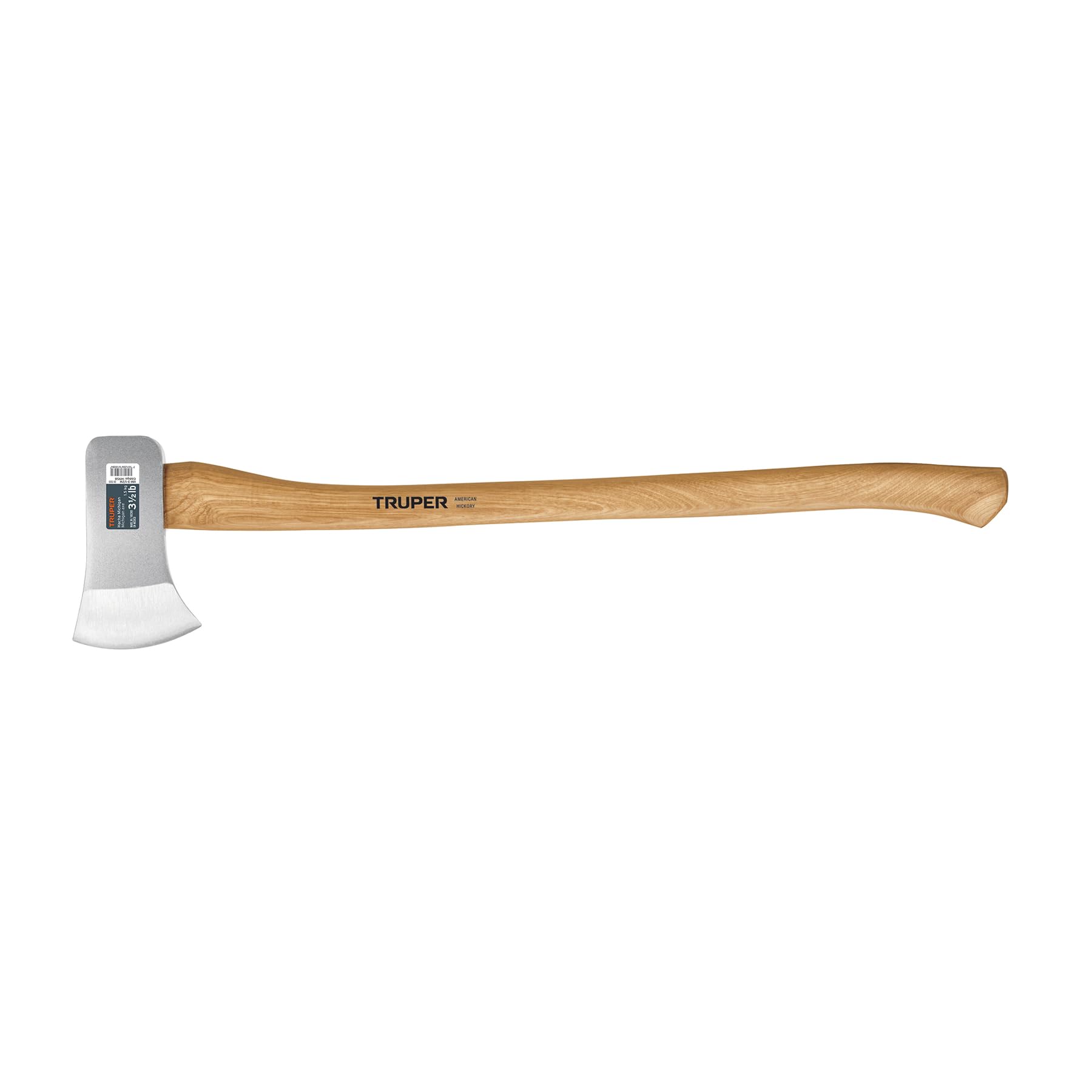
Truper Michigan Axe
Key Features
- Head Weight: 3.5 lb
- Handle Length: 35 in
- Handle Material: American hickory
- Head Attachment: Wood and steel wedges
- Price: Budget
The cheapest way into a full-size felling axe here is this one: a 3.5-pound forged Michigan-pattern head on a 35-inch American hickory handle, with a sheath in the box. On the two numbers that decide what an axe can fell, it matches the premium axes here. That is why it earns a place even though it is the plainest tool on the list.
The Michigan pattern is a proper felling shape: a long bit with a slight curve and enough poll to drive a wedge when a cut starts to close. The head is held on with a wooden wedge backed by a steel one, the traditional and repairable way to hang an axe, and the hickory is kiln-dried before it goes on. The handle arrives lacquered, which protects it in storage but feels slick in a bare hand; twenty minutes with sandpaper and a coat of linseed oil fixes the grip for good.
What you do not get for the money is hand-finishing, so treat the unboxing as an inspection. Read the grain where it runs into the head, make sure the head sits square and tight, and check that both wedges are driven home. Sharpen it to your own taste and you have a full-size feller that will take down a real tree, one that asks you to be the quality control.
Pros
- Full-size 35 in hickory handle
- Traditional wood-and-steel wedge mounting
- Sheath included
- Lowest price of the full-size picks here
Cons
The cheapest full-size axe here, and a sound one: 35 inches of hickory and a 3.5-pound head if you will do the finishing yourself.
Best for Wedge Work
WoodlandPRO Fallers Axe

Key Features
- Head Weight: 5 lb
- Handle Length: 28 in
- Handle Material: Hickory
- Price: Budget
Five pounds of head on a 28-inch handle looks like a mistake until you know what it is for. This is a faller’s axe in the old sense: a short, heavy tool for driving wedges into a back cut and working close to the stump, not for standing back and swinging at the sky.
The heft is the entire point. A head that heavy sends a wedge home with the poll and keeps a cut from closing while you work, and the short handle keeps your hands clear when you are inside a felling zone. The hickory is American and the head is forged, and there is no ceremony anywhere in the finish.
We are recommending it as a specialist, not as your only axe. Taking down small trees on a suburban lot with five pounds on a short handle is the wrong job for it, heavy to swing for an hour and short on reach. Dropping mature trunks and wanting one heavy head for the dirty end of the work is exactly the job, and it does that for less than the premium axes here.
Pros
- Five-pound head drives wedges hard
- Short handle works close to the stump
- American hickory handle
Cons
- Handle runs small for larger hands
A specialist we are glad to have on the list: five pounds of head and a short handle for wedge work and close-in cutting.
How We Tested Felling Axes in Real Wood
We started by researching the felling axes that experienced users and repair shops actually talk about, then narrowed the field by head shape, handle length and fit, steel quality, and whether replacement handles were available. That whittled a long list down to nine axes. We bought every one at retail so no one was testing a cherry-picked sample, and we used them for six months.
The work happened in a backyard woodlot and on a friend’s storm-damaged property: felling small softwood trees, bucking an oak that had come down across a fence line, limbing branches, and clearing brush. Out of the box, I checked each edge on newsprint and then made controlled cross-grain cuts into green pine and seasoned oak, noting whether the axe bit and cleared chips or bounced and stuck. I weighed each axe, then swung it at chest and waist height to see where the balance point sat and whether the head felt nose-heavy or dead in the hand.
After each session, we checked the head-to-handle fit for movement, looked for rolled edges or chips, and inspected the handle for dings and grain lifts. Head shape got judged in real work: a thinner profile was quicker in softwood, while a fuller cheek held up better in knotty oak. We compared how each axe handled a full afternoon of limbing versus a few focused felling cuts, then set performance against cost. The axes that stayed sharp, stayed tight, and felt controlled after six months are the ones that rose to the top.
How to Choose a Felling Axe
A felling axe is a matched pair, head weight and handle length, and getting that pair right matters more than the steel, the brand, or the finish.
Start with handle length, then pick the head
Length decides what you can fell and how hard you work for it. Under 28 inches you have an axe for limbs, saplings, and packing; from 31 to 36 inches you have a tool that reaches across a trunk and builds real speed before the bit lands. Head weight follows the handle: 3 to 3.5 pounds on 31 to 36 inches is the classic felling pairing, while 4.5 to 5 pounds belongs on the long end or on specialist short-swing work. The trap is assuming a heavyweight head on a short handle is a shortcut to power. It is not; it is a tool that tires you out and still cannot reach.
Felling geometry is not splitting geometry
A felling axe carries a long, relatively thin bit that cuts across the grain. A splitting axe or maul carries a thick, wedge-shaped profile that forces the wood apart. Use a splitter on a standing tree and it bounces and sticks; use a felling bit on a stack of rounds and it buries itself in the first knot. If one tool has to do both, expect it to be mediocre at one of them. The other thing to check is the edge: some axes arrive shaving sharp, and some arrive with a grind that needs a file before you cut anything.
Handle material and the hang
Hickory absorbs shock and can be rehung; fiberglass survives overstrikes and never needs a wedge. Wood is the traditional choice for a reason, since it damps vibration and feels alive through the swing, but it is also the part that fails. Look at how the head is attached: a wooden wedge backed by a steel one is the repairable, traditional hang. Check that the head sits square and the wedges are driven home before the first swing, and again at the start of each season.
Total weight and balance, not just head weight
Catalogues quote head weight; your shoulders care about total weight. A 3.5-pound head on a 31-inch handle runs around five and a half pounds in the hand, and stepping up a head size adds roughly a pound you will feel by the twentieth tree. Balance matters as much as the number on the box: an axe that feels head-heavy pulls itself through the cut, and one that feels dead in the hand makes you supply all the power.
What it costs to keep one running
The purchase is the cheap part. Budget for a file or a sharpening puck, a bottle of linseed oil for a wooden handle, and a spare wedge; hickory is a wear item, and a rehang takes an afternoon rather than a new axe. A sheath matters more than it sounds, because an axe rattling around in a truck bed is how edges chip and handles get scarred. Several of the picks here ship with leather, and the ones that do not want one bought separately.
Frequently Asked Questions
Is a felling axe or a chainsaw better for clearing small trees?
For a handful of trunks under about eight inches across, an axe is quieter, cheaper to run, and needs no fuel or bar oil. Past that, or once you are felling more than a few trees in a session, a saw wins on time and effort. Measure the biggest stump you plan to cut: under a foot, buy the axe; over, rent the saw and keep the axe for limbing.
Can you fell a tree with an axe if you have never done one before?
Yes, on a small tree, and the technique matters more than the tool. Cut a notch on the side you want the tree to fall, then a back cut slightly above it, leaving a hinge of wood a couple of inches thick to steer it. Clear your retreat path before the first swing, wear eye protection, and start on something under eight inches.
How much do I need to spend on a first felling axe?
Buy at the budget end if you are felling a few trees a year. The cheapest axes here will do the work, and you will learn what you like before committing to a hand-finished tool. Spend up when you want a sharpened edge out of the box, a proper sheath, and an axe you plan to keep for decades. Put the savings into a file and a puck.
Final Verdict
For most people felling real trees, the Helko Werk Bavarian Woodworker is the axe to buy: a full-size 3.5-pound head on a 31-inch hickory handle, a hand-finished edge that arrives ready, and a build that will outlast the trees you take down.
If the budget is tighter or the trees are smaller, the Fiskars 28-inch is the sensible first axe. If you want a 36-inch reach on working-tool money, take the Council Tool Jersey. And if the axe travels more than it swings, the Gränsfors is worth the premium.