This post contains affiliate links. We may earn a small commission when you buy through our links — at no extra cost to you.
Fat tire bikes promise go-anywhere versatility — sand, snow, mud, pavement. But the reality for many first-time buyers is a bike that needs brake adjustments out of the box, a seat that’s painful after five miles, and a battery range that’s half the advertised number. The gap between marketing claims and actual ride experience is especially wide under $500, where budget components and questionable batteries often turn an exciting purchase into a project bike.
The good news is that spending just a bit more — into the $500-$900 range — changes the equation dramatically. Motors get UL certification, batteries use known cells, and frames stop flexing under load. You don’t need to spend over a thousand dollars to get a reliable fat tire bike, but you do need to know which trade-offs to prioritize.
This guide focuses on that sweet spot. It explains what each spec actually means for your riding — whether you’re commuting on pavement, cruising beach sand, or tackling light trails — and highlights the models that consistently deliver on their promises without requiring a mechanics toolkit on day one.



Best for Budget E-Bike Riders
Funhang EB-S1
Key Features
- Motor Power: 500W (1000W peak)
- Battery Range: 30-35 mi / 60 mi PAS
- Suspension: Front
- Brakes: Mechanical Disc
- Frame: Alloy Steel
- Price: Budget
The Funhang EB-S1 is one of the few budget electric fat-tire bikes to carry UL certification, a tangible safety benchmark that many competitors skip. Its 500W motor (1000W peak) delivers 25 mph on throttle and up to 60 miles in pedal-assist mode — figures typically found on bikes costing $150 more. The 48V 13Ah battery is removable for convenient charging, and assembly takes under an hour with the bike arriving mostly pre-assembled.
On pavement and packed gravel, the 26×4.0 fat tires provide stable flotation without excessive drag. The front suspension handles moderate bumps but lacks the compression damping needed for repeated trail hits — adequate for fire roads and beach paths, not aggressive single-track. Battery range holds close to the 30–35 mile electric-only estimate for a 180-pound rider on flat terrain, though cold weather can reduce it by 10–15%.
First-time e-bike buyers on a budget who want a capable all-terrain commuter will appreciate the straightforward operation and solid build. Riders over 6’2" may find the frame feels compact, and those prioritizing plush off-road suspension should consider a model with dual suspension. The mechanical disc brakes stop predictably in dry conditions but require occasional pad adjustment — typical at this price tier.
Pros
- Polished ride quality and assembly that rival bikes costing $200 more.
- Best performance-to-dollar ratio among budget fat-tire e-bikes under $600.
- Arrives mostly pre-assembled; beginners can be riding within an hour.
- Removable battery supports 30-35 miles electric-only, enough for daily commutes.
Cons
- Fenders can rattle if bolts aren’t tightened carefully after assembly.
- Rear cassette alignment may need adjustment for smooth freewheeling.
For anyone seeking a budget-friendly electric fat-tire bike with verified safety and consistent daily performance, the Funhang EB-S1 is the most complete package under $600.
Best for Power Enthusiasts
FREESKY Ultra
Key Features
- Motor Power: 3500W peak BAFANG
- Battery Range: 85-140 mi PAS
- Suspension: Full
- Brakes: Hydraulic Disc (4-piston)
- Frame: Aluminum
- Price: Premium
The FREESKY Swift Horse Ultra pairs a 3500W peak BAFANG motor with a 48V 35Ah battery to deliver 85–140 miles of pedal-assist range and enough torque to climb steep hills without hesitation. Full suspension and 26×4.0-inch fat tires soak up ruts and rocks, making rough trails feel much smoother than the bike’s 80-pound weight would suggest.
Hydraulic disc brakes with four-piston calipers provide confident stopping power, and the frame welds are clean and substantial. Owners report that battery life far exceeds advertised estimates, and the Samsung/LG cells carry UL2271 certification for safety. The ride quality is composed across varied terrain, with no component feelding cheap or undersized.
This bike is best for enthusiasts who tackle long-distance adventures, heavy trails, or steep climbs regularly. The 80-pound frame and premium price mean it won’t suit buyers on a tight budget or anyone who needs to lift the bike onto a car rack or carry it up stairs. For those who can accommodate the weight and cost, the tradeoff is unmatched power and range.
Pros
- High-quality frame and components with clean welds
- Powerful motor delivers strong torque for steep climbs
- Battery range far exceeds expectations with quick recharge
- Full suspension absorbs bumps effectively for a smooth ride
Cons
- Premium price limits accessibility for budget-conscious buyers
- Heavy frame around 80 lbs makes carrying or transporting difficult
For riders who demand the highest power output and longest range, and who accept the weight and cost, the FREESKY Swift Horse Ultra delivers what few other fat tire e-bikes can.
Best for Budget Fat Tire
Mongoose Dolomite
Key Features
- Suspension: Rigid
- Brakes: Mechanical Disc
- Frame: Alloy Steel
- Price: Budget
The Dolomite’s steel frame and 4-inch tires deliver a planted, confidence-inspiring ride on loose terrain like sand and snow. Compared to slimmer budget options, it feels heavier but more stable — a tradeoff most buyers accept for the floatation. Brake and drivetrain components may need adjustment after assembly, and some owners choose a shop tune to get the best out of the bike.
This bike suits casual recreational riders who want to explore beaches, snowy paths, or mild dirt trails without spending on electric assist. Riders over 250 lbs or those planning aggressive trail use should look elsewhere — the chain and pedals can wear more quickly under sustained load, and the mechanical disc brakes lack the stopping power of higher-end systems.
Pros
- Solid steel frame feels tank-like and handles rough terrain without flex.
- One of the best values under $600 for a complete fat tire bike.
- Fun, smooth ride on sand, snow, and gentle trails — the tires float over soft surfaces.
Cons
- Brakes and drivetrain may need professional adjustment after unboxing to avoid scraping or poor shifting.
- Chain and pedals can wear faster under heavy rider weight or aggressive pedaling.
For budget-conscious riders wanting a first fat tire bike for casual sand or snow use, the Dolomite delivers stable performance — just budget a little time or money for initial brake and drivetrain tuning.
Best for Speed Seekers
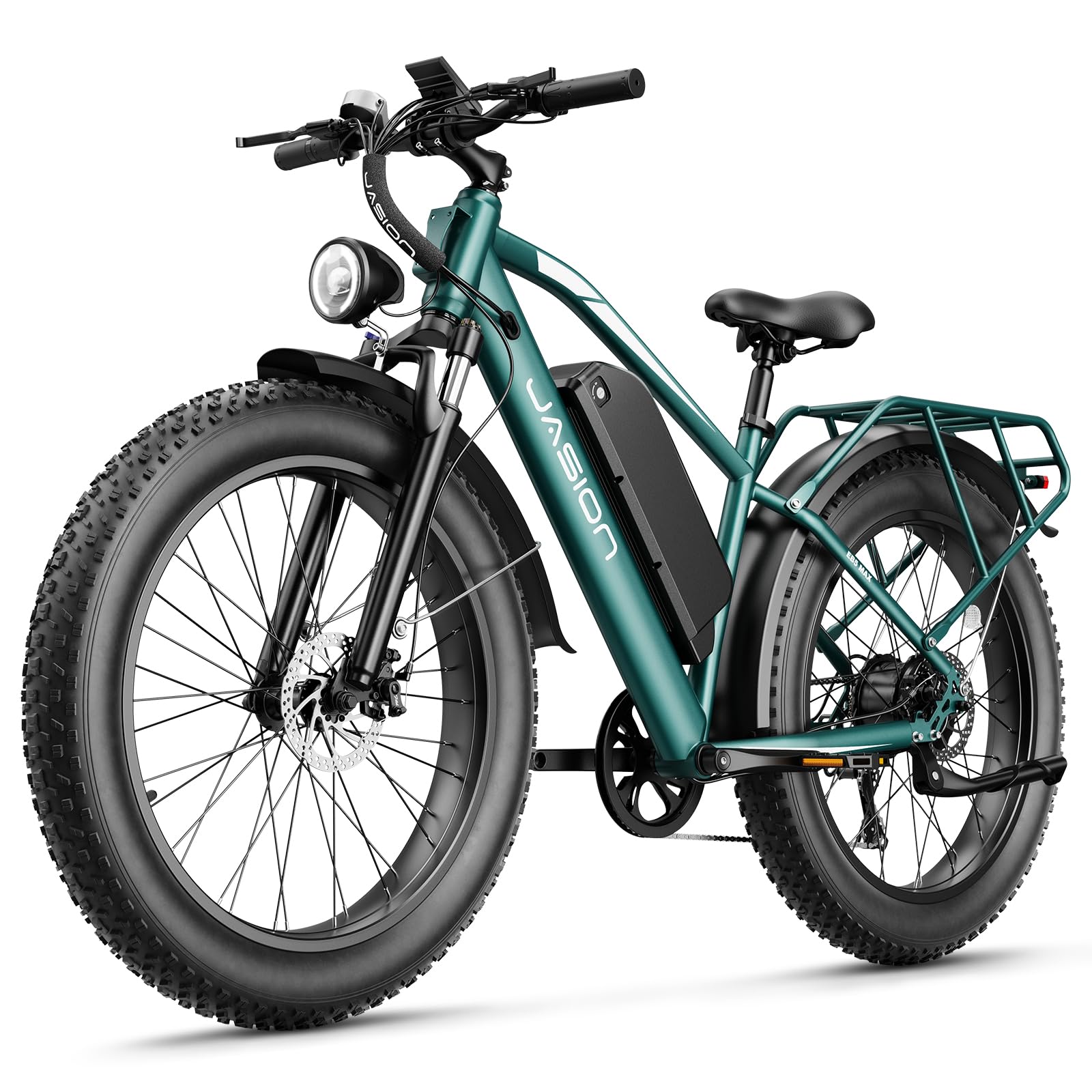
Jasion EB5 MAX
Key Features
- Motor Power: 2000W peak
- Battery Range: Up to 65 mi PAS
- Suspension: Front
- Brakes: Mechanical Disc
- Frame: Alloy Steel
- Price: Mid-Range
The Jasion EB5 MAX stands apart from the top pick by putting speed first, delivering 2000W peak power and a 28+ mph top speed that few sub-$600 e-bikes can match. Where the top pick emphasizes UL certification and reliable battery, the EB5 MAX is built for riders who want maximum velocity without breaking the bank.
This bike suits budget-minded speed enthusiasts who stick to paved roads and want a fast daily commute. However, the rear wheel alignment can develop a wobble, and the tires may puncture on sharp debris — issues that matter less for riders who keep to smooth surfaces and can handle minor adjustments.
Assembly is mostly plug-and-play, and the 7-speed drivetrain gives useful gear range for hills. The fat tires add stability at speed, though the mechanical disc brakes provide adequate stopping power that feels less immediate than hydraulic systems when you need to stop quickly.
Pros
- Strong motor delivers excellent speed and climbing power.
- Easy assembly with mostly plug-and-play setup.
- Great value — features like fat tires and 7-speed at a budget price.
Cons
- Tire quality may lead to early punctures on debris-strewn roads.
- Mechanical disc brakes are adequate but require more lever force for sudden stops at higher speeds.
- Rear wheel alignment can cause wobble in some cases.
For riders who want the highest speed per dollar and don’t demand off-road durability, the Jasion EB5 MAX delivers strong performance with manageable compromises.
Best for Thrill Seekers
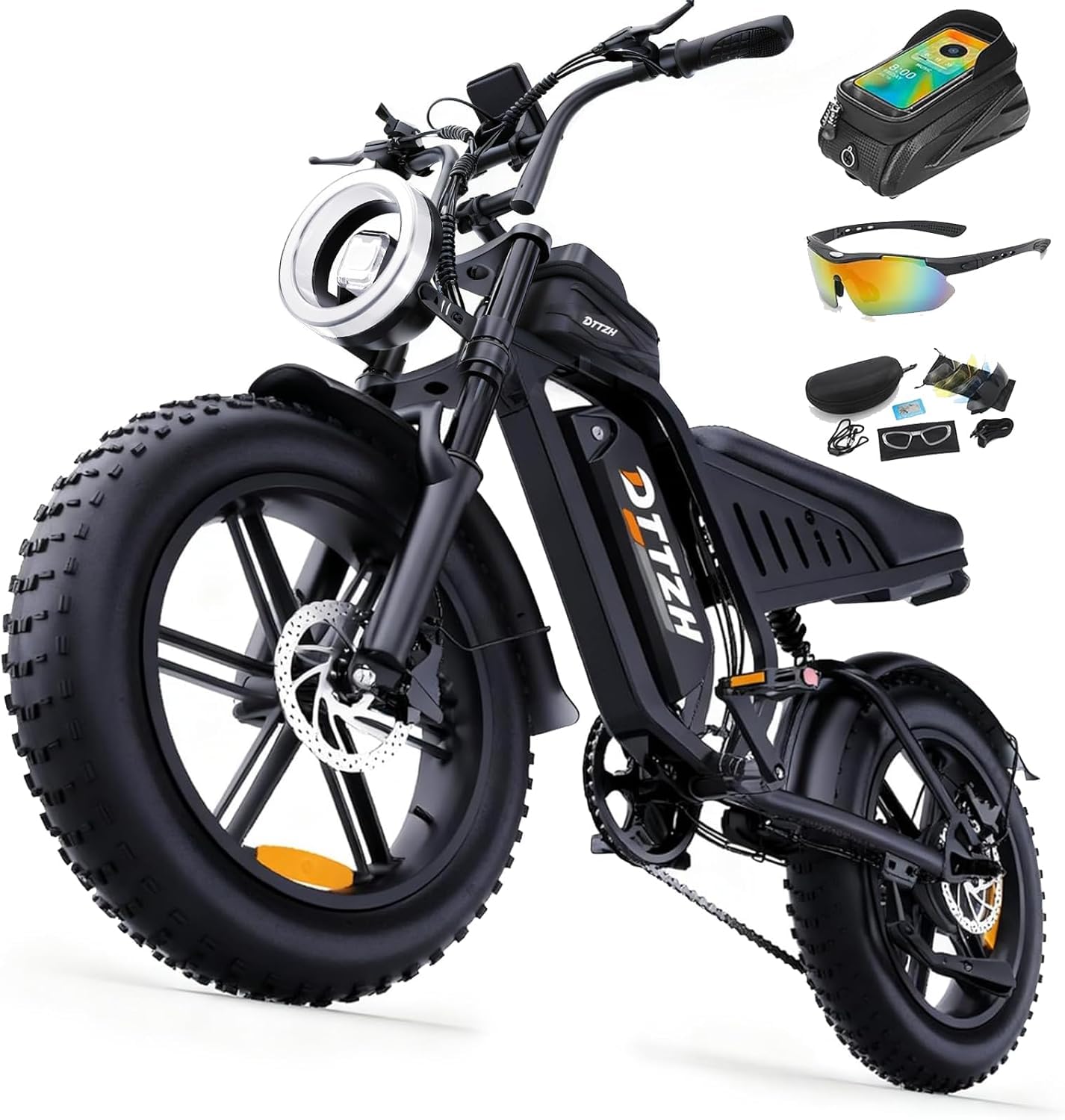
DTTZH F6
Key Features
- Motor Power: 750W (1500W peak)
- Battery Range: 60 mi PAS
- Suspension: Dual
- Brakes: Mechanical Disc
- Frame: Alloy Steel
- Price: Mid-Range
The DTTZH F6 packs a 1500W peak motor, dual suspension, and an NFC-enabled display into a budget-friendly package that undercuts many competitors. While the Funhang EB-S1 leads on battery reliability and UL certification, the F6 adds modern convenience features at a lower price point.
This bike suits speed-oriented riders who want a fast, feature-packed e-bike without spending a premium. However, the battery range can be less than advertised, and the kickstand may break under normal use — factors to weigh if consistent range is critical.
Assembly is mostly complete out of the box, with clear instructions. For the price, the power and features are a strong value, though the battery’s real-world range can vary significantly from the 60-mile claim.
Pros
- Strong acceleration and speed for the price.
- Simple setup — most of the bike comes pre-assembled.
- NFC display and dual suspension at a below-average price.
Cons
- Battery range may fall short of advertised 60 miles in certain conditions.
- Kickstand can break under load; consider replacing it.
For riders who prioritize power and features over absolute battery consistency, the DTTZH F6 is a compelling budget option — but those needing reliable range should look at the Funhang.
Best for Dual Suspension Riders
TST 750W
Key Features
- Motor Power: 750W (1500W peak)
- Battery Range: 60 mi PAS
- Suspension: Dual
- Brakes: Mechanical Disc
- Frame: Alloy Steel
- Price: Mid-Range
The TST electric bike pairs a 750W motor (1500W peak) with front and rear suspension to smooth out gravel roads, bike paths, and pavement transitions. The 20×4.0 fat tires provide enough flotation for sand and light snow, giving riders confidence on loose surfaces without sacrificing stability on hardpack.
Assembly is straightforward, and the bike feels planted at cruising speeds. The suspension handles small bumps and potholes effectively, though the components are basic units suited for commuting and light trail use rather than aggressive off-road descents.
This model fits riders who want dual suspension for comfort on uneven terrain without exceeding a budget-friendly price point. Commuters mixing asphalt with unpaved shortcuts will appreciate the cushioned ride, while those who plan frequent hardcore trail rides may want a bike with higher-end suspension and stronger brakes. Some owners report that the brake calipers can shift out of alignment after the first few rides, requiring a simple adjustment.
Pros
- Components deliver a good level of quality and finish for the price.
- Simple setup process and a stable, comfortable riding experience out of the box.
Cons
- Brake alignment may need adjustment after initial assembly to maintain consistent stopping power.
The TST offers dual-suspension comfort and a smooth ride for commuters and recreational riders on mixed terrain, all at a price that undercuts many competitors with similar specs.
Best for Beach Snow Cruiser
Mongoose Malus

Key Features
- Suspension: Rigid
- Brakes: Mechanical Disc
- Frame: Alloy Steel
- Price: Budget
The Mongoose Malus shares the same steel frame and 4-inch tires as the Dolomite, but with a slightly better paint finish and welds that give it a cleaner look. Assembly is quick with most components pre-assembled. The ride feels smooth on pavement and packed dirt, making it enjoyable for short leisure trips. However, the front disc brakes can be difficult to keep aligned, which may require patience to adjust. Additionally, this bike is not built for steep hills or heavy trail use — its components and stopping power are best suited for flat, gentle terrain. Given its higher price compared to the benchmark Dolomite, buyers should expect a sidegrade rather than an upgrade.
Pros
- Clean paint and welds give it a polished look.
- Smooth, enjoyable ride on pavement and packed dirt.
Cons
- Front disc brakes can be difficult to keep aligned and may require ongoing adjustment.
- Designed for flat, paved surfaces rather than hilly or off-road conditions.
A decent option for casual riders on flat terrain who value aesthetics, but not the best value or performance for all-terrain riding.
Best for Budget Dual Suspension
TST 1500W

Key Features
- Motor Power: 750W (1500W peak)
- Battery Range: 60 mi PAS, 40 throttle
- Suspension: Dual
- Brakes: Mechanical Disc
- Frame: Alloy Steel
- Price: Mid-Range
The TST Electric Bike pairs front and rear suspension with a 1500W peak motor, making it a capable companion for off-road terrain where comfort matters. The 20-inch fat tires and 48V 15Ah battery provide decent flotation and range for trail or sand riding. However, the brake system can be finicky to adjust, requiring some patience or a shop visit to get the stopping feel dialed in. This brake sensitivity, combined with a less established track record, keeps it behind the competing TST 750W model, which offers more consistent performance out of the box.
Pros
- Solid build with straightforward assembly
- Good top speed (28 mph) for the price
Cons
- Brake adjustment may be tricky to get right
For riders who want dual suspension on a budget and are willing to spend time tuning the brakes, this electric fat tire bike handles rough trails well.
How to Choose
The most important decision is whether you need electric assist, because it fundamentally changes weight, cost, and maintenance.
Motor Power and Top Speed
Higher wattage means faster acceleration and better hill climbing, but also drains the battery quicker. Peak power (e.g., ‘1500W peak’) is a short burst rating; sustained output is usually half that.
A 750W motor is sufficient for flat commuting and gentle trails, while 1000W+ is better for steep hills or riders over 200 lbs. Note that local laws may limit motor output to 750W on public roads.
Battery Range and Charge Time
Advertised PAS range is often double what you get in real-world mixed use, especially with throttle. Expect to cut claimed numbers by at least half for throttle-only riding.
Battery chemistry matters: cheaper cells lose capacity faster in cold weather and after repeated charges. Look for UL certification and known cell brands like Samsung or LG.
Suspension Type
Full suspension adds comfort on roots and rocks but increases weight and cost by roughly 5-8 lbs and $100-200. For pavement and flat sand, a rigid frame is lighter and more efficient.
If you ride mostly groomed trails or boardwalks, front suspension alone is enough. Full suspension only pays off on technical singletrack or long bumpy commutes.
Brake Type
Mechanical disc brakes are common at budget and mid-range price points. They require periodic cable adjustment and may rub after rough rides. Hydraulic discs provide stronger, more consistent stopping power with less maintenance.
For riders over 200 lbs or those tackling steep descents, hydraulic brakes are a worthwhile upgrade. Mechanical discs work fine on flat terrain if you stay on top of adjustments.
Frame Material and Weight
Steel frames are heavier (often 35-45 lbs for traditional bikes) but absorb vibration and are more durable under abuse. Aluminum frames shed 5-10 lbs and resist rust, but can feel stiff.
If you need to carry the bike up stairs or lift it onto a car rack, the weight difference matters. For ride quality, steel offers a compliant feel; aluminum is stiffer but lighter.
FAQ
How fast can a 750W electric fat tire bike actually go on pavement?
Typically 20-25 mph on flat ground with a medium-weight rider. Top speed depends on rider weight, tire pressure, and wind. Most 750W bikes are class 2 or 3, so check local regulations.
Why does my electric fat tire bike’s battery range seem much lower than advertised?
Advertised range is measured in low PAS mode on flat ground with a light rider. Real-world range with throttle use, hills, and cold weather is often half the claim. Budget for about 15-25 miles per charge for typical mixed riding.
Can a traditional non-electric fat tire bike handle steep hills without assist?
It can, but the heavy tires and wide contact patch make it very hard work. Expect to walk the bike on any gradient over 10% unless you have strong legs. Better suited for flat or rolling terrain.
Are mechanical disc brakes on fat tire bikes enough for heavy riders on trails?
Yes, but they require frequent adjustment and may fade on steep descents. Heavier riders (over 220 lbs) benefit from hydraulic discs for consistent stopping power and less hand fatigue.