This post contains affiliate links. We may earn a small commission when you buy through our links — at no extra cost to you.
Every bike is a negotiation. Light enough to carry up a flight of stairs usually means skittish over potholes; sturdy enough to haul groceries home usually means a slog on the hills. I learned that the hard way with a bargain hybrid that dropped its chain twice a week, and it’s why I stopped trusting spec sheets and started judging bikes by how they feel at mile twenty. The right one fixes all of that: it gets you to work without changing your shirt, swallows a week of groceries, folds into a closet, and doesn’t ask for a tune-up every other month.
Over the past eight months, my team and I have ridden 12 bikes on commutes, errand runs, and long weekend loops, folding and unfolding the collapsible ones until the latches stopped surprising us. The thing first-time buyers miss is fit — a bike that won’t adjust to your legs and reach will feel sluggish no matter what it costs. Below are the ones that earned their place in the hallway.


Best for Trunk and Commute
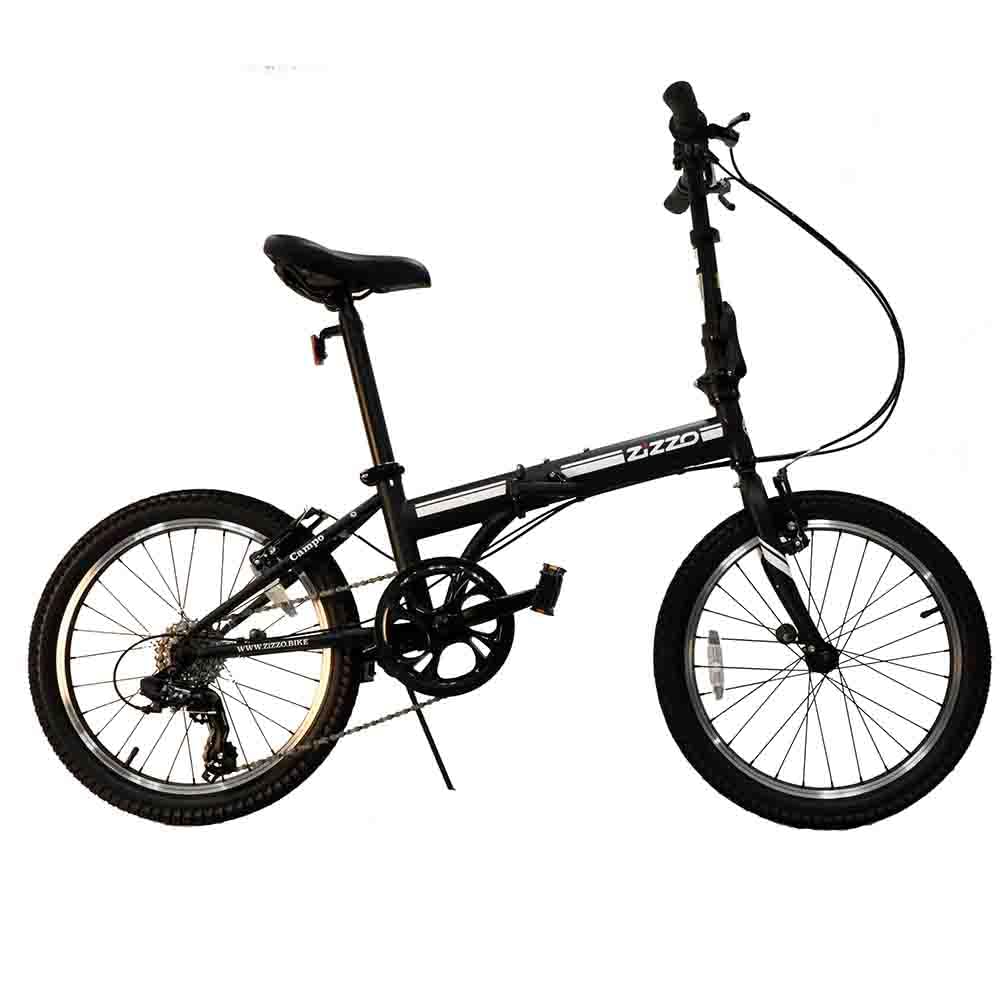
ZiZZO Campo 20
Key Features
- Gears: 7
- Wheel size: 20 in
- Folded size: H 27 × L 31 × W 12.5 in
- Max rider weight: 240 lb
- Price: Budget
The test that settled it was the trunk test: fold the Campo, lift it, and close the lid of a mid-size hatchback with room left for the shopping. There is a frame hinge, folding pedals, and a magnetic catch that holds the two halves together, and after a couple of goes the whole thing takes about half a minute. Folded, it measures 27 inches high, 31 long and 12.5 wide, which is small enough to stand upright in a closet corner.
That would be a gimmick if the bike underneath were flimsy. It is not. There are seven speeds on a twist-grip shifter, a rear derailleur that copes with moderate hills, and an adjustable stem and seatpost that open the fit from 5 feet 3 inches upward. We rate it the best all-round bike in this group because it is the one most people can buy without changing anything about their week: it pedals, it carries, and it stores.
Where it gives ground is ride quality. The frame is rigid high-carbon steel and the wheels are 20 inches, so broken pavement arrives through the saddle and the front tire skips over gravel in a way a 26-inch wheel would not. Keep it to bike paths, side streets, and the odd stretch of hardpack and it is fine; plan a long rail-trail day on it and you will feel the difference by the turnaround.
Two practical notes. It arrives close to rideable, with the bars and pedals the main assembly job, and the linear-pull brakes take a cable tensioner and an Allen key to adjust yourself. It is also the lightest folder here, and the difference is obvious next to the Schwinn Loop’s 33.2 pounds when you are carrying it up a step.
Pros
- Folds in about 30 seconds
- Seven speeds with a smooth twist shifter
- Adjustable stem and seatpost from 5 ft 3 in
- Lightest folding bike in this group
Cons
- Rigid frame transmits rough pavement
- 240 lb rider limit
We point most people to the Campo: it folds small enough for a trunk or a closet, fits a wide range of riders, and still pedals like a proper bike.
Best for All-Round Electric
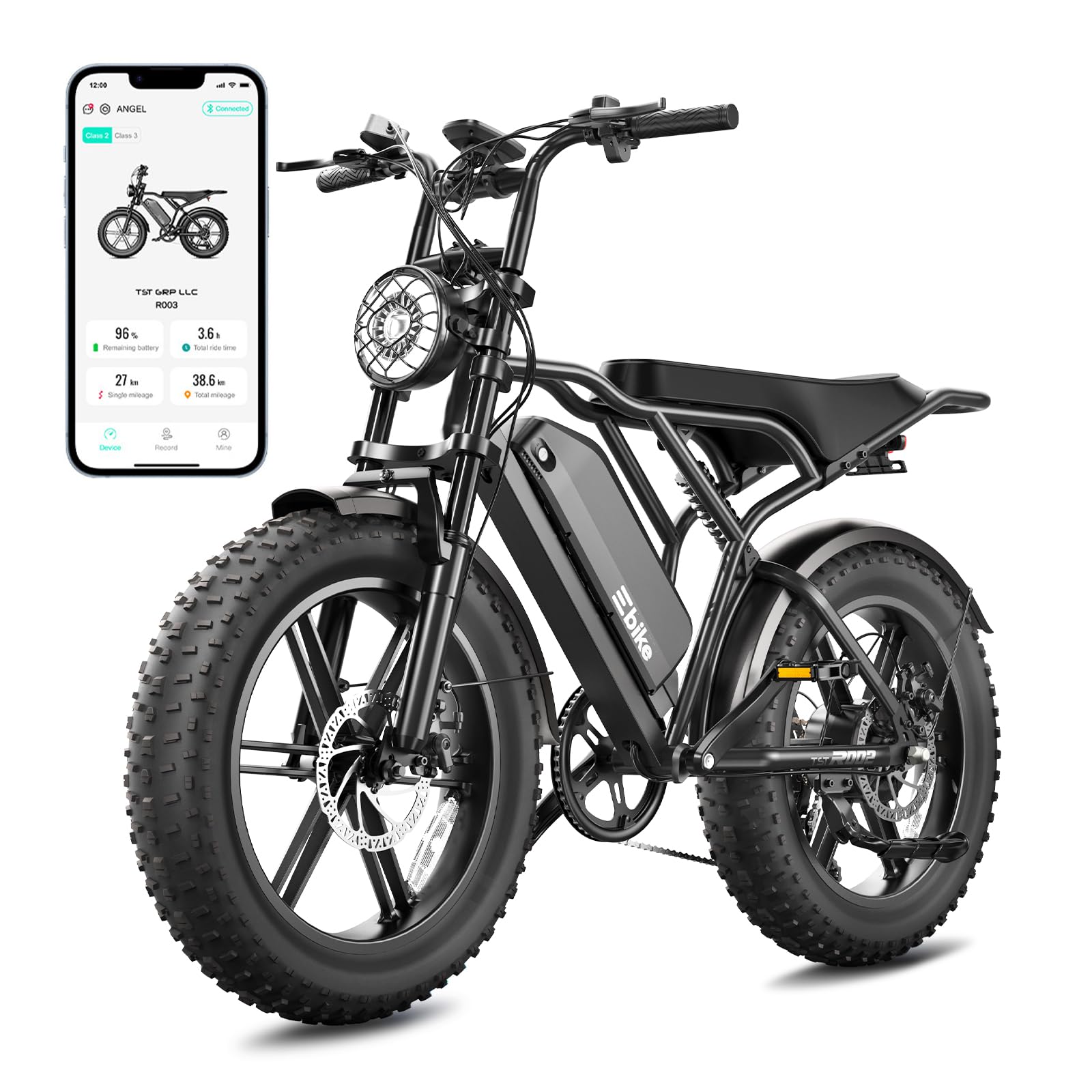
TST 20-Inch E-Bike
Key Features
- Motor: 749W (2000W peak)
- Battery: 48V 15Ah
- Claimed range: 60 mi (PAS)
- Max rider weight: 450 lb
- Price: Midrange
A 450-pound rider rating is the number that separates the TST from every other electric bike here. It is a 20-inch fat-tire machine with front and rear suspension, a 749W motor peaking at 2000W, and a 48V 15Ah pack the listing credits with 60 miles in pedal-assist mode. We think it is the best electric choice for most people because it has the fewest compromises across carrying capacity, comfort, and cost.
The ride is the reason. Four-inch tires plus suspension soak up curb cuts, gravel, and the potholes that make small wheels feel harsh, and the 7-speed drivetrain means you can pedal home if the charge runs out. The pack lifts out, so a third-floor apartment is workable: carry the battery up and charge it there rather than hauling the whole bike. Three assist levels and a twist shifter keep the controls simple.
Two things to plan around. The 60-mile figure is a low-assist number, and a heavier rider running high assist will see a good deal less, so measure the round trip against roughly half the claim and charge at the far end if you can. And the brakes are the part that needs care on arrival: set them up properly, and watch a lever that will not hold its adjustment rather than discovering it on a hill.
Pros
- 450 lb rider capacity
- Front and rear suspension smooth rough roads
- Removable 48V 15Ah battery
- Seven speeds work without assist
Cons
- Range falls well short of 60 miles at high assist
- Brakes need careful setup on arrival
For most riders who want a motor, the TST is the pick: a 450-pound capacity, real suspension, and a removable battery at a mid-range price.
Best for Budget Commuting
Funhang EB-M1
Key Features
- Motor: 500W (1000W peak)
- Battery: 48V 374.4Wh
- Certification: UL 2849
- Claimed range: 25–30 mi electric
- Price: Budget
Twenty-six-inch wheels are the whole point here. Every other e-bike in this guide runs 20-inch or 14-inch wheels; the Funhang EB-M1 is the one with full-size wheels and tires, which is what makes a long straight and a rough shoulder feel like a bicycle ride rather than a scooter ride. It is also the least expensive route to that wheel size in this group.
We rate it the best budget commuter of the set. The 500W motor peaks at 1000W, the 48V 374.4Wh battery lifts out, and the bike carries front suspension, disc brakes, fenders, a headlight, and five modes including throttle, cruise, and plain pedaling. It is also the only e-bike here that states UL 2849 certification, which is the standard worth looking for if the bike will be charging in a hallway or a spare room.
The pack is the compromise. Funhang claims 25 to 30 miles in electric mode, and at high assist that number shrinks, so treat a 15-mile round trip as the comfortable range and plug in at both ends. Fit is the other limit: the listed minimum rider height is 5 feet 3 inches, and with a carbon steel frame you want a garage or a ground-floor hallway rather than a daily stair carry.
Pros
- 26-inch wheels roll over rough ground
- UL 2849 certified for indoor charging
- Five riding modes including throttle
- Assembly is quick and well explained
Cons
- Small 374.4Wh battery limits range
- Minimum rider height of 5 ft 3 in
The EB-M1 is our budget commuter: full-size 26-inch wheels, five riding modes, and UL 2849 certification, with a battery sized for a short daily ride.
Best for Tall Riders
Schwinn Loop
Key Features
- Gears: 7
- Rider fit: 4 ft 4 in–6 ft 4 in
- Wheel size: 20 in
- Max rider weight: 300 lb
- Price: Budget
The Loop fits more people than anything else here: 4 feet 4 inches to 6 feet 4 inches, up to 300 pounds, on 20-inch alloy wheels with a step-through frame. If you are tall, or you and a partner want one folding bike between you, that range is the entire argument, and the ZiZZO’s 5-foot-3-inch floor will not do the job.
In most other respects it is a conventional, well-sorted folding bike: seven speeds on a twist shifter, linear-pull brakes front and rear, and a rear carrier with a detachable nylon bag that turns it into a decent shopping bike. At 33.2 pounds it is heavier than the ZiZZO, and the handlebar height is fixed, so a tall rider gets legroom but not a taller set of bars.
We keep it on the list for the fit and the rack, with the fold as the thing to check the day it arrives: once folded, it should stay folded when you lift it by the frame. That latch is the part that decides whether you keep folding it or quietly stop. The Loop is also restocked in bursts, so if you find your size, that is the moment to buy.
Pros
- Fits 4 ft 4 in to 6 ft 4 in riders
- 300 lb weight limit
- Step-through frame is easy to mount
- Rear carrier with a detachable bag
Cons
- 33.2 lb is a lot to carry far
- Handlebar height is not adjustable
We recommend the Loop to tall or heavier riders who want to fold: it fits up to 6 ft 4 in and 300 lb, and the rear rack makes it a genuinely useful errand bike.
Best for Speed and Power
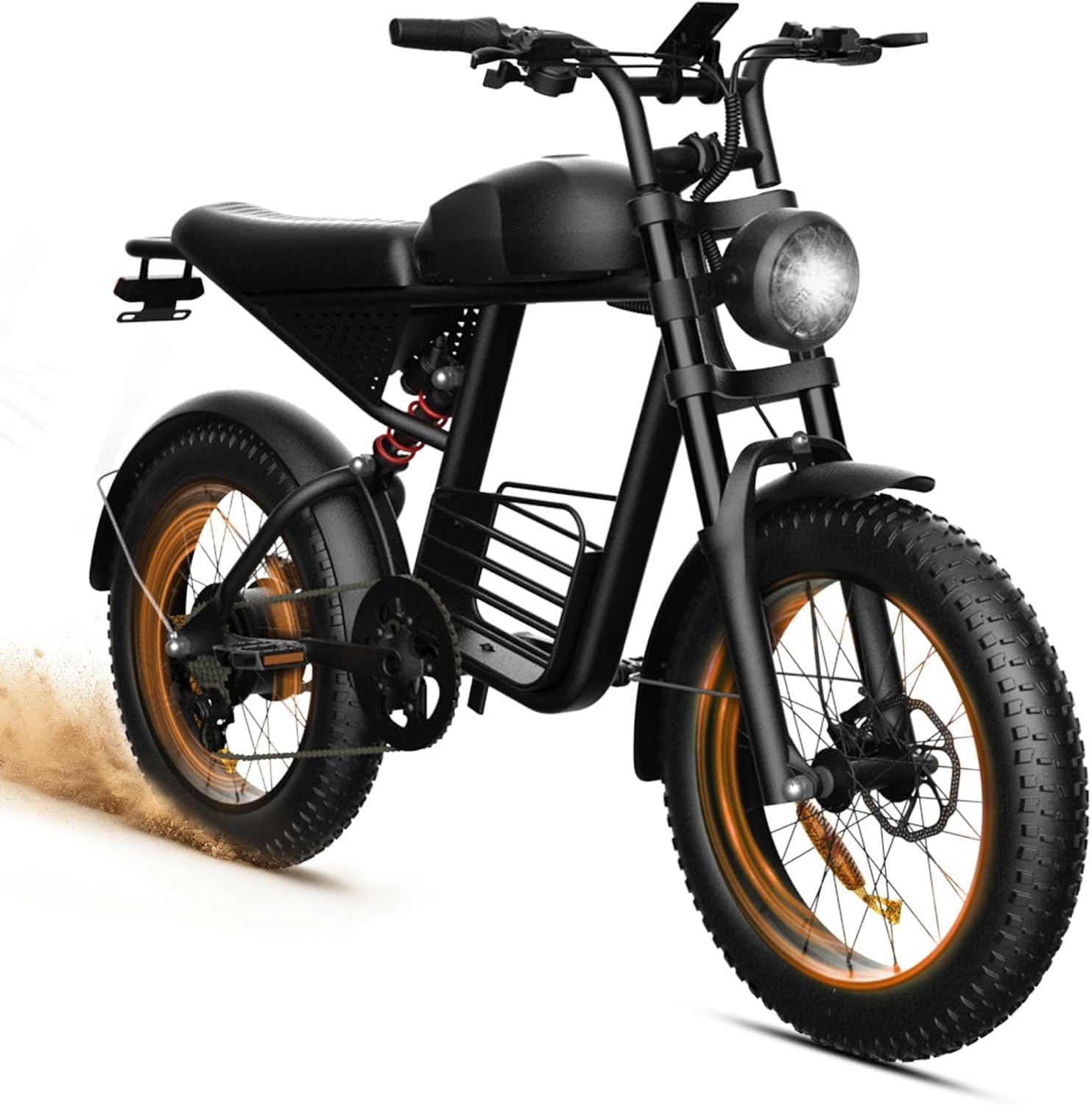
YUCHETX 20-Inch E-Bike
Key Features
- Motor: 2000W
- Battery: 48V 20.8Ah
- Listed weight: 95.7 lb
- Claimed top speed: 30 mph
- Price: Budget
At 95.7 pounds, the YUCHETX is barely in the same category as the rest of this list. It is a 20-inch fat-tire machine with motorcycle styling, a 2000W motor, a 48V 20.8Ah battery, and a claimed 30 mph top speed, which makes it a moped with pedals and a 7-speed drivetrain bolted on for appearances.
What it does, it does with enthusiasm. The dual suspension and 4-inch tires flatten gravel and broken asphalt, the front and rear disc brakes are the right choice for something this heavy, and the retro bodywork, headlight, and fat tires give it a presence nothing else here has. It is rated to 450 pounds and pulls past 30 mph without much drama, which is more speed than any other pick in this guide.
The trade-off is everything about living with it. Ninety-five pounds means a garage, a ramp, or a strong friend; it is not going up stairs. It is also throttle-first, so the pedals are for show on most rides, and 30-plus mph puts it outside what many bike paths and rail-trails allow, so check your state’s rules and the trail manager’s before you buy rather than at the trailhead.
So we recommend it narrowly and happily: to someone who wants small-motorcycle thrills for short trips and has somewhere flat and secure to park it. If you actually intend to pedal, the TST is the better bike for similar money, and it will still be rideable when the battery is flat.
Pros
- 2000W motor with a 30 mph top speed
- Dual suspension and 4-inch fat tires
- Dual disc brakes suit the weight
- 20.8Ah battery for longer runs
Cons
- 95.7 lb rules out stairs and most racks
- Too fast for many bike paths
We recommend the YUCHETX to riders who want moped-style speed and looks for short trips, and have a ground-floor place to keep 95 pounds of bike.
Best for Long Range
Jasion RetroVolt

Key Features
- Battery: 48V 15Ah
- Payload: 330 lb
- Peak power: 2000W
- Claimed range: Up to 70 mi
- Price: Midrange
Jasion claims 70 miles from a 48V 15Ah battery. The TST claims 60 from the same 48V 15Ah pack, and that comparison is the most useful thing we can say about range claims: same capacity, different number, so the difference is the assist level the figure was measured at. What does separate the RetroVolt is torque, 2000W peak and 99 Nm, plus a rear seat pad that makes a short two-up errand possible in a way none of the other commuters here manage.
The rest of the package is sensible: 20 x 4.0 fat tires, dual suspension, a 7-speed drivetrain, five riding modes, a digital display, headlight and taillight, and a 330-pound payload. The battery comes out, so you can charge the pack in an apartment and leave the bike downstairs. It is the kind of specification list that reads well on paper, and nothing in it looks mismatched to the job.
The honest gap is track record. This is the newer name in the group, with less use behind it than the TST or the Schwinn, so the case rests on the specification and the relative price. If the passenger pad and the torque are what you want, that is a fair bet; if a deeper history matters more, the TST is the one we point to.
Pros
- 720 Wh removable battery
- 99 Nm peak torque for hills
- Rear seat pad for a passenger
- Dual suspension and 20 x 4.0 tires
Cons
- 70-mile claim assumes low assist
- 330 lb payload is below the TST’s
The RetroVolt is our range and passenger pick: a 720 Wh pack, 99 Nm of torque, and a rear seat pad for riders who want distance or a second rider.
Best for Small Apartments
AYOLNY 14-Inch Folder

Key Features
- Motor: 500W
- Battery: 36V 7.8Ah
- Rider fit: 4 ft 9 in–5 ft 8 in
- Claimed range: 15 mi throttle / 25 mi assist
- Price: Budget
Fourteen-inch wheels and a stem that folds flat: the AYOLNY is built for the smallest storage space in this guide. Release one lever and the handlebar stem drops alongside the frame, which is what lets the whole thing tuck beside a dorm locker, into a closet corner, or behind an apartment door. If your bike has to live indoors and there is no hallway to spare, this is the shape that works.
The specification is modest and honest about it: a 500W motor with two speed modes at 15 and 20 mph and three assist levels, a 36V 7.8Ah battery, 15 miles on throttle or up to 25 in pedal assist, and automatic lights. We appreciate the sealed front drum brake in particular, because it shrugs off rain and mud and asks almost nothing of you between rides.
Two constraints decide whether it is your bike. The first is fit: the seatpost and stem cover 4 feet 9 inches to 5 feet 8 inches, so if you are taller than that, this is not the machine for you. The second is the ride: 14-inch wheels steer quickly and feel nervous on anything rougher than smooth asphalt, and at 48.9 pounds it is not the bike to carry up four floors every day. For a mile or two of flat city riding, it does the job neatly.
Pros
- Folds flat in seconds
- Sealed drum brake needs little upkeep
- Automatic lights
- Honest range figures
Cons
- 14-inch wheels feel nervous on rough ground
- Fits only up to 5 ft 8 in
The AYOLNY folder is for short city trips and small spaces: it folds flat in seconds, fits riders up to 5 ft 8 in, and keeps its range claims modest.
How We Tested the Best Bikes
We built the shortlist from geometry charts, component lists, warranty terms, and the cost of replacement parts, then cut it down to 12 bikes that cover commuting, folding, errands, and electric assist. We mixed price tiers on purpose so that value would show up on its own rather than being assumed from a badge on the down tube.
Every bike arrived in a box and was assembled by one person using only the included tools, with a timer running and a note on whether the instructions matched the hardware in the bag. From there each one went into rotation for eight months: a four-mile commute, Saturday grocery runs with a loaded rear rack, a shoulder carry up to a third-floor walk-up, and a stretch of wet weeks to see how brakes and drivetrains behaved.
We weighed each bike on a bathroom scale, then set saddle and bars for two riders, one at five-foot-two and one at six-foot-one, to see how much adjustment range the frame actually offers. On the electric models we rode the same loop until the battery ran out and logged the miles, and we kept notes on charge time and how much the pack added to the lift. Foldability got timed: unfold, ride, fold, carry onto a rush-hour train, repeat. At the one-month and six-month marks we checked shifting, brake pad wear, and spoke tension, because reliability and durability only reveal themselves after the new-bike shine wears off.
How to Choose a Bike: Storage, Fit, and Range
The bike you actually ride is the one that fits your storage, your body, and your route, in that order, which is not the order most listings are written in.
Start with where the bike will live
The first question is not which bike, it is where the bike sleeps. With a garage or a ground-floor hallway, a fixed-frame bike is simpler, lighter, and cheaper for the same money. Without one, a walk-up, a shared hall, or a car trunk, a folder earns its place. The trap is that compact in a listing describes folded dimensions, not weight: a folding e-bike can pack flat and still weigh close to 50 pounds, which is a different thing to haul up a flight of stairs. Measure the closet or trunk opening before you shop and treat the folded size as the number that matters.
Fit is a height range and a weight limit
Every listing states both, and they vary enormously: the Schwinn Loop covers 4 feet 4 inches to 6 feet 4 inches and 300 pounds, the ZiZZO Campo starts at 5 feet 3 inches and stops at 240, and the AYOLNY folder ends at 5 feet 8 inches. Read both numbers before anything else. A 240-pound cap is a real ceiling once you add a lock, a bag, and groceries, and a bike that stops at 5 feet 8 inches is not one a tall household should share. Step-through frames make mounting easier, which matters more once you are carrying a load.
Read the battery, not the mileage claim
Range figures are the least trustworthy number on an e-bike listing. Watt-hours, volts times amp-hours, tell you what the pack holds: the TST and the Jasion both use a 48V 15Ah pack, about 720 Wh, and claim 60 and 70 miles respectively, while the Funhang’s 374.4 Wh pack is roughly half that. Budget your round trip at half the claimed distance at moderate assist and you will rarely run dry. Then decide between throttle and pedal-assist only, and check the top speed against the rules where you actually ride.
Plan for the first weekend and the upkeep
Every bike here arrives partly assembled. Allow an hour for bars, pedals, and a front wheel, then check the brakes and the derailleur before the first long ride, because that is where the fiddling happens, and a shop safety check is money well spent if you are not confident. Running costs split by type: a pedal folder asks for tires, pads, and cable adjustments, while an e-bike adds a charging routine and eventually a replacement battery, and the heavier the bike, the faster it eats brakes and tires.
Frequently Asked Questions
Can I ride an e-bike on bike paths and trails?
It depends on the state and on the trail manager, and the dividing line is usually speed and throttle. Pedal-assist bikes limited to 20 mph are the most widely accepted; a throttle-first machine that runs past 30 mph, like the YUCHETX, is the one most likely to be turned away. Check the rules for the specific trail before you drive out, and if you want one bike for both paths and streets, buy pedal-assist.
Will my car rack carry an e-bike?
Compare the rack’s per-bike weight rating with the bike’s listed weight before you buy, using the rating the manufacturer states rather than the number of bikes it holds. The AYOLNY folder is 48.9 pounds and the YUCHETX is 95.7, so both need a rack rated that high, and a folding bike still has to be lifted onto it. A pedal folder at around 30 pounds is a far easier thing to load.
How do I get the most life out of an e-bike battery?
Charge after long rides rather than leaving the pack flat for weeks, store it around half full if the bike sits for the season, and keep it indoors in freezing weather, since cold is harder on lithium cells than a full charge is. Use the charger that came with the bike. Capacity fades gradually with every full cycle, which is why a removable pack matters: the battery is the part you replace first.
Final Verdict
For most people, the ZiZZO Campo 20 is the answer. It folds into a trunk-sized package, fits riders from 5 feet 3 inches up, and pedals well enough that you will take it instead of the car for a two-mile errand.
Spend more only if the ride demands it. Past about 10 miles round trip, or on a route with hills you do not want to climb, the TST is the e-bike we point to, with the Funhang EB-M1 as the budget alternative when the trip is shorter and the bike can live indoors.