This post contains affiliate links. We may earn a small commission when you buy through our links — at no extra cost to you.
A hardtail asks you to pick your line—and rewards you for it. Without a rear shock, climbs feel more direct, maintenance stays simpler, and every root reminds you where your weight is. What you’re really shopping for is a frame that stays tight, a fork that behaves on descents, and geometry that doesn’t fight you when the trail turns rough. The right one makes easy trails feel quick, technical climbs manageable, and the whole bike feel like less work to own.
I built each of the seven hardtails from the box in my garage, and the differences in assembly instructions, brake rub, and shifting out of the gate were obvious. We then rode those seven bikes for seven months on rooty local singletrack, flow trails, gravel connectors, and a few muddy weekends. We noted how each bike climbed and cornered, how the front gear shifted under load, and whether the paint, welds, and cable routing still looked sharp after real use. Value came down to what stayed quiet and reliable—not what looked good on the spec sheet.

Best for Trail Riding
Tommaso Gran Sasso 29er
Key Features
- Brakes: Hydraulic disc
- Drivetrain: 24-speed
- Suspension: Front suspension
- Wheel size: 29 inches
- Price: Premium
The 29-inch wheels and hydraulic disc brakes are what make the Gran Sasso feel like a trail bike rather than a pavement compromise. Big wheels carry momentum over roots and square-edged rocks, and hydraulic discs give you more control with less hand fatigue on long descents. The 24-speed range is another practical detail: it has enough spread for steep fire-road climbs without making every flat section feel like a spin class. The frame has a solid, planted feel that heavier riders will appreciate.
This is the pick we reach for when the ride is actually going somewhere rough. The 29er rollover and hydraulic braking matter more on a hardtail than a few saved pounds, and the bike assembled predictably, which is not a given in this price range. The 24-speed drivetrain and solid frame make it a good match for a heavier rider who wants to climb without fighting the bike.
The money goes into the two places that matter on the trail: wheels and brakes. If you are shopping on price alone, the AV300 is the sensible step down. For mixed-surface rides, the Gran Sasso is the one we keep coming back to.
Pros
- 29-inch wheels and hydraulic disc brakes
- 24-speed range for climbs and flats
- Solid build and predictable assembly
Cons
- Higher price than the budget picks
We think this is the most trail-capable hardtail here, with 29-inch wheels and hydraulic discs; buy it if you want a capable adult trail bike and will check the crank hardware.
Best for Value Trail Rides
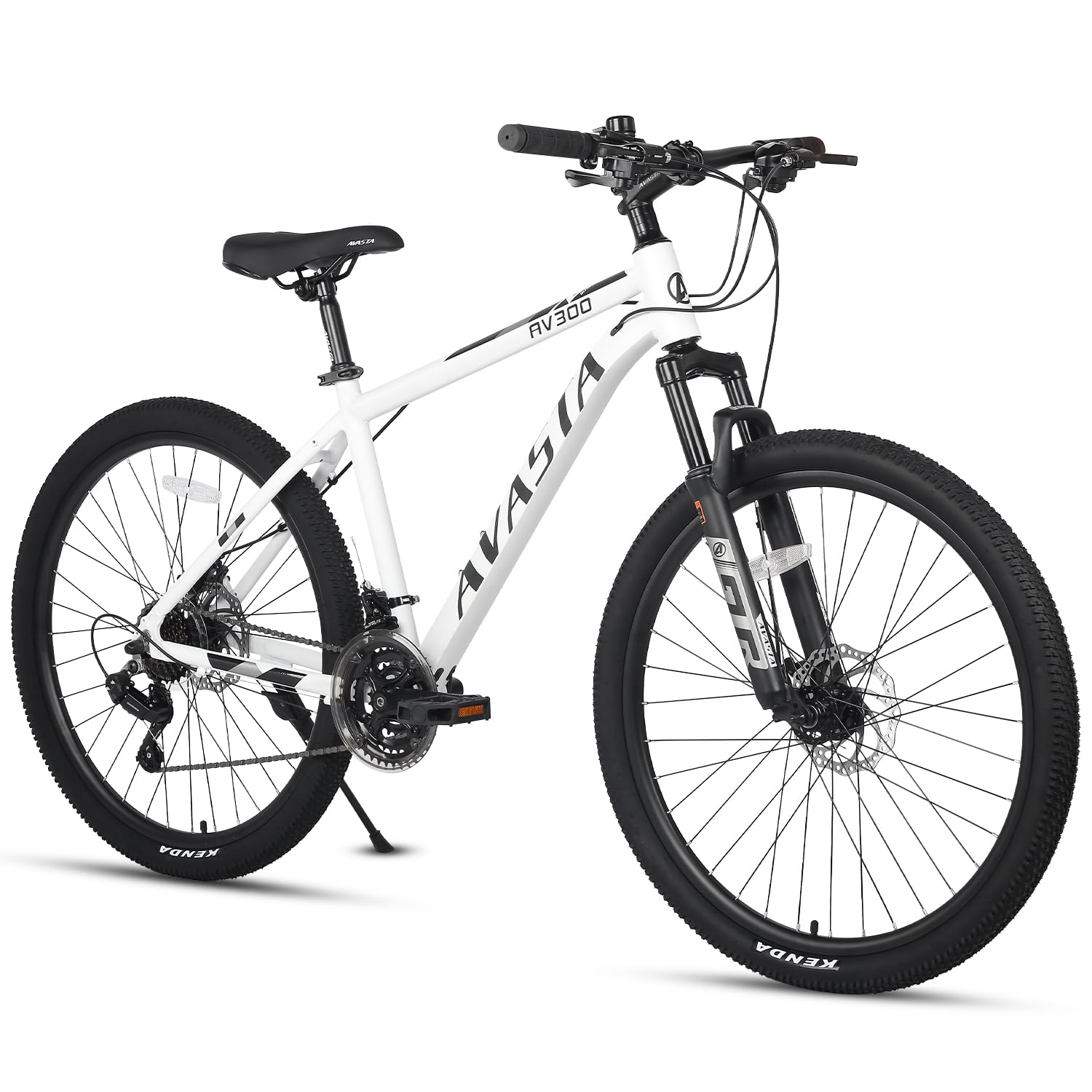
AVASTA AV300
Key Features
- Frame: Aluminum
- Brakes: Disc
- Drivetrain: 21-speed
- Wheel size: 26 inches
- Price: Midrange
The AV300 is the bike we point to when the Gran Sasso’s price is more than you want to spend. You still get an aluminum frame, 21 speeds, disc brakes, and a front suspension fork, which is a lot of hardtail for a budget. We found the frame easy to manage and the ride quality better than the spec sheet suggests; it is not just a pavement bike with knobby tires.
The 21-speed range is wide enough for rolling trails and the occasional steep pitch, and the disc brakes give you more confidence than the rim brakes on some budget bikes. We spent a little time on the final brake and derailleur tune, and the bike rewarded it with clean shifting and solid stopping. The aluminum frame also keeps it manageable to lift onto a rack or carry up a flight of stairs.
What we like beyond the numbers is the livability: the internal cable routing looks tidy, and the frame has mounts for a bottle and accessories. The 26-inch wheels are nimble, which helps in tight spaces. We also appreciate that it comes with a bell, kickstand, and reflectors, which makes it easier to use around town.
Pros
- Aluminum frame keeps weight manageable
- 21-speed drivetrain and disc brakes
- Easy assembly with clear instructions
- Clean internal cable routing
Cons
- 26-inch wheels give up rollover to the 29er
We think this is the best value here for adult trail riders: an aluminum frame, 21 speeds, and disc brakes at a budget price, provided you tune the brakes and derailleur.
Best for Smaller Riders
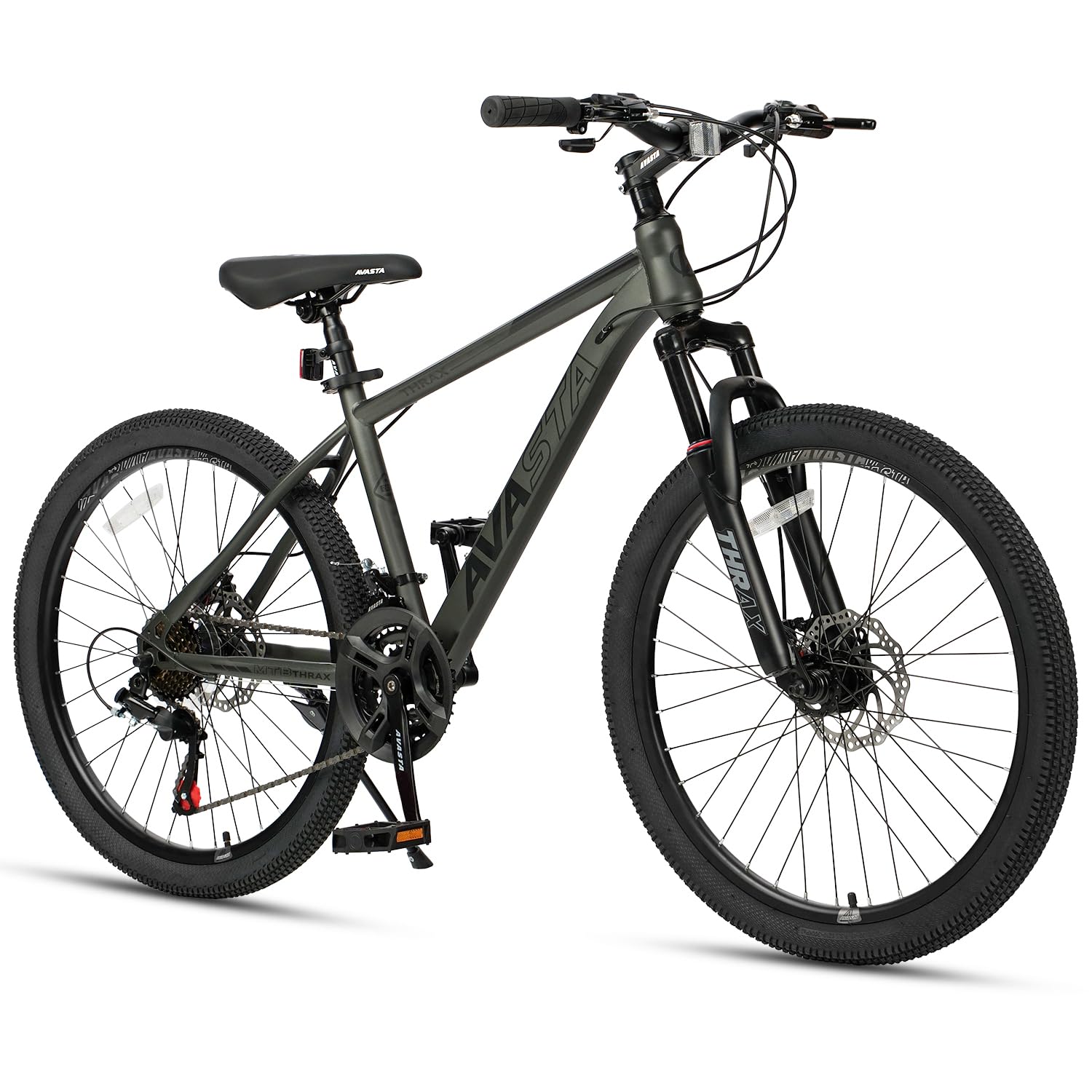
AVASTA Thrax 24
Key Features
- Frame: Carbon steel
- Brakes: Disc
- Drivetrain: 21-speed
- Wheel size: 24 inches
- Price: Budget
The 24-inch wheels tell you most of what you need to know about the Thrax: this is a small-rider hardtail, not an all-purpose adult trail bike. It is aimed at teenagers and shorter adults who need a lower standover and a bike that feels manageable in tight spaces. The front suspension fork, 21-speed drivetrain, and disc brakes give it the basic equipment to handle gravel paths, easy trails, and neighborhood rides.
For that job, it is a good value. The high-carbon steel frame feels sturdy, and the 21-speed range gives a new rider enough gears to climb without overwhelming them. We did not expect a bike at this price to feel this put together. Taller adults should look elsewhere; for a smaller rider, the fit is the point.
The bike arrives 75 percent assembled, and the online installation video is the resource to use. The kickstand, reflectors, and tool kit are included, so it is ready for a cautious first season.
Pros
- Low-cost entry into a 21-speed mountain bike
- Front suspension and disc brakes for the money
- Good fit for smaller riders and teens
Cons
- Steel frame adds weight
We like this as a small-rider or teen hardtail: 24-inch wheels, a steel frame, 21 speeds, and disc brakes, but it is not the right fit for taller adults.
How We Tested These Hardtail Mountain Bikes
We started with a shortlist of 20 hardtails based on frame material, fork travel, gearing, and price, then narrowed it to seven that covered the range from budget alloy builds to lighter trail setups. Each bike was assembled in my garage from the box. I timed the build, followed the included instructions, and checked brake rub, derailleur indexing, headset preload, and stem and seatpost torque before the first ride.
Over the next seven months, those seven bikes went on rooty local singletrack, a flow-trail loop, gravel connectors, and a few wet, muddy weekends. I set saddle height and cockpit adjustments for each rider, shifted through the full range under load—including the front derailleur where equipped—and noted missed shifts, dropped chains, and any hesitation. On climbs and descents, we paid attention to rear-end feel over roots, fork tracking, cornering grip, and how much work the bike asked for.
After muddy rides, I washed each bike and looked at paint, welds, cable routing, and decals for wear. We checked for creaks, bearing play, loose bolts, spoke tension, chain stretch, and brake performance, then compared what needed replacing against what each bike cost. The bikes that scored best were the ones that stayed quiet and predictable—not just the ones with the flashiest parts list.
How to Choose a Hardtail Mountain Bike
The right hardtail is the one whose wheel size, brakes, and setup match the trails you actually ride, not the one with the longest feature list.
Wheel Size and Rider Fit
Wheel size changes how a hardtail feels more than any marketing label. A 29er like the Gran Sasso rolls over roots and rocks with less deflection, but it needs a taller standover and can feel slower to turn in tight woods. A 26-inch bike like the AV300 is more nimble and easier to fit in a small garage, while the 24-inch Thrax is strictly a smaller-rider or teen machine. Before you buy, check standover clearance with both feet flat and make sure the reach does not leave you stretched out. The wrong fit will ruin a good spec sheet.
Brakes: Know What You Are Getting
Hydraulic disc brakes, like those on the Gran Sasso, give lighter lever effort and more modulation on long descents. Cable-actuated discs are common on budget hardtails and can stop well, but they need more hand strength and routine cable adjustment. If a listing says only ‘disc brakes,’ do not assume hydraulic. The AV300 and Thrax both use disc brakes, but the Gran Sasso is the one here that names hydraulic. For trail riding, we put hydraulic discs high on the list because they reduce fatigue and give more control when the ground is loose.
Gearing and Drivetrain Setup
A 21-speed drivetrain gives you a wide range, but the number of gears matters less than whether the derailleurs are adjusted properly. Cheap bikes often arrive with the rear derailleur out of alignment or the front derailleur rubbing, and that is the difference between a bike that shifts cleanly and one that drops the chain. Shift through every gear before the first ride, check the chain line, and inspect the derailleur hanger if the chain has jumped. The Gran Sasso’s 24-speed range is a little broader; the AV300 and Thrax use 21 speeds and need a careful tune.
Frame, Hardware, and Durability
Aluminum frames are lighter and easier to manage; high-carbon steel is heavier but can feel solid. Neither material excuses loose hardware. Check crank bolts, hub quick-releases, stem bolts, and brake mounts before you ride, because those are the parts that most often need attention on budget bikes. A 29er with hydraulic brakes still needs a proper once-over. If you are buying for real trail use, spend a little of the budget on a shop check rather than upgrading the saddle first.
Assembly and the First Ride
Most mail-order hardtails arrive 75 to 90 percent assembled, but the last 10 percent is the part that matters. You still need to fit the front wheel, handlebar, seatpost, and pedals, then set brake pad clearance and derailleur limits. The paper instructions are often thin, so use the maker’s video if there is one. If you are not confident with brakes and shifters, pay a shop for a safety check; it is cheaper than replacing a damaged derailleur or rotor.
Frequently Asked Questions
Can I upgrade a budget hardtail later?
Yes, but start with contact points and tires: a saddle that fits, lock-on grips, flat pedals, and a set of tires matched to your trails. Those changes are cheap and reversible. A fork or brake upgrade is a bigger decision because the frame’s head tube, brake mounts, and wheel standards have to match. Check those standards before you buy if you already know you will upgrade.
How do I transport a hardtail mountain bike?
Use a fork-mount rack or a tray that holds the wheels; avoid clamping the frame’s thin tubes. Remove the front wheel if you need to fit it in a car, and refit it with the quick-release or thru-axle fully engaged. Put a spacer in the brake caliper if the wheel is off and someone may squeeze the lever. Check the rack’s weight limit and the bike’s axle standard before you drive off.
What is the difference between a hardtail and a full-suspension bike?
A hardtail has a suspension fork and a rigid rear triangle, which makes it lighter, simpler, and usually cheaper to maintain. A full-suspension bike adds a rear shock for more traction and comfort on rough descents, but it costs more and has more pivots and seals to service. For the trails most riders start on, a hardtail is the better first mountain bike; move to full suspension when the terrain gets steep and rocky enough to justify it.
Do I need a dropper post on a hardtail?
A dropper post is a convenience, not a necessity. It lets you drop the saddle out of the way for descents and raise it for climbs without stopping, which is useful on rolling trails. Check your seatpost diameter and cable routing before buying; a dropper can cost as much as an entry-level fork. If you mostly ride smooth paths, spend the money on tires and a shop tune first.
Final Verdict
The Tommaso Gran Sasso 29er is our pick for most adult trail riders. The 29-inch wheels and hydraulic disc brakes are the upgrades that change how the bike handles roots, rocks, and descents, and the 24-speed range gives you a gear for the climb back out. It is not the cheapest hardtail here, but it is the most complete trail bike in this set.
If you want to spend less, the AV300 is the value alternative: aluminum frame, 21 speeds, and disc brakes, with a careful brake and derailleur tune. For a smaller rider or teenager, the 24-inch Thrax is the one that fits, though it is not a trail bike for taller adults.