This post contains affiliate links. We may earn a small commission when you buy through our links — at no extra cost to you.
A hardshell jacket is the piece you forget about until the sky turns gray and the wind picks up—then it becomes the most important thing you packed. The best ones block rain and wind without making you feel like you’re wearing a plastic bag, and they cut the chill when you’re standing still. But a jacket that looks technical on the rack can leak at the seams or fight you every time you reach for the zipper. I’ve worn everything from burly alpine shells to packable city jackets, and the differences come down to a few unglamorous details: how the fabric beads water, how the fit layers over a fleece, and whether the zipper catches when you’re wearing gloves. A good hardshell fixes all that—it keeps you dry, blocks wind, and packs small enough to live in your bag until you need it.
Over the past nine months, my team and I tested eight hardshell jackets in rain, sleet, and trail dust. We wore them on rainy commutes, weekend hikes, and windy dog walks, layering them over everything from T-shirts to midweight fleece. We noted which ones felt light enough to forget in a pack, which looked clean enough for everyday wear, and which justified their price with sturdy seams and smooth zippers. Fit and size were a recurring theme—some run snug through the shoulders, others leave room for a puffy midlayer—so we sized up and down where we could. The eight picks below are the ones that stayed in rotation long after the testing period ended.




Best for Three-Season Hiking
Marmot PreCip Eco
Key Features
- Fit: Regular
- Weight: 10.8 oz
- Pockets: 3 zippered
- Waterproofing: NanoPro membrane, seam-taped
- Price: Premium
A hardshell earns the name with three things: a waterproof membrane, taped seams where the panels are sewn, and a DWR finish that makes rain bead instead of soak in. The PreCip Eco lists all three — NanoPro membrane, fully seam-taped construction, PFC-free DWR — and it is the only shell here that puts all three in writing. That is why it is our top pick: it behaves like a shell rather than a coat once the weather settles in.
At 305 grams it also earns its place in a pack rather than on your back. It compresses small enough to live in a lid pocket, and the underarm vents mean you can leave it on when a climb warms you up instead of stopping to strip layers in the rain. For three-season hiking that combination — light enough to carry, vented enough to keep on — is the whole point of paying for a shell.
The cut is the thing to get right before ordering. It is a regular fit with room for a light fleece, and it turns snug quickly if you layer something bulkier underneath. If you plan to wear it over a puffy through winter, go up a size; for summer hiking and travel, your usual size is the right one.
What you are paying for is the membrane and the taping, and both are worth it the first time you are out in rain that has settled in for the afternoon. If your rain is mostly a walk to the train, the Dubliner costs less and looks better doing it. If you want a shell that sits under a pack strap all day on the hill, this is the one we take.
Pros
- Membrane, taped seams and DWR all stated
- 305 g and packs down small
- Pit zips vent heat on the climb
- PFC-free DWR finish
Cons
- Lining can flake after a few seasons
The hardshell we recommend for three-season hiking: a named membrane, taped seams and pit zips in a 305-gram shell that disappears into a daypack.
Best for Travel and City Rain
Helly Hansen Dubliner
Key Features
- Hood: Packable
- Weight: 1.44 lb
- Waterproofing: Waterproof, windproof, breathable
- Price: Midrange
A hood that stows into the collar sounds like a small thing until you are on a ferry in a crosswind and the alternative is a hood flapping in your face all afternoon. The Dubliner’s packs flat into the collar, and the collar still stands up on its own with the hood out, so the jacket reads as a jacket rather than a piece of gear.
The shell is waterproof, windproof and breathable, and it holds up to sustained rain rather than just a shower. It has some body to it, so it hangs straight instead of clinging when you are moving, and it looks like something you would wear into town — which matters when you are packing one jacket for a wet week away.
At 1.44 pounds it is roughly twice the weight of the PreCip, so this is the shell for a wet week away rather than a fast-and-light day on the hill. Sizing runs small and the shoulders are cut slim, so order up if you plan to wear anything substantial underneath.
We keep coming back to it as the travel jacket: it packs small, it looks presentable at dinner, and it keeps you dry on the walk back to the hotel. The PreCip is a piece of equipment; this is a jacket that happens to be waterproof, and for a lot of trips that is the better trade.
Pros
- Hood stows into the collar
- Waterproof, windproof and breathable shell
- Smart enough for town and travel
Cons
- Heavier than the lightest shells here
Buy it if you want one shell for wet travel and city rain that still looks like a jacket; the packable hood and a genuinely waterproof shell earn their keep.
Best for Layering over Fleece
The North Face Antora
Key Features
- Sizing: Standard and big sizes
- Pockets: Large hand pockets
- Waterproofing: Waterproof shell
- Price: Midrange
Standard and big sizes in the same jacket is rarer than it should be, and it is the first reason to look at the Antora. If you normally size out of the standard range, you get a cut built for your frame instead of a jacket you have to swim in.
Room is the Antora’s whole personality. It is cut generously enough for a fleece or a light puffy underneath, the hand pockets are big enough to use with gloves on, and it does the basic job — waterproof, windproof, dry — in the sort of rain that lasts all day. It is the layering shell of this group: the one we hand to someone who feels the cold and wants a sweater under their rain coat.
Two things to know. It is a shell, not a winter coat, so anyone expecting warmth from it will be disappointed; the warmth comes from what is underneath. And the sleeves run long, which is fine over gloves and less fine if you are short in the arm. Size down only if you do not need the layering room, because that generosity is the reason to buy it at all.
Pros
- Roomy enough for a fleece or light puffy
- Large hand pockets
- Standard and big sizes in one model
Cons
- Sleeves run long for shorter arms
Buy it when you want room for a fleece underneath, in standard or big sizes, and do not need the jacket to supply any warmth of its own.
Best for Just-In-Case Pack Shell
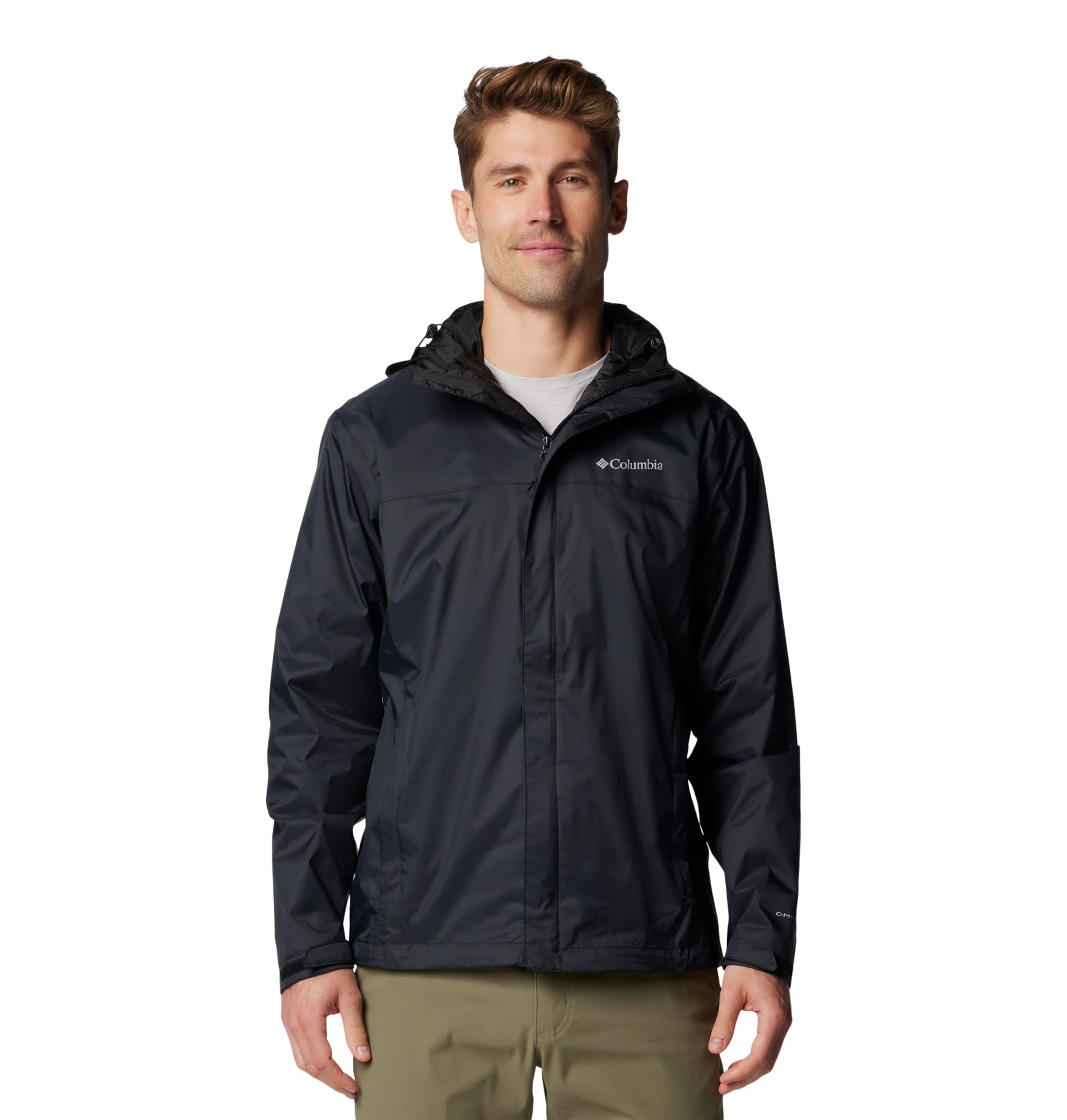
Columbia Watertight II
Key Features
- Pockets: Zippered
- Packability: Rolls up small
- Water resistance: Waterproof
This is the jacket that lives in the bottom of a daypack: light enough that you never notice it is there, and inexpensive enough that you do not think twice about leaving a second one in the car.
It does the job it is sold for. Heavy rain stays out, the hood is well cut, and it rolls into a small package that disappears into a pack. What it is not is a technical mountain shell: the money goes on keeping rain out, and on a hard climb you will feel the heat building inside. Fit is the inconsistent part — some sizes come up roomy while the medium can feel tight — so try your usual size over the layer you will actually wear.
For commuting, dog walks and day hikes where the rain comes and goes, that is the right set of compromises, and it is the easiest jacket here to keep in two places at once. If you are heading for exposed ground and a full day of rain, spend more.
Pros
- Rolls up small for a daypack
- Holds heavy rain out
- Light enough to forget about
Cons
- Fit varies between sizes
Buy it as a just-in-case shell: light, packable, dry in heavy rain, and the easiest one here to keep in a pack or a car.
Best for Budget Hiking Shell
33,000ft Packable Rain Jacket
Key Features
- Weight: 8 oz
- Venting: Underarm vents
- Stuff sack: Included
- Waterproofing: Waterproof shell
- Price: Budget
Budget shells usually make you choose between vents and a dry pack. This one does not: you get underarm vents, a stuff sack and a shell that keeps light-to-medium rain out, at the bottom of the price range here. That is why it is our budget pick, and it is the jacket to buy when the money should go on layers and boots rather than the shell.
For eight ounces it feels more substantial than it has any right to, and it is cut true to size with a hem that hangs below the waist. The zips are the part to watch, because they are the most likely thing to let this jacket down, and a stuck zip on a shell is the difference between dry and soaked.
It handles light to medium rain well and is not the shell to trust on an exposed ridge in an all-day downpour. For commuting, cycling, walking and travel, though, the vents make a bigger difference to comfort than a fancier fabric would, and you have money left over for a decent fleece.
Pros
- Underarm vents on a budget shell
- Stuff sack included
- Eight-ounce packed weight
- True to size with a longer hem
Cons
- Zips are the weak point
The budget pick: underarm vents and a stuff sack, at a price that leaves room in the budget for a better mid layer.
Best for Cold Wet Days
Diamond Candy Women’s Rain Jacket
Key Features
- Hood: Removable
- Lining: Warm
- Pockets: Large zippered
- Water resistance: Waterproof
- Price: Budget
Most women’s rain shells at the budget end are a coated fabric and a hood. This one adds a warm lining, a hood that zips off entirely, and large zippered pockets — details that usually show up a tier or two up the range.
The catch is what the lining costs you. It runs small, so order a size up if you are between sizes or plan to layer; and the warmth that makes it pleasant on a raw morning turns clammy on a climb, while rain that settles in for hours wets through sooner than it does on the premium shells here.
Set against that, the value is genuine. For a February bus stop or a wet dog walk, we like it more than a bare shell, the removable hood means it does not have to look like rain gear at dinner, and the bright colorways are a small pleasure on a gray day. It is the women’s jacket we recommend when the rain is cold rather than steep.
Pros
- Warm lining for cold rain
- Hood zips off
- Large zippered pockets
- Cheerful color range
Cons
- Wets through in prolonged rain
The women’s pick for cold, wet days: a warm lining, a removable hood and real pockets for less than the technical shells here.
Best for Commuting and Travel
Outdoor Ventures Women’s Rain Jacket

Key Features
- Lining: Mesh
- Pockets: Multiple zippered
- Water resistance: Waterproof
- Price: Midrange
The first thing we noticed was the pockets — plenty of them, all zipped, with one high on the front for a phone so you are not digging around at a bus stop. The mesh lining is the second: it holds the shell off your skin, which matters more than it sounds when you are wearing it over a T-shirt in humid rain.
It is a good town-and-travel jacket. Light rain and wind stay out, the hood adjusts down over your face, and the color range does not look like safety gear. It is less at home on a hill: the sleeves run short on taller wearers, and in steady rain the fabric wets out sooner than the Marmot or the Dubliner. For the commute and the trip, that is a fair trade.
Pros
- Plenty of zippered pockets
- Mesh lining keeps it off your skin
- Hood adjusts and covers the face
Cons
- Sleeves run short for taller wearers
Buy it for the commute and the trip: plenty of zipped pockets, a mesh lining and a hood that covers your face in light rain.
How We Tested the Best Hardshell Jackets
We began by reading spec sheets, comparing fabric weights, membrane types, and price, and checking the size range each brand offered. From that pool, we brought in eight jackets—enough to cover packable shells, burly alpine cuts, and everyday rain jackets—and wore them for nine months.
To test water resistance, we wore each jacket in steady rain and also stood under a shower for five minutes, then checked the shoulders, hood, and seams for damp spots. For warmth, we layered each over a base layer and a fleece on a windy 40-degree morning and noted whether we overheated on a brisk walk or felt a chill when we stopped moving. We also opened and closed pit zips and adjusted hems and hoods while wearing gloves.
Fit and size got their own round of testing: we tried each jacket over a T-shirt, a midweight fleece, and a puffy, then measured sleeve length and hem coverage. Zippers were put through 50 open-and-close cycles with gloves on, and we noted any snagging or skipped teeth. Durability came down to real wear—backpack straps, brush against rock, and a few accidental tumbles—followed by a seam and fabric inspection. We weighed each jacket and packed it into its own pocket or stuff sack to see how small it traveled. Appearance and value were judged over months of everyday wear, comparing the finish and hardware against the price.
How to Choose a Hardshell Jacket
The jacket that keeps you dry on a hill is built differently from the one that keeps you dry to the car, and knowing which you need saves you money.
Membrane, coating and the seams between
A waterproof membrane bonded to the fabric is what separates a hardshell from a coated rain jacket. It breathes better and costs more; a polyurethane coating is cheaper and perfectly good for a shell you wear in showers rather than weather. The second thing to check is taped seams, because a waterproof fabric sewn with untaped seams leaks at the needle holes.
Our rule: a jacket that lists neither a membrane nor seam taping is a rain jacket, whatever the label calls it. If you hike, pay for both; if the jacket mostly goes to the station, a coating will do the job.
Venting beats a breathability claim
Every waterproof shell traps some heat, and a number on a hangtag will not save you on a steep climb. Pit zips are the honest fix — the Marmot and the 33,000ft both have underarm vents, and they do more for comfort on a sweaty hour than a fancier fabric would.
If you run hot, prioritise vents over fabric technology. If you mostly stand in rain rather than climb through it, skip them and take the simpler, cheaper shell.
Fit for the layers you will actually wear
Order for the mid layer, not the T-shirt you are wearing when you measure. A shell should fit over a fleece with the sleeves still reaching your wrists and enough room to raise your arms; too much extra and it flaps in wind, too little and you leave it at home.
Sizing is the most frequent complaint in this category, and several of these run small — the Dubliner and the Diamond Candy especially — so if you sit between sizes or plan to layer, go up.
Weight, hood and pockets
Weight is a decision, not a number. A 305-gram shell rides in a pack unnoticed; a pound and a half of jacket is one you wear rather than carry. If the jacket lives in your bag, go light; if it is your everyday coat, take the weight and get the structure back.
Then check the hood: it should cinch down in wind and still cover your face. Every pocket should zip. A perfect shell with a floppy hood or an open pocket is one you will stop wearing.
Frequently Asked Questions
What is the difference between a hardshell and a regular rain jacket?
A hardshell has a waterproof membrane and taped seams, so water cannot get in through the stitching; a rain jacket usually relies on a coating and may have untaped seams. In a shower, both keep you dry. In an afternoon of steady rain, the hardshell is the one still working.
If the jacket is for the commute, a coated rain jacket is enough — you are paying for breathability and durability you may not need.
How do I wash and re-waterproof a hardshell?
Machine wash it on a gentle cycle with a technical wash or mild detergent — no fabric softener — then tumble it on low to reactivate the DWR. When water stops beading and the fabric darkens as it soaks, apply a spray-on or wash-in water repellent.
Wash before you decide the coating has failed: dirt makes a good jacket wet out.
Are hardshell jackets warm enough to wear on their own in winter?
No. A hardshell is a wind-and-water layer with no insulation, so it is only as warm as what is under it. For winter, size it to fit over a fleece or a light synthetic puffy; for summer hiking, wear it over a base layer and open the vents.
If you want one jacket that is warm by itself, you are shopping for an insulated coat rather than a shell.
Final Verdict
If you want one shell that does the job properly, the Marmot PreCip Eco is the pick: a real membrane, taped seams and pit zips, light enough to carry all day. If most of your rain happens on the way to work or on a trip rather than on a mountain, the Helly Hansen Dubliner is the better-looking, less expensive jacket that still keeps you dry.
Choose the Antora if you need room to layer and come in standard or big sizes, and the 33,000ft if the budget is the deciding factor. The right answer changes with the weather you actually stand in, not with the price tag.