This post contains affiliate links. We may earn a small commission when you buy through our links — at no extra cost to you.
A rain jacket has to do two jobs at once: keep the weather out and let your sweat escape. Most fail at one — you finish the climb clammy inside a plastic bag, or the drizzle soaks through your shoulders by mile three. Fit makes it harder, since the same jacket layers over a T-shirt in July and a fleece in October. The right one disappears into your pack and quietly does its job when the sky opens.
Over eight months, we wore 12 jackets through a wet spring and sticky summer of day hikes — drizzle on local trails, steady rain above treeline. Some felt like garbage bags in fit and looks; a couple we forgot we had on. Here’s what first-time buyers learn the hard way: a jacket that keeps rain out but traps steam leaves you as wet inside as the storm would from outside, so pit zips matter as much as waterproof ratings. The picks below got that balance right, held up over a season, and come with notes on how the sizing runs.
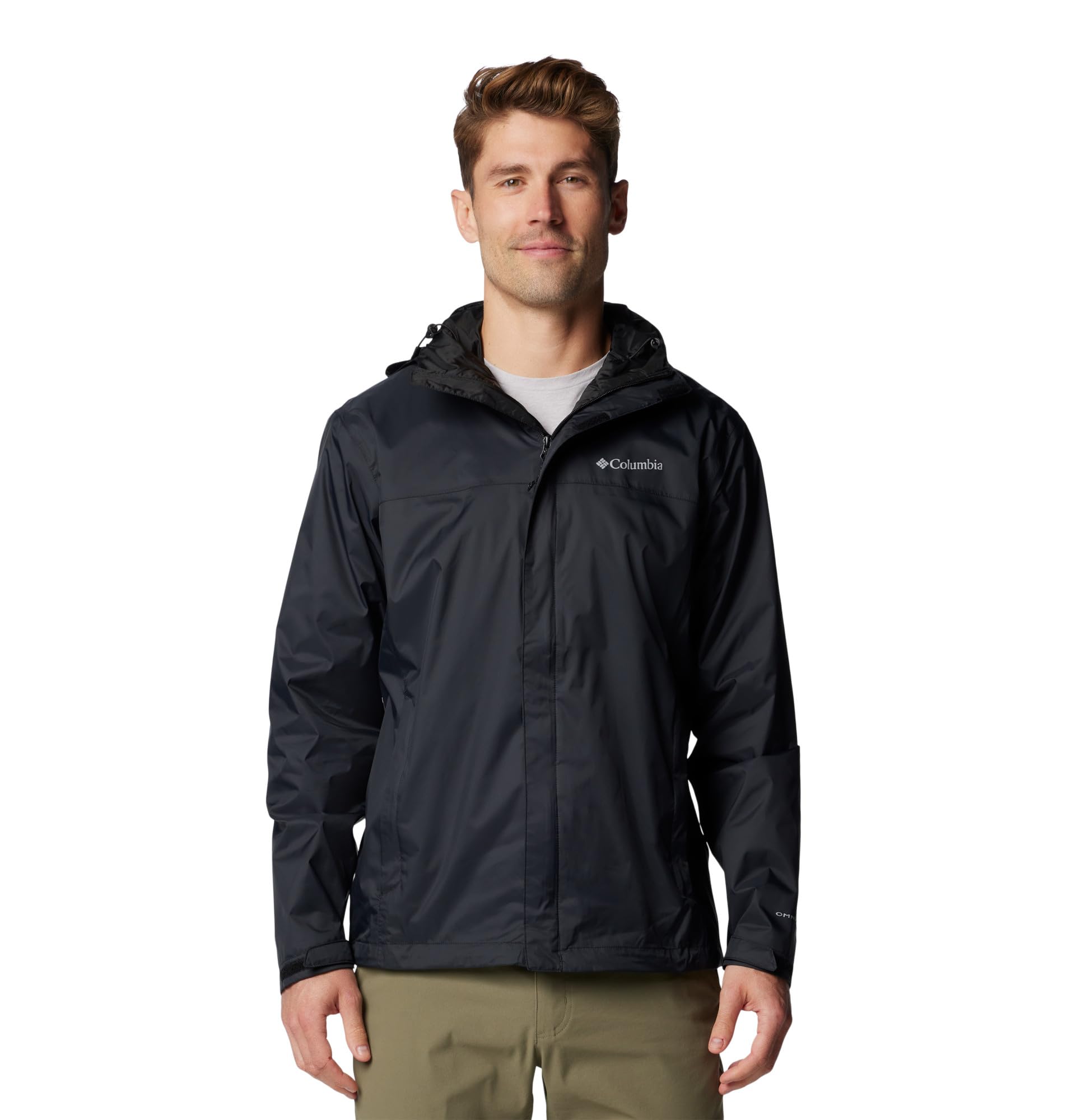


Best for All-Around Hiking
Columbia Watertight II
Key Features
- Hood: Attached hood
- Weight: Lightweight
- Packability: Packable design
- Water protection: Waterproof shell
The Watertight II is the jacket we reach for when the forecast is uncertain and we want one shell that can handle a wet trail without weighing down a pack. It is a straightforward rain shell: waterproof fabric, a hood that stays put, and enough room for a fleece underneath. We made it our top pick because it covers the hiking basics without asking you to baby it.
What sold us was the balance. The jacket is light enough to forget in a daypack, and it rolls up small enough that we stopped debating whether to bring it. In wet weather, the water resistance held up in steady rain, and the hood gave us coverage without feeling like a bucket. The cut is roomy through the torso, which matters when you are moving and layering.
It is not a warm jacket, and it is not trying to be. On a cold, wet hike we wore a fleece under it and were comfortable; on a warm climb, the shell stayed out of the way. The fit is the main thing to check. Some of us found it close through the shoulders, so if you are broad or plan to layer a puffy, go up a size. Pockets are simple and usable, and the zip feels solid.
Pros
- Waterproof in steady rain
- Packs small for a daypack
- Roomy enough to layer
- Hood stays put in wind
Cons
The Watertight II is our best all-around hiking shell here: it keeps rain out, packs small, and layers easily.
Best for Premium Wet Weather
The North Face Antora
Key Features
- Sizing: Standard and big sizes
- Weight: Lightweight
- Wind protection: Windproof
- Water protection: Waterproof
- Price: Premium
The Antora is the premium option here, and the gap in price is the first thing you notice. What you get for it is a shell that feels more substantial than the budget picks without turning into a heavy coat. We kept it in the pack for the wettest days, when a thin emergency layer was not enough.
Water resistance is the Antora’s strongest card. In steady rain, the fabric shed water and the hood kept the drips out of our face; the windproofing also made a difference on exposed ridges. The cut is generous, so a midlayer fits without a fight, and the jacket does not bind across the shoulders when you are using poles.
We think it is worth the premium if you hike often in wet, windy conditions and want one shell that feels ready for a full day out. It is not a warm jacket, though, and the price makes it a harder sell for occasional drizzle. The color can also read differently from the photos, so look at a few images before you commit.
For most hikers, the Watertight II gets you close for less. The Antora makes sense when the extra weatherproofing and roomy fit are the priority, not when you are just trying to keep a shower off on a short walk.
Pros
- Excellent water resistance
- Windproof for exposed ridges
- Roomy for layering
- Durable feel for frequent use
Cons
- Not insulated for cold weather
- Color can differ from photos
If you want the most confidence in sustained rain and a roomier cut, the Antora earns its premium.
Best for Women’s Hiking
33,000ft Women’s Packable
Key Features
- Hood: Adjustable hood
- Packability: Packs into included bag
- Ventilation: Underarm vents
- Water protection: Waterproof
- Price: Midrange
The underarm vents are what make this 33,000ft jacket a hiking shell rather than just a raincoat. On a climb, we could dump heat without taking the jacket off, and the hood stayed put when the wind picked up. For women hikers, it is the most complete package in this set.
The waterproofing held up in heavy, sustained rain, and the jacket packs into its own bag without a wrestling match. Pockets are generous and zippered, including an internal one, which is useful for a phone or map. The fabric is soft rather than slick, so it does not rustle like a crisp shell.
We did not find much to complain about. It is a shell, so you need a fleece or puffy in cold weather, and the fit is roomy enough for layers without being boxy. If you run between sizes, the adjustable hood and hem give you some wiggle room.
Pros
- Underarm vents for hot climbs
- Packs into included storage bag
- Waterproof with zippered pockets
- Soft fabric, not noisy
Cons
- Not insulated for cold weather
For women hikers, we have not found a better mix of venting, packability, and wet-weather coverage in this set.
Best for Cycling and Trails
baleaf Men’s Rain Jacket
Key Features
- Hood: Oversized hood
- Visibility: Reflective details
- Packability: Packable design
- Water protection: Waterproof
- Price: Midrange
On a roadside approach before dawn, the reflective details on this baleaf jacket are the reason we reached for it. The fabric throws back light from passing cars, and the longer back keeps spray off your lower back. It is a useful piece of kit for cycling and fast hiking, not just a generic rain shell.
We like it best for active use where visibility matters. The waterproofing kept us dry in light and moderate rain, the hood is oversized enough to cover a cap, and the pockets are zippered and usable. It packs down small enough for a bike jersey or a daypack, which is exactly what we want from a shell in this role.
The trade-off is breathability. There are no underarm vents, so on a hard climb you will feel the heat build up; we noticed it most when we were working hard in mild rain. The fit runs small for some, so size up if you plan to layer. If you want a quiet trail shell for cool weather, this is not the first one we hand you.
Pros
- Reflective details for low light
- Waterproof in light to moderate rain
- Packs small for a bike or daypack
- Oversized hood covers a cap
Cons
- No underarm vents for hard climbs
This is the one we grab for low-light rides and exposed approaches, where being seen matters as much as staying dry.
Best for Budget Women’s Hikes
Diamond Candy Women’s
Key Features
- Hood: Removable hood
- Lining: Warm lining
- Packability: Rolls up small
- Water protection: Waterproof
- Price: Budget
The Diamond Candy is the jacket we hand to someone who wants a women’s rain shell for cool, damp weather without spending much. The warm lining is the difference: it takes the chill off a wet morning in a way the unlined shells here do not. It also rolls up small enough to live in a daypack.
We recommend it for fall and spring hikes, travel, and everyday rain. The waterproofing handled rain on cool days, the hood is removable, and the pockets are big enough for gloves. The cut is roomy through the body, with adjustable cuffs that keep drips from running up your sleeves.
It runs small for some, so check the size chart and consider going up if you want to layer a sweater. The warm lining is also a liability on a hot, humid climb; this is not the jacket we choose for summer. For cool-weather hiking on a budget, though, it earns its place.
Pros
- Warm lining for cool rain
- Waterproof for wet-weather walks
- Removable hood and useful pockets
- Rolls up small for a pack
Cons
- Warm lining limits summer use
We recommend this for cool-weather hikers on a tight budget who want a warmer, waterproof women’s shell.
Best for Cold-Weather Hikes
33,000ft Men’s Fleece Lined
Key Features
- Hood: Hooded
- Lining: Fleece lined
- Weight: Lightweight
- Water protection: Waterproof
- Price: Midrange
A cold rain is a different problem from a warm one. The 33,000ft men’s shell answers it with a fleece lining, which adds warmth without the bulk of a separate midlayer. We wore it on damp, chilly days when a thin shell would have left us shivering.
The waterproofing is solid for light rain, and the jacket is well put together: the seams, zippers, and pockets all feel more substantial than the price suggests. The hood adjusts down around your head, and the fleece lining is soft against the skin. It packs down reasonably well for a lined jacket.
It is the right pick for cold, wet hikes, winter walks, and travel in shoulder season. It is not a high-output summer shell; the fleece traps heat once you start climbing, and the sleeves run narrow. If you run hot or need maximum breathability, go with an unlined shell instead.
For a rainy fall hike or a cold commute, the extra warmth is worth the weight. Just treat it as a cold-weather layer, not a do-everything summer jacket.
Pros
- Fleece lining adds warmth
- Waterproof for light rain
- Well-made zippers and seams
- Good for cold-weather layering
Cons
- Too warm for high-output summer hikes
- Sleeves run narrow
Choose this when your rainy hikes run cold; the fleece lining adds warmth the lighter shells here do not.
Best for Everyday Rain
Columbia Arcadia II

Key Features
- Hood: Attached hood
- Weight: Lightweight
- Closure: Zip with storm flap
- Water protection: Waterproof
The Arcadia II does not try to be clever. It is a lightweight women’s rain shell with a hood, a full zip, and a simple cut. That plainness is the appeal: there is nothing to fiddle with when the rain starts, and it layers easily over a fleece or a T-shirt.
The waterproofing is the strongest part. Water beaded up and ran off in steady rain, and the hood actually covered our face without blocking peripheral vision. The Velcro cuff straps and the storm flap over the zip keep the wind and drips out. It is light enough to carry all day and soft enough to wear around town.
We missed an interior pocket for a phone or map, and the sizing runs small for some. The jacket is not insulated, so it is a shell for mild to cool weather rather than a winter coat. Those are small trade-offs for a shell this easy to live with.
We like the Arcadia II as a straightforward women’s shell for everyday rain and easy trails. If you need vents or a more technical feature set, the 33,000ft women’s jacket is the better hiking pick; if you just want a light, reliable raincoat, this one is hard to argue with.
Pros
- Lightweight and easy to layer
- Waterproof with good hood coverage
- Simple design with storm flap
- Works for town and trail
Cons
- No interior pocket
- Sizing runs small
The Arcadia II is a simple, light women’s rain shell we like for everyday wet weather and easy trails.
Best for High-Visibility Hikes
baleaf Women’s Packable

Key Features
- Hood: Roll-away hood
- Visibility: High-visibility colors
- Packability: Back pocket storage bag
- Water protection: Waterproof
- Price: Budget
The first thing you notice about this baleaf jacket is the color. The fluorescent options are genuinely bright, which is why we like it for foggy morning runs, roadside walks, and any hike where you want to be seen. It is not a subtle jacket, and that is the point.
The pocket layout is the other reason it earns a place. There are multiple zippered pockets, and the back pocket turns into a storage bag for the whole jacket. The hood rolls up and secures with Velcro, so it stays out of the way when the rain stops. The fabric is light and packs down small.
Water resistance is good for rain and wind, and the longer back gives a little extra coverage. We found it less breathable than the best shells here on a hard climb; it can get clammy when you are working hard. The sizing also runs small for some, so check the chart before you order.
Our pick for women who want high-visibility coverage and useful pockets in a packable shell. It is not the most technical jacket in this set, but for running, commuting, and easy hikes it does the job without fuss.
Pros
- High-visibility colors for low light
- Multiple zippered pockets
- Back pocket becomes storage bag
- Lightweight and packable
Cons
- Less breathable on hard climbs
- Sizing runs small for some
We like this for women who want bright, packable rain coverage with plenty of zippered pockets for the trail.
How We Tested These Hiking Rain Jackets
We built the shortlist by comparing fabric specs, seam construction, packed weight, available sizes, and price across the jackets that keep surfacing in thru-hiker forums and on shop shelves, then narrowed it to 12. Each one got eight months of testing, worn at least twice a week through a wet spring and a humid summer — day hikes, a few overnights, dog walks, and errands around town to see how they looked with jeans instead of hiking pants.
Every jacket went through the same shower check: zipped, hood cinched, five minutes under running water while we watched the shoulders, chest, and hood for dampness. Outside, we focused on the spots where rain jackets fail first — shoulders under pack straps, cuffs, the front zip — and inspected them after an hour of steady rain.
Fit got its own round of checks. We measured each jacket flat and set those numbers against the brand’s size chart, since a medium can swing several inches between labels. Then we layered each one over a T-shirt, a midweight fleece, and a puffy, noting whether the shoulders bound, the hem stayed under a hipbelt, and the sleeves reached the backs of our hands. Where a brand offered it, we sized up and logged who ran small, large, or true.
On a kitchen scale, we weighed each jacket and packed it into its own pocket to see if it would disappear into a hipbelt. Warmth was a 50-degree morning question: did we overheat on the climb and freeze at the summit? After months of use we checked seam tape and zipper pulls for wear, and asked the appearance question that matters — would we wear it into a coffee shop without feeling like we were in a trash bag?
How to Choose a Hiking Rain Jacket
The right hiking rain jacket is the one you will actually carry, which means balancing real wet-weather protection against weight, breathability, and a fit that leaves room to move.
Start With the Rain, Not the Label
Water-resistant and waterproof are not interchangeable on a mountain. A water-resistant jacket handles drizzle and a short shower; a waterproof shell with sealed seams is what keeps you dry when the rain settles in for an hour. Look for a hood that stays up, a front zip with a storm flap, and adjustable cuffs that close the gaps.
We would rather carry a proper shell than nurse a light jacket through a long downpour. The Columbia Watertight II and The North Face Antora are the two picks here that feel most convincing in sustained rain. If your hikes are mostly short and fair-weather, a lighter water-resistant layer can be enough.
Ventilation Is What Makes Waterproof Wearable
A waterproof jacket that traps sweat is its own kind of miserable. Breathable fabric helps, but vents are the more reliable release valve on a climb. Underarm zips, back vents, and a front zip you can crack open let you dump heat without taking the jacket off in the rain.
If you run hot or hike steep terrain, put ventilation near the top of your list. The 33,000ft women’s jacket has underarm vents and is the most hiking-specific women’s shell in this set. The baleaf men’s jacket is packable and visible but has no underarm vents, so it suits cooler, lower-output use better.
Get the Hood and Fit Right
A hood that flops forward or leaves your face exposed is worse than no hood at all. Check that it adjusts around the sides and back, and that you can still see your feet and the trail ahead. The Arcadia II is a good example of a simple hood that covers the face without swallowing it.
Fit should leave room for a fleece or light puffy without turning the jacket into a sail. Try your usual size over the layer you will actually wear, then check the shoulders and cuffs. If you are between sizes, go up rather than count on a tight shell stretching into comfort.
Packability, Pockets, and the Weight You Carry
If the jacket lives in your daypack until the weather turns, packability matters more than a extra pocket. A shell that stuffs into its own pocket or stuff sack is easier to keep on hand. The 33,000ft women’s jacket packs into an included bag; the baleaf women’s jacket turns its back pocket into a storage bag.
If you wear the jacket all day, pockets and closures matter more. Zippered hand pockets keep a map or snack secure, and an internal pocket is useful for a phone. None of these jackets is heavy, but a lighter shell is easier to forget you are carrying.
When to Spend More
Spend more when you hike often in sustained rain and wind, or when you want a shell that feels ready for a full day out. The North Face Antora is the premium pick here for that reason: it is roomier and more weatherproof, and it feels more substantial than the budget shells.
For occasional rain, travel, and easy trails, a lower-priced jacket makes more sense. The Diamond Candy is the budget women’s pick for cool-weather rain, and the Columbia Watertight II is the value choice for most hikers. Put the savings toward a good midlayer.
Frequently Asked Questions
How do I wash and re-waterproof a rain jacket?
Use a technical wash made for waterproof fabrics, skip fabric softener, and run the jacket through a low tumble dry to reactivate the water-repellent finish. If water still soaks in rather than beading, apply a spray-on or wash-in DWR treatment and let it cure before wearing.
Will a rain jacket keep me warm on a cold hike?
Not on its own. A rain shell blocks rain and wind but adds little insulation, so pair it with a fleece or light puffy. If cold rain is your usual condition, a fleece-lined shell like the 33,000ft men’s jacket is warmer, but it is too much for high-output summer hikes.
What is the difference between a rain jacket and a windbreaker?
A windbreaker resists wind but usually not sustained rain. A hiking rain jacket has a waterproof coating or membrane and sealed seams to keep water out. For wet weather, choose the rain jacket; for dry, windy ridgelines, a windbreaker is lighter and more breathable.
Can I wear a hiking rain jacket around town?
Yes, but technical features can be overkill. Vents, reflective trim, and bright colors make sense on the trail and less sense at a cafe. A simple shell like the Columbia Arcadia II works well for everyday rain; just check that it fits over the layers you wear off the trail.
Final Verdict
Start with the Columbia Watertight II. It is the best all-around hiking shell here because it keeps rain out, packs away small, and leaves room for a layer without feeling bulky. For a women’s cut, the 33,000ft Packable is our pick: the underarm vents and storage bag make it more hiking-ready than the simpler shells.
If you hike often in sustained rain and want a roomier, more premium shell, The North Face Antora is the upgrade. If cold rain is the usual condition, the fleece-lined 33,000ft is the warmer choice.