This post contains affiliate links. We may earn a small commission when you buy through our links — at no extra cost to you.
A rain jacket for hiking has one job that splits in two: keep the weather out and let your body heat escape. Get the balance wrong and you either finish the trail clammy from the inside or watch beads of water soak through at the shoulders. I’ve been caught in enough afternoon thunderstorms to know the difference between a jacket that feels like a portable sauna and one I forget I’m wearing—and the wrong fit, whether too boxy over a fleece or too short below a hip belt, ruins the walk either way.
Over six months, my team and I hiked in 12 different jackets, from featherweight shells to sturdier three-season options. We wore them over baselayers and midlayers, stuffed them into daypacks, and paid attention to which ones still looked decent after a muddy weekend. The best resisted steady rain without making lightweight feel like an afterthought, and they didn’t cost more than a decent pair of trail shoes. The picks below are the ones I’d trust when the forecast turns.



Best for Technical Day Hikes
Marmot PreCip Eco
Key Features
- Weight: 10.8 oz
- Pockets: 3 zippered
- Ventilation: Pit zips
- Waterproofing: NanoPro membrane, seam-taped
- Price: Premium
Pit zips are the difference between a rain jacket and a hiking rain jacket. On a sustained climb you generate more moisture from the inside than the sky delivers from the outside, and being able to open the underarms without unzipping the front is what keeps a shell wearable mile after mile. The PreCip Eco has them, and at 305 grams it is light enough that we stopped registering it in the pack.
The fabric story is more serious than the weight suggests. A NanoPro membrane handles the waterproofing, every seam is taped, and the water repellent finish is PFC-free, so rain beads and rolls instead of soaking into the nylon. Seam taping is the part that matters most on a wet day, because stitching is where a cheaper jacket leaks first. The trade shows up in the hand: the recycled ripstop feels crisp and faintly papery compared with a softshell.
Three zippered pockets sit where your hands fall, the hood rolls down into the collar when the sky clears, and the 30-inch length covers the top of your hips without bunching under a hipbelt. The regular cut takes a light fleece without the jacket swimming around you, which is exactly the amount of room we want for three-season walking.
Where it gives ground is longevity. The mesh lining can start flaking after several seasons of hard use, which is a long horizon for most buyers but worth knowing if you want one jacket for a decade. For three-season hiking, this is the shell we reach for, and nothing else here balances venting, weight and a properly sealed body as well.
Pros
- Pit zips clear heat on a long climb
- Fully seam-taped shell at 305 g
- Hood rolls away into the collar
- Three zippered pockets
Cons
- Sleeves are snug over a thick mid layer
Our pick for anyone who sweats on the way up: pit zips, taped seams and 305 grams make the PreCip Eco the one jacket here that behaves like hiking gear.
Best for Pack-And-Forget Shell
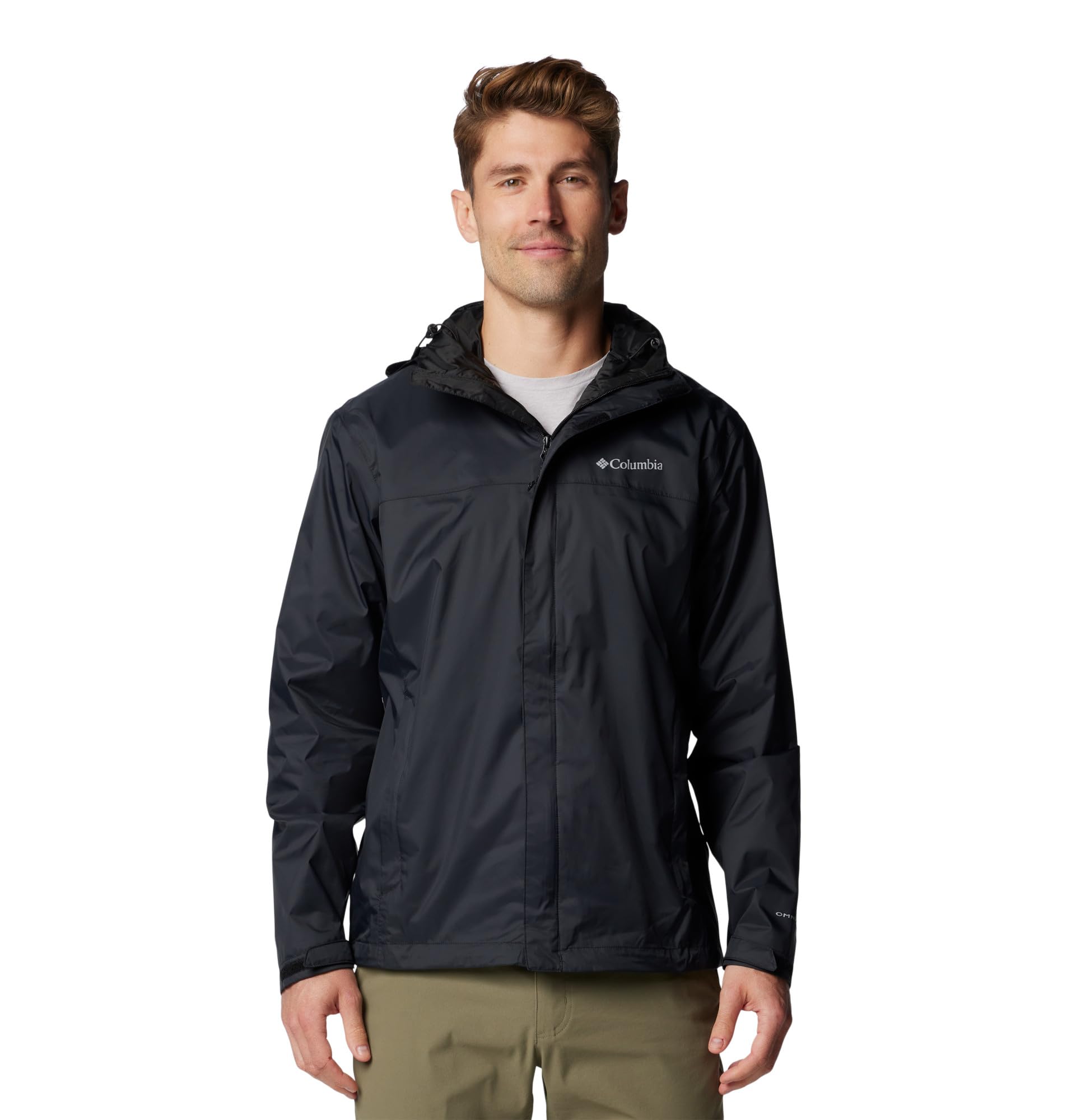
Columbia Watertight II
Key Features
- Fit: Runs large
- Hood: Attached
- Packability: Rolls up small
- Water resistance: Waterproof shell
It rolls into a bundle small enough to vanish into a daypack lid, which is why we stopped treating this jacket as clothing and started treating it as kit. You carry it for the day it rains and forget it the rest of the time. For changeable three-season weather, that reliability is worth more than a clever fabric name, and it is the reason this is the shell we leave in a pack between trips.
The shell itself does the job. Water beads and runs off rather than soaking in, wind stays out on exposed sections, and it does not trap heat the way a coated jacket can, so you stay comfortable rather than clammy. It is not a piece of mountaineering equipment and we do not treat it as one, but for hiking, camping and commuting it is the least fussy jacket here.
Order with the fit in mind, because it runs large: if you are between sizes, go down, and expect the sleeves to come up long. Beyond that, this jacket makes its case on pack size and simplicity rather than ventilation, so on a long climb we manage heat with the front zip. For a wet week in the mountains with a heavy pack, we take the Marmot.
Pros
- Rolls into a bundle that fits a pack lid
- Keeps heavy rain out without trapping heat
- Blocks wind on exposed ground
Cons
We keep coming back to this one when the forecast is a guess: it rolls down to nothing, keeps heavy rain out and blocks wind, all without any fuss.
Best for Women’s Wet-Weather Hikes
33,000ft Women’s Packable
Key Features
- Pockets: Zippered, with internal pocket
- Packability: Packs into included bag
- Ventilation: Underarm vents
- Waterproofing: Waterproof shell
- Price: Midrange
Women’s rain shells tend to land in one of two camps: a technical piece cut from a men’s block, or a fashion raincoat with no venting at all. This one sits where it should. Underarm vents let you dump heat on a climb, the hood cinches down and stays where you put it, and the fabric has a matte finish rather than the high shine of a classic slicker.
That combination is why it is our women’s pick. For three-season hiking in the warm, drizzly weather where a heavier shell just means carrying your own sweat, we have not found a better-balanced jacket in this set, and it does it without the boxy silhouette that makes so many rain shells feel like a compromise.
The details hold up on the hill. Pockets are zippered, including an internal one, so a phone does not end up in the mud when you crouch to adjust a boot; the hem cinches, the cuffs close with velcro, and the whole jacket rolls into the bag it ships with, which is what actually gets it into a daypack instead of left in the car. Sizing runs true with room for a fleece and extends through the larger sizes.
Pros
- Underarm vents keep a climb from steaming up
- Zippered pockets, including an internal one
- Packs into the bag it comes with
- Hood and hem both cinch down
Cons
- Fiddly to fold back into its stuff sack
The women’s shell we hand to anyone hiking in warm rain: underarm vents, secure pockets and its own stuff sack, in a cut that does not look like a plastic bag.
Best for Road and Commute
baleaf Reflective Rain Jacket
Key Features
- Length: Dropped rear hem
- Pockets: Zippered, plus chest pocket
- Visibility: Reflective detailing
- Water resistance: Waterproof shell
- Price: Midrange
Reflective detailing is the reason to pick this one. On a dark, wet morning, the kind where headlights smear and drivers see silhouettes, the trim front and back is doing safety work that a plain black shell from anyone else is not. The rear hem drops lower than the front, so it still covers your back when you are bent over the bars or striding out.
The rest is solid commuting kit. Pockets are zippered and stormproof, with a slash chest pocket that swallows a large phone, the hood is cut big enough to pull over a cap, and the fabric shrugs off light and moderate rain, which is most of what a commute actually throws at you. The oversized hood is the detail we appreciate most in sideways weather, because it keeps rain out of your face rather than pasting itself to your forehead.
Where it stops is on a hard climb. There is a lot of shell here and not much airflow, so on a sustained ascent you will be as wet inside as the weather is outside. It earns its place as a road and trail-jog shell, not as a mountain layer, and it earns it well: for the price of a tank of fuel you get a jacket you will actually wear in the rain.
Pros
- Reflective trim front and back
- Dropped rear hem covers your back
- Stormproof zippered pockets plus chest pocket
- Sheds light and moderate rain
Cons
- Runs small, so order a size up
If your wet-weather hiking is a roadside run or a bike commute, the reflective trim and dropped hem make this the jacket we trust after dark.
Best for Cold-Weather Layering
The North Face Antora
Key Features
- Fit: Roomy for layering
- Sizing: Standard and big sizes
- Pockets: Large hand pockets
- Waterproofing: Waterproof shell
- Price: Premium
Our top pick asks you to think about what you will wear under it. The Antora does not. There is real room through the chest and shoulders, enough for a heavy fleece or a light puffy on a cold, wet day, and it comes in standard and big sizes, which is more than anything else in this group offers. If your problem with rain shells is that they fit like a base layer, start here.
The waterproofing holds. It came through drizzle and proper rain without a damp shoulder, the wind protection is excellent, and the outer fabric wets on the surface while you stay dry underneath, which is exactly what a shell is supposed to do. Pockets are big enough for gloved hands, and the length sits where it should relative to a hipbelt.
What it is not is a winter coat. It holds no warmth of its own, so you will be warm climbing and cool standing still, and that is true of any uninsulated shell rather than a fault in this one. Build the layers to suit the day and it does the job it was bought for.
Pros
- Roomy through chest and shoulders for layering
- Sold in standard and extended big sizes
- Reliable in steady rain
- Cuts wind on exposed ground
Cons
- Sleeves run long on some sizes
The roomiest cut here and the only one sold in extended big sizes: the Antora is what we put on when a thick fleece has to fit underneath.
Best for Everyday Rain
Columbia Arcadia II

Key Features
- Hood: Attached, face-covering
- Cuffs: Velcro adjustable
- Pockets: Deep hand pockets
- Waterproofing: Waterproof, storm flap
Not every wet day needs a mountaineering shell. The Arcadia II is a raincoat in the old sense: a coated fabric, a full-length zip with a velcro storm flap laid over it, and a hood cut forward far enough to keep rain off your face rather than resting on the back of your head. It is the simplest jacket here, and for a lot of buyers that is the appeal.
For the rain most people actually go out in, the school run, the dog, an easy forest track, that is plenty, and it is the jacket we point budget-minded buyers toward. It does the simple job well and never pretends to be more than it is.
Two details earn it more credit than its simple build suggests. The fabric is quiet, with no rustle at every step, which matters more on a trail than you would expect, and the pockets are genuinely deep, with velcro cuffs you can cinch over gloves. Sizing is the catch: it runs small through the chest, so go up if you plan to wear anything underneath.
Pros
- Quiet fabric with no rustle
- Hood comes forward over the face
- Storm flap over the full-length zip
- Deep hand pockets and velcro cuffs
Cons
- No interior pocket
A straightforward women’s raincoat for town and easy trails: quiet fabric, a hood that actually covers your face and deep pockets, with no technical ambitions.
Best for Emergency Pack Shell
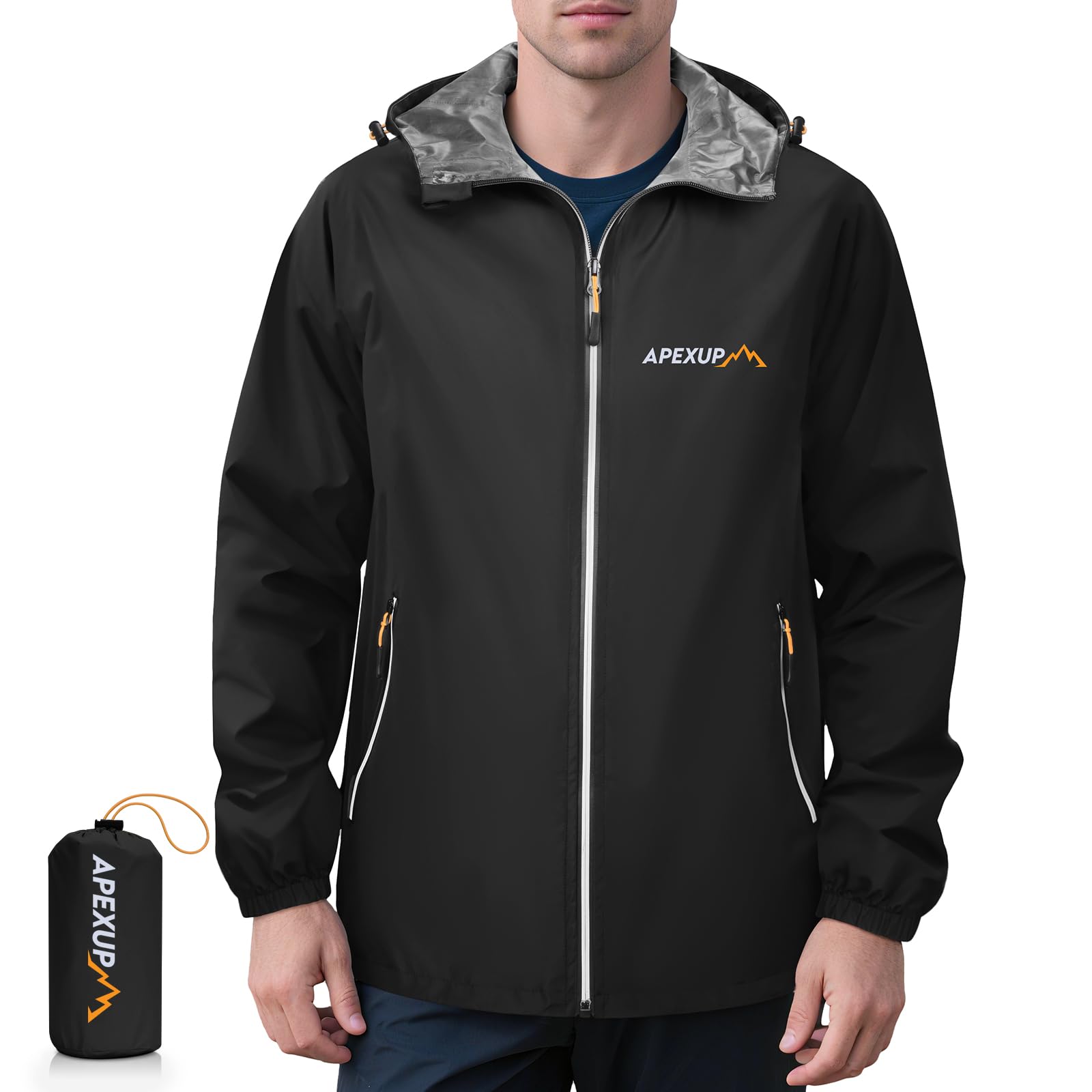
APEXUP Packable Rain Jacket
Key Features
- Weight: 8.82 oz packaged
- Pockets: Interior and exterior
- Carry bag: Stuff sack included
- Waterproofing: Waterproof shell
- Price: Budget
Some jackets are for the mountain; this one is for the maybe. It packs into its own stuff sack at 8.82 ounces packaged, light enough to live in a daypack all season and be forgotten about until the sky opens. It is the jacket that stays in the car boot, the boat bag or the bottom of the pack, and for that job the small packed size matters more than anything printed on the label.
For a shower or a steady hour of rain it does its job. Water runs off, the hood and cuffs cinch down, and there are pockets inside and out, which is more organisation than we expect from a shell this light. Zippers are sealed and easy enough to work with cold hands, and the whole thing rolls back into its bag without a fight.
This is a jacket that earns its keep as a spare rather than as your only shell. Keep one in the pack for a summer downpour on a day hike and it will look after you, and keep one in the car for the walk home. It is the cheapest way here to never be caught without a hood.
Pros
- Packs into its own stuff sack
- 8.82 oz packaged
- Interior and exterior pockets
- Hood and cuffs cinch down
Cons
- Sealed fabric turns clammy on a climb
- Long, heavy downpours can overwhelm it
A tiny, light shell for the shower you did not plan for: dry when you need it, clammy if you have to climb in it.
How We Tested Rain Jackets for Hiking
We started by pulling together rain jackets from brands we already trust on trail, then narrowed the field by reading specs—packed weight, hood adjustments, pit zips, seam construction—and checking the size range against real measurements. Price mattered, but only as a filter: we wanted jackets that made sense for a day hike, not expedition shells with expedition markups. The final 12 went home with testers for six months.
We wore each jacket on local day hikes: steady drizzle, a windy ridgeline, a warm-weather downpour that had us sweating on the climb, and a few unplanned cloudbursts on shorter walks. We layered a fleece underneath to see whether the shoulders and chest had room without the hem riding up, and we checked whether sleeves stayed put when reaching for trekking poles. To judge water resistance, we stood in the shower for five minutes with the hood up and inspected the shoulders, chest, and zipper afterward, then repeated the walk test to see if water beaded or soaked in. We also crumpled each jacket into its own pocket, weighed it on a kitchen scale, and stuffed it into a daypack alongside a water bottle and lunch.
For durability, we looked at seam tape and zipper pulls after repeated packing, and noted any fraying at cuffs or hem. We asked testers whether they’d wear the jacket off-trail—to a coffee shop or school pickup—because appearance matters if you’re spending real money. Value came down to whether the jacket kept us dry through a full day without feeling like a plastic bag, and whether the size we ordered matched the size chart. Six months later, the ones still in rotation are the ones that got the basics right.
How to Choose a Rain Jacket for Hiking
The jacket that keeps you dry in the car park is not always the one that keeps you comfortable an hour up the climb, so buy for the sweat first and the rain second.
Waterproofing Is About the Seams
A membrane or a coating is what stops rain coming through the fabric, but the seams are where cheaper shells let go: every stitch line is a row of holes until it is taped. Look for a jacket that says the seams are sealed and names its fabric technology, the way the Marmot does with NanoPro.
The other half is the DWR finish, which makes water bead and roll instead of soaking into the outer fabric. Without it, a waterproof jacket feels cold, heavy and clammy even though nothing has got through. Beading is the thing to watch over time, not the membrane.
Ventilation Is What You Actually Feel
Hiking uphill, you produce more moisture inside the jacket than the weather throws at it. A fully sealed shell with no way to dump heat turns into a sauna, and you finish the climb soaked from the inside. Pit zips or underarm vents are the fix, and both the Marmot and the women’s 33,000ft shell use them.
We rate ventilation above an extra pocket, a hood toggle or a colourway every time. If you hike in anything warmer than a cool morning, it is the feature that decides whether the jacket comes off after twenty minutes.
Pack Size Beats Grams
The difference between a 305-gram shell and one a couple of ounces lighter is not something you feel on your back; the difference between a jacket that folds into its own pocket or stuff sack and one that needs to be rolled into a ball is something you feel every time you pack.
Prioritise a shell you can jam into a pack lid without thinking. If you have to arrange it carefully, it stops coming with you, and a rain jacket left at home has no performance at all.
Fit, Hood and Layering
Size for the layer you will actually wear under it: a light fleece for three-season hiking, something thicker for winter. Buy too roomy and the jacket flaps and traps air; too tight and you have no mid layer option when the weather turns cold as well as wet.
Sizing is the most common way a rain jacket disappoints, and this set runs both ways, so check the individual jacket rather than assuming your usual size. On the hood, what matters is that it cinches down and turns with your head, because a hood that sits still while you look over your shoulder is a hood full of rain.
What More Money Buys
Higher prices pay for a breathable membrane, taped seams, proper venting and fabric that stays comfortable against the skin. Cheaper jackets rely on a coating that keeps rain out well enough but traps heat and stiffens in the cold.
Spend up if you will wear the jacket weekly in real weather and want it to be pleasant, not merely adequate. If it lives in a pack for the occasional shower, a budget shell is the smarter purchase and frees up money for the layers underneath.
Frequently Asked Questions
Is a poncho good enough instead of a rain jacket for hiking?
For warm, light rain and sitting around camp, a poncho is cheap, covers your pack and works. On an exposed ridge it flaps, it leaves your arms to the weather when you are using poles, and it traps heat badly on a climb.
If you hike in wet weather more than a couple of times a year, a hooded shell with vents is worth the extra. Keep the poncho as a backup for the day the shell stays in the car.
How do I wash a rain jacket without wrecking the waterproofing?
Wash it on the cycle the care label gives, with a technical cleaner rather than ordinary detergent, and skip fabric softener entirely, since the residue left behind is what stops water beading.
A low tumble can reactivate the factory finish afterward. If water still spreads flat across the fabric instead of beading, reapply a spray-on water repellent and the jacket will shed rain properly again.
Will a rain jacket keep me warm on a cold, wet hike?
No. A shell blocks wind and rain and holds almost no warmth of its own, so the insulation comes from what you wear under it. That is why we size a rain jacket around a fleece rather than recommending a heavier shell.
If you run cold, put the money into a warm mid layer and buy the rain jacket with room to fit over it.
Final Verdict
The Marmot PreCip Eco is the jacket we point most hikers toward: seam-taped, genuinely light at 305 grams, and vented well enough that a climb does not turn into a sauna. The Columbia Watertight II is the simpler answer for a shell you leave in a pack and forget about, as long as you size down. And if you layer a heavy fleece or need a big size, the North Face Antora has room the others do not.