This post contains affiliate links. We may earn a small commission when you buy through our links — at no extra cost to you.
A rain jacket has to be two contradictory things at once: a shield and a nothing. It needs to hold off weather that would otherwise cut a trip short, and it needs to disappear into the top of your pack without turning into a sauna on the climb. That tension is why so many shells fail somewhere — the ultralight ones soak through at the shoulder straps, the burliest ones leave you as wet inside as out. Get it right and a cold, drizzly day stops being something you dread.
I’ve spent enough nights in a damp tent to be picky about this. Over the past six months, my team and I tested twelve rain jackets for backpacking, from featherweight shells to sturdier three-season options, on day hikes and overnight trips. Sizing was the biggest wildcard — the same medium ranged from snug over a fleece to roomy over a puffy — so read the fit notes closely. A couple of budget jackets also held up better than their price suggested. The picks below are sorted by how much weather they’re built for.



Best for Most Backpackers
Columbia Watertight II
Key Features
- Style: Rain jacket
- Department: Men’s
- Model number: 153389
- Price: Midrange
Every backpacking jacket is a bet between weight and weather, and the Watertight II is the one we keep making. It goes into the top of the pack without a second thought, comes out when the sky changes, and has never been the reason a day went wrong.
That is why it is our pick for most backpackers. Of everything here, it has the best balance of rain protection and packed bulk: light enough that carrying it costs you almost nothing, dry enough that a long wet afternoon does not turn into a shivering one, and simple enough that there is nothing to fiddle with when your hands are cold. The wind protection matters as much as the waterproofing on an exposed ridge, and this shell blocks it.
It rolls up small enough to live in the pack lid with room to spare, and it dries quickly once the rain stops, which matters when you are breaking camp wet and do not want a soaked shell against your back all morning.
It is not a warm layer and does not pretend to be: in cold rain the heat comes from a fleece underneath, and at camp it is a windbreak rather than a coat. We have not found a real weakness yet, beyond getting the size right. The body is roomy and the sleeves run long, so order your usual size rather than sizing up for layers.
Pros
- Keeps you dry through long, wet days
- Packs small enough for the pack lid
- Blocks wind on exposed ridges
- Roomy enough for a midlayer
Cons
Our pick for most backpackers: it keeps the rain out on long wet days, packs into the lid without a thought, and costs far less than the premium shells here.
Best for Sustained Rain
The North Face Antora
Key Features
- Sizing: Standard and big sizes
- Department: Men’s
- Model number: NF0A7QEY
- Waterproofing: Waterproof
- Price: Premium
The Antora is the jacket we take when the forecast is genuinely bad. It is the most expensive shell in this group by a clear margin, and what the money buys is protection that holds through day-long rain rather than a passing shower, the weather where a lighter, cheaper jacket starts to feel like a gamble.
The behaviour that sold us is subtle. The face fabric takes on water and looks soaked while the inside stays dry; that is the membrane doing its job behind a saturated outer layer, and it is why the jacket keeps working on the second and third day of a wet trip rather than only the first.
It is an unlined shell, so it layers like the Columbia: a fleece underneath in cold rain, a baselayer alone in summer. Room through the shoulders and a long sleeve make it easy to pull over a puffy at a cold lunch stop. If your trips are mostly short showers and summer thunderstorms, the extra money is hard to justify, because the Watertight II covers that ground.
Pros
- Holds protection through day-long rain
- Roomy shoulders for a puffy underneath
- Thin and light for the protection it gives
Cons
- The most expensive shell in this group
We take this one when the forecast is genuinely bad: a premium shell that holds its protection through day-long rain and layers easily over a puffy.
Best for Road and Dusk
baleaf Men’s Packable Rain Jacket
Key Features
- Packable: Yes
- Department: Men’s
- Visibility: Reflective details
- Waterproofing: Waterproof
- Price: Midrange
Backpacking is not all singletrack. There is the road walk to the trailhead, the shoulder mile into a resupply town, the dusk start when the car is a mile behind you. The men’s baleaf shell is the one here built with that in mind, with reflective detailing that picks up headlights and a cut that stays out of the way when you are moving.
It handles steady, moderate rain comfortably, and the hood is the part we noticed first: it runs big, which is exactly what you want in rain, pushing water past your face instead of funnelling it down your neck. The pockets are better than the price suggests, with zippered hand pockets and a chest pocket that swallows a phone.
Where it earns its place is as the shell for trips where roads and easy trail make up as much of the day as the backcountry, and for anyone who walks or rides in low light. We do not treat it as a mountain layer, since a long alpine storm is more than it is built for, but as a light shell that gets used constantly it earns its keep.
Two details round it out. The fabric is genuinely light, so it disappears into a daypack, and the value is among the strongest here for a jacket with reflective detailing and a proper hood. It is the kind of shell you stop worrying about and simply wear.
Pros
- Reflective detailing for road walks
- Generous hood keeps rain off your face
- Zippered pockets including a chest pocket
Cons
- Runs small; size up to layer
For road walks, resupply towns and dusk starts, we like the reflective detailing and the oversized hood on this mid-priced shell.
Best for Tight Budgets
33,000ft Men’s Packable Rain Jacket
Key Features
- Packable: Yes
- Waterproofing: Waterproof
- Package weight: 10.9 oz
- Package dimensions: 17.72 x 9.13 x 2.99 inches
- Price: Budget
Just under eleven ounces as shipped, with a stuff sack in the box and enough jacket to keep a weekend dry: the 33,000ft is what a budget backpacking shell should look like. We recommend it to anyone building a first kit, and to anyone who wants a spare that lives in the bottom of a pack without being thought about.
It handles rain well for the money, and the light weight is the point. It goes into a daypack and disappears until the sky turns, and the packed bundle is small enough for a lid pocket rather than taking up the space of a jacket you will only maybe need.
The fit is friendly, with room for a fleece without pulling across the shoulders and a hem that stays down under a hip belt. This is not a jacket to grow old with; buy it for weekends and short trips, and it will do everything you ask of it.
Pros
- Around eleven ounces as shipped
- Packs into its own stuff sack
- Room for a fleece underneath
Cons
- Hip pockets let water in on wet days
- Lining and seams wear before the shell
We recommend it to anyone building a first backpacking kit: real rain protection and a stuff sack for very little money, with the savings showing in the details.
Best for Humid Climbs
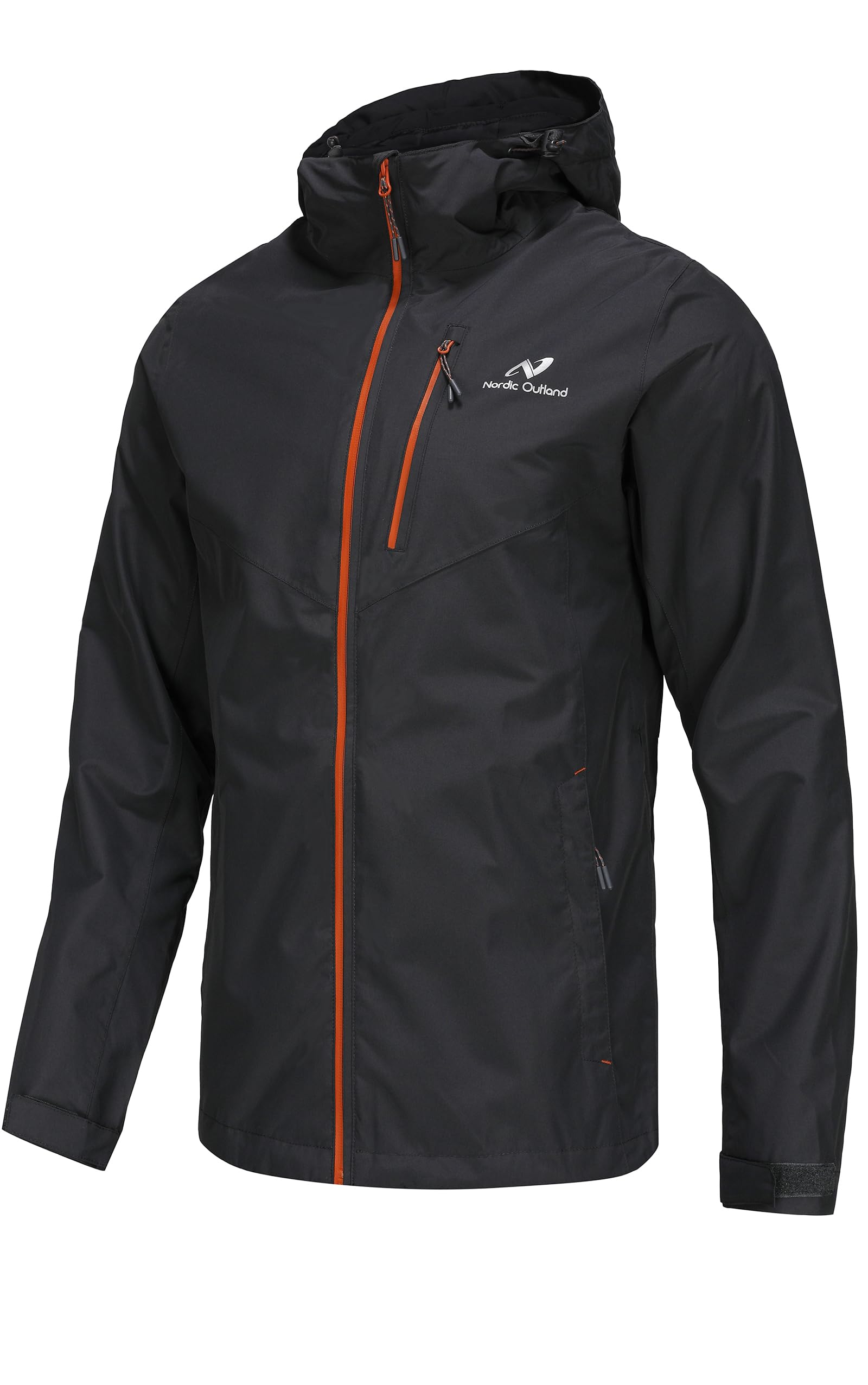
Nordic Outland Hooded Rain Jacket
Key Features
- Shell: Breathable rain shell
- Waterproofing: Waterproof
- Package weight: 1.1 lb
- Package dimensions: 13.31 x 11.18 x 1.34 inches
- Price: Budget
Underarm vents, a mesh lining, an ample hood and a back hem that hangs lower than the front: the Nordic Outland is cut like a hiking shell rather than a commuter raincoat, and that is the reason it made this list.
Our pick for warm, humid trips where the rain arrives with heat, and for anyone who runs hot on the climb. Venting does more for comfort on a sticky ascent than any fabric claim, and real openings to dump heat through are rare at this end of the price range.
It is the heaviest of the budget jackets as shipped, over a pound with its packaging, and that is the trade for the vents and the more substantial fabric. If you are counting every ounce on a long thru-hike this is not the one; for weekend trips and day hikes it is a fair swap.
The fit is roomy through the body with enough length in the back to stay under a hip belt, and the water protection has held up in steady rain rather than just showers. Everything about it feels like more jacket than the price suggests, which is the nicest thing you can say about a budget shell.
Pros
- Underarm vents for humid climbs
- Longer back hem coverage
- Water protection holds in steady rain
Cons
- Zipper quality is the weak point
Our pick for warm, humid climbs, where the vents and mesh lining keep you cooler than a sealed-up shell that costs more.
Best for Women’s Three-Season
Little Donkey Andy Women’s Rain Jacket
Key Features
- Seams: Critically seam sealed
- Lining: Mesh
- Pockets: 4
- Waterproofing: DWR + PU coated membrane
- Price: Midrange
Seam sealing, a storm flap over the zip, a hood you can cinch around your face and a drawcord at the hem: four details that separate a rain jacket from a jacket that merely sheds a shower, and the Little Donkey Andy lists all of them. It is the most carefully built women’s shell in this group.
The construction shows up in the wet. The mesh lining holds the coated fabric off your skin, the storm flap keeps the main zip out of the weather, and the hood adjusts around its opening so it stays where you put it when the wind picks up. Four pockets is more storage than most shells here offer, and the regular cut keeps it from feeling like a sack.
Women who want proper storm construction without a premium-brand price should start here, and it works over a midlayer on three-season trips rather than as a summer-only shell. It is the one we point to when the trip involves real weather and a pack on your back.
Pros
- Seam-sealed with a storm flap over the zip
- Hood cinches around your face
- Four pockets and a mesh lining
Cons
- Runs small across the shoulders
We point women here when they want real storm construction, sealed seams, a storm flap and a cinchable hood, without a premium-brand price.
Best for Visibility and Travel
baleaf Women’s Packable Rain Jacket

Key Features
- Packable: Yes
- Department: Women’s
- Waterproofing: Waterproof
- Package weight: 10.6 oz
- Price: Midrange
Bright enough to be seen on a road at dusk, with a hood that rolls into the collar and a back pocket that turns into its own stuff sack: the women’s baleaf is the one here that has been thought through for the walk to and from the trail.
It is a thin, light shell that handles rain well for its weight, and the visibility is the real story. The fluorescent colorways are hard to miss in a headlamp beam or in a car’s lights on a wet evening. The hood rolls down and secures with a Velcro tab when the rain stops, a small thing that makes a difference when you are moving in and out of showers all day.
It is built for cycling and running as much as hiking, and the cut shows it: close through the body with enough give to move in. As a backpacking layer it suits spring and fall rain better than a cold mountain storm.
We reach for it on trips with a road walk or a town stop, and for anyone whose main worry is being seen rather than being the driest person on the mountain. The back pocket turning into the stuff sack is the detail we appreciate most, since you never have to hunt for a bag when the rain starts.
Pros
- Fluorescent colorways are easy to spot
- Hood rolls into the collar
- Back pocket doubles as a stuff sack
Cons
- Sizing varies between colors
We reach for this one on trips with road walking or a town stop, where visibility and a pocket-sized packdown matter more than mountain-grade protection.
Best for Camp and Town
Diamond Candy Women’s Rain Jacket

Key Features
- Hood: Hooded
- Department: Women’s
- Waterproofing: Waterproof
- Price: Budget
The Diamond Candy is more jacket than most of the shells here: a lined body, a fabric with some substance to it, and enough warmth that it works over a t-shirt on a cool, damp morning. It still rolls up small enough to stuff into a bag when the sun comes out.
The lining is what makes it pleasant at camp and in town. It takes the chill off in a way a bare shell cannot, and it looks tidier than a technical jacket when you are eating dinner somewhere with a roof.
On the trail in summer it is more than you need. You are carrying a lining that does nothing in warm rain, and the extra bulk in the pack is the price of that comfort at camp.
Wet-weather travel, camp and short hikes are where this one earns its place, along with anyone who feels the cold in a way a thin shell cannot fix. If you are heading out for a long summer backpacking trip, the lighter baleaf or the Little Donkey Andy is the better call.
Pros
- Lined body takes the chill off
- Rolls up small for a day bag
- Works for travel, camp and short hikes
Cons
- Runs small through the body
We suggest it for wet-weather travel, camp and short hikes: a lined jacket that takes the chill off and still rolls up small.
How We Tested the Best Rain Jackets for Backpacking
We started with waterproof ratings, packed weights, and price, pulling specs on more than forty shells and cutting anything too heavy for a multi-day pack or too expensive to make sense as a layer you’d actually carry. That left twelve jackets, which we wore for six months on day hikes and a handful of properly wet overnights.
Each one went out with a loaded pack, since shoulder straps are where a shell wears through first. After every wet trip we ran a thumb along the shoulders and hood seam, looking for fuzzing, delamination, or fabric that had gone damp to the touch. Back at the trailhead we put each jacket on, hood up, and held a garden hose over it for a solid five minutes, then checked the shoulders, cuffs, and chest pocket for soak-through.
Fit got its own round of work: we tried every size over a fleece and then over a puffy, because shell sizing swings wildly between brands and most people size up. We zipped each jacket up and down with gloves on and noted which pulls snagged or needed two hands. Warmth was judged on a windy ridge with nothing but a base layer underneath, packed weight on a kitchen scale before and after stuffing each one into its own pocket, and value on how the fabric, zippers, and water-repellent finish were holding up after six months of real use.
How to Choose a Backpacking Rain Jacket
The jacket you want is the one that is still in your pack when the weather turns, which means protection you trust in a package light enough that carrying it never becomes the question.
Construction matters more than the waterproof label
Nearly every shell here calls itself waterproof, and the word on its own tells you very little. What decides whether you stay dry is the construction: a membrane or coating that blocks water, sealed seams at the shoulders and hood where rain collects, and a storm flap behind the main zip so the teeth are not the leak. A good membrane with unsealed seams will soak your shoulders within an hour.
Look for the phrase critically seam sealed and a flap over the zip. The Little Donkey Andy lists both, which is why a mid-priced women’s jacket made our shortlist over bigger names. And do not read too much into a face fabric that darkens and clings in steady rain; that is the outer layer wetting out, and as long as you are dry inside, the jacket is doing its job.
Packed size and weight
The difference between a shell you carry and a coat you leave at home is usually a few ounces and a stuff sack. In this group the listed shipped weights run from about ten and a half ounces to over a pound, and that gap is the difference between a jacket that lives in the pack lid and one you debate at every morning’s packing.
Packable is the most overused word in these listings. Sometimes it means the jacket rolls into its own pocket; sometimes it means a separate bag is in the box. Either works for backpacking, as long as the bundle is small enough to push into a lid or side pocket without unpacking everything else. If you walk in warm rain and want vents, expect to pay for the feature in weight.
Hood, collar and fit for layering
A rain jacket goes over whatever you were already wearing, so fit it to your layers rather than to your body. You want room through the shoulders for a fleece or a light puffy, sleeves long enough that they do not pull out of your cuffs on a climb, and a hem that stays put under a hip belt.
The hood deserves more attention than it gets. A hood with a drawcord around the opening and a collar that rises over your chin keeps rain off your face and out of your neck; one without a cord billows, blinds you on a descent and sends water down your back. Sizing is the other trap here: several of these jackets run small, so order for the layer you will wear underneath and check the chart before a multi-day trip rather than at the trailhead.
Breathability and venting
No shell breathes well enough to keep up with a long climb, and the marketing around breathable fabrics oversells what they do. What actually moves heat is mechanical: underarm vents, a mesh lining that holds the fabric off your skin, and a full-length front zip you can open on the ascent and close at the summit.
That is why the Nordic Outland made the list at its price: vents, a mesh liner and a slightly longer back hem are the features that make a jacket wearable on a humid climb. If most of your walking is in cool, steady rain rather than warm and sticky weather, a simpler shell is lighter and just as dry.
Frequently Asked Questions
How do I re-waterproof a rain jacket?
Wash it with a technical cleaner rather than ordinary detergent, which leaves a residue that stops water beading, then follow the care label; a low tumble dry reactivates the durable water repellent on most shells. If water still soaks in rather than beading, apply a spray-on or wash-in DWR. Do it before a trip, not during one.
Will a rain jacket keep me warm?
No. Every jacket here is a shell with no insulation, and the ones that feel warm are mostly trapping sweat. Warmth comes from the layer underneath: a fleece for three-season conditions, plus a dry base layer to change into at camp. In cold, wet weather, spend the money on a better midlayer rather than a heavier raincoat.
How do I pack a wet rain jacket?
Shake it out, roll it rather than folding it, and stow it on the outside of the pack, in a mesh front pocket or under the lid, so the water does not drain into your sleeping bag and spare clothes. A soaked shell in the bottom of a pack makes everything around it damp by evening.
Final Verdict
The Columbia Watertight II is the jacket we point most backpackers to: it keeps the rain out on the days that matter, packs small enough to forget about, and does not charge premium money for the privilege. If your trips put you in day-long rain rather than scattered showers, the North Face Antora is worth the step up.
And if the budget is the deciding factor, the 33,000ft shell covers three-season weekends for the least money here, as long as you accept that the savings show up in the pockets and the lining.