This post contains affiliate links. We may earn a small commission when you buy through our links — at no extra cost to you.
Most budget all mountain bikes hit a low price by cutting corners on components. Shifter cables stretch, pedals twist, and chains drop off at the worst moment. That trade-off turns a weekend ride into a trailside repair session.
The trick is knowing where the extra $100 goes. A few key specs — disc brakes over V-brakes, an aluminum frame instead of steel, and a drivetrain with at least 21 speeds — separate a bike that feels solid from one that needs constant wrenching.
This guide helps you match those specs to how you actually ride. Whether you’re a first-time full-suspension buyer or a budget-minded commuter looking for 29-inch wheels, the right choice starts with understanding what each component does once you hit the dirt.


Best for First-Time Full-Suspension
Schwinn Traxion 29"
Key Features
- Suspension: Full suspension
- Wheel Size: 29 inches
- Brake Type: Mechanical disc
- Frame Material: Aluminum
- Speeds: 24
- Price: Mid-Range
The Schwinn Traxion delivers a combination you won’t find elsewhere at this price: full suspension, a 24-speed Shimano drivetrain, mechanical disc brakes, and 29-inch wheels. That spec list alone sets it apart from every other bike in this price tier, where hardtails or lesser components are the norm. The aluminum frame keeps weight manageable, and the suspension absorbs moderate trail chatter without excessive bob when climbing.
On singletrack and gravel climbs, the 24-speed gearing provides a wide enough range to manage steep grades without feeling under-geared. The mechanical disc brakes offer controlled stopping power in dry conditions, though they require a bit more hand force than hydraulic setups. Riders who keep the bike on intermediate trails and fire roads will find the Traxion capable and predictable; it handles descents with reasonable composure for its price.
This bike suits first-time full-suspension buyers and intermediate trail riders on a budget — anyone who wants rear-wheel traction without spending over $600. It is not meant for heavy aggressive trail riding or riders who want zero maintenance. Factory assembly can be inconsistent: some units arrive with the front fork installed backwards, and early component wear (chain, bearings, derailleur) has been noted in a minority of cases. A professional tune-up at purchase is strongly recommended to catch any misalignment and to extend component life.
Pros
- Sturdy frame and smooth-shifting drivetrain for the price
- Assembly requires only basic tools and minimal time
- Full suspension at a cost that undercuts comparable models
Cons
- Front fork can be installed backwards from the factory, requiring re-alignment
- Some bikes show early wear on the chain, bearings, or derailleur within weeks
For the price, no other bike offers the same blend of full suspension, 24 speeds, and disc brakes on 29-inch wheels — just plan for a quick professional check to address any factory quirks.
Best for Casual Trail Riders
Schwinn High Timber 29"
Key Features
- Suspension: Front (hardtail)
- Wheel Size: 29 inches
- Brake Type: Disc
- Frame Material: Aluminum
- Speeds: 21
- Price: Mid-Range
The Schwinn High Timber delivers a smooth, controlled ride feel that makes it the most comfortable hardtail for casual singletrack and gravel paths. The 29-inch wheels roll over roots and rocks with confidence, and the front suspension soaks up moderate bumps without bouncing the rider around.
On fire roads and packed dirt, the ride remains composed over longer distances, reducing fatigue. The aluminum frame keeps weight manageable for climbing, though aggressive technical terrain isn’t its forte.
This bike suits recreational trail enthusiasts who prioritize comfort over ruggedness. However, pedal and derailleur failures have been noted within the first year, so budget for minor repairs. It’s a better fit for riders who accept occasional maintenance than those expecting trouble-free shifting and robust components. Unlike the full-suspension Traxion, the High Timber trades component durability for a smoother ride feel.
Pros
- Smooth, controlled ride on trails
- Solid overall quality for recreational riding
Cons
- Gear shifting requires frequent adjustment and can be inconsistent after tuning
- Braking performance lacks modulation compared to hydraulic disc brakes
Ride comfort is the standout trait, but component reliability makes this a better fit for riders who prioritize a smooth feel over long-term durability.
Best for Budget-Minded Beginners
AVASTA Earth 27.5"
Key Features
- Suspension: Front (switchable fork)
- Wheel Size: 27.5 inches
- Brake Type: Disc
- Frame Material: Aluminum
- Speeds: 21
- Price: Budget
The AVASTA Earth stands out in the budget segment with a switchable suspension fork, an aluminum frame, and disc brakes — features typically found on more expensive bikes. The 21-speed drivetrain handles moderate hills, and 27.5-inch wheels offer a balanced ride. While the near-identical sibling from the same store uses a fixed fork, the Earth’s lockout fork adds versatility for mixed pavement and light trail use. Fit and finish are notably good for the price point.
This bike targets budget-minded adults new to mountain biking who want a do-it-all ride for commuting and gentle off-road paths. Durability is mixed: some units have shown chain guard damage or bent parts after limited use, so treat the Earth as a capable starter bike rather than a workhorse. It suits occasional recreational rides rather than daily abuse or aggressive trail riding.
Pros
- Well-built aluminum frame with disc brakes delivers strong stopping power for light trail and commuting.
- Switchable suspension fork lets riders lock out for paved sections or engage for smoother off-road comfort.
- Strong value for a 27.5-inch mountain bike with modern features at a budget-friendly price.
Cons
- For those new to bike assembly, the unclear instructions may require extra patience or a professional tune-up.
A capable starter bike for budget-minded riders who want modern features like a switchable fork, but best treated as a light-use bike rather than a long-term workhorse.
Best for Tall Budget Beginners
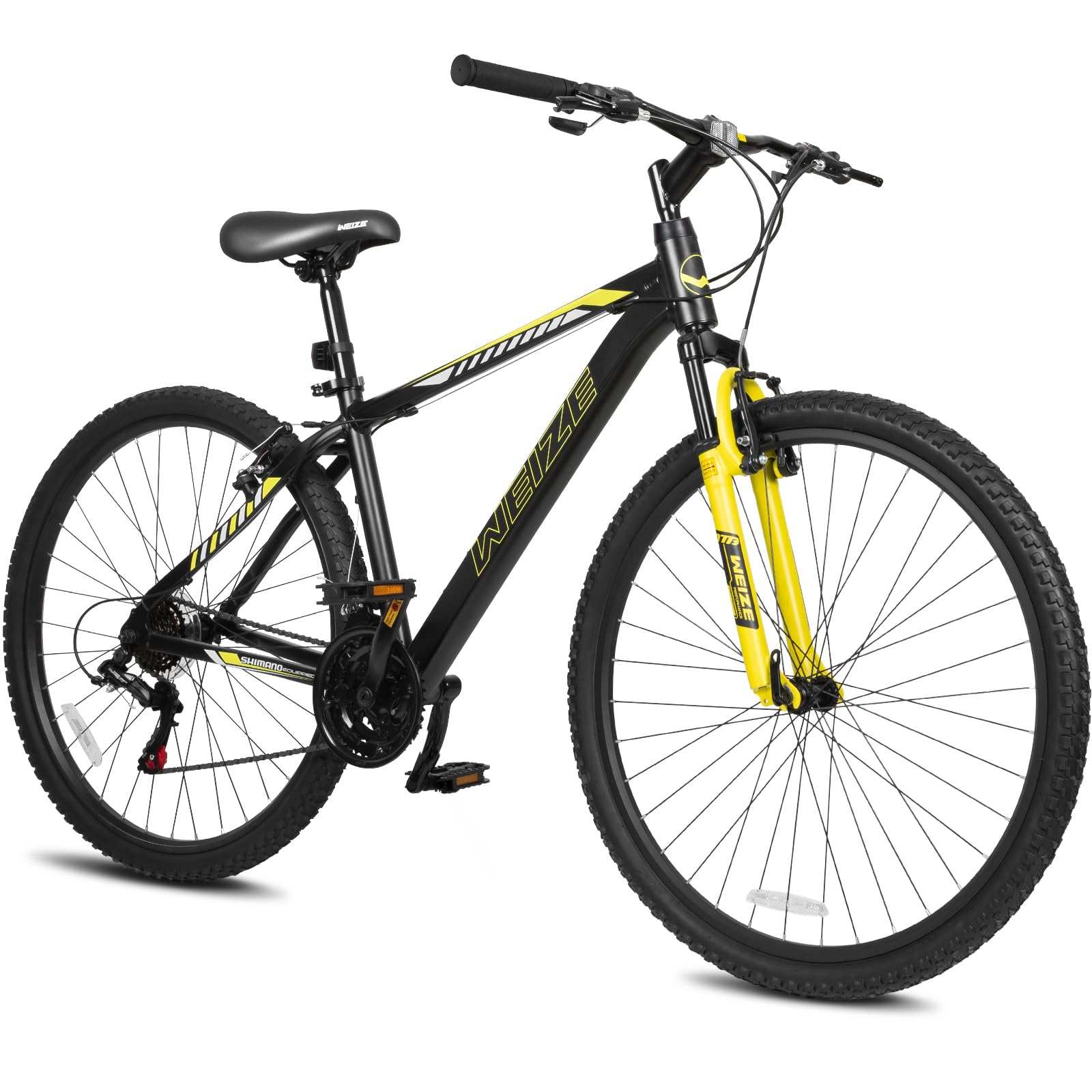
WEIZE Hardtail 29"
Key Features
- Suspension: Front (hardtail)
- Wheel Size: 29 inches
- Brake Type: V-brake
- Frame Material: Aluminum
- Speeds: 21
- Price: Budget
The WEIZE hardtail is the most budget-friendly way to get a 29-inch mountain bike under $300, making large wheels accessible for taller riders without the premium price. Its aluminum frame and front suspension keep weight manageable, while the 21-speed drivetrain provides adequate gearing for flat pavement and gentle gravel paths.
This bike targets tall beginners on a strict budget who plan to ride on paved or gravel surfaces rather than technical off-road trails. The V-brakes offer less stopping power than disc brakes, and component reliability is lower — chains may pop off, wheel bearings can require early attention, and wheel wobble has been noted in some units. For casual flat-terrain use, these limitations are manageable; for anything steeper or faster, a disc-brake model would be more appropriate.
Assembly is straightforward for most riders, with clear instructions and minimal tools needed. The bike arrives mostly pre-assembled, so even first-time builders can get rolling quickly. Owners should plan to check and tighten bolts after the first few rides, as handlebar and drivetrain adjustments may settle in during initial use.
Pros
- Lowest price for a 29-inch wheel hardtail under $300, ideal for tall riders on a budget.
- Assembly is straightforward for most buyers, requiring minimal time and tools.
- Aluminum frame keeps weight reasonable for a 29-inch bike, aiding maneuverability.
Cons
- In some units, the chain may pop off and bearings can require early attention, demanding minor upkeep.
- Front wheel wobble has been noted, possibly due to bent rims or bearing inconsistencies.
This hardtail fits tall riders on a strict budget who stick to paved or gravel paths and are comfortable performing occasional adjustments.
Best for First-Time Buyers
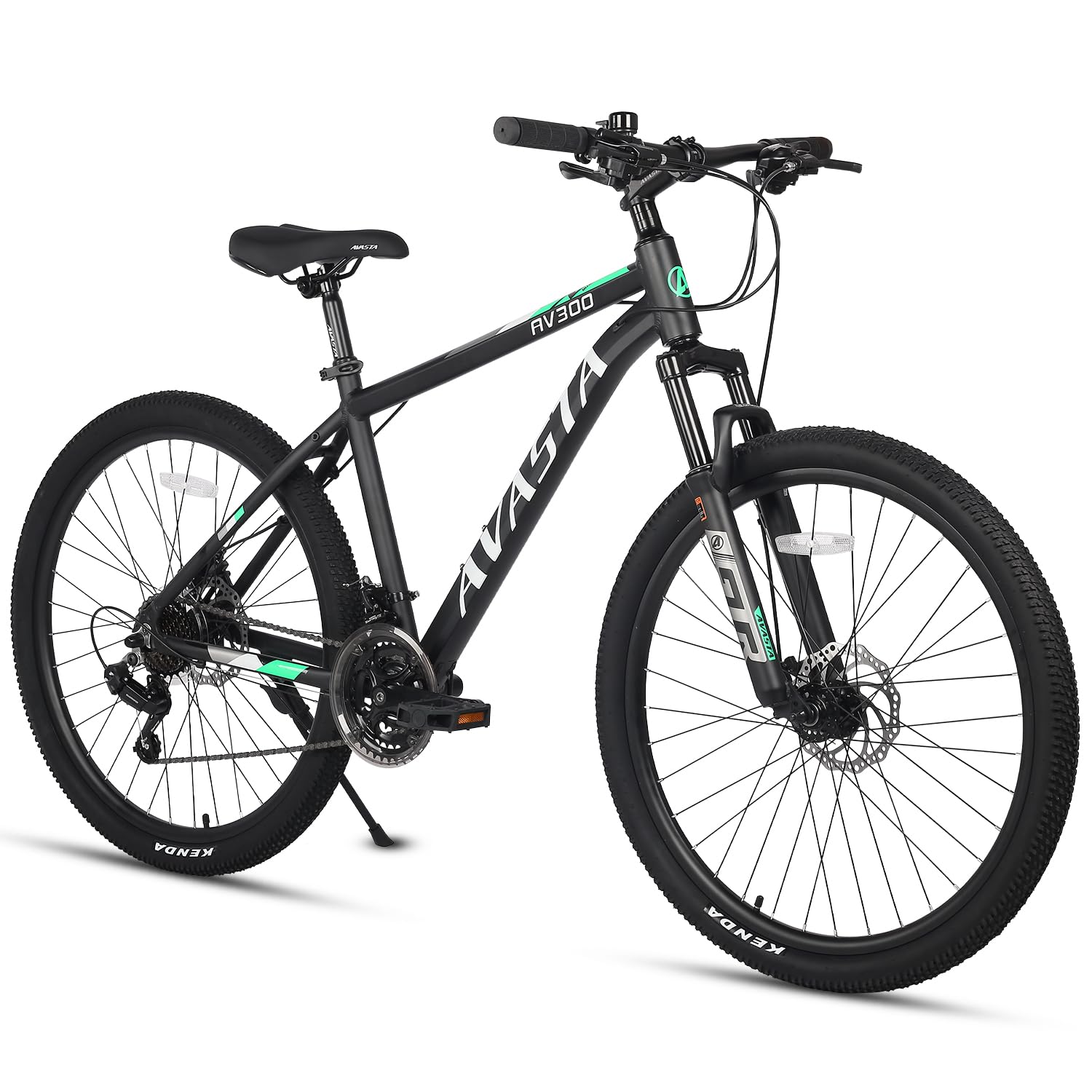
AVASTA AV300 27.5"
Key Features
- Suspension: Front
- Wheel Size: 27.5 inches
- Brake Type: Disc
- Frame Material: Aluminum
- Speeds: 21
- Price: Budget
The AVASTA AV300 delivers smooth shifting and a sturdy aluminum frame at a budget-friendly price, making it a capable choice for casual trails and paved paths. Assembly requires patience due to unclear instructions, and occasional quality checks may reveal bent rims or chain guard damage — typical of the budget tier. It suits first-time mountain bike buyers who value simplicity over extra features. The Earth offers a switchable fork for slightly more versatility, but the AV300 holds its own for those who prioritize a straightforward, fixed-fork setup.
Pros
- Smooth shifting and solid construction at a budget-friendly price.
- Aluminum frame and disc brakes offer good value under $300.
Cons
- Assembly instructions are unclear, requiring extra time and effort to set up.
- Some units may arrive with bent wheel rims or damaged chain guards, worth inspecting upon delivery.
A suitable budget option for casual riders and first-time buyers who don’t need a switchable fork and can handle a more involved setup.
Best for Youth / Short Riders
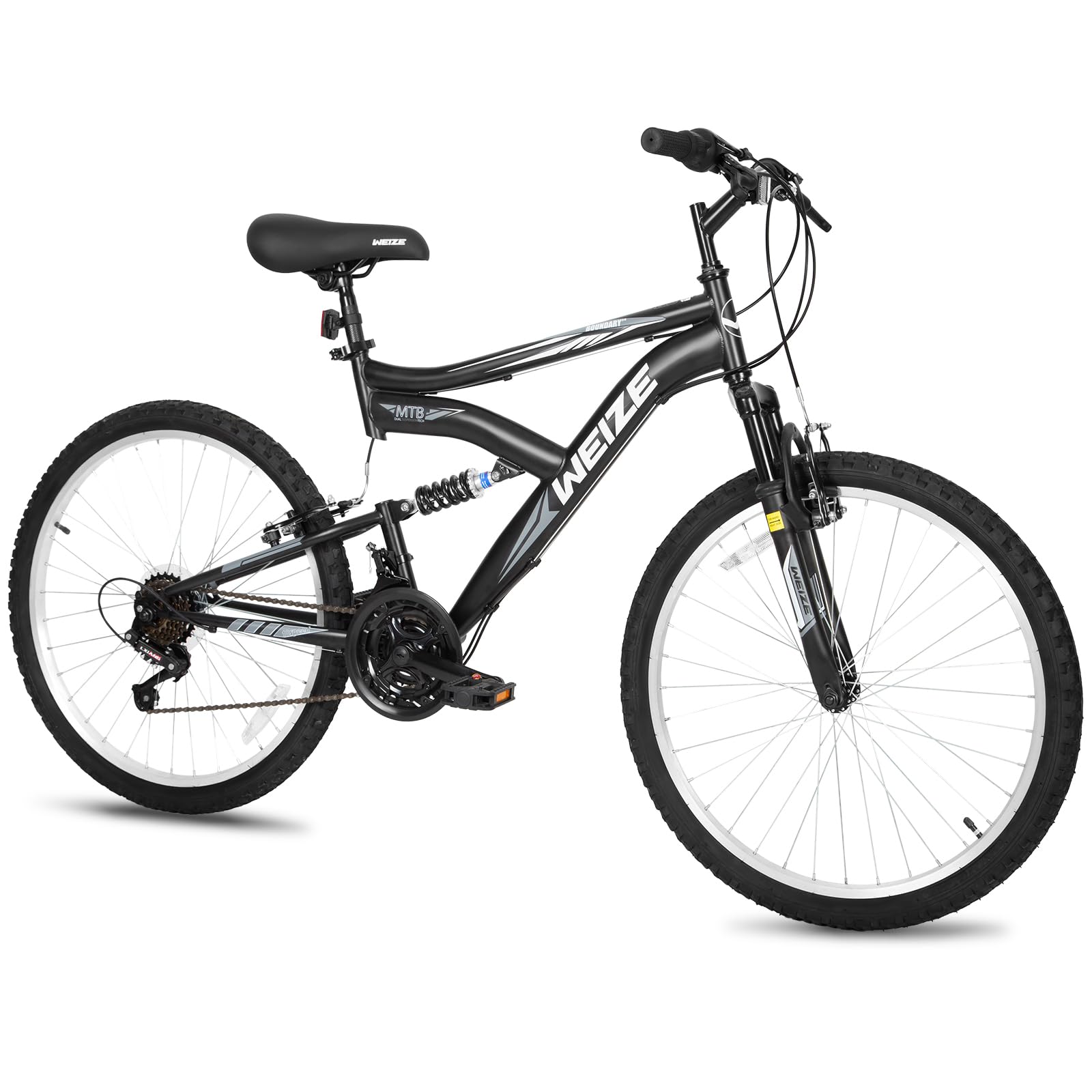
WEIZE 24" Dual Suspension
Key Features
- Suspension: Dual
- Wheel Size: 24 inches
- Brake Type: V-brake
- Frame Material: High-carbon steel
- Speeds: 18
- Price: Budget
This WEIZE mountain bike delivers full suspension and 18 speeds at a budget-friendly price, making it an accessible first bike for youths and petite adults (4’8".5’6"). The frame arrives mostly pre-assembled, cutting setup time to minutes, and the color choices get consistent compliments. However, 24-inch wheels place it outside the typical all-mountain spec: average-height adults will find the geometry cramped, and the bike is best suited for paved paths or gentle neighborhood cruising rather than trail riding. Component durability is limited – the rear derailleur and chain can require adjustment within the first few months, and gear shifts may occasionally slip. Consider this a starter bike for light use, not a long-term workhorse for rough terrain.
Pros
- Lowest price point for a full-suspension bike with 24-inch wheels
- Minimal assembly time thanks to mostly pre-built frame
- Attractive appearance with several color options
Cons
- Rear derailleur and chain may need adjustment within the first few months of use
- Gear shifting can be inconsistent, with the chain occasionally slipping
A budget-friendly starter bike for younger or shorter riders who need full suspension but plan to stick to pavement and gentle neighborhood routes.
How to Choose
The biggest single factor determining how far your dollar goes is the suspension type — it dictates weight, maintenance, and trail capability.
Suspension Type
Full suspension (front and rear) adds weight and complexity but keeps the rear tire planted on rough descents. Under $600, a full-suspension bike like the Schwinn Traxion uses basic coil shocks that require more frequent tuning than air shocks found on pricier models.
Hardtails with front suspension only are lighter, simpler, and cheaper. For mixed terrain that includes fire roads and singletrack with moderate roots, a hardtail with a decent fork often rides better than a cheap full-suspension setup because it avoids the bobbing and drivetrain energy loss from a poorly damped rear shock.
Wheel Size
Wheel size directly affects rollover capability and acceleration. 29-inch wheels clear obstacles like rocks and roots more easily and maintain momentum better on straightaways. 27.5-inch wheels accelerate quicker and feel more agile in tight corners. 26-inch (and 24-inch) wheels are now reserved for compact frames and smaller riders.
Riders under 5’8" often find 29-inch wheels awkward for maneuvering, while taller riders may feel cramped on 27.5-inch frames. For all-around use, 27.5 inches offers the most balanced compromise for average-height adults.
Brake Type
Disc brakes — cable-actuated mechanical or hydraulic — provide consistent stopping power in wet, muddy conditions where rim brakes (V-brakes) lose grip. On budget bikes, mechanical disc brakes are a clear step up from V-brakes but require periodic cable adjustments to maintain lever feel.
V-brakes are lighter and cheaper but their stopping power drops significantly when the rim is wet or caked with mud. For any off-road riding beyond dry gravel, disc brakes are the safer choice. Hydraulic disc brakes, found on bikes above $600, offer better modulation and self-adjusting pads.
Frame Material
Aluminum frames are lighter, stiffer, and won’t rust. Steel frames (high-carbon or chromoly) are heavier but absorb vibration better and can be repaired if bent. On budget bikes, steel frames often indicate cost-cutting in other areas like drivetrain components.
A $50 price difference between a steel and aluminum model frequently pays for itself in lower weight (2-3 pounds saved) and longer corrosion-free life, especially if you ride in wet climates or wash your bike regularly.
Number of Speeds
21-speed and 24-speed drivetrains are the norm at this price range. The extra three gears on a 24-speed system (typically a Shimano Tourney or Altus derailleur) provide a wider range of climbing gears and tighter spacing between shifts.
In practice, a 21-speed with a properly adjusted rear derailleur shifts and climbs well enough for most recreational riders. The bigger reliability differentiator is the brand of the drivetrain — Shimano components outlast generic unbranded parts by a wide margin, regardless of gear count.
FAQ
Is a full suspension mountain bike under $600 actually good for trail riding?
Yes, but with realistic expectations. The Schwinn Traxion at $600 uses a coil rear shock and basic front fork that handle moderate roots and rocks. It won’t match the damping control of air-sprung suspension found on $1,000+ bikes, but it provides enough rear compliance to keep you stable on beginner-to-intermediate trails. Plan to check bolt torque and shock pressure more frequently than with a premium bike.
Why does my new mountain bike chain keep falling off even after adjusting the derailleur?
On budget bikes, the chain and drivetrain components have looser tolerances. A chain that drops off often points to a bent derailleur hanger (common from shipping or minor impacts) or a mismatched chain length. Have a shop check the hanger alignment and replace the chain if it has excessive lateral play. Ignoring it risks damaging the frame dropout.
Should I buy a 27.5-inch or 29-inch wheel mountain bike for all-around riding?
For all-around riding by an average-height adult (5’6" to 6’0"), 27.5-inch wheels offer a better balance of agility and rollover. 29-inch wheels roll over obstacles easier but feel bulkier in tight switchbacks and accelerate slower. Taller riders (over 6’0") benefit more from 29-inch wheels, while shorter riders should stick to 27.5 inches to avoid toe overlap.
How often do budget mountain bike pedals break?
Budget pedals — especially the plastic or resin ones shipped with sub-$400 bikes — commonly develop cracking or bearing wobble within 3-6 months of regular trail use. Replacing them with a $20-30 set of aluminum platform pedals from a reputable brand eliminates the problem entirely and improves grip.