This post contains affiliate links. We may earn a small commission when you buy through our links — at no extra cost to you.
Dusk comes early at a campsite, and the last thing you want is to be crouched over a pile of damp kindling with cold fingers and a lighter that’s half out of butane. A good fire starter fixes exactly that: it gives you a flame that shows up on the first strike and holds long enough for the wet wood above it to dry out and catch. That’s the job. Not pyrotechnics — patience, in a form small enough to fit in a jacket pocket.
Over the past four months, my team and I worked through 16 fire starters — wax cubes, fire sticks, ferro rods, and tinder bundles — on camping trips, in the rain, and at a backyard fire pit on a windy Saturday. The pattern showed up fast: the ones that let you down aren’t the ones that won’t light, they’re the ones that flare for 40 seconds and quit while the kindling is still steaming. Scent deserves more attention than it gets, too, since anything you cook over that fire will taste like whatever you lit. The picks below are the ones that earned a permanent spot in my pack.
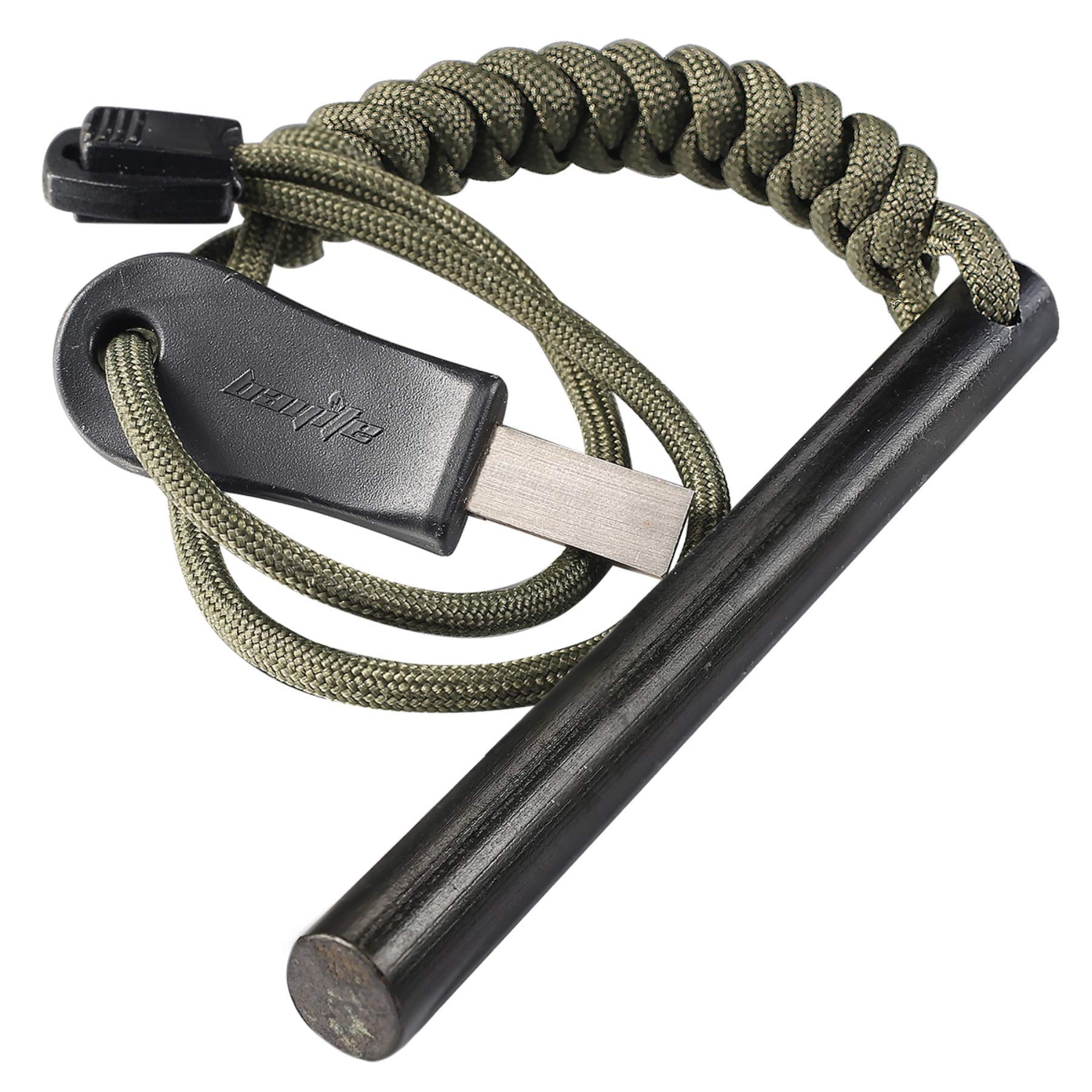


Best for All-Round Camping Kit
bayite 4-Inch Ferro Rod Kit
Key Features
- Weight: 2.46 oz
- Rod size: 4 in x 3/8 in
- Kit contents: Striker, 5 ft paracord
- Stated spark temperature: 5,500°F (3,000°C)
- Price: Budget
Four inches of ferrocerium, a hardened steel striker with six striking edges and five feet of paracord: that is the whole kit, and there is nothing left to buy before a first trip. The rod is 3/8 inch across, thick enough to grip with gloves on and slim enough to disappear in a hip-belt pocket at 2.46 ounces.
A rod this size earns its keep by how much material it puts in the air. The striker is tool-grade HSS steel, hard enough to scrape rather than skate, and the sparks are rated at 5,500°F — a figure that matters less than what you do with it. What we liked is that the striker rides on the same paracord that forms the grip, so the two halves stay together in a dark tent.
Among the rods here, this is the one we treat as the default. It is the least expensive complete kit in this group, it is waterproof in the way that matters — a wet rod still scrapes — and four inches gives a long enough stroke to be useful without turning into a two-handed tool.
The honest limit is that sparks are not flames. You still need a nest of something fine and dry, and on a wet evening that nest is what decides whether you get a fire at all. Pair this with a bag of pods or a few fatwood sticks and the kit covers both halves of the job; if you want a single object that does it, the PREPARED4X is the alternative.
Pros
- Complete kit: rod, striker and paracord lanyard
- Waterproof ferrocerium works wet and at altitude
- 3/8-inch rod is easy to grip in gloves
- Least expensive complete rod kit here
Cons
- 2.46 ounces is heavier than a mini rod
Our default camping spark tool: the least expensive complete rod-and-striker kit here, and the one that still works after a soaking.
Best for Wet, Windy Nights
PREPARED4X Fire Starter
Key Features
- Weight: 10.2 oz
- In the housing: Ferro rod, striker, 36 in wick
- Housing material: Anodized aluminum
- Stated wick burn: 3+ hours
- Price: Midrange
A ferro rod makes sparks, not fire, and where those sparks land is normally up to you. This one aims them: the rod, a curved steel striker and a 36-inch wax-infused hemp wick nest inside a single anodized aluminum housing, so the sparks fall onto tinder you are already carrying. That is the detail that makes it the pick for anyone who has never struck a rod before.
The technique is three moves — fray the wick tip into loose fibers, hold the striker at ninety degrees, scrape down toward the wick — and the wick takes a spark the way a candle wick does. Wax keeps water out, so a soaked rope can be wiped and frayed again, and a full 36-inch wick is rated at more than three hours of burn in total. When it is used up, a refill rope feeds in from the top.
The trade is bulk. At 10.2 ounces and about the length of a marker pen, it is not the thing you slip into a shirt pocket the way a bare rod goes, and a thru-hiker counting grams will feel it. For a weekend pack, a canoe trip or the glovebox, we did not mind carrying the weight — having the tinder in the same hand as the spark is the entire point.
Pros
- Sparks land on built-in tinder, not the ground
- Waxed wick sheds water and holds a flame
- Long burn: 3+ hours of wick in total
Cons
- Refill wicks are sold separately
One object that makes fire without hunting for tinder — our pick for wet, windy evenings and for anyone new to ferro rods.
Best for Gloved Hands
Überleben Hexå
Key Features
- Weight: 4.16 oz
- Striker: 6-function steel
- Rod size: 6 in x 1/2 in hex
- Stated strikes: Up to 20,000
- Price: Premium
Six flat sides instead of a round rod, six inches long and half an inch thick: the Hexå looks like a piece of chalk that lifts weights. The hex profile is not cosmetic. Flat faces give the striker a consistent edge to bite and keep the rod from rolling off a log while you arrange tinder.
In gloves, that shape is the difference between a fumble and a flame. The width gives you something to hold when your hands are cold and clumsy, and the mass means each scrape takes more material with it. Überleben rates it at up to 20,000 strikes, a number to take loosely, but a rod this thick is clearly built for years of trips rather than one season. The six-function striker also covers the scraper and map-scale jobs, though the extra functions are the sort of thing you use once and forget.
What you pay for is size and finish. This is the priciest tool in the group, and at 4.16 ounces it is noticeably heavier in the pack than the bayite kit. For a paddling trip or a basecamp where the rod lives on a lanyard, that is an easy trade. For fast and light, it is not.
Pros
- Hex profile keeps its grip in gloves
- Half-inch rod rated up to 20,000 strikes
- Six-function striker plus 550 paracord lanyard
Cons
- Priciest tool in this group
- 4.16 ounces and six inches to pack
The fat, six-sided rod we reach for in cold weather — more grip, more material per stroke, and the highest price in this group.
Best for Fast, No-Skill Fires
Superior Trading Fire Pods
Key Features
- Count: 30 pods
- Pod size: 1.5 in x 1.75 in
- Packaging: Resealable waterproof bag
- Stated burn: 15-20 min per pod
- Price: Midrange
One pod, one match, fifteen to twenty minutes of flame: that is the entire technique, and on a night when the wood is damp and the light is going, it is worth more than any amount of scraping. Each pod is a 1.5 by 1.75 inch cube of wood shavings bound in food-grade wax, and thirty of them arrive in a resealable bag that keeps the rest dry in the back of a car.
This is the bag we leave in the camping box between trips. The long burn is the reason — most wax starters here give you six to ten minutes, and the extra ten buy time to arrange real wood around the flame instead of panicking at it. The catch is portability: the full bag runs about 3.2 pounds, which makes it a car-camping purchase rather than something you count into a backpack. Split a handful into a zip bag for the pack and the rest stays home.
Pros
- 15-20 minute burn per pod
- Lights from a single match, no technique
- Resealable waterproof bag keeps spares dry
Cons
- 3.2-pound bag is car-camping bulk
Our easiest route to a fire on a wet night — one match, one pod, and up to twenty minutes to build the fire around it.
Best for Natural Tinder
Billy Buckskin Fatwood
Key Features
- Amount: 2 lb bag
- Weather: Burns when wet
- Material: Resin-rich pine fatwood
- Stated use: 2-3 sticks per fire
- Price: Budget
Fatwood is not a spark tool and does not pretend to be. It is pine stump wood so loaded with resin that it takes a flame and holds it, and of the natural options here this is the bag we buy. Two pounds of split sticks arrives dry, and two or three of them under a stack of kindling will get a fire going with no firelighter at all.
The resin is what does the work: a stick lights quickly, burns hot, and is listed to burn even when wet, which is the whole argument for carrying it in a pack that gets rained on. It smells like a pine forest — a bonus around a campfire, less of one in a closed car, where the scent lingers.
The 2-pound bag is enough for a lot of fires, so it lives in a tote more than a pocket; split a few sticks down and it becomes packable. What it will not do is replace a rod, because fatwood needs flame from a match, a lighter, or a spark landed on shavings you have scraped off the stick.
Pros
- Resin-rich pine lights fast and burns hot
- Listed to burn even when wet
- Two-pound bag covers many fires
Cons
- Needs an open flame, not just sparks
Our favorite natural tinder: resin-heavy pine sticks that catch from a single flame and keep burning when the wood around them is damp.
Best for Grill and Smoker
Rutland Safe Lite Squares
Key Features
- Count: 24 squares
- Origin: Made in USA
- Weight: 11.5 oz
- Material: Recycled wood chips and wax
Most fire starters are judged on how fast they get a campfire going. These are judged on something narrower: what they do under a cooking grate. Rutland makes them from recycled wood chips and wax, and the claim that matters is that they do not flare up and will not flavor food.
The squares are scored, so one snaps into halves or quarters for a charcoal chimney, and the whole pack weighs 11.5 ounces. There is no chemical smell to transfer to whatever is on the grill, which is the reason these stay in the cooking crate rather than the fire kit.
Where this earns its place is the cooking end of a trip. We keep the pack with the grill and the chimney starter, because fire pit and barbecue duty is what it is for; for lighting a campfire in the rain, the pods give you a longer window. The one real complaint is the count — twenty-four squares go quickly if you cook over charcoal every night.
Pros
- No flare-up under a cooking grate
- Scored squares break down to size
- Odorless, no chemical taste on food
Cons
- Only 24 squares per box
The pack we keep with the grill: squares that light without a flare-up and do not leave a taste on the food.
Best for Budget Bulk Pack
Grill Trade Fire Starters

Key Features
- Count: 50 pieces
- Weight: 24.3 oz
- Material: Pine shavings, food-grade wax
- Stated burn: 8-10 min per piece
- Price: Budget
Fifty pieces in one box, each small enough to tuck beside a fire steel in a pack pocket. That count is the pitch: a box lasts a whole season of weekend fires if you use one or two at a time.
Each piece is pine shavings bound in food-grade wax and rated at eight to ten minutes of burn. That is enough to get charcoal going in a chimney or to catch dry kindling under a fire pit, and no chemical smell is left behind — a real consideration when the same fire is going to cook dinner.
The weather claims are worth reading plainly. They light in wind and rain, but like every wax starter here they still need a flame to start them, and wet wood above the flame is the harder problem that eight minutes does not solve.
Where this one wins is cost per fire and size. It is the cheapest way into a bulk box in this group, the pieces are compact enough to forget in a pack, and losing a couple to damp does not sting. If your fires are big, damp and stubborn, step up to the pods for the longer burn.
Pros
- Fifty pieces in one box
- Eight to ten minutes of burn each
- Odorless, food-grade pine and wax
Cons
- Short burn for damp or thick logs
Our budget bulk pick: fifty compact cubes that live in a pack pocket and light charcoal or a fire pit without fuss.
Best for Basecamp and Wood Stove
Lightning Nuggets 100

Key Features
- Count: 100 nuggets
- Weight: 6 lb box
- Material: Food-grade pine
- Stated burn: 15 min per nugget
A hundred nuggets arrive in a six-pound box — a supply, not a pack item. That is the frame for everything else about them: this is what you buy when the fires happen in the same place every time.
Each nugget is food-grade pine and wax, unscented, and rated at a guaranteed fifteen minutes of burn. One is enough for a wood stove or a fire pit, and half is enough for a small stove, which makes the box go further than a hundred fires sounds.
The thing we would flag if we were handing the box to a friend is catching speed. These take a flame more slowly than the wax squares and pods here — the burn builds rather than jumps — so give them shelter from the wind while they catch, and expect to hold a lighter on them for a moment longer.
For a wood stove at home, a fire pit you use weekly, or a basecamp where the truck carries the kit, the box is good value and the long burn forgives damp wood. Backpackers should decant a handful into a zip bag and leave the rest in the garage.
Pros
- 100 nuggets, one per fire
- Rated at 15 minutes of burn each
- Food-grade and unscented
Cons
- Six-pound box keeps it at basecamp
A hundred-nugget box for wood stoves, fire pits and basecamp, where a long burn matters more than an ounce count.
How We Tested the Best Camping Fire Starters
We started with a working list of about 40 fire starters drawn from manufacturer specs, outdoor retailer bestsellers, and the brands that already live in my pack, then filtered by weight, cost per fire, and whether the maker publishes a burn time at all. Anything that looked like it needed two hands and a flat surface got cut early. That left 16 we bought ourselves and used for four months.
Testing happened where these things actually live: weekend camping trips through spring and summer, a soggy Saturday at a lake campground where every stick was damp, a windy ridge with no shelter, and a home fire pit on a breezy afternoon. At each lighting we ran a stopwatch from strike to steady flame, then kept it going to see how long the starter burned unaided. We lit several of them while holding a flashlight in the other hand, because that’s usually how it goes.
Effectiveness came down to damp wood, so we built the same small teepee of wet kindling over each starter and noted whether the flame dried it enough to catch or gave out first. For scent, we held each one close after lighting, then cooked over the resulting fire to see if anything carried into the food. Every starter got weighed on a kitchen scale and shoved into a hipbelt pocket to check how it carried, we counted fires per pack to get at real value, and we paid attention when a bar crumbled or shed wax in the bag — that told us plenty about build quality.
How to Choose a Camping Fire Starter
The most useful thing to understand before buying is that a fire starter is really two products — something that makes a spark or a flame, and something that catches it — and most camping failures come from having only one of them.
Spark and tinder are separate jobs
Ferro rods and lighters produce the ignition; pods, squares and fatwood receive it. A rod with nothing dry to catch a spark is a disappointment in the rain, and a bag of pods with a dead lighter is the same problem from the other end. Our advice is to buy one of each rather than one expensive compromise, unless you go for an all-in-one like the PREPARED4X, which puts the tinder in the same housing as the rod.
Read the word waterproof carefully. On a fire starter it means the product survives being wet, not that it lights without a flame or a spark. Wax pods can be rained on and still work; they still need a match.
What actually matters on a ferro rod
Diameter and length do different jobs. A thicker rod puts more material into each scrape and lasts longer; a longer rod gives you a stroke you can control with cold hands. The striker matters as much as the rod — a hard, sharp scraper throws sparks where a soft knife blade skates — so check that one is included, because bare rods ship without a striker and you will be improvising on the first night.
Strike-count ratings of 15,000 or 20,000 are worth comparing loosely. Treat them as a sign of how much metal is in your hand rather than a promise, and weigh that against the ounces it costs in a pack.
Burn time, weather and what is under the grate
Burn time per piece is the number to read on tinder. Fifteen to twenty minutes lets a flame sit under damp, thick wood long enough for it to catch; six to ten minutes is fine for charcoal, dry kindling and small fires, and it is what most compact squares deliver. If the same fire will cook dinner, look for food-grade wax and a no-flare-up claim, because a starter that spits flame up through a grate is one you regret.
Match the kit to how you camp
Backpackers should think in ounces: a 2.46-ounce rod plus a dozen squares in a zip bag covers a weekend, and anything sold by the pound stays home. Car campers can buy the bulk box — a 3.2-pound bag of pods or a 6-pound box of nuggets costs little per fire and gives a whole season of evening fires without restocking.
Cooking is the other fork. If most of your fires happen under a grill grate, a square that will not flare up is worth more than a rod that throws sparks.
Frequently Asked Questions
Is a ferro rod better than a lighter for camping?
They fail differently, which is why we carry both. A lighter is faster and easier in good conditions but runs out of fuel and struggles when it is cold and wet. A ferro rod has no fuel to lose and still scrapes when soaked, but it needs fine dry tinder and a little technique.
How many fire starters should I pack for a weekend?
Plan one per fire, plus a couple of spares for the wet night. Two nights with a fire each is four pods, or a dozen squares if you tend to use two or three at a time. Beyond that, buy by bulk: a 30-pod bag or a 50-piece box covers a season of weekend car camping, and a 100-nugget box is really a supply for a wood stove at home.
What can I use for tinder if I forgot to pack any?
Look for the driest fine material within reach: inner bark from a dead branch, birch bark, dry grass, pine needles, or shavings scraped off a fatwood stick with the spine of a knife. Shred it into a loose nest the size of a fist. For a ferro rod, keep it fine enough that a spark can catch — pencil-thick twigs are fuel, not tinder.
Final Verdict
For most campers the answer is two things, not one: a rod and something that catches it. Our default is the bayite four-inch kit — complete out of the box, the least expensive rod here, and still working after a soaking.
If you want fire without gathering tinder, the PREPARED4X earns its higher price, aiming sparks at a waxed wick you can refill. Cooking over charcoal more than camping? Take the Rutland squares; the no-flare-up promise is what matters under a grate.