This post contains affiliate links. We may earn a small commission when you buy through our links — at no extra cost to you.
A hydration pack only earns its place on your back if you forget it’s there—until you need a drink. I’ve had bladders leak onto a down jacket and hip belts dig into my shoulders, so I know how quickly a promising pack can turn a hike sour. The right one keeps water within reach without bouncing, carries a layer and lunch without bulging, and fits closely enough that scrambling feels natural. Since spring, my team and I have logged six months with 12 packs on day hikes, trail runs, and a few bike commutes.
A pack that swallows a shell, snacks, and a first-aid kit without becoming a brick beats a larger one that swings with every step. We zeroed in on whether the bladder seals at the bite valve, how the harness adjusts across torso lengths, and if the pack stays balanced when full. Value is the zippers, fabrics, and seams that survive a season, plus a bladder you can turn inside out to clean. The picks below reflect that balance.




Best for Day Hikes
N NEVO RHINO 18L Hydration Backpack
Key Features
- Weight: 1.74 lb
- Pockets: 3
- Reservoir: 3 liters
- Pack capacity: 18 liters
- Price: Midrange
The bladder pocket on this pack is insulated, and so is the hose, which is the difference between water you look forward to on a hot climb and water that has been sitting in the sun since the trailhead. N NEVO RHINO rates the compartment at up to five hours of cold. We did not need five hours to notice the improvement: the first liter out of an insulated hose on a warm afternoon tastes like water rather than warm plastic.
Eighteen liters is the number that turns this from a water carrier into a daypack. A shell, lunch, a first-aid kit, and a spare layer disappear into it. At 0.79 kg empty it sits in the middle of this group — lighter than the tactical packs, heavier than the ultralight ones — and the ventilated mesh on the straps and back panel keeps the load from turning into a wet patch on a climb. Of the packs here, this is the one we recommend first for hiking, because it does not ask you to choose between enough water and enough gear.
The two places we inspect on this pack are the bottom seam and the bite valve. Fill it at the kitchen sink, squeeze the bladder, and hang the pack upside down before a real trip. The one-year warranty turns a first-season failure into a replacement rather than a loss.
Pros
- Insulated bladder pocket and hose
- 18 L of gear space beside 3 L of water
- Ventilated mesh harness and back
Cons
- Only three pockets for organizing gear
We keep reaching for this one because 3 liters of water, an insulated bladder pocket, and 18 liters of gear ride together without a weight penalty — our default for a full day on the trail.
Best for Rugged Terrain
MARCHWAY Tactical Molle Hydration Pack
Key Features
- Weight: 2 lb
- Pockets: 2
- Reservoir: 3 liters
- Shell material: 1000D nylon
- Price: Midrange
1000D nylon is the reason this pack exists. That is the heavy, abrasion-resistant fabric you associate with load-bearing gear rather than trail daypacks, and it is wrapped around a main compartment that holds the 3 L reservoir still instead of letting it slosh against your spine. Push through scrub oak or scramble over granite and the shell is the last thing on your mind.
MOLLE webbing runs down the back, which is the other half of the pitch: a first-aid pouch, a knife, or a light can be lashed where you can reach it without opening the bag. The straps adjust at the shoulder, chest, and waist, and with a full bladder the pack stays put on a climb. There are only two pockets, and at 2 pounds empty the weight is noticeable on a long ascent.
The soft spots are all in the plumbing. Overfill it and water can escape the top port, and the bite valve is the piece that gives out first, so we fill this one over a sink and seat the cap before the pack goes anywhere. What is left is a rugged pack that carries 3 liters, takes abuse, and costs less than the rain-cover pack here — the right buy for brush, rock, and gear strapped to the outside.
Pros
- 1000D nylon shrugs off abrasion
- MOLLE webbing for added pouches
- Reservoir compartment reduces shifting
Cons
- Two pockets keep organization basic
- Two pounds empty on long climbs
We reach for the MARCHWAY when the day involves brush, rock, or gear lashed to the outside — 1000D nylon and MOLLE webbing, at the cost of a couple of pounds and some pocket space.
Best for Wet Weather
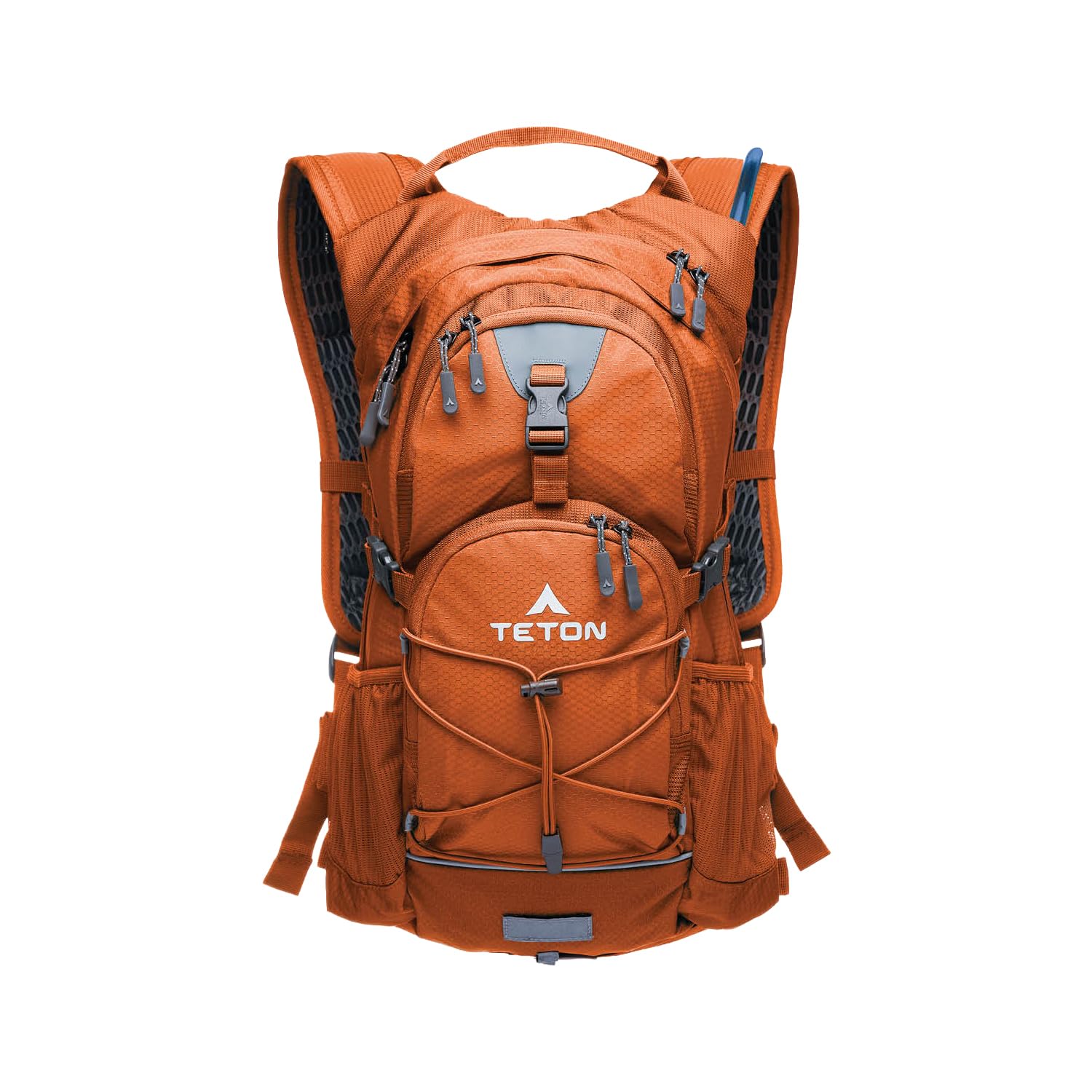
TETON Sports Oasis Trailrunner 18L
Key Features
- Weight: 2 lb
- Reservoir: 2 liters
- Rain cover: Sewn in
- Pack capacity: 18 liters
- Price: Premium
A rain cover that is sewn into the pack rather than stuffed in a pocket is the kind of detail you appreciate once the weather turns and you are still walking. Add weather-guarded zippers and a butterfly opening that lays the pack flat, and the Oasis is the one here we trust in shoulder-season rain. It is also the most organized pack in this group, with mesh and zippered pockets, a bungee cord for a shell or helmet, and compression straps that stop a half-full load from shifting.
The question is the harness. High-density foam shoulder straps and a mesh back panel are comfortable when the sizing lines up, but on smaller frames the belt tends to ride high rather than settle on the hips, so try it with the bladder full rather than empty. Two liters of water is also a step down from the 3 L packs here — fine for a wet morning, less forgiving on a long hot one. At 2 pounds empty it is not a light pack; what you get for the weight is a cover, pockets, and a shell that shrugs off brush.
Pros
- Sewn-in rain cover and guarded zippers
- Butterfly opening lays the pack flat
- Pockets and bungee for real gear
Cons
- Waist belt can break under a loaded pack
- 2 L reservoir trails the 3 L packs here
We pick this one when the forecast is uncertain: a sewn-in rain cover, weather-guarded zippers, and 18 liters of organized space, provided the harness suits your frame.
Best for Fast and Light
N NEVO RHINO 12L Hydration Backpack
Key Features
- Weight: 8.5 oz
- Reservoir: 2 liters
- Pack capacity: 12 liters
- Shoulder strap range: 19 to 34 in
- Price: Budget
Eight and a half ounces is the whole pitch. That is the pack, empty, before you add the 2 L bladder — light enough that a full load feels like a water bottle and a sandwich rather than a backpack. The vest-style straps sit close across the chest and put a soft pouch within reach on each side, and the shoulder straps adjust from 19 to 34 inches with a chest strap that slides up and down, so it settles on a wide range of frames.
This is what we take when the plan is a fast lap rather than an all-day carry. Twelve liters swallows a shell, snacks, and a phone, and the close fit keeps the load from bouncing on a run or a rough descent. Two liters is the trade — fine for a shaded morning, thin for a full day of sun — and the bladder carries a plastic taste out of the box that a warm-water rinse with lemon or baking soda mostly clears. If water capacity matters more than 8 ounces of pack weight, step up to the 18 L pack here.
Pros
- 8.5 ounces empty
- Vest straps with reachable side pouches
- Wide 19 to 34 inch shoulder adjustment
Cons
- 2 L reservoir runs short on hot, full days
At 8.5 ounces with vest-style straps, this is the pack we grab for fast, light days; the 2 L bladder is the limit you are accepting.
Best for Family Outings
Neboic 2-Pack Hydration Backpack
Key Features
- Weight: 1.9 lb
- Pockets: 3
- Reservoir: 2 liters each
- Packs included: 2
- Price: Midrange
Two packs, two 2 L bladders, one purchase. That is the whole idea, and it is a better one than it sounds: the second pack is not a spare, it is the reason a child stops asking for your bottle halfway up the trail. The frame is small, the straps adjust at the hip and shoulder, and three pockets — a mesh front and two zippered sides — take keys, a phone, and a handful of trail mix.
Fill one for a kid and the arithmetic starts to matter. Two liters of water weighs about 4.4 pounds, so a full bladder plus a snack is a load most seven-year-olds can carry without complaint. The quick-disconnect tubing is the feature we appreciate most: the hose unclips at the bladder, so you can refill mid-hike without threading it back through the pack.
Cleaning is where the format costs you. The wide mouth helps, but these bladders hold water in the corners and take a day to dry, so two of everything means two rounds of that job. Rinse them the moment you get home and hang them mouth-down over a bottle brush handle and the routine stays short. For the money, no other pick here outfits a family this cheaply.
Pros
- Two complete packs in one purchase
- Quick-disconnect hose for mid-hike refills
- Three pockets for snacks and keys
Cons
- Bladders are slow to dry and fiddly to clean
Two complete packs for about what a single pack costs here — our pick for a family where everyone carries their own water, with wide-mouth bladders that take ice.
Best for Short Rides
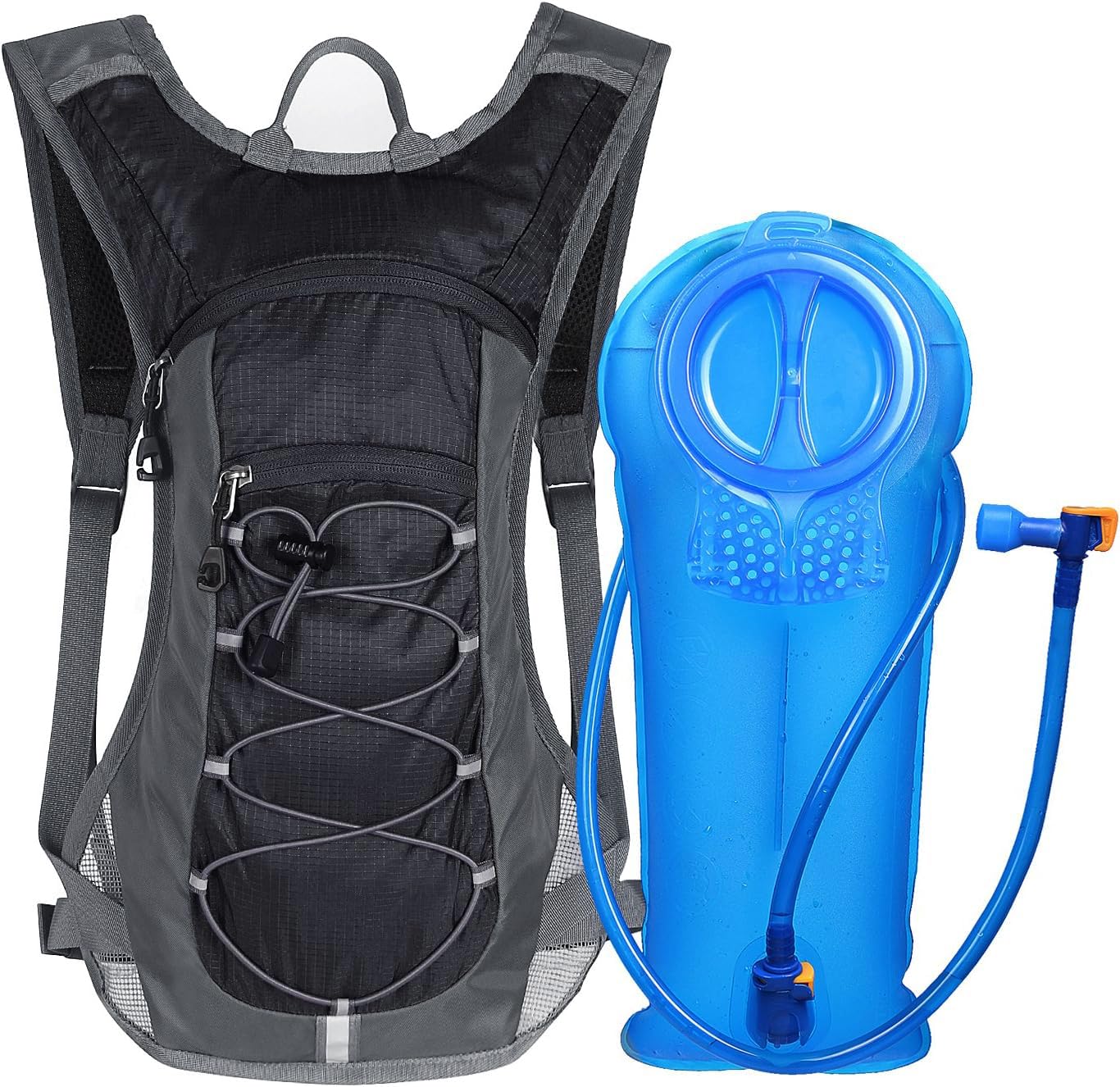
Unigear Hydration Pack 2L
Key Features
- Weight: 1.1 lb
- Pockets: 1
- Reservoir: 2 liters
- Dimensions: 8 x 16.5 in
- Price: Budget
This is a pack for a two-hour ride or a fast lap, not a day on the hill. It measures 16.5 by 8 by 6 inches, weighs 1.1 pounds with the 2 L bladder in it, and has a single front pocket for keys and a bar. The cut is narrow and splash-resistant, and on a bike it stays where you put it. At this end of the price range, that restraint is the point.
The bladder is what needs checking. The hose connection and the bite valve are the parts that can fail, and the shell has torn under ordinary use, so fill it, hang it, and leave it overnight on a towel before you commit. Unigear backs it with an unconditional return and replacement window of 30 days, which is the right amount of time to find out whether yours is a good one. The shell, the straps, and the fit are fine; the plumbing decides whether this is a bargain or a chore.
Pros
- 1.1 pounds with the bladder in
- Compact splash-resistant shell
- 30-day unconditional return window
Cons
- Single pocket holds very little
The entry point of this group: compact, 1.1 pounds with the bladder in, and inexpensive enough to keep as a second pack — as long as you test the reservoir before you trust it.
Best for Minimalist Rides
CamelBak Hydrobak

Key Features
- Weight: 13.4 oz
- Pockets: 2
- Warranty: Lifetime
- Reservoir: 1.5 liters
- Price: Premium
The Hydrobak is built around one component, and it is the right one to build around: the 50 fl oz Crux reservoir. It fills through a wide top with an ergonomic handle that makes refills quick, and the bite valve is the part CamelBak says delivers more water per sip. The pack and reservoir are covered by a lifetime warranty.
Everything else is deliberately minimal. At 13.4 ounces, with an air mesh back panel and a ventilated harness, it sits on the back without fuss, and there is no waist belt to fiddle with when you stop. For a commute or a quick training loop, that absence of stuff is the feature.
The cargo is the catch: a zippered pocket takes keys, a tool, and a bar, so a shell goes in a jersey pocket or a frame bag instead. Nothing here is trying to be a hiking pack.
What you are paying for is the reservoir, the fill handle, and a pack that weighs 13.4 ounces empty. If your rides run under two hours and you leave the house with a plan rather than a backpack, this does the job and the warranty covers the part most likely to wear out.
Pros
- Crux reservoir with easy fill handle
- 13.4 ounces with ventilated harness
- Lifetime warranty on pack and reservoir
Cons
- 1.5 L reservoir limits long days
We recommend it for the reservoir: a 1.5 L Crux with a fill handle that makes refills quick, in a 13-ounce pack with almost no cargo. A commuter and short-ride specialist.
How We Tested These Hydration Packs
We started with a shortlist of 30-plus packs from brands we trust, then narrowed by capacity range (12 to 30 liters), harness adjustability, and whether the bladder had a wide opening for cleaning. The final 12 included options for fast day hikes, long scrambles, and daily commutes. Over six months, I and two other testers wore them on repeated local day hikes, a handful of trail runs, and bike commutes around town, swapping packs between us to compare fit across different torso lengths and shoulder shapes.
Each pack got the same load: a rain shell, a lunch, a first-aid kit, a phone, and a full bladder. We noted whether the main compartment swallowed that kit without bulging or forcing us to rearrange, and whether the hip belt and sternum strap kept the pack from swaying on steep descents. To check for leaks, we filled each bladder, sealed it, hung it upside down for an hour, then squeezed the bite valve and watched for drips at the seams and hose connection. We also turned every bladder inside out after each hike to see how easily it dried and whether the opening was wide enough to reach a hand inside for cleaning.
Durability came down to abrasion: we dragged loaded packs over granite slabs, brushed them through tight trees, and inspected zippers and fabric for fraying after each month. Value wasn’t about the lowest price—we compared what each pack included (usable pockets, a reliable bite valve, a harness that didn’t need constant readjustment) against what it cost. The packs that rose to the top kept their shape after repeated stuffing, didn’t leak, and were easy to clean and dry.
How to Choose a Hydration Pack
The reservoir decides how a pack feels on day one; the harness and the volume decide whether you still like it in month two.
Match the bladder to the gaps between refills
Reservoirs here run from 1.5 to 3 liters, and the right size is a question about your route rather than your thirst. If the hike crosses a stream or passes a tap at lunch, a 2 L bladder and a filter are lighter than carrying 3 L you never drink. If the day is dry and unsupported, the 3 L packs — the N NEVO RHINO 18L and the MARCHWAY — are the ones we point to.
Insulation is the other half of the decision. An insulated pocket and hose, like the compartment N NEVO RHINO rates at up to five hours of cold, earns its weight on a shadeless climb. On a shaded morning it matters much less.
Pack volume, and the liters trap
Capacity figures in this category do not always describe the same thing. One listing here quotes 3 liters, and that figure is the reservoir, not the gear the pack will swallow. Read volume as the space left after the bladder goes in: 12 liters takes a shell, lunch, and a phone; 18 liters adds a first-aid kit, a spare layer, and room to shed a jacket into.
If you climb with a rope or carry a camera body, neither size is enough and you want a hiking pack with a hydration sleeve instead. Be honest about the load before you pay for pockets you will not fill.
The hardware is what fails
The bladder, cap, bite valve, and hose connection are where hydration packs break, and a leak inside a pack soaks everything you brought. Two details earn their place: a wide fill opening — 2 inches is enough to add ice and get a brush inside — and a quick-disconnect at the hose, which lets you refill without rethreading the tube.
Our routine with any new pack is a full fill over the sink, a squeeze, and an overnight hang on a towel. It takes five minutes and it catches the bad valve before a trailhead does.
Fit, bounce, and empty weight
A pack that shifts is worse than a heavier one that stays put. Look for a chest strap that slides vertically and a shoulder range wide enough for your frame — the N NEVO RHINO 12L adjusts from 19 to 34 inches — and judge the fit with the bladder full, because 3 liters of water changes how a pack sits on your back.
Empty weight runs from 8.5 ounces to 2 pounds in this group. That gap matters most on runs and rides, where every ounce swings, and least on a slow day hike where the total load is the same either way.
Frequently Asked Questions
How do I get the plastic taste out of a new water bladder?
Fill it with warm water and a spoonful of baking soda, or lemon juice, and let it sit a few hours. Run the same mix through the hose and bite valve, then rinse twice and air-dry with the bladder propped open.
A faint smell from new tubing is normal. A taste that survives two or three rinses is worth acting on while the return window is still open.
Can I put ice in the reservoir?
Yes, if the fill opening is wide enough — a 2-inch mouth takes cubes, narrower ones want crushed ice or none. Fill about halfway with water first, add the ice, then top up.
A bladder packed solid with ice and then filled to the brim puts pressure on the cap and seams, which is exactly where leaks start.
Can I replace the bladder in a hydration pack?
Often, yes, but check the fitting first. Reservoirs use either a push-fit hose that slides straight onto the bladder or a quick-disconnect coupling, and the two do not swap.
The Unigear is sold with a replaceable bladder, and the Neboic pair uses quick-disconnect tubing. Match the connector and the bite valve, and a worn reservoir does not mean a new pack.
How much heavier does the pack get when the bladder is full?
Water weighs about 2.2 pounds per liter, so a full 3 L reservoir adds roughly 6.6 pounds, a 2 L about 4.4 pounds, and a 1.5 L around 3.3 pounds — on top of the pack’s empty weight.
Use that number when you are fitting a pack to a child or deciding whether the extra liter is worth carrying. It usually is on a dry, exposed route, and usually is not when there is water at lunch.
Final Verdict
Buy the N NEVO RHINO 18L if you want one pack for a full day of hiking. Three liters of water, an insulated pocket and hose, and enough gear volume that you stop rationing layers is the balance most hikers need, and it manages all three at 0.79 kg.
If speed matters more than capacity, the 12 L N NEVO RHINO at 8.5 ounces is the one for runs and short laps. The TETON Oasis earns its price when rain is likely and you want a cover built in rather than remembered.