This post contains affiliate links. We may earn a small commission when you buy through our links — at no extra cost to you.
A hydration pack looks like the simplest piece of gear you’ll buy — a bag with a bladder in it — right up until hour three of a ride, when the thing is bouncing against your neck, the hose has gone dry, and something in the bottom pocket is leaking down your back. What you’re actually paying for is a pack that carries enough water and food for the ride you really do, stays put over rough pavement and rooty singletrack, and lets you grab a snack without unclipping. I’ve ridden with everything from stripped-down race vests to bulky daypacks that turned into a sweaty mess by mile ten, and over the past six months my team and I have put 12 hydration packs through commutes, gravel grinds, and long weekend trail days to sort out which ones are worth wearing.
The number printed on the bladder tells you less than you’d think. A pack that fits well and holds its weight close to your spine feels lighter than a smaller one that swings, so the harness and the pocket layout often matter more than raw capacity — and yes, several of these crossed over to hiking days without complaint, which is a nice bonus if your rides share a shelf with your trail shoes. We also kept an eye on the unglamorous stuff: seams and zippers that hold up after months of use, a bite valve that doesn’t dribble on your jersey, and whether the price actually buys you better materials. The picks below are the ones I’d strap on again, whatever kind of riding you do.


Best for Short Road Rides
CamelBak Hydrobak
Key Features
- Fit: Shoulder and sternum straps
- Reservoir: 50 fl oz (1.5 L)
- Pack weight: 13.4 oz
- Cargo pockets: 2
- Price: Premium
The Hydrobak is the pack we reach for when the ride is short and the goal is to carry water without feeling like you’re wearing a backpack. Its 1.5-liter Crux reservoir sits in a 13.4-ounce pack with a ventilated harness and an air-mesh back panel, and the whole thing stays close to your back. We like that it doesn’t try to be a daypack. There’s no bulky cargo space to tempt you into overpacking, just a zippered pocket for keys, a tool, or a phone.
That minimalism is the point. On a road or gravel ride, the pack disappears behind a jersey, and the sternum strap keeps the shoulders from wandering. We also appreciate the ergonomic handle on the reservoir, which makes refilling at a tap less fiddly. Nothing about the Hydrobak feels overbuilt, and that’s why it stays comfortable when you’re pedaling hard.
The trade-off is capacity. A liter and a half is enough for a quick loop or a commute, but on a hot three-hour ride you’ll be looking for a refill or carrying a bottle. That’s fine if you ride light; if you don’t, the Teton Oasis below is the better shape. We keep the Hydrobak for the rides where a bottle is annoying and a full pack is overkill.
Pros
- Low-profile bike-specific fit
- Light 13.4 oz pack
- 1.5L Crux reservoir with easy-fill handle
- Just enough storage for essentials
Cons
- Minimal cargo space
We recommend the Hydrobak for short road and gravel rides where you want water and almost nothing else; its bike-specific fit is the reason to choose it over a bigger pack.
Best for Long Gravel Rides
Teton Oasis Trailrunner
Key Features
- Pockets: 6
- Capacity: 22 L
- Reservoir: 3 L
- Weather cover: Sewn-in rain cover
- Price: Midrange
The Oasis Trailrunner is the pack we take when the ride might outlast the weather forecast. A 3-liter bladder, 22 liters of cargo, and a sewn-in rain cover make it the most self-sufficient pack here, and the six pockets give you places for a shell, snacks, tools, and a phone.
We like that Teton didn’t just scale up a small pack. The butterfly opening makes the main compartment easy to pack, the bungee cord gives you a place to stash a helmet or jacket, and the weather-guarded zippers back up the rain cover. The 210D ripstop feels like it can take tree branches and gravel spray, and the six pockets are laid out for a day’s gear rather than a single water bottle.
Fit is the bigger question. The 22-liter body is a lot of pack for a small frame, and the harness doesn’t suit every petite rider; if you have a small frame, try it on before you commit. For everyone else, it carries a full day of water and gear without turning into a brick. We think it’s the best long-ride choice here for gravel, commuting, and light mountain biking, especially when the weather is part of the plan.
The 3-liter reservoir is the real reason to pick it over the Hydrobak. On a hot day, that extra liter and a half buys you time between refills, and the insulated bladder pocket helps keep it from turning warm. The trade is weight: 0.98 kg before water, and the pack can feel tall when fully loaded.
Pros
- 3L bladder for long rides
- Sewn-in rain cover
- Six pockets plus bungee carry
- Insulated bladder pocket
Cons
- Waist strap is the durability weak point
The Oasis Trailrunner is our long-ride pick: 3 liters of water, a rain cover, and six pockets for a full day, provided the 22-liter body fits your frame.
Best for Vest-Style Endurance
Criuage Hydration Vest
Key Features
- Pockets: 8
- Capacity: 5 L
- Reservoir: 2 L
- Pack weight: 1.65 lb
- Price: Midrange
Vest-style packs live or die by how they sit, and the Criuage gets the basics right. The 2-liter bladder sits in a 5-liter pack with eight pockets, split between the chest and back, and the harness adjusts across the chest to keep the load close. We like the front pockets for snacks and a phone on upright gravel and endurance rides; they’re reachable without breaking rhythm.
The eight-pocket layout is the reason to choose this over a minimal bike pack. You can carry a phone, keys, a few gels, and a light layer without adding a separate jersey pocket, and the 2-liter reservoir is a sensible middle ground between the Hydrobak’s 1.5 liters and the Teton’s 3. The 5-liter body gives those pockets room to work without turning into a daypack.
For aggressive road riding, the chest pockets can feel busier than a low-profile bike pack, and the vest cut is happier at an upright endurance pace than in a deep tuck. We think that’s a fair trade for the storage and the stable fit. The Criuage is the one we reach for when the ride is long but the route is steady, and we want food and a phone within reach without stopping.
Pros
- Eight pockets keep gear accessible
- 2L bladder with stable vest fit
- 5L capacity without daypack bulk
- Durable nylon build
Cons
- 750 g is heavy for a race vest
We recommend the Criuage for riders who want a vest with pockets within reach; it’s a strong gravel and endurance choice, not a stripped-down race pack.
Best for Budget Short Rides
Unigear Hydration Pack
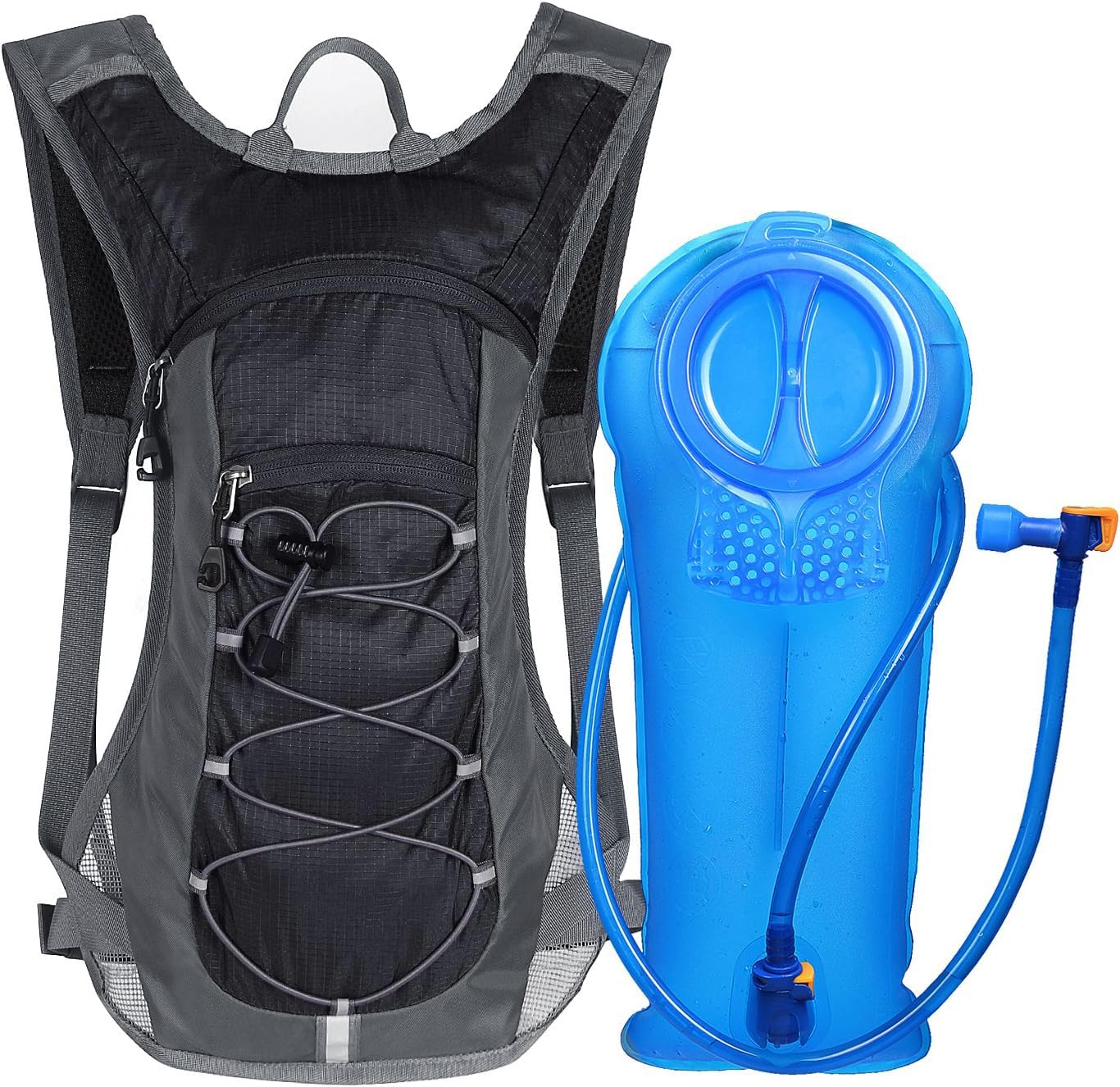
Key Features
- Fit: Shoulder, chest, and waist straps
- Pockets: 1
- Reservoir: 2 L
- Pack weight: 1.1 lb
- Price: Budget
The Unigear is the cheap pack that gets the shape right. It holds 2 liters, weighs about 1.1 pounds with the bladder, and uses shoulder, chest, and waist straps to keep a compact 16.5 by 8 by 6-inch body close to your back. We like it as a backup or a first pack for short rides, because it doesn’t feel like a burden.
The single front pocket is sized for keys, a phone, and a granola bar. The 2-liter bladder is the main event, and the air-flow system is meant to keep the water from turning hot; this is a pack you fill for a quick loop, not a full day.
The bladder and hose are the parts that decide whether the Unigear stays in rotation. Check the seal before every ride, and don’t expect the same lifespan as the pricier packs. The low price is real, but it buys a pack you use for short rides and keep as a spare, not one you lean on for a remote mountain day.
Pros
- Very low price for a 2L pack
- Light 1.1 lb total
- Adjustable shoulder, chest, and waist straps
- Compact 16.5 by 8 by 6 body
Cons
- Single small front pocket
We see the Unigear as a cheap, light 2-liter pack for short rides and backups; it’s the one to choose when the budget is tight and the ride is short.
How We Tested the Best Hydration Packs for Cycling
We started by pulling together more than 40 packs sold for cycling and narrowing them by bladder volume, harness design, pocket count and placement, and price, with an eye on whether the cost bought noticeably better materials or just a bigger logo. That cut the field to 12 packs, which we rode for six months across road rides, gravel, singletrack, and daily commutes — plus a handful of hikes to see how the cycling-specific designs handled life off the bike.
Each pack was weighed empty, then loaded with a full bladder, a phone, keys, a light layer, and a day’s worth of snacks, weighed again, and ridden. We filled and threaded the hose in parking lots with cold hands to see how fast it could be done, turned every pack upside down on a car seat to check for drips at the cap and bite valve, and rode washboard gravel and root sections to watch how much the pack shifted at the shoulders and hips. Riders of different heights and torso lengths wore the same packs so we could tell a genuinely adjustable harness from one that only fit one body type.
Then we just kept using them. Over six months we tracked zipper snags, frayed mesh, split seams, and whether the bladders stayed easy to dry and clean between rides. Value came down to what held up: a cheaper pack that still sealed tight and carried a full day of gear scored better than a pricier one that leaked or wore through at the hose port.
How to Choose a Cycling Hydration Pack
The right pack for cycling is the one that stays put, lets you drink without breaking rhythm, and carries only the water and gear your rides actually need.
Capacity: Match the Bladder to the Ride
Start with how long you ride between refills, not with the biggest bladder on the page. A 1.5-liter reservoir like the Hydrobak’s is enough for a short road loop or a commute, while a 2-liter pack like the Criuage gives you a little more margin for gravel and endurance rides. A 3-liter bladder, as on the Teton, is the choice for long summer days or remote routes where taps are scarce. We prefer to size the bladder to the longest ride you do regularly, not the longest ride you might do once. If you routinely finish with water left, downsizing will make the pack lighter and less bouncy.
Fit and Stability Beat Cargo Space
A cycling pack should feel like part of your jersey, not a backpack you happen to be wearing. We look for a sternum strap, a waist belt if the pack carries more than a couple of liters, and a harness that sits close without pressing on your shoulders. The trap is buying cargo space you don’t need: a 22-liter pack is useful for commuting or a full day on the mountain, but it can feel tall and bulky on a fast gravel ride. A 5-liter vest like the Criuage is the better shape for steady endurance pace, while the Hydrobak is the one for short, light rides.
The Bladder Is the Part That Decides
A pack can have a great harness and still be a bad buy if the bladder seal, hose connection, or bite valve drips. We pay more attention to the reservoir than to the pocket count: a wide opening makes filling and cleaning easier, an on/off lever helps during transport, and a hose that connects securely is worth more than an extra liter of capacity. Before you trust a new pack, fill it, close it, and turn it upside down over a sink. If the cap or hose connection weeps, return it before the first ride.
Cargo and Weather Protection
For a road or gravel ride, one zippered pocket for keys, a phone, and a tool is often enough; the Hydrobak’s two-pocket layout is built around that idea. If you commute or ride mountain trails, look for a rain cover, weather-guarded zippers, and enough room for a shell. The Teton’s sewn-in rain cover and six pockets make it the more self-sufficient pack, but that capacity comes with weight and bulk. The Unigear’s single small pocket is a reminder that a low price often means choosing between water and gear.
Frequently Asked Questions
Are hydration packs better than water bottles for cycling?
They’re better when you want to drink without taking a hand off the bars, and on rough terrain where a bottle can bounce out of a cage. Bottles are simpler to clean, refill, and swap between bikes. If your rides are under an hour and your frame has room for two cages, bottles are still the easier system. For long, hot, or technical rides, a pack earns its place.
How do I clean and dry a hydration bladder?
Rinse the bladder with warm water and a little dish soap, scrub the inside with a soft bottle brush, and run the soapy water through the hose. Rinse until the water runs clear, then dry the bladder open with a paper towel or a drying hanger. Don’t store it sealed with moisture inside. A quarterly deep clean with a bladder cleaning tablet helps with odors.
Can I put sports drink or electrolytes in the bladder?
Yes, but sugary drinks leave residue in the hose and bite valve, so clean the system sooner and more thoroughly than you would after plain water. Mix the drink in a bottle first and pour it in, rather than scooping powder into the bladder. If you use electrolytes often, keep a dedicated bladder for them or rinse immediately after every ride. Plain water remains the simplest choice for everyday use.
Final Verdict
We recommend the CamelBak Hydrobak first for most cyclists. It’s the cleanest expression of a bike-specific pack: 1.5 liters, 13.4 ounces, and just enough pocket space for a key and a tool. If your rides regularly stretch past a couple of hours or you need to carry a shell, the Teton Oasis Trailrunner is the better buy, with 3 liters, a rain cover, and six pockets. The Criuage is the vest-style pick for riders who want front pockets, and the Unigear is a budget backup with a bladder caveat.