This post contains affiliate links. We may earn a small commission when you buy through our links — at no extra cost to you.
Running vests solve a simple problem badly if you pick wrong: the more pockets a vest has, the more it wants to bounce, and that tradeoff never shows up in the product photos. A pack that swallows a phone, two flasks, and a shell is useless if it shifts an inch with every stride; a featherweight that disappears against your back often can’t carry more than a couple of gels. What you want is the vest that stays put at the load you actually run with — a different number for a marathoner than for someone doing an hour on the trails.
I’ve run with a vest three or four days a week for years, and I’ve learned fit beats capacity every time: a snug vest with fewer liters carries better than a loose one stuffed full. Over the past six months my team and I ran in 12 vests, from minimal 2-liter shells to 12-liter packs, on long road runs, tempo days, and one memorably muddy trail outing. The ones that made the list stayed quiet on the move, and they came with the flasks rather than charging extra for them.

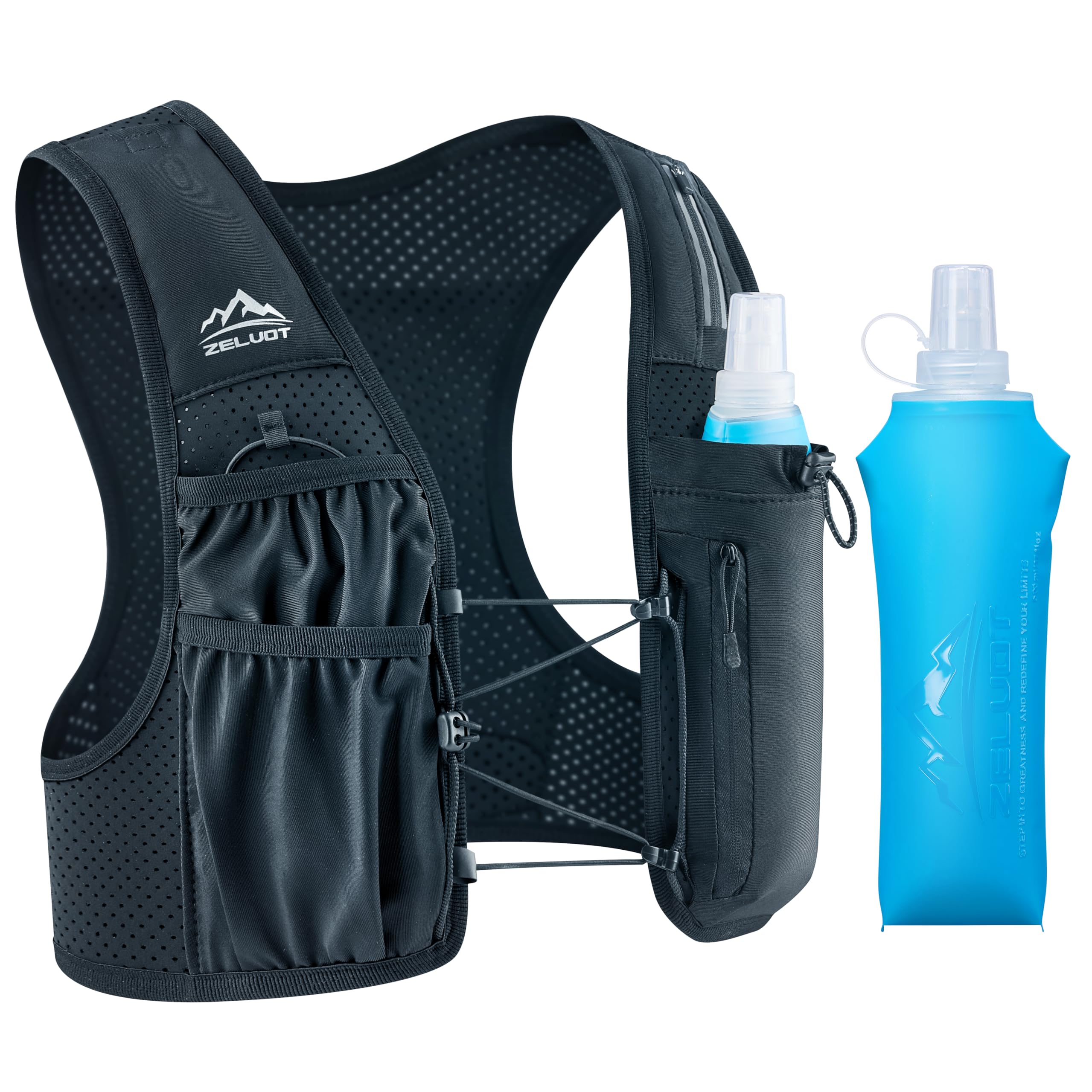
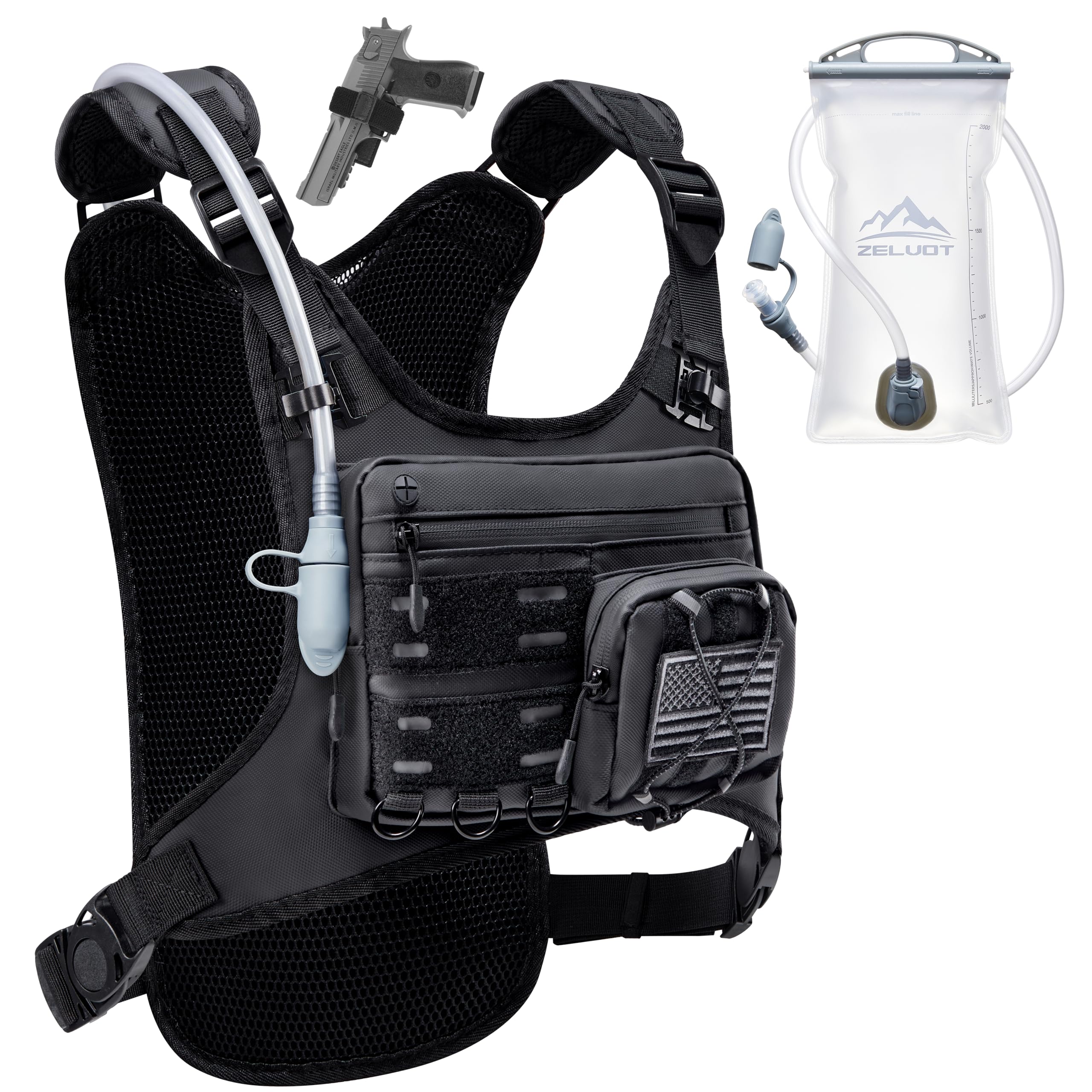


Best for Everyday Training
SWIFTVEST Running Vest
Key Features
- Fit: 3 sizes, adjustable
- Weight: 10.1 oz
- Storage: 6 pockets
- Hydration: 500 ml soft flask
- Price: Midrange
The six-pocket layout is what makes the SWIFTVEST feel like a running vest rather than a hydration pack with straps. A 500 ml soft flask sits up front, the zipped phone pocket is separated from the gel and key pockets, and there is just enough room for a light shell. What struck us on the first run is how little thought it asks for: load it, tighten the chest straps, go. At 285 g it disappears once it is on, and the reflective detailing is useful on early starts without making the vest look like safety gear.
The soft flask is the right call for shorter efforts. It compresses as you drink, so it does not slosh, and the bite valve is simple enough to use without breaking stride. We also appreciate the three-size range: the adjustable straps take up the difference, and the neoprene padding around the shoulders cuts the rubbing that shows up late in a run. The close cut is part of why it stays put, but it leaves less room for a thick layer underneath.
The 500 ml flask is the real limit. For a 5K, a park run, or a half with aid stations, that is plenty; for a self-supported long run, carry a second bottle or choose a vest with a bladder. The rear mesh gives you somewhere to stash a light layer, but this is not the pick for carrying two liters. We keep coming back to it because the pockets are in the right places and the fit is easy to live with, not because it is the biggest vest here.
Pros
- Six pockets keep phone, gels, and keys close
- Light 285 g build with reflective trim
- Soft flask compresses to reduce sloshing
- Three sizes with adjustable straps
Cons
- Phone pocket is tight for large handsets
For most runners, this is the vest we recommend first: light, stable, and laid out so phone, gels, and a soft flask are easy to reach.
Best for Marathon Training
Zelvot RUNV-3 Running Vest
Key Features
- Weight: 12.3 oz
- Storage: 9 pockets
- Hydration: 500 ml soft flask
- Chest straps: 3 adjustable
- Price: Midrange
Nine pockets sounds like marketing math until you are three hours into a long run and need a gel without unzipping the whole vest. Zelvot splits the storage between seven front pockets and two larger rear pockets, with a 500 ml soft flask up front and room for a phone, keys, and a light shell. The layout is the reason this one earns a place: it carries more than the minimal vests here without turning into a backpack.
What convinced us on longer efforts is the harness. Three adjustable chest straps spread the load and hold the vest close, and at 350 g it stays light enough to forget between aid stations. The soft flask compresses as you drink, and the reflective strips front and rear are a useful detail for early or late runs. The close fit is deliberate; if you plan to wear a thick layer underneath, size with that in mind rather than expecting the straps to stretch.
The single flask is the main compromise. Two flask pockets let you add a second bottle, which is what we recommend for a self-supported marathon, but the vest does not include one. The pocket count is generous enough that the extra weight stays organized rather than sloshing around. For races with aid stations, one flask and nine pockets is a very practical setup.
Pros
- Nine pockets organize fuel, phone, and layers
- Three chest straps hold it close on long runs
- Light 350 g build with reflective trim
- Soft flask compresses as you drink
Cons
- Close fit can feel small through the chest
For marathon training and long supported runs, this is the vest we choose when every gel, phone, and layer needs its own place.
Best for Self-Supported Runs
Zelvot 2L Hydration Pack
Key Features
- Weight: 1.43 lb
- Storage: 3 zippered front pockets
- Material: 900D Oxford
- Hydration: 2 L bladder
- Price: Premium
The case for the Zelvot 2L is simple: two liters of water on your back and enough pockets to leave the house without a drop bag. The bladder sits in its own compartment, the hose routes over the shoulder, and the 900D Oxford front panel is the most weather-resistant material in this group. It is a pack you notice, not a race vest you forget.
Storage is the other reason to choose it. Three zippered front pockets keep a phone, keys, and gels secure, while the bladder sleeve keeps the water where it belongs. The shoulder and waist straps are adjustable enough to settle the load, and the waist belt makes a real difference once the bladder is full. This is the vest we reach for when the route has no refill and the weather looks uncertain.
The harness needs attention before you start. The adjustment tails can work loose if you leave them long, and the pack carries best when the waist belt is snug rather than hanging loose. The bladder and hose are the parts to inspect and rinse carefully; any hydration pack lives or dies on those seals. It is also more pack than most runners need for a 10K.
We see the 2L as a specialist, not the default. It is the right choice for self-supported marathon training, long trail days, and runners who prefer to carry water rather than plan refills. For a fast 5K or a race with tables every few miles, the extra capacity and weight are unnecessary. Buy it for the long, quiet routes where the next tap is a long way off.
Pros
- Two-liter bladder for self-supported runs
- Three zippered front pockets plus bladder sleeve
- Rugged 900D Oxford front panel
- Adjustable waist belt stabilizes the load
Cons
- Heavy 0.65 kg before water
If your long runs have no aid stations, this is the one to take: two liters on your back, useful pockets, and a harness that can carry the weight.
Best for Value Seekers
MOKURA Running Vest
Key Features
- Weight: 9.6 oz
- Storage: 5 pockets
- Hydration: 500 ml soft flask
- Chest straps: 3 adjustable
- Price: Budget
The first thing that stands out about the MOKURA is how little vest there is. It weighs 9.6 ounces, uses soft neoprene and mesh, and carries a 500 ml soft flask in a front pocket rather than a bladder on your back. Five pockets cover the essentials, and the reflective accents on the front and back are a sensible touch for early starts. It is not trying to be a gear hauler, and that is exactly why it works for short runs.
We think it is the easiest vest here to recommend to someone buying their first one. The three chest straps and stretch waist panels hold it close without a lot of fiddling, and the phone pocket with its retractable lanyard is a neat detail that keeps a screen accessible without unzipping. The soft flask compresses as you drink, so it does not slosh, and the whole thing is easy to rinse and hang dry.
The limit is capacity. A single 500 ml flask and five pockets are enough for a 10K, a tempo session, or a race with aid stations, but not for a self-supported marathon. The fit also needs to be snug: the waist panels do the stabilizing, and a loose vest will shift. Get the size right and this is a comfortable, light companion for most training runs.
Pros
- Light 9.6 oz build for short runs
- Five pockets with accessible phone holder
- Three chest straps and stretch waist panels
- Includes a 500 ml soft flask
Cons
- Stability depends on a very snug fit
This is the value pick for a first vest or short daily runs: light, comfortable, and organized enough for a phone, keys, and a gel.
Best for Budget Runners
BECOJADDE 5L Running Vest
Key Features
- Weight: 7.05 oz
- Storage: 8 pockets
- Capacity: 5 liters
- Hydration: Bladder not included
- Price: Budget
The BECOJADDE is the odd one in this group because the current variant is the vest only. There is no bladder in the box, so the appeal is the shell: five liters of capacity, eight pockets, and a 0.2 kg build that lets you carry water your own way. If you already own a bladder or like front bottles, that is a sensible way to save money. If you want a complete hydration kit, choose one of the vests that includes a flask or bladder.
The layout is more useful than the price suggests. A waterproof phone pocket sits up front, dual rear zippered compartments take a light layer or snacks, and the chest and waist straps are adjustable enough to settle the load. The vest is cut close, with four straps to tune the fit, and the stretch fabric moves without feeling bulky. It is a trail-running shape rather than a race-day minimal vest.
We think it earns its place as the budget option for someone who is already invested in hydration. The close fit suits runners who do not want a loose pack, and the five-liter body is enough for a couple of hours on the trail. The trade-off is that you are supplying the water; that is the reason to choose it only if you already have a bladder or bottles.
Pros
- Five liters of capacity for layers and snacks
- Eight-pocket layout with rear zippered compartments
- Light 0.2 kg vest shell
- Adjustable chest and waist straps
Cons
- Sizing runs small for some runners
A good budget shell for runners who already own a bladder or prefer bottles, with five liters of space and a light, close-fitting harness.
Best for Trail Days
N NEVO RHINO Hydration Pack

Key Features
- Weight: 8.5 oz
- Capacity: 12 liters
- Hydration: 2 L bladder
- Shoulder straps: 19–34 in
- Price: Budget
The N NEVO RHINO is the outlier here: 12 liters of capacity, a 2 L bladder, and a weight of 8.5 ounces. That combination makes it more daypack than race vest, and we mean that as a useful distinction rather than a criticism. For a run-hike, a long day on the trail, or a commute that ends with a few miles, the extra space earns its place.
The vest-style shoulder straps are what make it wearable for running. They sit close, the chest strap adjusts up and down, and the shoulder range is broad enough to fit a wide variety of torsos. There are pockets for a phone, snacks, and a light layer, and the bite valve and hose work simply. We found it comfortable on easy miles and hike-run transitions, where the load is steady and the pace is not the point.
Fast running is where it stops making sense. A 12 L pack can shift when it is loaded, and the extra capacity invites you to bring more than you need. For a tempo run or a race, a minimal vest is the better tool.
Pros
- 12 L capacity for long trail days
- Includes a 2 L bladder
- Light 8.5 oz empty weight
- Vest-style adjustable shoulder straps
Cons
- Front bottle pockets are narrow
For long trail days and hike-run adventures, this carries two liters and a day’s gear for very little weight, but it is not a fast-run vest.
Best for Gear-Heavy Days
Criuage Hydration Vest

Key Features
- Weight: 1.65 lb
- Storage: 8 pockets
- Capacity: 5 liters
- Hydration: 2 L bladder
- Price: Midrange
At 750 g empty, the Criuage is not pretending to be a featherweight race vest. It is a five-liter hydration pack with a two-liter bladder, eight pockets, and a nylon body that feels built for rough use. That weight buys capacity and organization: four front pockets and four rear pockets, a dedicated bladder sleeve, and enough adjustment to settle the pack on your torso.
The storage is the reason to consider it. A phone, keys, gels, a light layer, and a two-liter bladder all have a place, and the front pockets are reachable without taking the pack off. The shoulder straps are wide and the chest and waist straps spread the load, which matters once the bladder is full. For long, slow days where you want to carry everything and refill rarely, the layout makes sense.
The harness needs some patience. The shoulder straps can feel odd until you get the chest and waist straps balanced, and a heavy load will make a loose fit obvious. This is a pack to adjust carefully before you start, not one to throw on and forget.
We see it as a specialist for gear-heavy days, not a default running vest. If your runs are mostly under an hour or you race with aid stations, the weight is hard to justify. If you are heading out for hours with layers, food, and two liters of water, the Criuage is one of the few vests here that can carry it all without a separate backpack.
Pros
- 2 L bladder plus 5 L of cargo space
- Eight pockets split front and back
- Rugged nylon body
- Wide adjustable harness
Cons
- Heavy 750 g empty
For gear-heavy trail days and runners who want a bladder plus lots of pockets, this is a sturdy option, but it is too heavy for race pace.
Best for Minimalist Runs
Dunquya Running Vest
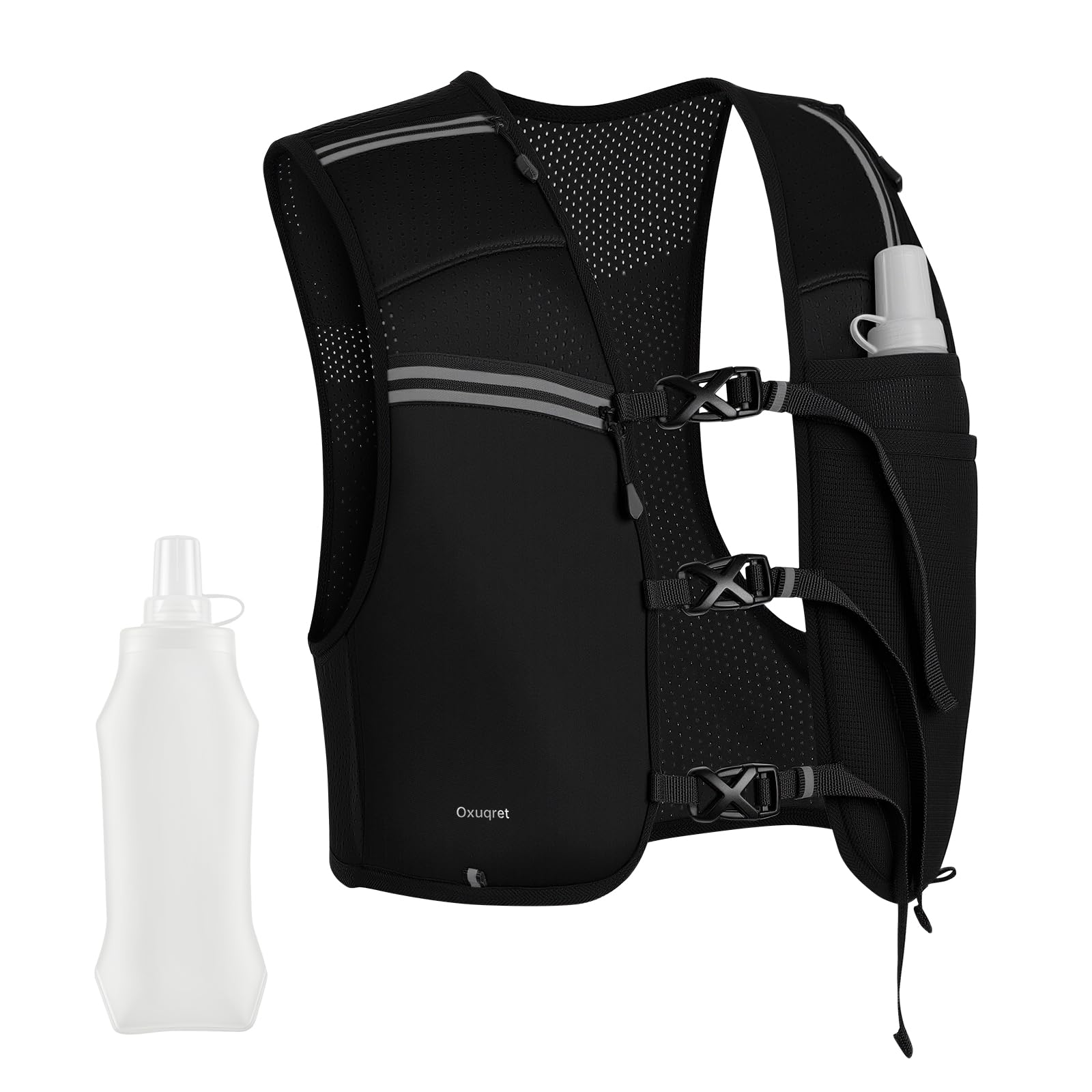
Key Features
- Weight: Under 250 g
- Storage: 6 pockets
- Hydration: 500 ml soft flask
- Visibility: Front and rear reflective
- Price: Budget
Dunquya’s running vest is the simplest version of the idea here: a 500 ml soft flask, six pockets, and an under-250 g build with reflective strips. We see it as a first vest or a minimal training vest for someone who wants to carry water and a phone without a pack. The low price is part of the appeal, but the design is not stripped down in the ways that matter: the flask sits up front, the phone pocket is separate, and the chest system adjusts.
There is less to go on for long-term durability, and we have not put enough miles on this one to make a call on the seams or bite valve. Treat it as an inexpensive way to find out whether a vest suits you, and inspect the valve and stitching before you rely on it for a race. Six pockets are enough for keys, a gel, and a phone; they are not enough for a jacket. For short runs and race-day minimalism, that is the right trade.
Pros
- Includes a 500 ml soft flask
- Six-pocket layout for essentials
- Under-250 g build
- Reflective front and rear strips
Cons
- Long-term durability is unproven
A simple, light first vest for short runs and race-day minimalism, with a soft flask and just enough pockets for the essentials.
How We Tested a Dozen Running Vests
We built the shortlist from research rather than reviews: vests that came in actual chest measurements instead of S/M/L, that held at least one soft flask without extra hardware, and that sat in the mid-range-to-premium bracket where better materials should justify the cost. From roughly 30 candidates we filtered down to 12, then bought every one at full retail so nothing arrived as a favor.
Each vest got loaded to its claimed capacity — phone, keys, four gels, a light shell, two flasks — then weighed empty and full on a kitchen scale. I jogged in place in the driveway and ran a mile before judging bounce, because a pack that feels fine standing still can slap your shoulder blades by the second block. Fit was checked over a T-shirt and again over a rain shell, since most of us size up in winter.
The real work happened on Saturday long runs of two to three hours, midweek tempo sessions, and a wet trail day. After each long run we checked the collarbone and ribcage for hot spots, counted how long it took to pull a flask and get it back in without breaking stride, and worked every zipper with gloves on. Phones rode in their designated pocket with a paper towel behind them so we could see how much sweat got through.
Every vest went through the wash after three runs, and we watched the mesh, seams, and elastic cords for fraying as the months added up. Last, we counted what came in the box — flasks, bladder, nothing — to judge whether the price was fair.
How to Choose a Running Vest
The right vest is the one that carries what you need for the runs you actually do, without bouncing or rubbing enough to make you leave it at home.
Start with how you hydrate
A 500 ml soft flask is enough for most runs where you can refill, and it is the lightest, least fussy setup. The flask collapses as you drink, so it does not slosh, and it sits in a front pocket where you can reach it. Move to a 1.5- or 2-liter bladder when the route has no reliable water. The Zelvot 2L and N NEVO RHINO carry that much, but they are packs first and race vests second; expect more weight and more material against your back. For a half marathon with aid stations, one flask is the more comfortable choice.
Fit is the whole ballgame
Look for a vest that sits close through the chest and can be adjusted at the chest and, where available, the waist. A loose vest will bounce no matter how many pockets it has; a close one can carry a full flask without you noticing. Measure your chest rather than choosing by T-shirt size, and leave room for the layers you actually run in. Three chest straps, as on the Zelvot RUNV-3, spread the load better than a single strap, but they only help if the vest is sized correctly. If you are between sizes, go with the larger one for layering.
Pockets should match your kit
Count the things you carry before you count pockets. A phone, keys, a gel or two, and a light shell are the realistic load for most runs; a 5L vest can swallow that and more, while a five-pocket vest keeps it tight. Put the phone in a zipped or weather-resistant pocket and keep gels somewhere you can reach without stopping. The BECOJADDE shell has eight pockets but no bladder, which suits runners who already own hydration; the SWIFTVEST has fewer pockets and includes its flask, which suits someone who wants one purchase to cover the basics.
Weight and fabric are a trade-off
A 200-350 g vest is the sweet spot for running; you feel it when you put it on and then forget it. Moving to a 650-750 g pack buys capacity and a bigger bladder, but it also changes how the vest behaves at pace. Neoprene and stretch mesh feel soft against the skin and reduce chafing; nylon packs are more weather-resistant and hold their shape when loaded. Neither is better in the abstract. Choose the lighter fabric for fast, short runs and the more structured pack for long days when you are carrying layers and two liters.
Check the leak points and the low-light details
Bladders and bite valves are where hydration vests fail, so inspect the seams, the hose connection, and the valve before you trust them on a long run. Rinse the bladder after every use and store it open and dry. Reflective trim matters if you run before sunrise or after work; it is not a substitute for a light, but it helps drivers see you at junctions. A vest with a secure, high-flow bite valve is easier to use on the move, and a leak you notice at home is much better than one you find out on the trail.
Frequently Asked Questions
Why use a running vest instead of a waist belt or handheld bottle?
A vest puts the weight on your torso instead of one arm or your lower back, so it stays balanced when you carry a phone, gels, and a flask. A waist belt is less fabric and easier to grab for a short run, but it cannot carry as much without bouncing. If you routinely run more than an hour or need your phone and fuel with you, a vest is the more comfortable long-term choice.
Are running vests allowed in races?
Most road and trail races allow them, but the rules vary by event and distance. Check the race handbook for any rule on capacity, clear bottles, or mandatory gear, and do at least one long training run in the exact setup you plan to race. A vest that is legal but rubs is worse than a simple handheld.
How do I clean a soft flask or bladder?
Rinse the flask or bladder with warm water after every run, use a little mild soap if it held a sports drink, and let it air dry completely with the cap and bite valve open. A bottle brush helps with the bladder; a teaspoon of baking soda in warm water can freshen it if it starts to taste stale. Store it dry and open, not sealed in a cupboard.
Final Verdict
The SWIFTVEST is the running vest we recommend first for most people. It is light, stable, and organized enough for a phone, gels, and a soft flask without turning into a pack. If your long runs are self-supported, the Zelvot 2L is the better tool: the two-liter bladder and extra storage justify the weight. If you already own a bladder or prefer bottles, the BECOJADDE shell gives you the vest and pockets for less, as long as you accept the close fit and supply the hydration.