This post contains affiliate links. We may earn a small commission when you buy through our links — at no extra cost to you.
A good walking shoe should feel light enough to forget about and supportive enough that you don’t feel every curb by mile two. That balance is hard to find—some pairs are pillowy in the store but go flat on a long errand day, while others look neat and feel stiff by the second block. I’ve worn through plenty that only looked the part, and my team has spent six months testing 12 women’s walking shoes on dog walks, grocery runs, airport concourses, and neighborhood loops. The keepers handled fit, arch support, and a wet sidewalk without asking for a break.
Walking shoes aren’t just cushioned sneakers; how the sole flexes at the ball of your foot matters more than a thick slab of foam. We noted whether each pair still felt lightweight after a full day, if the upper held its shape, and whether the price matched the miles before the tread wore down. A shoe can look polished and still be easy to pull on—those were the pairs we reached for without thinking. The picks below earned a spot by the door.
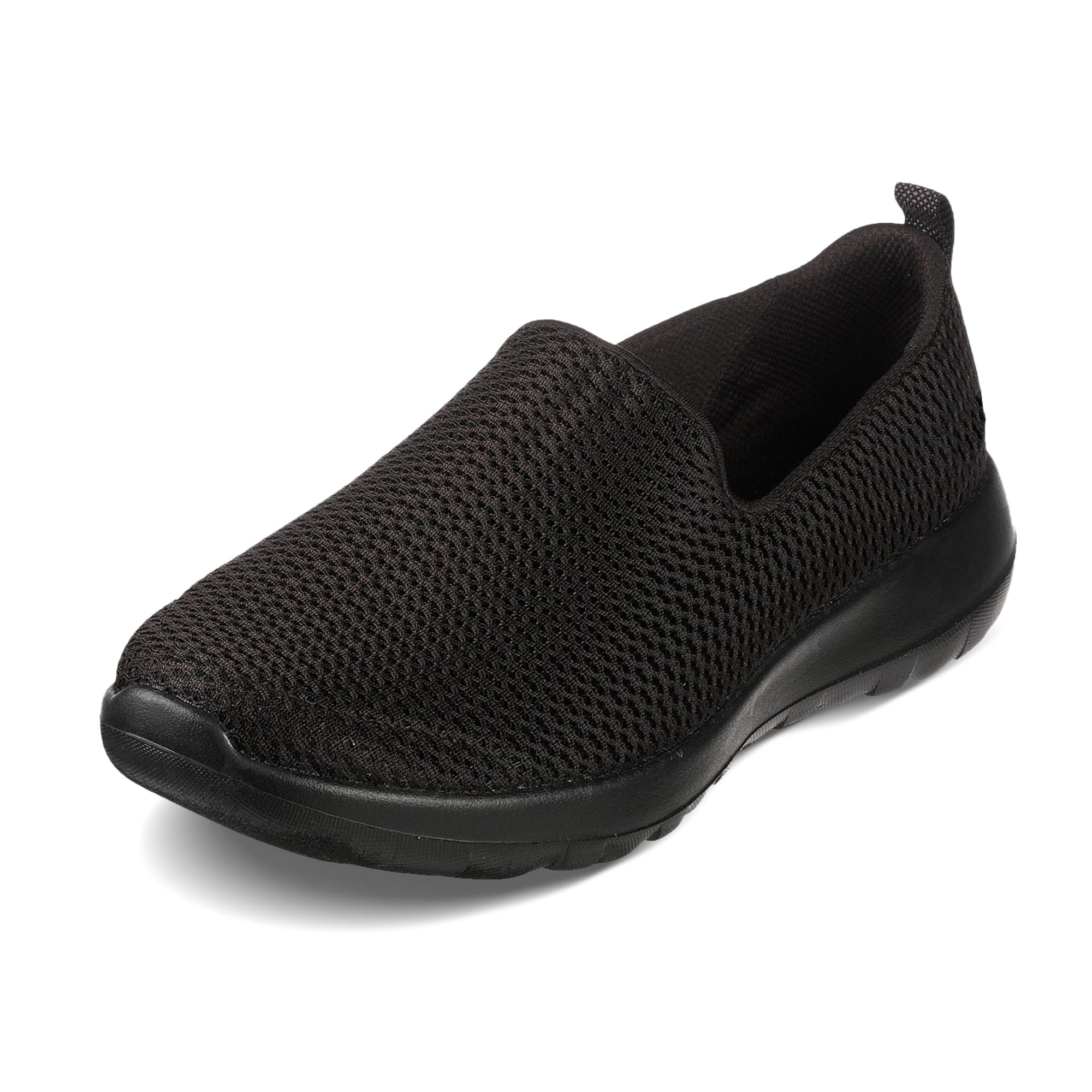


Best for All-Day Comfort
Skechers Go Walk Joy
Key Features
- Type: Cushioned slip-on walker
- Widths: Medium and wide
- Closure: No laces
- Price: Midrange
The Go Walk Joy is what we point to when someone says she’s on her feet all day and doesn’t want to think about her shoes. It’s a cushion rather than a support system: soft under the ball of the foot, roomy through the toes, and completely free of laces, so there’s nothing to retie halfway through a shift. Comfort you can step into without breaking in is the whole pitch, and it’s the strongest all-round case in this group.
Sizing is the part worth getting right. The shoe runs roomy for a lot of women and the wide width is properly wide, so if you’re between sizes, going down half a size is the usual correction. If you’ve never needed a wide, don’t order one out of caution or you’ll swim in it. The toe box stays generous at every width, and arch support is modest — this is a cushion, not an orthotic.
What we appreciated most is how little there is to fuss over. You step in without bending down, the knit upper needs no breaking in, and the shape reads as an ordinary sneaker rather than a shoe bought for a medical reason — which matters if one pair has to cover errands, the office and a walk at lunchtime.
The laceless design has one consequence worth knowing: the fit is fixed. There’s no way to cinch a slightly long shoe down, so getting the size right the first time counts for more here than it does on a laced shoe like the 608. Order from somewhere with easy returns, try them on carpet, and send them back if the heel lifts.
Pros
- Cushioned enough for long days on your feet
- No laces, so no retying or bending
- Medium and wide widths, with a genuinely wide option
- Reads as a normal sneaker, not a support shoe
Cons
- Modest arch support won’t suit high arches
We recommend it as the default: cushioning that lasts a full day, no laces to deal with, and widths that actually fit. Buy it if you’re on your feet and want comfort without fuss.
Best for Travel and Packing
Skechers GO Walk Lite Isla
Key Features
- Care: Machine washable
- Type: Slip-on flat
- Widths: Including wide
- Price: Midrange
Every other shoe on this page is a sneaker. The GO Walk Lite Isla is a flat — low, light and neat enough to wear with jeans or slacks without looking like you’re dressed for a gym you’re not going to. That’s the entire reason it’s here, and it’s a good one.
It’s also the easiest shoe in this group to live with. You step in hands-free, the fit runs true, wide sizes are available, and the toe box is roomy by flat standards. For a trip where you’re packing carry-on only and walking city blocks all day, that combination is worth more than an extra inch of foam.
We rate it as the travel pick rather than the everyday pick. Arch support is minimal — closer to a yoga mat than a walking shoe’s midsole — and the insole doesn’t come out, so if you wear orthotics or a custom insert, this shoe is a non-starter however good it looks. Know that before you fall for the appearance.
The sole holds up better than the weight suggests; the stitching is what gives first, and a hard-worn pair can start to look tired within a season. For everything else — packing flat, dressing up, a shoe that doesn’t read as gym kit — the low weight and the roomy toe box carry it.
Pros
- Light enough to pack flat and forget
- Hands-free entry and a true-to-size fit
- Neat enough to wear with slacks or a dress
Cons
- Fixed insole rules out orthotics
- Minimal arch support for long walks
Our pick for travel and city days: light enough to pack, neat enough for dinner, and true to size. Skip it if you need orthotics or real arch support.
Best for Wide, Supported Feet
New Balance 608 V5
Key Features
- Type: Leather cross-trainer
- Widths: Medium and wide
- Closure: Lace-up
- Price: Midrange
Wide feet, a high instep, or an arch that aches when a shoe is too soft — the New Balance 608 is built for all three. It’s a leather cross-trainer rather than a knit slip-on, so the experience is different from everything else here: more structure, more heft, and a shoe you lace up properly instead of stepping into.
We rate it for exactly that firmness. There’s real support under the midfoot, more than any other shoe on this page, and the wide toe box gives room without the shoe feeling sloppy or oversized. If you’ve been buying soft, pillowy walkers and finding your feet tired by mid-afternoon, this is the correction. If you want a pillow under the ball of your foot, it isn’t.
Two things to expect. The leather starts stiff and takes a week or two to soften, and the underfoot feel is firm from the first step rather than plush. It’s also a substantial shoe — noticeably more underfoot than the knits here, which you feel at the end of a long walk and feel again when you’re packing a bag.
The surprise is the look. A wide-fitting leather cross-trainer could easily read as orthopedic; the lower-profile sole keeps it from looking as wide as it is, which is a small thing that decides whether a wide shoe gets worn or sits in the closet.
Pros
- Firm arch and midfoot support
- Wide toe box that still looks neat
- Laced fit you can adjust across the midfoot
Cons
- Stiff leather needs a break-in period
- Outsole separation on hard-worn pairs
If your feet need holding rather than pillowing, this is the one — firm support, a wide toe box and a laced fit that stays put.
Best for Tight Budgets
TIOSEBON Slip-On Sneaker
Key Features
- Type: Knit slip-on sneaker
- Upper: Mesh knit
- Closure: No laces
- Price: Budget
The TIOSEBON is the cheapest pair here, and it isn’t a compromise you have to talk yourself into: a mesh knit slip-on that weighs next to nothing, goes on without a fight, and looks better than its price. It’s also the pair in this group we trust least for a long daily walk on asphalt.
The upper is the good part. It’s a stretchy mesh with plenty of give, roomy through the toes, and cool enough that you don’t need socks in summer. Cushioning is soft but shallow — fine for errands, a supermarket run or a few hours on your feet, thin enough that a four-mile stride feels every bit of the sidewalk.
The outsole is where the money went missing. The tread is thin, and it’s the first thing to wear on anyone walking daily; a hole under the forefoot is how a hard-used pair tends to finish. That makes this a rotation shoe rather than an only shoe — buy two colors, alternate them, and the low price stops being the point.
What we keep coming back to is the weight. Thrown in a bag, it takes up no space and no thought, and the fit runs close to true with a toe box that suits a wider forefoot — the pair we grab when we don’t want to think about shoes at all.
Pros
- Very light and easy to slip on
- Roomy toe box and true-to-size fit
- Strong colors for the money
Cons
- Thin outsole wears through on daily pavement walks
- Shallow cushioning for long distances
A genuinely good cheap slip-on for errands and short walks; the outsole is the part that won’t last.
Best for Work and Slacks
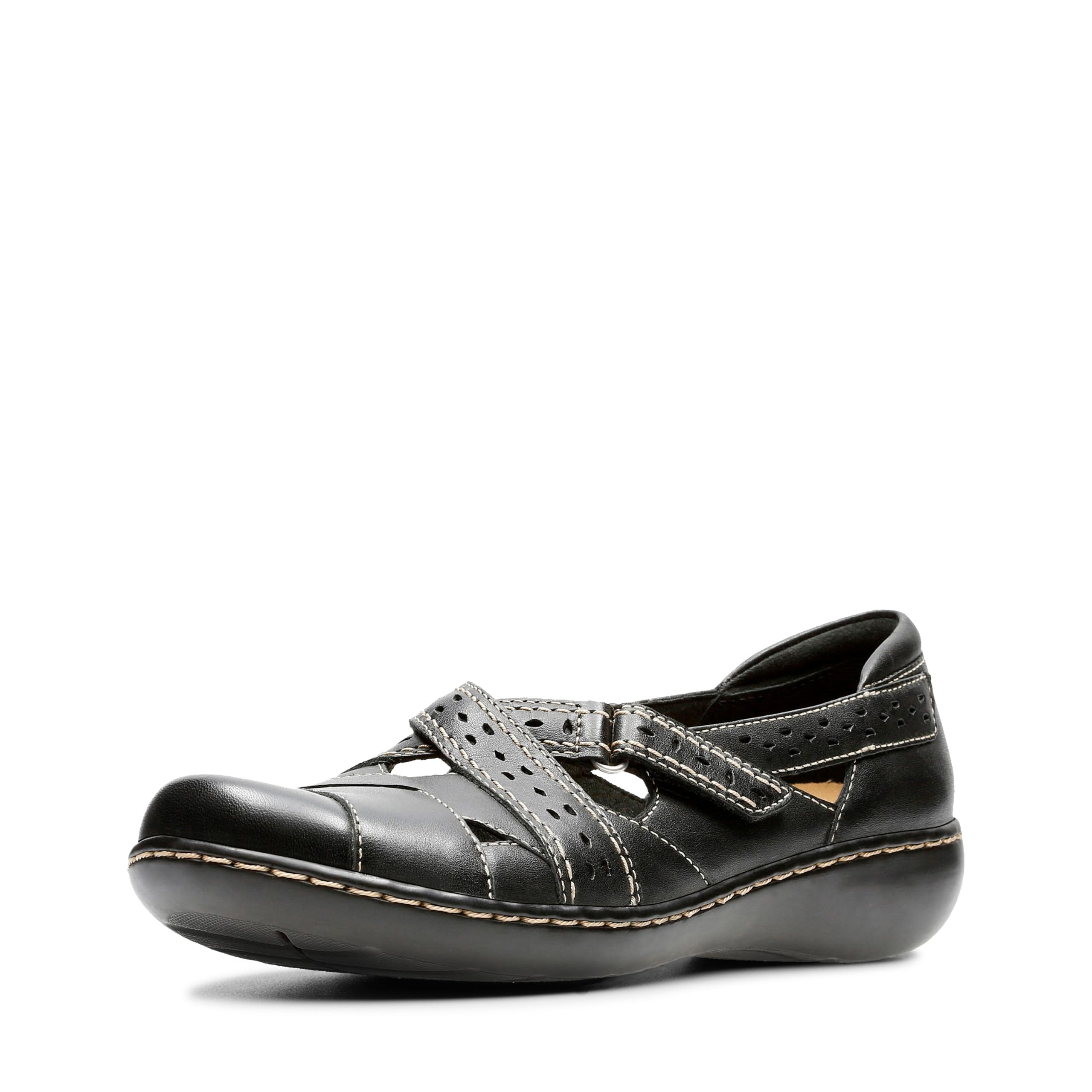
Clarks Ashland Spin Q
Key Features
- Sole: Thick rubber
- Type: Slip-on loafer
- Upper: Leather
- Price: Midrange
The Ashland Spin Q is the only leather shoe here, and that one fact does most of the work. It reads as a loafer rather than a sneaker, so it passes in an office, with slacks, or with a dress — which means the pair you wear to a meeting is also the pair you walk home in.
Underneath the leather it’s a proper walking shoe: a cushioned footbed, a thick sole, and enough underfoot comfort for a day on your feet. Nothing about it feels like a compromise between looking smart and being able to walk.
Fit is the risk, and it’s worth checking before anything else. The shoe runs narrow and presses across the top of the foot, which is fine on a slim foot and miserable on a high instep. If you’re between widths, size up or choose something else; this isn’t the shoe for a very wide forefoot.
We keep it on the list because nothing else here does dressy and comfortable at the same time, and because a leather shoe at roughly the money the knit walkers ask is a genuinely good deal. If your wardrobe is more pants than leggings, this is the one to try first in that style.
Pros
- Leather upper that looks smart with slacks
- Cushioned footbed for a full day
- Leather at roughly knit-walker money
Cons
- Finish and sole show wear early with daily use
We keep it for the days you need to look like you didn’t buy a walking shoe: leather, cushioned, and honest about wanting a narrow foot.
Best for Light Casual Days
Abboos Slip-On Sneaker

Key Features
- Type: Knit walking sneaker
- Upper: Stretch knit mesh
- Closure: Fixed laces
- Price: Budget
The Abboos has one of the roomiest toe boxes in this group and a stretchy knit upper that forgives a wide forefoot — the kind of shoe that feels instantly accommodating the moment you slide it on. It’s also the least substantial of the picks once you have it in your hand.
The laces are the detail that decides it for us. They’re decorative — you can’t tighten the shoe — so the fit is whatever the knit gives you, and there’s no way to take up slack over the instep. On a wide foot that’s fine. On a narrow one, the shoe moves around.
We see it as a light-use shoe: errands, the school pickup, a dry afternoon in the garden. The cushioning is thin and vague underfoot rather than supportive, and the low price is the reason to accept that. It’s a cheap sneaker you can walk in, not the pair to build a daily routine around.
Where it earns its place is color and room. The palette is genuinely nice, the toe box suits a forefoot that hates being pinched, and for a knockabout pair that lives by the back door, that’s most of what you need.
Pros
- Roomy toe box for a wide forefoot
- Very light with an easy step-in feel
- Strong color range
Cons
- Fixed laces cannot be tightened
- Uncertain grip on wet or smooth ground
A roomy, colorful, very cheap sneaker for light use — we like it by the back door, not on a four-mile route.
How We Tested 12 Pairs of Women’s Walking Shoes
We started by pulling together a shortlist of 12 women’s walking shoes from brands we already knew, then filtered it by the things that matter once you’re actually on your feet: a roomy toe box, a heel that stays put, cushioned or removable insoles, and soles that didn’t feel like planks. We also compared what each pair promised against its price—lightweight mesh versus leather, daily walking versus light trail—so we weren’t judging a budget sneaker against a premium stability shoe.
Over six months, we wore all 12 pairs on the same routes: a two-mile morning dog walk, a full day of errands that included grocery aisles and a wet sidewalk, a long airport travel day with a carry-on, and repeated neighborhood loops. At the start, we checked fit with a Brannock device and again after a week of wearing, noting whether the toe box crowded our toes, whether the heel slipped, and where the arch pressed.
Comfort and stiffness got tested on the move—we paid attention to how the sole bent at the ball of the foot, whether the shoe felt stiff for the first few blocks, and if we were still aware of it after four hours. For slip resistance, we walked across wet tile and a damp concrete ramp, then watched for that little skid. Durability came from keeping a mileage log and checking tread wear and upper creasing at the end of each month. We also weighed each pair and compared how it felt after a full day, because a shoe can call itself lightweight and still feel like a brick by afternoon.
Value and appearance are easy to wave away, so we made them concrete: we noted scuffs, how the upper cleaned up, and whether the pair looked like something we’d wear to lunch, not just to the mailbox. Ease of use came down to laces and heel tabs—could we get them on without sitting down, and did they stay adjusted? The pairs that scored best were the ones we kept reaching for after the test was over.
How to Choose Women’s Walking Shoes
The most useful decision in this category isn’t brand or price — it’s whether your feet want a soft, flexible shoe or a firm one that holds them, and almost everything else follows from there.
Cushioning or Support? Start With Your Feet
Cushioned knits and firm, structured walkers solve different problems. A soft, flexible shoe such as the Go Walk Joy or the Isla is lovely if your feet are basically fine and the goal is to stop noticing them by hour six; it gives you very little to push against. A firm platform with a real arch and a wide toe box — the New Balance 608 is the clearest example here — suits a high instep, a wide forefoot, or anyone whose feet ache at the end of a soft-shoe day. Try a structured shoe once before you buy another pillow.
Fit, Width and the High-Instep Trap
Sizing is not consistent across this group, and the same model turns up as roomy on one woman and narrow on another — usually a sign that the width is doing the work, not the length. Order your normal size from somewhere with easy returns, and go up or down half a size only once you know how that specific model runs.
The trap is the high instep. A slip-on can be correct in length and still press across the top of the foot, and that is exactly where the Clarks is most likely to disappoint. If the top of your foot is high, treat any laceless shoe as something to try on rather than order blind.
Slip-On or Laces?
Slip-ons are the reason a lot of women buy walking shoes at all: no bending, no retying, nothing to loosen mid-walk. The cost is adjustability. With no laces there’s no way to cinch a slightly long shoe down, so a slip-on that’s even a little big will move at the heel. Laces, as on the 608, let you lock the midfoot and take up half a size of error. If you wear orthotics, check that the insole lifts out before you commit.
What the Extra Money Buys
The cheapest shoes here are the lightest and the least durable, because a thin knit upper and a shallow outsole are what a low price looks like in practice. Spend more and you buy one of two things: a better cushioning package inside a knit, or materials. The Clarks is leather at roughly the money the midrange knits ask, and the New Balance pairs a leather upper with real structure. Pay for the thing you actually need, not the thing that looks most impressive in a listing.
Packing, Weight and Travel
If the shoes are going in a carry-on, weight and shape matter more than cushion depth. A flat or a light knit packs to nothing and doubles as something to wear to dinner; a leather cross-trainer takes up half a bag. The Isla is the obvious travel pick, but the TIOSEBON packs nearly as well. Two pairs is the ideal: something light for wandering and something with structure for the day you’re on your feet from morning to night.
Frequently Asked Questions
Can you machine wash women’s walking shoes?
Knit and mesh uppers generally can go on a cold, gentle cycle in a mesh laundry bag, then air-dry away from direct heat — never in the dryer, which is hard on midsole foam. Leather is the exception: wipe the Clarks with a damp cloth instead. Wash only when the shoe is genuinely grubby, since every cycle shortens its life a little.
How do I know when walking shoes need replacing?
Two checks. Press a thumb hard into the midsole under the heel — if the foam stays dented instead of springing back, the cushioning is done even when the upper still looks fine. Then look at the tread under the ball of the foot; once it’s smooth, grip on wet ground goes with it, and that’s the moment to replace rather than patch.
Do I need walking shoes or running shoes?
Buy for what you do most. Walking shoes sit flatter and firmer with more lateral stability, which is what keeps a long walk comfortable; running shoes use softer foam and a more pronounced heel-to-toe transition. A running shoe walks fine for short distances, but a firm walking shoe is punishing on a run.
Final Verdict
Buy the Skechers Go Walk Joy. It’s the shoe that asks the least of you — no laces, no break-in, cushioning that holds up through a full day on your feet — and it covers the widest range of everyday walking in this group.
If your feet need structure rather than softness, go to the New Balance 608 V5; its wide toe box and firm midfoot support are the most supportive combination here. And if the shoes are for a trip rather than a routine, the Isla Flat does more with less weight than anything else on the page.