This post contains affiliate links. We may earn a small commission when you buy through our links — at no extra cost to you.
Two springs ago I traded my cushioned running shoes for a flat, flexible pair with a wide toe box, and by the third week an ache that had lived in my arches for years was gone. That’s the promise of barefoot shoes: a thin sole lets your foot flex and push off, and a foot-shaped toe box gives your toes room to splay. The catch is fit and looks — get the width wrong and your heel slides; get the look wrong and they never leave the closet.
Over the past six months, my team and I have worn 12 pairs of barefoot shoes for everyday use — to the office, on dog walks, through grocery runs — and the spread in comfort, weight, and build quality was wider than I expected. One thing I’d tell any first-timer: don’t size up chasing room. Match the shoe to your actual foot width and your heel stays put. The pairs below are the ones that survived all of it, in colors you won’t mind being seen in.


Best for Women’s All-Day Wear
WHITIN W81 Barefoot Sneakers
A barefoot shoe lives or dies at the toe box, and the W81 is the pair here that gets the width right. Toes lie flat and spread instead of curling toward each other, the big toe stays straight, and no seam digs into the little toe. Add a sole that sits level from heel to toe and a shoe light enough that you stop noticing it by mid-morning, and you have the pair we hand most people first.
Fit is why it holds the top spot. It runs true to size, the midfoot stays snug enough that your foot doesn’t slide forward on a downhill, and the heel doesn’t rub. Under the arch there’s nothing at all, which is the design rather than a fault — what you get instead is real information about the surface under you, and after a week of wearing them, ordinary pavement stops feeling like a compromise.
The trade-off is the silhouette. Seen from above, this is a broad shoe, wide enough to change how a slim trouser leg hangs, and that’s the one criticism the shape invites. We think the roominess is a fair trade for a footbed this comfortable, but if you need a barefoot shoe that passes as an ordinary sneaker, the AIRHAS below does the job better. What the W81 does best is the boring middle of the day — the walk to the bus, a long stretch of standing, four hours on your feet in a shop — the places where a tight toe box has you kicking your shoes off under the desk.
Pros
- Toe box genuinely lets toes spread
- True to size with a secure midfoot
- Light enough to forget you’re wearing them
- Flat, low sole gives real ground feel
Cons
- Broad from above, so it changes the silhouette
We recommend the W81 to anyone who wants the widest, truest-fitting everyday pair here, and accepts a broad silhouette in exchange.
Best for Wide Men’s Feet
ASITVO Wide Barefoot Sneakers
Key Features
- Sole: Zero drop
- Sizing: Men’s
- Toe box: Wide
- Extra insole: Included
- Price: Midrange
If most sneakers leave a red mark at your little toe, start here. The ASITVO is built for a genuinely wide foot: broad across the whole forefoot rather than flaring at the tip, flat under the arch, and structured enough through the midfoot that your foot doesn’t wander sideways. In a category where width claims are loose, this is the men’s pair whose shape we trust most.
Two insoles come in the box, one flat and one with more shape to it. Swapping between them is a two-minute experiment that tells you how much ground feel you actually want — the flat one is the truer barefoot experience, the shaped one takes the edge off a long day on tile. The upper is soft enough to wear without socks and doesn’t collapse when you kick them off at the door.
What it isn’t is a running shoe, despite sitting on a trail-running shelf. The sole is thin and there’s nothing under the heel, so long pavement miles will beat you up. Treat it as a walking and gym shoe, which is how most people will use it, and the value is hard to argue with: the finish reads like a more expensive shoe, and the price sits in the middle of this group.
Pros
- Broad forefoot for genuinely wide feet
- Second, more supportive insole included
- Very light with real ground feel
- Finish reads better than the price
Cons
- Not built for running or long trail days
Buy this one if your feet are genuinely wide: we think it’s the surest men’s fit here, provided you’re walking rather than running.
Best for Office-Friendly Everyday
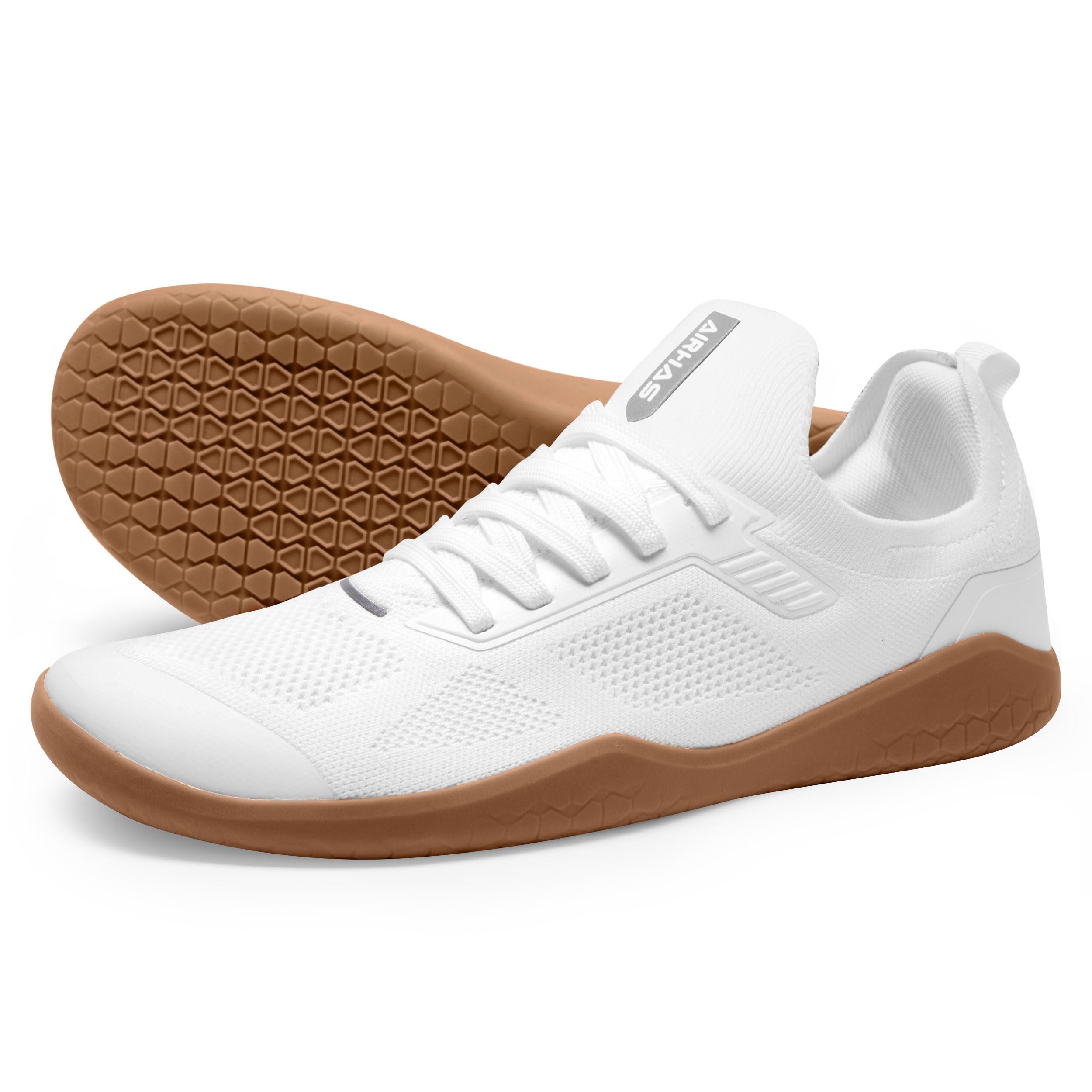
AIRHAS Minimalist Barefoot Shoes
Key Features
- Sole: Zero drop
- Insole: Removable
- Sizing: Men’s
- Toe box: Anatomical
- Price: Midrange
Most barefoot shoes look like barefoot shoes. This one looks like a plain sneaker — neutral upper, low profile, a shape that doesn’t announce the wide toe box from across the room. That’s the whole reason it’s here: it’s the pair you can wear to a meeting and then walk home in without anyone noticing your shoes are doing something different.
Underneath, it’s a proper zero-drop shoe. The toe box is anatomical, wide at the ball and tapered enough that it doesn’t look like a boat, the sole is thin and flexible, and the insole lifts out — which makes the whole thing thinner and more ground-feeling, and gives you somewhere to put your own insert if you want one. Sizing runs about a half size large, so most feet go down rather than up.
We wore these for errands and desk days rather than workouts, which is where they make sense: flat, quiet, and light enough to forget. Grip is fine on dry pavement and ordinary indoor floors, and the flat sole keeps you connected to whatever you’re standing on rather than insulating you from it.
Longevity is the open question, and it’s what keeps this out of the top spot. The upper is the part to watch over a year of daily wear, while the sole underneath looks like it will take whatever the pavement offers. Buy it because you want a barefoot shoe that doesn’t look like a statement — the trade is that you may be shopping again a little sooner than you would with a heavier build.
Pros
- Looks like an ordinary sneaker
- Anatomical toe box with a flexible sole
- Removable insole tunes the feel
- Strong value for the build
Cons
- Uppers may not last as long as the sole
We pick it when the shoe has to look ordinary, and accept that the upper may not outlast the sole.
Best for Women’s Slip-On Days
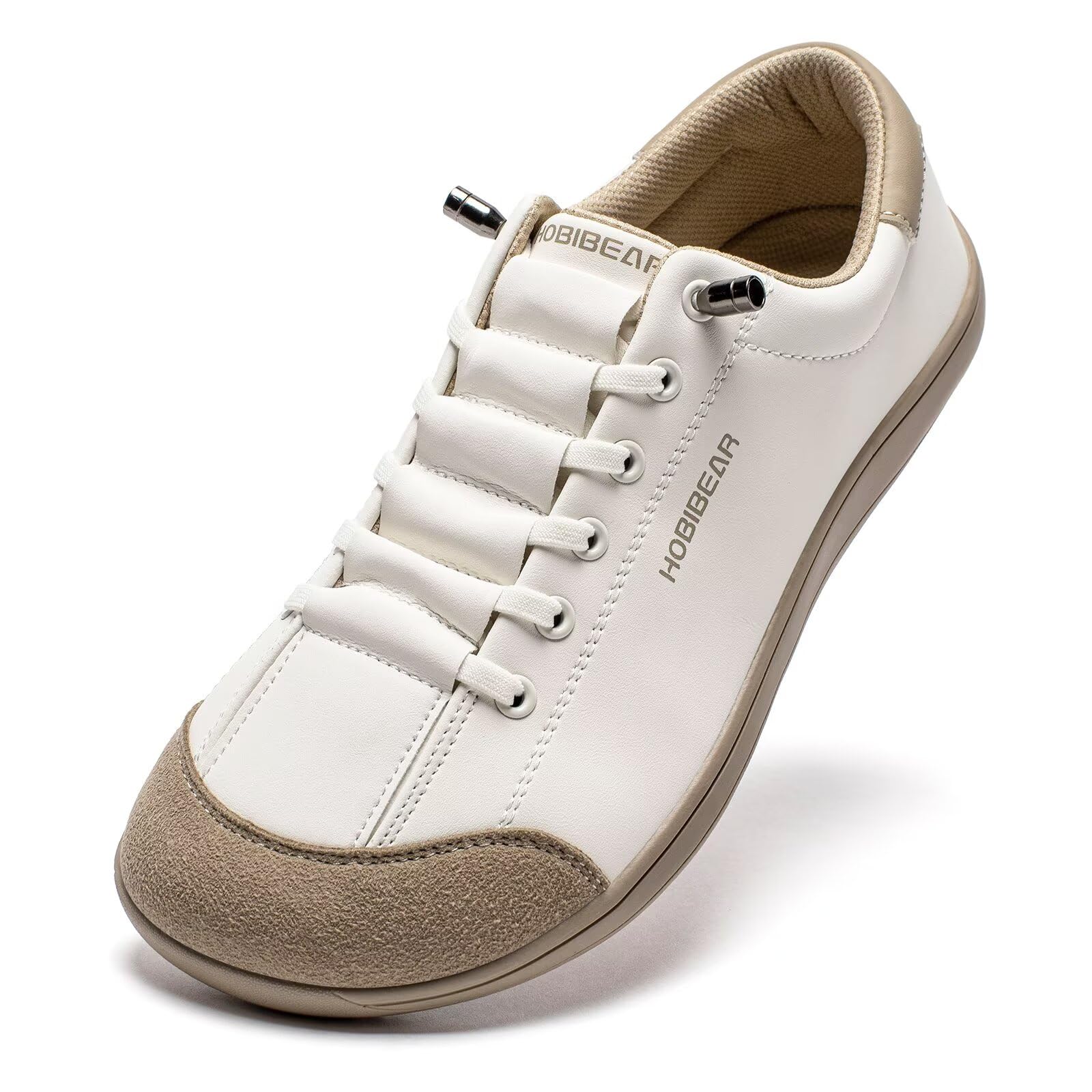
HOBIBEAR Leather Barefoot Slip-On
Key Features
- Upper: Leather
- Sizing: Women’s
- Closure: Slip-on
- Toe box: Wide
- Price: Midrange
Leather is what separates this HOBIBEAR from the canvas and knit pairs on this list. It wipes clean after a wet walk, takes a scuff without looking finished, and holds its shape so the shoe slides on without you digging a thumb into the heel. The colors are the kind that get noticed, and the overall effect is closer to a casual loafer than a gym shoe — which is exactly what an everyday pair needs to be if it has to survive a workplace.
Fit is the part to get right. This is a shoe that runs large on some feet and presses across the top on others, so know your instep before you order: if the top of your foot is tall, this is the pick here most likely to feel tight there, and going up a size makes that worse rather than better. Where it fits, the wide toe box does its job and the flat sole gives a quiet, unremarkable walk in the best sense. For a slip-on that has to look presentable five days a week, it’s the best of this bunch.
Pros
- Leather upper wipes clean and holds shape
- Slides on without a shoehorn
- Wide toe box in a tidy-looking shoe
- Colors that get noticed
Cons
- Tight across a high instep
- Leather upper runs warm
Our pick for a presentable slip-on, as long as your instep isn’t high — that’s the fit that decides it.
Best for Men’s Hands-Free Wear
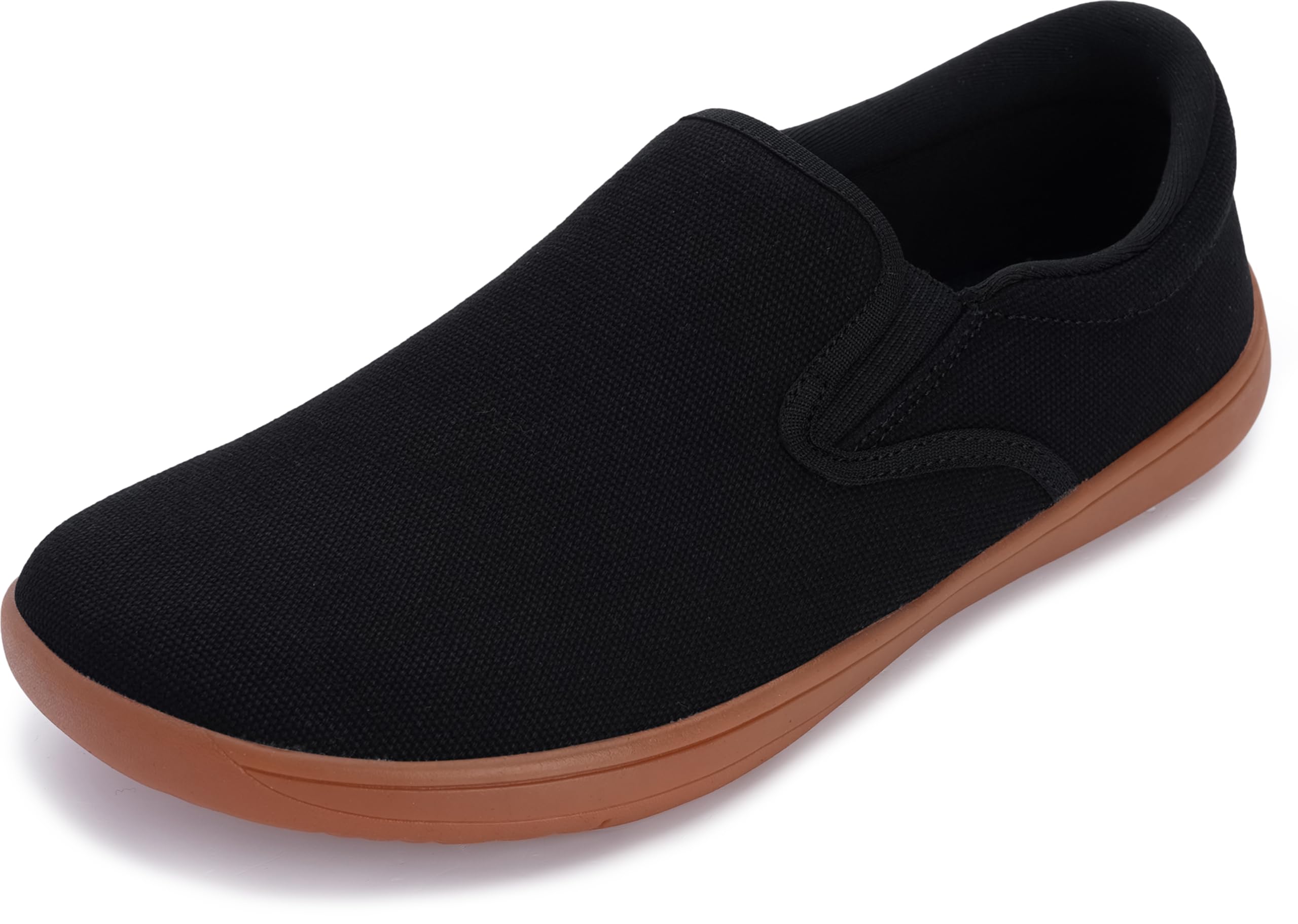
WHITIN W863 Canvas Slip-On
Key Features
- Upper: Canvas
- Sizing: Men’s
- Closure: Slip-on
- Toe box: Wide
- Price: Midrange
There’s a specific moment this shoe is built for: the doorway, with your hands full. The canvas upper is soft enough that you step into it without touching the laces, and it stays on through a walk instead of flipping off your heel — which isn’t a given for a slip-on this light.
The shape underneath is the same idea as the rest of this list: flat, wide, thin. Sizing comes out true, with a snug instep that holds your foot in place rather than letting it slide forward, and the canvas breathes in a way the leather pick doesn’t. It packs flat in a bag and dries quickly after a wet walk, which counts for more than cushioning if you’re wearing one pair all summer.
One thing we noticed and didn’t love: the sole is loud on smooth floors. Tile, wood, polished concrete — it squeaks, and in a quiet office that’s a small social problem. Everything else is quietly competent. The build is simple enough that there’s little to fail, the value is among the best in this set, and for anyone who has stopped wanting to bend down and tie shoes, it solves something the laced picks can’t.
Pros
- Truly hands-free to put on
- Breathes well and dries fast
- True to size with a secure instep
- Strong value for a daily shoe
Cons
- Squeaks on tile and wood floors
We keep coming back to it for hands-free everyday wear, squeaky sole and all.
Best for Extra Support Underfoot
Hike Footwear HF Stride

Key Features
- Sizing: Women’s and men’s
- Closure: Slip-on
- Toe box: Wide
- Price: Premium
This is the most expensive pair on the list, and what the money buys is more shoe: a thicker sole than the rest, a broader base under the heel, and a stance that feels steady the moment you stand up. If a true barefoot shoe feels like standing on a tile floor in socks, this is the version that takes the edge off without going all the way back to a conventional sneaker.
Sizing is the least settled thing about it. It’s sold in size ranges rather than single sizes, the steps between them are wide, and plenty of feet land in between two of them — so order somewhere with easy returns and treat the first try-on as a real appointment rather than a formality. It’s also sold as a slip-on, and it isn’t: there are laces, and you will tie them.
Steadiness is what it does best. The extra material underfoot and the wide base make it the most confidence-inspiring of this set on uneven pavement, which is why it stays on the list for anyone coming to barefoot shoes later in life or after a foot problem. Just don’t pay the premium expecting a true ground-feel shoe. You’re buying cushioning and stability, and this one charges for both.
Pros
- The steadiest, most confidence-inspiring ride here
- Cushioning for anyone new to barefoot
- Wide toe box on a broad base
- Tidy enough for work
Cons
- Wide size steps make fit a gamble
- Not actually slip-on — the laces need tying
Worth the premium only if you want cushioning and steadiness rather than a true ground-feel shoe.
Best for Budget Everyday Pairs
Barezoey Wide Toe Barefoot Shoes

This one reads as a cute sneaker before it reads as a barefoot shoe, and that’s most of its appeal. The colors are the draw, the toe box is properly roomy, and it’s light enough that you forget you’re wearing it by the end of the block. It’s also the cheapest way into the category on this list, which matters if you’re not yet sure the shape is for you.
Comfort is where it divides. The sole is thin and firm even by barefoot standards, so everything the pavement has to say comes straight up through it — some feet love that, and some are done by mid-afternoon. We treat it as an errand shoe rather than a mileage shoe: a walk to the store, a day of standing, a weekend of wandering. Long days on concrete are where it runs out of ideas.
Sizing is the thing to sort before you commit. It runs small for some feet and large for others, so measure against the size chart instead of trusting your usual number. At the bottom of the price range, a first pair that’s slightly off is a survivable mistake. If you’re replacing a daily shoe you’ll wear for miles, spend more and get the fit right.
Pros
- Cheapest way to try the barefoot shape
- Roomy toe box in a cute silhouette
- Very light and easy to wear
Cons
- Firm thin sole tires you on concrete
- Sizing runs inconsistently
A cheap way to find out whether the barefoot shape suits you, and no more than that.
How We Tested Barefoot Shoes for Everyday Wear
We started with close to 40 pairs from brands known for zero-drop, foot-shaped construction, then cut anything with more than a few millimeters of heel-to-toe drop, a sole thick enough to feel like a conventional sneaker, or an upper that gave no ground on width. That left 12 pairs, worn over six months by me and two editors on my team, on rotation, so each saw several full weeks of ordinary life rather than a single walk around the block.
Before anyone wore them outside, I traced each tester’s foot on paper and set the widest point against the insole width — the number of pairs that were the right size on paper but pinched at the toes surprised us. We wore each with thin and thick socks and noted where pressure landed. Standing through a two-hour stretch on a hard kitchen floor showed whether the arch gave way and the foot rolled inward, and a heel that lifted on the first walk got marked down. Slip-on styles had to come off hands-free at the door and still hold their shape at the collar a month in.
Everything else was ordinary wear: dog walks, grocery runs, school pickup, a full desk day. We walked each pair over wet brick and a damp wooden deck to see how the outsole gripped, checked the flex crease at the ball of the foot and the outer heel for wear after roughly a hundred miles, and weighed them on a kitchen scale, where most landed well under 10 ounces. We also wore them with jeans, trousers, and dresses and scuffed the colored uppers against a curb to see whether the finish held. Value, in the end, came down to that flex crease: the cheap pairs cracked there first.
How to Choose Barefoot Shoes for Everyday Wear
The sole is the easy part of this category — width is what decides whether a pair works for your foot, and it’s the thing a listing can’t tell you reliably.
Fit starts at the toe box
Pull the insole out, stand on it, and look at where your toes land. You want roughly a thumb’s width past the longest toe and no part of the foot hanging over the edge. A listing’s wide toe box is a shape, not a measurement, and the same phrase covers very different shoes.
Our two roomiest picks, the WHITIN W81 and the ASITVO, run broad through the whole forefoot rather than flaring only at the tip. That’s the shape that lets toes lie flat instead of curling toward each other, and it’s the one thing worth checking before anything else.
Drop, stack, and the first month
Zero drop means the heel sits level with the toe; a thin sole means you feel the ground. Both are the point of the category, and both ask something of you at first. Add them gradually — an hour around the house, then a short walk, then a normal day — rather than swapping your whole rotation in a week.
If your calves complain early on, that’s information about pace rather than a reason to abandon the shoe. Anyone who wants the ground feel without the full adjustment should look at the Hike Footwear, which puts noticeably more material between you and the pavement.
Sizing: fewer half sizes than you’re used to
Several pairs here come in whole sizes or in size ranges rather than a true half-size run, so read the chart instead of trusting your usual number. When you’re between two, pick the longer one: a shoe that’s slightly big can be laced snug, while one that presses on your smallest toe never gets better.
Upper material changes the call. Canvas and knit give a little and forgive a half size; leather doesn’t, which is why the HOBIBEAR slip-on rewards careful measuring more than anything else on this list.
Uppers, closures, and what this category won’t do
Canvas and knit breathe and dry fast; leather wipes clean, looks tidier with a jacket, and runs warmer. Closure matters more than it appears: a genuine slip-on is a different shoe from a laced sneaker you leave tied, and more than one pair here is billed as hands-free while still needing the laces tied.
What no barefoot shoe does is protect you. Gravel, sharp stones, and long days on concrete all come straight up through a thin sole, and there is no arch under the midsole because there isn’t meant to be one. If you need cushioning or support, this is the wrong shelf.
Frequently Asked Questions
Can you run in barefoot shoes?
Not in most of the pairs here. They’re walking shoes with thin soles and nothing under the heel, and the ones that get used for gym work — the ASITVO, for instance — are still squarely walking and lifting shoes rather than running shoes.
If running is the goal, buy a barefoot model designed for it and build mileage far more slowly than you would in a conventional trainer. Save these for the dog, the school run, and the walk to the bus.
Can I put my own insoles in a barefoot shoe?
Usually, yes, and it’s the cheapest way to soften the transition. A thin cushioned insole adds stack and takes away some ground feel; a supportive one puts contact under the arch without changing the shape of the shoe. Both the AIRHAS and the ASITVO make the swap easy.
Try it for a full day before deciding the size is wrong. An extra layer eats volume across the top of the foot, and it’s often the insole rather than the shoe that’s too small.
How long should a pair of barefoot shoes last?
Expect a thin rubber outsole to wear through at the ball of the foot first, and canvas uppers to give at the flex crease. A year of near-daily use is a realistic horizon for a canvas pair, and rotating two pairs spreads the wear.
Check the tread under the ball of your foot every few months. Once it’s smooth there, wet-pavement grip is gone and it’s time to replace them, whatever the upper still looks like.
Final Verdict
The WHITIN W81 is the pair we point most people to: a toe box that genuinely lets toes spread, sizing you don’t have to gamble on, and a flat, light sole that makes an ordinary day easier on your feet.
Men should start with the ASITVO, which does the same job for a broader foot and throws in a second insole to tune the feel. And if the shoe has to pass as a normal sneaker at work, the AIRHAS is the one worth the swap.