This post contains affiliate links. We may earn a small commission when you buy through our links — at no extra cost to you.
A river shoe has two jobs that pull against each other: dump water fast and still feel like something you’d walk a quarter mile in. Get the drainage right and you usually end up with a sole so thin you feel every pebble; get the cushioning right and you squelch for an hour after every swim. What a good pair actually fixes is the shoe-change ritual — no second set of sneakers at the put-in, no driving home in soaked socks, no wet laces rubbing your heel raw.
I’ve ruined plenty of retired running shoes on gravel bars, so I know the failure mode: fine in the store, then chewing your heels a mile downstream. Fit is the sneaky part, because wet feet slide and swell, and appearance counts more than anyone admits when you’re walking into a brewpub afterward. We spent six months with 12 pairs on creek crossings, canoe take-outs, and parking lots, and one pattern held across all of them: drain ports in the midsole do more for all-day comfort than any tread pattern. The picks below reflect that.


Best for Rocky Riverbeds
KEEN Newport H2
Key Features
- Design: Closed-toe sport sandal
- Department: Men’s
- Package weight: 2.54 lb
- Price: Premium
The Newport H2 earns the top spot because it solves the river-shoe problem in the most complete way: a closed toe, a secure strap system, and enough structure to walk out of the water without switching shoes. We like that combination for rocky riverbeds, where an open sandal lets every pebble and branch find your toes. The toe bumper and closed upper are the reason this is the pair we reach for when the bottom is uncertain.
Support is the other half. The footbed and arch support give you a fighting chance on a long gravel bar or a steep bank, and the sandal is built for hiking and water sports rather than just the boat deck. The strap layout adjusts enough to lock the heel down, which matters more than cushioning once you’re standing in current. It is not a featherweight: the listed package weight is 2.54 pounds, and you feel that as substance rather than bulk on foot.
The trade-off is getting them on. The back strap has little give, and the closed toe and multiple straps make the Newport H2 fussier than a slip-on. If you’re in and out of a kayak all day, that friction adds up. We still think the protection is worth it on rough ground; just loosen the straps before you pull. For the reader whose river days involve rock, roots, and a hike back to the car, this is the strongest all-around choice here. If easy on/off matters more, the Crocs below is the better fit.
Pros
- Closed toe protects against rocks and branches
- Supportive enough for hike-in river days
- Secure strap system adjusts for a locked-in heel
Cons
- Long-term durability is mixed
Our top pick is the Newport H2: the most protective, supportive river shoe here for rocky crossings and hike-in swims.
Best for Easy Travel Days
Crocs Swiftwater
Key Features
- Design: Mesh deck sandal
- Department: Men’s
- Package weight: 1.26 lb
- Price: Midrange
At 1.26 pounds for the package, the Swiftwater is the pair that disappears into a day bag and comes out ready for a wet launch. The mesh deck-sandal design is closer to a water-ready sneaker than a strappy river sandal, and that is exactly why we like it for travel: it slips on, drains, and doesn’t demand a break-in.
We were also impressed by how much toe protection the design delivers for such a light shoe. The closed mesh upper keeps gravel and sticks off the top of your foot, and the fit is roomy enough for a wide foot without feeling sloppy. It is not the shoe we choose for a long, rocky hike; the sole and support are more deck-and-gravel than technical riverbed. But for kayak launches, beach walks, and shower blocks, it is the easiest recommendation here.
For a casual river day, this is the pair we hand to a friend who wants one less thing to think about. It looks tidy enough for lunch after, and the price is far below the premium picks. If your itinerary is mostly boats, sand, and short walks, start here. If you need a shoe that grips big wet rocks, look to the KEEN or the UBFEN.
Pros
- Light enough to pack and carry
- Easy on/off for travel days
- Roomy toe box suits wide feet
Cons
- Roomy fit can swim on narrow feet
For easy travel days and casual water play, we prefer the Swiftwater’s light weight and quick on/off to more technical support.
Best for Camp and Boat
Teva Hurricane XLT2
Key Features
- Design: Sport sandal
- Department: Men’s
- Toe coverage: Open toe
- Price: Premium
The Hurricane XLT2 is the open-air option we reach for when the day is more camp and boat deck than submerged rock. The strap layout is adjustable, the footbed is cushioned, and the open toe lets water and grit out fast. But the same straps that make it versatile can rub: blister risk is the most serious caveat in this set, and it shows up on the top of the foot and around the toes.
On the right foot, it is a versatile sandal for hiking, kayaking, and stream crossings, with a wide toe box and a secure feel once the straps are dialed. The sole has enough grip for wet trails and boat ramps, and it dries faster than a closed water shoe. We like it as a second pair for trips where you want one sandal for the water and the evening.
The fit is not forgiving out of the box. The straps need time to settle, and the wrong placement can create a pressure point before you even get wet. If you have sensitive skin or a high instep, start with short wear and adjust the straps before a long day. For everyone else, this is a capable open sandal that handles mixed terrain better than its beachy looks suggest.
Pros
- Open design drains water and grit fast
- Adjustable straps secure a wide toe box
- Cushioned enough for camp and light hiking
Cons
- Long-term durability is inconsistent
We like the Hurricane XLT2 for open-air camp and boat days once the straps are dialed in; blister-prone feet should look elsewhere.
Best for Light Travel Backup
DLGJPA Quick-Dry
Key Features
- Design: Sport water shoe
- Drainage: Perforated sole
- Department: Men’s
- Price: Midrange
The DLGJPA is the water shoe that looks most like a normal sneaker, which is why it ends up on errands and airport days as often as it does at the river. The mesh upper and perforated sole drain quickly, and the whole thing stays light when wet. We like it as a travel shoe that can handle a rocky shore without making you feel like you’re wearing a pool toy.
The fit is adjustable through the laces, and the toe box is roomy enough for a wide forefoot. Check the size, though, because this one can run large; sizing up out of habit is the wrong move. The sole is best on gravel, sand, and packed trail. On big, wet rocks it gives you less bite than the KEEN or the UBFEN, so treat it as a light-duty river shoe rather than a technical one.
Where it wins is versatility. It dries fast, packs flat, and looks tidy enough for a casual dinner after a day on the water. We reach for it when luggage space matters more than technical support, and it handles the beach-to-kayak-to-shower sequence without complaint. If you want one lightweight pair for a trip and don’t plan to scramble over slick rock, this is the one.
Pros
- Sneaker-like look works off the river
- Perforated sole drains water quickly
- Light and packable for travel
Cons
- Tread can wear faster than premium soles
The DLGJPA is our lightweight, sneaker-like travel pick for beach, kayak, and casual river days without premium spend.
Best for Wide Feet
DOUSSPRT Water Shoe
Key Features
- Design: Quick-dry water shoe
- Closure: Adjustable strap
- Department: Men’s
- Price: Midrange
Wide feet are the reason the DOUSSPRT earns a place here. The adjustable strap and roomy toe box give you more room across the forefoot than most water shoes in this group, and the shoe still cinches down enough to stay on in a current. It looks like a casual sneaker, too, which is a small thing until you’re walking through town after a swim.
The ride is comfortable for all-day wear, with a lightweight feel and enough sole underfoot for gravel and packed sand. We like it for water parks, lake days, and fishing spots where you’re on your feet for hours. It is not the most technical shoe for steep, slick rock: the tread is more general-purpose than aggressive, and the fit can run large, so check the size before you rely on it.
For a wide-footed buyer who wants one comfortable pair for mixed water play, this is a strong midrange choice. It handles the parking lot, the beach, and the boat without asking for much care. If you need a technical river shoe for big rocks, the KEEN is the safer spend. If comfort and room are the priority, start here.
Pros
- Roomy toe box suits wide feet
- Adjustable strap improves retention
- Comfortable for long water-park days
Cons
- Sole and laces can wear with hard use
We choose the DOUSSPRT for wide feet and long water-park days, where roomy comfort matters more than aggressive wet-rock grip.
Best for Budget River Days
Maxome Barefoot

Key Features
- Design: Barefoot water shoe
- Insole: Removable foam
- Department: Men’s
- Price: Budget
The Maxome is the budget pick that doesn’t feel like a penalty box. For very little money you get a barefoot-style water shoe with a soft upper, a wide toe box, and a sole that grips better than the price suggests. We like it for sandy riverbanks, lake swims, and packed travel, where a bulky shoe is more trouble than it’s worth.
The barefoot feel is the point: you can feel the ground through the sole, which is great on sand and gravel. The removable foam insole comes out for drying, so you can air both pieces separately. Traction is surprisingly good on boat decks and wet grass, and the shoe stays on in a current when the fit is right. The listed weight is light enough to forget in a day pack.
This is a second pair, not a mountain shoe. We reach for it when the day is mostly water and sand, and we don’t want to risk a premium pair in the mud. It packs small, rinses clean, and costs little enough that a lost shoe isn’t a disaster. If your river days are gentle and you want a backup that grips, this is the value pick.
Pros
- Very light and packable
- Surprisingly good grip for the price
- Wide toe box with a barefoot feel
Cons
- Thin sole transmits sharp rocks
Our budget pick is the Maxome: a packable second pair for sandy or gravelly river days, not rough hikes.
Best for Slippery Rocks
UBFEN Quick-Dry

Key Features
- Design: Quick-dry water shoe
- Department: Unisex adult
- Listed weight: 11.2 oz
- Price: Midrange
The UBFEN is the shoe we point to when the river bottom is the obstacle: wet, sloping rock with a little algae on it. The rubber sole has a chunky tread and a wide contact patch, and the upper cinches down enough to keep the shoe from rolling off your foot in a current. That combination makes it one of the more confidence-inspiring picks here.
It is also one of the more comfortable water shoes in this set, with a soft upper and a roomy toe box. The 11.2-ounce listed weight is light enough to wear all day and still feel like a shoe. We like the lace-up fit for walking into a swim spot and then straight back to the car.
The heel is the spot to watch. Cinching the laces hard locks the midfoot, but it can also rub the back of the ankle before the upper softens. Start with a looser fit and tighten only as much as you need for the current. That is a small annoyance in a shoe that otherwise feels secure.
For slick rock and mixed river terrain, the UBFEN delivers more traction than its price suggests. We reach for it when the day involves scrambling down to the water and not just standing in it. If you have a hard-to-fit foot, the KEEN’s adjustable straps are a safer call; if grip is the priority and you can dial in the size, this one earns its spot.
Pros
- Chunky tread grips slick rock
- Light enough for all-day wear
- Roomy toe box and soft upper
Cons
- Sizing is inconsistent
Wet-rock grip is why we pick the UBFEN, provided you can take time to dial in the sizing before your trip.
Best for Calm Shallows
SIMARI Aqua Sock
Key Features
- Design: Barefoot aqua sock
- Drainage: Sole drain holes
- Department: Unisex adult
- Price: Budget
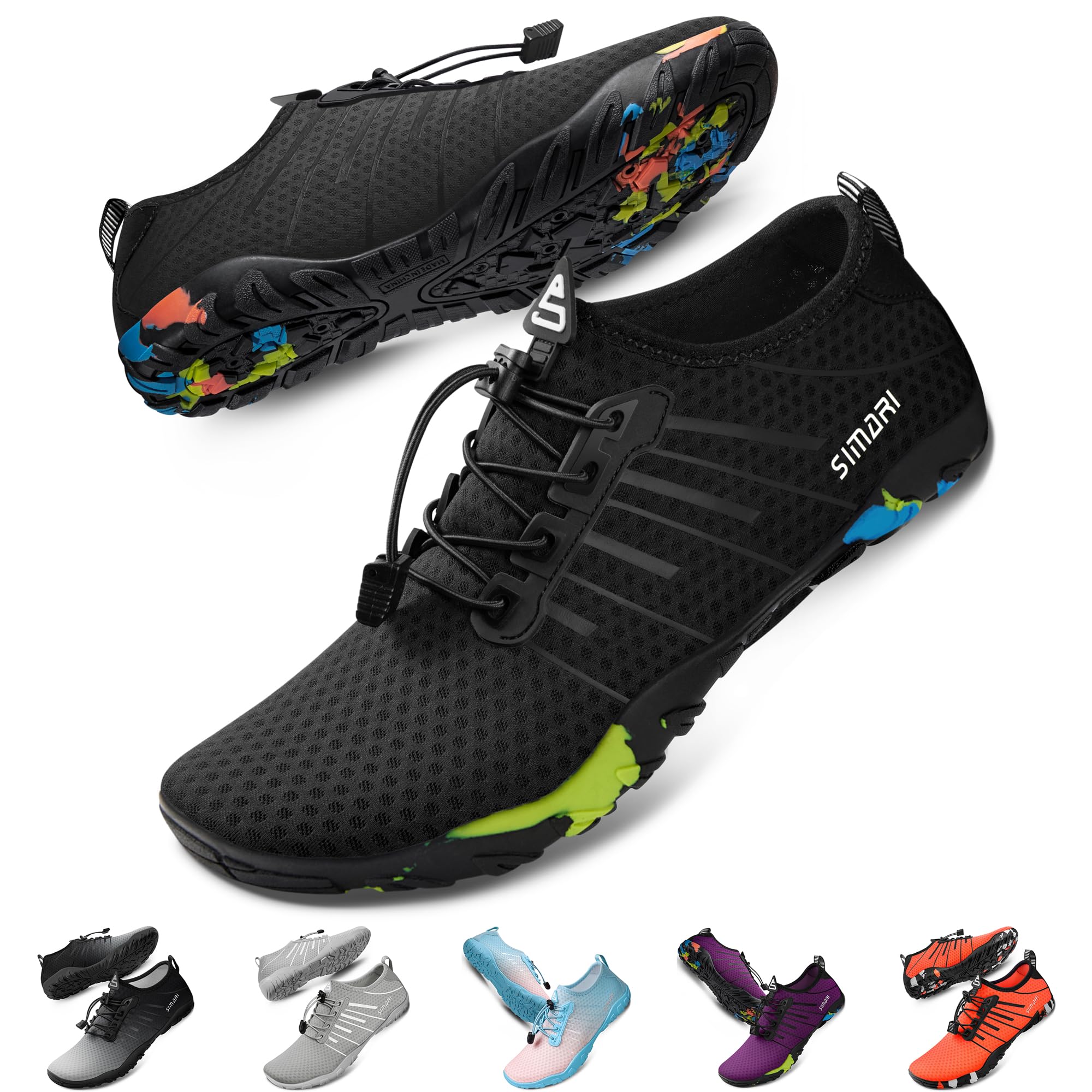
The SIMARI is the pair you fold into a suitcase for a trip where you might swim but don’t want to commit bag space to a real water shoe. It is a barefoot aqua sock with a thin, flexible sole and a stretch upper that pulls on like a slipper. For pool decks, sandy banks, and calm river shallows, that is enough.
The sole is thicker than a pure aqua sock, which helps on gravel and small rocks, and the drain holes let water out instead of pooling around your foot. The fit is true to size for many, but the upper is soft enough that you need to check the heel and toe before you get in. It dries fast and packs to almost nothing.
Traction is the divider. On wet grass, boat ramps, and smooth rock it does fine; on slimy, uneven riverbed it can feel vague, and the sole is not as aggressive as the closed shoes here. That makes it a light-duty shoe, not a technical river pick. We treat it as a backup for calm water rather than the pair we trust on a rocky crossing.
We still keep a pair for travel because it costs little, packs small, and handles the beach-to-pool day without fuss. If your river days are mostly sandy or gravelly, it earns its place. If you’re heading for rocky, fast water, spend more on the KEEN or step up to the Maxome for a little more sole.
Pros
- Packs down to almost nothing
- Drain holes clear water quickly
- Thin sole protects better than bare feet
Cons
- Uppers and toes can wear with hard use
We keep the SIMARI as a foldable travel sock for beaches and calm shallows, where low cost and small pack size make sense.
How We Tested the Best River Shoes for Men
We started with a list of about 40 pairs — purpose-built water shoes, trail runners with drainable uppers, and the closed-toe hybrid styles that show up in every river-shoe search — then cut it by upper material, outsole compound, size range, and price. Anything missing half sizes came off. Twelve pairs made the cut, and we wore them from May through October: gravel bars, rocky creek crossings, canoe take-outs, the walk back to the car, and the drive home afterward.
Each tester tried their usual size and a half size up, first barefoot and then with a neoprene sock, and we noted heel slip in the water versus on dry ground and whether toes jammed on steep descents. We ran a two-hour wear in each pair and logged hot spots on heels and toes before they turned into blisters, then wore the same pair for a full day — launch to take-out to dinner — to see whether the cushioning survived being soaked. For ease of use, we timed getting in and out with wet hands and noted which closures we could manage one-handed.
For water-friendliness, we weighed each shoe dry on a kitchen scale, soaked it, then weighed it again every ten minutes until it stopped losing water, and noted how long the squelch actually lasted. We inspected all twelve at the start, middle, and end for sole separation, frayed straps, crushed midsoles, and stretched laces, and walked a two-mile pavement loop in each to see how fast the rubber wore down. At the end of the season we asked ourselves whether we’d pay full price again — and whether we’d wear them anywhere other than the water.
How to Choose River Shoes for Men
The right river shoe starts with the ground under your feet, not the label on the box.
Match the shoe to the riverbed
Rocky, uneven ground calls for a closed toe and a sole with some substance; that is where the KEEN Newport H2 and UBFEN make the most sense. Sandy or gravelly shallows are friendlier to an aqua sock like the Maxome or SIMARI, which packs smaller and lets you feel the bottom. Open sport sandals like the Teva Hurricane XLT2 are best for camp, boat decks, and mixed dry-wet days. We prioritize the worst ground you’ll cross, not the average.
Fit and retention when wet
Water makes everything slicker, including the inside of a shoe. A river shoe should hold the heel down and leave enough toe room to avoid jamming on descents. We check the heel first, then the toe box, with the socks you plan to wear, and take a few steps with the straps or laces snug. The Crocs Swiftwater runs roomy; the UBFEN is less consistent across sizes. If you have a narrow foot, size down or choose an adjustable strap sandal rather than a stretch upper.
Traction is a tread question
A non-slip label tells you less than the tread pattern and how it meets the rock. Deep, widely spaced lugs bite into gravel and soft ground; a softer rubber compound helps on smooth wet rock, but no shoe grips algae. We treat the tread pattern as the real spec and step flat with weight over the feet. The UBFEN has the most aggressive tread in this group; the DLGJPA is better on gravel and packed trail than on big slick slabs. Choose for the surface you’ll actually stand on.
Drainage and drying
Water trapped in the shoe is weight you carry and moisture that softens skin. Mesh uppers, drain holes, and removable insoles all help. The DLGJPA’s perforated sole and the Maxome’s removable insole are practical examples. We pull the insole out, rinse the shoe after a river day, and let everything air dry away from direct sun. A shoe that stays wet overnight is a shoe that smells by the second morning.
Durability and care
River shoes live in grit, sun, and repeated soaking, so the weak points are usually the straps, toe seams, and sole edges. We rinse them after use, keep them out of a hot car, and never put them in the dryer. A closed toe and a proper strap system add protection, but they don’t guarantee years of service. If you’re hard on footwear, spend for the KEEN or accept that a budget pair is a season-at-a-time purchase.
Frequently Asked Questions
Do I need to wear socks with river shoes?
Not required, but a thin synthetic or neoprene sock helps on long days by reducing friction and keeping grit off your skin. Cotton is the wrong choice because it holds water and chafes. Try the sock with the shoe before your trip; if the fit gets tight, size up or go without.
How do I dry river shoes overnight?
Rinse them, pull out any removable insole, and stuff the shoe with newspaper or a dry cloth. Air dry away from direct sun or heat, never in a dryer. If the shoe is still damp by morning, keep it out of your clothes bag so the moisture can escape.
Are river shoes allowed in pools and water parks?
Usually yes if they’re clean and non-marking, but rules vary by facility. Rinse off river grit before you go inside, and check the pool’s footwear policy. A dedicated pool shoe is kinder to filters than a gravel-covered river shoe.
Final Verdict
For most men heading to a rocky river, the KEEN Newport H2 is the pair we recommend: closed-toe protection, a secure strap system, and enough support for the hike back. It is not the easiest to pull on, so if your days are mostly kayak launches and beach walks, the Crocs Swiftwater is the better-tempered choice. For a packable backup, the Maxome covers sandy and gravelly ground at little cost.