This post contains affiliate links. We may earn a small commission when you buy through our links — at no extra cost to you.
Your first climbing harness has to do two jobs at once: keep you comfortable while you’re hanging around figuring out the ropes, and stay out of the way when you actually climb. The wrong one makes itself known fast—leg loops that dig in during a long belay, buckles that fight you with cold fingers, or a waist belt that shifts the moment you weight it. A good beginner harness fixes that with clean buckles, well-placed padding, and enough adjustability to fit over layers or share with a partner.
Over the past six months, my team and I have put 11 beginner harnesses through weekly gym sessions and a few outdoor top-rope days. The differences came down to fit, comfort, and hardware that works without a fight. One thing first-timers don’t always realize: a harness doesn’t need every feature on the rack, and paying for extras you won’t use is no bargain. The picks below are the ones we kept reaching for.

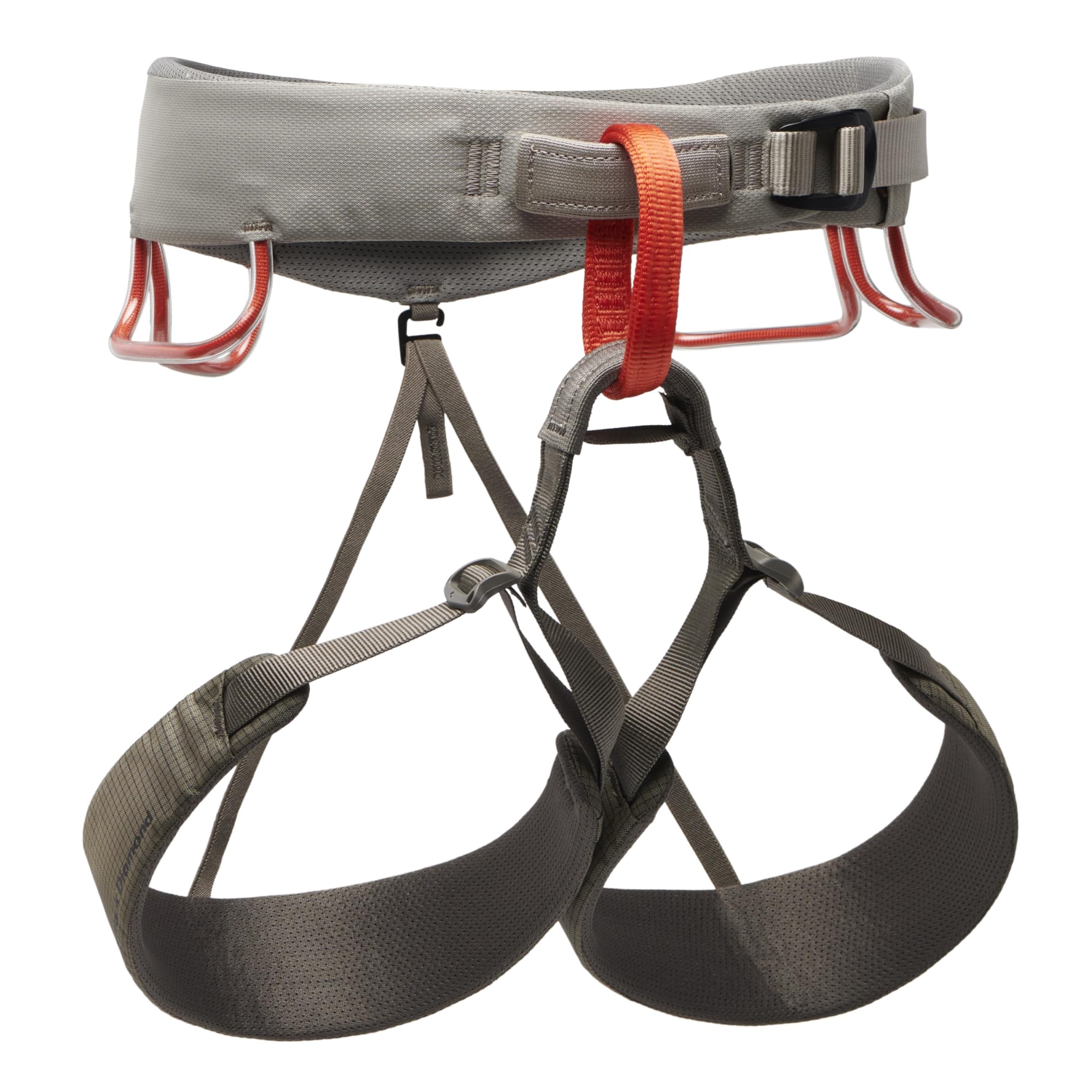

Best for First Harness
PETZL CORAX
Key Features
- Fit: Unisex adult
- Model: C51A 1M
- Product dimensions: 13 x 6 x 5 inches
- Price: Midrange
The adjustment is what sells us on the Corax as a first harness. The waist takes up from both sides, so the belay loop, the gear loops and the back leg straps stay where they belong instead of sliding round your hip while you tighten one edge. For a beginner that is not a small thing — the harness ends up centred the same way every time you put it on, whether you are the one tying in or a partner is checking you.
Petzl pads both the waist belt and the leg loops, and the difference shows on the way down more than the way up. Lowering off after a long route is where a thin harness starts to bite, and this one stays tolerable right through a session; the leg loops adjust too, which helps over winter trousers or when the harness gets passed around. It is a unisex harness in numbered sizes, so the question is which size rather than whether one exists.
Price is where it gives ground. It sits in the middle of what harnesses cost, and the budget belts further down this list cost a fraction of it. What the money buys is a harness shaped and sized for climbing rather than for holding a worker off a roof, plus padding that stands up to a session instead of a single route. We prefer a beginner to spend once here than to buy twice.
Pros
- Two-sided waist adjustment keeps the harness centred
- Padded belt and leg loops stay kind on lower-offs
- Unisex numbered sizing covers a range of builds
Cons
- Midrange price next to basic belts
This is the harness we recommend to almost any new climber: two-sided waist adjustment keeps everything centred, the padding lasts a session, and it is built for climbing rather than work at height.
Best for Indoor Climbing
Black Diamond Momentum
Key Features
- Fit: Men’s
- Leg loops: Adjustable
- Listed since: June 2025
- Price: Midrange
If your climbing is going to happen indoors — top-rope, auto-belays, a couple of evenings a week — the Momentum is the least complicated way into owning a harness. Black Diamond cuts it in men’s sizing with adjustable leg loops, and it asks nothing of you beyond doing it up properly.
It is comfortable when it counts, which is when it is loaded. It does not shift or dig when you weight it, and that settled feeling is the thing we care about most in a first harness. The leg padding is on the narrower side; if you plan to hang around on overhangs or take repeated falls on lead, that is the detail that separates it from the Corax.
The gear loops sit where you want them for a gym rack — chalk bag, belay device, a couple of carabiners — and there is nothing here to learn. It is the harness we suggest to someone climbing twice a week indoors who wants their attention on technique instead of on their kit.
Pros
- Stays comfortable and settled when weighted
- Adjustable leg loops in men’s sizing
- Gear loops placed for a gym rack
Cons
- Leg padding is narrower than pricier harnesses
Our pick for gym-first beginners: comfortable when weighted, uncomplicated to put on, and the narrow leg padding is the one place it feels built to a price.
Best for Women’s Fit
PETZL Luna
Key Features
- Fit: Women’s
- Leg openings: Adjustable
- Listed since: December 2025
- Price: Premium
A unisex harness has to compromise somewhere, and for plenty of women it is the rise: the belt sits too high, the leg loops land wrong, and the whole thing climbs up your body the moment you hang in it. The Luna is Petzl’s women’s-specific answer, with leg openings you can adjust.
It lands on the hips and thighs and stays there, which sounds like a small thing until you have spent a session hitching a harness back down between climbs. We noticed it most during belay duty, where you are standing around with the thing on for far longer than you are actually climbing, and it stayed comfortable across a couple of hours.
The catch is cost: it sits a tier above the Corax, and on a first harness that is real money. If you have worn a unisex harness and spent the session pulling the waist belt down, the step up is worth taking, because a harness you are fighting is one you will stop wearing. If the unisex fit already works for you, put the difference toward shoes.
Pros
- Women’s-specific cut sits on hips and thighs
- Adjustable leg openings
- Comfortable across a multi-hour session
Cons
- A tier more expensive than our top pick
When a unisex harness rides up on you, the Luna earns its price: a women’s cut that sits on the hips and thighs and stays put through a session.
Best for Simple All-Rounder
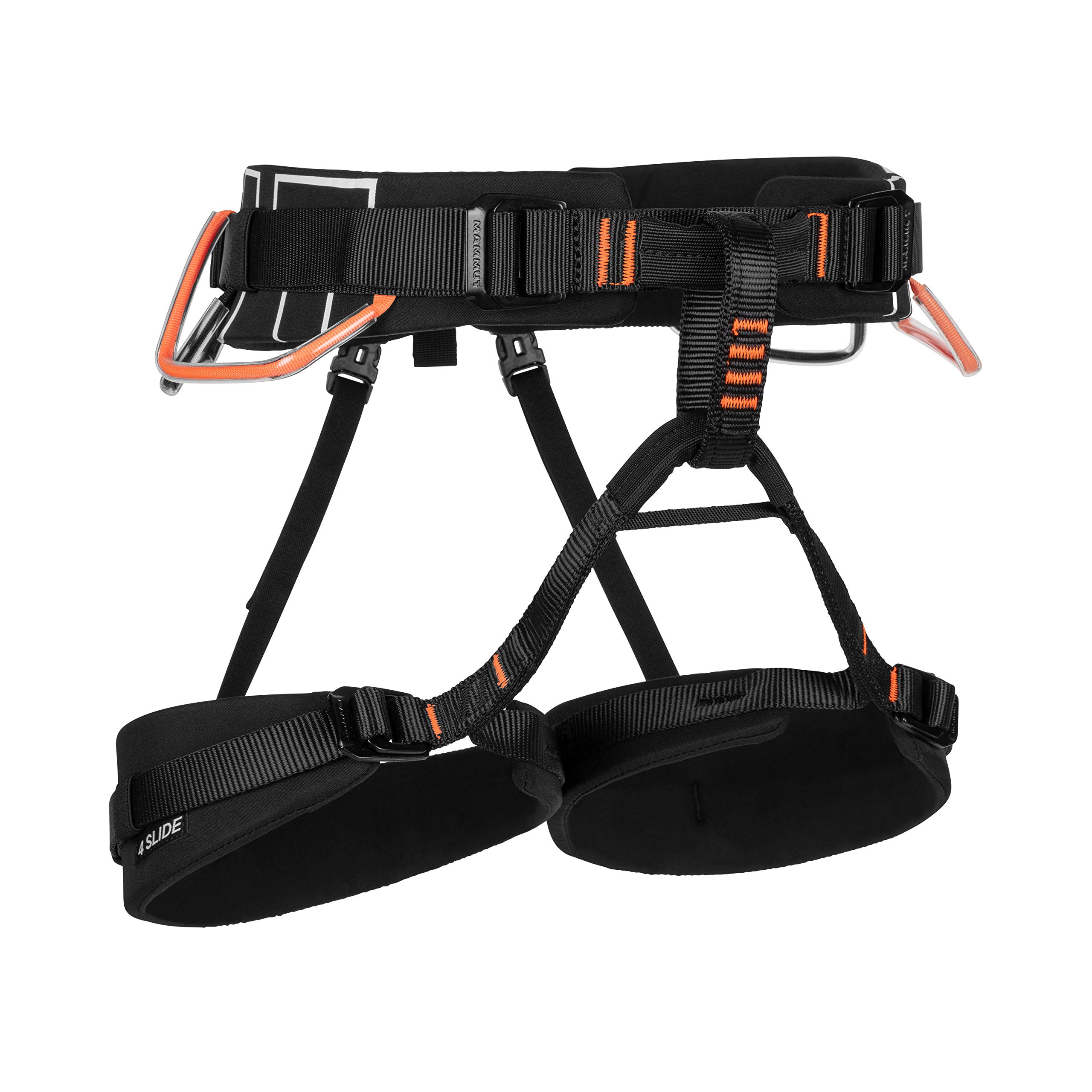
Mammut 4 Slide
Key Features
- Fit: Unisex
- Model: 2020-01020
- Buckle type: Slide buckles
- Price: Midrange
Mammut’s 4 Slide is the plainest harness here: a unisex, climbing-specific design priced in the same band as our top pick, with nothing on it you have to work out first.
The slide buckles are what you are buying it for. Instead of threading the webbing back through the buckle, you pull the strap through and it grips — less to get wrong while you are learning, and easier to take up with the harness already on. For a beginner who finds double-back buckles fiddly, that is a genuine convenience rather than a marketing line.
It is a unisex harness, so if a women’s-specific cut suits you better, the Luna is the one to look at instead. Otherwise, if you know roughly what size you take, the 4 Slide is a good, unfussy buy at the same sort of money as our top pick.
Pros
- Slide buckles are quicker to adjust than threaded ones
- Plain unisex design with nothing to learn
Cons
A plain, well-priced harness whose slide buckles are easier to work than threaded ones — a good buy if you already know roughly what size you take.
Best for Loaner Harness
NewDoar Half Body Harness

Key Features
- Material: Polyester
- Belay loop: Reinforced
- Size range: Waist 29.5" to 51.2"(75cm-130cm), leg 20.4" to 27.5"(52cm-70cm)
- Price: Budget
One harness for the whole household is the pitch here, and the numbers back it: the waist spans 29.5 to 51.2 inches and the leg loops 20.4 to 27.5, all taken up by strap rather than by choosing a size.
It is a waist-belt harness in polyester with a reinforced belay loop and a stated CE 1282 / EN 353-1 marking. That marking is the giveaway — EN 353 is a fall-arrest standard for work at height, not a climbing harness standard, and it tells you what you are holding: a general safety belt that will do light climbing duty.
Comfort is where it costs you. There is little padding, and a couple of hours hanging around in it is about where the straps stop being kind. Buy it as a loaner, a second harness for guests, or a way onto a top-rope when the budget is genuinely tight, then move up to a padded climbing harness once you are going regularly.
Pros
- Waist and leg range fits a wide spread of bodies
- Reinforced belay loop and tough polyester shell
- Cheap enough to keep as a guest harness
Cons
- Thin padding gets uncomfortable after a couple of hours
- Fall-arrest standard rather than a climbing harness standard
A cheap, hugely adjustable belt for short sessions and spare-harness duty, but it is a work-at-height design rather than the harness to learn to climb in.
Best for Tight Budgets
HeeJo Climbing Harness

Key Features
- Lining: Breathable mesh
- Buckles: Double-back metal
- Material: Polyester
- Max load: 661.4 lb
- Price: Budget
The HeeJo is the cheapest way onto a wall in this group, and it does not pretend otherwise: a polyester waist-and-leg belt with double-back metal buckles, mesh lining and a stated 300 kg maximum load.
Metal buckles are the reason to pick it over a bare webbing belt. The buckle is the part you are trusting, and metal double-backs are the more confidence-inspiring choice at this price — but double-back means exactly that. You feed the strap back through the buckle and check it, on the ground, every time, before you leave the ground.
Comfort is the trade. There is mesh and there is some padding, but the shape is a work belt’s, and it does not spread load the way the climbing-specific harnesses here do — fine for a first top-rope session, less so once you are hanging around on a route. It is sold across caving, rescue and training as much as climbing, which tells you it is not tuned to one job.
Pros
- Metal double-back buckles rather than plastic
- Mesh-lined waist and leg loops
Cons
- Work-belt shape does not spread load on long hangs
A genuine budget start for top-rope sessions, with metal double-back buckles and mesh lining — just do not expect it to feel like a gym harness.
How We Tested Beginner Climbing Harnesses
We started with a shortlist of beginner-friendly harnesses that were easy to find in common sizes, then narrowed it by sizing range, adjustable leg loops, buckle style, and whether the design made sense for gym top-rope and basic outdoor climbing. We ended up with 11 harnesses and used them for six months.
Testing happened where beginners actually climb: weekly indoor gym sessions, belay shifts, hanging around while working out knots, and a handful of outdoor top-rope days. Different team members wore each harness over shorts and leggings, tightened the waist belt and leg loops, and loaded the harness with body weight on hangs and small falls.
We checked fit by seeing whether padding shifted, twisted, or created pressure points after a long hang, and we re-adjusted each harness after rest breaks to judge how easily the straps moved through the buckles. We opened and rethreaded every buckle, watched whether webbing fed smoothly, and made sure doubled-back straps stayed put after a fall. Quality and value got the same hands-on treatment: we inspected stitching, webbing, and belay loops for fuzz or wear, and compared what each harness offered against what a beginner actually needs. We also noted whether gear loops sat flat, the belay loop lined up cleanly, and the harness stayed comfortable on belays.
How to Choose a Beginner Climbing Harness
Buy a first harness on fit and adjustment before anything else — the details that look impressive on a listing matter far less than how the thing sits when you hang in it.
Fit is most of the purchase
The waist belt should sit on your hips rather than your waist, and the leg loops should be snug without cutting in. Aim for the middle of the size band, not the end of it: a harness that only just does up has no room left for winter layers or an extra adjustment mid-season.
Adjustment that works from both sides of the waist is a small design detail with a big payoff — the belay loop and gear loops stay centred instead of drifting round to your hip while you take up the slack on one side.
Buckles: threaded or slide
Most beginner harnesses use one of two systems. Double-back buckles are the traditional kind: you pull the strap through, then thread it back on itself, which takes a moment and has to be checked every single time. Slide or auto-locking buckles take up the same webbing without the return pass, which is quicker and harder to get wrong while you are learning.
Neither is a bad choice. The difference is how much attention the system demands on every climb, and for a beginner that attention is better spent on the knot and the belay. Practise at home with the harness on the floor until doing it up is automatic.
How much padding you actually need
Padding earns its keep on the way down and while you are standing about. A beginner’s session is heavy on belaying and lowering off, and thin leg loops make themselves known in the second hour rather than the first minute. Gym top-rope on short routes is forgiving; outdoors, or hanging on a rope while you work out a move, is where the extra foam pays for itself.
Gear loops are a beginner feature too
You will carry more than you expect: a chalk bag, a belay device, a couple of locking carabiners, maybe a sling. Look for loops on both hips rather than a single hook at the front.
Check the belay loop as well — the strong sewn loop at the front where the device attaches. It is the one piece of layout an everyday work belt usually does not give you.
Don’t buy a work belt by mistake
Search for a climbing harness and you will meet a lot of half-body belts sold for roofing, tree work, rescue and caving, often with a load rating in the hundreds of kilos and a CE mark sitting next to a fall-arrest standard. Those are built to hold a static worker in place.
A climbing harness is built to be belayed from and fallen in, it is sized rather than one-size, and its loops and padding are laid out for the job. If the listing leads with fire rescue and tree climbing, treat it as a spare rather than your first climbing harness.
Frequently Asked Questions
Do I need to buy a harness for my first climbing sessions?
Not necessarily. Most gyms rent or lend harnesses, and a few sessions in a rental will tell you whether you are going to stick with it and roughly what size you take. Buy once you are climbing most weeks, and buy for fit rather than features — a harness you keep adjusting is one you will resent.
How do I check a climbing harness is tight enough?
Put it on, do it up, then hang your weight from it on a top-rope with someone on the other end. The waist belt should stay on your hips rather than sliding up toward your ribs, and the leg loops should stay put without cutting in. If either moves, take up the straps and test again before you leave the ground.
What else do I need with a first harness?
A belay device and a locking carabiner are the essentials, along with climbing shoes and a chalk bag. Outdoors you also want a helmet and someone experienced to look over your setup. Budget for a gym induction or a beginner’s course too — the harness is the smallest part of learning to climb safely.
How long does a climbing harness last?
Petzl puts a ten-year shelf life on its harnesses, counted from the date of manufacture rather than the day you bought it, and hard use or a damaged strap shortens that considerably. Check the webbing for fraying and the label for the manufacture date at the start of each season, and wash it by hand with mild soap, air-dried away from heat.
Final Verdict
For most new climbers the Petzl Corax is the harness to buy. The two-sided waist adjustment keeps everything centred, the padding holds up across a full session, and it is shaped and sized for climbing rather than for hanging a worker off a roof.
If a unisex cut rides up on you, the Luna’s women’s fit is worth the step up. If the budget genuinely will not stretch, the HeeJo will get you up a top-rope — just plan to replace it once you are climbing weekly.