This post contains affiliate links. We may earn a small commission when you buy through our links — at no extra cost to you.
Trad climbing demands more from a harness than gym sessions or sport cragging. You need gear loops that keep cams and nuts organized and accessible, adjustable leg loops for layering over alpine pants, and padding that doesn’t turn a hanging belay into a misery. Many all-around harnesses claim to do it all, but the reality is that a lightweight design often sacrifices the padding that keeps you comfortable when you’re hanging for twenty minutes.
The real differentiator isn’t just the number of gear loops – it’s whether those loops are rigid enough to let you clip one-handed while your other hand holds the rope. A harness that works for trad must also center the tie-in point properly when your rack pulls from one side. This guide covers the models that get those details right, so you can carry a full rack without feeling like you’re fighting your gear.


Best for All-Around Trad
PETZL CORAX
Key Features
- Gear Loops: 4, 2 rigid front
- Leg Loops: Adjustable
- Buckle: Dual DoubleBack
- Price: Mid-Range
The CORAX uses well-distributed padding in the waist and leg loops to keep pressure off during hanging belays, while dual waist buckles and fully adjustable leg loops let you dial in the fit whether climbing in light layers or bulky winter clothing. Four gear loops — two rigid in front for quick racking, two flexible in back — keep trad gear accessible without snagging.
This harness suits trad climbers who value all-day comfort over minimal weight. At 470 grams, it is not built for ultra-light alpine missions where every gram counts, but the padding trade-off is widely accepted for the added belay comfort. Note that the leg loops have fixed tie-in points, which may feel restrictive to those accustomed to a fully floating design.
Pros
- Padding in waist and leg loops reduces pressure during long belays.
- Dual waist buckles and adjustable leg loops accommodate different body shapes and clothing layers.
- Four gear loops with rigid front loops allow quick access to trad rack.
Cons
- Heavier than alpine-specific harnesses, at 470 grams, making it less ideal for fast-and-light missions.
- Fixed tie-in points may not suit climbers who prefer a floating leg loop design.
For trad climbers who want one harness that works from the gym to multi-pitch routes, the CORAX delivers consistent comfort and practical features without pushing the price up.
Best for Budget Trad Beginner
BD Momentum
Key Features
- Gear Loops: 4
- Leg Loops: Adjustable
- Buckle: Single buckle
- Price: Budget
The Momentum delivers trad-ready adjustability and comfort at a fraction of the cost of the top pick. Four gear loops and padded leg loops suit moderate trad racks and hanging belays, but the waist and leg loops fit tighter than expected. Climbers at the upper end of the waist range should order up a size to avoid discomfort.
Pros
- Exceptional value with four gear loops and adjustable leg loops for trad climbing.
- Comfortable all-day wear with cushioned waist and leg straps.
- Lightweight enough for approaches, yet durable for regular use.
Cons
- Occasional units arrive with damaged webbing, so inspect upon delivery.
- Waist and leg loops fit tighter than expected; sizing up can resolve this for most climbers.
Best for budget-conscious trad climbers who accept a trimmer fit and can size up if needed.
Best for Heavy Rack Trad
PETZL Adjama
Key Features
- Gear Loops: 5, 2 rigid front
- Leg Loops: Adjustable
- Buckle: DoubleBack
- Price: Premium
The Adjama stands out with five gear loops, including two rigid front loops that keep quickdraws and cams organized for efficient trad racking. The 100% recycled polyester exterior reduces environmental impact. This harness targets experienced trad climbers who carry a full rack and want eco-friendly materials, though long-term comfort under heavy loads is less validated than the Corax.
Pros
- Two rigid front gear loops provide clear separation for racking cams and quickdraws.
- 100% recycled polyester exterior lowers environmental footprint without compromising durability.
- Adjustable leg loops with DoubleBack buckles accommodate varying clothing layers.
Cons
- Premium pricing compared to the Corax – the extra cost goes into gear loop count and recycled materials, not adjustability.
A specialist harness for trad climbers who prioritize maximum gear capacity and recycled materials over verified all-day comfort.
Best for Alpine Trad Light
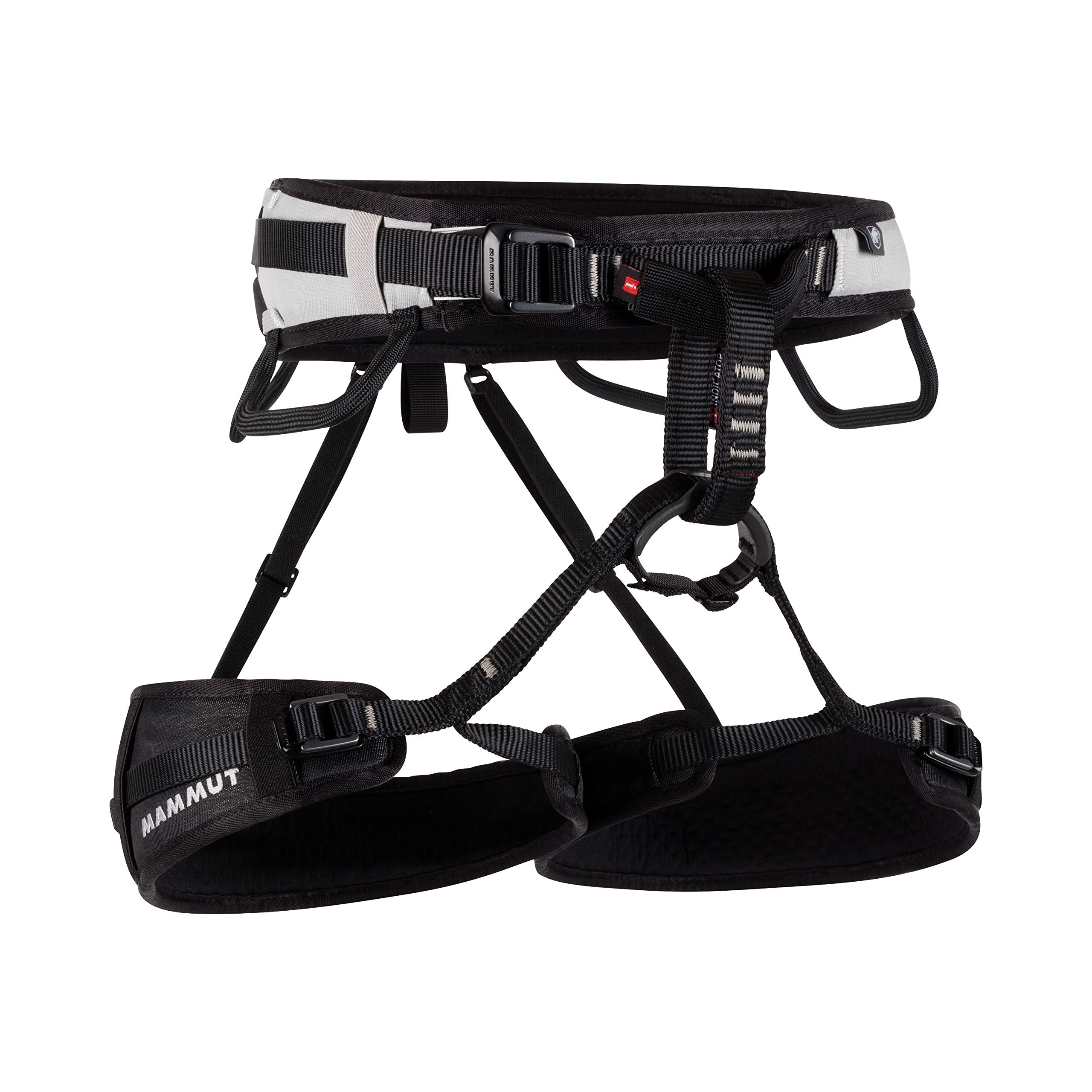
Mammut Ophir 3
Weighing only 380g, the Ophir 3 trims grams without sacrificing adjustability. The Slide Bloc buckles allow quick on-the-go leg loop and waist adjustments – ideal for changing layers on alpine routes.
This harness suits climbers who prioritize weight for alpine trad and fast-and-light missions. However, because detailed user feedback on gear loop stiffness and hanging comfort is unavailable, it’s a gamble for those carrying heavy racks or spending extended time on belay. Stick with a more padded option if gear loop rigidity and all-day hanging comfort are priorities.
Pros
- Weighs just 380g – one of the lightest adjustable harnesses for alpine trad.
- Slide Bloc buckles enable quick leg loop and waist adjustments without removing gloves.
- Adjustable leg loops accommodate varying clothing layers and seasonal insulation.
Cons
- Gear loop stiffness and hanging comfort are unconfirmed from real-world trad use – a risk for heavy rack carrying.
For alpine climbers who count every gram, the Ophir 3 delivers on weight and adjustability – but verify gear loop performance if your rack is heavy.
Best for Unisex Budget Harness
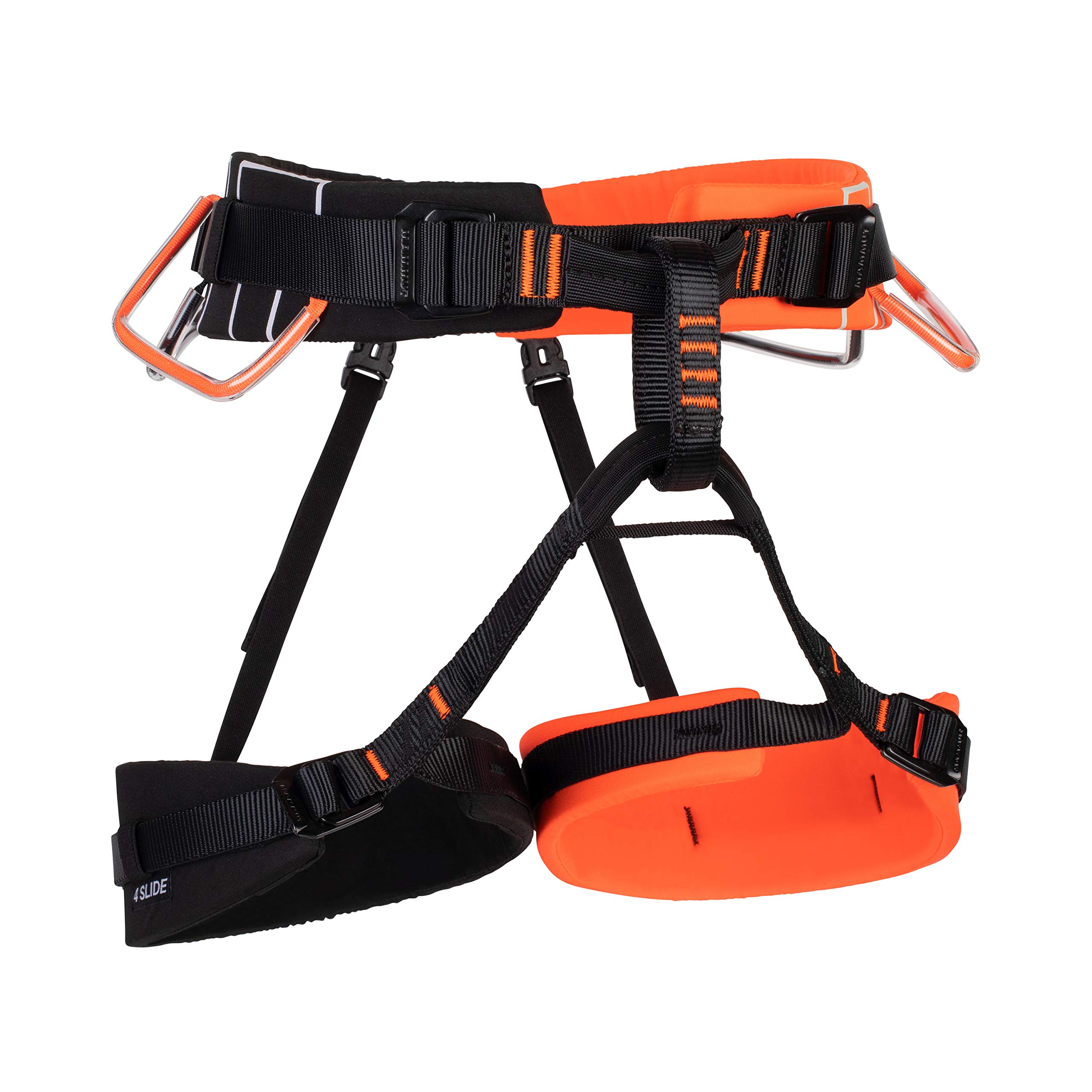
Mammut 4 Slide
The Mammut 4 Slide delivers a unisex fit at a budget price, appealing to climbers who prioritize brand reputation over verified specs. Unlike lighter alpine harnesses, this one emphasizes affordability and simplicity. But the gear loop count and weight are not disclosed, so you are committing without full knowledge. This suits budget-conscious trad climbers who have prior experience with Mammut sizing and are comfortable with a blind buy. It is not for those who need confirmed features or rely on community feedback for fit.
Pros
- Unisex design fits a range of body types without gender-specific constraints.
- Budget price makes Mammut’s build quality accessible for trad climbers on a tight budget.
Cons
- Gear loop count and harness weight are not disclosed — you won’t know exact specs until it arrives.
For anyone who already trusts Mammut’s harness sizing and wants a simple, affordable trad harness, the 4 Slide works. If you need confirmed gear loop layout or weight, look elsewhere.
Best for Alpine Mixed Trad
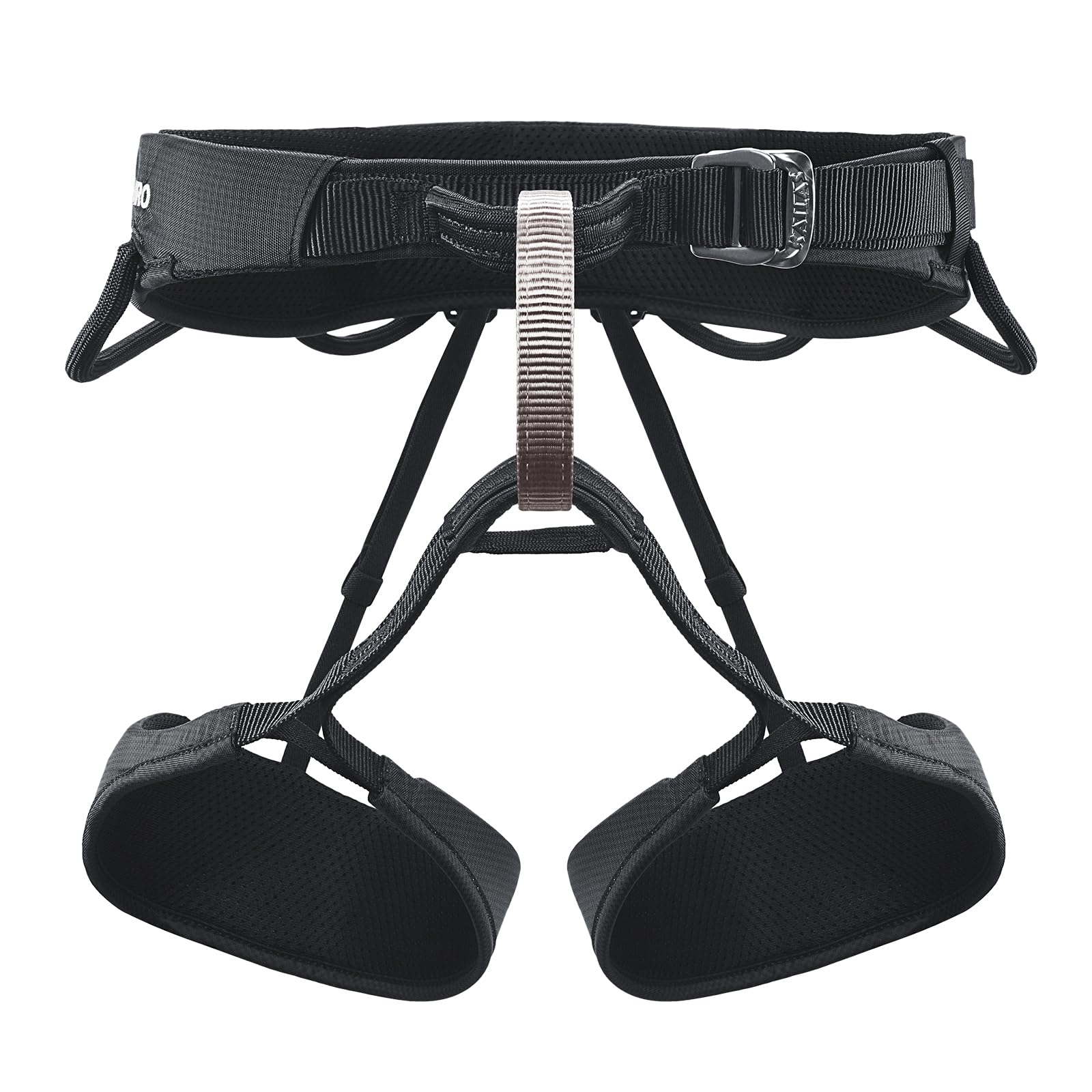
KAILAS Airo
Side ice tool hanging points and breathable mesh set the Airo apart from other budget trad harnesses. The construction feels solid for the price, and the mesh keeps you cool during long approaches. However, sizing runs small — even following the size chart, leg loops can be tight for some users. This is a good option for climbers who need ice tool attachment points on a budget and are willing to order at least one size up.
Pros
- Side ice tool hangers for alpine mixed routes at a budget price
- Breathable mesh keeps you comfortable in hot conditions
- Good overall features for the cost
Cons
- Sizing can be off — leg loops may fit tightly even when waist matches size chart
Best suited for climbers who need ice tool hangers on a budget and are willing to order a size up to get the right fit.
How to Choose
The most important decision when choosing a trad harness is the gear loop design – rigid front loops with enough separation make racking quick and keep your gear organized.
Gear Loop Design
The number of gear loops matters less than their stiffness and spacing. Rigid front loops hold their shape when you clip a cam one-handed, while flexible loops can collapse under a heavy rack. Look for loops made of hard plastic or reinforced webbing that stay open and accessible.
On multi-pitch routes, having at least two rigid front loops lets you separate cams from nuts and quickdraws, so you can find the right piece without fumbling. Harnesses with five loops, like the Petzl Adjama, give extra capacity for long routes or aid climbing.
Adjustable Leg Loops
Adjustable leg loops are a must for trad climbing because conditions change. You may start a route in shorts and top out in a puffy jacket and hardshell pants. Fully adjustable loops let you loosen or tighten without taking the harness off.
Fixed leg loops save weight but lock you into one fit – if you gain or lose weight, or borrow a friend’s harness, they may not work. For trad, the convenience of adjustment outweighs the few extra grams.
Weight vs. Padding
Every gram saved on the approach comes at a cost on the belay. Ultralight harnesses (under 400g) often use thin waistbelts that concentrate pressure on your hips during a hanging belay. After ten minutes, that pressure turns into real discomfort.
A mid-weight harness around 470g (like the Petzl Corax) spreads the load with wider padding, making it comfortable for long belays. If your trad day includes many hanging stances, choose padding over lightness.
Buckle Design
DoubleBack buckles (Petzl style) provide fine adjustment and stay secure once set. Slide Bloc buckles (Mammut style) are faster to adjust but can slip if not fully engaged. Quick-release buckles are convenient but less common on trad harnesses.
For trad, a buckle that allows micro-adjustments under load is valuable because you may need to tighten the waistbelt after racking gear. DoubleBack buckles are the most reliable for this.
Waistbelt Centering
A harness with a single waist buckle can shift off-center when you carry a heavy rack on one side, pulling the tie-in point away from your centerline. Dual buckles (one on each side) let you center the belay loop regardless of gear distribution.
This is most noticeable on long approaches or when you wear a pack over the harness. Dual-buckle designs like the Petzl Corax keep your tie-in point aligned for cleaner rappels and safer belay transitions.
FAQ
How many gear loops do I really need for trad climbing?
For single-pitch trad with a moderate rack (10-12 pieces), four gear loops are sufficient. For multi-pitch or big wall where you carry 15+ cams plus nuts and draws, five loops (like the Petzl Adjama) help keep gear organized and accessible. The key is having at least two rigid front loops – flexible rear loops are fine for slings and quickdraws.
Are adjustable leg loops worth the extra weight on a trad harness?
Yes, for all trad climbing where you might layer clothing or change temperatures through the day. Fixed leg loops save about 50g but lock you into one fit. Adjustable loops let you tighten for security on steep sections and loosen for comfort at belays. The weight penalty is trivial compared to the fit versatility.
Can I use a gym harness for trad climbing outdoors?
You can, but it’s not ideal. Gym harnesses often lack rigid front gear loops, so racking cams and nuts one-handed is frustrating. They also tend to have thinner padding, making hanging belays uncomfortable. If you already own a gym harness, it will work for short trad routes, but a purpose-built trad harness with stiff gear loops and good padding will make the experience much better.
Why do some trad harnesses have a second buckle on the waistbelt?
A second buckle (dual-buckle design) lets you center the tie-in point after racking gear. When you hang a heavy rack on one side, a single-buckle harness can twist, pulling the belay loop off-center. Dual buckles compensate for that shift, keeping your harness aligned for safe rappels and belay transitions.