This post contains affiliate links. We may earn a small commission when you buy through our links — at no extra cost to you.
For years I treated my road shoes as all-purpose shoes — fine on packed dirt and crushed gravel, right up until they weren’t. The switch came on a wet, root-laced descent where I spent more time braking than running. Trail shoes aren’t road shoes with a beefier sole: the rubber compound, the lug depth, the rock plate, and the way the upper locks your heel down all change how confident you feel when the ground stops cooperating. That confidence is what you’re actually buying.
Over the past six months my team and I have run in 12 pairs, from featherweight racers to tank-like mountain shoes, and the gap between a good pair and a good-looking pair is wider than the price tags suggest. One thing first-time buyers rarely hear: trail shoes often fit snugger than your road pair, a heel that slips on a descent is a blister waiting to happen, and a toe box that’s too short will cost you a toenail. Everything below earned its spot on the technical stuff first.



Best for Muddy Trails
Speedcross 4
Key Features
- Fit: Narrow toe box
- Weight feel: Light
- Traction focus: Soft, muddy ground
- Price: Midrange
On soft, muddy ground, the Speedcross 4 is the shoe we reach for first. The outsole bites in a way that makes steep, wet climbs feel less like a negotiation, and that grip is the clearest advantage any shoe in this group has. It is also light and supportive enough to run, not just hike, which is why it stays in our top group for aggressive off-road days.
The shoe’s race-day feel comes from more than the lugs. Arch support is generous, and the upper holds the foot securely without feeling bulky. We noticed the lightweight build most on longer climbs, where a heavier trail shoe starts to feel like extra work. The Speedcross is not a plush cruiser; it is a focused tool for soft ground and obstacle-style courses.
Durability is better than we expected for a shoe this light, and the upper has held up to rough, obstacle-style use in our testing. It is not the plushest shoe here, but that is the point: the Speedcross trades softness for control. If your trails are wet, loose, and steep, that trade is easy to live with.
Pros
- Surest grip here on soft, muddy ground
- Light and supportive for aggressive trail running
- Holds up to rough, obstacle-style use
Cons
- Narrow toe box; size up if between sizes
We recommend the Speedcross 4 for soft, muddy trails and obstacle races: its grip is the most secure in this group, and it stays light underfoot.
Best for Wet Weather
XA Pro 3D GTX
Key Features
- Closure: Quick lace
- Arch support: Supportive
- Waterproofing: Gore-Tex
- Price: Premium
The XA Pro 3D Gore-Tex is the shoe we pick when the weather turns genuinely wet. The waterproof liner keeps water out on saturated trails, and the quick-lace system is a small mercy when your hands are cold and muddy. This is a trail runner built for miserable conditions, not just dry summer hardpack.
Support is the other reason it earns a place. The arch and ankle hold are generous, and the fit is more accommodating than the Speedcross for many feet. We like the quick laces for the same reason: you can cinch them down without fumbling, and they stay put.
The trade-off is the price: this is the premium option here. If you run mostly dry trails, a non-waterproof shoe will breathe better and cost less; the XA Pro earns its keep when the forecast is bad. For wet-weather runners who want one dependable pair, that is a reasonable exchange.
Pros
- Gore-Tex keeps feet dry in wet conditions
- Quick lace system is easy to cinch and adjust
- Supportive arch and ankle hold
Cons
- Sole wear can appear early
For wet, cold trails, we choose the XA Pro 3D Gore-Tex: it keeps feet dry, locks in support, and makes quick laces work with cold hands.
Best for Wide Feet
Lone Peak 8
Key Features
- Toe box: Wide
- Traction: Slippery rock and loose dirt
- Trail use: Mixed-surface
- Price: Midrange
The Lone Peak 8 is the shoe we hand to anyone whose toes feel cramped in standard trail shoes. The wide toe box gives your foot room to spread, and that changes how the shoe feels on long descents and hot days. It is not a snug race shoe, and it is not trying to be.
Traction is better than the roomy shape might suggest. The outsole grips slippery rock and loose dirt well enough for mixed-surface runs, and the shoe is comfortable right out of the box. We appreciate that the roomy fit still feels stable enough for long days, even if it is not the most precise shoe here.
The wide fit is not for everyone: runners who want a precise, snug race shoe will find it loose, especially on technical descents. But for wide feet and long days, that room is the point. If you want a natural-feeling trail shoe that lets your toes work, this is the one we point to first.
Pros
- Wide toe box gives toes room to splay
- Comfortable right out of the box
- Grippy on slippery, rocky terrain
Cons
- Durability can be uneven over time
We keep the Lone Peak 8 for wide feet and long days: the toe box lets toes splay, and the ride feels natural on mixed trail.
Best for Women’s Trails
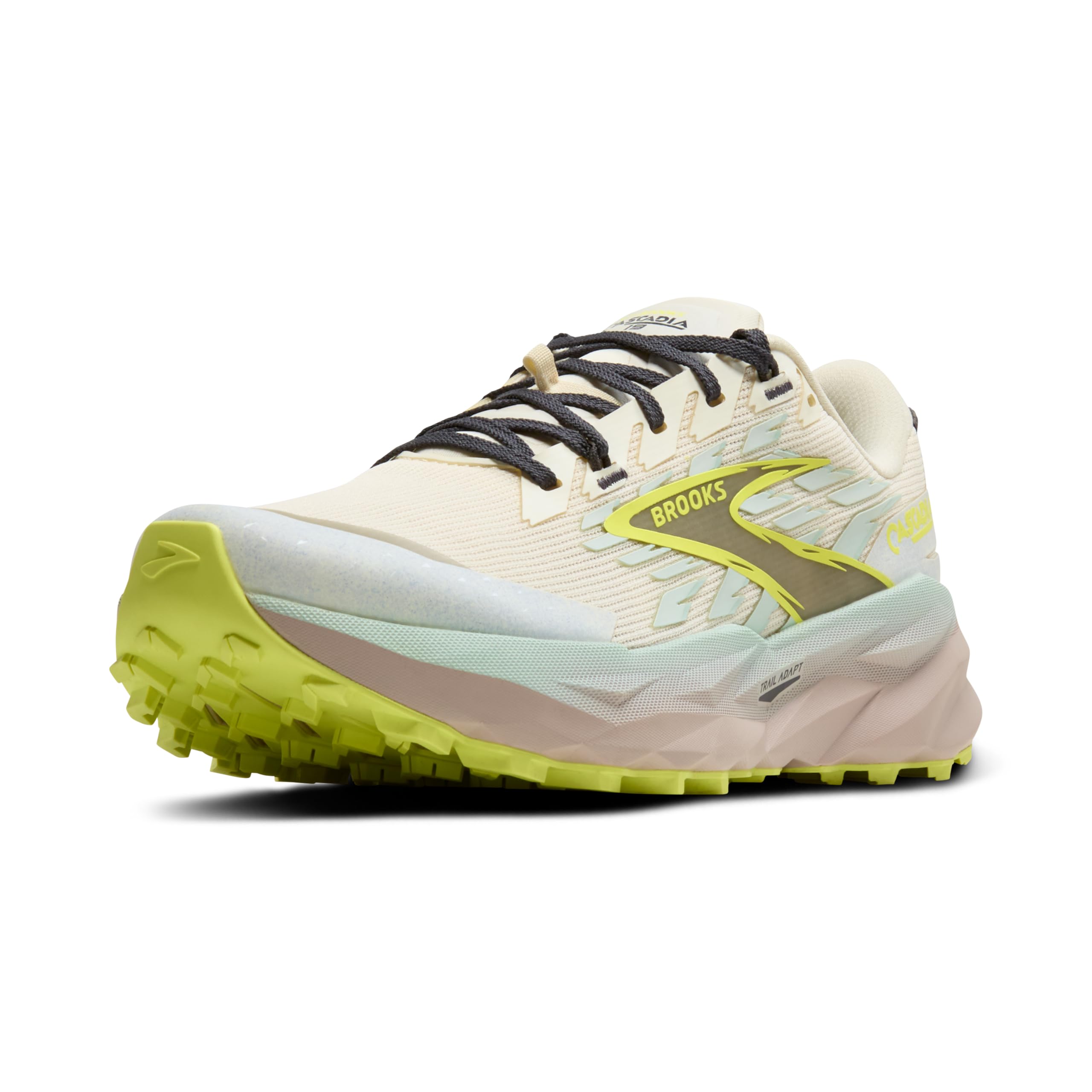
Cascadia 19 Women’s
Key Features
- Support: Stable
- Toe box: Wide
- Traction: Rocky trails
- Department: Women’s
- Price: Midrange
The women’s Cascadia 19 is the most complete women’s-specific trail shoe in this group. It has a wide toe box without feeling sloppy, and the supportive upper gives you something to push against on rocky ground. That combination is what makes it worth a place here.
We were impressed by how quickly it felt comfortable. The shoe has a stable, planted ride on rocky trails, with traction that holds on mixed surfaces and enough arch support for long days. It is a trail runner for hiking-size days as much as fast efforts, and the women’s-specific build gives you that roomy fit in a shoe sized for women.
Style is a bonus, but the fit is the real story: it gives you a wide toe box and stable support without making you feel like you are wearing a men’s shoe. It is not a minimal race shoe; it is a supportive trail companion for long, rocky days.
Pros
- Women’s-specific fit with a roomy toe box
- Sure-footed traction on rocky trails
- Supportive and comfortable for long days
Cons
- Durability can fall short with heavy use
We point women toward the Cascadia 19 for rocky trails: it pairs a roomy toe box with stable support and confident traction.
Best for Budget Trails
Excursion Tr14
Key Features
- Use: Light trails and walking
- Cushioning: Firm heel
- Width options: Wide available
- Price: Budget
The Excursion Tr14 is the budget shoe we point to when someone wants to try trail running without committing a lot of money. It has real tread, a comfortable upper, and enough support for light trails and daily walks. It is not a specialized mountain shoe, but it does not feel like a toy either.
Wide sizing is a genuine advantage here. The shoe is available in wide widths, and the roomy options work for feet that feel pinched in narrower trail models. We also like that the comfort holds up for all-day wear, which makes it useful for hiking and standing as well as running.
Sizing is the thing to get right: the fit can run narrow or inconsistent, so try the wide option if you are on the edge. That is a small hassle for a shoe that otherwise delivers a lot for the money. For light trails, dog walks, and everyday wear, it is an easy recommendation.
Pros
- Low-cost entry into trail running
- Comfortable for walking and light trail days
- Wide sizes available
Cons
- Firmer heel than plusher trail shoes
We put the Excursion Tr14 at the front of the budget list: it gives you trail grip, wide sizing, and all-day comfort without a premium outlay.
Best for Light Hikes
NORTIV 8 Trail
Key Features
- Support: Light-duty
- Toe box: Wide
- Traction: Dry, dusty trails
- Price: Budget
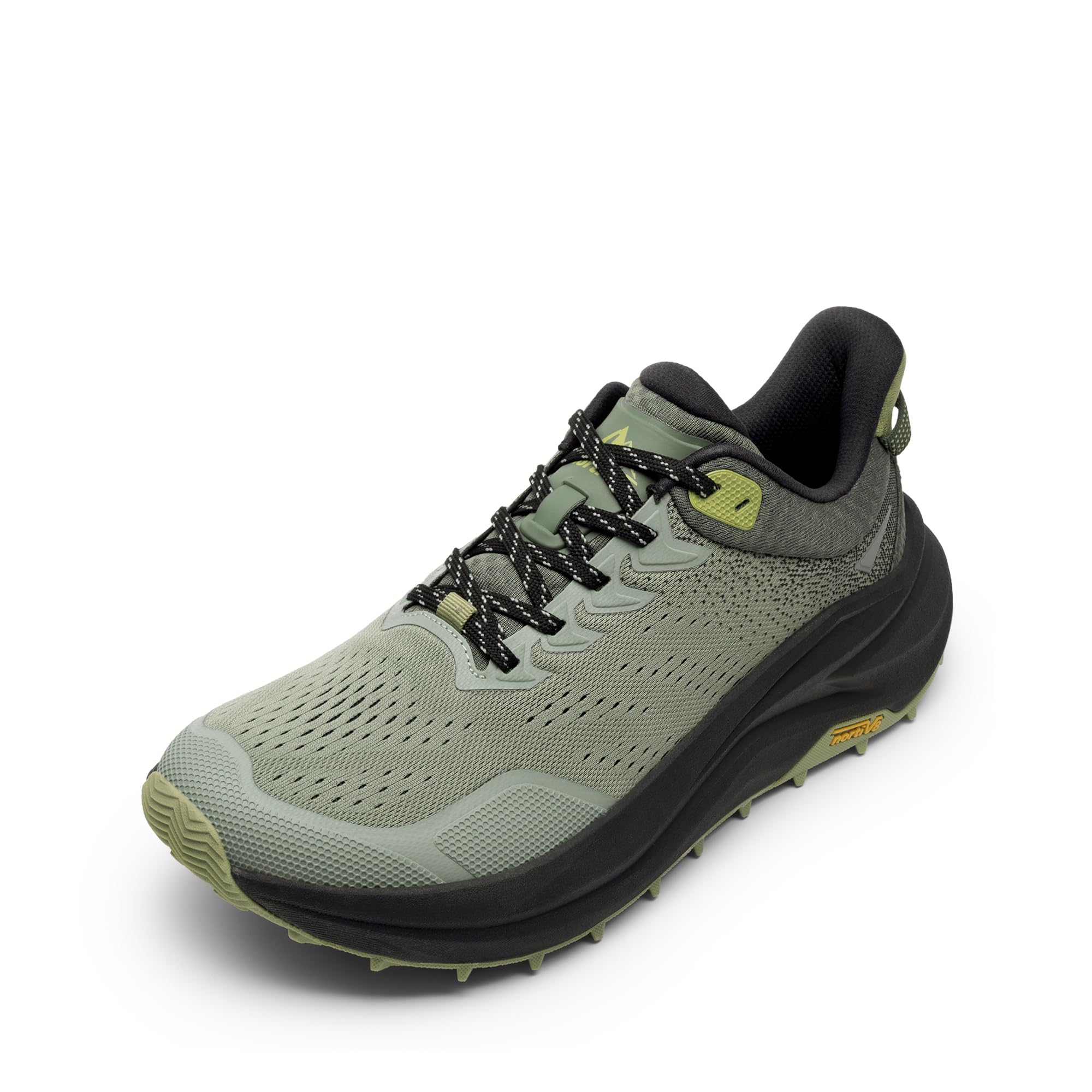
The NORTIV 8 asks you to accept a narrower job description than the other shoes here. It is a wide-toe-box trail shoe at a budget price, and it works best for walkers and light hikers rather than runners who need a lot of support. If that sounds like your use, it is a lot of shoe for the money.
We found the fit genuinely roomy, with a toe box that gives wide feet space without the shoe feeling like a slipper. Cushioning is comfortable for daily wear, and the traction is fine on dry, dusty trails and packed dirt. It is the kind of shoe you leave by the door for dog walks and easy path miles.
The boundary is running support. Some runners find it too soft and unsupportive for real trail efforts, and we don’t choose it for technical descents or long mountain days. For wide-footed walkers who want a low-cost trail-capable shoe, that is a fair trade.
Pros
- Wide toe box with plenty of room
- Comfortable cushioning for walking and light trails
- Low-cost option
Cons
- Less secure on wet, steep ground
We see the NORTIV 8 as a budget wide-fit shoe for walkers and light hikers; runners needing support should pass.
Best for Trail to Town
Charged Bandit Trail 3

Key Features
- Fit: Can run tight
- Use: Trail and pavement
- Traction: Light trails
Some trail shoes feel like specialized race gear; the Charged Bandit Trail 3 is the one we grab for a mix of trail, pavement, and errands. It has a tidier look than most trail shoes, and the ride is comfortable enough for all-day wear. That versatility is the reason it is here.
Traction is good for light trails and paths, and the foot support is adequate for daily walking and easy running. We like that it does not feel clunky on pavement, which makes it easier to live with than a dedicated lugged shoe.
It is not the most technical shoe here; for rocky, steep terrain, the Cascadia or Speedcross is the better tool. But for light trails and daily wear, that lighter build is exactly right. It is a trail shoe for people who want one pair to do a bit of everything.
Pros
- Good grip for light trails and paths
- Comfortable enough for all-day wear
- Strong value and appearance
Cons
- Fit can be tight for wide feet
We like the Charged Bandit Trail 3 for light trails and daily wear: it grips well, looks tidy, and doesn’t feel like specialized race gear.
Best for Long Rocky Days
Caldera 8
Key Features
- Toe box: Wide
- Traction: Rough, loose ground
- Cushioning: Plush
- Durability: Can wear early
- Price: Midrange
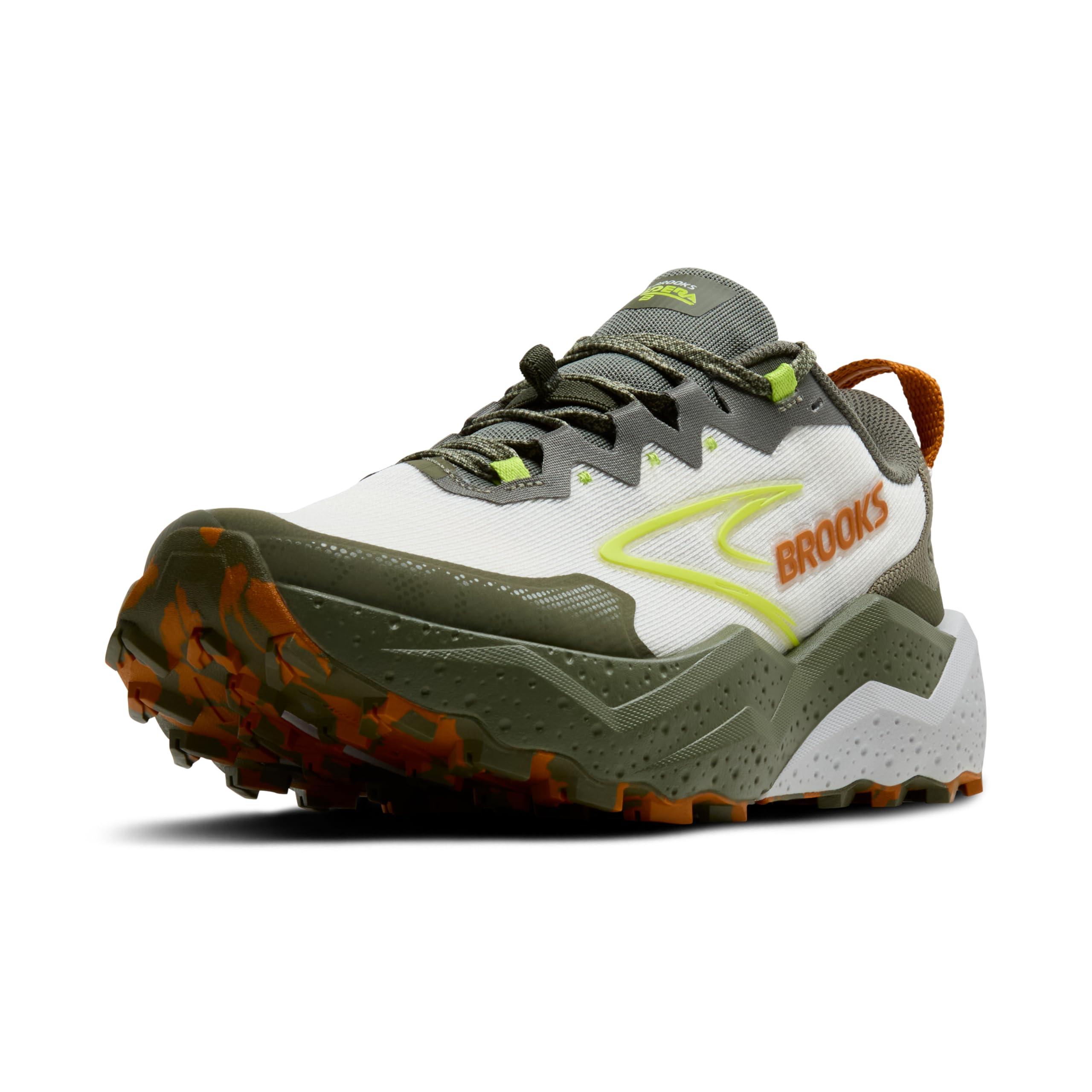
The Caldera 8 is the cushioned option in this group. It is built for long, rocky days when you want a softer landing and less sting from the trail, and the roomy toe box keeps your feet from feeling packed in. It is not a fast, ground-hugging race shoe, and it does not pretend to be.
Traction and arch support are solid for mixed terrain, and the cushioning is the star. We noticed the softer ride most on long descents, where a firmer shoe starts to wear on your legs. The Caldera is the pick for runners who value comfort over trail feel.
It is not a precise race shoe, but that is the cushioning trade. We still choose the Caldera for long, rocky days when comfort matters more than outright pace. If you want a softer landing and a roomy toe box, it earns its place.
Pros
- Plush cushioning for long trail days
- Good traction on rough, loose ground
- Roomy toe box and supportive arch
Cons
- Durability can fall short on high mileage
We choose the Caldera 8 when cushioning matters more than outright speed: it softens long, rocky days and leaves room in the toe box.
How We Tested a Dozen Pairs of Trail Running Shoes
We started with a shortlist of about 30 models and cut it down the way trail runners actually read a spec sheet: lug depth and pattern, heel-to-toe drop, whether there’s a rock plate, which widths are offered, and price measured against how many miles the outsole could plausibly survive. From there we ordered 12 pairs and ran in them for six months, on everything from a groomed rail trail to a ridgeline that’s more scree than dirt.
Traction got its most honest test on a local climb that turns slick after rain. We ran the same wet rock slab and muddy switchbacks in every pair and noted where we slowed down out of caution and where we didn’t have to. Cushioning and arch support were judged on long days of 10 to 15 miles with two testers at opposite ends of the spectrum — one flat-footed, one high-arched — who logged where the arch started to ache, whether sharp gravel came through the midsole, and how much foot fatigue showed up the morning after.
Fit and sizing got their own pass: we ordered half sizes up and down where available, measured each insole against a shoe we already trusted, and wore everything from thin socks to thick wool to see how much room was actually left in the toe box. Every pair was tracked to at least 100 miles, with checks at 50 and 100 for worn lugs, fraying uppers, and any separation where the outsole meets the midsole. We also wore them to the grocery store, because a shoe that only looks right on a trail is one you’ll resent. Value came down to simple math — price divided by the miles logged before something wore through — and quality showed up in the small stuff: stitching, glue lines, eyelets that didn’t stretch out.
How to Choose Trail Running Shoes
The right trail shoe starts with the ground you actually run and the shape of your foot, then narrows by weather, cushioning, and budget.
Fit and Toe Box First
Fit is the first thing we check, because a trail shoe that pinches on flat ground will be worse on descents. You want a secure heel, a toe box that lets your toes spread, and enough length to keep your longest toe off the front. If you have wide feet, start with the Lone Peak 8, the NORTIV 8, or the wide option in the Excursion Tr14; if you have narrow feet, the Speedcross 4 can work, but size carefully.
Match the Outsole to Your Trails
The outsole you need depends on where you run. Soft, muddy ground rewards deep, aggressive lugs that bite and clear; the Speedcross 4 is the clearest example here. Dry hardpack and rocky trails favor a flatter, more versatile pattern, which is where the Cascadia 19 and Caldera 8 make more sense. Don’t buy the most aggressive shoe if most of your running is dry and smooth; you will give up comfort and get less useful wear on hard surfaces.
Waterproof or Breathable?
Waterproof shoes are a specialist tool, not an automatic upgrade. The XA Pro 3D Gore-Tex is the pick for cold, wet, muddy days, because it keeps water out and the quick laces work with cold hands. But a waterproof membrane also holds water in if it gets past the collar, and it breathes less than a non-waterproof upper. For hot summer trails and stream crossings, a non-waterproof shoe that drains and dries is often more comfortable.
Cushioning and Ground Feel
Cushioning is a trade between comfort and connection. The Caldera 8 is the softest option here and makes long, rocky days easier on the legs; the Lone Peak 8 gives you a roomier, more natural feel; the Speedcross 4 is firmer and more direct. If you run technical descents and want to feel the ground, lean toward less cushioning. If you stand around a lot or cover long miles, the softer choice earns its place.
Durability and Price
Trail shoes wear at the outsole and upper, so think about the miles you actually run. The Excursion Tr14 is a low-cost way to try trail running, and the NORTIV 8 is a budget wide-fit option, but both are best for lighter use. The premium waterproof models cost more, so they make the most sense for wet-weather runners who will use that feature often. Spend more where fit and traction are right; save on shoes that will see gentle miles.
Frequently Asked Questions
Can I use trail running shoes for hiking?
Yes, for day hikes and light packs. Trail runners are lighter and more flexible than hiking boots, but they give up ankle support and underfoot protection for heavy loads or very rough ground. If you carry a heavy pack, choose a sturdier hiking shoe; for fast, light hikes, the Cascadia 19 or Caldera 8 works well.
Can I wear trail running shoes on the road?
For short pavement stretches and errands, yes. The lugs that help on mud and loose dirt feel clunky on asphalt and wear faster there, so don’t make road miles their main job. If your route is mostly road with a short trail link, a lighter trail shoe is a better compromise than an aggressive mud shoe.
Are trail running shoes good for obstacle races?
Yes, if the course is muddy and wet. Choose an aggressive, non-waterproof shoe like the Speedcross 4; it grips soft ground and drains better than a Gore-Tex model. For dry, rocky obstacle courses, a more cushioned shoe may be kinder on the feet.
Final Verdict
Most trail runners should start with the Speedcross 4. Its grip on soft, muddy ground is the strongest here, and it stays light and supportive enough for real trail efforts; just size around the narrow toe box. If wet weather is your main concern, the XA Pro 3D Gore-Tex is the better buy, and wide-footed runners should go straight to the Lone Peak 8. The budget choice is the Excursion Tr14.