This post contains affiliate links. We may earn a small commission when you buy through our links — at no extra cost to you.
A trail shoe can feel fine on the store carpet and turn into a liability two miles into a wet, root-covered descent. What you want is a pair that stays sure-footed on loose gravel and wet rock, cushions without feeling mushy, and supports your arch for the long haul. I went into this roundup looking for that balance, not just the lightest shoe or the most aggressive lug pattern.
Over the past six months, I ran in 11 pairs of men’s trail running shoes on rocky singletrack, muddy river loops, and gravel access roads, and the differences showed up fast. Some felt light and nimble but left my arches aching after an hour; others gripped beautifully and then felt clunky on smooth gravel. One tip for first-time buyers: don’t size up just because the upper feels snug—your foot slides forward on descents, so fit matters more than extra room. A pair that looks sharp enough for the post-run coffee stop is a bonus, but the picks below earned their place when the trail got ugly.


Best for Muddy Technical Trails
Salomon Speedcross 4
Key Features
- Sizing: Size up half
- Toe box: Narrow and shallow
- Terrain focus: Mud and soft trail
- Underfoot feel: Firm and protective
- Price: Midrange
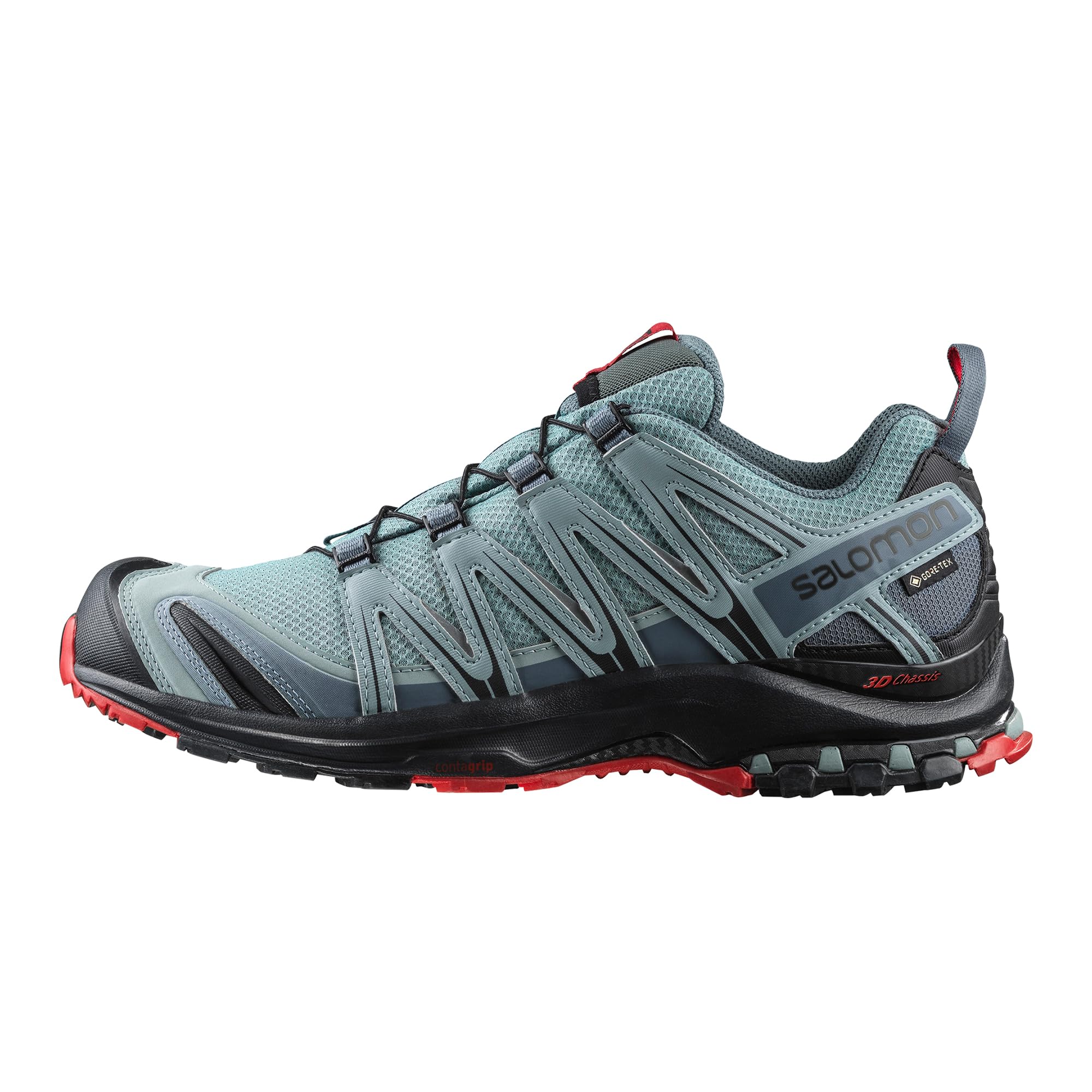
Soft, churned-up ground is where the Speedcross 4 earns its reputation, and that grip is why it sits at the top of this list. On wet, chewed singletrack it holds a line that lighter, flatter shoes lose, and it does it without feeling like a boot on the runnable stretches in between. Big wet rocks are the exception: the same outsole that bites in mud can slide across them. For dirt, grass, and sludge, nothing else here comes close.
Fit is the part you have to get right. The toe box is shallow and the shoe runs narrow, so order a half size up; if your feet are genuinely wide, skip it and go to the Lone Peak 8 or the Cascadia 19 instead. Sized correctly it feels firm and supportive rather than plush, with arch support that holds through long descents and enough underfoot protection that small stones stop registering.
What keeps us recommending it is the balance of toughness and price. It sits near the bottom of the premium-brand range here, and the upper takes rock and brush abuse without the seams giving out first. When the forecast turns properly wet we take the XA Pro 3D; for everything short of that, this is the shoe we lace up first.
Pros
- Best mud and soft-ground grip in this set
- Light on the foot with real rock protection
- Tough upper at the low end of the price range
Cons
- Narrow, shallow toe box rules out wide feet
Buy this if you run soft, churned-up trail and want the surest grip here for the least money, as long as you size up half.
Best for Wet, Cold Runs
Salomon XA Pro 3D GTX
Key Features
- Fit: Snug, true to size
- Closure: Quick-pull laces
- Terrain focus: Wet trail and road
- Waterproofing: Gore-Tex membrane
- Price: Premium
The XA Pro 3D costs more than anything else on this page, and it buys the one thing the Speedcross cannot: dry feet. The Gore-Tex membrane holds up on soaked grass and cold rain, and the quick-pull lacing means one tug and you are done, which is a real kindness on a morning when your fingers are numb and the mud is ankle deep.
Fit is more forgiving than the top pick’s. It runs close to true with a snug, cradling upper, and the support through the arch and ankle is the most substantial in this group, which is why we reach for it when the ground is wet and the footing uncertain. Whether that is worth the premium depends entirely on your weather: a season of wet running justifies it, two muddy weekends a year does not.
It is also the least fussy shoe here about where the trail starts. Gravel paths, wet fields, a mile of pavement to the trailhead: it handles all of it without the tread feeling like cleats on concrete, which makes it the easiest of these to live with as an everyday outdoor shoe.
Pros
- Gore-Tex keeps feet dry in cold wet weather
- Quick-pull laces go on and off in seconds
- Strongest arch and ankle support here
Cons
- Outsole can separate at the heel after months of hard use
Worth the money if wet trails are a regular part of your year; skip it if you run dry, hot ground and want to save the difference.
Best for Wide Feet
Altra Lone Peak 8
Key Features
- Toe box: Widest in this set
- Heel drop: Low to zero
- Terrain focus: Gravel and rock
- Price: Premium
If your toes have never had room in a running shoe, start here. The Lone Peak 8 has the roomiest toe box in this group and it is shaped like a foot rather than tapered like a dress shoe, so your toes spread, your big toe stays straight, and long descents stop punishing the front of your foot. That alone is why it stays in our rotation.
The heel sits low and close to the ground, and that takes adapting to. Build mileage up over a few weeks rather than jumping straight into a long trail day, and if you wear orthotics for plantar fasciitis this is not the shape to start from. Once you have adapted, the ride is comfortable from the first run in a way few shoes manage, and the tread is surprisingly sure on gravel and rock for something this roomy.
It is also the most versatile shoe here, happy on a hike, under a loaded ruck, or through a shift on your feet. The trade is outsole life: the tread goes before the upper does, so plan on replacing them more often than a firmer shoe. For wide feet that is still the best bargain on this page.
Pros
- Widest, most foot-shaped toe box here
- Comfortable from the first run
- Grip holds on gravel, dirt, and rock
- Works for hiking and rucking as well as running
Cons
- Outsole wears faster than the upper
- Low drop demands a gradual buildup
The shoe we point wide-footed runners to first: room to spread your toes, a low ride, and grip that holds on gravel and rock.
Best for Rocky Mixed Terrain
Brooks Cascadia 19
Key Features
- Sizing: Runs small, size up
- Midsole: Cushioned and stable
- Toe box: Roomy
- Traction: Grips slick rock
- Price: Premium
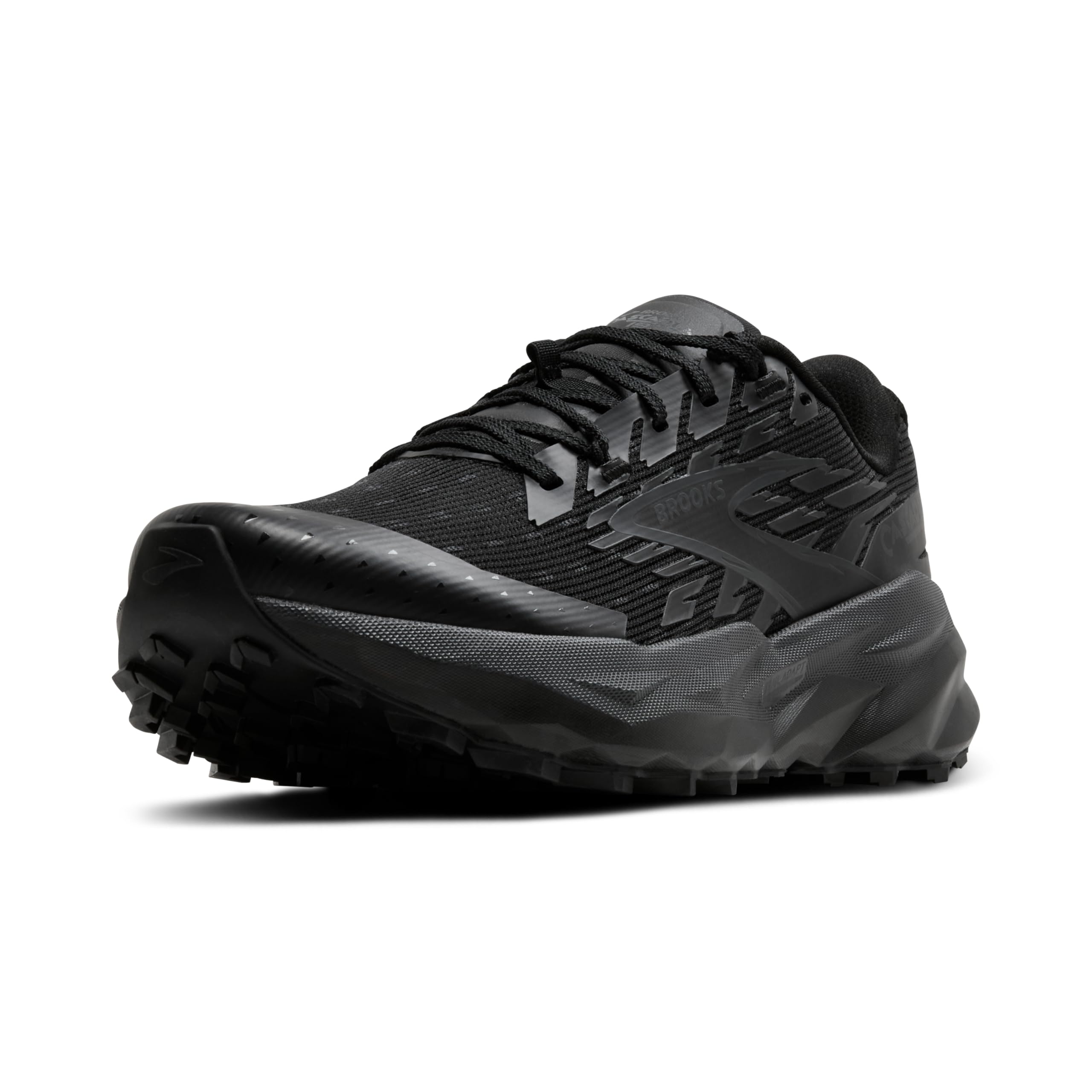
Order a half size up. The Cascadia 19 runs short, and that one piece of housekeeping is what turns it from a shoe that gets returned into the most balanced trail shoe here. Get the size right and the toe box is genuinely roomy, not Altra-roomy, but enough that your toes are not touching the front on steep descents.
What we appreciate most is the midsole. It splits the difference between cushioning and stability in a way the softer budget shoes cannot, and the platform is wide enough that technical ground does not roll you off your line. The tread grips slick rock too, which is where most trail shoes embarrass themselves. This is the pick for rocky, rooty terrain where you want to run the descents rather than survive them.
The caveat is longevity. That soft rubber grips well and wears accordingly on abrasive ground, so if your local trails are sharp granite, factor replacement into the decision. On mixed dirt and rock, it is the shoe we would hand a friend who wants one pair to do everything.
Pros
- Best cushion-stability balance in this set
- Grip holds on slick rock and technical trail
- Roomy toe box and rigid, supportive ride
Cons
- Soft outsole wears quickly on abrasive rock
The best-balanced trail shoe in this set for rocky mixed ground, once you accept that it runs short and its soft tread wears.
Best for Budget Wide Fit
NORTIV 8 Trail Runner
Key Features
- Toe box: Wide
- Heel drop: Low
- Cushioning: Soft, not thick
- Terrain focus: Dry, dusty trails
- Price: Budget
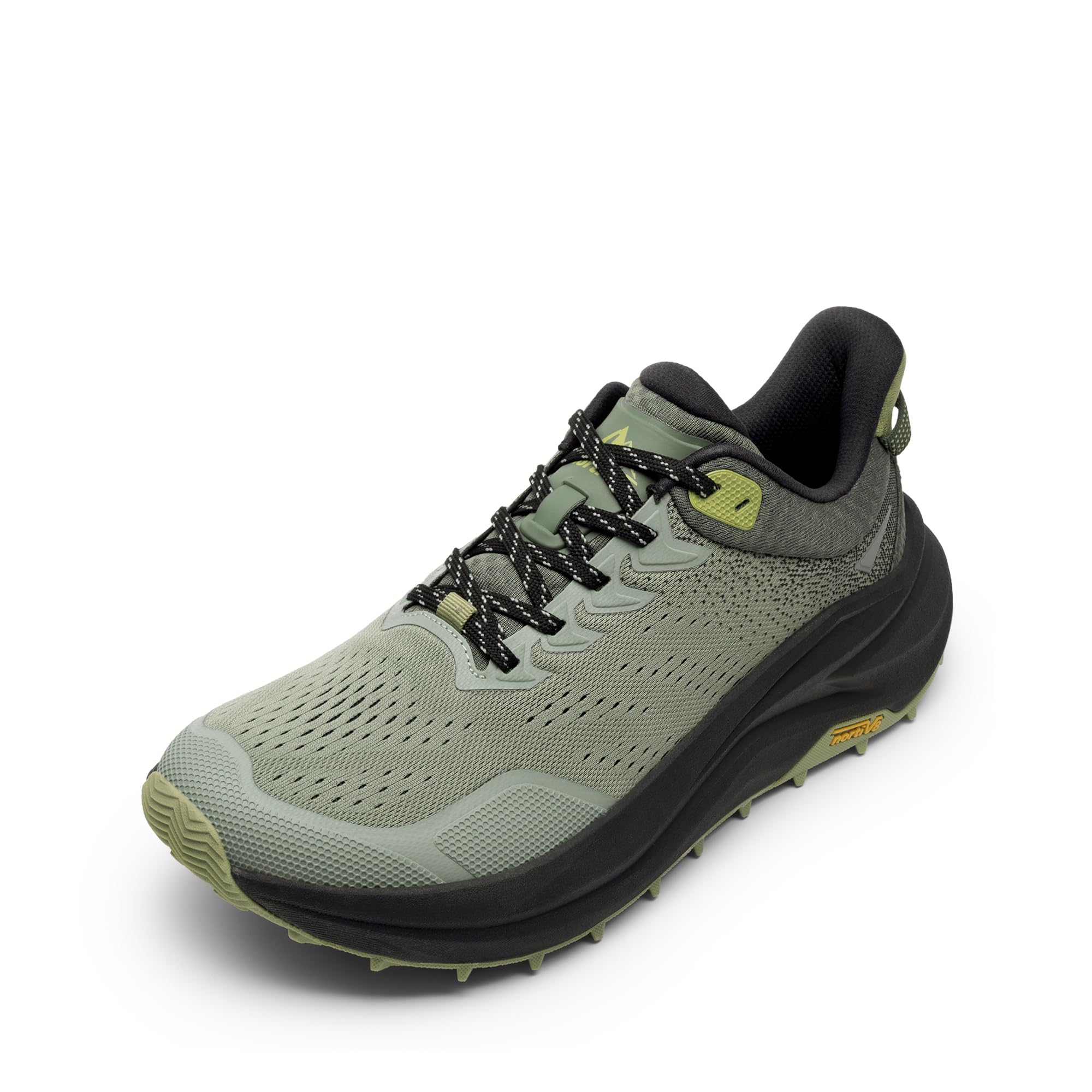
Most wide-fit trail shoes ask premium money. The NORTIV 8 does not, and the fit is the reason to look at it: plenty of room across the ball of the foot, a low drop, and a forefoot that never pinches. If you have been squeezing wide feet into narrow trail shoes, this is the cheapest convincing fix in this group.
The cushioning is the pleasant surprise. It is soft without turning vague, thick enough to take the edge off gravel while still letting you feel the trail underneath, closer to a firm daily trainer than a maximal shoe. On dry, dusty ground the tread is confident and the ride is stable. It is a shoe for summer hardpack and park trails rather than a mountain tool.
Sizing is the wrinkle. The sole runs long while the upper runs short, so try them on before you commit to a long run and go a half size up if you are between sizes. Do that and you get most of what the premium wide shoes offer for a fraction of the outlay, with the trade being wet-weather grip.
Pros
- Genuinely wide toe box with room for broad feet
- Soft cushioning without excess bulk
- Lowest price tier here with real trail tread
Cons
- Tread is unsure on wet roots and rock
- Sole runs long while the upper runs short
The value answer for wide feet on dry trails: soft cushioning, a roomy forefoot, and none of the premium-brand markup.
Best for Barefoot-Style Running
WHITIN Minimalist Trail

Key Features
- Sole: Zero drop, flexible
- Insole: Removable
- Weight: Light
- Toe box: Wide toe splay
- Price: Budget
Buy the WHITIN only if you want your feet doing the work. The sole is flat, flexible, and barely there, with no heel lift and almost no padding, and that is the entire proposition. On smooth dirt and crushed gravel it gives you a light, free ride and a ground feel the heavier shoes here cannot offer.
What we did not expect to like was the shape. There is real room to splay your toes, the insole lifts out if you want to swap it, and the shoe slips on and off without a fight, which makes it a useful second pair for gait work, gym sessions, and easy trail miles. At this price, trying a minimal shoe costs very little.
The limits are real. There is nothing between your foot and a sharp rock, so rocky, technical trails are the wrong assignment, and the build is the least robust here, with seams and uppers that can come apart under heavy use. Treat it as a lightweight trainer for smooth ground rather than a mountain shoe, and it earns its place.
Pros
- Zero-drop, flexible sole for foot strength
- Wide, splay-friendly toe box
- Light, easy on and off, removable insole
Cons
- No protection on sharp rock
- Seams and uppers can come apart with heavy use
A cheap way to try barefoot-style running on smooth paths, provided you accept minimal protection and a build that can come apart.
Best for Trail and Commute
UA Charged Bandit Trail 3

Key Features
- Fit: Runs slightly small
- Weight: Light
- Traction: Confident grip
- Terrain focus: Trail and pavement
- Price: Midrange
Most trail shoes are miserable on pavement. The Charged Bandit Trail 3 is not, and that makes it the practical pick for city runners whose dirt loop begins with a mile of sidewalk. Light, neutral, and calm underfoot, it handles the transition to gravel without the clumping, cleated feel of a mud shoe.
On packed dirt, park trail, and crushed stone the grip is confident and the ride is comfortable for a shoe this light. It is a light trail shoe rather than a mountain one: for deep mud and wet rock, the Speedcross 4 and Cascadia 19 are in a different class. For the groomed trail most of us actually run, we like it more than its modest tread suggests.
Fit is the catch. It runs slightly small and narrow through the toes, so go up half a size and do not count on the upper giving much. Get that right and it doubles as a walking shoe and a travel pair, which is more than most trail shoes can claim.
Pros
- Comfortable on pavement as well as dirt
- Light with a confident grip on packed trail
- Good value against the premium picks
Cons
- Runs small and narrow through the toes
- Trail grip is modest in mud and on wet rock
The right trail shoe for runners whose route starts on pavement, as long as you go up half a size and keep it off deep mud.
Best for Easy Daily Miles
Saucony Excursion TR13

Key Features
- Sizing: Runs small, size up
- Weight: Light
- Toe box: Roomy
- Cushioning: Soft
- Price: Midrange
The Excursion TR13 is a plain shoe done well: light, soft underfoot, and roomy through the toes. For easy daily miles on groomed trail, gravel paths, and the walk afterwards, that is most of what matters, and it does those things without asking much of your budget.
Fit runs small, so go up at least a half size and a full size if you are between. Once sized, the upper accommodates wider feet better than most of the shoes here, and the arch support is more substantial than a shoe this light has any right to offer. Traction is fine on packed dirt and crushed gravel and unremarkable once the ground turns wet.
Where it drops down our list is toughness. The mesh upper and the outsole are the parts that give out first, and on rocky ground the Cascadia 19’s protection matters more. As a first trail shoe or a high-mileage walking crossover, though, it is easy to recommend: it does simple things comfortably.
Pros
- Light and soft for easy daily miles
- Roomy enough for wider feet
- Substantial arch support for the weight
Cons
- Mesh and outsole wear before the rest of the shoe
- Traction fades once the ground turns wet
A light, soft, roomy shoe for easy trail miles and daily walking, as long as you size up and keep it off sharp rock.
How We Tested Men’s Trail Running Shoes
We started with a shortlist of nearly 40 pairs, comparing lug depth, weight, drop, arch support, upper construction, and price, then narrowed it to 11 models that covered different foot shapes and trail conditions. Each pair went through six months of regular running rather than a single test loop. That meant weekday dawn runs on a wet river loop, weekend long runs on rocky singletrack, and repeated climbs and descents on loose gravel access roads.
On every run I paid attention to the first mile and the last: whether a shoe caused hot spots or pressure across the toes, whether my heel stayed locked on steep descents, and whether my arch felt supported after an hour. For traction, I noted how the outsole handled wet roots, muddy switchbacks, and loose gravel, especially on uphill pushes and quick downhill turns. I also weighed each pair, picked them up side by side, and compared how light they felt on long climbs. To judge construction and quality, I checked stitching, toe caps, and lug wear after muddy weekends, and I cleaned each pair to see how the upper held up. Appearance got a fair look too—some shoes looked too technical for errands, while others cleaned up well enough for the coffee stop.
How to Choose Trail Running Shoes for Men
The decision that matters most is matching the outsole to the ground you actually run on; width, waterproofing, and price are much easier to sort once that is settled.
Match the tread to your trails
Trail shoes are built around one kind of surface, and a mismatch is what disappoints people. A soft-ground shoe like the Speedcross 4 is built to bite in mud and clear itself as you run; take that same shoe onto big wet rock slabs and it can slide. A firmer, flatter tread like the Cascadia 19’s holds rock better and packs up in deep mud.
Be honest about where most of your miles happen, not where the good photos are. If you drive two hours for rooty, churned singletrack once a month but run gravel six days a week, buy for the gravel.
Get the size right, then the width
Several shoes here run small, and that is the expensive mistake in this category: a shoe that is too short produces sore toes on descents and gets retired early. If you are between sizes, size up.
Width is a separate question and a permanent one. The Lone Peak 8 and the NORTIV 8 are shaped around a wide forefoot; the Speedcross 4 is narrow and will not change with a size. Do not count on a shoe stretching into shape. Buy the shape you need.
Waterproof or drainable
A membrane like the Gore-Tex in the XA Pro 3D keeps out splash, wet grass, and cold rain, and through a wet winter that is money well spent.
The trap is water coming in over the collar. Once a waterproof shoe fills, it holds the water and drains slowly, which is why creek crossings and hot climates suit a breathable mesh shoe instead. Choose the membrane for cold and wet, mesh for warm and wadeable, and accept that one shoe will not do both.
Cushioning, drop, and ground feel
More shoe is not automatically better. On rocky ground you want enough underfoot that sharp stones stop registering, which the Speedcross 4 and Cascadia 19 both manage. On smooth path, a minimal zero-drop shoe like the WHITIN lets the foot do more of the work.
That switch has to be gradual: keep the first few weeks short and easy before you take a minimal shoe on a long trail. If you wear orthotics or manage plantar fasciitis, a low-drop shoe is the wrong place to start.
Frequently Asked Questions
Can I use trail running shoes for hiking?
Yes, and for day hikes on maintained trails they are often the better choice: light, grippy, and quick to drain. The roomy picks here, the Lone Peak 8 and the NORTIV 8, are the most comfortable for hours on your feet.
As a rule, take the shoe when the pack is light and the trail is maintained, and take a boot when the load is heavy or the ground is loose and steep.
How long should a pair of trail running shoes last?
The outsole retires a trail shoe, not the upper. Look at the forefoot lugs: once they are rounded flat, grip on wet roots and rock is gone even if the shoe still looks presentable.
Rotating two pairs and keeping trail shoes off pavement both stretch the tread. A shoe whose midsole has visibly compressed or creased deeply is finished for running, whatever the tread looks like.
Are trail running shoes okay on pavement?
For the mile to the trailhead, yes. A trail shoe handles pavement fine and will not be damaged by a short stretch of it. The trade is wear: soft trail rubber abrades quickly on asphalt, and tall lugs feel vague and noisy.
If most of your miles are paved with occasional dirt, the Under Armour Charged Bandit Trail 3 is the shoe here built for that mix.
Final Verdict
Buy the Salomon Speedcross 4. For most men running real dirt, it has the best grip in this group, a light enough build for long days, and an upper that survives contact with rocks, provided you size up half and your feet are not wide.
If they are wide, the Altra Lone Peak 8 is the shoe to get instead. And if you run through wet winters rather than dry summers, pay the premium for the Salomon XA Pro 3D and stop thinking about your feet.