This post contains affiliate links. We may earn a small commission when you buy through our links — at no extra cost to you.
Trail shoes usually force a trade: the pairs that bite into wet roots and slabby rock tend to feel like bricks, while the light, cushy ones that float uphill can skate sideways on the way down. I’ve eaten that particular slice of humble pie on a slick descent more than once, which is why I no longer trust a shoe I haven’t run wet. What a good pair actually fixes is simple — it lets you stop thinking about your feet and start looking at the trail.
Over the past six months, my team and I logged miles in 12 pairs on singletrack, fire roads, and one memorably muddy loop, starting with fit and comfort and ending with how the tread and uppers held up after repeated soakings and dry-outs. Traction got judged on wet rock and loose gravel rather than on a spec sheet, and we factored in value and even looks — a shoe you resent putting on stays by the door. The ones that survived the rotation are below.



Best for Wet Technical Trails
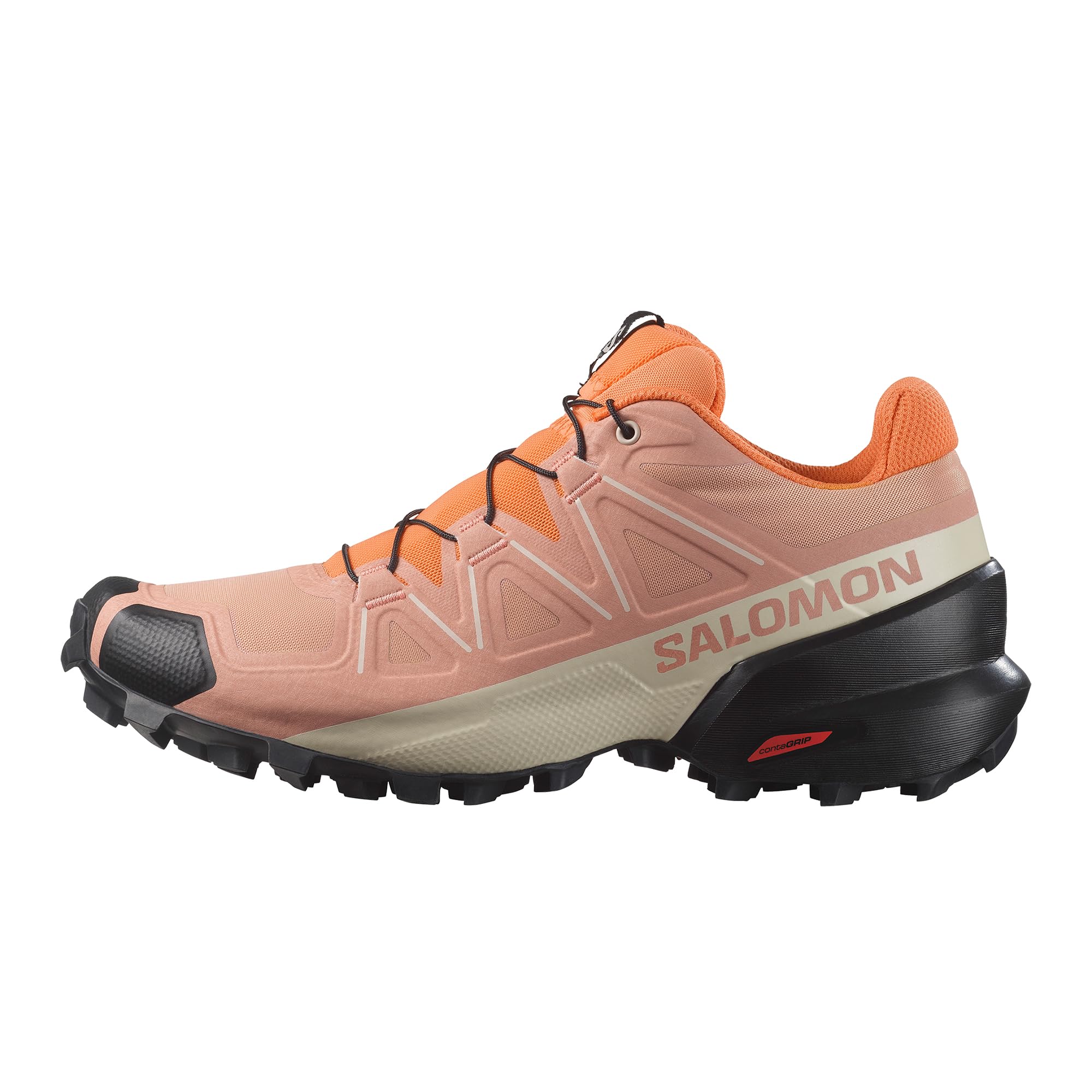
Salomon Speedcross
Key Features
- Model: Speedcross (L41742800)
- Category: Trail running
- Department: Women’s
- Price: Premium
A deep, widely spaced lug pattern is the whole argument for the Speedcross. On wet rock and root steps the rubber bites where a smoother trail sole slides, and it wraps up over the toe so a kicked stone does not end the day. That is why this is our top pick: when the trail turns mean, this is the shoe we want on our feet. The lacing is a cord with a pull tab rather than a knot, which takes a second to cinch and stays cinched.
The shape is the other half of the story. It runs narrow through the midfoot with a heel that does not move, which is exactly the shape you want on off-camber ground. Underfoot there is more support than the low profile suggests, and the arch feels planted rather than pillowy. If you need room across the forefoot, the Altra Lone Peak 7 below is built for that foot instead.
At the top of the price range in this group, it is also the most single-minded: on a flat rail-trail or a paved approach it feels like more shoe than the job needs, and the lugs drone on asphalt. What we did not expect is how long it stays comfortable — grip-first trail shoes usually start punishing you around hour three, and this one does not.
Pros
- Best wet-rock grip in this set
- Locked-in heel and midfoot
- Stays comfortable for hours
Cons
- Narrow fit will not suit wide feet
For wet rock, roots and steep descents, this is the shoe we reach for: the best grip in this set, a locked-in fit, and a narrow shape that rules out wide feet.
Best for Wide Toe Box
Altra Lone Peak 7
Key Features
- Model: Lone Peak 7
- Category: Trail running
- Department: Women’s
- Price: Premium
A roomy forefoot, a straight inner edge and a heel that narrows down again — the Lone Peak is built around a foot shape most running shoes ignore. Toes spread out on descents instead of stacking on one another, and the upper gives over a tender spot rather than pressing into it.
For anyone who has given up on trail shoes because of a bunion, a broad forefoot or a nerve that flares when a shoe is too narrow, this is the pair we point to first. It sits on a level, zero-drop platform, which loads the calf and Achilles more than a traditional shoe does — build into it over a few weeks rather than taking it straight out for a long descent.
Grip is closer to a hiking shoe than a road runner, and that is a compliment: rocky, rooty trail and loose gravel both hold, and it is happy at walking pace all day, which makes it a genuine one-pair answer for a run-hike weekend. The upper breathes well, and the darker colorways hide trail dirt longer than most of the shoes here.
Pros
- Widest toe box in this set
- Heel still locks down
- Grip close to a hiking shoe
Cons
- Outsole wears faster than the rest here
If every trail shoe pinches your toes, buy the Lone Peak: the widest toe box here with a heel that still holds, on a ride soft enough for all-day hiking.
Best for Long Cushioned Days
New Balance Hierro V7
Key Features
- Model: WTHIERD7
- Midsole: Fresh Foam X
- Category: Trail running
- Price: Midrange
Cushioning is the reason to choose the Hierro over everything else here. The midsole is soft without going vague, and it takes the sting out of gravel roads, hardpack and long fire-road descents — the sort of surface that leaves you feeling every pebble in a firmer shoe.
Grip is better than a cushioned shoe has any right to be. Loose gravel, sand and slick winter pavement all held, and the upper keeps grit out without feeling like a sock. Fit is the thing to plan around: it runs small and a little narrow, so go up half a size if you are between sizes or wear thicker socks.
Our pick for long, mostly runnable days, and for anyone whose heels ache after a hard session in a firm shoe. On steep, wet, technical ground the Speedcross is the sharper tool; the Hierro is the one your feet forgive you for at the end of a long afternoon. The palette is quieter than most trail shoes too, which is either the appeal or the drawback depending on how much you want to look like a runner in town.
Pros
- Cushioned ride that stays supportive
- Reliable grip on gravel and wet pavement
- Kind to sore heels
Cons
- Durability is inconsistent over months of use
The cushioned one: soft enough for long gravel days and aching heels, grippy enough for real trails, as long as you go up half a size.
Best for Rocky Mixed Ground
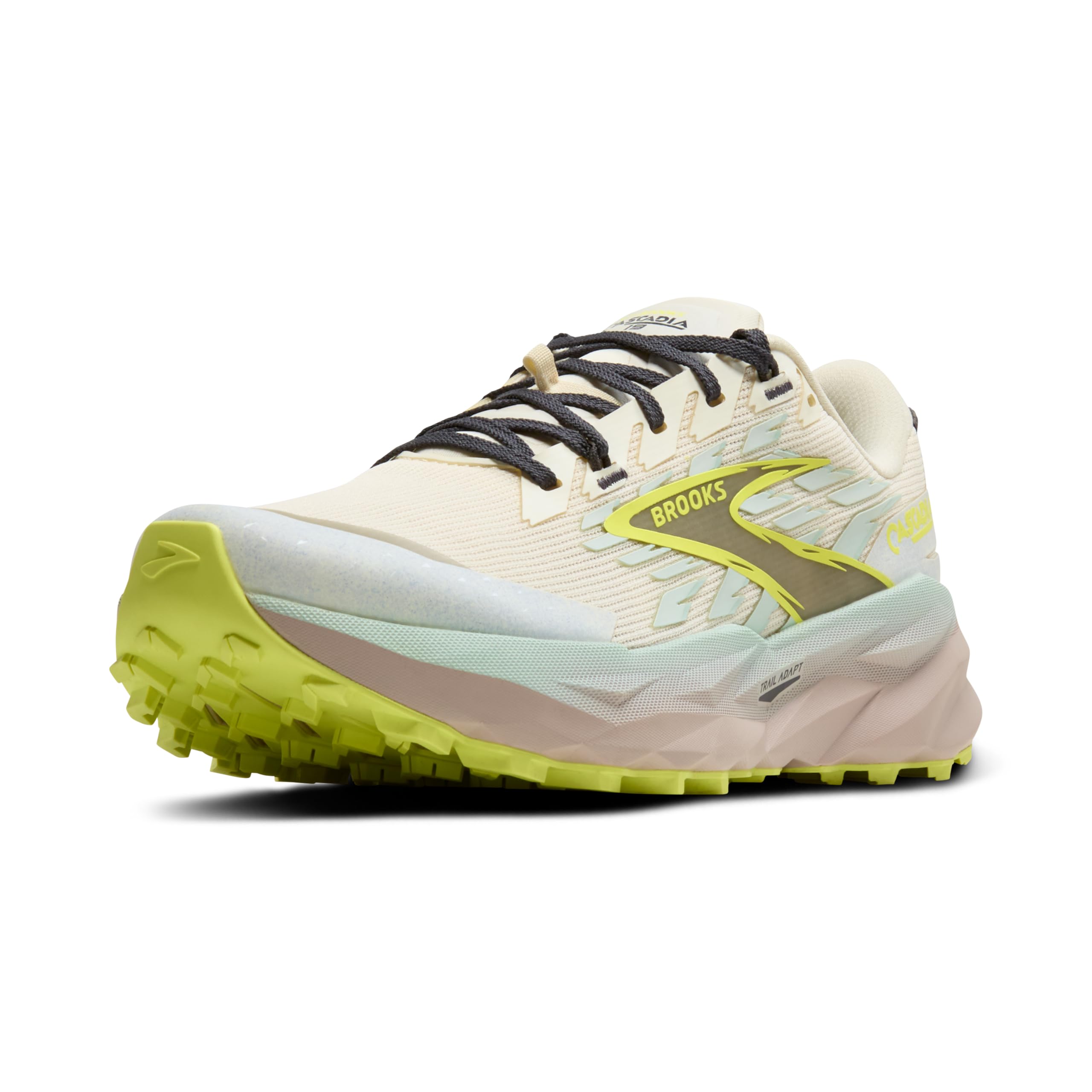
Brooks Cascadia 19
Key Features
- Model: 120446-277
- Terrain: Mountain trail
- Category: Trail running
- Price: Midrange
The Speedcross is sharper on wet rock, but the Cascadia 19 is the trail shoe we put on for a long day where the ground keeps changing. The ride is stable and planted, the toe box has real room in it, and nothing about the shoe asks for attention while you run — which is about the highest compliment a trail shoe can get.
Traction is the part we trusted most. It holds on rocky, rooty trail and stays predictable on wet slabs, and the arch support is noticeable without being intrusive, which matters on long descents when feet start to flatten out. The sole is stiffer than the Hierro’s, and that stiffness is where the planted feel comes from.
Where it sits in the group: not the lightest or the fastest here, and on smooth hardpack it feels like more shoe than the job needs. But for steady training on rough ground it is the least fussy of the technical options, and room in the toe means a long downhill does not jam your toes into the front.
Pros
- Stable and planted on rocky trail
- Real toe room, true to size
- Strong, unobtrusive arch support
Cons
- Outsole life on abrasive rock is the weak point
A steadier, more forgiving trail shoe than our top pick, and the one we hand to runners who want stability on rocky ground without a rock-hard ride.
Best for Budget Trail Miles
Saucony Excursion TR13
Key Features
- Model: Excursion TR13
- Category: Trail running
- Department: Women’s
- Price: Budget
Every list needs a shoe you can afford to destroy, and the Excursion TR13 is ours. It is the least expensive trail shoe here, and it does not feel like a punishment on the run — light, comfortable straight out of the box, and easy to wear for a full day on your feet.
We recommend it for the runner whose trail is a gravel path, a park loop and a stretch of wet sidewalk. Traction holds on wet roads and packed dirt, the ride is fine for an hour on pavement, and it is the pair we hand to someone who wants to find out whether trail running sticks before spending properly on a shoe.
Sizing is the practical catch: it runs narrow and a little short, so try a half size up, especially with thicker socks. It also runs warm — the upper holds heat more than the others here, which is welcome in November and less welcome in July.
Pros
- Least expensive trail shoe here
- Comfortable straight out of the box
- Holds on wet pavement and packed dirt
Cons
- Thin cushioning underfoot
- Upper can fray within a season of use
The cheapest way into a real trail shoe: fine for door-to-trail runs and wet pavement, but the upper and the cushioning will not survive big mountain miles.
Best for Light Hiking Trails
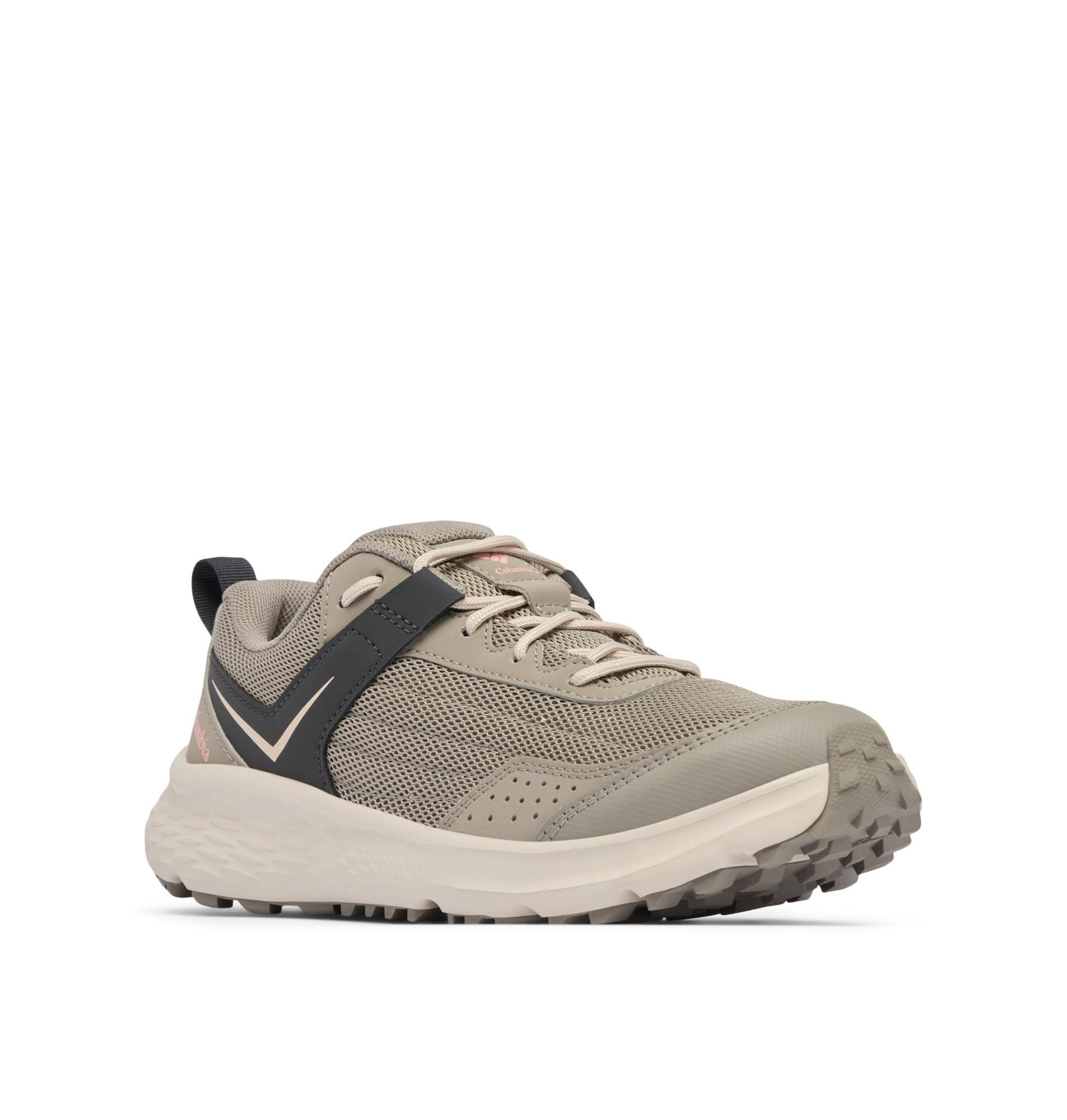
Columbia Vertisol Trail
Key Features
- Model: 207737
- Category: Hiking shoes
- Department: Women’s
- Price: Budget
Columbia lists the Vertisol Trail as a hiking shoe, and that is the honest way to think about it. It is not built for hammering a steep downhill; the sole is tuned for walking. It is, however, light enough and quick enough to run the flat and rolling parts of a trail day.
Comfortable from the first wear with no break-in, room at the toe for a broad forefoot, and support through the midfoot that steadies you on uneven ground. Grip is secure on wet surfaces, and it looks like a sneaker rather than a hiking boot, which matters if you want one pair for the trail and the drive home.
This is the one we suggest to walkers, run-walkers and anyone whose trail days include as much standing around as moving. For anything steep, loose or properly remote, the Cascadia 19 or the Speedcross is the better tool. The Vertisol is the pair that lives by the door.
Pros
- Comfortable with no break-in
- Secure grip on wet ground
- Roomy toe and steady support
Cons
- Sole is tuned for walking, not racing
A light hiking shoe that runs like a sneaker — ideal if your trail days are walk-run affairs, and wrong if you want to race one.
Best for Gravel and Everyday
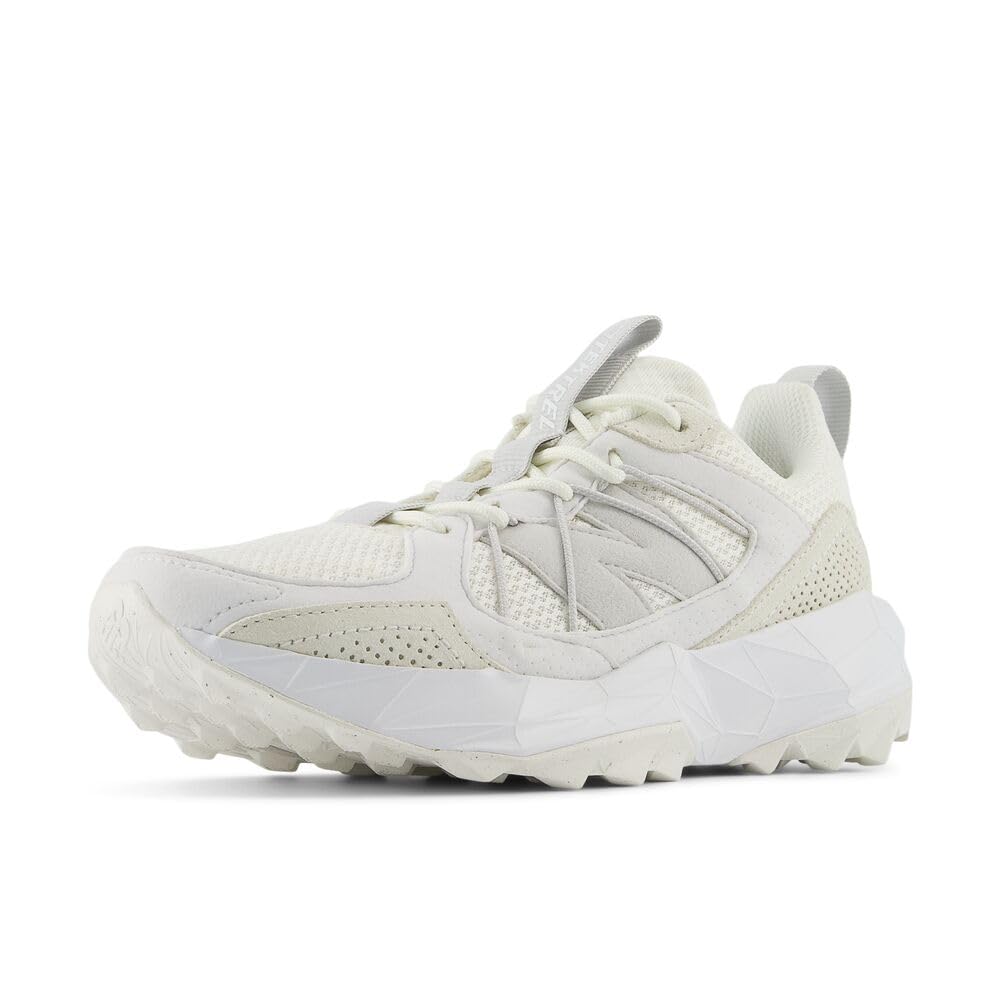
New Balance Tektrel V1
Key Features
- Model: WTTTREU1-108
- Upper: Suede
- Category: Trail running
- Price: Budget
Suede on a trail shoe is a statement of intent. The Tektrel V1 is aimed at gravel roads, park paths and the walk into town rather than a bog crossing, and the nubby upper tells you that before you read a single line of the listing.
The outsole has enough bite for packed dirt and loose gravel, and it does not feel like a hiking boot on pavement, which is more than most trail shoes can say. For a mixed week that includes a long walk, a couple of easy trail loops and a good deal of standing about, it covers everything without looking out of place.
Fit is the sticking point. The midfoot runs narrow and the insole feels short, so if you are between sizes or have a broad forefoot, this is one to try before committing. It rewards a normal-width foot and disappoints a wide one.
Where it earns its place: as the one-pair answer for someone who wants a trail-capable shoe that looks like a sneaker and does not cost what the dedicated trail models do. It is the pick for gravel and everyday wear, not for wet rock — and that is a perfectly reasonable thing to want from a shoe.
Pros
- Suede upper works off the trail
- Grip on packed dirt and gravel
- Good value as a do-everything pair
Cons
- Narrow through the midfoot
The trail shoe for people who mostly do not run trails: handsome suede, decent grip on gravel, and a narrow fit that keeps it out of the mountains.
Best for Minimalist Ground Feel
WHITIN W63

Key Features
- Drop: Zero drop
- Style: Barefoot
- Category: Trail running
- Price: Budget
Going zero drop changes how your feet and calves work, and this is the least expensive way to run that experiment. Start with short efforts on easy ground and build over weeks; the first week is not the time to take a minimal shoe down a long descent.
The upper is a stretchy knit that slips on and off without a fight and gives over a bunion instead of pressing into it. There is very little between your foot and the ground, which is the point — you feel the trail, and you also feel every sharp stone on it.
Grip is better than the price suggests on packed dirt, gravel and dry rock. It is the shoe in this group with the least underfoot protection, though, so rocky and rooty ground asks more of you than it does in the Cascadia or the Speedcross.
We recommend it to two kinds of buyer: the runner who wants to strengthen their feet and try a barefoot style without spending much, and the walker who wants a wide, flexible shoe for easy paths. Everyone else should look at the Lone Peak, which offers a similar toe shape with far more shoe around it. Ours lives at the bottom of a duffel as a spare pair, because it packs flat and disappears into a bag.
Pros
- Cheap entry to zero-drop running
- Stretchy upper is easy on bunions
- Grippy for a minimal shoe
Cons
- Almost no arch support
- Insoles and lining wear within months
The cheap way to try minimalism on trail: zero drop, a stretchy upper that slips on, and as much ground feel as you can handle, with almost no arch support.
How We Tested the Best Women’s Trail Running Shoes
We built the shortlist from shoes that kept surfacing in reviews and in conversations with runners we know, then filtered by what actually matters on dirt: lug depth, whether there was a rock plate, heel-to-toe drop, and whether a roomier toe box was offered. That narrowed things to 12 pairs, which we ran in over six months on a consistent rotation — a rooty local loop, gravel fire roads, a rocky ridge scramble, and one very muddy weekend that ruined everyone’s socks. Every pair went out wet at least once.
Fit was the first cut. Testers with narrow, average, and wide feet each tried their usual size plus a half size up, and we noted where the toe box started pinching after an hour and whether a heel slipped on steep climbs. On descents we paid attention to arch support — one tester with flat feet, one with high arches — and whether the cushioning still felt like cushioning at mile eight instead of a slab of foam. Traction we judged by feel, not numbers: wet roots, loose gravel, slimy rock, and how much mud the lugs shed between miles.
After each run we rinsed the shoes, air-dried them, and checked uppers, overlays, and outsoles for wear, comparing lug depth against day one. We also wore them on errands to see how they looked with jeans, because a trail shoe you merely tolerate is one you’ll leave in the closet. Value was scored against miles logged — the pair that felt expensive on day one and invisible by week six earned its price.
How to Choose Women’s Trail Running Shoes
Buy for the worst ground you actually run on rather than the average, because the two decisions that matter most are the shape of the shoe around your foot and the rubber under it.
Fit Begins With Width, Not Length
Trail shoes are won or lost at the midfoot and heel. A shoe with a wide forefoot and a snug heel — the Altra Lone Peak 7 is the clearest example here — lets your toes spread on descents without your foot sliding forward inside the shoe. A uniformly close model like the Salomon Speedcross holds you tighter and leaves no room at all for a broad forefoot.
The common mistake is sizing up to find width. Extra length does not add width, and it puts more shoe in front of your toes, which is the last place you want it on a downhill. Judge a pair at the midfoot first, then walk up a slope: if the heel lifts, that size or that model is wrong for you.
Match the Outsole to the Ground You Run
Deep, soft lugs are for mud, loose dirt and wet roots; shallower, harder rubber is for rock, hardpack and the pavement you cover getting to the trailhead. Choose for the worst twenty percent of your running rather than the easy middle of it, because that is the twenty percent where grip decides whether you stay upright.
There is a trade inside the rubber itself, and it is worth knowing before you read outsole wear as a verdict. Soft compounds that bite wet rock give up material faster on abrasive ground, while hard, long-lasting soles surrender some of that wet-rock grip. Expect a grip-first shoe to have a shorter outsole life than a harder, cheaper sole.
Decide How Much Drop and Cushioning You Want
A level, zero-drop platform such as the Lone Peak’s puts you closer to the ground and loads the calf and Achilles more. A cushioned shoe like the Hierro takes the sting out of long gravel days and costs you some feel for the terrain. Neither is better; they suit different feet, different run lengths and different injury histories.
The mistake is changing both at once. If you are moving to a lower drop, do it in the off-season with short, easy runs and build over several weeks, and do not also change your distance or your terrain in the same month. Runners who have used zero drop before can start there; if you have not, a cushioned mid-drop shoe is the safer first trail pair.
Protection Underfoot: Plates, Bumpers and Ground Feel
Sharp limestone, scree and embedded roots bruise a thin midsole, and that is what underfoot protection is for: a stiffer layer or a thicker stack spreads the load so a rock does not find the arch of your foot. The trade is ground feel and weight — the more protection you carry, the less the trail tells you through your feet.
Match it to your terrain rather than to the specification sheet. Smooth dirt and gravel do not need much, and a lighter, more flexible shoe is more pleasant over a long day. Genuinely rocky ground is where a stiffer, more protective shoe earns its keep, and where a flexible minimalist pair starts to feel like a gamble on a descent.
Frequently Asked Questions
Should I size up in women’s trail running shoes?
Often yes, but check the model rather than applying a rule. The New Balance Hierro V7 and the Saucony Excursion TR13 both run small enough that a half size up is the safer order, while the Altra Lone Peak 7 is true to size and the Salomon Speedcross is true to size but narrow.
Measure your longer foot at the end of the day, order to that number, and leave a thumb’s width in front of your longest toe. If you land between sizes, take the larger one for trail use — feet swell and descents push them forward.
How do I know when trail running shoes need replacing?
The outsole tells you before the upper does. Run a thumbnail across the lugs under the heel and the ball of the foot; once they are level with the base, the grip that keeps you upright on wet rock is gone even though the shoe still looks intact.
Retire them at that point. A shoe with smoothed lugs is a road shoe, and keeping it for technical ground is the cheapest way to take a fall you did not need to take.
Can I wear trail runners for hiking instead of hiking shoes?
For most day hikes, yes. The Altra Lone Peak 7 and the Brooks Cascadia 19 handle rocky, rooty ground and stay comfortable for hours of walking, and they are lighter than a boot on the climbs.
Go the other way if you carry a heavy pack or walk far more than you run — a light hiking shoe such as the Columbia Vertisol Trail is stiffer and more planted under load. Deep-lug shoes are built for soft ground, so pick something with a flatter sole for rock slabs and scrambles.
Final Verdict
For most women heading out on real trails, the Salomon Speedcross is the one to buy. It has the best grip in this set on wet rock and roots, the fit stays locked down on off-camber ground, and the compromise — a narrow shape at the top of the price range — is easy to check against your own foot before you order.
If your forefoot needs room, or you want one pair that hikes as well as it runs, the Altra Lone Peak 7 is the alternative and not a consolation prize. Everyone else can start with the Speedcross and stop shopping.