This post contains affiliate links. We may earn a small commission when you buy through our links — at no extra cost to you.
A trail shoe is a compromise you wear on your feet. The sticky rubber that grips wet granite is often the same rubber that makes a shoe feel like a brick on the smooth fire road home, and a featherweight pair that floats uphill can leave you wincing on a rooted descent. The right one splits that difference so quietly you stop thinking about your feet and start noticing the trail.
I’ve run and hiked the same local loops for years, and over the past six months my team and I logged miles in 14 pairs of women’s trail shoes. The ones we kept reaching for weren’t the most aggressive or the lightest — they were the ones that fit right out of the box, cradled the arch without prodding it, didn’t feel clumsy on the paved mile to the trailhead, and still held together after a hundred miles. One thing worth knowing before you shop: trail shoes tend to run small, so size with the socks you’ll actually wear. The picks below are grouped by the terrain and foot shape they suit best.


Best for Most Trail Runners
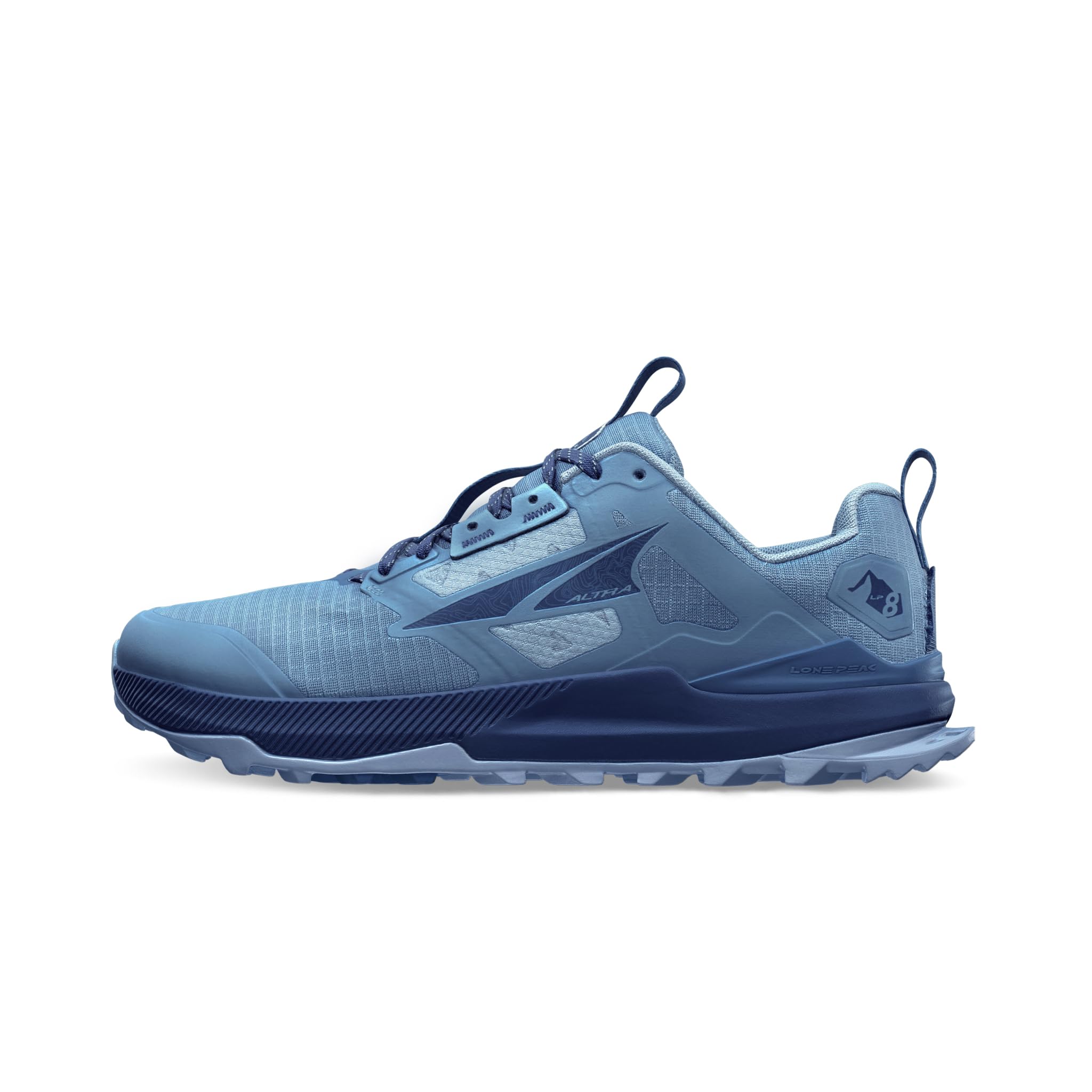
Altra Lone Peak 8
Key Features
- Outsole: Lugged rubber
- Toe box: Wide
- Heel drop: Zero
- Price: Midrange
The thing that goes wrong with most trail shoes happens in the first hour: the forefoot starts to feel clamped. The Lone Peak 8 is the pick that fixes it. Altra shapes the front of the shoe around a wide, foot-shaped toe box, so toes spread and push off instead of stacking on each other, and on a long descent that difference is the whole ballgame. Feet that have been squeezed by narrower trail shoes tend to relax in this one, and that’s the reason it’s our top pick.
Grip is the other half of the story. The lugged outsole holds on wet rock and loose dirt, and it stays predictable when the trail turns rutted. What impresses us most is the heel: with all that room up front, the back of the shoe still locks down, which is the part that usually goes wrong when a brand chases a wide toe box. Nothing about the shoe needs breaking in, either.
You do give up cushioning. This is a moderate, ground-feel ride, and if you want a soft landing on long rocky descents the Brooks Cascadia 19 is the better tool. The zero-drop platform is the other adjustment: there’s no heel lift, so your calves take more of the load. Build up with short runs for a few weeks before you take them on a big day. For most trail runners, the fit and the grip are worth the adaptation.
Pros
- Wide toe box lets toes spread on descents
- Grip holds on wet rock and loose dirt
- Heel stays locked despite the roomy forefoot
- No break-in period before long days
Cons
- Modest cushioning on long rocky descents
If you want one pair for most trails, we point you to the Lone Peak 8: the roomy toe box and dependable grip make long days easier on your feet.
Best for Rocky, Technical Trails
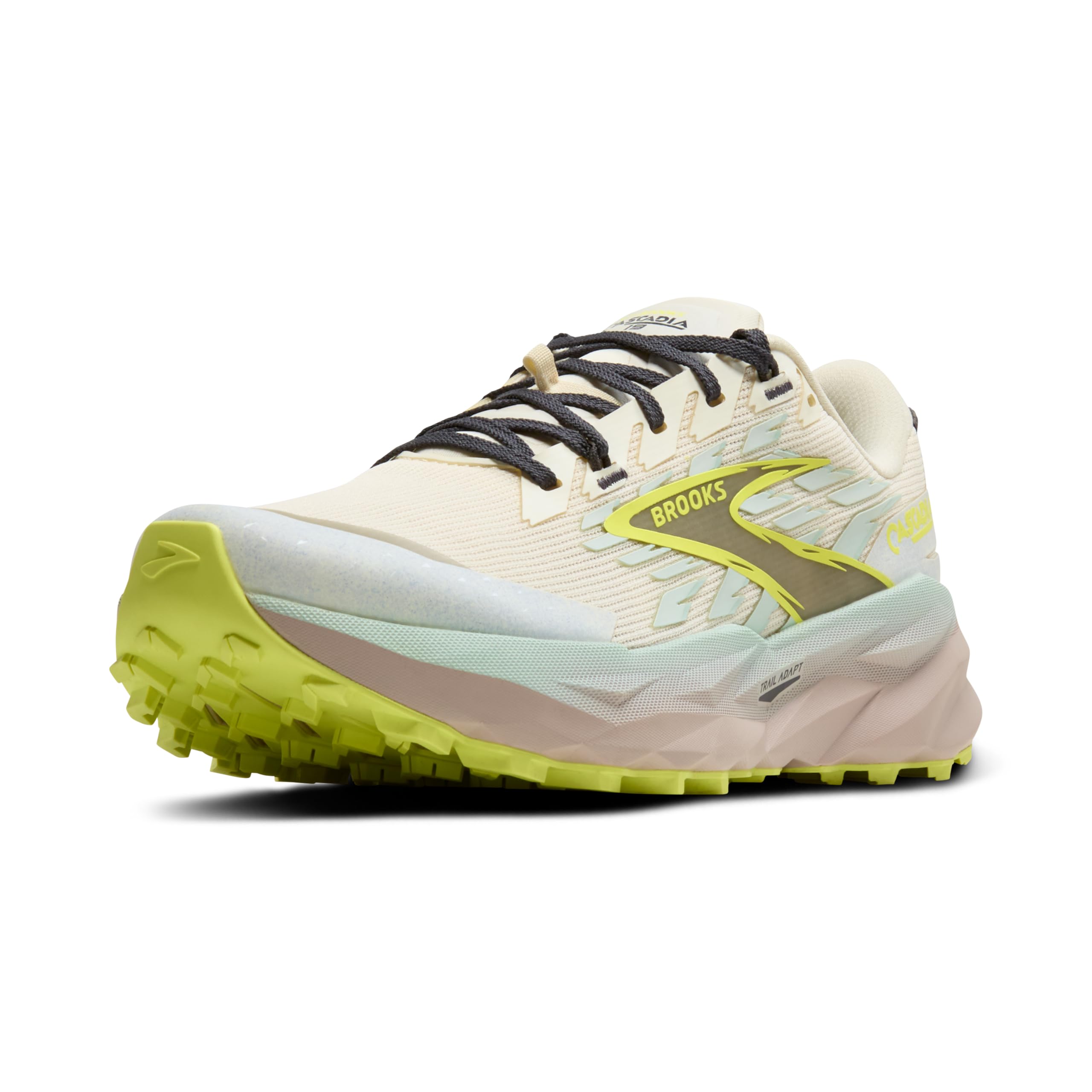
Brooks Cascadia 19
Key Features
- Terrain: Rocky trail
- Toe box: Roomy
- Arch support: Supportive
- Price: Midrange
Point the Cascadia 19 at a rock garden and it’s the shoe we’re happiest to be in. The outsole bites on wet rock and roots, the midsole is stable enough that a lumpy landing doesn’t roll you sideways, and there’s real support under the arch. It’s the surest-footed shoe in this group, and the toe box still leaves useful room up front without turning the whole shoe into a boat.
It’s also the most conventional shoe here in the best sense, which is why we hand it to anyone whose local trails are rocky rather than smooth. Sizing runs true, the ride is cushioned without going vague, and it flexes enough to feel like a trail shoe instead of a boot — exactly what you want on a mixed day of rock, dirt, and pavement at the trailhead.
Longevity is where it slips. Seams and upper material come apart within a couple of months for some pairs used hard, so don’t count on three seasons of weekly abuse. Treat it as a shoe to replace periodically rather than a decade-long investment, and the value still works out; if you want the pair most likely to still be going strong after a few years, the Lone Peak 8 has the better long-run record here.
Pros
- Sure-footed on rock and wet roots
- Supportive arch and a roomy toe box
- Cushioned ride that still feels flexible
Cons
- Upper and seams can fail within months
For rocky, technical ground the Cascadia 19 is our pick: it is the most sure-footed and best-supported ride in this group of shoes.
Best for Hot, Wet Hikes
Merrell All Out Blaze Aero Sport
A humid July hike with two creek crossings is the test this shoe was built for. The mesh upper moves air, the whole thing feels barely there on a warm climb, and it drains and dries fast enough that a soaking doesn’t end the day. Underneath, the Vibram outsole gives genuine grip on wet rock, which is the part that matters when you’re stepping across slimy stone.
Fit is the thing to sort out before you commit, because this isn’t a shoe to buy blind. The forefoot runs roomy for some feet and pinches across the toes for others, and the sizing doesn’t leave much margin either way. The mesh is on the stiff side as well, and long days can end with rubbing over the toes. Order with a return window open and try them with the socks you’ll actually wear.
Our take is that this is a warm-weather and wet-trail specialist rather than a one-pair-does-everything shoe. It’s light, it’s cool, and it drains, and if you hike in heat and splash through water those three things beat a plusher ride. If your trails are cold, sharp, and dry, the Cascadia 19 or the Lone Peak 8 will serve you better.
Pros
- Breathes well on hot, humid climbs
- Drains and dries fast after a soaking
- Vibram outsole grips wet rock
- Feels barely there on the foot
Cons
- Forefoot fit varies from roomy to pinching
- Stiff mesh can rub over the toes
For humid summer hikes and creek crossings, the All Out Blaze Aero Sport breathes, drains fast, and feels barely there on your foot.
Best for First Trail Season
New Balance Dynasoft Nitrel V6
The price is the first thing to like, and it isn’t the only thing. The Nitrel V6 is a proper trail shoe rather than a road sneaker with a chunky sole: the tread bites on gravel and packed dirt, the upper holds your foot without pinching, and the look leans retro runner, so you can wear them into town afterward without feeling like you’re still on the trail.
This is the pair we point a first-season trail runner toward. The ankle collar is the friendliest part of the shoe, with no break-in blisters at the heel, though the seam across the toe box is worth watching if your toes sit high, because that’s where rubbing shows up first. Sizing is the real catch: these run small and narrow, so order a half size up if you’re between sizes and try them on in the evening when your feet are at their largest.
The compromise sits underfoot. The sole is thin and firm, and after a few hours on hard-packed trail you feel every stone. On gravel roads, towpaths, and easy singletrack that’s fine, and it’s what keeps the shoe cheap and light. On a rocky all-day route, step up to the Cascadia 19 or the Lone Peak 8.
Pros
- Real trail tread at a budget price
- Friendly ankle collar, no break-in blisters
- Retro looks work off the trail too
Cons
- Thin, firm sole on rocky ground
The Nitrel V6 is our budget pick: a good-looking trail shoe that handles gravel and easy singletrack without asking much of your wallet.
Best for Pavement to Gravel
Saucony Excursion TR13

Key Features
- Model: TR13
- Upper: Thin mesh
- Cushioning: Light padding
- Price: Budget
The upper is the part to know about before you buy. The fabric around the collar and the sides is thin, and it’s the first thing to go — edges fray and start to separate while there’s still life in the sole. If you’re hard on shoes, that’s a dealbreaker; if these are for dog walks, gravel paths, and the walk to work, it’s a trade we’re willing to make for a shoe this affordable.
Everything else does better than the price suggests. They’re light enough to forget you’re wearing them, comfortable straight out of the box, and the grip holds on wet sidewalks and damp gravel — the kind of shoe you can put on in the morning and not think about until evening. The toe box has decent room without letting the heel wander.
Where it lands is pavement that turns into gravel, not rocky technical trail. It’s the cheapest way into a genuine trail shoe in this group, and for a lot of people that’s the whole point; just plan on replacing them sooner than the others here.
Pros
- Light enough to forget you’re wearing them
- Grips wet pavement and damp gravel
- Comfortable straight out of the box
Cons
- Thin upper frays and tears early
- Little cushioning underfoot
We rate the Excursion TR13 as a light, cheap everyday shoe for gravel and pavement, as long as you don’t expect the upper to survive rough country.
How We Tested the Best Women’s Trail Shoes
We started with specs rather than vibes: lug depth, claimed weight, heel-to-toe drop, stack height, and whether a shoe came in wide as well as standard width. Anything that topped our price ceiling or only came in whole sizes got cut, which left 14 pairs. Every one of them went to the same places over six months — a Tuesday-night hill repeat on wet, rooty singletrack, a loaded Saturday hike, a rocky ridge scramble, and the two paved miles between my front door and the trailhead.
Fit was judged on feet, not on paper. Each pair got a short walk, then a two-hour run, and I paid attention to whether my heel stayed locked on steep descents and whether my toes had room to splay and drop without jamming the front of the shoe. Every model was run once with its stock insole and once with a neutral aftermarket insert, and I noted whether the arch felt genuinely supported or just vaguely lumpy. Where a half size up or down was available, I tried that too.
Traction got tested where it actually matters: standing on a wet, sloped flagstone, then walking a muddy, leaf-covered descent to see what slipped and how readily the lugs shed muck. Each shoe went on a kitchen scale in a women’s size 8 before its first run and again after a wet one, since a light shoe that soaks up water isn’t light by mile four. Cushioning was judged by how my feet and knees felt the morning after a long effort, and by how much midsole had compressed at 50 miles.
Durability checks came at 50 and 100 miles: frayed seams, peeling glue at the toe cap, worn lugs under the ball of the foot, eyelets that had begun to oval. For versatility, every pair did a road mile, a gravel path, and a technical descent, and we noted where each felt out of its depth. The highest scorers were rarely the most specialized — they handled all three without complaint.
How to Choose Women’s Trail Shoes
Start with the shape of the shoe rather than the feature list, because the problem that turns up most across every pair we tested is a forefoot that feels clamped after the first hour.
Fit Comes Down to the Toe Box
Trail shoes are built on narrower shapes than most walking shoes, and sizing labels are unreliable: several picks here run small, and the ones that don’t are the exception rather than the rule. If your forefoot is wide, start with the Lone Peak 8 and its foot-shaped toe box; if it’s narrow, the All Out Blaze Aero Sport or the Excursion TR13 will feel closer to right. Try pairs on late in the day, in the socks you’ll run in, and give heel hold as much attention as toe room.
Zero Drop Is a Decision, Not a Detail
Most trail shoes put a small wedge of foam under the heel. The Lone Peak 8 doesn’t: heel and toe sit at the same height, which changes how you land and puts more load through the calf and Achilles. It’s not better or worse, but it is a commitment. Buy a zero-drop pair at the start of a training block, not the week before a long hike, and keep your old shoes in rotation while you adjust. If you want a conventional ride, the Cascadia 19 and the Nitrel V6 sit closer to what you already wear.
Match the Tread to the Trails You Actually Run
Lug depth is a terrain decision. Deep, spaced lugs clear mud and bite into loose dirt; shallower, denser tread rolls better on gravel and pavement and lasts longer if that’s most of your mileage. The trap is buying the most aggressive shoe on the page for rail trails and towpaths — you pay for grip you never use in weight and wear. Be honest about the road-to-dirt ratio in your week. If the trailhead is a two-mile run from your door, a lighter, shallower shoe makes more sense than a rock shoe.
Cushioning and Weight Trade Against Each Other
More foam means more forgiveness on rocky ground and more weight to lift with every step. Less foam gives you ground feel and a light shoe, and less protection when the trail turns sharp. For runs under an hour on smooth singletrack, a firmer shoe like the Nitrel V6 is plenty; for long days on rock, the Cascadia 19’s cushioning earns its extra bulk. Think about how long you’re actually out rather than how far you’d like to go someday.
Frequently Asked Questions
Can you use trail running shoes for hiking?
Yes, for day hikes with a light pack. Trail shoes are lighter and more flexible than boots, and the grip on picks like the Cascadia 19 is enough for maintained trails and rocky steps. What they don’t give you is ankle coverage and stiffness under a heavy load, so once you’re carrying an overnight pack or heading well off trail, boots are the better call.
How long should a pair of trail shoes last?
The upper usually gives out before the outsole. Watch the flex point across the toes and the collar, where thin mesh frays first, then check the lugs: once the edges round off, grip is gone even if the shoe still looks fine. When the midsole stops springing back, retire them to walking duty. Rotating two pairs spreads the wear and lets each dry out between runs.
Do I need waterproof trail shoes?
Usually not. Mesh uppers like the ones here drain and dry quickly, and a waterproof membrane traps sweat on a warm day — you end up wet from the inside instead of the outside. Membranes earn their keep in cold, wet, muddy seasons where keeping water out matters more than drying fast. Either way, water comes in over the collar in a deep crossing, so drainage is the more useful property.
Final Verdict
The Altra Lone Peak 8 is the pair we recommend first. A wide toe box fixes the problem that runs through this category, the grip is dependable on wet rock, and the heel stays put — small things that add up to happier feet at the end of a long day. If you want a plusher, more stable ride for rocky ground, the Brooks Cascadia 19 is our alternative; if the budget is tight, start with the New Balance Nitrel V6 and stay off the sharp stuff.