This post contains affiliate links. We may earn a small commission when you buy through our links — at no extra cost to you.
Trail shoes ask you to pick a side. The pairs that bite into mud and wet rock tend to feel like planks on the walk home, and the plush ones that feel wonderful at mile one can skate right through a root section. I’ve owned both kinds, and what separates a keeper from a shoe that ends up in the donate pile is rarely on the spec sheet — it’s whether the toe box still has room for your toes after a long descent. We spent six months running in 12 pairs, and the ones that held up are the ones that felt like mine at mile ten, not mile one.
Here’s what nobody tells a first-time trail buyer: the shoe for a groomed gravel path and the shoe for a rocky ridge are not the same shoe, and most people buy more shoe than their terrain asks for. Cushioning, sole hardness, and lug depth trade off against each other, and the wrong balance is what turns an ankle on a flat corner. The picks below run the range, from crossover pairs you can wear straight to the grocery store to burlier shoes for wet, rooty singletrack.



Best for Mixed Mountain Trails
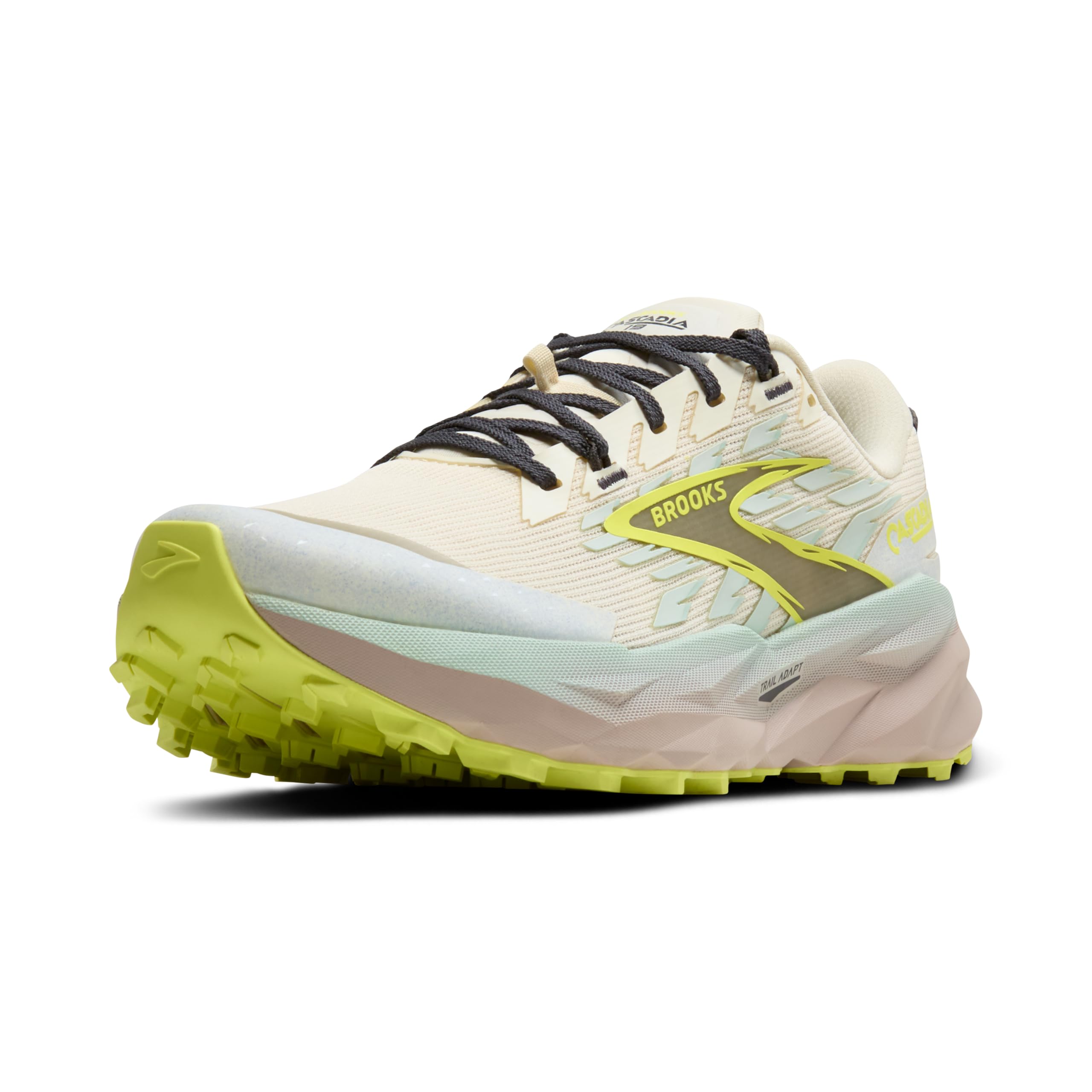
Brooks Cascadia 19
Key Features
- Model: 120446-277
- Department: Women’s
- Trail type: Mountain trail
- Price: Midrange
Most women shopping for a trail shoe want one pair that handles a muddy Saturday, a rocky ridge and the gravel path back to the car. The Brooks Cascadia 19 is the shoe in this set that does all three without a compromise you notice mid-run, and that is why it is our top pick. The toe box is genuinely roomy, wide widths are available, and the platform underfoot is stable enough to make technical ground feel less sketchy than it looks. We think it is the strongest all-round default here, and it costs midrange money rather than premium.
Grip is the other half of the job, and the outsole finds purchase on rock and mixed trail, near the top of this group on descents that are not quite dry. The trade is a firm, stiff sole. That is what keeps a sharp stone from becoming a bruise, and it is why the Cascadia feels more planted than the lighter shoes here, but it is not a soft ride.
Durability is the open question. The upper is light, and a light upper is what goes first on rock and brush; nothing here suggests it is the toughest shoe in the roundup. The fit runs true with room at the front, so if your forefoot is extra wide, take the wide sizing rather than hoping a standard last stretches. For a first trail shoe or a single pair for a season of mixed running, this is the one we hand over.
Pros
- Roomy toe box, including wide widths
- Confident grip on rocky, mixed trail
- Stable, protective platform
- Midrange price for a real trail shoe
Cons
- Firm sole takes adjustment from road shoes
- Light upper is the wear point
Our pick for most women: the Cascadia 19 pairs a roomy toe box with stable footing and dependable grip on mixed mountain trails, and it does it at midrange money.
Best for Technical, Wet Trails
Salomon Speedcross
Key Features
- Model: L41742800
- Closure: Pull-tab lacing
- Trail type: Technical trail
- Price: Premium
Grip is the whole argument for the Salomon Speedcross. The lugs are aggressive and widely spaced to bite rather than clog, and on slick rock and loose scree it is the surest shoe in this roundup, the one that turns a sketchy descent into a routine one. The pull-tab lacing cinches evenly in a single pull, which matters more than it sounds when your fingers are cold.
We think it is the best technical-trail shoe here and a poor choice for a wide forefoot at the same time. The last is narrow and low-volume, happiest on a foot that does not need much room up front. If that is you, this is a superb shoe; if it is not, the Lone Peak 8 is the direct alternative, and you should not talk yourself into the Salomon because of the grip.
Comfort holds up over long days and the arch support is solid, so it is not a race-only shoe: it looks sharp enough for the drive home and the coffee after. The upper is the part to watch across a long season, since the sole is far more durable than the fabric above it. Steep, wet and rocky is the brief, and nothing here meets it better.
Pros
- Surest grip here on slick rock and scree
- Secure hold for narrow, low-volume feet
- Quick pull-tab lacing
Cons
- Highest price in this roundup
- Narrow fit runs against wide forefeet
Buy it if your trails are steep, loose or wet: nothing here grips better. Just know it fits narrow and costs the most in this roundup.
Best for Wide Forefeet
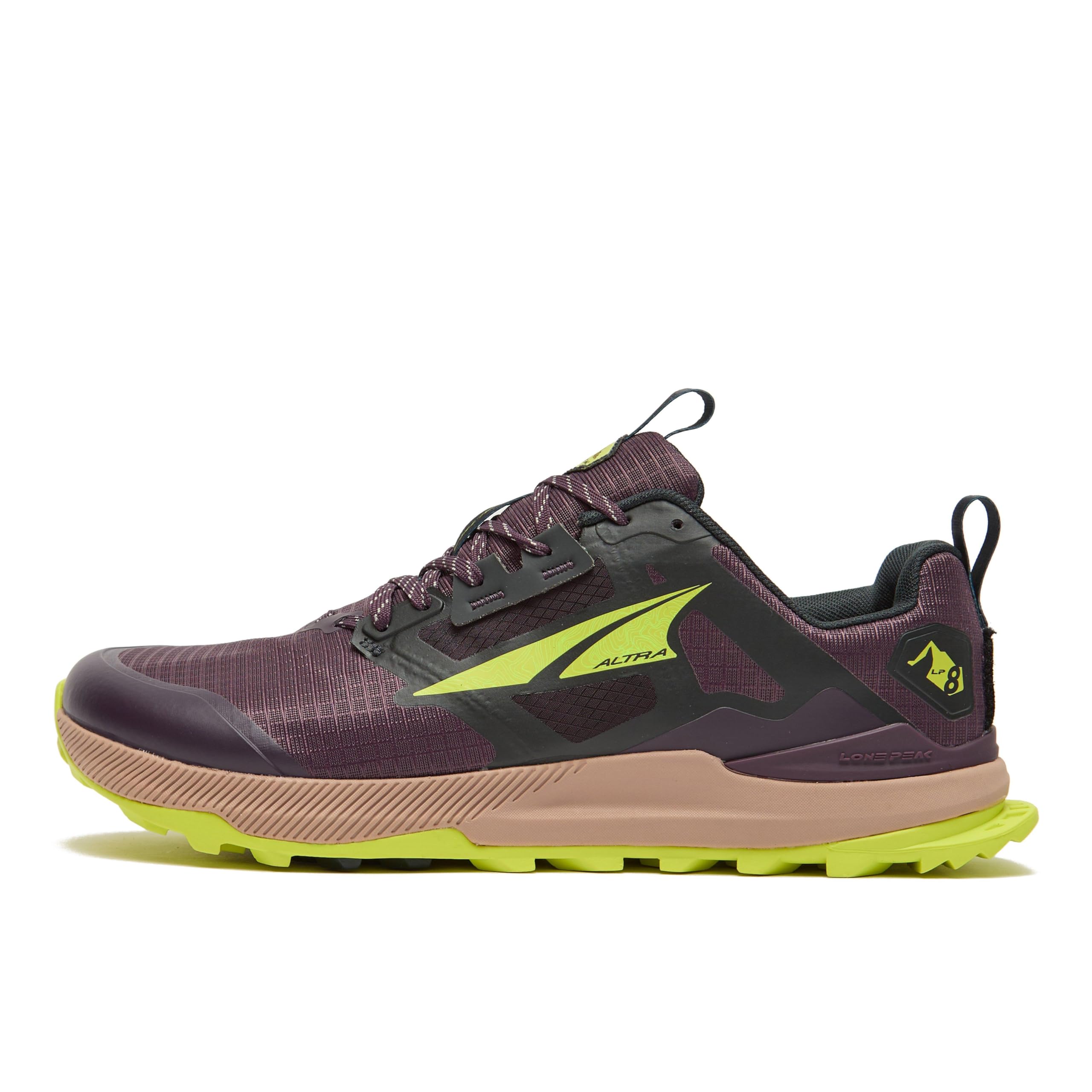
Altra Lone Peak 8
Key Features
- Model: AL0A85ND
- Department: Women’s
- Trail type: Trail and hiking
- Price: Premium
If your forefoot has never felt properly accommodated in a running shoe, start here. The Altra Lone Peak 8 is built around a foot-shaped toe box rather than a tapered one, so toes spread on push-off and stop rubbing on descents, while the heel stays narrow enough to hold the back of the foot in place. That pairing is rare, since a wide front usually comes with a sloppy heel, and it is why this is our pick for wide feet and bunions.
The lugged outsole handles packed dirt, gravel and wet roots with more confidence than the smooth profile suggests, and the build is on the durable side for a light trail shoe. It is also comfortable straight out of the box, with no break-in period to plan around.
The ride is deliberately low and firm, and that is the dividing line: you feel the trail, which some runners love and others find tiring on long rocky descents. It doubles as a hiking shoe better than most here, which suits anyone whose trail days mix running and walking. If you want plush, look at the Cascadia; if you want room, this is the answer.
Pros
- Foot-shaped toe box with room to spread
- Narrow heel holds the foot in place
- Durable for a light trail shoe
- Grippy lugged tread
Cons
- Firm, low ride with little cushioning
The wide-footed runner’s trail shoe: a foot-shaped toe box, a heel that holds and grip that surprises, for anyone whose forefoot has never fit a tapered shoe.
Best for Wet-Weather Trails
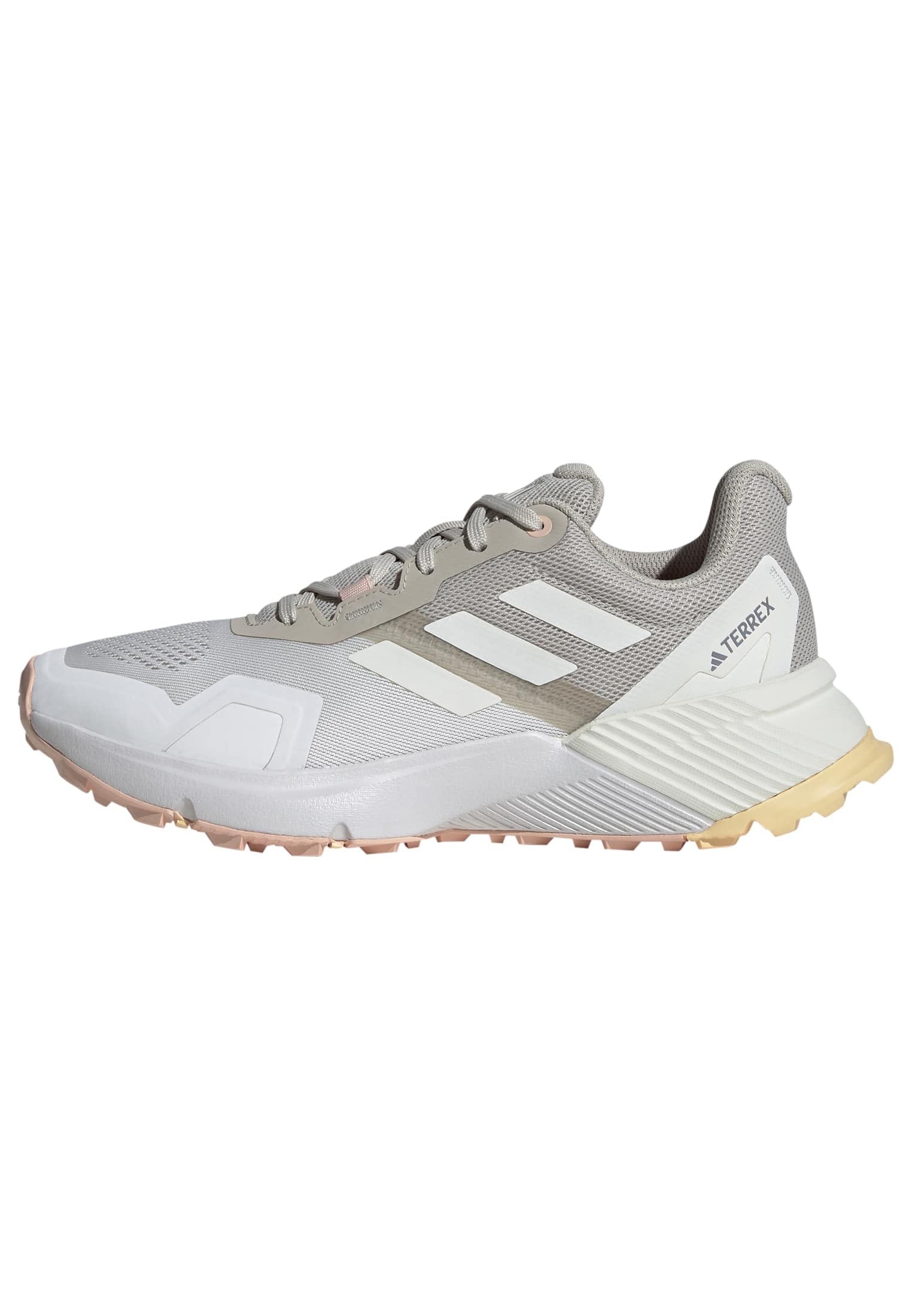
adidas Terrex Soulstride
Key Features
- Model: 34DC094-OFW
- Upper: Rain.rdy water-resistant
- Trail type: Trail and wet weather
- Price: Midrange
Wet days are where the adidas Terrex Soulstride earns its place. The Rain.rdy upper turns drizzle, wet grass and shallow puddles instead of soaking them up, which is the difference between finishing a grey-weather run and turning back at the gate.
The rest of the shoe is more than a rain cover. The tread is aggressive and grips mixed ground well, comfort is right up with the best in this set, and the arch support is stronger than the price suggests. It feels light enough to be quick and stable enough to trust on a camber.
Fit is the one thing to sort out before you commit. Sizing here is the least predictable in the roundup, with the split falling between true to size and too narrow, so if you have a wide forefoot or a high instep, buy from a seller with easy returns and try them indoors first.
We rate it the best value in this roundup: weather protection, real grip and comfort for a full day on your feet, without premium money. Damp trails, wet grass and the shoulder seasons are exactly what it was built for.
Pros
- Water-resistant Rain.rdy upper
- Aggressive tread for mixed ground
- Comfortable over long days
- Best value in this set
Cons
- Not waterproof in sustained rain
- Sizing is unpredictable between buyers
Our wet-weather pick and the best value here: a water-resistant upper, aggressive grip and all-day comfort without premium money.
Best for Budget Trail Miles
Saucony Excursion Tr13
Key Features
- Midsole: Versafoam
- Department: Women’s
- Trail type: Trail and road
- Price: Budget
The Saucony Versafoam Excursion Tr13 is the cheapest way into a proper trail shoe here after the barefoot Joomra, and it behaves like it: a road sneaker with trail ambitions rather than a mountain shoe. On gravel paths, rail trails and wet pavement it is comfortable and sure-footed, and it doubles as an everyday sneaker without looking like you have come straight off a mountain.
We rate it as a good second pair, or a first trail shoe for someone working out whether they even like running off-road, not as the one you take to a technical race. The honest limit is durability: the upper is thin and frays first, so rocky ground and high weekly mileage are the wrong assignment. Fit runs narrow through the midfoot and short in the length, so size up if you are between sizes and skip it if your forefoot is wide.
What it does well is comfort and price. A long day on your feet, a commute, a dog walk and a gentle trail all land in the same shoe, and it looks tidy doing it. If your trails are firm and your ambitions modest, that is a genuinely useful combination.
Pros
- Cheapest name-brand trail option here
- Comfortable for long days on foot
- Sure grip on wet pavement and light trail
Cons
- Thin upper frays with hard use
- Thin cushioning and modest arch support
A budget crossover for gravel paths and easy trails, comfortable enough for work and weekends, and not built for rocky ground or big mileage.
Best for Minimalist Running
Joomra Barefoot
Key Features
- Design: Minimalist barefoot
- Footbed: Zero drop
- Trail type: Trail and everyday
- Price: Budget
Barefoot shoes are a philosophy as much as a product, and the Joomra is the cheapest way to try it: zero drop, a thin sole and a wide toe box that lets your toes do the work. If you have been curious about minimalist running and do not want to spend much finding out whether it suits you, this is the obvious entry point.
On packed dirt, gravel and the grassy edge of a trail it holds up better than the price suggests. The sole is grippy, the upper is comfortable enough for bare feet, and it is genuinely versatile, working as much as a walking and hiking shoe as a running one.
Treat it as a change of technique rather than a straight swap. The sole is thin by design, so your calves and feet do work a cushioned shoe has been doing for them. Start with short, easy miles and keep some runs in your old shoes for the first few weeks; runners who move too fast here are the ones who end up sore.
As a cheap, wide, zero-drop trail shoe it is hard to argue with, and we have not found another pick here that covers the same ground. It is the one to try if you want ground feel and toe room on a budget, and the wrong shoe if you want a plush, forgiving ride.
Pros
- Zero-drop minimalist ride for very little money
- Wide toe box for toe splay
- Grippy on gravel and packed dirt
Cons
- Sizing runs short
- Soft rubber wears fast on pavement
The barefoot experiment, cheap: zero drop, a wide toe box and real grip on dirt, if you are ready to feel every stone underfoot.
Best for Dry Gravel Paths
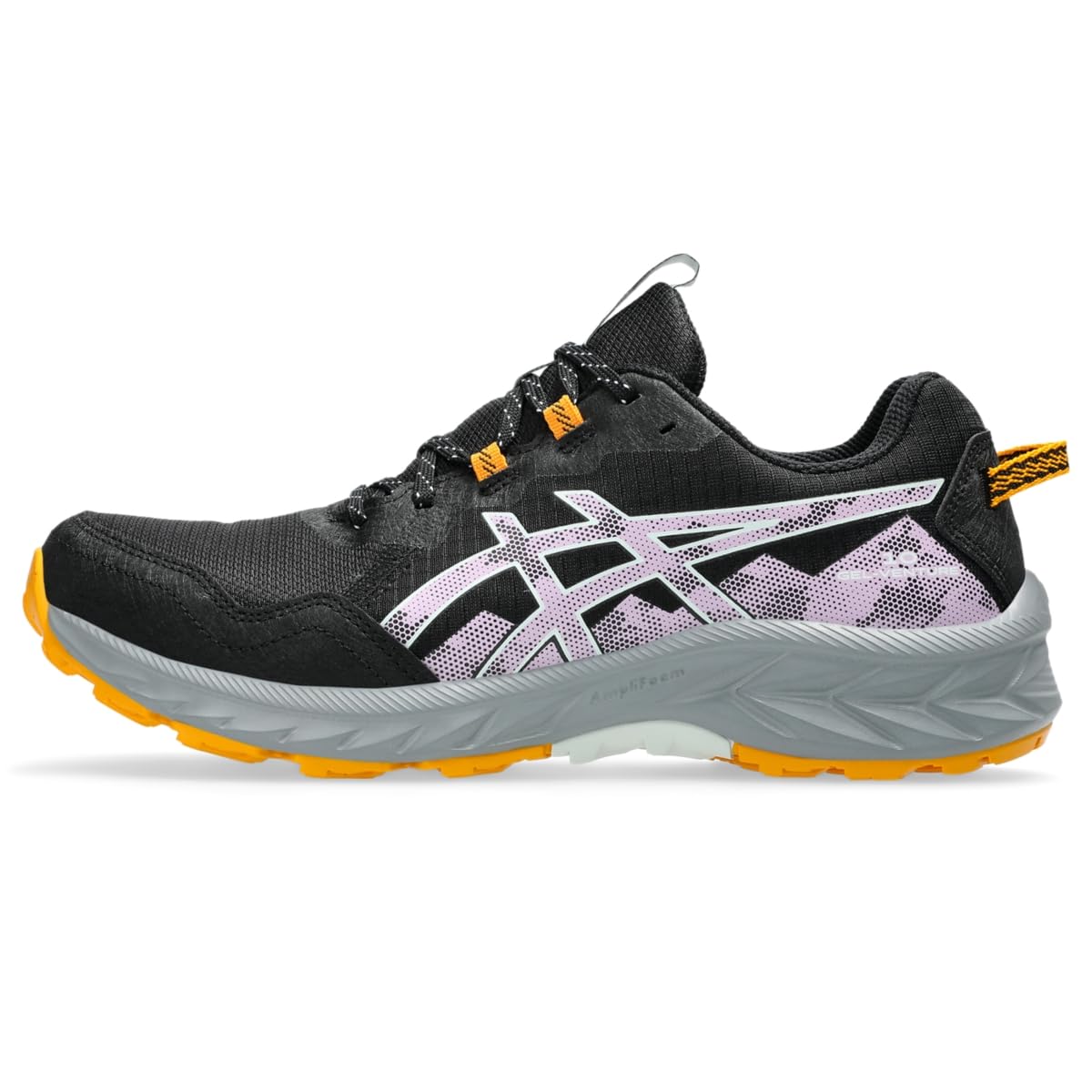
ASICS Gel-Venture 10
Key Features
- Model: 1012B760.002
- Midsole: Gel cushioning
- Trail type: Trail and road
- Price: Midrange
The ASICS Gel-Venture 10 has one problem, and it is worth knowing before anything else: on wet rock and wet roots the outsole loses its grip. In the dry it is an agreeable, supportive trail shoe; add water and it becomes the least confidence-inspiring shoe in this roundup. If your trails are damp half the year, look at the Speedcross or the Terrex instead.
Otherwise there is plenty to like. The arch support is strong and the platform feels stable under a heel strike, which is why it works so well as a standing-and-walking shoe. The sole is firm and protective rather than plush, and it handles gravel and packed dirt without feeling vague.
We think of it as a dry-weather gravel shoe that happens to work for the rest of your day: school run, dog walk, easy trail, all fine. Sizing runs short, so go up half a size. Buy it if your running is mostly dry dirt and you want support over aggression, and do not ask it to handle wet rock.
Pros
- Strong arch support and stable platform
- Firm, protective sole
- Versatile for work and walking
Cons
- Outsole slips on wet rock
- Sizing runs short
Supportive and comfortable on dry gravel, but the outsole loses its grip on wet rock, so buy it for fair-weather trails and standing all day.
Best for Light Trail Walks
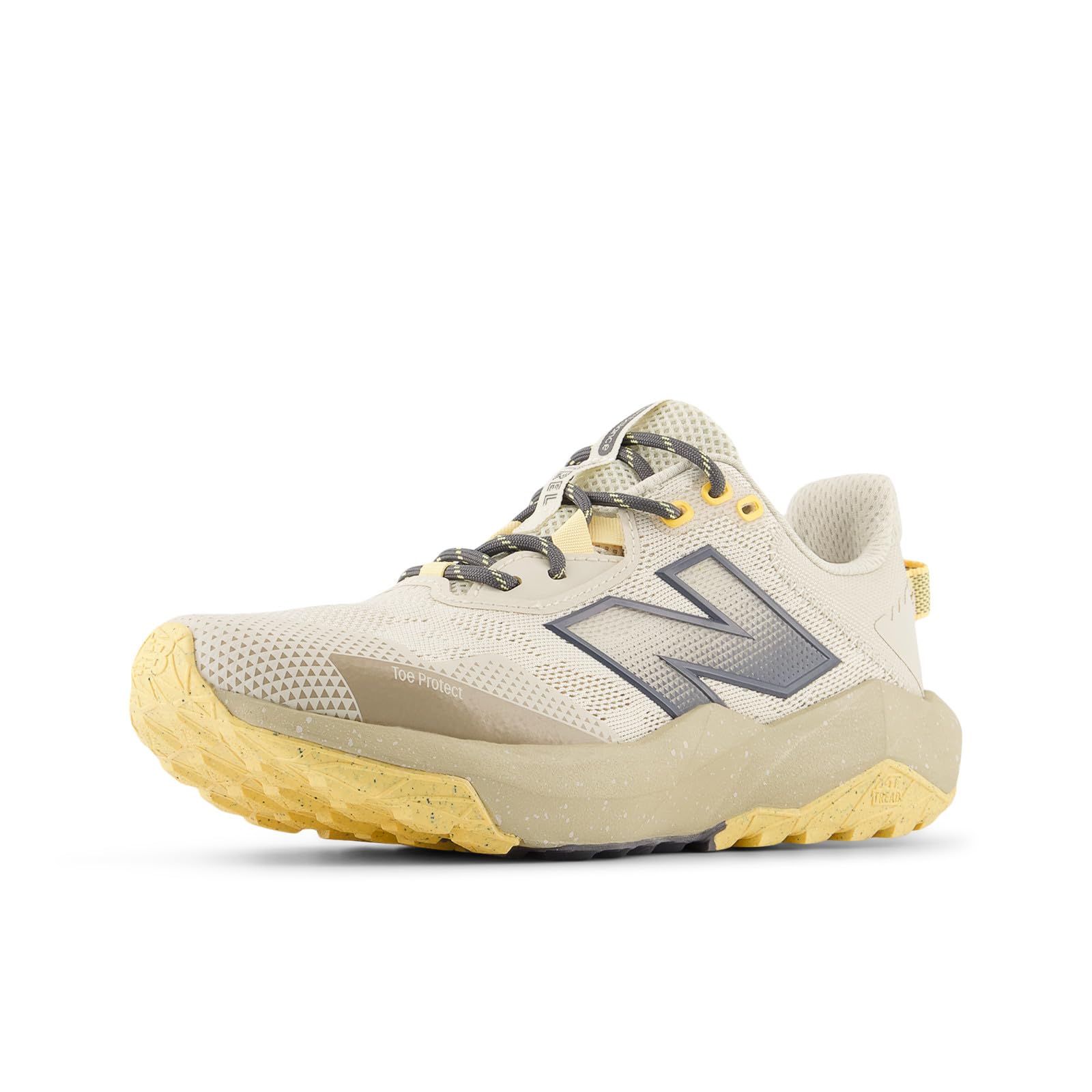
New Balance Nitrel V6
Key Features
- Model: WTNTRGP6
- Midsole: Dynasoft
- Trail type: Trail and walking
- Price: Midrange
The New Balance Dynasoft Nitrel V6 is the best-looking shoe in this roundup, and in a category where most trail shoes read as function first, that counts for something. The colors are strong and the shape stays sleek enough to wear with jeans.
The looks are not covering for a bad shoe. Quality and value both come out well, comfort holds up over a long day on your feet, and the tread keeps you upright on light trails and packed gravel. It is a crossover in the honest sense: fine for the run, fine for everything after it.
Two caveats decide it. The insole is thin and firm, which you notice on long days until you swap it or add a cushioned sock, and the fit runs small and narrow, so size up and take the wide option if your forefoot needs it. Neither is a dealbreaker at midrange money; both are worth knowing before you order.
Pros
- Sharpest looking shoe here
- Good quality and value
- Comfortable for all-day wear
Cons
- Thin, firm insole underfoot
- Runs small and narrow
A sharp-looking crossover that handles light trails and long days on your feet, once you go up a size and accept a firm insole.
How We Tested 12 Pairs of Trail Running Shoes
We started by pulling every women’s-specific trail shoe we could get our hands on, comparing lug depth, heel-to-toe drop, stack height, weight, and whether widths were offered at all. Anything that came in one width only, or had no reinforced toe cap, got cut early. That left 12 pairs, which we ran in over six months.
Testers wore them three or four times a week: rocky singletrack on weekday mornings, a muddy fire-road loop the day after rain, long descents on weekend outings, plus the walk to the coffee shop and the school pickup line, which is where appearance and versatility got judged. Two of us have wide forefeet and one has a narrow heel, so fit notes aren’t one person’s opinion. We sized up a half size in three pairs to see how sizing actually behaved, and logged where hot spots appeared first — usually the pinky toe on descents or the heel collar on climbs.
Traction got the wet test: the same steep, rooted section after a storm, at speed, noting whether the shoe held or slid. After roughly 100 miles per pair we photographed the outsole lugs, checked for upper fraying at the flex point, and pressed and twisted each sole by hand to judge hardness and whether the rock plate was doing anything. Cushioning we judged at mile eight, not mile one.
How to Choose Women’s Trail Running Shoes
Two decisions do most of the work: how much protection you want underfoot, and how much room your forefoot needs. Get those right and the rest, from lugs to lacing, is detail.
Match the shoe to the ground you actually run
The tread that feels wonderful on wet rock is a liability on pavement: tall, soft lugs round off fast and feel vague on hard surfaces. Look at your real weekly mix rather than the trail you aspire to. If most of your running is packed dirt, gravel paths and the occasional root, a moderate lug pattern like the Saucony or the Brooks is plenty.
If you are regularly on wet rock, loose scree or steep descents, pay for the aggressive outsole. The Speedcross and the Terrex are the two here that feel planted when it is slick. A shoe overbuilt for your terrain just costs more and wears out sooner.
Sort the toe box before anything else
Forefoot width is where most trail shoe purchases go wrong, because sizing labels are unreliable and women’s lasts vary more than a chart suggests. If you have a bunion, a wide forefoot or a history of black toenails, start with a foot-shaped toe box. The Lone Peak 8 is the clear example here, and the Joomra offers a similar shape far cheaper. A narrow, low-volume shoe like the Speedcross sits at the other end.
Decide how much shoe you want underfoot
Cushioning on the trail is really about protection. A firmer, stiffer platform spreads the impact of a sharp stone and stops your foot rolling on uneven ground, at the cost of feeling less of the trail. The Cascadia sits on the protective side; the Lone Peak is lower and more communicative.
If you are moving to a zero-drop or minimalist shoe like the Joomra, treat it as a training change rather than a purchase. Start with short, easy miles and keep some runs in your old shoes, because your calves and Achilles take the load first.
Water resistance is a trade, not an upgrade
A water-resistant upper like the Terrex’s Rain.rdy keeps out drizzle, wet grass and splashes, which is most of what a damp autumn run throws at you. It also holds water in once it gets past the collar, and it breathes less on a warm day.
If you run in proper rain or cross streams, a quick-draining mesh shoe with wool socks is often more comfortable than a waterproof one, because it empties and dries as you go. Choose based on how wet you get, not how wet you might get.
Spend where your mileage is
Budget trail shoes are not worse shoes; they are built for fewer miles. Thin uppers and softer rubber save money and weight, and they wear through sooner on rock and brush. Two runs a week on gentle ground makes a cheaper shoe the sensible buy, and the Saucony or the Joomra will serve you well.
Four or five runs a week on technical ground is different: the upper is what fails first, and paying more for a better-built shoe works out cheaper per mile. Either way, watch the flex point at the ball of the foot. That is where the fabric goes first.
Frequently Asked Questions
Can I run on pavement in trail shoes?
Yes, for connectors and the walk to the trailhead. What you do not want is a high-mileage road week in them: soft lugs round off quickly on asphalt and the ride feels vague underfoot.
If your week is mostly pavement with a Saturday trail, buy a road shoe and keep the trail pair for the weekend.
Will trail running shoes work for hiking?
For day hikes with a light pack, yes. They are lighter and grippier than most hiking shoes, and the Lone Peak and the Terrex both handle mixed ground well.
With a heavy pack, deep mud or sustained off-camber walking, a hiking shoe’s stiffer sole and higher collar earn their extra weight.
How do I know when a pair is worn out?
Press your thumb into the midsole under the heel. If it does not spring back, the cushioning is gone even when the tread still looks fine.
Also check the upper at the crease behind the toes and the lugs at the outer heel. If you run often, rotate two pairs so the foam gets a day to recover between outings.
Final Verdict
For most women running mixed ground, the Brooks Cascadia 19 is the pair to buy: roomy enough for a real forefoot, stable on rock and sure-footed in the dry and the merely damp, at a price that does not sting. Take the Salomon Speedcross instead if your trails are steep, wet and technical, and accept the narrow fit as part of the deal.
If a wide forefoot or a bunion is the thing that has kept you out of trail shoes, the Altra Lone Peak 8 solves that problem better than anything else here.