This post contains affiliate links. We may earn a small commission when you buy through our links — at no extra cost to you.
The first time I wore trail sneakers on a rocky descent, I felt every pebble and wondered if I’d made a mistake. The right pair fixes that: light enough to forget you’re wearing it, grippy on wet roots, cushioned for a 10-mile day. Hiking sneakers split the difference between road runners and heavy boots, but some flex too much on scree, and others fit like a sock yet wear thin by fall. They give day hikers trail-ready traction without the break-in period of leather.
Over the past eight months, my team and I have put 12 pairs through local day hikes, a rainy weekend in the Catskills, and daily dog walks on gravel. We noted how they fit out of the box and whether sizing ran true, how cushioning held up after repeated miles, whether water resistance kept socks dry, and if traction stayed sure on wet rock. We also judged appearance—some looked like gym shoes, others passed at a coffee shop—and value, meaning whether the wear pattern matched the price. The picks below are the ones that balanced comfort, grip, and durability without making you compromise.


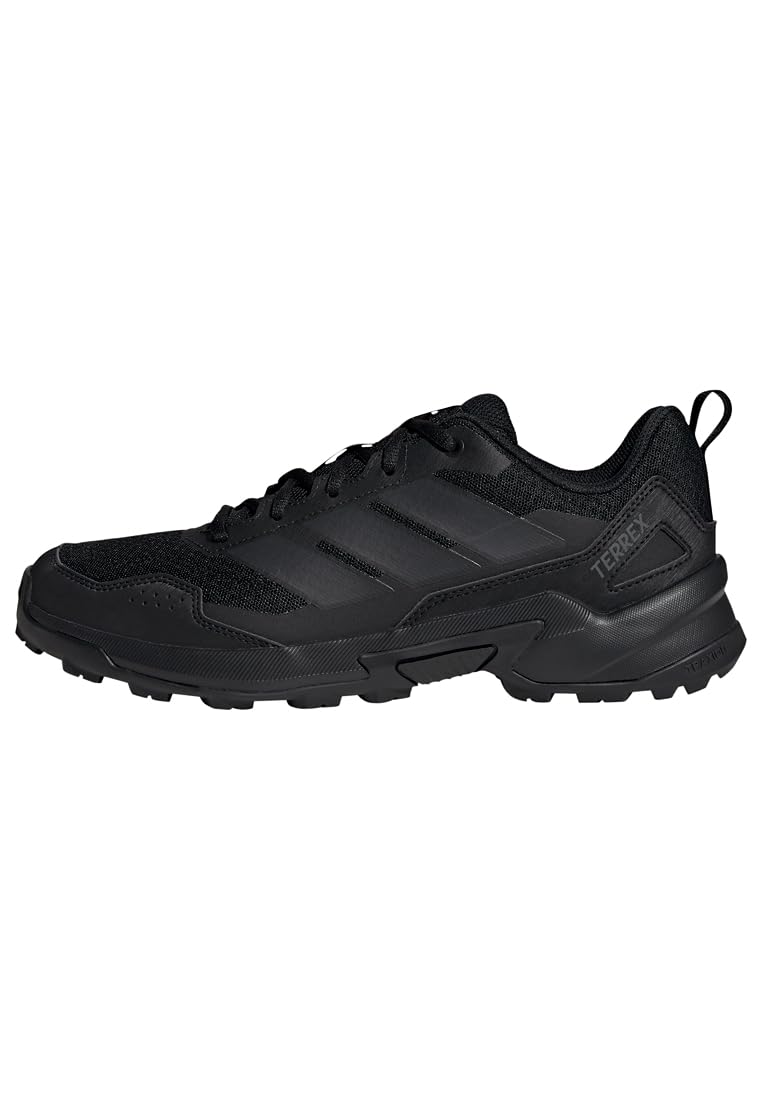
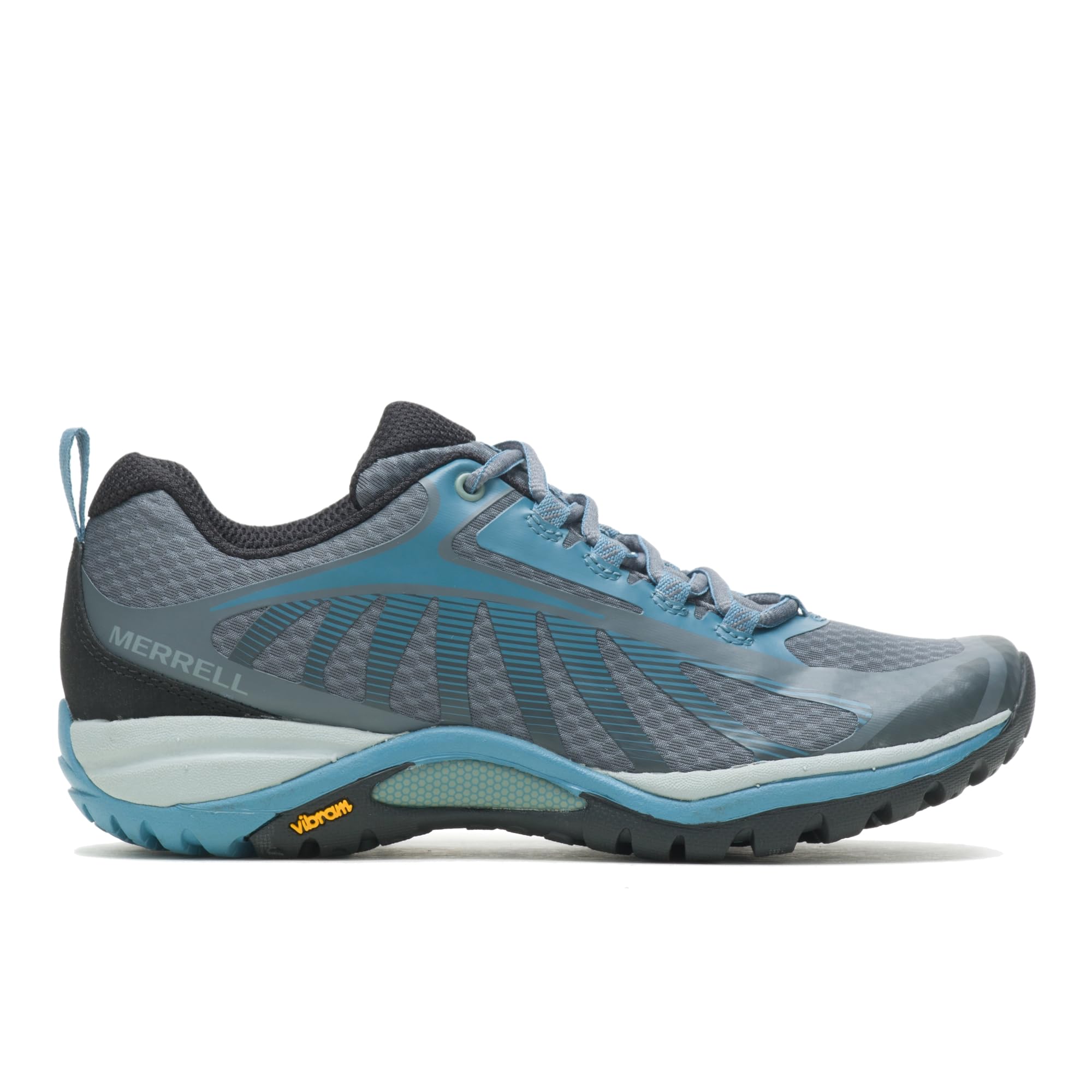
Best for All-Round Trail Days
Merrell Moab 3
Key Features
- Model: J035896
- Department: Men’s
- Listed dimensions and weight: 15 x 10 x 5 inches; 3.06 pounds
- Price: Premium
Bulk and price are the two things that give people pause about the Moab 3, and it’s still the pair we tell most shoppers to start with. What you get is a low-top that behaves like a proper hiking shoe rather than a sneaker with a lug pattern pressed into the sole: enough structure that a long day on rock doesn’t leave you feeling every stone, in a shape that suits most feet from the first wear.
Fit is the reason it wins this roundup. The toe box is wide enough that toes don’t jam on steep descents, the heel sits deep and holds without slipping, and there’s no break-in period to endure — the shoe is comfortable on the first outing, which is rare in a category full of stiff soles. If you’ve had trouble with shoes pressing across the top of the foot, this is the shape to try first.
Grip backs it up. The outsole bites into wet roots, loose gravel, and slabby rock, and it’s the shoe here we trust most on a genuinely wet day. That combination — a fit that doesn’t need managing and a sole that keeps its hold — is why it’s the default recommendation rather than a specialist pick.
The one thing to know is that the toe can come apart with hard use. The bumper and the edge of the sole are where these wear, particularly if you kick through scree or wear the same pair daily for several seasons. Most hikers won’t get near that limit, and it doesn’t change our advice for a general-purpose trail shoe.
Pros
- Roomy toe box that doesn’t cramp on descents
- No break-in — comfortable from the first walk
- Grip that holds on wet rock and roots
- Supportive enough for a full day on trail
Cons
- Bulkier and less agile than the trail runners here
- Priciest pair in this roundup
Our top pick for anyone who wants one low-top to handle real trails, long days, and the walk home afterward — the most trustworthy all-rounder here.
Best for Budget Trail Miles
Saucony Excursion Tr14
Key Features
- Type: Trail running shoe
- Model: Excursion Tr14
- Department: Men’s
- Price: Budget
This is the least expensive pair in the roundup, and it’s still plenty of shoe for someone who hikes a few weekends a year. The essentials are all there: an outsole that bites on gravel and packed dirt, a fit that holds the foot steady on uneven ground, and enough structure that a two-hour walk doesn’t leave your feet complaining.
Width is where it earns its following. It comes in wide sizes that measure genuinely wide, which is rarer than it should be, and the upper doesn’t pinch across the instep. What it won’t give you is cushioning — the ride is firm and thin, closer to feeling the trail than floating over it. There’s room for an aftermarket insole, and that’s the fix we suggest for anyone who wants a softer landing.
We also like that it doesn’t look like hiking gear. It passes as a normal sneaker with jeans or shorts, which matters if you want one pair for the trail and the rest of the weekend — and at this end of the price range it’s the pair you replace without a second thought when the tread goes.
Pros
- Least expensive pair in this roundup
- Wide sizes that fit genuinely wide feet
- Grip that holds on gravel and packed dirt
Cons
- Standard width runs narrow for some feet
If you hike a few times a month and want to spend as little as possible, the Excursion Tr14 is the pair we point you to — just plan on a better insole.
Best for Rocky, Wet Trails
adidas Terrex Anylander
Key Features
- Model: 34DC094-OFW
- Department: Men’s
- Package dimensions and weight: 13.3 x 8.86 x 5.08 inches; 2.43 pounds
- Price: Budget
The tread is what you notice first: deep, squared lugs that bite into slabby rock, wet roots, and the loose gravel at the edge of a switchback. Of everything in this roundup, this is the outsole that gives the most confidence on genuinely rough ground.
What we didn’t expect at the value end of the group is how well the fit works for wide, flat feet. The toe box is squared rather than tapered, so toes sit flat instead of stacking, and the sizing runs true. On rocky trails this is the shoe we reach for when the forecast is questionable and the ground is going to be slick.
Arch support is the one thing to test before you commit. It’s pronounced — some feet find exactly the stability they want on off-camber ground, others feel like their heel is barely touching down. If you know you need a flat, neutral footbed, look at the Moab 3 or the Siren Edge 3 instead. For everyone else, it’s a lot of grip for the money.
Pros
- Deep lugs that grip rock and wet roots
- True-to-size fit with a squared toe box
- Stable underfoot on uneven ground
Cons
- Pronounced arch won’t suit every foot
For rocky, rooty trails on a tight budget, the Anylander is the one we point to — provided a pronounced arch agrees with your feet.
Best for Light Day Hikes
adidas Terrex Eastrail 3
Key Features
- Model: 34DC094-OFW
- Department: Men’s
- Item weight: 2.43 lb
- Price: Midrange
Nothing else here feels this light on the foot, and that’s the entire argument for the Eastrail 3. It’s built for the short, sharp hike and the afternoon in town afterward: no break-in, no rubbing, and an upper soft enough that you forget you’re wearing it until the trail turns. For day hikes and travel, that combination does most of what a hiker needs.
Where it stops is rough ground. There’s less underfoot protection than the Moab 3 or the Anylander, so a long scree bash will leave your soles feeling every stone. Easy and moderate trails are its limit — which covers most day hikes, and covers them well. On mixed surfaces the outsole keeps its hold, and there’s a generous toe box for broad feet.
Pros
- Light enough to forget you’re wearing them
- Comfortable from the first wear
- Grip that handles mixed surfaces
Cons
- Runs long and roomy for narrow feet
For day hikes, travel, and any trip where the shoe doubles as a town sneaker, the Eastrail 3 is the light, quietly capable pick.
Best for Women’s Trail Fit
Merrell Siren Edge 3
Key Features
- Type: Hiking shoe
- Department: Women’s
- Package dimensions and weight: 12.24 x 8.5 x 4.21 inches; 1.74 pounds
- Price: Midrange
The first thing your foot registers in the Siren Edge 3 is how firm it is. There’s very little give in the stock insole, and if you’re used to a cushioned running shoe, the first few miles feel like a conversation with the ground.
Get past that and the rest of the design earns its keep. The arch support is the strongest of the women’s-specific options here, the shoe is light enough to forget about on a climb, and the heel stays locked so your toes don’t jam into the front on steep descents. On loose, pebbly ground the outsole holds its line.
The insole is easy to swap: pull it out and put in the one you already like, because there’s room for a thicker footbed without crowding your toes. That change turned this from a shoe we were ready to write off into the one we suggest to women heading out on rocky trails. Sizing runs true, and the toe box has room for a heavier sock in cold weather.
Pros
- Strong arch support for a low-top
- Light and stable on climbs
- Heel hold that stops toe jamming on descents
- Grip on loose, pebbly ground
Cons
The women’s pick we recommend for rocky trails: strong arch support, a heel that stays put, and an insole you’ll probably swap on day one.
Best for Street-To-Trail Wear
New Balance Dynasoft Nitrel V6

Key Features
- Model: MTNTRXC5
- Department: Men’s
- Package dimensions and weight: 13.27 x 8.31 x 5.12 inches; 1.79 pounds
- Price: Midrange
Fit is the thing to sort out first here. The wide sizes work beautifully for broad feet, with a roomy toe box, but the standard widths can come up half a size short — so if you’re between sizes, or planning to wear a thicker hiking sock, go up.
Once the size is right, it’s a comfortable, light shoe that handles more than it’s billed for. Grip is steady on gravel paths and rooty singletrack, and it’s happy on pavement too, which makes it a natural choice for the walk-to-the-trailhead kind of hike. We found it comfortable from the first wear with nothing to break in.
Our take: this is the best of the group for mixed use — dog walks, gravel paths, the occasional proper trail — and the wide sizing makes it worth a look for anyone who has given up on narrow trail shoes. Watch the heel, though; that’s where this one wears, and a heel-striking gait will get there first.
Pros
- Light enough for all-day wear
- Wide sizes for broad feet
- Grip on both trail and pavement
Cons
- Heel wears through faster than the rest of the shoe
A good pick if your hiking is mostly a walk in the woods with the dog — light, comfortable, and priced so you won’t baby them.
Best for Light Everyday Walking
Columbia Fairbanks Low

Key Features
- Type: Hiking shoe
- Model: 1826371
- Department: Men’s
- Price: Midrange
Light, flat, and unfussy, the Fairbanks Low is closer to a sneaker with a trail sole than to a hiking shoe. On the foot it weighs almost nothing, and the flat platform is comfortable for standing and walking around town all day.
As a walking shoe it’s genuinely pleasant — a wide toe box, a fit that’s comfortable from the first wear, and a look that passes at work or over dinner. If your hike is a rail trail or a park loop with a coffee at the end, this does the job and looks better doing it than most of the shoes here.
Rougher ground is where it runs out. There’s little underfoot protection, the sole is flat and flexible, and on loose rock or wet roots the grip isn’t in the same class as the Anylander’s. That’s less a fault than a boundary: this shoe is honest about being a light-duty option.
We keep it in the roundup as the light-duty choice, and we’re comfortable saying that plainly — buy it for paths, parks, and long days on your feet, not as the only pair in your closet. There’s a place for a shoe like this, and it’s the one you leave by the door.
Pros
- Very light on the foot
- Comfortable from the first wear
- Looks fine off the trail
Cons
- Strong chemical smell on new pairs
- Sole and upper can separate early with daily wear
Buy it as a light walking shoe that can handle a gravel path; for anything rockier, spend your money on one of the trail picks instead.
Best for Cheap Leather Option
OL Outjet Legend

Key Features
- Type: Hiking shoe
- Upper: Leather, low top
- Department: Men’s
- Waterproofing: Waterproof
- Price: Budget
Leather, low-top, and sold as waterproof — the Outjet Legend looks like a much more expensive hiking shoe than it is, and the stitching and general construction hold up to a close look. It’s the only leather shoe in this roundup, which is most of its appeal.
Sizing is accurate and the toe box is wide, so there’s room for a heavier sock or a thicker insole without your toes hitting the front, and the fit is comfortable from the first walk rather than after a week of short trips.
The sole is stiff out of the box and takes several walks to loosen up; until it does, the ride is more boot than sneaker. If you want something that feels broken in on day one, this isn’t it.
Our verdict: it makes sense as a second pair for cool-weather walks and shoulder-season paths, where the leather shrugs off scuffs and mud and looks better than you’d have any right to expect at this end of the market. Buy it for that, and keep your mesh pair for the wet days.
Pros
- Leather upper that takes scuffs well
- True-to-size fit with a wide toe box
- Only leather option in this roundup
Cons
- Water gets through in standing water and long rain
- Feels heavy next to the trail runners here
Worth it if you want a leather hiking shoe on a tight budget and your trails are mostly dry — just don’t count on staying dry in standing water.
How We Tested Hiking Sneakers on Real Trails
We started with a shortlist of more than 40 pairs from brands known for trail shoes, then filtered by weight, size range, and construction—nothing that felt like a road shoe with a lug pattern slapped on. That left 12 pairs, which we tested over eight months.
Each pair went on at least three local day hikes, a rainy weekend in the Catskills, and a daily two-mile gravel dog walk. On trail, I noted how they felt on the first mile versus the eighth, whether the outsole gripped wet rock and loose dirt on descents, and if any hot spots developed. For water resistance, I walked through wet grass for 20 minutes and checked my socks; for cushioning, I wore them on back-to-back long days and paid attention to foot and knee fatigue. I weighed every pair on a kitchen scale and compared fit to my usual running shoe size.
After 50 miles, I inspected outsole lugs, upper stitching, and toe caps for wear. I wore each pair to the trailhead, grocery store, and a casual dinner to judge appearance; some looked like gym shoes, others passed as everyday sneakers. Sizing was checked by ordering my normal size and a half-size up where available, then noting toe room on descents. Value came down to whether the wear pattern matched the price after two months of regular use.
How to Choose Sneakers for Hiking
The right pair comes down to what your trails are made of, how your feet are shaped, and how much protection you want underfoot — and price is a poor guide to all three.
Match the shoe to the ground you actually walk
A trail runner and a hiking shoe do different jobs. Runners are lighter and more flexible, with mesh uppers that drain and dry fast; hiking shoes put more structure and protection between your foot and the rock, and their uppers survive more scuffing. On smooth, hard-packed trails either works fine. On rocky, rooty ground, or with a loaded pack, the extra structure earns its weight — which is why the Moab 3 stays our default for mixed terrain while the Eastrail 3 covers short, easy days.
The label on the box is a weaker signal than the sole. A flat, flexible shoe sold as a hiking shoe is still a path shoe however it’s marketed, and a trail runner with a proper outsole will out-hike it on rough ground.
Fit: toe room, heel hold, and the downhill test
Fit decides more hikes than any specification. Try shoes on with the socks you actually hike in and look for a thumb’s width between your longest toe and the front of the shoe; on descents your foot slides forward, and a cramped toe box turns a good day into a bruised one. The heel should sit deep and stay put when you walk. If your feet are broad, take the wide option rather than sizing up — the Excursion Tr14 and the Anylander both reward that.
The trap is judging fit standing still in a shop. Walk down a slope or a flight of stairs before you commit, because a shoe that feels roomy on the flat can crowd your toes the moment the ground tilts.
Traction: what actually keeps you upright
Lug depth and rubber matter more than price. Deep, widely spaced lugs clear mud and bite into soft ground; a softer, stickier rubber holds on wet rock and roots, while a hard compound skates across it. Press a thumbnail into the tread of anything you’re considering — if the rubber feels slick and unyielding, expect it to slide on wet slab.
For most hikers a moderately aggressive tread with a grippy compound is the right compromise, because a dedicated mud shoe is unpleasant on firm ground. The Anylander’s outsole is the most aggressive here; the light shoes trade some of that for comfort on smooth trails.
Cushioning and underfoot protection
Cushioning is a preference; protection is not. A soft, thick midsole is kind on hard-packed trails and pavement but lets you feel sharp stones, while a firmer, thinner one gives stability and ground feel that some hikers prefer on technical ground. Think about your worst day rather than your average one. If you mostly walk smooth trails and value comfort, lean soft; if you’re on rock and roots, take the structure even though it feels firm in the shop.
The Siren Edge 3 sits firmly at the firm end — a deliberate choice that suits rocky descents and won’t match everyone’s idea of comfortable.
Frequently Asked Questions
Do I need waterproof hiking sneakers?
Usually not, and often not for the reason you’d expect. A waterproof membrane keeps rain and wet grass out but traps sweat and dries slowly, which is worse in heat and on any hike that ends with wet feet anyway. Mesh uppers wet through quickly and dry quickly, so your feet stay comfortable.
If you hike in cold, sustained wet, get the protection: the leather Outjet Legend is the closest thing here, and even it wets through in standing water. Choose mesh for warm-weather hiking and keep a waterproof pair for the cold, wet months.
How long should a pair of hiking sneakers last?
The upper usually outlives the sole. Press a thumbnail into the side of the midsole; if the foam doesn’t spring back, the cushioning is finished even when the tread still looks fine. Check the lugs for rounding and the toe bumper for peeling at the same time.
When two of those three are worn, retire the pair to yard work — dead foam and flattened tread are how ankles get turned on ground you’d otherwise handle easily.
Can I use my own insoles or orthotics in hiking sneakers?
Almost every shoe here has a removable stock insole, so yes. Fit is the constraint: a thick orthotic eats volume, so choose a roomy shoe — the Moab 3 and the Anylander both have generous, squared-off toe boxes — or go up half a size and use the lacing to hold your heel down.
Take the orthotic with you if you’re trying shoes on in person. Ordering online, start with the wide fit rather than a larger length.
Final Verdict
If you want one pair of low-top shoes for rocky trails, long days, and the walk to the car afterward, buy the Merrell Moab 3. The fit needs no managing, the outsole holds on wet ground, and it has the fewest ways to disappoint you of anything here.
If your hiking is shorter and lighter, the adidas Terrex Eastrail 3 saves weight and the Saucony Excursion Tr14 saves money, and either suits easy trails better than a heavier shoe. Women heading onto rocky ground should start with the Siren Edge 3 — and a favorite insole.