This post contains affiliate links. We may earn a small commission when you buy through our links — at no extra cost to you.
A climbing harness has to do two opposite jobs at once: hold you if you fall, and disappear on your body while you climb. Most people buy their first one by color, or by whatever the shop has in their size, then spend a whole season finding out where it digs in. The difference between a harness you forget you’re wearing and one you’re constantly hitching up comes down to a few unglamorous details — how the waist belt sits over your hips, whether the leg loops open wide enough to layer over pants, how the belay loop is bar-tacked — and none of that shows up on a spec sheet.
I’ve spent the past eight months climbing in 12 harnesses, from budget gym models to rack-ready ones built for long days outside, and the gap between them is real but rarely where the marketing puts it. The thing I’d tell any first-time buyer: fit beats features every time, and a harness that stays put will out-climb a fancier one that doesn’t. What follows are the ones I’d actually spend my own money on.


Best for All-Round Climbing
Petzl Corax
Key Features
- Size: 1
- Adjustment: Double-sided waist, adjustable leg loops
- Package dimensions: 13 x 6 x 5 inches
- Price: Premium
Two buckles on the waist, one either side, is the detail that decides this one for us. Adjusting from both hips lets you center the harness instead of dragging it round to one side, so the gear loops finish where your hands expect them and the back leg straps stay even. It sounds fussy. In practice it is the difference between a quick check at the car and a wrestling match in the parking lot.
The leg loops adjust too, which matters more than a spec line suggests, because it is how you stop them riding up when you sit into a rest. We wore this through long gym sessions and a day of top-roping without ever thinking about it, which is close to the highest compliment a harness gets. Nothing dug in, and nothing needed re-threading halfway up a route.
The padding sits in the waist belt and the leg straps, and it is the part you appreciate when you are lowered off and hanging while your partner pulls the rope. It is light enough to vanish into a crag pack next to a rack, and it has done gym duty and rock duty without complaint.
Two things to settle before you order. The Corax comes in numbered sizes rather than one adjustable belt, so read the size chart against a waist measurement you have actually taken; the payoff is padding in the right places instead of one wide slab that fits everybody equally badly. And buy it somewhere with an easy exchange, because fit is the one thing no specification settles.
Pros
- Double-sided waist adjustment keeps gear loops centered
- Padding holds up over long lowers
- Light enough to forget in a pack
Cons
- Priciest harness in this group
We recommend the Corax to anyone who climbs more than a few times a year: it fits properly, stays where you put it, and the padding is still working on the last lower-off of the day.
Best for Budget Certified Climbing
NewDoar Half Body Harness
Key Features
- Leg fit: 20.4 to 30.3 inches
- Waist fit: 31.5 to 47.2 inches
- Weight limit: 125 kg / 276 lb
- Certification: UIAA 105; CE EN 12277:2015+A1:2018
- Price: Midrange
UIAA 105 and CE EN 12277:2015+A1:2018 are the two standards that matter for a climbing harness, and this one states both. That is the whole reason it earns a place here. Certification is the one thing you cannot judge by feel in a shop, and a comfortable belt that is not rated for a fall is just a belt.
The fit is where the numbers get interesting. The waist runs from 31.5 to 47.2 inches, but the leg loops stop at 30.3, so your thighs are the real limit rather than your waist. If you have heavy legs, measure them before you order, because there is no larger leg loop option. The maker also says it is not built for slim frames or kids, and the cut backs that up: this is a broad, padded belt that suits a big adult.
Padding is generous for the money, with a wider panel across the back of the waist and doubled leg loops. We found it fine standing at a belay and less so over a long hang, because the padding is broad but flat; the leg loops make themselves known in a way a purpose-built sit harness like the Corax does not.
Two rings on the right hip take a belay device or a few tools. The straps are the part to watch, since they can creep, so run the tails through your fingers at every changeover. That is a two-second habit, and it is all this harness asks of you.
Pros
- Certified to UIAA 105 and CE EN 12277
- Fits waists from 31.5 to 47.2 inches
- Wide, doubled padding at waist and legs
- Two hip rings for a device or tools
Cons
- Not cut for slim builds or kids
The cheapest certified harness in this group, and a sound first harness for a bigger build; check the leg loop range before you order.
Best for Gym and Crag
Mammut 4 Slide
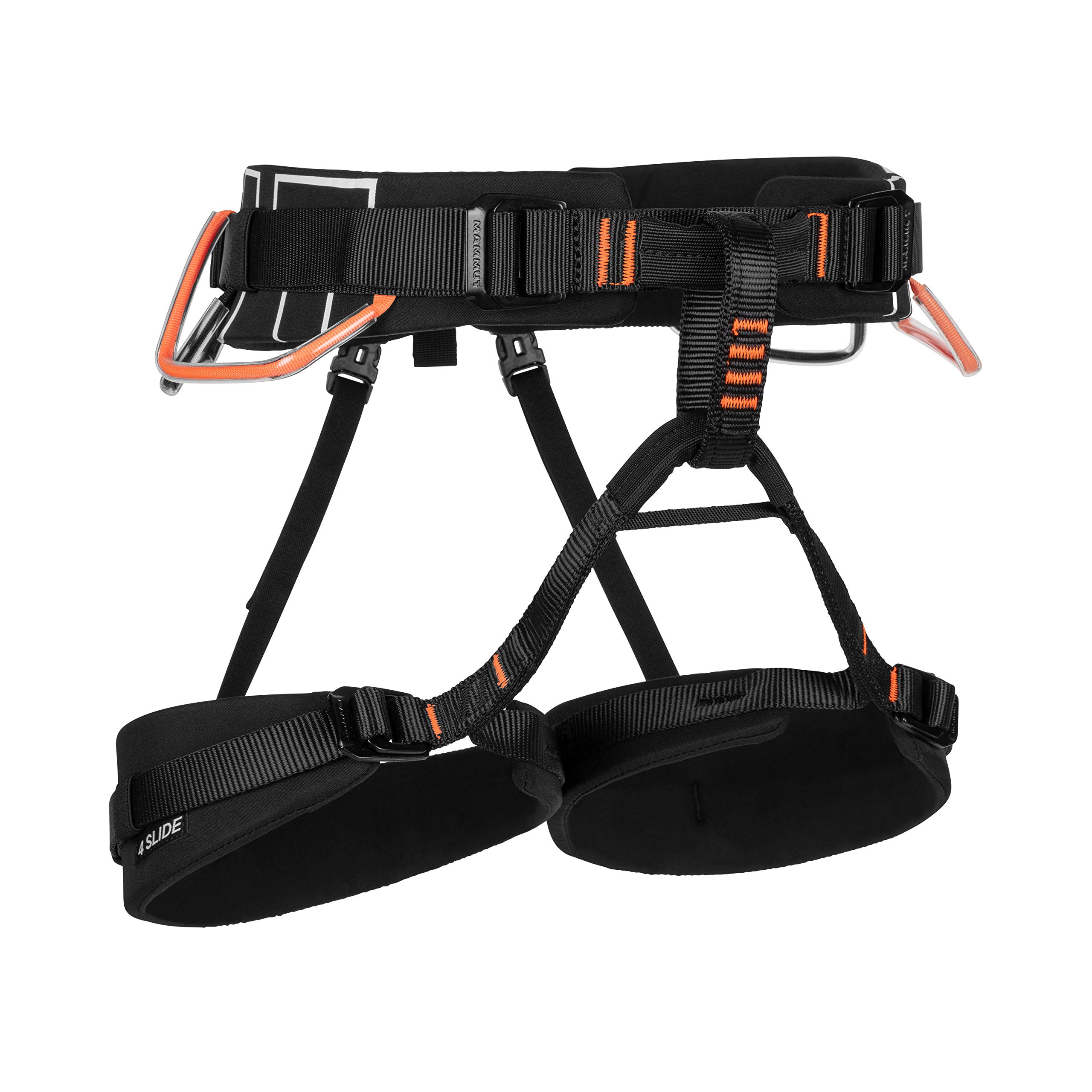
Mammut makes real climbing harnesses, and the 4 Slide costs the same as the Corax. That is where the useful comparison stops. The published details run to a model number and a unisex fit, with no stated weight, no gear loop count and nothing on sizing beyond unisex, so there is very little to check the harness against before you buy it.
We kept it in because a specialist harness at Corax money deserves to be on your list, and if you have worn Mammut before or can get to a shop and hang in one, the information gap matters less. For everyone else, the Corax is the easier call: every detail that decides whether a harness fits is there to check before you commit.
Pros
- From a climbing-specialist maker
- Costs no more than our top pick
Cons
- Almost no published spec to check
A climbing-specialist harness at the same money as our top pick, and worth a look if you can try one on; there is just too little published to put it first.
Best for Guests and Kids
HeeJo Half Body Harness

Key Features
- Sizing: Universal fit
- Buckles: Double-back metal
- Material: Polyester
- Weight limit: 661.4 lb
- Price: Budget
The mesh lining is the nicest thing here. It sits between you and the webbing where a plain belt would rub, and at this money it is an unexpected touch rather than a token one. The webbing is polyester with reinforced stitching, and the belt carries a 300 kg weight limit, which is more than a person weighs and is why the same harness turns up on zip lines and tree stands as often as in climbing bags.
Where it stops is the setting it is built for. Its description lists mountaineering, tree climbing, zipline and rescue alongside rock climbing, and the thing we want before trusting a rope to a harness is a stated climbing standard. As the spare in the truck, the belt you hand a visitor for a fixed line, or a kid’s harness on a zip line, it is a good buy, and nothing else here costs as little.
Pros
- Mesh lining keeps webbing off your skin
- 300 kg stated weight limit
- Cheapest harness in this group
Cons
- One size, loose on smaller frames
- Double-back buckles take two hands
A cheap, mesh-lined belt that makes a sensible spare for guests and kids, and the least expensive way here to get a padded half-body harness.
Best for Tree and Roof
X XBEN Thicken Harness

Key Features
- Model: HUWAI-Harness001
- Weight: 2.84 lb
- Package dimensions: 9.13 x 7.24 x 6.02 inches
- Price: Midrange
At 2.84 pounds this is the heaviest harness in the group, and the weight is all in the harness itself: a wide, thickened waist panel and leg loops broader than anything else here. For standing work that is the point. It spreads load across the hips instead of digging a narrow strap into them, and after an hour of it you understand why work belts are built this way.
The extras point the same direction. Rings on the sides keep tools where you can reach them without looking, and the build holds up, with doubled material and heavy stitching. That is what you want from something that is taking your weight for long stretches rather than for the couple of minutes a climbing harness spends loaded.
Our read is that this is work gear that is also sold for climbing, and it makes sense on those terms: the padding is flat and broad because it is built for standing and leaning, not for hanging. Which is fine, as long as you know which of those two jobs you are buying it for.
Pros
- Wide, thickened waist panel spreads load
- Side rings keep tools within reach
- Heavy stitching and doubled material
Cons
- Runs small against its own size chart
- Leg straps loosen as you wear it
For tree stands, roof work and long spells leaning back against something, this wide padded belt buys a lot of support for not much money.
How We Tested Climbing Harnesses
We started by filtering for certification first — every harness on our shortlist carries a legible EN 12277 or UIAA 105 label, no exceptions. From there we sorted by intended use (gym and top-rope, sport, trad, alpine), then narrowed by size range, gear loop layout, listed weight, and price so the final group covered a genuine spread rather than six versions of the same thing. That left us with 12 harnesses.
Testing ran for eight months. Each harness saw weekly indoor sessions on top-rope and lead, weekend trips to sport crags, and a handful of multi-pitch days. We also wore them on the approach hike and layered them over everything from shorts to a fleece and a puffy, because a harness that only fits over leggings isn’t much of a harness.
In use, we hung in each one on a fixed line for a straight 20 minutes to mimic a long belay and noted where the pressure landed and whether the waist belt rode up. We re-adjusted leg loops over bulky layers and with gloves on, timing how long it took one-handed. Buckles got a full session of climbing and falling to see whether anything crept loose or the tail ends flapped in the way. We took high steps, heel hooks, and wide stems to judge whether the leg loops cut or let us move, and racked a full trad rack to count how many gear loops actually held weight without collapsing. After every lead fall we ran a thumb over the webbing, tie-in points, and belay loop looking for fuzz; at the end of eight months we reinspected belay loops, elastic risers, and gear loop wear against the day-one photos.
How to Choose a Climbing Harness
Fit and certification settle more than padding or price ever will, so decide those two before you look at anything else.
Fit Is Two Measurements, Not One
Harnesses are sold by waist size, but the leg loops are usually what runs out first. The NewDoar shows how it happens: its waist goes to 47.2 inches while the leg loops stop at 30.3, so a big-waisted, slimmer-legged climber can be outside the range of a harness that looks generous on paper. Measure your thighs as well as your waist, and if you are near the top of either number, size up.
Then check that you can adjust it while you are wearing it. A belt you can only set with the harness off is one you will stop adjusting, and a harness that is not snug on the day is worse than one that is merely unfashionable.
Certification: Read the Label, Not the Title
Plenty of half-body belts carry rock climbing in the title and fire rescue, tree climbing and roofing in the description. Those are work-positioning jobs, and they do not put the same forces through a harness that a fall does. What you want is a stated standard, CE EN 12277 or UIAA 105, attached to the thing you are buying. It is not an expensive feature: the NewDoar carries both for far less than a specialist sit harness.
If a description names no standard and you cannot check the label in person, do not buy it for roped climbing. That is not caution for its own sake. It is the one thing about a harness you cannot judge by trying it on.
Match the Harness to How Long You Hang
A recreational harness spends a lot of its life holding your weight while you belay, lower off or sit into a rest, so the shape of the padding matters more than the thickness of it. Broad, flat padding is comfortable standing, which is exactly what the work belts here are built for. Shaped padding in the waist and leg loops is what pays off on the third lower-off of the day, and it is why we send regular climbers to the Corax.
Weight sits on the other side of that trade. The X XBEN is close to three pounds and you feel it on the approach; the Corax is not a harness you notice at all. If all your climbing happens twenty feet from the car, weight barely matters. If it does not, it does.
Check the Buckles and the Gear Loops
Buckles are where a cheap harness shows itself. Double-back buckles, the kind where you thread the webbing back through, are secure but slow, and slow matters when you are putting a harness on over a jacket in a cold parking lot. Slide and auto-locking buckles are quicker, and double-sided waist adjustment keeps the gear loops and back leg straps centered instead of pulling everything onto one hip.
Gear loops matter if you place gear; for gym climbing you need one for a chalk bag and not much else. Put the harness on and reach behind your hip as if for a quickdraw. If you have to hunt for the loop standing still, you will be hunting for it on the wall.
What Spending More Actually Buys
Certification is not what the extra money buys. The cheapest certified harness here meets the same standards as the most expensive one. What you pay for above the budget tier is shaping, lighter webbing and finishing: padding that is cut rather than slabbed, buckles you can work with one hand, loops that land where your hands go.
So spend up if you climb often, and spend down if you climb a few times a season and want a certified harness for the gym. Both are reasonable purchases. A cheap belt with no stated standard, used on a rope, is not.
Frequently Asked Questions
How tight should a climbing harness be?
Snug enough that you cannot pull it down over your hips once the waist is fastened, and tight enough that the leg loops do not slide up when you lift a knee. Fit it standing, then hang in it once: weight redistributes everything, and what felt fine on the ground often needs a second adjustment. Re-check the tails after your first climb of the day.
Can two people share one climbing harness?
Only if both of you fall inside the same waist and leg range, and you re-adjust and re-check it at every changeover. A sized harness rarely covers two very different builds; a one-size belt like the NewDoar, with a 31.5 to 47.2 inch waist, can, which is why it is the one we point to for a shared, club or family harness.
When should I stop using a climbing harness?
After a hard fall, or after any visible damage to webbing, stitching or buckles: fraying, fuzzy patches, a bent or cracked buckle, or stitching you can see has been pulled. Age matters too, and the guidance varies by model, so check what the maker says for yours. If you cannot account for a harness’s history, retire it. Replacing a harness early costs far less than being wrong about one.
Final Verdict
The Petzl Corax is the harness we recommend to most climbers. It adjusts from both hips, the padding survives a long lower-off, and it comes in real sizes rather than one belt for everyone. If money is tight, the NewDoar is the certified alternative, and it is the better fit for a big frame or a harness that gets passed around.
The one saving to avoid is a belt with no stated climbing standard on it.