This post contains affiliate links. We may earn a small commission when you buy through our links — at no extra cost to you.
A thermal layer has one job: keep you warm without turning your outfit into a sauna. The trouble is that many men’s thermals make you choose between enough thickness for a cold morning and enough softness that you don’t itch by lunch. Over the past seven months, my team and I tested 15 thermal tops and bottoms on morning commutes, weekend hikes, and long desk days. We paid attention to warmth, fit, softness, and value—and to whether each piece kept its shape and size after a few washes.
Sizing was the most common surprise: a second-skin fit can feel warmer, but it may ride up under jeans, while a looser layer can trap heat and bunch under a dress shirt. Functionality mattered on brisk walks, where some pieces wicked sweat and others left me clammy indoors. The picks below are the ones that held their shape, stayed soft against bare skin, and felt worth reaching for again—not all the same weight, and that’s intentional.




Best for Everyday Cold Weather
HeroBiker Fleece-Lined Thermal Set
Key Features
- Style: Long john base layer
- Lining: Fleece lined
- Coverage: Top and bottoms
- Price: Budget
The cheapest complete set here is also one of the warmest, which is why it takes the top spot. You get a long-sleeve top and matching bottoms, both brushed with fleece on the inside and smooth on the outside so they slide under jeans instead of grabbing them. Pull the top on in a cold room and the difference from a plain cotton layer is immediate.
Warmth is the whole point, and this set delivers it where the thin waffle knits here barely register. It’s what we reach for on days built around standing still — a touchline, a slow morning at a market, a cold commute — because the lining traps air against your skin and keeps it there. The cut is generous rather than compressive, which is exactly what you want when it has to layer under something else.
The one thing to get right is size. The fit is roomy but the sizes read small, so measure your chest and waist and go up if you’re between two. Get that right and there is very little else to think about.
Pros
- Fleece lining holds heat under jeans
- A full set, not just a top or bottom
- Roomy fit layers without feeling tight
Cons
- Lining traps heat instead of moving sweat
For most guys who just want to be warm, this is the set we recommend: a fleece-lined top and bottom that layer under jeans and cost less than most single base-layer pieces here.
Best for Hiking and Active Days
romision Thermal Long Johns Set
Key Features
- Style: Long john set
- Coverage: Top and bottoms
- Marketed for: Hunting base layer
- Price: Budget
Most of the sets in this guide are built for standing still. This one is built to move, and that’s the gap it fills: a smooth-faced knit instead of a brushed fleece, cut close enough to wear under hiking trousers, with a high collar that seals the gap at your neck.
We noticed the difference on the climb rather than at the top. Where a fleece-lined set holds sweat against your back, this fabric moves it away and dries, and the close cut stays put under a pack’s hip belt instead of riding up. The long inseam is a quiet win too — the bottoms stay tucked into boots without gaiters doing the work.
Sizing is the catch. The chart reads small and the top runs trim through the chest, so order against a measurement rather than your usual size. Thickness varies between sets as well; ours came out midweight, and thinner ones exist.
Pros
- Breathable knit that handles sweat on the move
- Tall collar and long inseam stay in place
- Close athletic cut layers under hiking trousers
Cons
- Thickness varies from set to set
If your cold-weather days involve a climb, this is the set we hand over instead of a fleece-lined one: breathable, close-fitting, and warm enough to stop in.
Best for High-Output Cold
Under Armour ColdGear Leggings
Key Features
- Type: Compression leggings
- Collection: ColdGear
- Department: Men’s
- Price: Premium
Tight is the point with these. The ColdGear leggings are compression tights rather than long johns — dense, smooth, stretchy, and meant to sit directly against skin under shorts, hiking trousers, or a shell.
For high-output cold we haven’t found better in this group. The compression supports tired legs on a long descent, the fabric is warm without bulk, and it holds its shape through a full day instead of loosening at the knee. This is the bottom we pack for a winter run or a cold hike where we’ll be moving the entire time.
The sizing is unforgiving. These run small enough that plenty of builds need a full size up, and even then the fit is compressive by design, so measure your waist and check the chart before you commit.
Pros
- Holds its shape through a full day
- Warm compression without bulk
- Durable fabric that survives repeated washing
Cons
- Leggings only; no top included
- Premium price for a single layer
These are the bottoms we reach for when we’ll be moving hard in the cold: warm, compressive, and built to stay tight all day.
Best for Deep Cold and Work
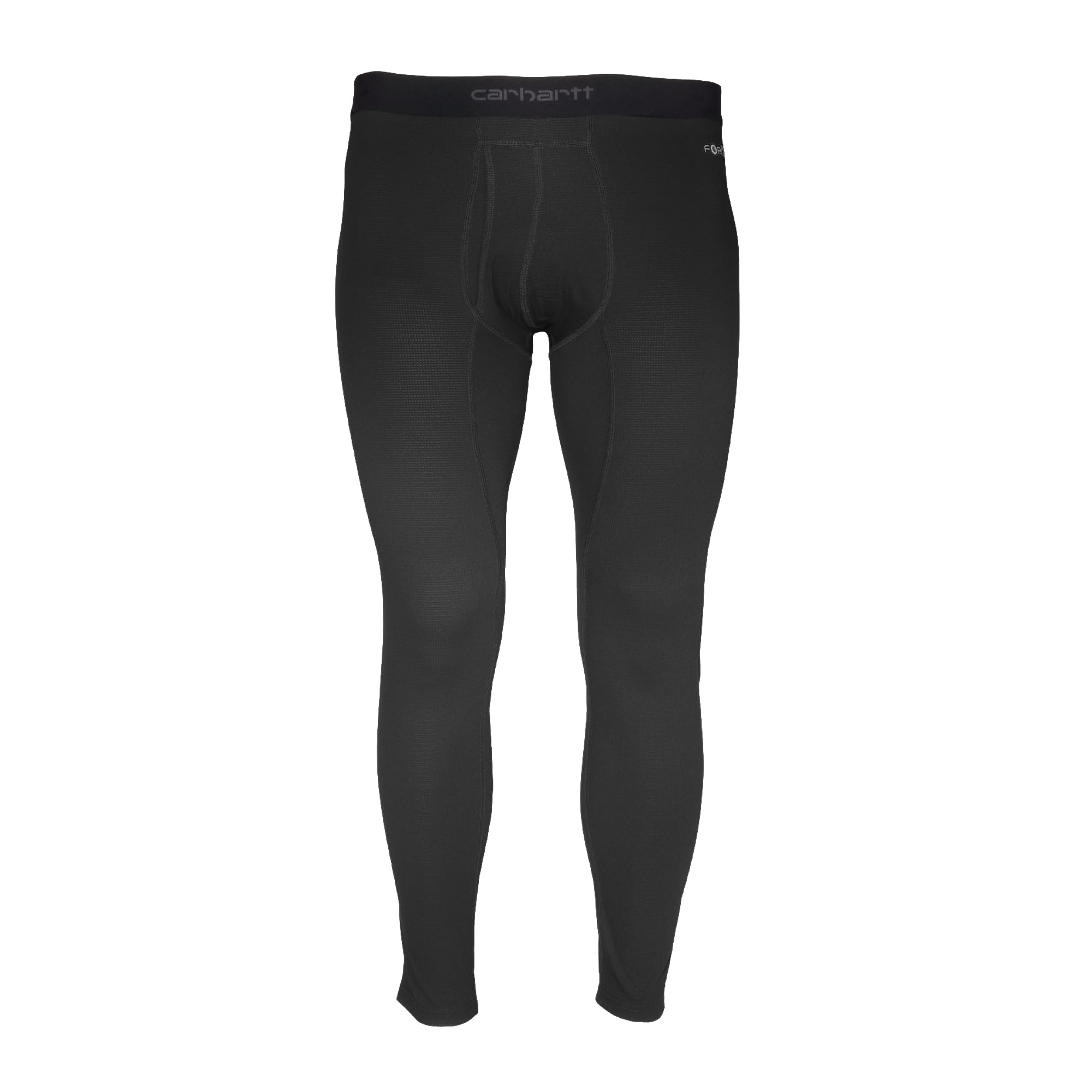
Carhartt Force Midweight Waffle Pant
Key Features
- Type: Base layer pant
- Fabric: Waffle knit
- Weight: Midweight
- Collection: Force
- Price: Premium
The Force midweight waffle is the warmest pair of bottoms here, and it feels the most like workwear. The waffle traps air in a way a flat knit doesn’t, the waistband sits high and stays put, and the fabric has enough body to keep its shape under jeans.
Comfort is the surprise. Something this warm has no business being this easy against skin — no itch, no chafe, no bunching behind the knee — and it stays comfortable through a long day outdoors.
Fit runs big and long. If you’re between sizes, take the smaller one, and expect the first wash to bring them in a little; shorter guys may want to check the leg length under slim trousers. That’s an easy trade for the warmest pair here, and it’s why this is the one we keep by the door when the forecast turns.
Pros
- The warmest bottoms in this group
- Comfortable enough for all-day wear
- Workwear-grade waffle knit
Cons
- Premium price for a single pair
When the forecast is genuinely serious, this is the pair of bottoms we trust: the warmest here, comfortable all day, and built like workwear.
Best for under Work Clothes
Amazon Essentials Waffle Long Johns Set
Key Features
- Fit: Slim fit
- Type: Long john set
- Fabric: Waffle knit
- Price: Budget
The waffle knit here is thin, thin enough that we forgot we were wearing it under dress trousers — which is exactly the trick. It adds warmth without adding shape: no bunching at the knee, no ridge at the waistband, nothing showing through a shirt.
This is not a deep-winter set. Warmth is moderate: enough for a cold commute, a chilly office, or a fall hike with a shell over the top, not enough for standing around in freezing weather. The slim fit sits close and stretches with you rather than fighting the layer above.
The legs run short for taller guys — if you’re over six foot, check the inseam before you order — and that’s the main thing standing between this set and a wider recommendation.
Pros
- Thin enough to disappear under office clothes
- Moderate warmth that won’t overheat indoors
- Slim fit that moves without bunching
Cons
- Shrinks in a warm wash
This is the set to buy when thermals have to disappear under office clothes: slim, thin, and warm enough for a cold commute.
Best for Mild Cold Layering
Fruit of the Loom Waffle Long Johns Bottom
Key Features
- Type: Long john bottoms
- Fabric: Waffle knit
- Collection: Premium
- Price: Budget
The legs run long on these, and that matters more than it sounds: they stay tucked into socks and boots instead of creeping up your calf every time you sit down.
Warmth is moderate. The waffle knit is light enough to wear under jeans without a bulge and takes the edge off a cold morning, but it won’t carry you through a deep freeze on its own. It feels soft rather than scratchy against skin, and it handles a day indoors better than the fleece-lined sets, which turn clammy in a warm room.
For mild cold and layering, this is the pair of bottoms to start with — light, long in the leg, and easy to forget you have on. Just check the waist: it runs big on some builds, so measure before you pick a size.
Pros
- Long legs stay tucked into boots
- Light enough to wear under jeans
- Soft waffle knit against skin
Cons
- Seams can separate after repeated washing
A cheap, light pair of bottoms for mild cold and layering — the ones to pick when you don’t need a full set.
Best for Softness Next to Skin
WEERTI Fleece-Lined Long Johns Set

Key Features
- Lining: Fleece lined
- Coverage: Top and bottoms
- Department: Men’s
- Price: Midrange
The inside of this set is the softest lining of the fleece options here. It’s a brushed fleece that feels closer to a worn-in sweatshirt than to technical base layer, and it doesn’t add the bulk you might expect — under jeans it stays flat.
Warmth is right up with the best sets in this guide, and the fit is close without being restrictive. We liked it best for long, low-output days — a winter walk, a cold house, a shift spent outdoors — where what’s against your skin matters as much as the heat.
Sizing is the catch. The sizes read small, so measure your chest and waist and order against the chart rather than your usual size; if you’re between, go up rather than down.
If softness next to skin is the thing you care about most, this is the set we point you to. Go in knowing the fit takes a little work.
Pros
- Softest lining of the fleece sets here
- Warm without bulk under jeans
- Close fit that doesn’t restrict
Cons
- Inner-thigh seam can give out
If softness next to skin matters most to you, start here — a warm, low-bulk set, as long as you order by measurement rather than habit.
Best for Tops for Layering
DEVOPS Turtleneck Compression Tops

Key Features
- Pack: 2 shirts
- Type: Compression top
- Sleeve: Long sleeve
- Neckline: Turtle neck
- Price: Midrange
Two turtleneck compression tops in one pack, which makes this the practical answer for anyone who needs warm tops and already has bottoms they like — the layer under a work shirt, a uniform, or a hoodie on a cold morning.
The brushed inside is genuinely soft, close to a fleece-lined top but thinner, and the turtleneck does real work: it seals the gap between collar and jacket. They’re warm for the weight, and they don’t feel bulky under a shirt.
These are compression shirts, so a snug fit is the design, not a fault — but the sizing runs small enough that a size up is the safer call for most builds.
For cold-weather runs, gym sessions, and layering under a work shirt, these do the job and then some. Plan the bottom half separately.
Pros
- Two tops in one pack
- Turtleneck seals the collar gap
- Soft brushed inside against skin
Cons
- Tops only; bottoms sold separately
For warm tops rather than a whole set, this is the pair to get: soft, snug turtlenecks that layer under a work shirt or a hoodie.
How We Tested Men’s Thermal Layers
We started by pulling together thermal tops and bottoms from brands we already trusted, plus a handful of highly reviewed options that kept surfacing in customer feedback. We filtered for fabric content, size range, care instructions, and whether each piece was sold as a single or a set, then narrowed the field to 15 thermal tops and bottoms. Anything that came in only one or two sizes, or needed hand washing, was out—daily wear has to be easy.
For seven months, we wore them on morning commutes, weekend hikes, and full desk days, layering under jeans, chinos, and button-downs. We tried each in our usual size and, when possible, one size up, noting whether hems stayed put, shoulders bound, or fabric bunched at the waist. Warmth was judged on cold walks and in drafty rooms: did we feel a chill at the small of the back, or overheat once indoors? Softness got checked against bare skin, especially at the collar and cuffs, where a rough fabric shows up first.
To test durability and shrinkage, we washed and dried each piece according to its care label five times, measuring body and sleeve length before and after. We checked seams, cuffs, and hems for loose threads, and folded each one to judge material thickness and see how much bulk it added under a fitted shirt. Functionality came down to sweat: we wore a layer on a brisk walk, then sat indoors for an hour to see whether it dried or clung. Quality and value were judged together—did it feel substantial without feeling heavy, and would I buy another at full price?
How to Choose Men’s Thermal Base Layers
The warmest fabric on the shelf is often the wrong one for the way you’ll use it, so start with the activity, then the fit, then how much you’ll layer over it.
Match the Fabric to How You’ll Move
Fleece-lined synthetic sets hold the most heat for the least effort, which makes them ideal for standing around — a touchline, a job site, a cold commute — and less ideal for a climb, where trapped moisture turns cold fast. Smooth compression knits and thin waffle weaves sit closer and move sweat, so they suit hiking, running, and anything that raises your heart rate. Cotton blends land in the middle: soft and inexpensive, but slow to dry. Buy the fabric for the day you’ll actually have, not the coldest day you can imagine.
Get the Fit Right Before Anything Else
The most common complaint about thermal clothing is fit, and it usually comes from ordering your usual size. A base layer should sit close to the skin without compressing it: snug at the shoulder, flat at the waist, long enough in the leg to stay tucked. If you’re between two sizes, take the larger — it layers better and won’t ride up. Check the size chart against a chest and waist measurement rather than the size you wear in a T-shirt, and if you’re tall, look at the inseam first.
Set, Top, or Bottoms Only
Think about which half of you gets cold. A set usually costs less than buying a technical top and bottom separately — our top pick proves the point — and it saves you matching pieces. Bottoms only make sense if you already own tops you like; tops only make sense under a uniform or a work shirt where heavy trousers cover the other half. If these are your first thermals, buy the set.
Bulk, Weight, and What Fits Underneath
Thickness is a trade-off, not a ranking. A thin waffle knit disappears under dress trousers and a blazer; a fleece-lined set adds a visible half-size and works better under loose jeans or ski trousers. If you need to look presentable, buy the thinnest layer that keeps you warm and add a shell over the top rather than sizing up your thermal. Weight also decides how long you can wear one indoors: the heavier sets here are for outdoors in earnest, and you’ll want them off once you’re in a warm room.
Frequently Asked Questions
How many thermal sets should I own?
Two is the practical answer: one on your body, one in the wash. Base layers sit against skin, so they get worn once and washed often, and a spare set means a cold snap never leaves you waiting on laundry. If you wear thermals only a handful of days a year, one full set plus a second pair of bottoms covers almost everything.
Will thermal underwear shrink in the dryer?
Some will. Waffle knits with a cotton content are the usual offenders: wash them cold and line dry and they keep their length, tumble them hot and the legs come up short. Fleece-lined synthetics are more forgiving, but heat still wears the lining down. When in doubt, hang them.
Can you wear thermal tops as regular shirts?
Some, yes. Compression tops with a finished high collar look like athletic wear and pass on a run or at the gym; waffle knits read as underwear and don’t. If you want a thermal you can take your jacket off in, look for a smooth face and a proper collar rather than a brushed fleece lining.
What should I wear under thermal underwear?
Usually nothing. They’re designed as the first layer, and cotton briefs underneath add bulk and hold moisture where you least want it. If you prefer underwear, pick a thin synthetic pair that won’t bunch at the waist, and check the rise — high-waisted thermal bottoms sit above most briefs.
Final Verdict
For most guys, the set we recommend is the HeroBiker fleece-lined top and bottom. It’s the cheapest complete set here and one of the warmest, it layers under jeans without a fight, and a size up from your usual fixes the fit. If your cold involves climbing rather than standing, change the pick: the romision set breathes where fleece doesn’t, and its tall collar and long inseam were built for a pack and boots.
Already have warm tops you trust? The Under Armour ColdGear leggings are the bottoms we pack for hard, cold movement — just measure your waist first, because they run small.