This post contains affiliate links. We may earn a small commission when you buy through our links — at no extra cost to you.
If you’ve ever cut a walk short because your feet started complaining, you know the right shoe matters more than the scenery. A good walking shoe for women over 50 isn’t just about cushioning—it needs to support your arch, leave room for toes to spread, and stay comfortable through errands, airport concourses, and uneven park paths. It should also look like something you’d actually wear, not a medical device, and feel worth the price after months of use. The wrong pair can leave you with heel slip, pinched toes, or soles so stiff they feel like boards.
Over the past eight months, I’ve rotated through 12 pairs of walking shoes, from lightweight mesh styles to more structured leather options. I wore them on daily neighborhood walks, to the grocery store, and on a few long travel days. Comfort was the baseline, but I also paid attention to arch support, how easy they were to put on, and whether the cushioning held up after weeks of wear. The picks below are the ones that earned a spot by the door.


Best for Daily Walking
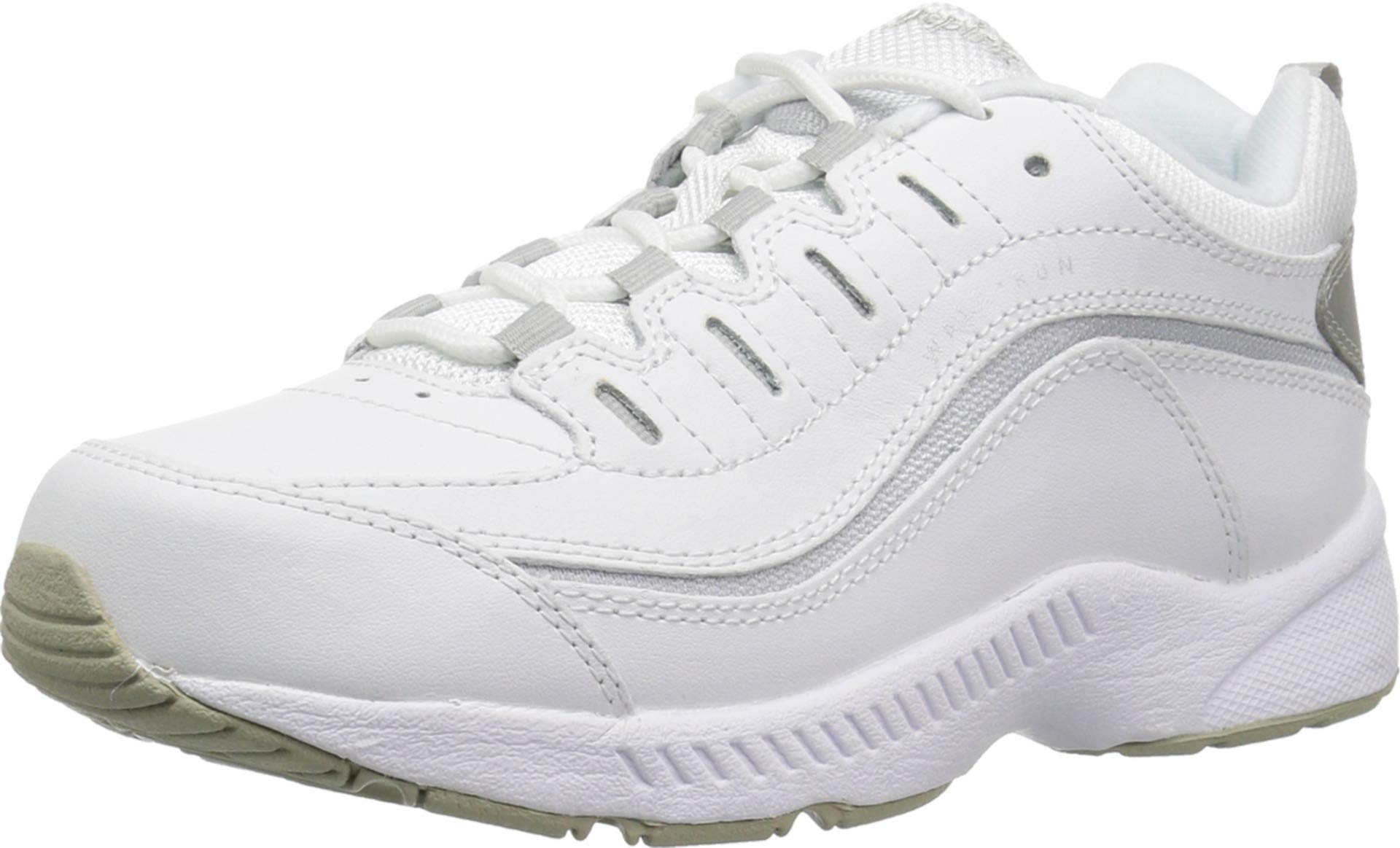
Easy Spirit Romy
Key Features
- Closure: Lace-up
- Toe box: Wide toe box
- Cushioning: Cushioned footbed
- Arch support: Supportive arch
- Price: Midrange
The room in the toe box is the first thing we notice about the Easy Spirit Romy. It gives toes space to spread without making the shoe look clunky, which is a harder balance than it sounds. The upper feels soft rather than stiff, and the cushioned footbed has enough give for a daily walk without turning mushy.
Arch support is the other reason this one rose to the top. It cradles the foot rather than just filling space under the instep, and the shoe stays stable as you roll through a step. We also like that wide and extra-wide fittings are available; for a walker whose feet have changed shape, that room matters more than a long feature list.
The Romy is not the softest shoe here; the NORTIV 8 has more of a pillow feel. It is also not the lightest. What it gets right is the everyday balance: a secure lace-up fit, a roomy forefoot, and enough support for the sort of walk that happens in real life, from the grocery store to the park and back. Narrow feet may find the standard width generous, so start with your usual size and adjust the lacing before deciding.
What settles it for us is the balance: the Romy is supportive without feeling medical, roomy without looking bulky, and simple without feeling cheap. It does not ask you to break it in, learn a new closure, or trade support for style. The understated look helps, too: it reads as a walking shoe without shouting about it. For one pair to cover errands, exercise, and everything between, this is the one we put by the front door.
Pros
- Roomy toe box with wide and extra-wide fittings
- Supportive arch and secure lace-up fit
- Cushioned enough for daily walks
- Comfortable without a break-in
Cons
- Can feel loose on narrow feet
For most women over 50, the Easy Spirit Romy is the walking shoe we recommend first: roomy, supportive, and comfortable for daily miles.
Best for Easy On/off
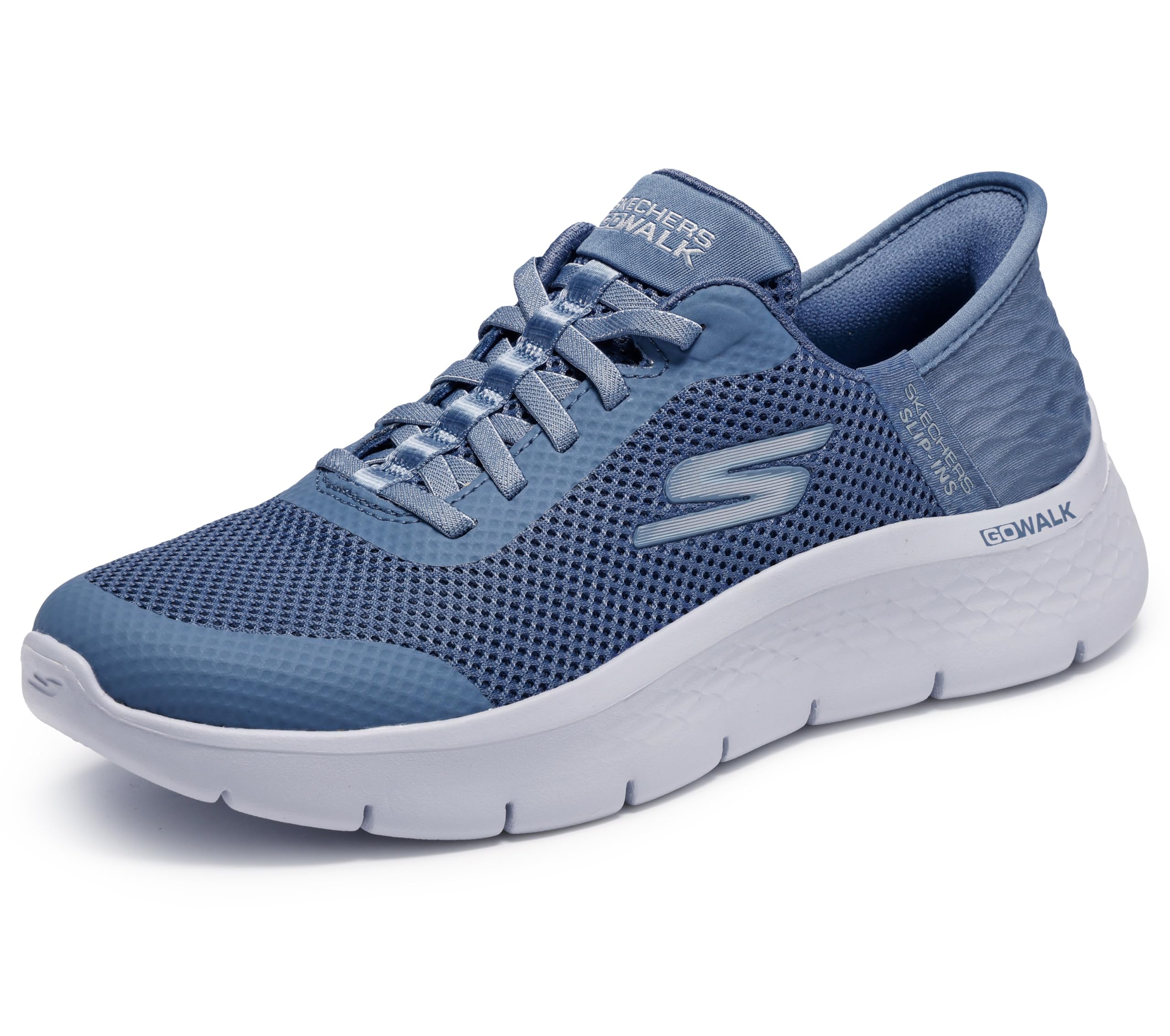
Skechers Go Walk Flex Grand Entry
Key Features
- Entry: Slip-on
- Upper: Breathable mesh
- Weight: Lightweight
- Arch support: Supportive arch
- Price: Midrange
A supportive shoe that goes on without bending, tugging, or tying is the whole point of the Skechers Go Walk Flex Grand Entry. The step-in collar opens as your foot goes down and settles back around the heel. We like that it still looks like a normal walking shoe rather than a medical device, and the mesh upper keeps it light enough for warm days. The arch support is the pleasant surprise; it has more shape underfoot than the usual flat slip-on. The mesh also dries quickly after a wet walk.
Fit is the catch. The same secure collar that makes the shoe easy to put on can feel narrow across a wide forefoot or a high instep, and the shoe runs small for some walkers. If you normally need a wide width, order it here rather than hoping the mesh stretches. The payoff is a shoe that stays put on a normal-width foot and handles errands, travel, and full days on your feet. We reach for it when the day involves a lot of in-and-out, not when we want the plushest ride. That is a fair trade for the convenience.
Pros
- No laces or bending to put on
- Supportive arch for a slip-on
- Lightweight mesh upper
- Secure step-in fit
Cons
- Runs narrow for wide feet or high insteps
The Go Walk Flex Grand Entry is our pick when bending over is the problem, with a slip-in entry that still feels supportive.
Best for Wide Feet
New Balance 608 V5
Key Features
- Upper: Leather
- Closure: Lace-up
- Support: Structured stability
- Toe box: Wide toe box
- Price: Midrange
Structure is the point, and it comes with a firmer ride. The New Balance 608 V5 has a leather upper, a wide toe box, and a structured sole that give it a planted feel many walkers miss in lighter sneakers. On foot, it feels less like a sock and more like a shoe built to hold its shape.
That structure is why we keep it on the list for wide feet. The 608 has room across the forefoot and a supportive base that does not collapse when you stand for long stretches. It is a good match for someone who wants a stable, almost athletic-trainer feel and does not need the shoe to disappear on the foot. The lace-up fit is easy to adjust, and the shoe looks tidy enough to wear beyond the sidewalk.
The trade-off is compliance. The 608 is firmer and heavier than the Easy Spirit Romy, and the stiffness can take some getting used to if you are coming from a soft knit sneaker. We recommend it for the walker who values support and width over a pillowy step, and who wants a shoe that feels substantial every time they put it on. If you want light and flexible, this is not the one; if you want a stable base, it makes sense.
Pros
- Wide toe box and roomy forefoot
- Structured, stable support
- Substantial leather upper
- Good for long days on feet
Cons
- Firmer, heavier ride than the others here
Choose the New Balance 608 V5 if you need a wide, structured shoe that feels stable all day, and you do not mind a firmer ride.
Best for Cushioned Walking
NORTIV 8 Walking Shoe
Key Features
- Closure: Lace-up
- Toe box: Roomy toe box
- Cushioning: Plush cushioning
- Arch support: Cushioned arch
- Price: Midrange
Softness is the NORTIV 8’s calling card. The midsole has a bouncy, pillow-like feel that makes pavement feel less punishing, and the roomy toe box keeps the front of the foot from feeling squeezed. The toe box is wide enough that toes do not rub, but the shoe still looks trim rather than boxy. For a walker who wants cushioning first, this is the plushest shoe in this group.
The shoe also has more arch support than we expected, and the lace-up fit can be adjusted around a wider forefoot. It works for all-day standing and for errands, and it does not need a long break-in. It is a good choice for someone who walks on pavement and wants the miles to feel softer, not faster. The softness does make it feel less planted than the New Balance 608; if you want a firm platform under you, this is the opposite end of the spectrum.
We like the NORTIV for walkers who prioritize a cushioned landing and do not need a precision fit. It is not the shoe for someone who wants a very stable, structured ride, and the soft underfoot feel can take some of the crispness out of a longer walk. As a comfortable, roomy everyday pair, though, it earns its spot. That makes it a strong casual walker, just not a stability shoe.
Pros
- Plush, bouncy cushioning
- Roomy toe box
- Supportive arch
- Comfortable out of the box
Cons
- Soft ride feels less stable
The NORTIV 8 is the cushioned value pick for walkers who want a soft, roomy ride without paying premium prices.
Best for Light Travel
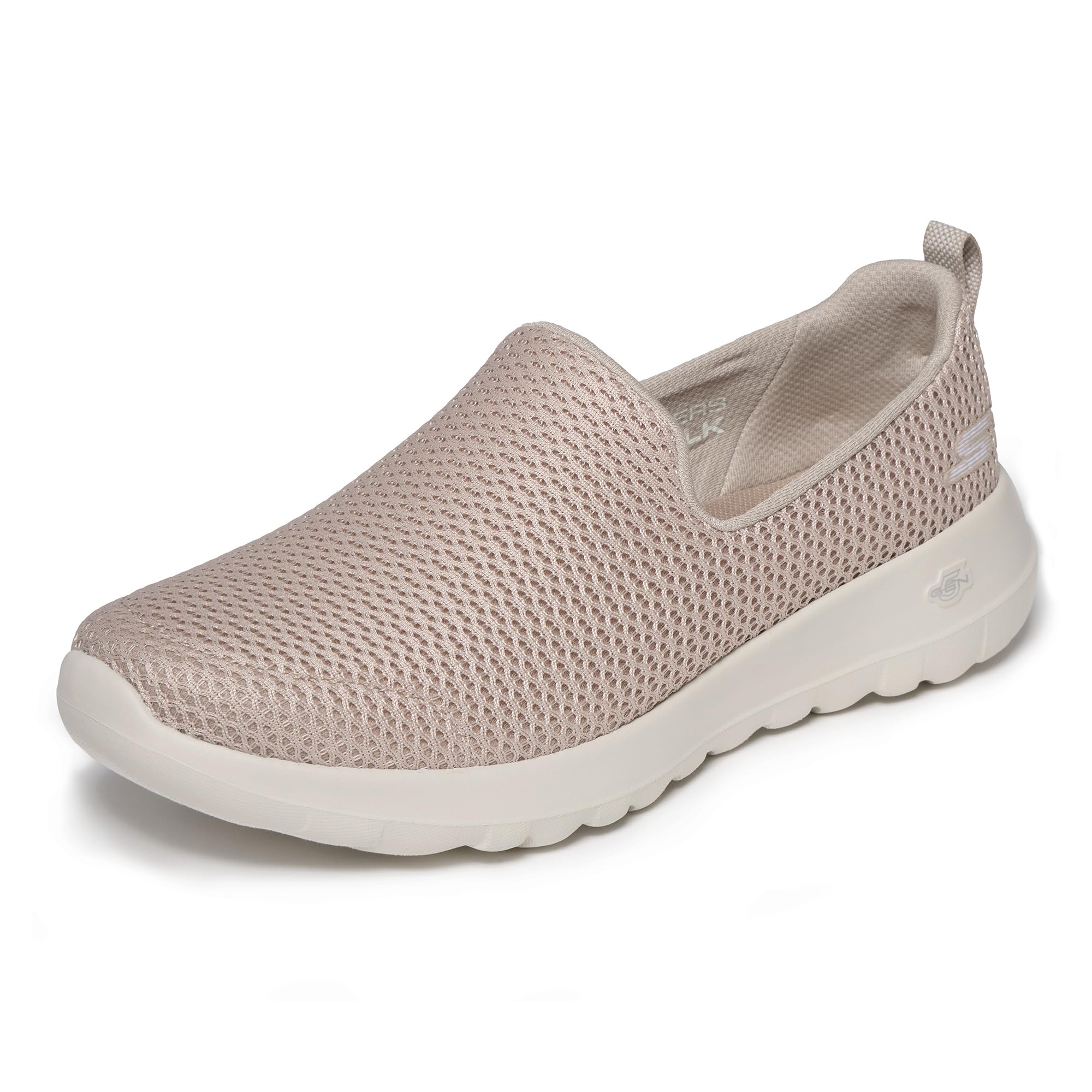
Skechers Go Walk Joy
Key Features
- Entry: Slip-on
- Upper: Machine washable
- Weight: Lightweight
- Arch support: Minimal
- Price: Budget
At the light, low-cost end of this group, the Skechers Go Walk Joy keeps things simple. It slips on without laces, feels barely there on the foot, and has a soft, flexible sole that is easy to wear around the house or on short errands. The machine-washable upper is a practical bonus for a shoe that will see garden dirt and coffee runs.
We like it most as a second pair, not as the only walking shoe for a woman over 50. The arch support is minimal, and the fit runs large for some feet, so it is not the shoe we recommend for long daily walks or for anyone who needs a secure, supportive base. If you have a narrow foot, the relaxed fit can feel sloppy; a half size down may help, but check the heel first. For quick trips, travel, and casual wear, though, it is the easiest of these to live with on a casual day. That light, simple role is worth having, as long as you do not expect it to replace a supportive walking shoe.
Pros
- Very lightweight
- Easy slip-on with no laces
- Machine washable
- Budget-friendly
Cons
- Minimal arch support
- Runs large for some feet
The Go Walk Joy is the light, inexpensive slip-on we keep for errands and casual days, not for serious arch support.
Best for Short Errands
ALEADER Energycloud

Key Features
- Entry: Slip-on
- Weight: Lightweight
- Cushioning: Soft cushioning
- Arch support: Limited
- Price: Budget
Low weight is the ALEADER Energycloud’s main advantage, and it sits at the budget end of the group. The knit-style upper slips on easily, and the shoe has a soft, flexible sole that works for quick errands and travel days when you want something packable. It also looks more like a running shoe than a support shoe, which some walkers will prefer.
We recommend it only for light walking. The cushioning is soft, but it does not have the arch support or stability for long daily walks, and the sole can wear down. For a walker over 50 who needs dependable support, that is a real limit. For someone who wants a low-cost, comfortable shoe for short outings and does not need to cover miles, it makes sense as a secondary pair.
The slip-on entry is genuinely convenient, and the roomy toe box helps on warm days. But if you are choosing one pair to walk in every day, put the budget toward a more supportive shoe; your feet will notice the difference over distance. For a spare pair that lives in the car or a tote, that light, flexible build is the whole point.
Pros
- Very light and flexible
- Easy slip-on entry
- Roomy toe box
- Low-cost option
Cons
- Too little support for long walks
- Sole can wear down with daily use
The ALEADER Energycloud is a light, low-cost errand shoe; for long daily walks, its cushioning and support fall short.
How We Tested the Best Walking Shoes for Women Over 50
We started by researching current models from brands known for comfort and support, filtering by available sizes—including wide widths—price, and materials. We read customer reviews for mentions of arch support, sizing quirks, and how the shoes held up over time. From there, we narrowed to 12 pairs that represented a range of styles, from slip-ons to lace-ups.
Each pair was worn for at least a week—some for several—during daily three-mile neighborhood walks, grocery runs, and a few long airport days. We alternated pairs to give our feet a fair comparison and kept notes on how they felt from the first mile to the last. We also wore them for standing stretches in the kitchen and on errands, since walking shoes often double as all-day shoes.
To assess arch support, we stood on hard floors and noted whether our arches felt cradled or pressed. Fit was checked at the toe box (room to wiggle), heel (no slip), and instep (no pressure points), and we noted whether the sizing ran true or required a half-size adjustment. We bent and twisted each shoe to gauge stiffness, then wore them over weeks to see if they softened or stayed rigid.
Durability came down to outsole wear and whether the cushioning flattened. We also timed how easy each pair was to put on and take off, and asked whether we’d wear them with jeans or casual pants—not just workout gear. Value was judged by how the shoe performed relative to its price, not just the price tag.
How to Choose Walking Shoes for Women over 50
The right pair should make the daily walk easier before you even stand up: roomy enough at the toes, supportive under the arch, and simple enough to put on without a fight.
Fit Starts at the Toe Box
For women over 50, foot shape can change enough that the size you wore a decade ago is no longer the size you need. A roomy toe box matters more than a soft upper, because toes that are pressed together get sore over a mile. The Easy Spirit Romy is the clearest example here: it gives the forefoot space without feeling like a wide boat. If your usual width feels tight, try a wide fitting before sizing up; going up a whole size to gain width often creates heel slip.
Cushioning Is Not Support
A pillowy shoe can feel wonderful in the store and still leave you tired after a long walk. Cushioning absorbs impact; support keeps the foot from rolling inward or the heel from wandering. For daily miles, look for a shaped arch and a stable heel, then decide how soft you want the ride. The NORTIV 8 is the plushest option in this group, while the New Balance 608 V5 is the firmer, more structured choice. Neither is better in the abstract; the question is whether you want softness or a planted platform.
Slip-Ons, Laces, and Heel Security
Slip-on walking shoes are a real help if arthritis, a bad back, or simple impatience makes bending down a chore. The Skechers Go Walk Flex Grand Entry shows how well the design can work when the collar is firm enough to hold the heel. The trap is choosing a slip-on that is too loose because it is easy to push on. Walk a few steps before you commit: your heel should stay seated, and your toes should not slide forward. If the heel lifts, try a lace-up or a smaller size.
Durability and Replacement Checks
Walking shoes wear at the heel and the flex point first, and a smooth or lopsided outsole can change how stable the shoe feels. Check those areas after a few months of regular use, and treat sole separation as a replacement signal rather than a cosmetic annoyance. A polished casual sneaker can still be a poor daily walker if the outsole starts to peel. The upper may look fine long after the midsole has flattened, so press the sole under your thumb and compare it with a new pair.
Frequently Asked Questions
Can I wear these walking shoes on a treadmill?
Yes for walking, provided the heel stays put and the sole feels stable on a flat belt. If you plan to run or use steep inclines, choose a running shoe instead; walking shoes are tuned for a different motion. Test a new pair for five minutes at an easy pace before you settle into a longer session.
Do I need to add an insole?
Not automatically. Start with the footbed that comes in the shoe, because adding a thick insole can crowd the toe box. If the arch feels vague after a few walks, try a thin, flat insole and give it a short trial. If the shoe becomes tight across the top, remove the insert and choose a more supportive model instead.
Can I machine wash walking shoes?
Only if the care label allows it. Remove the insoles and laces, use cold water on a gentle cycle, and put the shoes in a mesh bag with a towel to soften the tumble. Air-dry them away from direct heat; the dryer can warp the sole and shrink the upper. Machine washing cleans the surface but does not restore worn cushioning.
How do I stop a slip-on from rubbing my heel?
First check length: if your toe touches the front, the shoe is too short, not too tight. If the length is right and the heel still lifts, try a thicker sock or a heel grip before sizing down. A slip-on should feel secure when you walk, not just easy to push on. Persistent rubbing usually means the fit is wrong.
Final Verdict
For most women over 50, the Easy Spirit Romy is the strongest first buy: it has the roomy toe box, supportive arch, and daily-walking comfort that matter more than a long feature list. If bending down is the main obstacle, the Skechers Go Walk Flex Grand Entry is the easier shoe to live with; if you need a wider, more structured fit, the New Balance 608 V5 is the sturdier alternative. Choose the Romy unless one of those specific needs changes the decision.