This post contains affiliate links. We may earn a small commission when you buy through our links — at no extra cost to you.
Sixty-five liters is where a backpacking pack stops being a weekend bag — enough for a week of food, a bear canister and a puffy, but not so much that you’re wrestling it through a boulder field. The number on the tag says nothing about mile eight, when a hip belt that felt fine in the shop starts digging in and a side pocket you can’t reach takes two people. A good one fixes that friction: weight on your hips instead of your shoulders, water and layers reachable without stopping, quiet enough that you forget you’re wearing it.
I’ve carried everything from an old external frame to a frameless 30-liter sack, and 65 liters is where I’ve landed for anything past two nights. Over the past year we loaded eight of them for real trips — desert overnights, one soaking wet week in the mountains, a lot of loaded stair laps at home — and the pattern held: capacity claims are easy, comfort at 35 pounds isn’t. Measure your torso length before you shop, since height is a poor proxy. Every pack below earned its spot on a trail, not a spec sheet.
Best for Multi-Day Trips
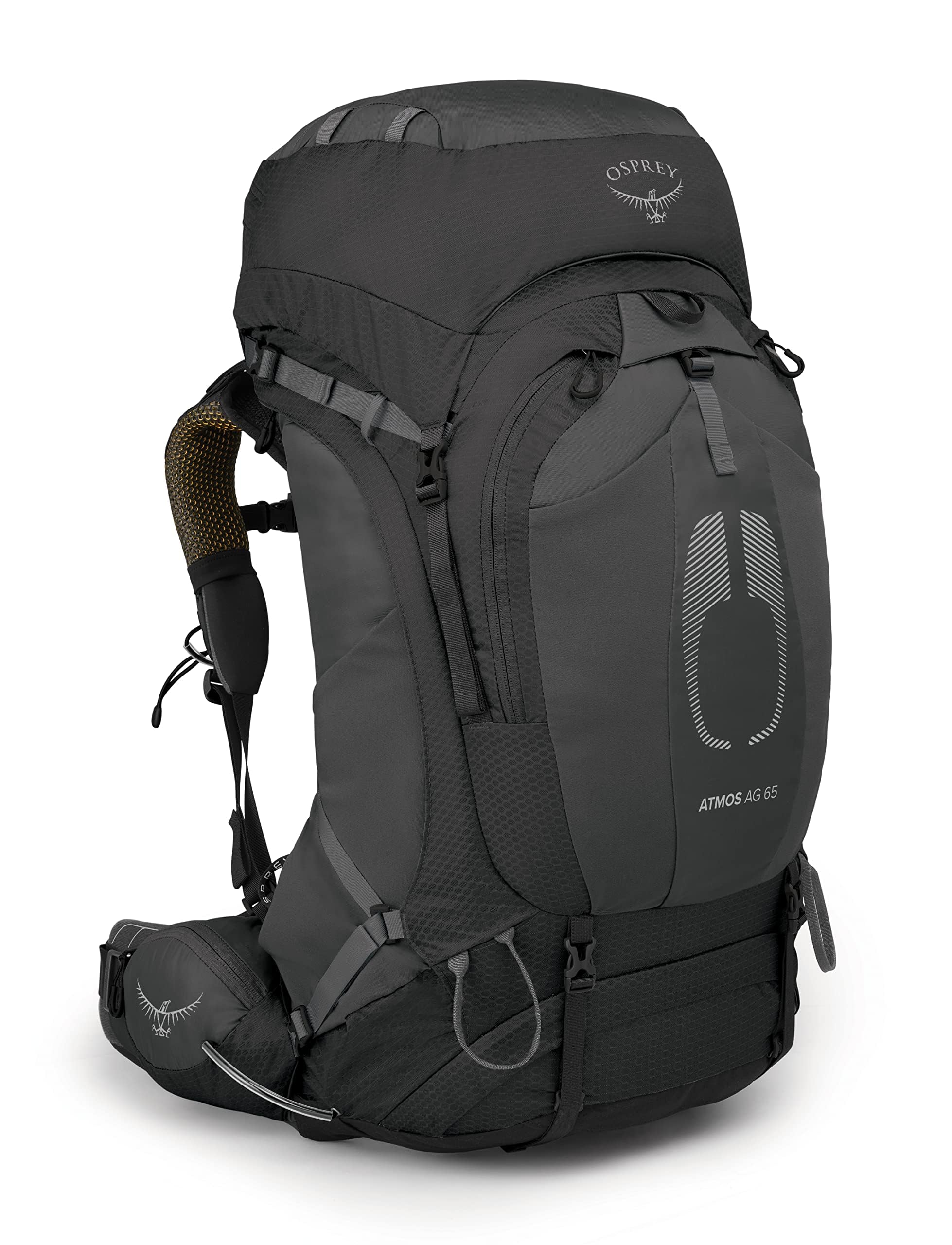
Osprey Atmos AG 65L
Key Features
- Rain cover: Included
- Harness size: L-XL
- Listed weight: 4 lb
- Sleeping bag compartment: Zippered, removable divider
- Price: Premium
The Atmos AG 65 in this listing is the L-XL harness, not a one-size pack, so the fit chart is the first thing to look at. It matters more than it sounds: on a 65-liter load, a hip belt that lands an inch high puts the weight on your shoulders, and no clever panel design fixes that. If you’re short-torsoed, settle the sizing before you read another word about mesh and floating lids.
What stayed with us through a loaded day is the back panel. The pack hangs off a tensioned mesh suspension instead of lying flat against your spine, so air moves between you and the load, and the belt takes the weight at the hips rather than on your collarbones. On a climb with a full pack, that’s the difference between a damp shirt and a soaked one, and it’s the reason this one sits at the top of the set.
The organization is quietly well judged. A curved zip opens the side of the main compartment, so a mid-afternoon layer comes out without unpacking half the bag. The top lid floats and takes lash points, and the sleeping bag compartment has a removable divider and removable pad straps, which turns two compartments into one long space when a bear canister or a rolled tent needs it. The raincover is included, with a PFAS-free DWR finish.
Four pounds empty is light for a pack this size, and this is the premium buy of the four — comfortably the most expensive here, with the budget Teton well below it. If you get out once or twice a year, that gap is hard to justify. If the pack is on your back most weekends, the carry is what you notice every hour, and this is the one we reach for.
Pros
- Tensioned mesh back panel keeps air moving
- Load settles on the hip belt, not the shoulders
- Curved side zip reaches gear without unpacking
- Raincover included, with a PFAS-free DWR
Cons
- Premium price against the budget picks
For three-season backpacking, the Atmos puts the load on your hips instead of your shoulders, keeps your back cooler on climbs, and opens at the side so you stop unpacking mid-trail.
Best for Weekend Backpacking
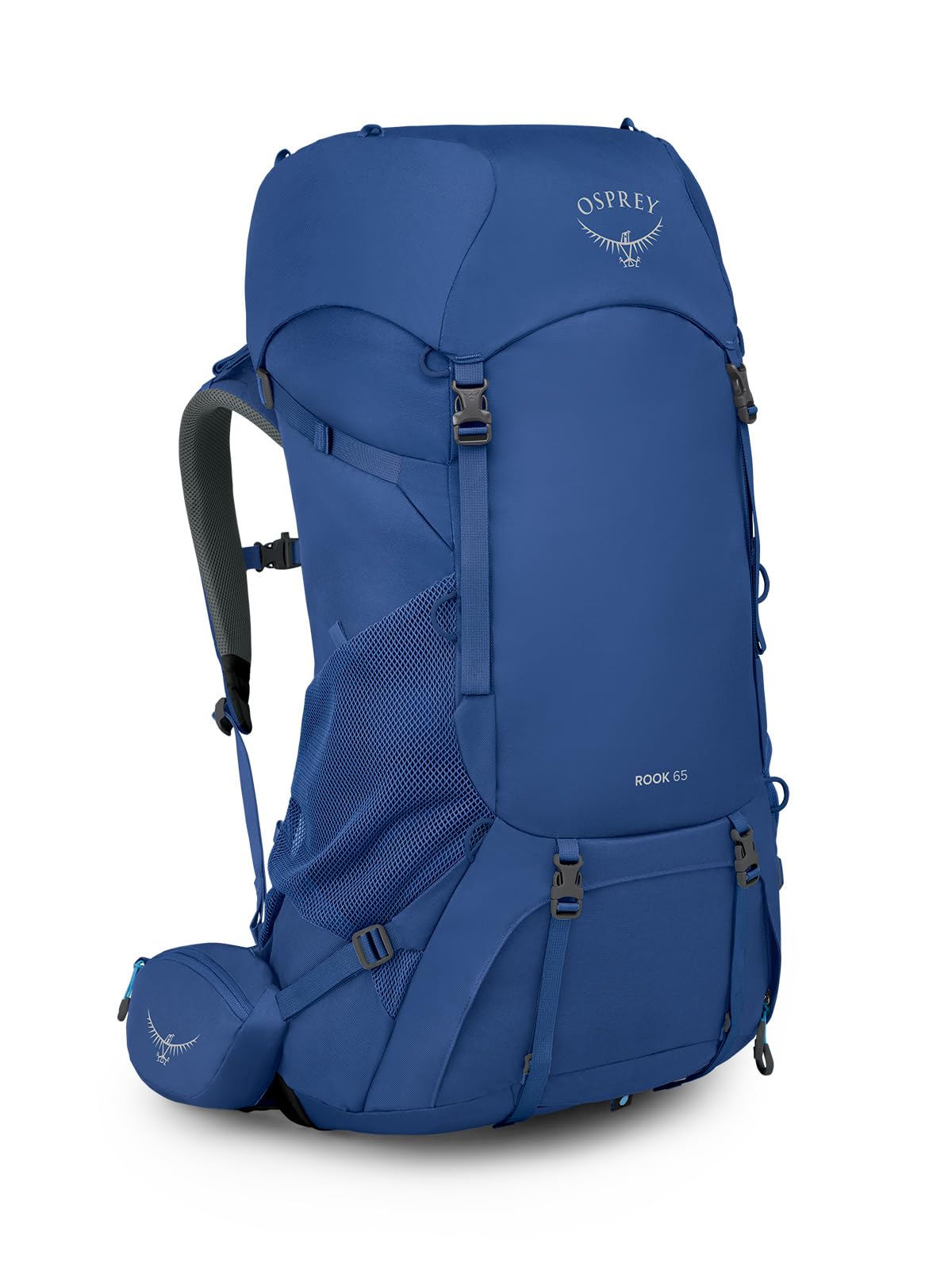
Osprey Rook 65L
Key Features
- Rain cover: Integrated, removable
- Suspension: Adjustable, tensioned AirSpeed backpanel
- Stated capacity: 65 liters
- Sleeping bag compartment: Zippered, floating divider
- Price: Midrange
Same maker, same 65 liters, a midrange price instead of a premium one. The Rook gives you Osprey’s suspension thinking — a tensioned AirSpeed backpanel adjustable across torso lengths, and a LightWire frame that pushes load down to the hip belt — plus an integrated rain cover, without the Atmos’s price tag. What it doesn’t have is the Atmos’s side panel zip and floating lid.
That adjustable back panel is the reason the Rook suits so many people. There’s no harness size to choose and get wrong; the panel slides to your torso length, so ordering isn’t a gamble. It’s the opposite approach to the Atmos in this guide, and for a first pack or an only pack, it’s the more forgiving one.
Seven pockets, a zippered sleeping bag compartment with a floating divider, and Daylite compatibility if you want to clip a smaller daypack to the outside. The rain cover is the detail we appreciated most: it’s integrated and folds into its own pocket, so it’s on the pack when the weather turns instead of in a drawer at home. For three-season trail use, the feature list is everything a weekend pack needs and nothing it doesn’t.
Pros
- Sliding back panel covers a range of torsos
- LightWire frame shifts load to the hip belt
- Integrated rain cover stows in its own pocket
- Sleeping bag compartment with floating divider
Cons
The Rook gives you Osprey’s adjustable harness and an integrated rain cover without the premium price, which makes it the pack we recommend for most weekend backpackers.
Best for First Multi-Day Trips
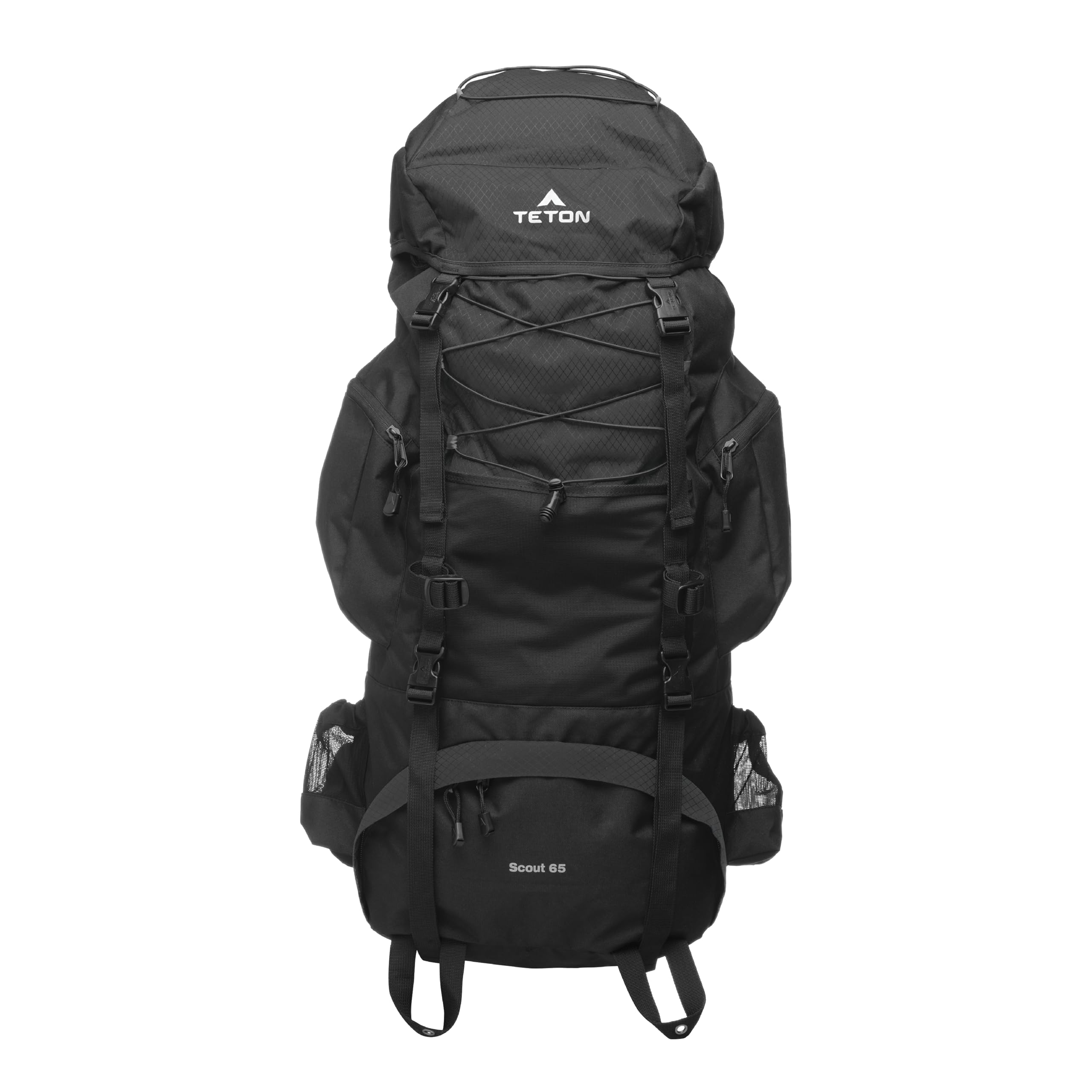
Teton Scout 65L
Key Features
- Torso fit: Multi-position adjustment
- Rain cover: Included
- Listed weight: 4.5 lb
- Stated capacity: 65 liters
- Price: Budget
Budget packs usually ask you to give something up, and the Scout gives up less than most. Sixty-five liters, an internal frame, a rain cover in the box, multi-directional compression straps, a sleeping bag compartment and a lifetime warranty — the feature list reads like a much more expensive pack, and the 600D diamond ripstop doesn’t feel like a corner was cut when you handle it.
The harness is where Teton made a choice. The multi-position torso panel is shaped toward shorter and smaller frames, which is rare in this class and worth knowing if one-size packs have never quite fit you. The lumbar pad is open-cell foam with molded channels — a long way of saying the small of your back gets airflow instead of a sweaty slab of nylon.
Where the Scout earns its place is packing. Eight compartments and three pockets sound lopsided until you’re living out of the bag: the sleeping bag goes in the bottom, the compression straps cinch a half-full load so it doesn’t slump, and the rain cover has its own spot. It turns a first multi-night trip into an organized exercise rather than a shoving match. One practical note — Teton specifies hand washing, so plan on a bathtub rather than a machine when it needs a clean.
Pros
- Rain cover included at a budget price
- Multi-position torso panel suits shorter frames
- Lifetime warranty on a budget pack
- Eight compartments organize a multi-day kit
Cons
- Sleeping bag compartment is tight for bulky bags
- Straps creep and need re-tensioning under a heavy load
The Scout gets a first-time multi-day hiker on the trail with 65 liters, a rain cover and a lifetime warranty, and it’s the budget pick we trust for a three-night trip.
Best for Travel with Day Hikes
Tripole Walker 65

Key Features
- Frame: Internal frame
- Stated capacity: 65 liters
- Included daypack: 20L foldable
- Price: Budget
The reason to look at the Walker isn’t the 65 liters — it’s the second bag. Tripole bundles a 20-liter daypack that folds into its own pouch, which solves a problem every backpacker runs into: the big pack stays at basecamp or in a hostel locker, and you still have something for a summit push or an afternoon in town. The main pack is internal-framed with a generous spread of pockets and adjustable straps, and the frame puts the load on your hips instead of your shoulders.
For the money, it’s remarkably complete: a laptop compartment that lets the pack go from trailhead to train station, a rain fly that pulls up over a loaded pack, and side compression that takes the slack out when you’re only half packed. It’s a travel-first pack with a real frame rather than a stripped alpine hauler, and for a month of mixed travel with hiking in it, that’s the better fit.
Pros
- Includes a foldable 20L daypack
- Frame puts the weight on your hips
- Pockets and straps for travel organization
Cons
- Color arrives darker than the listing photos
Two packs in one buy: the Walker pairs a 65-liter internal-frame hauler with a foldable 20-liter daypack for summit days and city afternoons.
How We Tested 65-Liter Backpacking Packs
We started with more than 30 65-liter packs from established backpacking brands and cut the list the way a shopper would: torso-length range, empty weight, fabric denier, whether the lid came off, and how many pockets were usable without unbuckling anything. That narrowed it to eight, from stripped-down weekenders to full-suspension haulers, and we bought every one at retail so no brand knew it was being reviewed.
Each pack got loaded to a realistic 30 to 35 pounds — synthetic sleeping bag, two-person tent, three days of food, two liters of water — and weighed empty and full on a kitchen scale first. Then we carried them: overnight trips in the desert, a soaking wet week in the mountains, and plenty of stair laps with a loaded pack when a trail wasn’t an option. We also packed each one from scratch in the living room and timed it, because a bag that takes four minutes to organize every morning gets old fast.
Fit got the most attention. Two testers nine inches apart in height wore every pack on the same trips, adjusting torso length, hip belt wrap and load lifters, and we noted where the weight actually landed — hips, lower back, or shoulders after an hour. We checked whether a fully loaded pack could be lifted by the lid, whether it stood on its own while we dug for a headlamp, and whether the side pockets released a bottle one-handed with gloves on.
Construction was graded over the full year rather than on day one: seam stitching, buckle teeth, zipper snagging, and how much abrasion showed where the pack met granite. The ones that still look new after twelve months are the ones that made the list.
How to Choose a 65L Backpacking Backpack
Fit and load transfer decide whether a 65-liter pack is a joy or a grind; capacity and pocket counts are the easy part to get right.
Start with torso length, not liters
Packs are sold by volume and fitted by torso. Measure from the bony bump at the base of your neck to the top of your hip bones, because that distance decides whether the hip belt lands on your pelvis or floats around your ribs. A belt that sits high puts the weight on your shoulders by the third mile, however good the suspension is.
Adjustable back panels, like the Rook’s sliding AirSpeed frame, cover a range within one size. Fixed harnesses, like the Atmos L-XL here, come in a specific size. Before you order, check which harness the listing actually ships.
Suspension: where the weight goes
An internal frame is the floor — it stops the pack folding against your spine. Above that, the question is whether the back panel sits flat against you or hangs off a tensioned mesh. Mesh runs cooler on climbs, which is the argument for the Atmos. Simpler padded frames put the money into capacity and pockets, which is the argument for the Teton and the Tripole.
If you run hot and hike in humidity, pay for ventilation. If you hike in cool, dry country, spend it on a hip belt that fits instead.
What 65 liters actually holds
Sixty-five liters is roughly three to four days for one person with a compact sleep system, or two comfortable nights with room for a bear canister and a food carry. How the volume is split matters more than the total. A sleeping bag compartment with a removable divider is the most useful feature in this class: a separate wet-and-dirty zone that opens into one long space when a canister or tent needs it.
Check the compartment’s cut. Many are shaped for a mummy bag and fight a bulky synthetic one, so pack your own bag at home before a trip rather than discovering the problem at the trailhead.
Empty weight and what it buys
Packs in this class land around four to five pounds empty. A pound sounds trivial until it’s on your back at hour eight, but lightness is bought with thinner fabric, less padding, or both. On a multi-day carry our priority is the harness: a pack that carries two pounds better beats one that weighs a pound less. Light and simple suits fast overnighters and travel; support wins from three nights up.
Rain covers and the gear strapped outside
Most packs here include a rain cover, and having one is genuinely worth it. The trap is the load you lash to the outside: a cover cut for the pack won’t stretch over a tent strapped to the lid, and the water-resistant coating underneath is a light-rain measure, not a storm one. If you routinely carry gear outside, line the pack with a trash compactor bag and treat the cover as the second layer.
Also check that the cover stows on the pack — a cover that lives in a drawer at home protects nothing.
Frequently Asked Questions
Can I take a 65L backpack on a plane as a carry-on?
No. Most airlines cap carry-ons near 22 by 14 by 9 inches, and a 65-liter pack runs well past that — the Atmos measures 34.6 inches tall. The pack goes in the hold: cinch every compression strap, fit the rain cover, and check it inside a duffel so the harness doesn’t snag on a conveyor. The Tripole’s foldable daypack works as your under-seat bag.
Do I need 65 liters for a two-night trip?
Usually not. A two-night summer kit for one person fits in 45 to 55 liters unless you carry a bear canister, a bulky synthetic bag or winter layers. Buy 65 liters when trips run three nights or more, when you carry group gear, or when you want slack for a food carry. For one-night trips the extra volume is just extra pack to haul.
Where does a tent go on a 65L backpack?
Across the top under the floating lid, or vertically on one side if the pack has the straps for it. Keep the weight close to your spine and centered — a tent lashed across the base swings and drags the pack off your hips. Strapped high and tight, even a two-person tent rides better than one bungeed across the bottom.
Final Verdict
The Atmos AG 65 is the pack we recommend for multi-day trips: the hip belt takes the weight, the tensioned back panel keeps you cooler on climbs, and the side zip means you stop unpacking the whole bag for a layer. Confirm the L-XL harness matches your torso before you order.
If it doesn’t, the Rook 65 gives you an adjustable Osprey harness and a rain cover for a lot less. On a tight budget, the Scout still gets you out for three nights.