This post contains affiliate links. We may earn a small commission when you buy through our links — at no extra cost to you.
Every four-season tent is a negotiation between warmth and moisture. Seal one up tight enough to hold heat through a windy night in the teens and by 2 a.m. you’re wiping condensation off the walls with a sock; vent it generously and you’ve basically bought a heavier three-season tent. The good ones get that balance right — they shed snow, stand up to gusts that flatten lesser shelters, and still let your breath escape — which is exactly what you want when the forecast turns and the trailhead is hours behind you.
My team and I spent eight months in six of them, from a wet October in the Cascades to a single-digit night where I could hear the guy lines humming. What surprised me most is that money buys durability and packed size far more reliably than it buys a warm night; warmth comes from how the inner tent and fly work together, and a couple of the mid-priced shelters held heat as well as the spendy ones. The picks below run from a roomy base-camp tent to a two-person you’ll actually want to carry.


Best for Two-Person Winter Camping
OneTigris Stella
Key Features
- Floor size: 6.9 x 4.1 ft
- Peak height: 45.2 in
- Waterproof rating: 3000 mm
- Minimum trail weight: 4.8 lb
- Price: Premium
The Stella goes up in two stages: an inner tent that clips to a four-pole aluminum frame, then a removable blackout shell that pegs over the top. That order is what makes it pleasant at a cold camp — you can have the inner standing, the packs inside and the door shut before you wrestle with the outer in the wind. Packed, it measures 21.7 inches and 4.8 pounds, short enough to strap along a pack rather than fight for room inside one. The shell fabric is rated to 3000 mm.
Three minutes is the assembly time on the spec sheet, and that matched our own pitches once we learned to stake the four corners first and let the poles do the rest; in gusts the frame sat still. What won us over is how warm it feels. A sealed inner and a 45-inch peak trap body heat fast, and the blackout outer keeps the tent dark enough to sleep past a five a.m. sunrise. We have pitched heavier shelters that came out colder.
Leave the outer on in mild weather and airflow suffers. The inner is mostly mesh, which is fine on its own, but with the shell over it the vents are doing all the work, and on a still night in the 40s the inside goes clammy. Below freezing that trade stops mattering and the warmth is worth far more than the airflow you give up; above it, sleep with the shell off or plan on wiping the inner down in the morning.
So the case for the Stella is range: a dry, dark, warm two-person box for the cold months, and, with the outer off, an airier tent for the shoulder season when a dedicated winter shelter would be miserable. Four poles, ten stakes, one bag. That flexibility is why it is the default recommendation here, even though the budget tents in this group will get you sheltered for a lot less.
Pros
- Pitches in about three minutes, even in wind
- Removable blackout shell doubles as a milder-weather tent
- Sealed inner and low peak trap heat fast
- 3000 mm shell keeps driving rain out
Cons
- Snug 28 sq ft floor and a token vestibule
Our default two-person winter tent: it pitches in minutes, seals out weather and traps heat, and the removable blackout shell makes it more versatile than anything else here.
Best for Budget Two-Person Trips
Clostnature 4 Season
Key Features
- Doors: 2
- Floor size: 86.6 x 59 in
- Peak height: 45.8 in
- Minimum trail weight: 5.3 lb
- Price: Budget
Two doors and two vestibules are usually the first luxury to disappear as a four-season tent gets cheaper, and Clostnature kept both. At the budget end of this group you still get a door and a porch on each side, which in winter is less about manners than about not climbing over your partner at two in the morning — and it is the main reason we send value-minded buyers here.
The shell is a full-coverage fly with snow flaps that run to the ground, and the floor is a coated bathtub, so the whole thing is built to sit in weather rather than dash through it. We pitched it through a wet night and the interior stayed dry. On a cold one, the flaps and the double-layer doors hold warmth noticeably better than a mesh-bodied summer tent, and the peak vents give the moisture somewhere to go — you will still find condensation on the inner in the morning, but not the dripping kind.
Pitching is two aluminum poles and a set of clips, quick enough to do alone in wind, and the 45.8-inch peak lets most people sit up. Two adults fit, but only just: if you are both broad-shouldered, plan on one person plus a well-housed pack. Neither of those is a reason to walk away at this end of the market. They are the reasons it is the value pick rather than the best pick here.
Pros
- Two doors and two vestibules at the budget end
- Snow flaps and full-coverage fly seal out wind
- Peak vents give condensation somewhere to go
Cons
- Trail weight of 5.3 lb is heavy for long carries
It’s the one we point budget-minded two-person buyers to: two doors, two vestibules, snow flaps and a dry floor for the least money in this group.
Best for Solo Winter Camping
Underwood 4 Season
Key Features
- Floor size: 86.6 x 31.8 in
- Peak height: 35.8 in
- Waterproof rating: PU 5000 mm
- Minimum trail weight: 4.4 lb
- Price: Budget
The listing calls the Underwood a 1/2 person tent. It is a one-person tent: 31.8 inches of floor width, 86.6 inches of length, a 35.8-inch peak. Read those numbers before you buy it for two, because the second sleeper would be pressed against the wall all night.
What the narrow floor buys is warmth. There is less air to heat, and below freezing the difference shows up within minutes of getting in — this is the tent that made us rethink how much interior volume a winter shelter actually needs. At 4.4 pounds trail weight it is level with the lightest tent in this group, which counts for more on a snowy approach than elbow room does. The fly is coated to 5000 mm, and the single door opens onto a porch just big enough for boots and a pack.
The pole sections are the one thing to watch. In a hard freeze the joins can bind, so dry them and wipe the ferrules before a cold trip instead of fighting them at dusk. That is a small habit for a shelter this light and this affordable, and it is why a solo winter trip makes more sense in the Underwood than in a two-person tent you rattle around in.
Pros
- 4.4 lb trail weight is light for four-season
- Small interior heats fast below freezing
- 86.6-inch floor fits tall sleepers
Cons
- 35.8-inch peak means no sitting up
We recommend this to anyone camping alone in the cold: 4.4 pounds, a long floor that fits tall sleepers, and a small volume that heats fast.
Best for Exposed, Stormy Camps
GEERTOP Navigator
Key Features
- Doors: 1
- Vestibules: 1
- Waterproof rating: 8000 mm
- Minimum trail weight: 6.3 lb
- Price: Midrange
Eight thousand millimeters is the figure GEERTOP prints on the Navigator’s fly, and it is the highest waterproof rating in this group by a wide margin — the OneTigris and Naturehike shells are rated at 3000. That number is not the whole story, but it tells you what the tent was designed for: sustained weather rather than a passing shower.
The design backs it up. The fly goes up first and the inner clips inside it, which sounds fussy, and the first pitch is fussy, but it means the sleeping compartment never has to stand exposed while you set up. On open ground the frame and fly held their shape through a windy night, and the guy-out points sit at the shoulders where they take load off the panels. It is the tent here we trust most when the forecast is genuinely bad.
The hardware is the weak part. Fasteners and skirt seams have let go on some of these, so inspect every clip, zip and guy-out before a trip and make the first pitch at home rather than at dusk in the cold. Do that and it is a shelter that takes whatever a bad forecast throws at it, which is the whole point of a four-season tent.
Pros
- 8000 mm fly is the highest rating here
- Holds its shape on exposed, windy ground
- Fly pitches alone as a tarp shelter
Cons
- 6.3 lb trail weight is a lot to carry
- One door and one vestibule for two sleepers
Our pick for exposed ground: the 8000 mm fly and stiff frame hold up when the weather turns, and you pay for it in weight and living space.
Best for Light Two-Person Trips
Naturehike 4 Season
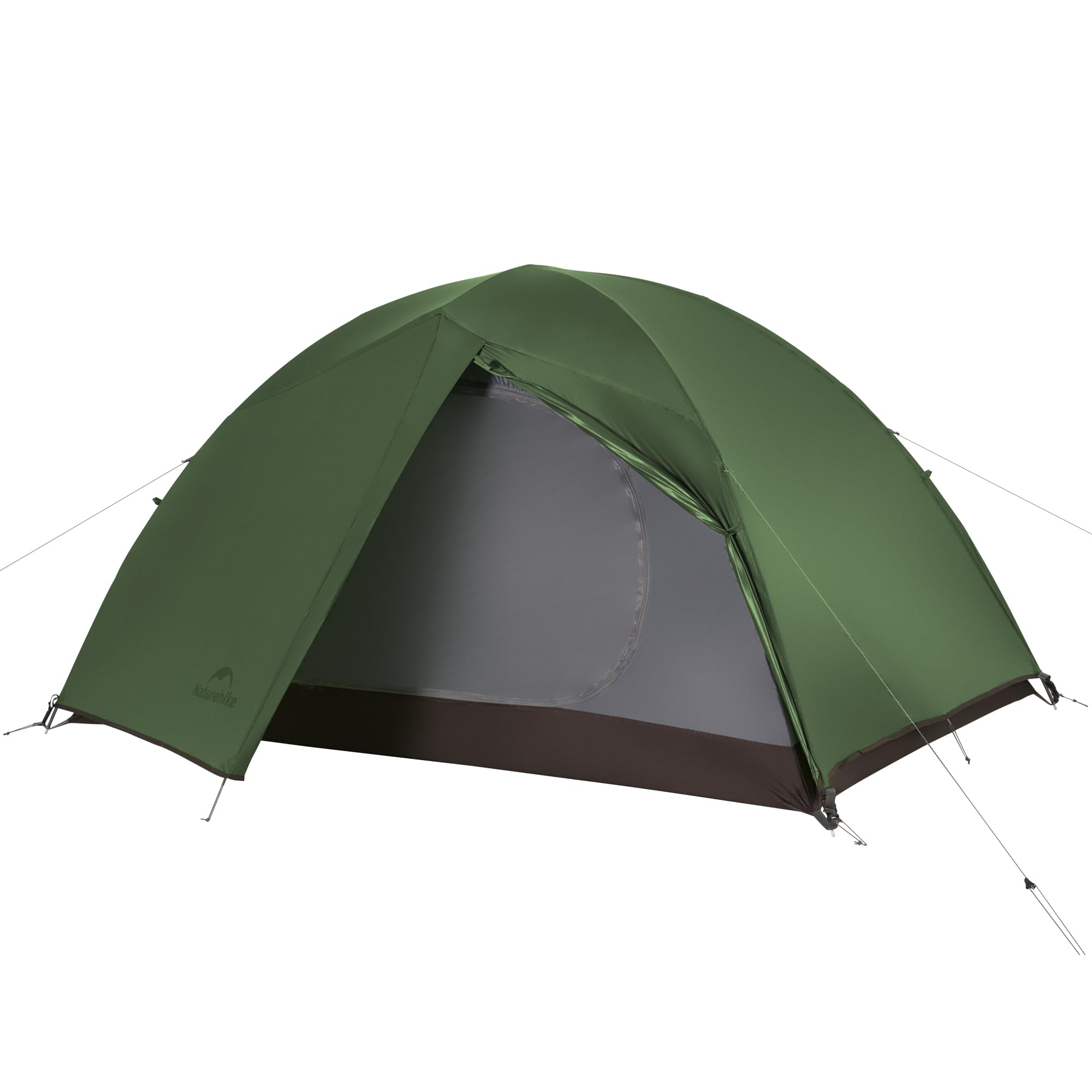
Key Features
- Doors: 2
- Floor area: 41.23 sq ft
- Waterproof rating: PU 3000 mm
- Minimum trail weight: 4.41 lb
- Price: Midrange
A footprint comes in the box, and that is the detail that makes the Naturehike the value pick at the light end of this group: the groundsheet most tents make you buy separately is already in the bag. Add 20D silicone-coated nylon, two doors, two vestibules measuring 10.66 square feet and a listed minimum trail weight of 2000 grams, and it reads like a much dearer tent.
Check the figures before you order, though. The floor is quoted as 86.6 by 88.6 inches in one place and as 41.23 square feet in another, and 88.6 inches of width would be wider than the tent is long; the weight turns up as both 4.1 pounds and 2.5 kilograms. Plan on a standard two-person dome rather than the palace the numbers suggest, and confirm the packed length yourself.
With the fly on it goes properly dark inside, which we appreciated on a bright morning, and the two-door, two-vestibule layout is a genuine luxury for two people handling wet snow. The 20D fabric tensions well, though it feels thin in the hand — treat it kindly, seam-seal what needs it, and it should return the favor.
Pros
- Footprint included in the box
- Two doors and 10.66 sq ft of vestibule
- 2000 g listed weight matches the solo pick
Cons
- Too new for a proven long-term record
Worth a look if you want two doors and a light pack — just confirm the packed size and floor plan yourself, because the listing’s numbers don’t agree.
How We Tested the Best 4-Season Backpacking Tents
We started with spec sheets — floor area, peak height, pole count and diameter, fabric denier, packed weight and packed volume, price per person — then cut anything that couldn’t plausibly sleep two adults on pads and still disappear into a 65-liter pack. That left six tents, which we lived with over eight months, fall through late spring, on overnights above treeline and in a snowy backyard when a storm rolled in and we wanted to watch it from the inside.
Setup we timed twice: once in daylight with the instructions, and again at dusk with liner gloves on, because that’s how it happens. We noted whether poles fed through sleeves without snagging, whether the fly went on before or after the inner, and how long four corners took to stake and the whole thing to pull taut. Packed size we measured with a tape and weighed on a kitchen scale, then carried each one on a real approach to see how it rode.
Warmth and ventilation got judged together, since you can’t separate them. Two of us slept in each tent with the doors sealed on nights that dropped into the teens and single digits, then checked the walls and the inside of the fly at 2 a.m. and again at dawn for condensation and frost, comparing an interior thermometer against the outside reading. A tent that ran warm but left a puddle in the footbox didn’t make the cut.
Durability we watched across the whole eight months: guy-out stitches pulling, pole sections that bent and stayed bent, zippers that started catching, floor abrasion after pitching on gravel and rock. Those notes, weighed against what each tent cost, are where the value calls came from.
How to Choose a Four-Season Backpacking Tent
The hard part of buying a four-season tent isn’t finding one that survives winter — it’s finding one that survives winter without ruining the walk in.
What four-season has to mean for your trips
A true winter shelter seals: a solid inner or a full-coverage fly that reaches the ground, snow flaps, and enough pole structure to shed a load. Plenty of tents sold as four-season are really three-season shells with a heavier fly, and they run cold and clammy in real snow. Be honest about the trip. If you camp below freezing in exposed country, you want the sealed version. If winter means wet, windy weekends in the 40s, a well-vented three-season tent will be lighter and far more comfortable.
Weight, and what the figure leaves out
Trail weight and packed weight are different numbers, and the gap is stakes, guys, footprint and stuff sacks — often most of a pound. In this group the range runs from 4.4 pounds for a solo shelter to 6.3 pounds for a two-person storm tent, and each extra half pound buys structure or space. We weigh our own kit list before blaming the tent: on a long approach the lighter shelter earns its premium, and on a short one it rarely does.
Doors, vestibules and where the wet gear goes
Two doors matter more in winter than in summer, because wet shells and boots come inside with you. A pair of vestibules also lets you crack one side for air while the other stays sealed. Look at the area, not the count: 1.4 square feet is a home for a pair of boots, while 10 square feet swallows two packs. A two-person tent with a single door means one sleeper is always climbing over the other.
Waterproofing numbers and the condensation problem
Fly ratings here run from 3000 mm to 8000 mm, and higher is better against sustained rain and wet snow — but a well-tensioned fly at 3000 mm beats a sagging one at 8000. The bigger winter problem is condensation, the weak point of any sealed tent. Look for peak vents, double-layer doors you can open a hand’s width, and a fly that reaches the ground without touching the inner. Pitch with the vent downwind, and don’t camp in a hollow where cold air pools.
Check the hardware before you trust it
Zips, pole joins and the clips that hold the inner to the fly are where these tents fail first, and no specification tells you about them. Before a trip, run every zip open and shut, push the poles together and apart, and look at how the fly attaches at the corners. If a fastener or a seam lets go, it will do it in the dark, in wind. One dry pitch at home is the cheapest test in this hobby.
Frequently Asked Questions
Can you use a four-season tent in summer?
You can, but you probably won’t enjoy it. Once the shell is on, a sealed winter tent traps heat and blocks the airflow a warm night needs. If the model has a removable outer, leave it off and pitch the inner alone; otherwise open both doors and camp where you’ll catch a breeze.
If most of your trips happen between June and September, a three-season tent is the better buy and the saved weight is real.
Do you need a footprint under a four-season tent?
It’s cheap insurance for the floor and it also stops ground water wicking through the bathtub seam. Only one of the tents here ships with one, so most buyers are shopping for it separately.
Buy the maker’s version or cut a sheet slightly smaller than the floor. A footprint wider than the tent catches rain and channels it underneath you, which is worse than no footprint at all.
Can you pitch these tents in snow?
Yes, with different anchors. Standard stakes pull straight out of snow, so bury them horizontally as deadman anchors, or fit wider snow baskets and pack snow back over each one.
Look for a tent with snow flaps that reach the ground — the Clostnature’s are the most pronounced here — and knock the fly clear during the night so a load doesn’t build up and flatten the poles.
Will a two-person tent really fit two adults in winter?
Measure your pads, not the sleeper count. Two 20-inch pads need 40 inches of floor width; the Clostnature offers 59, the OneTigris 49, and the Underwood’s 31.8 fits one.
Winter bags are bulkier than summer ones, so if you’re both on wide pads, treat a two-person tent as one person plus gear and size up rather than squeeze.
Final Verdict
The OneTigris Stella is the one we recommend first: a three-minute pitch, a removable blackout layer, and a body that seals at under five pounds — enough tent for most two-person winter trips.
If money is the constraint, the Clostnature keeps two doors and two vestibules and gives up only weight. If you walk in alone, the Underwood’s narrow floor and 4.4 pounds make far more sense than a two-person tent you rattle around in.