This post contains affiliate links. We may earn a small commission when you buy through our links — at no extra cost to you.
A three-season tent is fine until the night the forecast changes and you’re lying there listening to the wind test every guy line. That’s the night a four-season tent earns its keep — more poles, stronger fabric, a fly that reaches the ground — though the tradeoffs are real: extra weight on the climb in, condensation on the walls by morning, and a price that makes you want to get it right the first time. What a good one actually buys you is boring and invaluable: you sleep warm and stop monitoring the weather.
I’ve camped enough winters to be skeptical of tents that promise everything, so my team and I spent ten months pitching seven four-season tents, from a damp October basecamp to a windy February ridge. The ones that worked set up easily with cold hands, fit two pads and a duffel without a fight, and ventilated well enough that we weren’t wiping the walls down at dawn. The picks below are the ones I’d trust when the forecast turns.



Best for Cold-Weather Backpacking
Clostnature 4 Season 2P
Key Features
- Doors: 2 doors, 2 vestibules
- Capacity: 2 Person
- Floor size: 86.6 x 59 in
- Trail weight: 5.3 lb
- Price: Budget
Two doors and two vestibules on a tent that still fits on a pack is what won this one the top spot. You get a coated polyester shell with taped seams, a two-pole aluminum frame that clips together, and a freestanding shape you can build and then walk to the right patch of ground. We pitched it, slept in it, and came away with the same thought each time: this is a lot of shelter for a tent at the budget end of this group.
Weather is where it earns its keep. The fly and floor carry a PU 5000 coating, the base of the shell has snow flaps that lie flat to the ground, and the vents at the peak stay usable when the fly is buttoned down. That last detail matters more than it sounds. Seal a tent completely on a cold night and the moisture from your own breathing has nowhere to go; being able to crack the top is the difference between a dry bag and a damp one.
Inside, the floor is 7 feet 3 inches by 4 feet 11, which is two pads shoulder to shoulder and not much else. We treat the interior as sleeping space only and let the vestibules hold boots, packs and a stove. The mesh-and-fabric double doors keep a breeze off without the clammy feel of a fully solid inner, and with the fly on, the tent warms up faster than you expect from something this thin.
What you are buying, in the end, is margin: a second door so nobody climbs over anybody at two in the morning, a second vestibule so wet shells stay out of the sleeping space, and a coating that does not need babying. Fourteen stakes come in the bag, so you can guy it out properly rather than approximately, and in wind that counts for more than any single figure on the box.
Pros
- Two doors and two vestibules at 5.3 lb
- Peak vents stay usable with the fly sealed
- PU 5000 coating on fly and floor
Cons
- Packed weight climbs to 6.3 lb
- Two-pole frame is not a deep-snow design
We recommend it as the default four-season tent here: it seals out weather, keeps two doors and two vestibules, and still goes on your back.
Best for Light Winter Trips
OneTigris Stella 2P
Key Features
- Capacity: 2 Person
- Floor size: 82.7 x 49.2 in
- Trail weight: 4.8 lb
- Waterproofing: 3000 mm
- Price: Midrange
The Stella’s trick is an outer layer you can take off. In winter it goes on and the tent becomes a dark, wind-blocking shell; in summer you strip it and you are left with a mesh inner that breathes. The body is 20D nylon with a silicone coating rated to 3000 mm, the floor is a tougher 40D, and four aluminum poles cross at the crown, which is why it goes up quickly.
Sealed up, it is a warm tent for its weight, and we noticed that most on still, cold nights when the blackout outer holds the day’s heat in. It also keeps the light out, which in a northern summer is worth more than you expect. This is the one in the group we take when the trip is cold and dry and the plan is one person and a pack.
Pitching is four poles and ten stakes, fast enough that we had it standing before we finished deciding where to put it. The 3000 mm coating sits at the lighter end of this group, so a night of driving rain is fine but a three-day soak is where a heavier shell earns its keep. For crisp weather and long dark evenings, it is the nicest of the small tents here to spend time in.
Pros
- Removable blackout outer for winter and summer
- 4.8 lb with a 20D silicone-coated shell
- Four-pole pitch goes up fast
Cons
- Narrow 4.1 ft floor for two adults
- Condensation when the outer is fully sealed
We like it best for one person on a cold, dry trip, where the removable blackout outer and light pack weight earn their keep.
Best for Going Ultralight
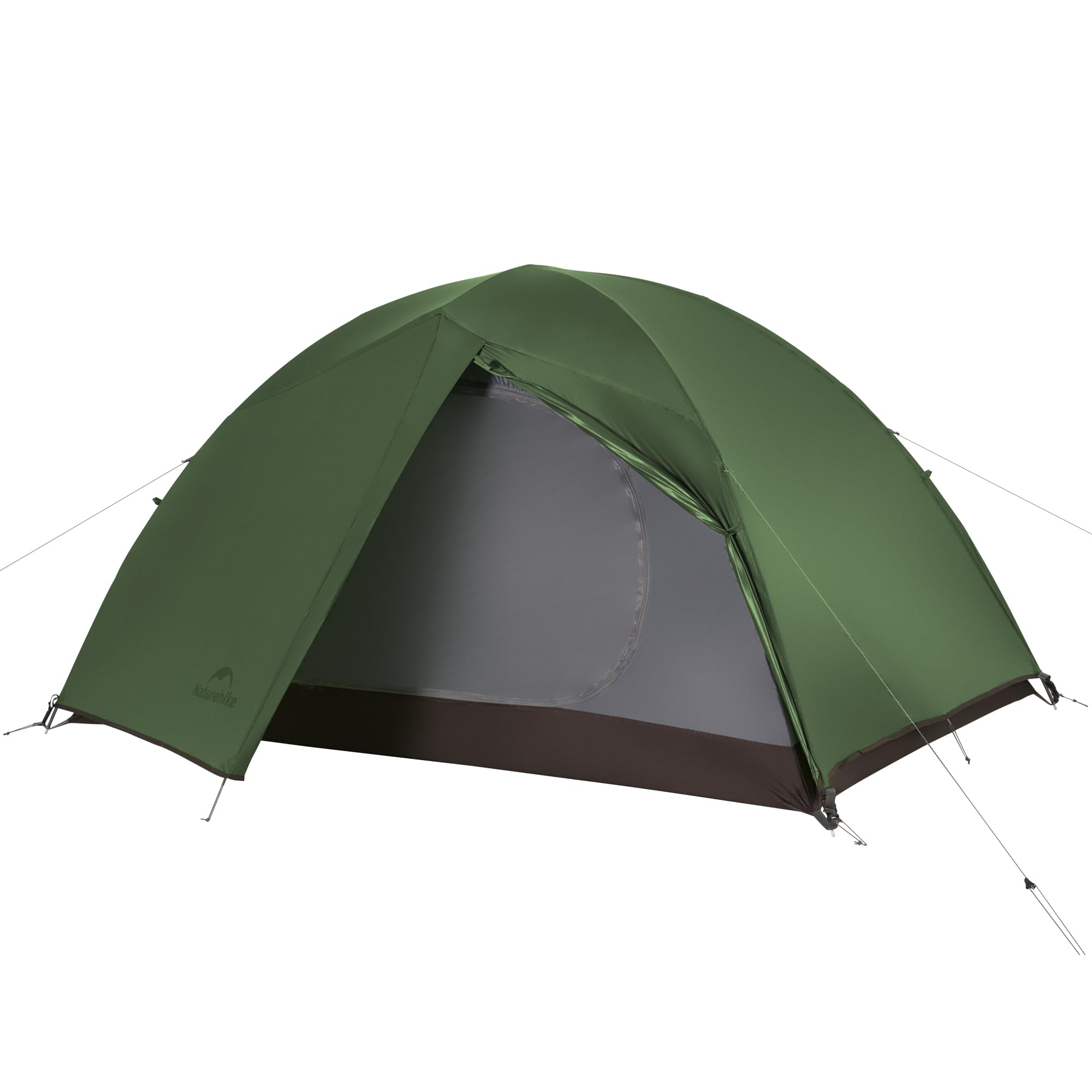
Naturehike 4 Season 2P
Key Features
- Doors: 2 doors, 2 vestibules
- Capacity: 2 Person
- Trail weight: 4.1 lb
- Waterproofing: 3000 mm+
- Price: Midrange
Four point one pounds is the headline, and it is the lightest trail weight in this group. The fabric is 20D silicone-coated nylon with a 3000 mm rating carried on both fly and floor, the frame is three aluminum poles, and there is a footprint in the bag, a detail we appreciate more every time we do not have to buy one separately.
Two doors and two vestibules on a tent this light is the unusual part. The floor runs to 41 square feet, which is real space for two pads, and each side gets its own entrance and its own porch. In winter that is where the wet shell and the boots live, and it keeps the inside from turning into a pile of gear. With the fly on, the inner goes properly dark, which helps in a long northern evening.
Our take: this is the walk-in tent. When the approach is long and the forecast is cold and dry, the lighter shell is the right trade, and the twin-door layout means two people can share it without negotiating. If you expect days of wind-driven rain, the GEERTOP Navigator’s heavier coating is the better bet; otherwise these two are chasing the same buyer.
Pros
- 4.1 lb trail weight, the lightest here
- Two doors and two vestibules
- Footprint included in the bag
Cons
- Waterproof coating at the lighter end of this group
Our pick when the approach is long: 4.1 pounds on the trail with two doors and two vestibules is a rare combination at this weight.
Best for Exposed Basecamps
ALPS Tasmanian 3P
Key Features
- Capacity: 3 Person
- Floor size: 92 x 79 in
- Trail weight: 9.6 lb
- Vestibule area: 21 sq ft
- Price: Premium
Twenty-one square feet of vestibule across two doors, a 54-inch peak and a floor that runs 92 by 79 inches: the Tasmanian is built for the camp you do not move. The fly comes all the way down, the vents close completely, the floor carries a 5000 mm coating, and the frame is shock-corded aluminum that clips into place rather than threading through sleeves.
In bad weather this is the tent in the group we trust most. Close the vents against spindrift, run out the guy lines, and the shape sits still in wind that has smaller domes flexing. The full-coverage fly and closable vents also let you shut the tent down completely, which is what makes it feel warm rather than merely dry. Three people is optimistic for a long trip; two with a dog and a fortnight of kit is exactly the use it is built for.
The trade is in the bag. This is a tent you split between two people on the walk in, and it is the only one here with a limited lifetime warranty behind it. That combination, a shelter that behaves like a small expedition tent and a maker backing it for as long as you own it, is why it is on this page at all. What it asks in return is a partner who carries their half.
Pros
- 21 sq ft of vestibule over two doors
- Full-coverage fly with closable vents
- Limited lifetime warranty
Cons
- Fly takes longer to pitch than the inner
For a camp you do not have to carry far, we trust this one most in a storm, and its two vestibules swallow winter gear.
Best for Winter Stove Camping
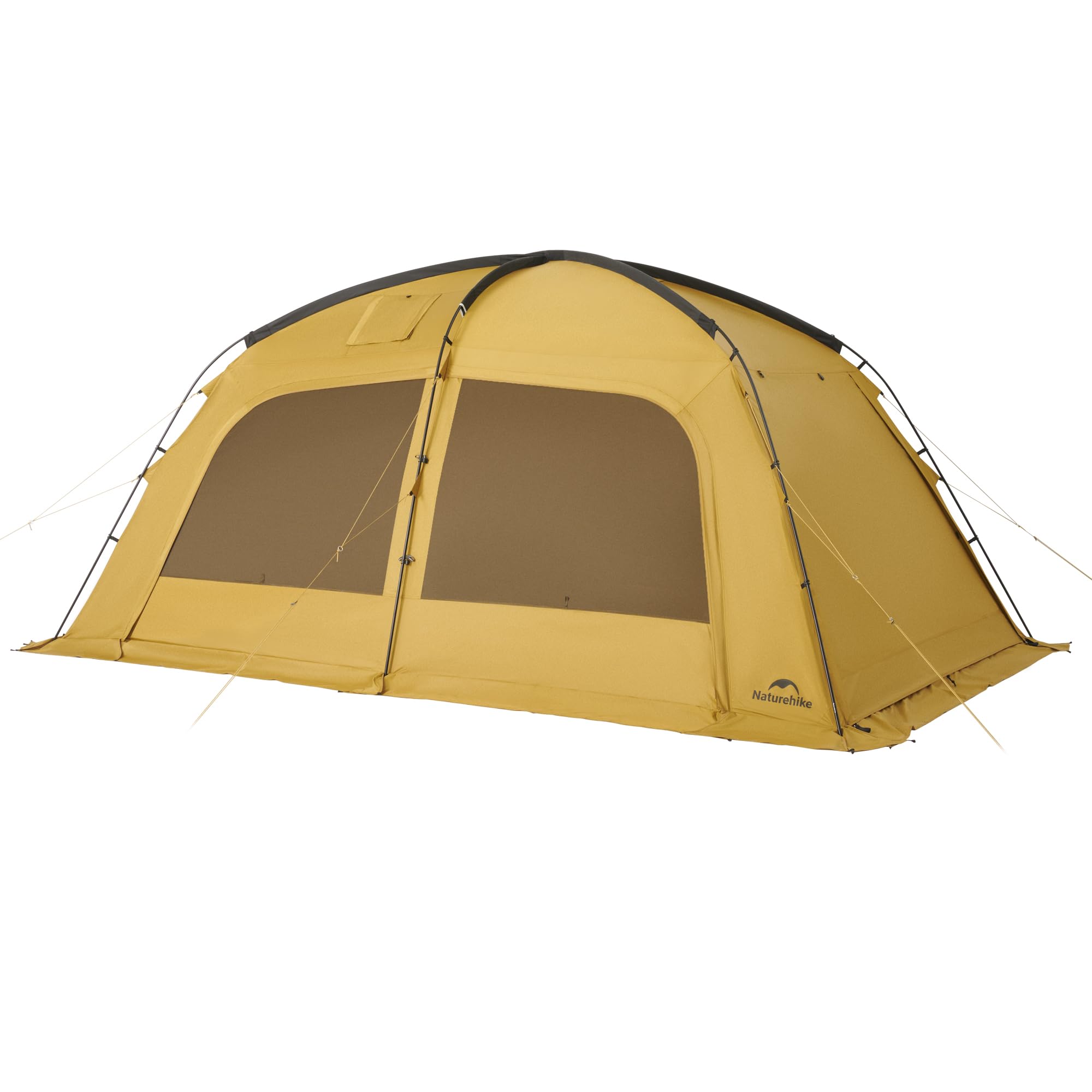
Naturehike Dune Hot Tent
Key Features
- Weight: 27.6 lb
- Capacity: 4 Person
- Floor area: 132 sq ft
- Waterproofing: 10000 mm+
- Price: Premium
Standing up inside a tent in February is a luxury that is hard to describe and easy to get used to. The Dune peaks at 81 inches, the floor runs about 14 and a half feet by 9, and there are two rooms so sleeping can be separated from gear and a folding chair. The shell is 75D polyester with a 10000 mm coating and a silver UV layer, over a 150D Oxford floor.
The stove jack is what separates it from everything else here. It is a fiberglass collar sewn into the roof, so a tent stove’s flue exits through the fabric instead of melting it. That changes a winter camp completely: heat you can sit next to, boots that are dry by morning, a shelter you occupy rather than endure. Run a stove only with the jack in place and a vent open, and treat carbon monoxide as the real risk, not the flames.
The rest is basecamp logistics. At 27.6 pounds with steel stakes it lives in the truck rather than on your back, and one person can put it up in a few minutes of clipping and staking. The four configurations, from fully sealed to mesh-lined to the canopy setups, mean it is not a one-season purchase. The footprint is separate, so budget for that before your first trip.
We choose it for trips where the tent is the base rather than the burden: a snowy week with a stove, a family that wants space to move, a long weekend where the weather is the whole point. It is the most expensive tent here and the only one that does this particular job, which makes the decision simple if a stove is on your list.
Pros
- Fiberglass stove jack for a tent stove
- 81-inch peak and 132 sq ft of floor
- Four setups from sealed to full mesh
Cons
- Fiberglass poles instead of aluminum
- Flexes in strong wind unless fully guyed out
We choose it for winter basecamp: you can stand up, fit a family, and run a stove through the jack when the temperature drops.
Best for Foul-Weather Camping
GEERTOP Navigator 2P

Key Features
- Doors: 1 door, 1 vestibule
- Capacity: 2 Person
- Trail weight: 6.3 lb
- Waterproofing: 8000 mm
- Price: Midrange
Eight thousand millimeters is the heaviest waterproof rating on any two-person tent here, and on a wet trip that figure decides how the second night goes. The fly is 20D ripstop nylon, the floor is a coated polyester, and the frame is three aluminum poles. You can also pitch the fly on its own as an open-fronted shelter, which is handy for a lunch stop or an unexpected night out.
The pitch is unusual: the poles feed through the fly and the inner clips up inside it, the reverse of what most people are used to. Our first attempt took longer than anything else in this group; the second took a couple of minutes. Do it once in daylight at home and the oddity stops mattering. In wind, the fly-first order is actually the smarter way round, because the shell is up before the inner is exposed.
Where it lands for us: the weather protection is the best of the two-person tents on this page, and once learned the pitch is quick. What keeps it out of the top tier is everything around that coating. On a wet, windy week being dry counts for more than being comfortable, and this is the tent that delivers dry.
Pros
- 8000 mm coating, the heaviest on a two-person here
- Fly-only pitch as a second shelter
- 6.3 lb trail weight with aluminum poles
Cons
- One door and one vestibule for two people
- Zippers and attachment points are the weak spots
We recommend it to campers who expect rain and wind rather than snow load, thanks to the heaviest coating on any two-person tent here.
Best for Budget Winter Trips
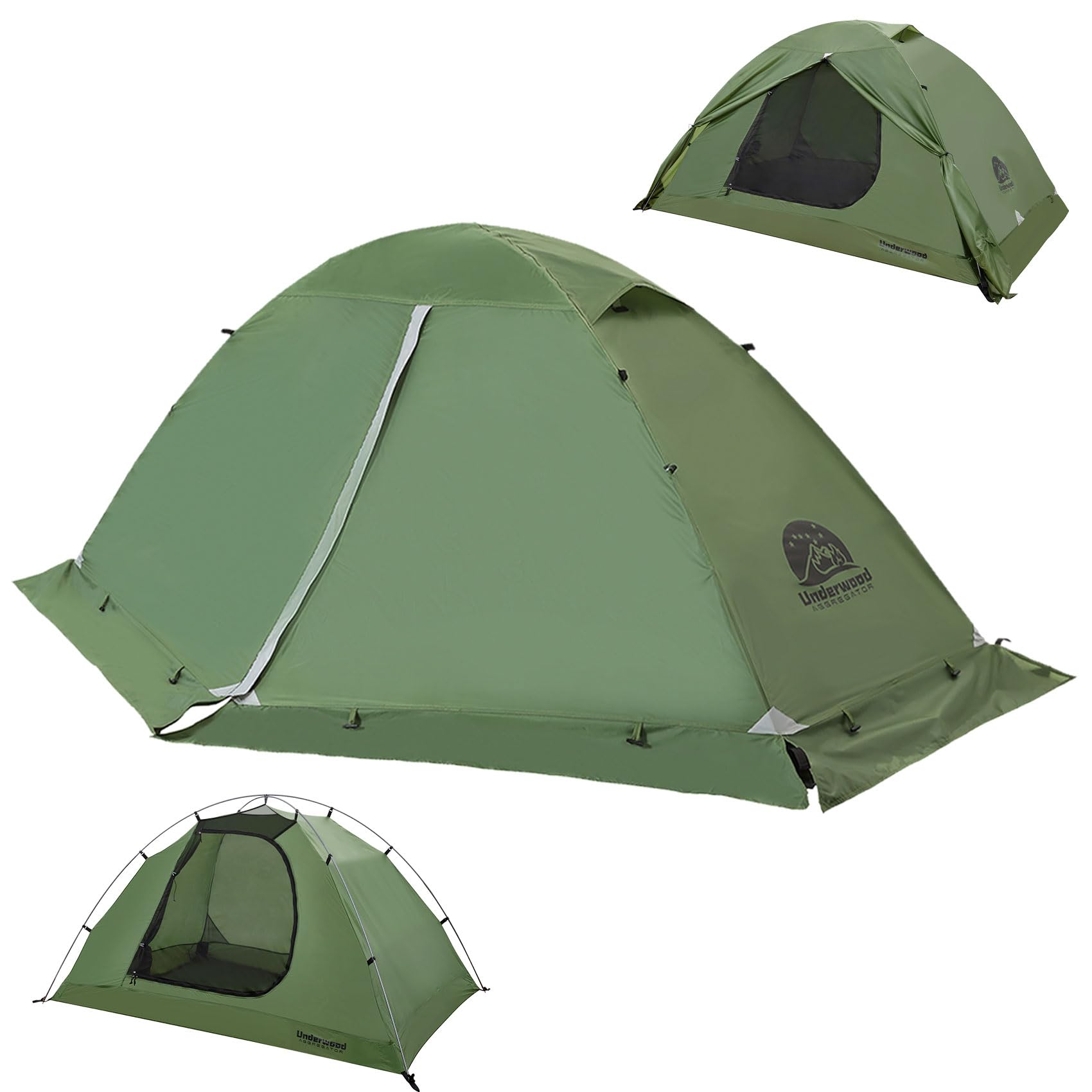
Underwood 4 Season 2P
Key Features
- Doors: 1 door, 1 vestibule
- Capacity: 2 Person
- Floor size: 86.6 x 59.1 in
- Waterproofing: PU 5000 mm
- Price: Budget
This is the least expensive route into a genuine four-season two-person tent here, and the numbers behind it are not the usual budget compromise: an 86.6 by 59 inch floor, a PU 5000 mm coating, an aluminum pole set and a two-way zipper on the door. For a first winter tent, a spare for a teenager, or a shelter that lives in the car, it is where we point people first.
In use it does the simple things well. It holds warmth below freezing with a decent pad underneath, it kept the weather out through heavy rain, and it goes up fast enough to pitch in the last of the light. Where it feels the budget is volume: once two pads are down there is little floor left for packs, and the walls slope in enough that sitting up takes a small negotiation.
Pros
- Full 86.6 x 59 in two-person floor
- PU 5000 mm waterproof coating
- Holds warmth below freezing with a good pad
Cons
- Single door and single vestibule
We point first-time winter campers here: a real two-person floor and a heavy coating for less than anything else in this group.
Best for Family Winter Camping
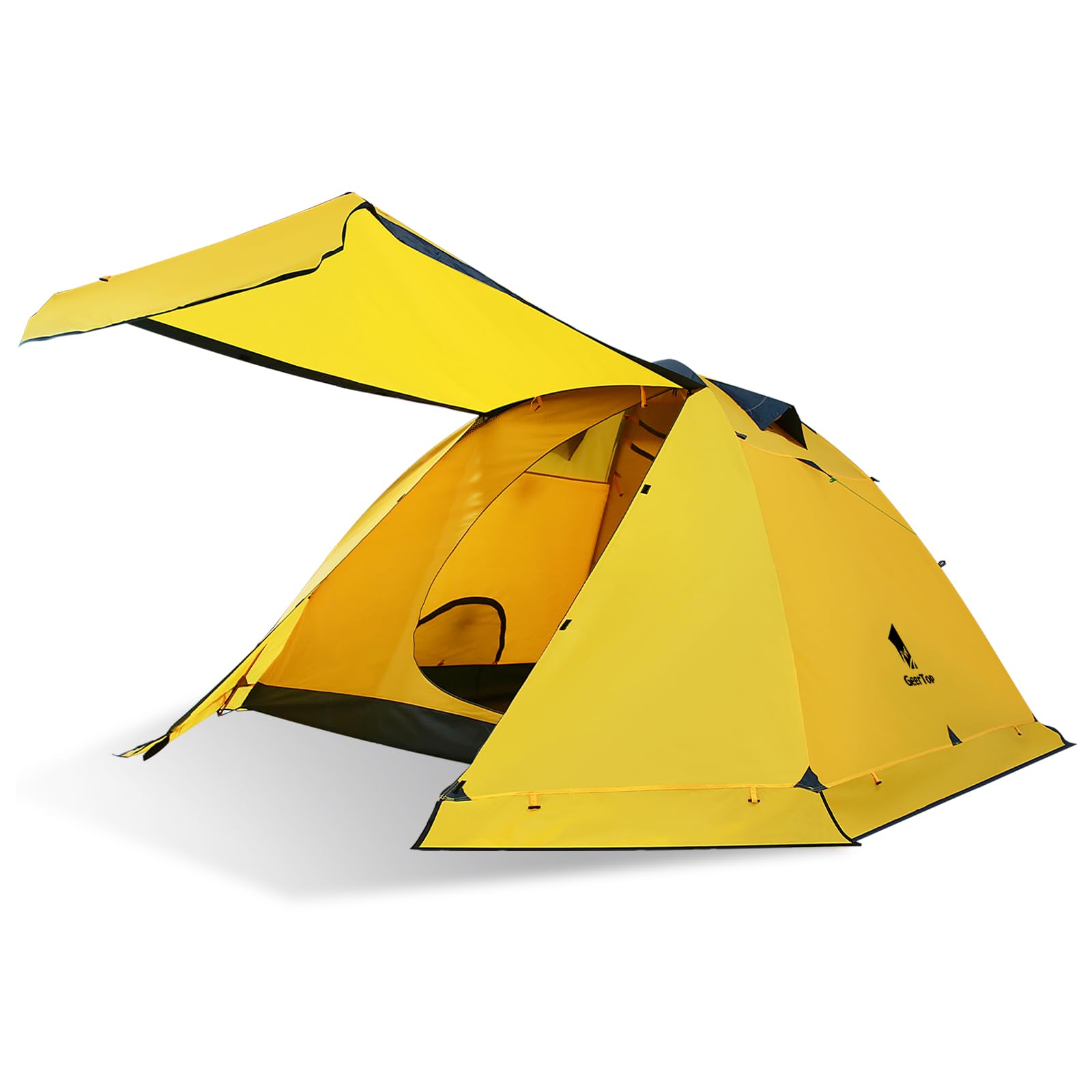
GEERTOP Toproad 4P
Key Features
- Capacity: 4 Person
- Floor size: 94.4 x 82.6 in
- Trail weight: 9.1 lb
- Waterproofing: Fly 3000 mm
- Price: Midrange
Four people, cold weather and a car within walking distance: that is the brief this tent was written for. It is a two-pole freestanding dome, 94 by 82 inches inside with a 53-inch peak, two doors, two vent windows, and a 210D Oxford floor with a 5000 mm coating under a 3000 mm fly.
As a two-person tent it is luxurious. A queen air bed drops in with room left over, you can stand a camp chair against one wall, and the two doors mean nobody climbs over anybody on the way out. As a three-person tent it is generous. That is the honest way to use it, and it is how most of them will be used.
Ventilation is the thing to manage. With the fly on and the skirts down it warms up quickly, and it also collects condensation on the inside of the fly; roll up the skirts on the sheltered side, crack the vent windows, and it clears. In milder weather the same fly makes it hot, so it is happiest in the cold.
Where we land: this is the tent that makes a cold-weather family trip easy, with two doors, a floor you can put a real bed on and a sealed shell for the nights that bite. Backpackers should look at the two-person tents on this page instead; everyone else can stop shopping.
Pros
- Two doors and two vent windows
- 210D PU 5000 Oxford floor
- Aluminum poles in a freestanding dome
Cons
- Low peak height means sitting up, not standing
- 9.1 lb is a car-camping weight
A sensible family tent for cold-weather car camping, and we think it is the easiest way to put four people in a four-season shelter.
How We Tested the Best Four-Season Tents
We started with every four-season tent we could get our hands on from brands with a track record in winter camping, then narrowed by packed weight, floor dimensions, and price. Anything that called itself four-season without a sturdy pole set and a fly that reached the ground was out. Seven tents made the cut, and we’ve lived with them for ten months — a wet October basecamp, a February weekend on an exposed ridge, and plenty of backyard nights in between.
Setup was timed, first with bare hands and then with gloves on, because that’s how it actually happens. We measured the interior with two wide sleeping pads and a duffel to see whether the quoted capacity held up, and we weighed each tent packed, then again after a night in the rain. On windy nights we watched whether the poles flexed or bowed and how much the fly flapped; after snow we checked how the roof shed load and whether the vents clogged. Every morning we looked for condensation — on the walls, on the sleeping bags, in the corners — and noted which tents stayed dry and which left us wiping down the interior before breakfast.
Durability showed up in small things: zippers that caught, stake loops that frayed, a floor that felt thinner after a season of rocks. Appearance mattered too, since a tent that pitches clean usually has well-placed guy-outs and tidy seams, but value came down to whether it still felt solid after ten months of use.
How to Choose a Four-Season Tent
The most useful thing to understand before you shop is that a four-season tent is a wind-and-moisture tool rather than a heater, and every choice after that trades carry weight against how much weather you can sit out.
Read the label, then check the design
Plenty of tents wear a four-season label while keeping the mesh body of a summer shelter. What you want is a fly that reaches the ground, an inner you can close off, vents that shut, and a snow skirt or a high bathtub floor. Together those features block spindrift and wind-driven rain and hold a little warmth. If the tent you are looking at is mostly mesh under a short fly, it is a three-season tent with a marketing problem, whatever the listing says.
All the tents here pass that test. The difference between them is how completely they seal — a full-coverage fly with closable vents, as on the ALPS Tasmanian, shuts down further than a simpler shell.
Weight decides the trip, not the tent
Trail weight is the tent with body, fly and poles. Stakes, footprint and stuff sacks come on top, which is why a tent advertised at five and a half pounds arrives closer to six and a half. Under roughly six pounds, one person can carry a two-person shelter without thinking about it: the Naturehike at 4.1 pounds and the Clostnature at 5.3 are both in that bracket.
Past nine pounds, treat the tent as basecamp equipment. The ALPS Tasmanian and the hot tents here are camp furniture that happens to fold, and the honest way to carry one is split between two people.
Doors, vestibules and the space you actually get
Capacity counts bodies; winter counts pads and packs. A two-person floor around 86 by 59 inches is two pads side by side with no gap between them, so the second door and the vestibule are what make sharing tolerable — boots, packs, a wet shell and a stove all need somewhere that is not your sleeping bag.
If two people are going out in real cold, size up rather than squeeze. A three-person tent with two vestibules is more comfortable for two than most two-person tents are, which is exactly how the Tasmanian gets used.
Ventilation, condensation and the sealed-up night
The warmer a tent is, the more moisture it traps. You put water vapor into the air all night, a sealed shell condenses it on the inside of the fly, and by morning the foot of your bag is damp. The fix is part design and part habit: peak vents you can leave open in rain, two door layers you can crack, and a pitch that keeps the fly off the inner.
In snow, keep the skirt down on the windward side and leave the sheltered side open. A four-season tent that cannot be vented is just a wet tent that takes longer to dry.
Frequently Asked Questions
Do I need a footprint under a four-season tent?
Not always, but it is cheap insurance. A footprint protects the floor from gravel and roots and gives you something dry to kneel on while you pack up. The Naturehike two-person comes with one; for the others, buy the maker’s version or cut a sheet of heavy plastic to the floor size and tuck it just inside the edges so it cannot catch rain.
Will a four-season tent hold up under snow?
Wind and snow are different problems. A two-pole dome sheds wind well but collects snow in the valleys of the fly, so if heavy snow is forecast, plan to knock it off once or twice overnight and pitch with every guy line out. Above the treeline in deep snow you want a stronger frame than any two-pole tent here.
Can you run a wood stove in a four-season tent?
Only in a tent built for it, meaning one with a stove jack sewn into the fabric; the Naturehike Dune has one. A stove in an ordinary tent will melt the shell or fill the tent with carbon monoxide. Even with a jack, keep a vent open, use a spark-arrested flue and put a battery carbon monoxide alarm inside.
Final Verdict
Buy the Clostnature if you want one tent that handles winter properly and still goes on your back: two doors, two vestibules and a coating that stands up to real rain, at the budget end of this group. It is the safest default here for the backpacking winter camper.
Two requirements change the answer. If the walk in is long, the Naturehike two-person saves more than a pound and still gives each sleeper a door. If the tent is a basecamp and a stove is part of the plan, the Naturehike Dune is the only one that does that job.