This post contains affiliate links. We may earn a small commission when you buy through our links — at no extra cost to you.
An ultralight backpacking tent is a negotiation: less fabric, fewer poles, less margin for error, all for a lighter pack. The best ones make that trade disappear—until the weather turns and you learn whether the floor holds, the poles stay put, and the interior still fits you, a pad, and a quilt. Saving ounces is only half the story; the other half is whether the shelter is actually livable.
We spent nine months with seven tents, from value-minded two-pole designs to gossamer single-wall shelters, and the differences were not just grams. The keepers set up fast with cold hands, stayed stable in a crosswind, and had enough room to sit up and sort gear without elbowing a partner. Weight is the point, but so is what comes in the bag and how the construction survives repeated packing. The picks below are the ones I’d carry again.
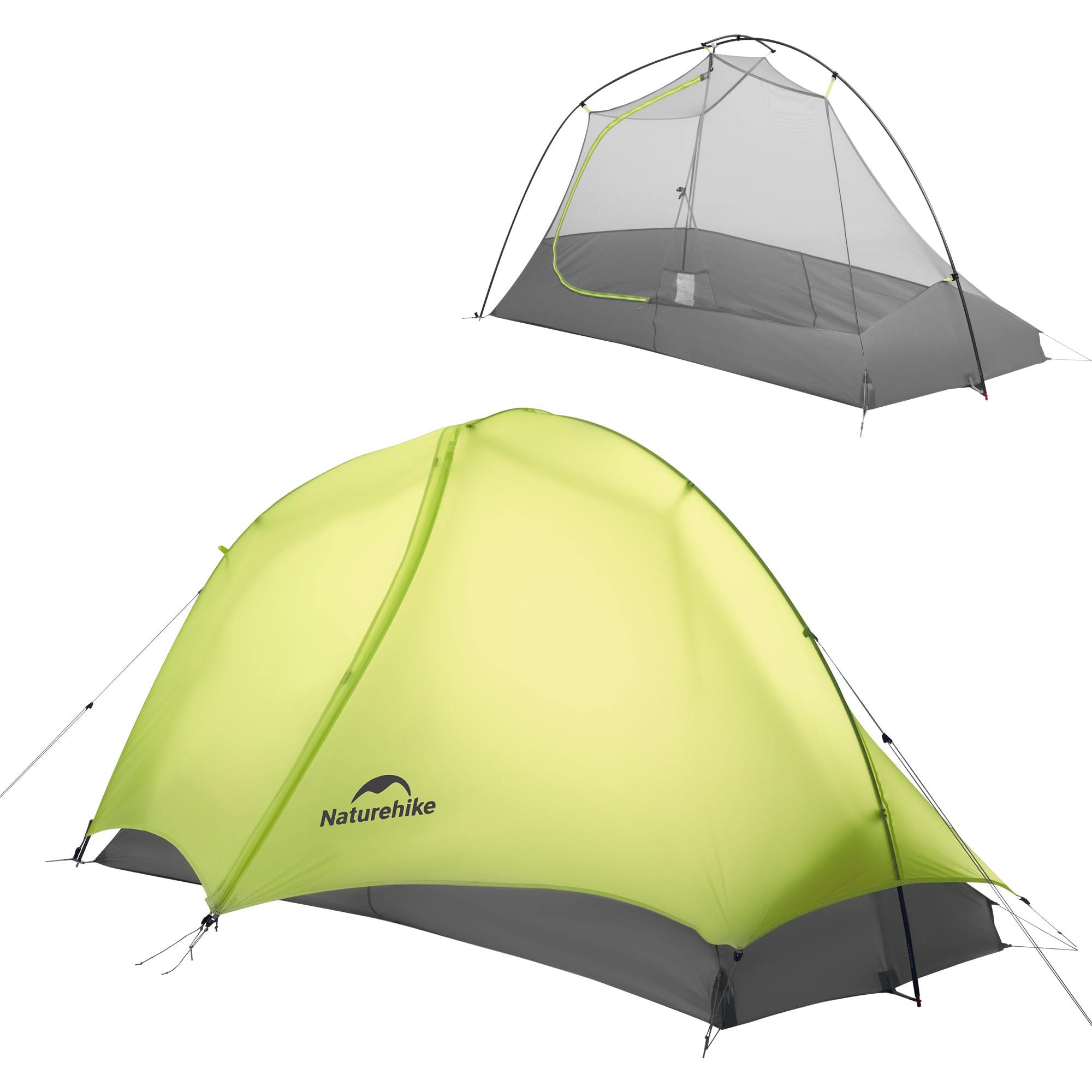


Best for Solo Backpacking
Naturehike Star Trail
Key Features
- Floor size: 86.6 by 59.1 in
- Peak height: 45.3 in
- Trail weight: 2.3 lb
- Waterproof rating: 1500mm+
- Price: Midrange
Two point three pounds is the number that sells this tent, and it is the honest version of the figure: fly, inner, poles, nine stakes, and a groundsheet all count toward it. That last item matters more than it sounds, because on a lightweight tent the footprint is usually the first thing you buy separately. The frame is two aluminium poles with clips, the listing puts the pitch at three minutes, and nothing about it asks you to find a trekking pole first.
We think it is the best solo default in this guide for exactly that reason: it removes the two compromises ultralight tents usually demand. You do not need trekking poles, and you do not give up floor space, because 86.6 by 59.1 inches is the widest solo floor here by a wide margin, enough for a wide pad, a pack, and your boots inside. The full-mesh inner also makes it a genuinely pleasant summer tent, with the airflow a solid inner cannot match.
The trade is fabric. A 10D fly with a 1500mm coating is the thinnest and lowest-rated combination in this group, and the peak is narrow with steeply sloping walls, so those 59 inches feel roomier at the elbows than at the shoulders. Neither makes it a bad buy; it makes this a tent built for three-season rain rather than a storm, and one worth seam-sealing and pitching in shelter when the forecast is ugly. If you are routinely out above treeline, the Lanshan 2’s coatings are in a different league.
Pros
- 2.3 pounds with the footprint in the bag
- Freestanding, so no trekking poles needed
- Widest solo floor in this group
- Full mesh inner for summer airflow
Cons
- Lowest waterproof rating here at 1500mm+
- Narrow peak and steep walls cut usable width
We recommend the Star Trail to solo backpackers who want to move fast: at 2.3 pounds it’s the lightest freestanding tent here, and the footprint comes in the bag.
Best for Couples Packing Light
Naturehike Cloud-Up UL 2
Key Features
- Floor size: 82.7 by 51.2 in
- Peak height: 41.3 in
- Trail weight: 3.6 lb
- Footprint included: Yes
- Price: Premium
Fifty-one inches of floor is the number to sit with before you order this one. Two standard 25-inch pads fit wall to wall with nothing left over, so if either of you sleeps wide, or you want packs inside rather than in the vestibule, this is the wrong shape. That is the compromise that comes with getting two people under four pounds.
Everything else is well judged. The 15D silicone-coated fly, the 20D floor, one aluminium pole, and the included footprint come in at 3.6 pounds, and the pitch is a straight clip-and-sleeve job with the instructions sewn into the stuff sack, a small thing we appreciated more than we expected on a first pitch in fading light. The vent above the front door is the real upgrade over the older Cloud Up, and condensation on a still, cold night is exactly what it is there for.
Live with it for a weekend and the single door becomes the second thing you notice: whoever sleeps at the back climbs over their partner for every exit. Length is fine at 82.7 inches, but the 41.3-inch peak means you are dressing lying down. For a couple on a straightforward three-season forecast that is an easy trade; for two broad sleepers, or a trip where rain is likely, the Lanshan 2 and the Tomount make more sense.
Pros
- Two-person shelter at 3.6 pounds
- Footprint and stakes included
- Vent above the door fights condensation
- Simple pitch with instructions in the bag
Cons
- 51.2-inch floor is tight for two pads
- One door for two people
Our pick for couples is the Cloud-Up UL: 3.6 pounds with the footprint included, a simple pitch, and the most complete package among the two-person tents here.
Best for Wet Weather
Lanshan 2
Key Features
- Floor size: 87 by 43 in
- Shelter type: Trekking pole, poles not included
- Trail weight: 2.8 lb
- Waterproof rating: Fly sheet: 5000mm+; Floor: 6000mm+
- Price: Midrange
Under three pounds for a two-person shelter is the lightest figure in this guide, and it is not magic: the Lanshan 2 has no poles of its own. It pitches on two trekking poles, which thru-hikers already carry and first-time buyers do not. That single fact decides whether this tent is a bargain or a false economy.
If you do carry poles, the payoff is weather protection. The seam-taped 15D fly is rated to 5000mm and the 20D bathtub floor to 6000mm, the highest figures here, and the double-wall build holds the mesh inner away from the fly so condensation runs down the outside rather than onto your bag. The 49-inch peak is the tallest of the two-person tents in this group, and height is what makes a wet evening inside tolerable rather than grim.
We rate it the best wet-weather shelter here and the narrowest. At 43 inches across it barely takes two pads, so plan on one person plus gear, or two people who already like each other. Setup is the other cost: a pole at each end, a lot of stake-out points, and thin directions mean the first pitch takes longer than the listed five to ten minutes. Practise once at home and it becomes quick; skip that and you will be learning in the rain.
Pros
- 2.8 pounds for a two-person shelter
- Highest waterproof ratings in this group
- Tallest two-person peak here
- Double-wall build keeps condensation off the inner
Cons
- Trekking poles not included
- 43-inch floor is narrow for two people
The Lanshan 2 is our wet-weather pick: the lightest two-person shelter here, with the highest waterproof ratings in this group, if you already carry trekking poles.
Best for First-Time Buyers
Kazoo 1-Person
Key Features
- Doors: 1
- Floor size: 83 by 36 in
- Peak height: 40 in
- Trail weight: 3.3 lb
- Price: Budget
The Kazoo is the least expensive tent in this guide, and the surprise is that it is a real backpacking tent rather than a car-camping tent that got a stuff sack. Three point three pounds, one integrated aluminium pole, clips instead of sleeves, and a freestanding frame that stands up on its own while you sort out the fly.
We point first-time buyers at it because the layout is friendly: 83 inches of floor, 36 inches of width, a full-coverage rainfly over a mesh inner, and a side-entry door. That is a pad and a pack with enough left for boots, and the single-pole design means there is no pitching sequence to learn. For a first season of weekend trips it does the job without asking you to spend like a thru-hiker.
What you are trading is longevity. A 3.3-pound tent at this price is built from thin 210T ripstop over one pole, and the pole joints, guy-out tabs, and floor are where that kind of shelter ages first. Pack a repair patch, do not overtension the clips, and buy it knowing it is a first tent rather than a decade-long one. The money you save is better spent on a sleeping pad, which will do more for your nights out than half a pound off the tent ever will.
Pros
- Lowest price of any tent here
- 3.3 pounds and freestanding
- Fast single-pole pitch
- Full-coverage rainfly over a mesh inner
Cons
- Poles and thin fabric wear first
- Small interior even for one person
Our budget pick is the Kazoo: the least expensive way into a freestanding one-person backpacking tent that is still light enough to carry all day.
Best for Tall Sleepers
MC Tomount 2-Person
Key Features
- Floor size: 86.6 by 53 in
- Peak height: 45.3 in
- Trail weight: 4.4 lb
- Waterproof rating: 3000mm
- Price: Midrange
Eighty-six and a half inches of floor is what separates the Tomount from the rest of this group. That is a tent a tall sleeper can lie in without their head against one wall and their bag jammed into the other, and at 53 inches wide it takes two pads with a couple of inches to spare.
This is the roomiest tent here, and the 20D nylon rated to 3000mm is properly wet-weather territory rather than a token coating. The tub seam sits above ground level, so a puddle under the floor is not automatically a wet bag, and two doors plus two vestibules mean nobody climbs over anybody. At 4.4 pounds it is the heaviest thing we are recommending, and we think that is a fair trade: you notice the extra pound on the climb, and you notice the room every night.
The check before you commit is the floor length. It is listed at 86.6 inches, and length is the whole reason to choose this tent, so pitch it at home and lie down before the trip where the fit matters. Split between two people, the 4.4 pounds works out to about 2.2 pounds each, which is how it usually gets carried and why the weight reads worse on the page than it feels on the trail.
Pros
- 86.6-inch floor fits tall sleepers
- Two doors and two vestibules
- 3000mm nylon coating with a raised tub seam
- 53-inch width takes two pads
Cons
- Heaviest stated weight in this group
We point taller and broader sleepers to the Tomount: an 86.6-inch floor, 45 inches of headroom, and two doors so nobody climbs over anybody.
Best for Minimalist Solo Trips
Night Cat 1-Person

Key Features
- Doors: 1
- Floor size: 125 by 100 cm
- Vestibules: 1
- Trail weight: 2 lb
- Price: Midrange
This shelter holds its shape on tension rather than on a frame, so the pitch is the product. Set it slack and you get a sagging inner and a fly that flaps; set it taut corner to corner and you get a shelter that holds together in wind far better than its weight suggests. It is not a tent you throw up in the dark on the first night.
We keep it in the guide because nothing else here is this light. Two pounds on the trail is a different kind of trip: it disappears into a small pack, and the low profile is an advantage when you are camping on exposed ground. The floor is roughly 49 by 39 inches, which is a pad and a small pack and no more, and the full-coverage fly with a vestibule gives you somewhere to put wet boots.
Two things to chase down before you buy. No waterproof rating is published for the fly, and on a shelter this thin that is the number that matters, so assume you will be seam-sealing it and treating the fabric carefully. The pole seats also rely on tension, so in gusty weather check the lines rather than trusting the pitch to hold itself. As a fast-and-light second shelter for solo trips it earns its place; as your only tent for a wet week it does not.
Pros
- 2 pounds, the lightest shelter here
- Packs down to almost nothing
- Full-coverage fly with a vestibule
- Low price for the weight
Cons
- Pitch depends on tension and can sag
- No published waterproof rating for the fly
Two pounds makes the Night Cat the lightest shelter here, and our pick for solo hikers who count grams and will take time to learn its tension-dependent pitch.
Best for Cheap Two-Person
Underwood Aggregator 2

Key Features
- Doors: 2
- Floor size: 86.6 by 45.3 in
- Shelter type: Trekking pole, poles not included
- Waterproof rating: 5000mm
- Price: Budget
Compared with the Cloud-Up UL, the Aggregator gives up a frame and a familiar name and takes back most of the money. It is an A-frame shelter that pitches on two trekking poles, or two sticks of the right length, with two doors, two vestibules, and a 5000mm coating on the fly. For a first two-person backpacking tent, that is a serious trade in your favour.
The layout is the part we like most. Two doors on a cheap tent is rare, and it changes how a night works: each person has their own way in and out, and the twin vestibules keep boots, packs, and a stove out of the sleeping space. The A-frame is also a proven shape in wind, as long as you set both poles to the same height and tension the fly evenly.
Rain is where it gives ground. The 5000mm figure looks reassuring on paper, but sustained wet weather is this tent’s weak spot, and water inside after a long night of rain is the failure to plan around. Seam-seal it before the first wet trip, pitch the fly taut and low, and treat it as a fair-weather weekend shelter rather than a two-week thru-hike tent. Do that and it is the cheapest way into a real two-door shelter.
Pros
- Cheapest two-person tent here
- Two doors and two vestibules
- 5000mm fly coating
- Pitches on trekking poles you already carry
Cons
- Water can get inside in sustained rain
- Needs poles at least 46 inches long
We steer budget-minded couples to the Aggregator: two doors, two vestibules, and a 5000mm fly for less money than anything else here, if you carry trekking poles.
How We Tested Ultralight Backpacking Tents
We started with a shortlist of 18 ultralight tents, filtered by packed weight, floor area, peak height, included stakes and guylines, and price, then narrowed it to seven models that represented the range—value-minded two-pole designs, freestanding shelters, and gossamer single-wall tents. Over nine months, from spring through fall, we took them on weekend trips and one three-day rain soak, and I pitched each one in the backyard on a wet Saturday to compare notes in controlled conditions.
On every trip, I timed setup solo from stuff sack to standing shelter, first in daylight, again after dark, and once with gloves on, noting whether the corners were obvious, the poles snagged, or the fly needed a second pair of hands. We weighed each tent packed—with its stakes, guylines, and stuff sack—on a kitchen scale, then stuffed it into a 50-liter pack to see how it fit. Inside, we measured floor length and width and peak height, laid out a regular pad and quilt, and had a six-foot tester sit up, change layers, and reach for a jacket to judge roominess and fit. For water resistance, we hit each fly and floor with a hose for 20 minutes, then checked seams, zippers, and the floor for dampness; the real rain test confirmed what the hose suggested.
Stability got tested in a crosswind: we pitched on an exposed saddle, pushed against the poles, and watched whether the arch folded or a stake pulled before we added extra guylines. After each trip, we inspected stitching, seam tape, pole joints, zipper snags, and abrasion at stake points, and packed each tent repeatedly to see how the construction held up. Value came down to what came in the bag—stakes, guylines, repair patches—and how many trips a tent survived before a seam or floor started to fail, not just the lowest sticker price.
How to Choose an Ultralight Backpacking Tent
Weight is the headline, but what matters is what that number includes and whether the tent still works when the weather turns.
Find out what the weight includes
Two tents that read as 2.3 and 2.8 pounds can be closer than they look once you add a footprint, stakes, and a stuff sack to one and not the other. The Star Trail’s 2.3 pounds already covers fly, inner, poles, nine stakes, and a groundsheet, and the Cloud-Up UL’s 3.6 pounds includes its footprint.
When a listing quotes a minimum trail weight, assume the groundsheet and pegs are extra until you see them listed in the bag. Compare what actually goes in your pack, not the stripped-down figure.
Decide whether you carry poles anyway
A trekking-pole shelter is the cheapest weight you will ever save, because the structure is already strapped to your pack. The Lanshan 2 gets two people under three pounds and the Aggregator does a similar job for far less money, both using poles you carry anyway.
The catch is that the poles have to suit the tent, since the Aggregator wants 46 inches or more, and the pitch is a deliberate sequence rather than a clip-and-go. If you never hike with poles, a freestanding tent is the better buy.
Match the floor to your sleeping pads
Two 25-inch pads need a little over 50 inches of floor before anyone’s elbows are involved. In this group, two-person floors run from 43 inches in the Lanshan 2 to 53 in the MC Tomount, and that is the difference between sleeping two and sleeping one plus a pack.
If you are buying for a pair, measure the pads rather than the people. Solo, 36 inches is enough for a pad and a little gear, and the Star Trail’s 59 inches is luxury.
Read the coating, then the denier
Hydrostatic head tells you how much water pressure a fabric resists before it leaks. A 1500mm fly is light three-season protection, 3000mm and up is properly wet-weather territory, and the Lanshan 2’s 5000mm fly and 6000mm floor are the most protection in this guide.
Denier is the other half of the trade: 10D and 15D fabrics save real weight and abrade sooner than 210T polyester. Thin fabric is not a defect, it is a decision to pitch on clean ground and reseal seams as they wear.
Count the doors
One door is fine for one person and quietly irritating for two, because whoever sleeps at the back climbs over their partner for every late-night exit. Two doors and two vestibules change how a tent lives: boots stay out of the sleeping space, packs have their own side, and a wet evening is easier to organize.
The MC Tomount and the Aggregator give two people two doors. The Cloud-Up UL gives two people one.
Frequently Asked Questions
How small does an ultralight backpacking tent pack?
Most pack to roughly the size of a one-liter bottle. The Cloud-Up UL packs down to 15.7 by 5.1 by 5.1 inches and the Lanshan 2 to 15.7 by 4.7 inches, short enough to lie sideways in most packs.
Check the width of your pack’s internal sleeve before you buy, and remember the poles can travel separately in a side pocket if the bundle is stubborn.
Can two people split one tent’s weight?
Yes, and it is the cheapest weight saving on this list. Split a two-person tent into its parts, with one person carrying the inner and poles and the other the fly, footprint, and stakes, and a 3.6-pound tent becomes about 1.8 pounds each.
Agree before the trip who carries what, and keep the stakes with the person who does the pitching so nobody is hunting through two packs at dusk.
Do I need a footprint under an ultralight tent?
On abrasive ground, yes. Floors this thin wear quickly on granite and gravel, and a footprint is far cheaper than a new tent. Two picks here ship with one, the Star Trail and the Cloud-Up UL.
If yours does not, cut a sheet of Tyvek to the floor’s shape and tuck the edges just inside the tent’s outline, so rain runs off the fly rather than under the floor.
Can you pitch an ultralight tent on a wooden platform?
Run cord from the corner loops out to the platform’s edge or a post, and a freestanding tent will stand while you work out the rest. That is the easy case.
A trekking-pole tent is harder because it needs tension in every direction. Plan on guylines to all four corners, or take a framed tent if platforms are common where you camp.
Final Verdict
Most readers should start with the Star Trail. It is the lightest freestanding tent here, the footprint is already in the bag, and for a solo three-season trip it is the least fuss per ounce.
If two of you share the load, the Cloud-Up UL is the better buy, and a narrow floor is worth accepting to stay near four pounds. If your trips run wet, the Lanshan 2’s 5000mm fly and 6000mm floor justify the trekking-pole requirement and the practice it takes to pitch.