This post contains affiliate links. We may earn a small commission when you buy through our links — at no extra cost to you.
The appeal of a two-person ultralight tent is obvious right up until the moment you’re inside one. Every ounce the designers shave off has to come from somewhere — a thinner floor, a footprint with no room left for two sleeping pads and a couple of dry bags, a pole structure that wants you to think before it stands up. What you’re actually shopping for is the shelter that drops weight without charging you for it at 2 a.m. in the rain, and that balance is harder to strike than any spec sheet admits.
One number worth knowing before you start: trail weight and packed weight are not the same thing, and the difference is usually the stakes, the stuff sack, and the repair kit you’ll want along anyway. I’ve slept in seven of these tents over the past eight months, from fly-only setups on clear nights to a properly soaked weekend where water resistance stopped being theoretical. The picks below are the ones that earned their place in my pack, grouped by what they’re genuinely good at.

Best for Two-Person Trips
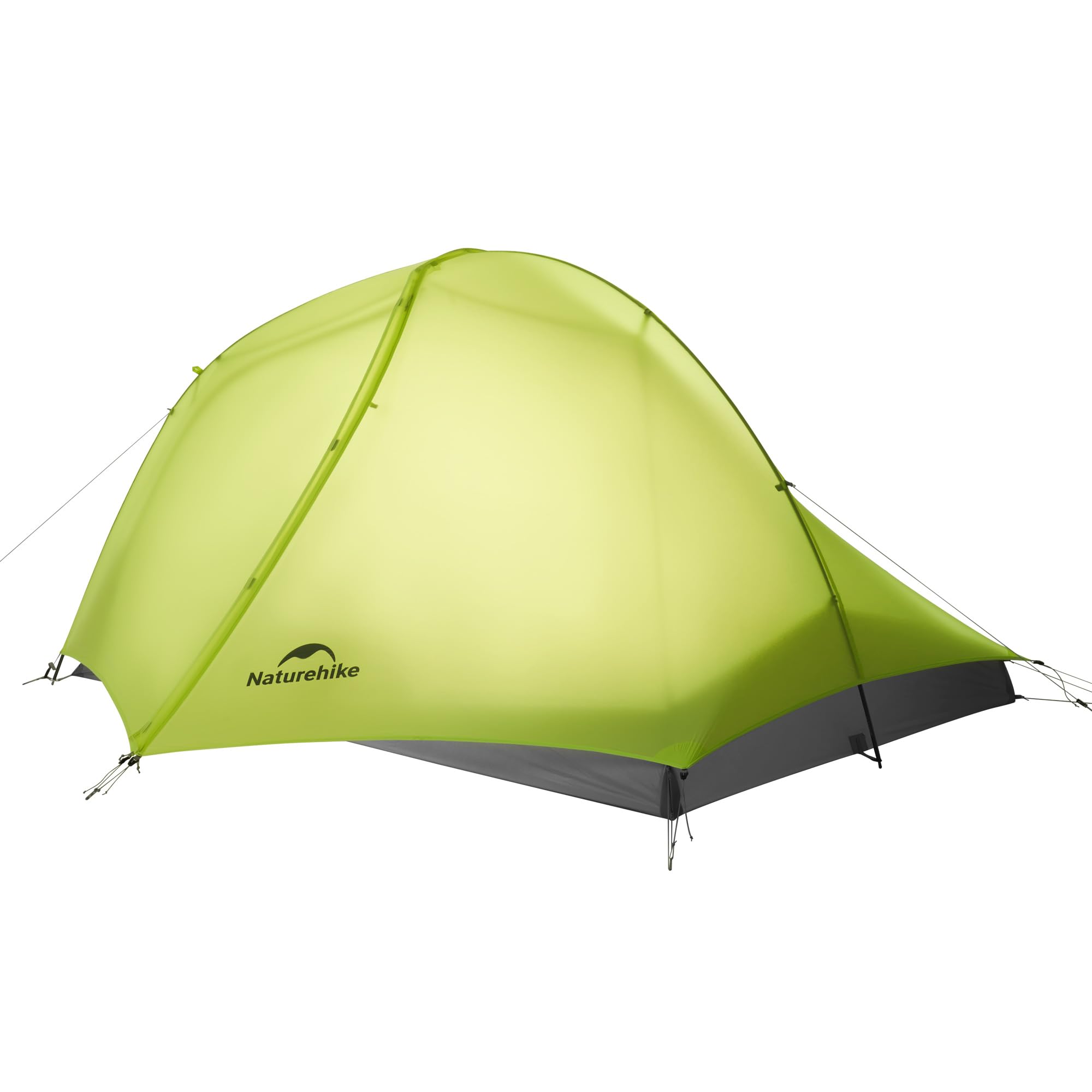
Naturehike Star Trail 2P
Key Features
- Doors: 2
- Floor size: 82.7 x 51.2 in
- Packed weight: 2.76 lb
- Rainfly rating: 1500mm
- Price: Midrange
Two point seven six pounds is what puts the Star Trail at the top of this guide, but the second door is why we keep coming back to it. Most shelters at this weight make you choose: shave the grams and climb over your partner at two in the morning, or carry a second door and pay for it in fabric. This one gives you both, plus a footprint, and still rolls into a 17.7 by 5.1-inch bundle.
The weight comes out of the fabric, and you can feel that too. The fly is 10D nylon rated at 1500mm, which is the lightest rain protection in this set, against the 20D and 210T polyester on the heavier picks. Our answer is to pitch it taut, put the included footprint down every time, and choose a grassy bench over a granite slab when there is a choice. Handled that way it has kept us dry through steady rain, and the saving costs you attention rather than sleep.
Inside, 82.7 by 51.2 inches takes two 20-inch pads with a little space between them. Two 25-inch pads fill the floor edge to edge, and whoever is on the door side needs to be tidy with their gear. The 41.3-inch peak is enough to sit up and pull on a layer in the morning, and the two vestibules each swallow a pack laid flat, which is more than a one-door tent can offer one of you.
Against the rest of the set, the Star Trail is the only shelter that combines a sub-three-pound packed weight, two doors and a footprint already in the bag. The LANSHAN gets close on weight, but it gives up eight inches of floor width and needs poles you bring yourself.
Pros
- 2.76 lb packed with two doors
- Footprint included in the bag
- Two vestibules keep packs outside
- Packs to 17.7 by 5.1 inches
Cons
- 10D fly needs careful handling
- 1500mm fly is the lightest coating here
We recommend the Star Trail to anyone who wants a real sub-3 lb two-person tent: it is the lightest shelter here that still gives each sleeper a door and a vestibule.
Best for Budget Backpacking
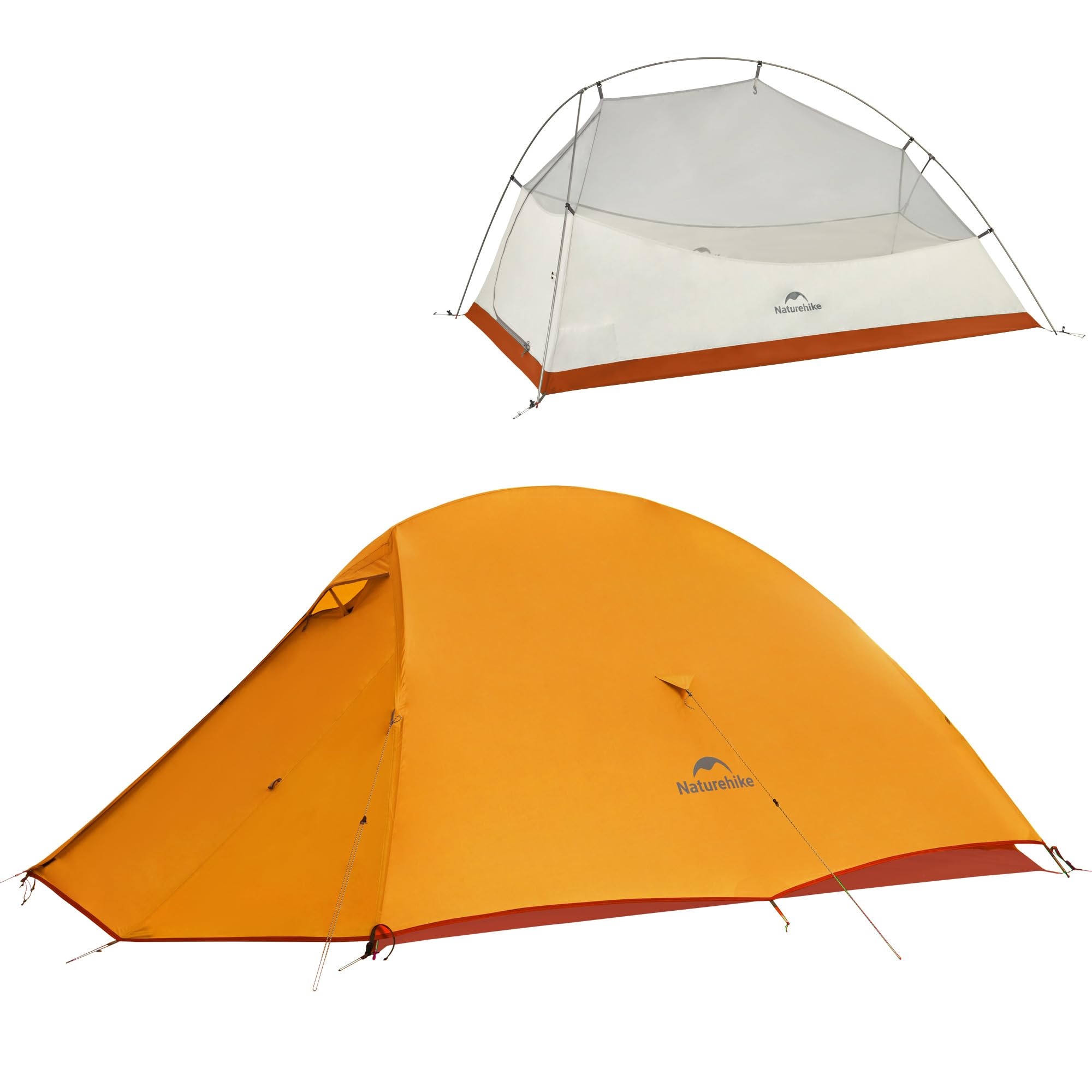
Naturehike Cloud-Up 2P
Key Features
- Doors: 1
- Floor size: 82.7 x 51.2 in
- Packed weight: 4.3 lb
- Waterproofing: 3000mm
- Price: Budget
Four point three pounds is an odd number to defend in a guide to ultralight tents, so here is the honest case. The Cloud-Up is the least expensive shelter here, and it is the best-established design in the set. One aluminum pole, clips rather than sleeves, five guy lines and fourteen stakes: it goes up in a couple of minutes and takes a hard night without drama.
The money goes into fabric rather than ounces. Fly and floor are both 210T polyester with a 3000mm coating, which is more rain protection than the Star Trail’s fly offers at a lower price, and the Base version adds a vent window above the front door for airflow. A footprint comes in the bag as well, and so do more stakes than most people will ever peg out.
What you pay for that is the layout. Two people share one door and one vestibule, so the sleeper on the far side climbs out over the other, and two packs do not both fit under the fly. The floor is the same 82.7 by 51.2 inches as our top pick, and with one door it feels smaller than that.
Two adults fit, narrowly. Two adults and their packs do not. For a first backpacking tent, a solo camper who wants room to spread out, or a couple doing short trips close to the trailhead, none of that is disqualifying, and the fourteen stakes in the bag tell you exactly who this tent was built for.
Pros
- Cheapest tent in this guide
- 3000mm coating on fly and floor
- Footprint and 14 stakes included
Cons
- One door and one vestibule for two
- Inner walls run damp on cold, still nights
If the budget decides, the Cloud-Up is the tent we hand a new backpacker: cheapest here and weatherproof enough, as long as 4.3 pounds and one door are acceptable.
Best for Tall Sleepers
MC TOMOUNT 2P
Key Features
- Doors: 2
- Floor size: 86.6 x 53 in
- Peak height: 45.3 in
- Packed weight: 4.4 lb
- Price: Midrange
Length and headroom are what separate the TOMOUNT from everything else in this guide, and they are why it is here. The floor runs 86.6 inches and the peak sits at 45.3 — roughly four inches more of each than our top pick — and at 53 inches it is also the widest floor in the set. If you are over six feet, sleep on your stomach, or simply hate waking up with your face against nylon, that matters more than a few ounces.
The build is reassuring. 20D nylon with a 3000mm coating is denser than the 10D fly on the Star Trail and less likely to pick up marks, and the two-pole cross frame clips on rather than threading through sleeves, which shortens a night pitch. Two doors mean nobody climbs over anybody, and two windows give you cross-flow when the fly is on.
We felt the weight on the climb: at 4.4 pounds this is the heaviest shelter in the guide, and the gap against the Star Trail is real by the second hour. There is also the question of how much of that length you can use. An 86.6-inch floor still loses a few inches at each end where the walls slope in, so measure your pad rather than trusting the headline figure.
Where it earns its place is the combination: this much length, this much height and two doors at a midrange price, in a set where the lighter picks ask you to sleep in a narrower box and the cheaper one gives up the second door.
Pros
- Longest floor and tallest peak here
- Widest floor in the set at 53 inches
- Two doors on a clip-on frame
Cons
- Heaviest shelter in this guide at 4.4 lb
We pick the TOMOUNT for tall sleepers: the longest floor and highest peak here, with the extra weight as the price of sleeping straight.
Best for Solo, Pole Pitch
LANSHAN 2P

Key Features
- Floor size: 86.6 x 43 in
- Peak height: 49.2 in
- Packed weight: 2.8 lb
- Rainfly rating: 5000mm
- Price: Midrange
A 5000mm fly, a 6000mm floor and a 49.2-inch peak at 2.8 pounds is a lot of shelter for the weight, and the LANSHAN gets there by leaving the frame at home. You pitch it on trekking poles — its own setup instructions call for one, and none come in the bag. If you already walk with poles, that is free structure. If you do not, this tent is not for you.
The floor is where the compromise sits. At 43 inches wide it is the narrowest here by a distance, eight inches down on the Star Trail, so two 20-inch pads touch along their length and there is nowhere inside for a pack. As a solo shelter with room to spread out, it is luxurious. As a couple’s tent it is a squeeze that gets old on the third night.
What we like most is the coverage up top. The 49.2-inch peak is the tallest in this set, the fly comes down low, and the silicone coating on fly and floor is the heaviest waterproofing on any tent here — the numbers you want under a wet ridge. The thin 15D fabric is the other side of that: it is the shelter here most likely to show wear at the folds and around the stuff sack first.
Expect a learning curve. A pole pitch depends on getting pole height and tension right, and the first couple of attempts will look worse than they perform, so practise in the yard until you can do it in the dark. Once it is standing, there is nothing else in this guide that shrugs off weather per ounce quite like it.
Pros
- 5000mm fly and 6000mm floor
- Tallest peak here at 49.2 inches
- 2.8 lb with no poles to carry
Cons
- Needs trekking poles that are not included
- 43-inch floor fits one person plus gear
We rate the LANSHAN for solo hikers who already walk with poles: the most weatherproof shelter per ounce here, and a floor that is honest about being one person plus gear.
How We Tested These Tents in the Rain, in the Dark, and in the Backyard
We started with a spreadsheet of roughly 40 tents and cut it by published packed weight, floor area, peak height, door count, and price. Anything over four pounds packed, or too short for a six-foot sleeper to sit up in, was out. That left seven tents, which we bought at retail and used for eight months across three seasons.
Each one got weighed on a kitchen scale twice: as it ships, and stripped to what we’d actually carry — fly, inner, poles, stakes, no stuff sacks. We pitched every tent solo at dusk with a stopwatch running, first in the backyard with the instructions, then again on the trail in the dark without them, noting where poles snagged, whether the fly went on before or after the inner, and how much fumbling it took.
Roominess was measured rather than guessed: two 25-inch pads laid side by side, two loaded packs in the vestibule, and whether I could sit up without my head brushing the ceiling. For water resistance, each tent sat under a sprinkler for an hour and then through a genuinely wet weekend in the mountains, and we checked for pooling on the floor, wicking at the seams, and condensation on the inner walls by morning. Durability surfaced over eight months of granite slabs, root-covered ground, and one gust that snapped a stake.
Backpacking suitability came down to the boring details — how the packed shape sat in a 50-liter pack next to a bear can, whether the stakes bit in loose duff, and how the tent felt on night two when the novelty wore off. We judged value by cost against packed weight and usable floor area, not sticker price alone.
How to Choose a 2-Person Ultralight Tent
Two numbers decide most of this purchase — the packed weight you carry and the width of floor you sleep on — and everything else is detail you can adjust to the trip you actually take.
Pack Weight, Honestly Measured
The number on the box is rarely the number in your pack. Trail weight can leave out the footprint, the stakes and the stuff sacks, so compare shelters the same way: weigh the whole bag once at home and use that figure, not the one in the bullet list.
Then think per person. A 4.4-pound tent split between two packs is 2.2 pounds each, which is why a heavier two-door shelter can beat a lighter one you carry alone. If most of your nights are solo, that arithmetic stops working and the sub-3-pound tents earn their price.
Floor Space Is Pad Math
Add your two sleeping pads together, add an inch or two, and you have your minimum floor width. Two 20-inch pads need roughly 42 inches; two 25-inch pads need 52. The floors here run from 43 inches to 53, so the label two person covers everything from a solo tent with gear space to a roomy shelter for a couple.
Check the width at the ends as well. A dome tapers, and the last few inches of floor at the head and foot are always narrower than the middle, which is where tall sleepers end up touching fabric.
Doors, Vestibules and the 2 a.m. Exit
Two doors cost weight and fabric. One door costs something else: every exit means waking whoever is between you and the zip. Decide which of those bothers you more, because it is the difference you will notice on every single night of the trip.
Vestibule space is the second half of that decision. A porch too small for two packs pushes boots and bags inside, where they eat the floor you just measured.
Waterproofing Ratings and Fabric Denier
Hydrostatic head is a rough guide, not a promise. A 1500mm fly suits dry summers and light showers, 3000mm is a sound three-season coating, and 5000mm and up is what you want if you camp where it genuinely rains. Denier is the other half: 10D and 15D fabrics save real weight and mark more easily than 20D or 210T polyester.
Neither figure says anything about condensation, which is a ventilation problem. Most of the moisture in a small tent comes from the people inside it, so an open vent matters more than another thousand millimetres of coating.
Freestanding Frames vs Trekking Poles
A freestanding tent stands on its own poles, which makes pitching easier on rock, hard-packed ground and wooden platforms. A trekking-pole shelter drops the frame weight, but it leans on the poles you were already carrying, and it takes a few pitches to learn how much tension the shape wants.
If you do not hike with poles, a pole-pitch design is a false economy. You end up buying poles you never use, or staking out a shelter that was drawn around a frame it does not have.
Frequently Asked Questions
How small do these tents pack down?
The two lightest are also the smallest bundles. The Star Trail packs to 17.7 by 5.1 inches and the LANSHAN to 15.7 by 4.7, both short enough to lie horizontally across a 40- to 50-liter pack. Bulk grows with the heavier shelters.
Pack the poles along a frame edge and keep the soft bundle loose, so it compresses around your clothes instead of leaving a hard cylinder in the middle of the load.
Do ultralight tents need special care?
Thin fabric rewards a little discipline. Dry the tent completely before it goes into storage, never store it compressed, and keep the fly off abrasive ground while you pack up.
Check the wear points after every few trips — pole tips, stake loops, the zip where the fly meets the inner — because 10D and 15D fabrics give out there first. A footprint is cheaper than a new floor.
Is a 3-season ultralight tent warm enough for cold nights?
The tent is not what keeps you warm. It blocks wind and rain and lets your breath escape; the insulation comes from your pad and bag. A three-season double-wall shelter with a mesh inner is comfortable into cool fall nights, and the limit you hit first is usually condensation, not temperature.
Put the money into a warmer pad before you put it into a heavier tent.
Final Verdict
The Star Trail is the shelter we point most backpackers toward, because nothing else here puts two doors, an included footprint and a sub-three-pound packed weight in the same bag. If the budget is the binding constraint, the Cloud-Up does the same job for less money and with a longer record behind it, as long as 4.3 pounds and a single door are acceptable.
And if you already walk with trekking poles and sleep alone, the LANSHAN buys more weather protection per ounce than anything else in this guide.