This post contains affiliate links. We may earn a small commission when you buy through our links — at no extra cost to you.
A backpacking tent has one job: get you through the night dry, then disappear into your pack by morning. The ways they fail are usually boring — a fly that sags until it touches the inner wall, poles heavier than the spec sheet promised, a two-person floor plan that’s really one and a half. What you’re actually paying for is a shelter that keeps its shape in wind, goes up without a fight when you stumble in after dark, and doesn’t cost you a pound you’ll feel at mile eight. Get those right and the tent drops out of your awareness entirely, which is the whole point.
I’ve spent the last ten months sleeping in 12 of them, from stripped-down trekking-pole shelters to roomier freestanding domes, and the differences that mattered weren’t the ones I expected. Capacity is the spec I trust least now: two 20-inch pads laid out side by side tell you far more than a floor-plan drawing does. Trail weight is also a bit of a fiction until you add the stakes, guy lines, and stuff sack you’ll genuinely be carrying. The picks below are the ones that stayed dry, packed small, and felt worth what they cost — and here’s how we sorted them.


Best for Most Backpackers
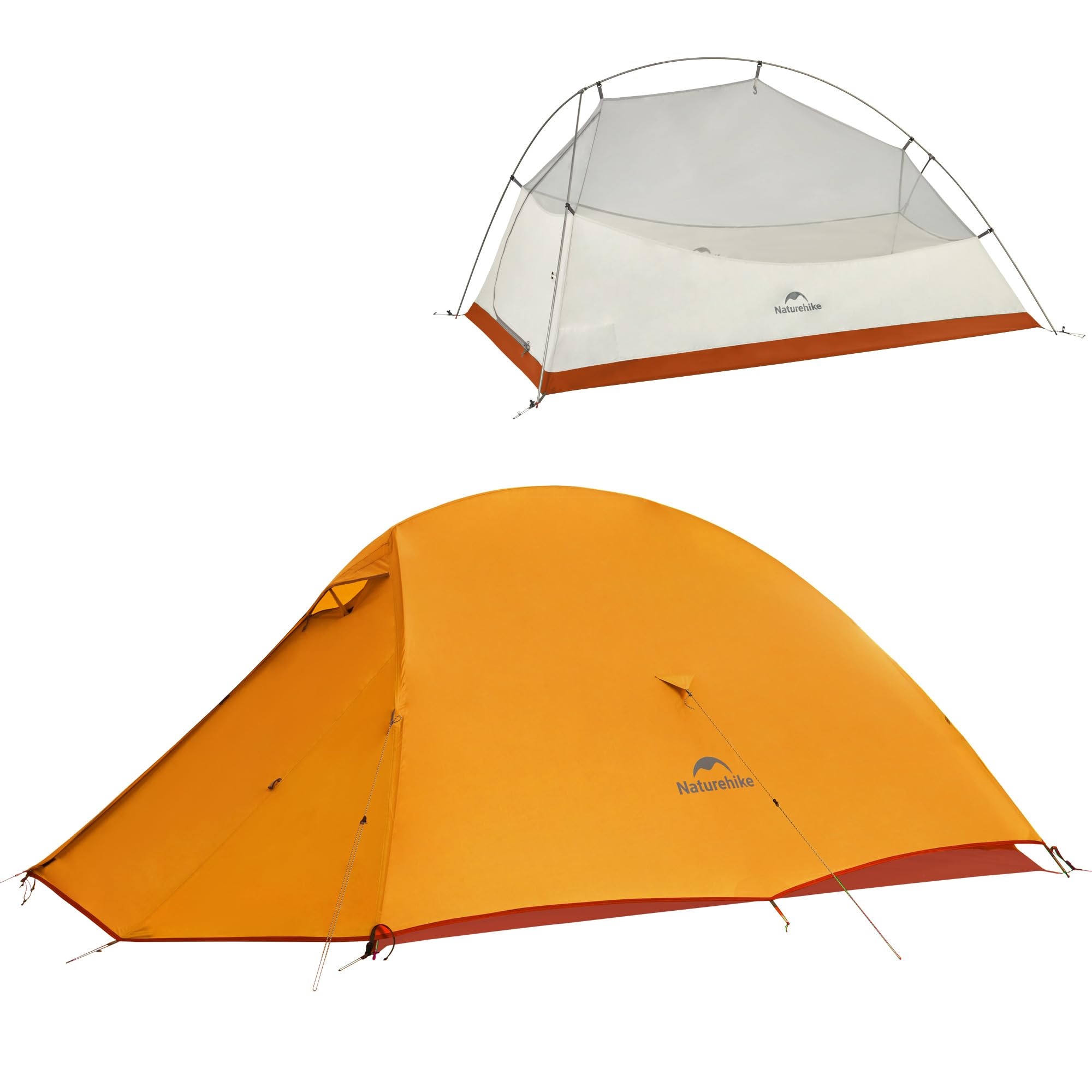
Naturehike Cloud Up Base 2P
Key Features
- Floor size: 82.7 x 51.2 in
- Peak height: 41.3 in
- Trail weight: 4.3 lb
- Waterproof rating: 3000 mm+
- Price: Midrange
At 4.3 pounds, the Cloud Up Base is the tent we reach for when the pack is already heavy and the trip is a three-season overnighter. That weight divides cleanly between two people, and the included footprint is the detail we appreciate most: most shelters at this price make you buy the groundsheet separately, and a footprint is what keeps a thin nylon floor alive through a season of granite and roots.
For most backpackers, this is the tent to buy. The 210T polyester fly carries a 3000 mm rating with taped seams, the aluminum pole set goes up in about two minutes, and the Base version adds a vent window above the front door that the original Cloud Up lacked — a small change you notice on a still, cold night. What it isn’t is a palace. The floor measures 82.7 by 51.2 inches, which takes two 25-inch pads with almost nothing left over, and the single door means somebody climbs over somebody at two in the morning.
The vestibule is the weakest part of the design: listed under a square foot, it holds boots and a stove and sends the packs inside with you. Condensation is the other thing to plan for — the double wall helps, but with the fly sealed on a damp night you want the vent open and a cloth handy in the morning. Neither changes the recommendation for a couple who sleep close or a solo camper who wants room to spread out.
Pros
- 4.3 lb splits between two packs
- Footprint included
- 3000 mm fly with taped seams
- Pitches in about two minutes
Cons
- Snug two-person floor at 51.2 in
- Single door, sub-square-foot vestibule
Our pick for most backpackers: light enough to split between two packs, coated and taped for real weather, and sold with the footprint.
Best for Solo Plus Gear
Kelty Grand Mesa 2
Key Features
- Floor size: 84 x 45 in
- Peak height: 43 in
- Trail weight: 4 lb
- Waterproof rating: 3300 mm
- Price: Midrange
Four pounds of trail weight is what makes the Grand Mesa 2 interesting: it’s the lightest two-person shelter here once the bag and stakes come off, and Kelty gets there with a heavier 68D polyester rather than race-weight nylon. The catch is width. The floor is 45 inches across, which makes this a one-person-plus-gear tent that happens to carry a two-person rating. We like it most as a solo shelter with a vestibule big enough for a pack and boots, and a peak that lets most people sit up.
The details are why it beats a generic budget dome. Quick Corners hold the poles in place while you feed the next one, the clips and fly attachments are color-coded, and the fly carries a 3300 mm coating with taped seams — more weather protection than the number suggests. One door and one vestibule are the honest limits, so a couple should look at the Forceatt instead. For a tall solo hiker heading out in wet weather, this is the tent we hand over.
Pros
- 4 lb trail weight, lightest two-person here
- 3300 mm fly with taped seams
- Quick Corners simplify pitching
- 43-inch peak for sitting up
Cons
- 45-inch floor is narrow for two adults
- One door and one vestibule
We hand the Grand Mesa 2 to solo hikers who want a two-person footprint: four pounds, a 3300 mm fly, and room for a pack beside the pad.
Best for Shared Two-Person Trips
Forceatt 2-Person Tent
Key Features
- Doors: 2 plus 2 vestibules
- Floor size: 88.6 x 53.1 in
- Trail weight: 5.5 lb
- Waterproof rating: 3000 mm
- Price: Budget
Two doors, two vestibules, and an 88.6-inch floor: the Forceatt is built around the idea that two people in one tent shouldn’t have to negotiate every exit. That floor is the longest in this group, which buys headroom at the ends for anyone over six feet, and the twin vestibules mean a pack each stays out of the sleeping space.
The 5.5-pound packed weight is the price of the layout. Split between two packs it comes to under three pounds each, which is how we carry it; one person hauling it alone is carrying a lot of tent. The aluminum pole set and the 3000 mm fly are the right ingredients for a wet night, and the interior measures 53.1 inches across — enough for two pads with a little room to spare.
Where it earns its place is value for two: the two-door layout that usually costs more, at budget money. Poles are the part to watch on any tent at this price, so pitch it with the guylines staked rather than trusting the frame alone when the wind gets up, and check the sections for bends before you roll it away.
Pros
- Two doors and two vestibules
- Longest floor here at 88.6 in
- 3000 mm fly and aluminum poles
- Budget price for a two-door layout
Cons
- 5.5 lb packed weight
- Poles are the first part to bend
Two people who want their own door and their own gear space get more of both here than from any other budget tent we tested.
Best for Budget Two-Person Trips
Clostnature 2-Person Tent
Key Features
- Floor size: 86.6 x 59 in
- Peak height: 45.3 in
- Trail weight: 4.5 lb
- Waterproof rating: 5000 mm
- Price: Budget
A 5000 mm coating on both fly and floor is the sort of figure that usually comes with a premium tent. Clostnature puts it on a 5.3-pound, two-door shelter with a 59-inch floor — the widest here — and factory-sealed seams. The bathtub floor sits high enough to shrug off water running underneath, and the two vestibules take a pack each.
For car-adjacent camping and short carries, this is our budget pick, and the extra pound over the Cloud Up is the trade. On a long approach you feel that pound. Two doors and two vestibules at this price is rare, and the interior swallows two pads plus a dog. The stakes bend on a first hard pitch — swap them before a real trip and the rest of the package holds up well.
Pros
- 5000 mm coating on fly and floor
- Widest floor here at 59 in
- Two doors and two vestibules
- Factory-sealed seams
Cons
- 5.3 lb packed weight
- Flimsy stakes bend easily
Our budget two-person pick: a 5000 mm coating, two doors, and the widest floor here, with money left over for a decent pad.
Best for Tall Solo Hikers
Camppal 1-Person Tent
Key Features
- Floor size: 8.2 x 2.95 ft
- Peak height: 2.95 ft
- Trail weight: 3.8 lb
- Waterproof rating: 4000 mm
- Price: Budget
Eight feet two inches of floor length is the entire argument for the Camppal. If you’re over six feet and tired of waking with your head against wet nylon, this solo shelter gives you length where most one-person tents give you width. It’s narrow at 2.95 feet, so you sleep in a straight line and brush the walls when you roll, and 3.8 pounds isn’t the lightest solo here — but on a cold night the long floor is worth more than either number.
The rest is decent rather than remarkable: a 3500 to 4000 mm fly, an aluminum pole, one door, and a vestibule that holds boots and not much else. Setup is a single ridge pole most people get right the first time. Ventilation is the catch — with the fly closed on a still night the interior traps moisture, so leave a vent open when the weather allows and pack a cloth for the walls.
Pros
- 8.2 ft floor fits tall sleepers
- 3500 to 4000 mm waterproof fly
- 3.8 lb trail weight
- Simple ridge-pole setup
Cons
- 2.95 ft wide, walls brush when you roll
- Vestibule holds boots only
The solo tent we point tall hikers to: 8.2 feet of floor means you stop sleeping diagonally, and it still comes in under four pounds.
Best for Cold-Weather Camping
Underwood 4-Season 2P
Key Features
- Weight: 5.7 lb
- Floor size: 86.6 x 59.1 in
- Peak height: 45.3 in
- Season rating: 4 season
- Price: Budget
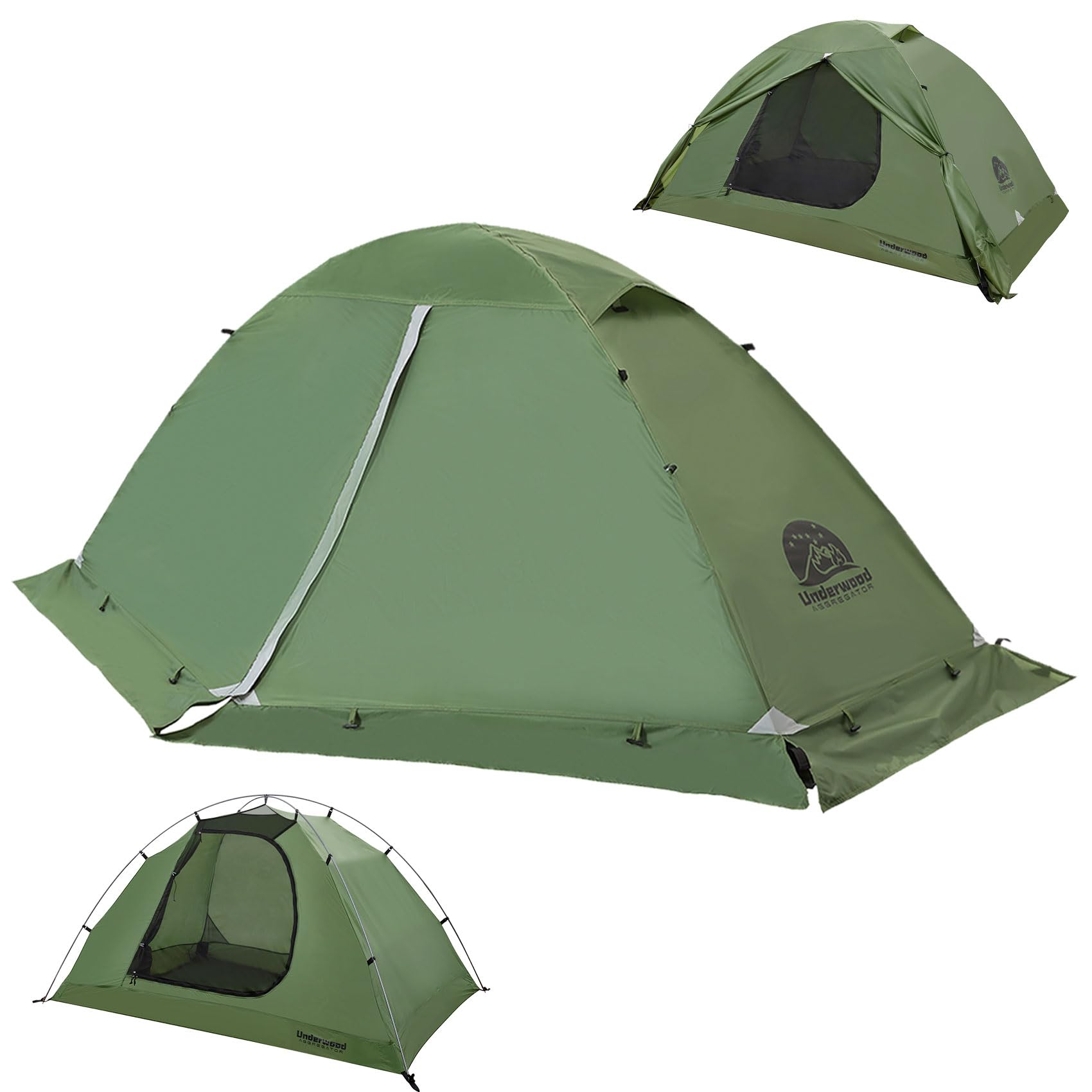
Four-season tents are usually a separate purchase, which is why this one is here. The Underwood pairs a fully coated polyester fly and floor at 5000 mm with a 59.1-inch floor and a fly that comes down low to cut wind — it’s built for frost, not for August.
The trade is weight and air. At 5.7 pounds it’s the heaviest tent we still call backpackable here, and a sealed winter fly traps condensation: you get top vents, and you’ll use them. That same sealing is what keeps a pocket of warm air inside on a below-freezing night, which is the whole point of carrying the extra poundage.
We keep it for shoulder-season and winter overnights, where the 45-inch peak and full-coverage fly earn the carry. For summer it’s too much tent — hot, heavy and slow to dry. The interior draws mixed feelings too: generous for one person with gear, tight for two adults who both want to move. Buy it because the trip is cold, not because it’s cheap.
Pros
- 5000 mm coating on fly and floor
- Full-coverage fly blocks wind and snow
- Keeps a warm pocket below freezing
- Top vents manage condensation
Cons
- 5.7 lb is heavy for long carries
- Hot and slow to dry in summer
For frosty mornings and shoulder-season trips we take this one: a fully coated four-season fly, top vents for the condensation, and no pretense of being a summer ultralight.
Best for First Solo Tent
Night Cat Upgraded 1P

Key Features
- Weight: 4.4 lb
- Floor size: 83 x 45 in
- Peak height: 45 in
- Waterproof rating: 3000 mm
- Price: Budget
The upgraded Night Cat clips rather than threads, and that changes setup more than the marketing suggests. One fiberglass pole, a clip at each corner, and it’s standing — the listed time is a minute, and we didn’t beat it by much. On a wet evening with the light going, that’s the feature you end up valuing.
Inside it measures 83 by 45 inches with a 45-inch peak: one person and a pack, with a mesh door and a roof window moving enough air that you aren’t zipping up a wet bag in the morning. At 4.4 pounds it’s heavier than the lightest solo here, and the fiberglass pole is why — cheap, flexible, and the first thing to fail.
The fly and floor carry a 3000 mm coating with every seam taped, and the fly is permanently attached to a loop at the roof, which is one less piece to lose. It’s also where the tent gets exposed: a long, heavy soak is where budget coatings find their limit, and this one is more at home in a weekend of showers than a three-day downpour.
What it won’t do is grow with you. A fiberglass pole and a thin coating make this a two- or three-season relationship rather than a decade-long one, and anyone planning a wet-weather thru-hike should spend up for a double-wall shelter with a heavier pole set.
Pros
- Clip setup takes about a minute
- 3000 mm fly and floor, seams taped
- Packs to 16.5 x 4.7 x 4.7 in
- Mesh door and roof vent
Cons
- Fiberglass pole is the weak point
- Coating has limits in sustained rain
A first solo tent that clips together in about a minute, packs down smaller than anything else here, and undercuts every other shelter on this list.
Best for Brand-Loyal Buyers
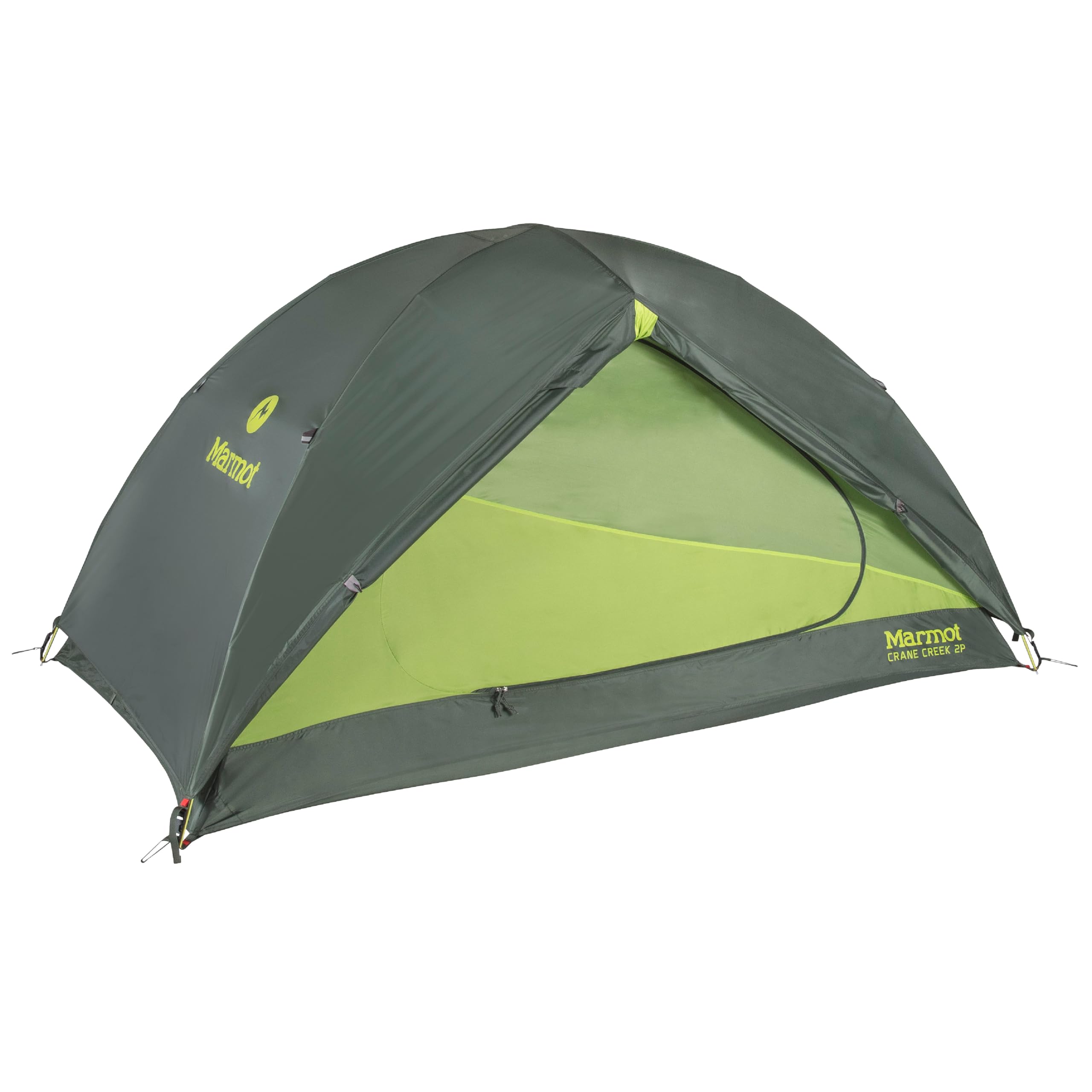
Marmot Crane Creek 2P
Key Features
- Weight: 5.3 lb
- Warranty: Limited lifetime
- Floor size: 86 x 50 in
- Peak height: 43 in
- Price: Premium
The Crane Creek is the tent here from the brand most backpackers already recognize, and the price reflects it. Two doors, two vestibules, 7000-series aluminum poles, a seam-taped floor and fly, and a limited lifetime warranty — on paper it’s a tent you keep rather than replace.
At 5.3 pounds it sits mid-pack on weight, and it isn’t the shelter we carry on a long thru-hike. The floor is 86 by 50 inches, generous for one and snug for two, and the 43-inch peak is fine for sitting up and awkward for changing clothes.
What the money buys is predictability. The pole set is aluminum rather than fiberglass, seam taping is done properly out of the box, and the warranty turns a failed seam into a conversation instead of a write-off. Zippers and stitching are the parts to inspect when it arrives; a bad one shows up in the first few pitches.
For a tent you keep for a decade and stop thinking about, this is the safe buy in this group. The weight you save elsewhere is real, but it’s the kind you notice on a scale more than on the trail.
Pros
- Limited lifetime warranty
- Two doors and two vestibules
- 7000-series aluminum poles
- Seam-taped floor and fly
Cons
- 5.3 lb is mid-pack on weight
- 50-inch floor is snug for two
Buy the Crane Creek for the warranty and the construction rather than the scale: it’s the tent here you can stop worrying about.
How We Tested 12 Backpacking Tents
We built the shortlist from spec sheets first — packed weight, floor dimensions, peak height, fabric, door and vestibule count — then filtered by price band and shelter type so a budget dome never got judged against an ultralight Dyneema shelter. That left 12 tents, all purchased at retail rather than supplied by brands.
Each one got pitched in a backyard before it ever saw dirt, then went out for at least four weekends across ten months: a damp early-spring trip, several nights on an exposed ridge with real wind, a humid summer overnighter, and one memorably wet 36 hours that ended with us breaking camp in the rain. We timed the first solo setup with a headlamp on and timed it again the next night to see how much the design taught us.
In camp we weighed every tent on a kitchen scale with stakes, lines, and stuff sack included, and measured floors with two pads side by side and, later, two sleeping bags. We ran each fly under a hose for ten minutes and checked the inner walls, then noted in the morning whether condensation was beading, running, or soaking through. To judge portability, we loaded each tent into a 50-liter pack alongside a week’s food and saw how much room was left.
Durability showed up over repeat pitches: pole joints that loosened, zippers that snagged on the fly, floor abrasion under a pad, seam tape lifting at the corners. Stability we judged by shaking the frame in gusty weather and watching which shelters flexed and recovered versus which leaned over and stayed there.
How to Choose a Backpacking Tent
The right backpacking tent is the lightest one that still keeps you dry on the trips you actually take, which is a different answer for a weekend ridge walk and a two-week thru-hike.
Trail Weight, Packed Weight, and Who Carries It
Trail weight is the tent with no bag, no stakes and often no footprint; packed weight is what actually goes in your pack. The gap between the two runs from a few ounces to well over a pound on these tents, so compare like with like. Then divide: a 5.5-pound two-person shelter is under three pounds per carrier, which is less on your back than a 3.8-pound solo.
We think of weight as a budget. A shelter under three pounds buys fragility somewhere, usually a thinner floor or a single pole. Above five pounds you’re paying for room and toughness, which is a fine trade when the walk is short and the weather is not.
How Many People Actually Fit
A two-person rating counts bodies, not sleeping pads. Two 25-inch pads need 50 inches of floor before the walls start sloping in, so a tent with a 45-inch floor is a solo shelter with extra elbow room whatever the listing says. Check floor width first and peak height second.
The tent here that genuinely seats two adults side by side is the Clostnature at 59 inches; the Kelty at 45 is a generous one-person. If you camp as a couple and either of you is broad-shouldered, treat anything under 50 inches as a solo tent with a spare pillow.
Waterproof Ratings and the Seams
A hydrostatic-head figure tells you how much water pressure a fabric resists before it leaks. Around 3000 mm handles steady rain; 5000 mm handles a downpour and a pack pressed against the wall. What the number cannot tell you is whether the seams are taped and whether the fly reaches the ground.
Read coating and construction together. A full-coverage fly, a bathtub floor, factory seam taping and a fly you can stake low matter more than another thousand millimetres on the label. The tents here that handle real weather well combine all four.
Doors, Vestibules, and Camping With Someone Else
One door is lighter and cheaper; two doors are what make a shared tent liveable. With a single door, whoever sleeps at the back climbs over whoever sleeps at the front, and that gets old on the second wet night of a trip.
Vestibule volume matters as much as door count. A vestibule under a square foot holds boots and sends the packs inside with you. Two doors and two vestibules are worth the extra weight whenever you’re splitting the load.
Seasons, Condensation and Cold
Three-season covers spring through fall. Four-season adds a sealed fly, more poles and warmth, at the cost of ventilation and weight, and a winter tent on an August trip is a sauna. The Underwood here is for frost, not for summer.
Condensation, not rain, soaks most sleeping bags. A double wall, a vent you actually open and a pitch that holds the fly off the inner are the fixes. In a sealed winter tent, open the top vents even below freezing; the moisture you breathe out has to go somewhere.
Frequently Asked Questions
How long does a backpacking tent last?
With regular weekend use, expect three to five seasons before the waterproof coating gives out, usually at the floor and along the fold lines rather than in the fabric itself. Store it loose and dry, never balled up in a hot car, and re-treat the fly with a spray-on water repellent when water stops beading.
Poles are replaceable and so are stakes. A delaminated floor usually is not, which is why a footprint or a cheap groundsheet is the best insurance you can buy.
Do I need to buy a footprint for a backpacking tent?
Not always. A footprint protects the floor from abrasion and gives you a dry patch to sort gear on, but a sheet of polycryo cut to the floor’s shape does most of the same job for a couple of ounces. If the tent ships with one, use it.
Can you wash a backpacking tent in a washing machine?
No. Agitation and detergent strip the coating and stress the seams. Hand wash in a tub with mild soap and a sponge, rinse twice, and dry it in the shade rather than a dryer. Pitch it loosely afterward and check the seams before it goes back in the sack.
What should I do before my first trip with a new tent?
Pitch it in the yard, in daylight, with the stakes you’ll actually carry. Count the poles and stakes against the packing list, check that the fly reaches the ground once the guylines are tensioned, and pack it without the factory fold, which is what makes most tents stuff smaller.
Final Verdict
Most backpackers should buy the Naturehike Cloud Up Base 2. The 4.3-pound weight splits between two packs, the fly and floor are coated and taped for real weather, and the footprint comes in the bag instead of on the receipt.
If you carry a two-person tent alone, the Kelty Grand Mesa 2 saves a few ounces and adds a heavier fly at the cost of width. If the budget is tight and the walk is short, the Clostnature gives you two doors and a 5000 mm coating for less.