This post contains affiliate links. We may earn a small commission when you buy through our links — at no extra cost to you.
A tent is the one piece of backpacking gear that can ruin a trip at 2 a.m. A thin sleeping pad makes you sore; a tent that sags, leaks, or folds in a gust has you bailing out in the dark. A good one turns a long day into a night you actually recover from, without adding pounds you’ll feel on the climb tomorrow. The trouble is that the things keeping you dry and steady — a real rain fly, stout poles, ventilation that isn’t an afterthought — are the same things that add weight and bulk to your pack.
I’ve slept in enough leaky tents to be fussy about bathtub floors, taped seams, and a fly that pitches taut instead of flapping. Over the past six months, my team and I have slept in eight backpacking tents, from two-person ultralights to roomier three-season models, on weekend trips and through a couple of storms that turned out to be useful. The mistake I see most is buying for the trip you imagine rather than the trips you actually take — including a two-person tent that only fits two people if neither one moves. The picks below are the ones we kept reaching for.




Best for Most Backpackers
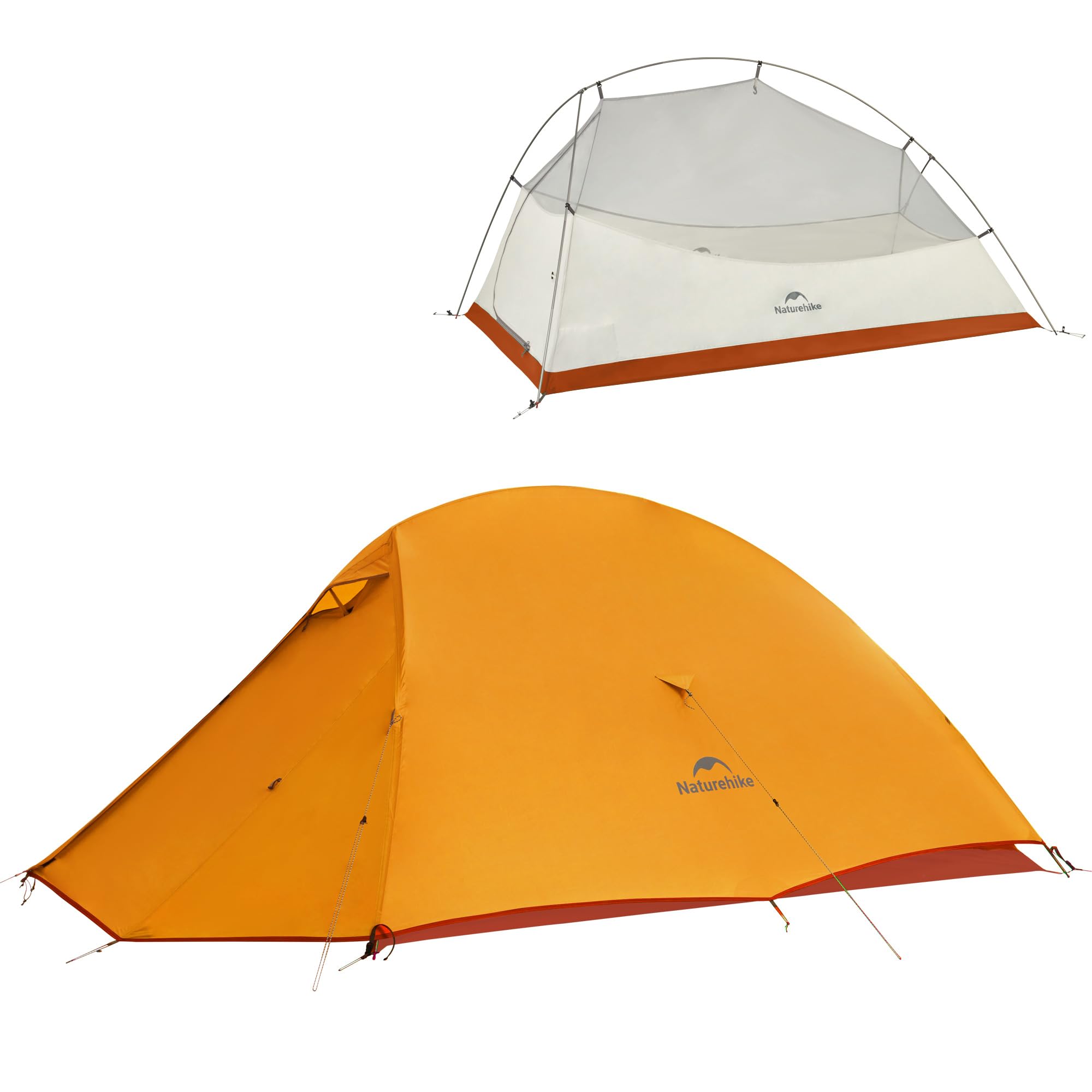
Naturehike Cloud Up 2
Key Features
- Floor: 82.7 x 51.2 in
- Footprint: Included
- Packed weight: 4.25 lb
- Waterproofing: 3000 mm
- Price: Midrange
One aluminum pole set, 14 stakes, five guylines and a footprint come in the bag, and the tent itself lands around four and a quarter pounds before you add the footprint’s half pound or so. That last item is what we keep coming back to. A footprint is the thing standing between a lightweight nylon floor and gravel, roots and the grit of a hardened campsite, and here it comes in the bag rather than as a separate purchase.
Pitching is a one-person job in the two-minute range: assemble the pole, clip the body on, throw the fly, stake the corners. The fly covers the body properly instead of floating above it, the coating is rated at 3000 mm with taped seams behind it, and this version adds a vent window above the door to move air on still nights. It’s the tent we point to when someone wants one shelter that handles three seasons without a learning curve.
Fifty-one inches of floor is where the arithmetic gets honest. Two 20-inch pads fit with an inch or two to spare, and everything else — boots, packs, cooking kit — lives out in the vestibule, so we treat this as a generous solo tent that can take a partner for a night or two. Two adults on a long trip should look at the Clostnature’s 59-inch floor instead.
Pros
- Footprint comes in the bag
- Full fly coverage with taped seams
- One person can pitch it in about two minutes
- Light enough to carry without thinking about it
Cons
- One door means climbing over your partner
The tent we recommend first: light enough to carry without complaint, sealed well enough for steady rain, and the footprint comes in the bag.
Best for Tight Budgets
BISINNA 2-Person Tent
Key Features
- Doors: 2
- Floor: 82.7 x 55 in
- Packed weight: 4.7 lb
- Waterproofing: 2000 mm
- Price: Budget
Two thousand millimeters is the lowest waterproof rating in this group, and on a budget tent the fly is usually where the money ran out. So coverage was the first thing we looked at: the fly runs over the whole body rather than sitting on top as a cap, the seams are taped, and both doors zip underneath it. A full fly and sealed seams buy more protection than the coating number alone suggests, and that combination is the reason this tent punches above its rating.
The layout is the surprise at this end of the range. Two D-shaped doors with dual zippers, two vestibules, aluminum poles and 10 alloy pegs — the same pieces the expensive tents here bring, and two doors matter more than any single specification once you’re sharing a shelter.
The mesh runs high on both walls, so with the fly off you get a cross breeze and a view; on a warm night that’s the difference between sleeping and lying there. Where the budget shows is on the scale: 4.7 pounds packed is unremarkable split between two packs and noticeable if you’re carrying it alone. In wind-driven rain the fly’s coverage is the weak point — pitch the low end into the weather, guy it out, and keep your sleeping bag inside the floor line.
Pros
- Two doors and two vestibules at the budget end
- Full-coverage fly with taped seams
- Aluminum poles and alloy pegs included
- Good cross ventilation with the fly off
Cons
- 4.7 pounds packed
Two doors, two vestibules and a full fly for the smallest outlay here — the tent we point first-time backpackers toward.
Best for Two Plus Gear
Clostnature 2-Person Tent
Key Features
- Doors: 2
- Floor: 86.6 x 59 in
- Packed weight: 5.29 lb
- Waterproofing: 5000 mm
- Price: Budget
Fifty-nine inches across is the widest floor in this group, and it isn’t a vanity measurement: two full-size pads fit with room at the edges, a tall sleeper can stretch out along the 86.6-inch length, and there’s still floor left for a pack at your feet. If your idea of a two-person tent involves two adults and their gear, start here.
The shell is built for wet country. A 5000 mm coating on the fly, floor and bathtub is the highest rating here, the seams are factory-sealed, and the fly is cut to cover both doors and both vestibules rather than stopping short of them. Two aluminum poles, 14 stakes, a three-minute pitch. On a damp trip that margin is worth more than an ounce count.
The weight is the trade. At 5.29 pounds packed, or 4.52 pounds at minimum trail weight, it’s the second heaviest two-person tent here and the one to split between two packs rather than carry alone. Poles are the part to watch in wind: back off the tension, use the guylines, and a bent section is less likely to end the night.
Pros
- Widest floor here at 59 inches
- 5000 mm coating, the highest in this group
- Two doors and two vestibules
- Simple three-minute pitch with two aluminum poles
Cons
- Over five pounds packed
- Pole sections can bend under wind load
The tent for two people who actually want to sleep next to each other, with the heaviest weather protection here and the weight to match.
Best for Ultralight Trips
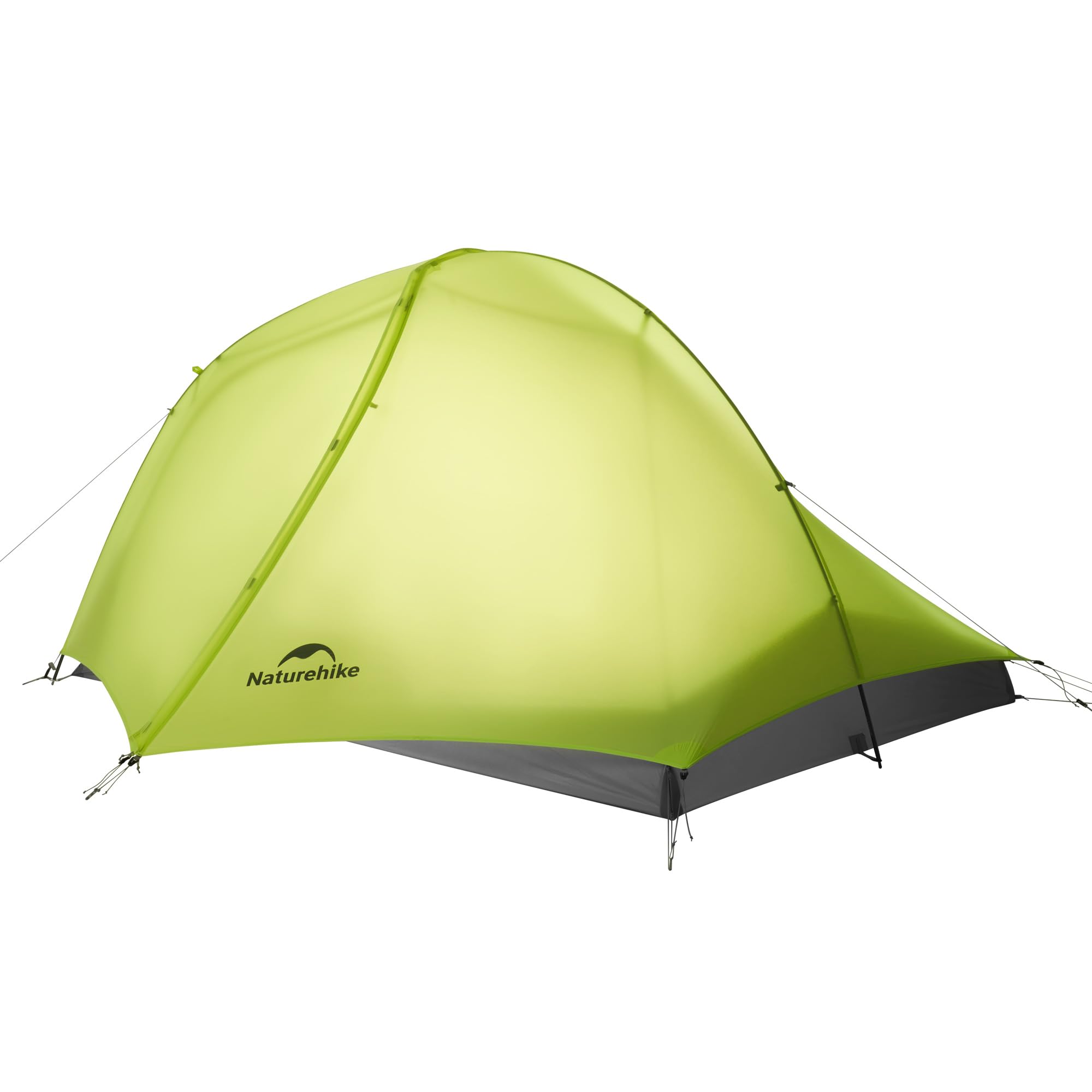
Naturehike Star Trail 2
Key Features
- Floor: 82.7 x 51.2 in
- Footprint: Included
- Packed weight: 2.76 lb
- Waterproofing: 1500 mm fly / 3000 mm floor
- Price: Midrange
Two point seven six pounds, including the footprint. That’s the lightest two-person shelter in this group, and weight like that changes decisions — it’s the tent that comes on the trip rather than staying in the car because the pack already feels heavy.
Getting there costs fabric. The fly is 10-denier nylon with a 1500 mm coating, the thinnest and least waterproof shell here, while the 20-denier floor is rated to 3000 mm and the included footprint adds a second layer underneath. The inner is full mesh, there are two doors, and three guylines and 10 stakes come in the bag. Everything about it is pared back to the gram.
So treat it accordingly: clear the pitch site of sharp sticks and stones, don’t drag it across granite, and expect to replace it sooner than a 68-denier polyester tent. The ends want staking even though the frame is freestanding, which is fine on soil and awkward on a platform. For a backpacker counting ounces on a long three-season route, that’s a trade worth making.
Pros
- 2.76 pounds including the footprint
- Two doors and a full mesh inner
- Packs down to 17.7 by 5.1 inches
Cons
- 1500 mm fly is the thinnest here
- 10-denier fabric needs a clean pitch site
The lightest two-person shelter here, and the one to buy if you count every ounce and treat your gear gently.
Best for Cold-Weather Camping
OneTigris Stella 2P
Key Features
- Floor: 82.7 x 49.2 in
- Seasons: 4 season
- Packed weight: 4.8 lb
- Waterproofing: 3000 mm
- Price: Premium
Snow, hard frost and nights below freezing change what a tent has to do: block wind, hold a little warmth, and keep mesh to a minimum without turning the inside into a puddle. The Stella is the four-season two-person option here, and it’s built for exactly those nights.
The outer is 20-denier nylon with a silicone coating rated to 3000 mm, the floor is a heavier 40-denier, and the inner is mesh for when you want air. The blackout outer is removable, which gives you a warmer double wall in winter and a lighter, airier shelter once the snow is gone. Packed, it’s a long thin bundle at about 21.7 by 6.3 inches — the shape that straps along a frame or a handlebar instead of loading the middle of your pack.
What you give up is space and summer comfort. The vestibule is small enough that a big pack has to come inside or live under the fly edge, and once everything is sealed against the cold, airflow is limited. Neither matters much in February; both matter in July.
Pros
- Holds warmth below freezing
- Removable blackout outer for two seasons of use
- Long thin pack straps to a frame or bars
Cons
- Vestibule barely fits a pack
- 4.8 pounds is a lot to carry in summer
The cold-weather tent of this group: if most of your nights land near freezing, this is the shelter that makes them comfortable.
Best for Solo with Gear
Kelty Grand Mesa 2P
Key Features
- Doors: 1
- Floor: 84 x 45 in
- Packed weight: 4.8 lb
- Waterproofing: 3300 mm
- Price: Midrange
The poles stay put in their corners while you clip the body on, which sounds like a small convenience until you’re pitching alone in wind at dusk. Kelty’s Quick Corners, plus colour-coded clips and fly attachments, are the reason this tent goes up in about the time it takes to unroll a pad — one person, no argument with the frame.
The rest is honest three-season kit: a 3300 mm fly and seam-taped floor, aluminum poles and stakes, a freestanding frame, and a limited lifetime warranty behind it. There’s one door with a vestibule, and the fly is cut to shed weather off the door rather than just covering mesh.
Forty-five inches of floor is the narrowest two-person measurement here, and it decides the job. This is a solo tent with room for a pack, a helmet and a dog, or a snug night for two people who have done this before. At 4.8 pounds packed and four pounds at minimum trail weight, it isn’t the tent for a long thru-hike — but for weekend miles and a first shelter, the build is the argument.
Pros
- Quick Corners make solo pitching easy
- 3300 mm fly with a seam-taped floor
- Freestanding frame with a limited lifetime warranty
Cons
- Only one door and one vestibule
- 4.8 pounds packed
Buy it as a roomy solo shelter that pitches faster than anything else here, and treat the second sleeping spot as a bonus.
Best for Short Approaches
Forceatt 2-Person Tent

Key Features
- Doors: 2
- Floor: 88.6 x 53.1 in
- Packed weight: 5.5 lb
- Waterproofing: 3000 mm
- Price: Budget
Two doors, two vestibules and a 3000 mm fly put the Forceatt in the same conversation as tents well above it, and the four-season label is the part to read carefully. Between the mesh body and those two large door openings, this behaves like a roomy three-season tent that handles wind and rain well — not a snow-load shelter.
The floor is 88.6 by 53.1 inches, the longest two-person floor here, and it swallows a double air mattress with room for gear at the sides. Two vestibules mean wet packs, boots and a stove stay outside the sleeping area, and the 7001 aluminum poles with reflective guylines are a genuine step up from fiberglass.
Poles are also where the risk sits. A bent or separated section on an early trip is the failure that ends a night out, so pitch with the guylines out and don’t force the frame through a tight sleeve in cold weather.
At 5.5 pounds it’s the heaviest tent here, which rules it out for long approaches and makes it a strong choice for the trips where the pack comes off quickly — a walk-in base camp, a bike overnighter, a float trip. Buy it for space and weather protection, not for the carry.
Pros
- Longest two-person floor here at 88.6 inches
- Two doors and two vestibules
- 3000 mm fly with a welded floor
- 7001 aluminum poles and reflective guylines
Cons
- Heaviest tent in this group at 5.5 pounds
- Pole sections can bend under load
A roomy, weather-ready two-person tent for trips where the pack comes off after a mile or two, not for long carries.
Best for Tall Solo Hikers
camppal 1-Person Tent

Key Features
- Floor: 98.4 x 35.4 in
- Seasons: 4 season
- Packed weight: 2.7 lb
- Waterproofing: 3500-4000 mm
- Price: Budget
Eight feet two inches of floor is more than any other solo shelter here, and it’s the first number a tall backpacker should look at. At six foot two you get your head and feet clear of the walls, with a strip of floor left at the end for boots and a pack liner.
The rest of the package leans winter. There’s a 3500 to 4000 mm coating on the outer, seam taping on the zipper and at all four corners, one aluminum ridge pole, and a pitch that runs about three minutes. At 2.7 pounds it’s the lightest shelter on this list, and it disappears into a pack that’s already full.
The shape is the compromise. An A-frame with a single pole leans on its stakes, so a platform pitch means improvising tie-offs, and the walls slope in close to your shoulders. You notice the peak height every time you reach for something at the foot end.
For a tall solo hiker, a hunter, or anyone who wants a four-season shell that takes up almost no room, that’s a fair exchange. For two people, or for anyone who wants to sit up and read through a long storm, it isn’t.
Pros
- 8.2-foot floor suits tall sleepers
- 3500-4000 mm coating with taped seams
- 2.7 pounds packed
Cons
- Peak is under three feet
- Condensation with the fly closed
The solo shelter to buy if you’re tall and want a four-season shell, as long as you accept a low ceiling and a narrow floor.
How We Tested the Best Backpacking Tents
We started with the tents that keep showing up in thru-hiker forums and on gear shop shelves, then narrowed by the numbers that decide whether a shelter earns its place in a pack: packed weight, floor dimensions, peak height, and price per person. Anything that pushed past roughly five pounds for a two-person model got cut unless it was clearly a palace. That left eight tents, which we took out over six months, from a cold, wet spring through the first brisk nights of fall.
Setup was timed solo with the clock running from stuff sack to fully staked, and we paid attention to which tents went up without wrestling — especially on packed dirt and root-covered slopes. We weighed each one on a kitchen scale with and without its footprint, then stuffed it back into its sack to see how much room it really ate in a 40-liter pack. Then we carried them, on weekend trips and short overnights, and noted which ones we dreaded hoisting onto our backs by the second mile.
Rain was the real test. We hosed each fly for ten minutes and checked seams, floor corners, and the inside of the bathtub floor for dampness, and we slept through several storms to see whether water came in from the ground or the air. At dawn we ran a hand along the inner walls to judge condensation, since a tent that traps moisture is wet even when it doesn’t leak. We shook each one hard at the poles and pushed on the windward side to see how it held, watched stake loops and zipper pulls for wear after repeated packing, and measured how much usable floor was left once two pads and two packs were inside. A couple of the lightest models didn’t hold up on a breezy night, and that’s why they aren’t below.
How to Choose a Backpacking Tent
The tent you’ll love is the one you forget you’re carrying, so start with packed weight and then spend whatever that buys on the things you can’t add later: floor space, a fly that covers, and poles that hold.
Weight Is a Range, Not a Number
Every listing quotes at least two weights and they don’t measure the same thing. Minimum trail weight usually means body, fly and poles with no stakes, no footprint and no stuff sack; the packed weight is what actually goes on your back, and the gap runs from a few ounces to well over a pound. Compare packed weights, then work out whether you’re carrying the whole thing or splitting poles and fly between two packs.
The spread in this group is real: our lightest two-person shelter is 2.76 pounds with its footprint, our heaviest 5.5. That difference is roughly a day of food. Decide which matters more to you before you fall for a floor plan.
Two-Person Is a Range From Snug to Roomy
Floor widths here run from 45 to 59 inches, and that number decides far more about a trip than the headline capacity. Two standard 20-inch pads need 40 inches side by side before anyone rolls over, and pads slide during the night. A 45-inch floor is one person plus a pack, or two very friendly sleepers. Fifty-five inches and up takes two adults with a little gear. Fifty-nine takes two and a dog.
Measure your pads and add four inches. Treat every advertised capacity as a maximum rather than a target.
Count the Doors Before You Count the Ounces
One door saves weight and material; two doors save the trip. With a single door, whoever sleeps at the back climbs over whoever sleeps at the front at 3 a.m., and both of you get a face full of fly if someone needs out in a hurry. Two doors also mean two vestibules, which is where wet boots, packs and a stove live instead of on your sleeping bag.
For solo trips one door is fine. For two adults on a multi-night trip, the second door earns its ounces back on the first wet night.
Waterproofing Numbers Only Tell You Half the Story
A 3000 mm coating is a sensible three-season standard, and the tents here run from 1500 mm to 5000 mm. The figure describes the fly fabric, not the shelter: coverage, taped seams, a floor that curls up at the edges, and a fly cut to reach down the walls all do more work than a bigger number. A generous 1500 mm fly keeps you drier than a 4000 mm cap that leaves the doors exposed.
Read the shape first and the rating second, then check whether the fly covers the body or just sits on top of it.
Poles and Pitching Are What Fail First
Fiberglass poles are the budget tell, and a splintered pole ends a night out — worse, it can end a trip. Aluminum costs more and survives more. Beyond material, watch how the tent goes up: colour-coded clips, poles that stay in their corners, and a frame one person can raise in wind matter more on a real trip than any claimed pitch time.
Carry a pole repair sleeve and two spare stakes. They weigh almost nothing and turn a broken pole into a bad night rather than a rescue.
Frequently Asked Questions
Do I need to buy a footprint for a backpacking tent?
Not always, but it’s the cheapest durability you can add. A footprint takes the abrasion from gravel, roots and grit instead of the tent floor, and it puts a layer between you and ground moisture. Two tents here include one — the Cloud Up 2 and the Star Trail — and for the rest a cut-down sheet of heavy plastic or Tyvek does the same job for a few ounces.
Skip it only if you always pitch on grass or forest duff. On gravel, rock or a hardened campsite pad, use one.
Can I use a three-season tent in winter?
Not for snow. A three-season tent sheds rain and wind, but wet snow flattens the poles and the mesh body holds no warmth. If your trips run into hard frost and snowfall, choose a four-season shelter like the OneTigris Stella and accept the condensation and extra weight.
If you’re only stretching into late autumn, a three-season tent plus a warmer sleeping pad is the better spend.
Can a backpacking tent be pitched on a wooden platform or hard ground?
Most tents here stand up without stakes, but the fly still needs tension and a platform gives you nothing to drive a peg into. Tie guylines to the platform edge, a picnic table leg or your own pack. The camppal is the one to avoid on a platform: its A-frame leans on its stakes. The Star Trail also wants its ends staked even though the frame is freestanding.
How do I know when a tent needs re-waterproofing?
Spray the fly with water and watch. If it beads and rolls, the coating is sound; if the fabric darkens and wets out, or you feel a mist come through the wall, it’s time. Clean with mild soap and a soft brush, dry it out of direct sun, then apply a spray-on silicone or polyurethane treatment.
Store it loose and dry. A tent packed damp for a season grows mildew that no coating will fix.
Final Verdict
The Naturehike Cloud Up 2 is the tent we point most backpackers to. It carries light, pitches in a couple of minutes, comes with its footprint already in the bag, and its 3000 mm fly and taped seams handle the weather a three-season trip actually meets.
If you count grams, the Star Trail saves about a pound and a half and asks you to baby 10-denier fabric for it. If the budget is the binding constraint, the BISINNA gives you two doors and a full fly and asks you to carry 4.7 pounds. Buy for the trip you take most often, not the one you’re dreaming about.