This post contains affiliate links. We may earn a small commission when you buy through our links — at no extra cost to you.
Every backpacking tent is a negotiation between weight, room, and price, and you rarely get all three. Shave half a pound and the cost climbs or the walls start pressing in on your sleeping bag. What a good two-person shelter fixes is simpler than a spec sheet makes it sound: it gives you a place to sleep you don’t dread carrying past mile six or crawling into at 2 a.m. when the fly starts flapping.
Manufacturers rate capacity generously. A "two-person" tent often means two pads wall to wall and nowhere for a pack, and "lightweight" sometimes means a fly that sags once it’s wet. Over nine months with 10 of these tents — trekking-pole shelters, semi-freestanding domes, a couple of burlier three-season models — the ones worth carrying got the small things right: a floor that fits two real pads, poles that go up without a fight at dusk, and a fly that stays taut. Just know that packed size and trail weight are two different numbers, and the floor is smaller than the diagram suggests. The picks below are the ones I’d hand to a friend.



Best for Two-Door Backpacking
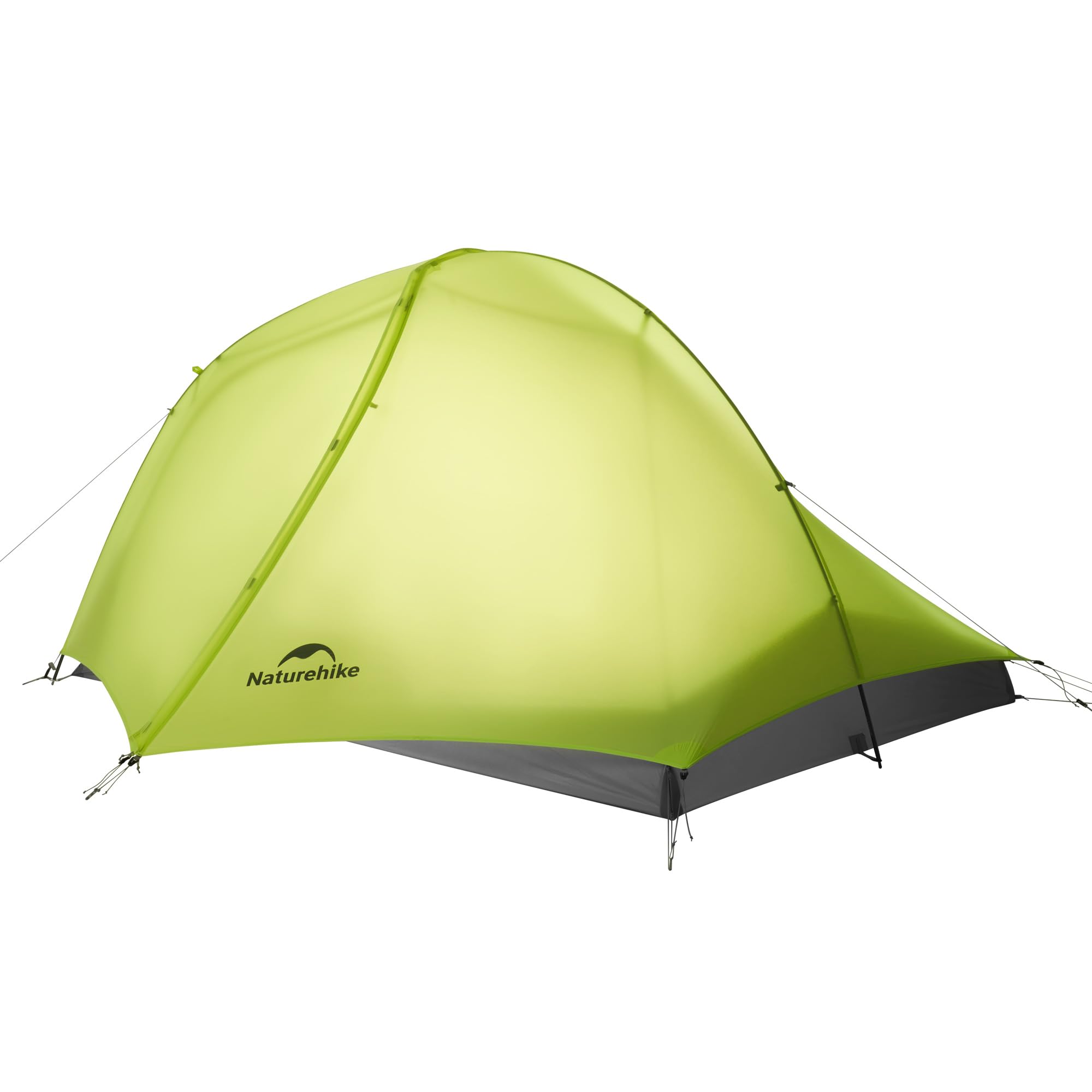
Naturehike Mongar 2
Key Features
- Floor size: 82.7 x 53.2 in
- Packed weight: 5.3 lb
- Waterproof rating: 3000 mm fly and floor
- Doors / vestibules: 2 / 2
- Price: Midrange
Two doors, two vestibules and 3000 mm waterproofing on both the fly and the floor is the specification budget tents promise and fumble. The Naturehike Mongar 2 is the tent in this group that actually delivers it, at a mid-range price rather than a premium one, which is why it is the tent we point most people toward when they ask what to buy for two.
What two doors buy you is quieter than it sounds on paper. Nobody climbs over anybody at two in the morning, each person gets a porch for boots and a pack, and wet shells never come through the sleeping space. The vestibules add up to about 19 square feet between them, enough for two packs and a pair of boots out of the rain. The floor is 82.7 by 53.2 inches: honest two-person width for two regular pads, tight if you both sleep on wide ones.
The whole set, footprint included, is listed at 5.3 pounds, which is mid-pack here rather than ultralight. Split between two packs that is roughly two and a half pounds each; on a long thru-hike you will feel it, and the Star Trail is the better answer there. For weekend trips and moderate mileage we think the trade is worth making, because the two doors and the full-coverage fly are what you notice every single night.
Setup is a plain clip-and-pole job on aluminum poles, and the stuff sack runs 19.7 inches long, so it packs along the bottom of a pack rather than into a side pocket. The floor is the part to watch over a few seasons, and the included footprint is the reason it stays a small problem rather than a hole you notice on a wet night.
Pros
- Two doors and two vestibules for gear
- 3000 mm coating on fly and floor
- Footprint included in the box
- 53-inch floor fits two regular pads
Cons
- 5.3 lb is heavy for long-distance backpacking
- Floor fabric is the first wear point
We recommend the Mongar 2 to anyone who wants two doors, two vestibules and 3000 mm waterproofing without paying premium money; it is the most complete two-person package here.
Best for Cheap Two-Door Shelter
Clostnature 2-Person
Key Features
- Floor size: 86.6 x 59 in
- Packed weight: 5.29 lb
- Waterproof rating: PU 5000 mm
- Doors / vestibules: 2 / 2
- Price: Budget
Fifty-nine inches across is the number that sets the Clostnature apart from everything else here. Most two-person tents in this group give you 50 to 55 inches of floor; this one gives you 59, which is the difference between two wide pads squeezed wall to wall and two wide pads with somewhere to put a water bottle.
The second door and vestibule are not an upgrade you pay extra for either. Two entry points and two porches mean wet jackets and packs stay out of the sleeping area, a layout that usually appears further up the price ladder. Waterproofing is genuinely serious for a budget tent: PU 5000 mm on the fly, floor and bathtub, with factory-sealed seams. Setup is a two-pole clip job that one person can manage in minutes, and the poles are aluminum rather than fiberglass.
Two catches. It ships at 5.29 pounds, or 4.52 at minimum trail weight, so it is a short-carry backpacking tent or a roomy car-camp shelter rather than something for a long traverse. And the poles are the weak point: a snapped pole under load is the failure to plan around, so pack a repair sleeve, stake the guylines out before the wind builds, and do not force a bent section back into shape. For a first backpacking tent, a festival, or two people who want space and do not mind carrying it, this is a lot of shelter for the money.
Pros
- 59-inch floor, the widest here
- PU 5000 mm fly and floor
- Two doors and vestibules at budget money
- Quick three-minute setup
Cons
- 5.29 lb is a short-carry weight
- Poles can snap under load
We recommend the Clostnature for budget buyers who need real room for two: the widest floor in this group, two doors, and waterproofing well beyond its price.
Best for Ultralight Trips
Naturehike Star Trail 2
Key Features
- Floor size: 82.7 x 51.2 in
- Packed weight: 2.76 lb
- Waterproof rating: 1500 mm fly, 3000 mm floor
- Doors / vestibules: 2 / 2
- Price: Midrange
At 2.76 pounds, the Star Trail is the only tent here you can genuinely forget you are carrying. Split between two people it is about a pound and a half each, and on a long climb that is the difference between a pack you enjoy and one you endure. It earned the ultralight slot on that figure alone, so we spent the rest of our time looking at what it costs.
What it costs is fabric. The fly is 10D nylon rated at 1500 mm and the floor is 20D at 3000 mm, and the gap between those numbers and the heavier tents here is real: 1500 mm handles steady rain, while a night of wind-driven sleet is a different test. The material is thin enough that the fly can tear where it meets the zipper if you pull hard, so open the door with a hand on the slider instead of yanking it.
Inside, the numbers are 82.7 by 51.2 inches with a 41-inch peak: exactly two regular pads, tight for two wide ones. Two doors and two small vestibules keep it liveable at that size, and the full mesh inner moves air well, so condensation is less of a problem than the sealed-up look suggests. The ends need staking before the shell sits taut, and the first pitch or two will teach you the order.
Treat it as a shelter that rewards care: a footprint comes in the bag, so use it, and keep the floor away from abrasive ground and sharp pack zips. For a solo hiker who wants a palace, or two ounce-counting partners, there is nothing else on this page that comes close on carried weight.
Pros
- 2.76 lb packed for two people
- 3000 mm floor coating
- Two doors and two vestibules
- Footprint included
Cons
- 10D fly is delicate
- Tight for two wide pads
We recommend the Star Trail to backpackers counting ounces who accept a delicate shell; anyone who wants to spread out or shrug off rough handling should take the Mongar instead.
Best for Tall Campers
Kelty Late Start 2
Key Features
- Floor size: 89 x 54 in
- Trail weight: 4.3 lb
- Waterproof rating: 1200 mm
- Doors / vestibules: 1 / 1
- Price: Midrange
Eighty-nine inches of floor length is the most in this group, and it is the reason the Late Start is here. Most two-person tents run 82 to 87 inches, which leaves a tall sleeper’s head and feet pressed against wet walls. The extra length, plus 54 inches of width, means a six-foot-plus camper lies down properly instead of curling.
Kelty’s Quick Corners are the other good idea. The pole ends sit in fixed corner pockets and stay there while you clip the body on, so one person can pitch it in a crosswind without chasing a pole across the site. Pre-bent aluminum poles push the walls out at shoulder height too, so the interior feels bigger than 30.6 square feet suggests. Minimum trail weight is 4.3 pounds, which is genuinely packable for a tent this long.
Two compromises come with it. One door and one vestibule: fine for a couple, irritating for two friends who each want their own exit and their own pack space. And the fly is rated at 1200 mm, the lightest waterproofing here. It will get you through a wet night, but a stormy forecast is the moment to pick the Marmot or the Mongar instead.
For tall campers who want an easy one-person pitch at a fair weight and do not mind sharing a door, there is a lot to like here.
Pros
- 89-inch floor fits tall sleepers
- 4.3 lb minimum trail weight
- Quick Corners make solo pitches easy
- Pre-bent poles add shoulder room
Cons
- Single door and vestibule
- 1200 mm fly is the lightest here
We recommend the Late Start for tall sleepers who want the longest floor here and the easiest solo pitch, as long as one door and light rain protection suit your trips.
Best for Windy, Wet Campsites
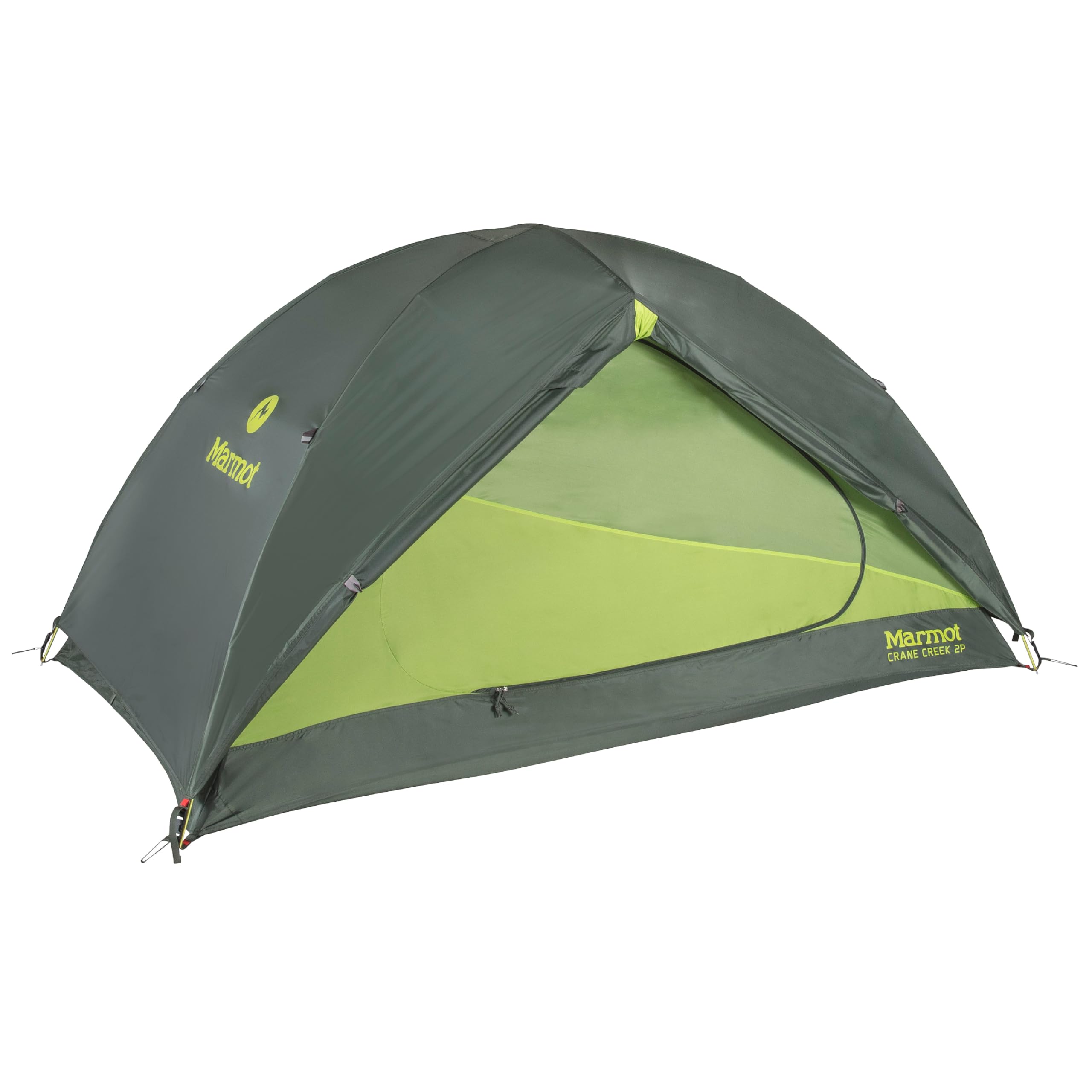
Marmot Crane Creek 2P
Key Features
- Floor area: 32 sq ft
- Packed weight: 5.29 lb
- Waterproofing: Seam-taped floor and fly
- Doors / vestibules: 2 / 2
- Price: Premium
If the forecast is the deciding factor, this is the tent we point to. Marmot builds the Crane Creek around wind: two full-height doors, two vestibules, 7000-series aluminum poles and a seam-taped fly that can be guyed out taut. It is the most weather-oriented tent in this group, and that is the reason it made the list.
The two-door layout is the part that matters night to day. Each sleeper gets an exit and a porch, so packs and wet shells stay outside the sleeping area, and nobody unzips across their partner at three in the morning. It is freestanding, which means you can pick the whole thing up and reposition it before committing a stake to the ground, and setup is quick once the fly is oriented the right way round.
The cost is space. At 50 inches across and 43 inches high it is snug for two adults: generous for one plus gear, cosy for a couple, tight for two friends. It is also the premium option in this group, and the seams and shell have had enough trouble after a hard season of use that the first setup doubles as an inspection. Check the stitching, seam-seal anything that looks thin, and never store it damp.
For exposed ridges, coastal campsites and shoulder-season trips where wind is the thing you worry about, it is the tent here built most obviously for the job.
Pros
- Two doors and two vestibules
- 7000-series aluminum poles
- Seam-taped fly and floor
- Limited lifetime warranty
Cons
- Snug 50-inch width for two adults
- Seams can separate with hard use
We recommend the Crane Creek when wind and rain decide your trips and you accept a snug two-person fit; the money buys weather-ready hardware, not space.
Best for Light Budget Trips
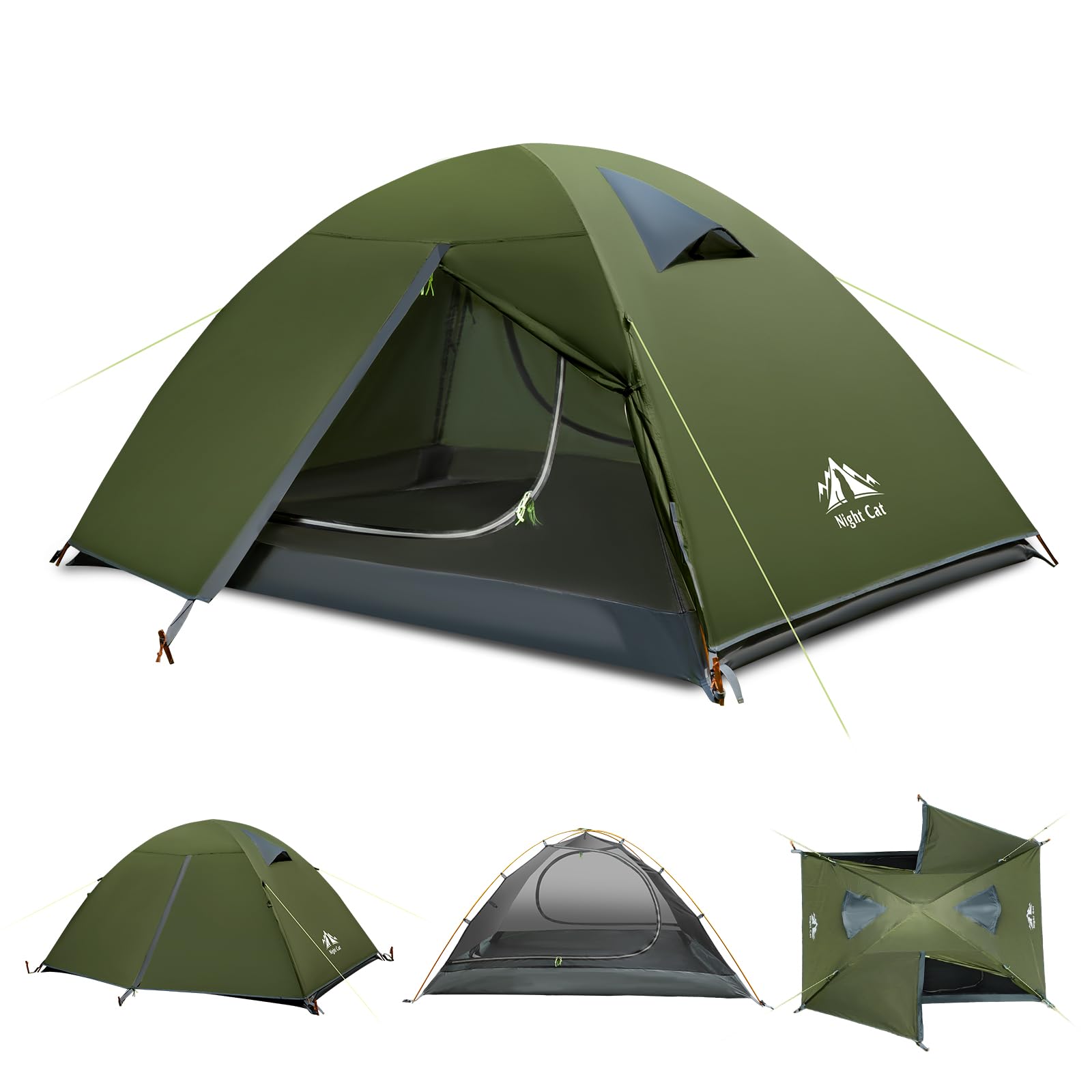
Night Cat 2-Person
Key Features
- Poles: Aluminum, 2
- Floor size: 82.6 x 55.1 in
- Packed weight: 4.4 lb
- Doors / vestibules: 2 / 2
- Price: Budget
Two doors, two vestibules and 4.4 pounds is a combination that usually costs more than this. The Night Cat gets the layout right at the budget end: 82.6 by 55.1 inches of floor, a 43-inch peak and a porch on each side, so two adults sleep without climbing over each other and boots stay out of the sleeping space.
The frame is two aluminum poles with clips rather than sleeves, which is the faster arrangement, and the whole package packs down small enough for a bike pannier or a weekend pack. Ventilation beats what the price suggests too, with a mostly mesh inner, and there is a hanging hook for a light or a small fan.
Where it gives ground is the fabric. There is no stated hydrostatic rating for the fly, just a coating and seam tape, and the groundsheet is nylon where the more expensive tents here use heavier polyester. Put a footprint or a sheet of plastic under it and keep it off abrasive ground. The 8 stakes and 3 guy lines are the bare minimum for a windy night, so add a couple of lines if weather is coming.
For short trips, moto-camping and a first backpacking season, this is a sensible place to start rather than a tent to take into a storm.
Pros
- Two doors and vestibules at 4.4 lb
- Fast clip setup
- Packs small for bike or weekend trips
- Good ventilation for the money
Cons
- No stated waterproof rating
- Nylon floor wants a groundsheet
We recommend the Night Cat for short trips and first seasons: two doors, two vestibules and a 4.4-pound carry for budget money, with a floor that wants a groundsheet.
Best for First-Time Campers
BISINNA 2-Person

Key Features
- Doors: 2
- Peak height: 47.2 in
- Packed weight: 4.7 lb
- Waterproof rating: PU 2000 mm
- Price: Budget
The first thing anyone notices is how quickly it goes up: two aluminum poles, clips, a full fly, and you are done. If a fiddly pitch is what has kept you out of backpacking, this is the tent that removes the excuse, because the frame is simple enough to learn in one go and the fly goes on without a fight.
The shape is closer to a cabin than a dome. Near-vertical walls and 47 inches of peak height make it feel bigger inside than the floor area suggests, and the two D-shaped doors with dual zippers give real cross-flow with the fly off. The vestibules are generous for the money, which matters more than it sounds when two packs and two pairs of muddy boots need somewhere to live.
The compromise is in the coating. PU 2000 mm is the lightest waterproofing in this group, and the fly leaves a gap at the edges where wind-driven rain and dust find their way in. Treat it as a fair-weather and ordinary-rain shelter rather than a storm tent, and pitch the low edge into the wind.
At 4.7 pounds it is fine for short carries and easy car camping. For a first tent, a festival, or a base camp within walking distance of the car, it is a smart way to spend a first-season budget.
Pros
- Very fast clip setup
- Near-vertical walls feel roomy
- Two doors with dual zippers
- Good value as a first tent
Cons
- PU 2000 mm is the lightest coating here
- Fly leaves edge gaps in wind-driven rain
We recommend the BISINNA for beginners and car-adjacent trips: fast to pitch, roomy for two and inexpensive, though its fly is the lightest protection here.
Best for Cold-Weather Camping
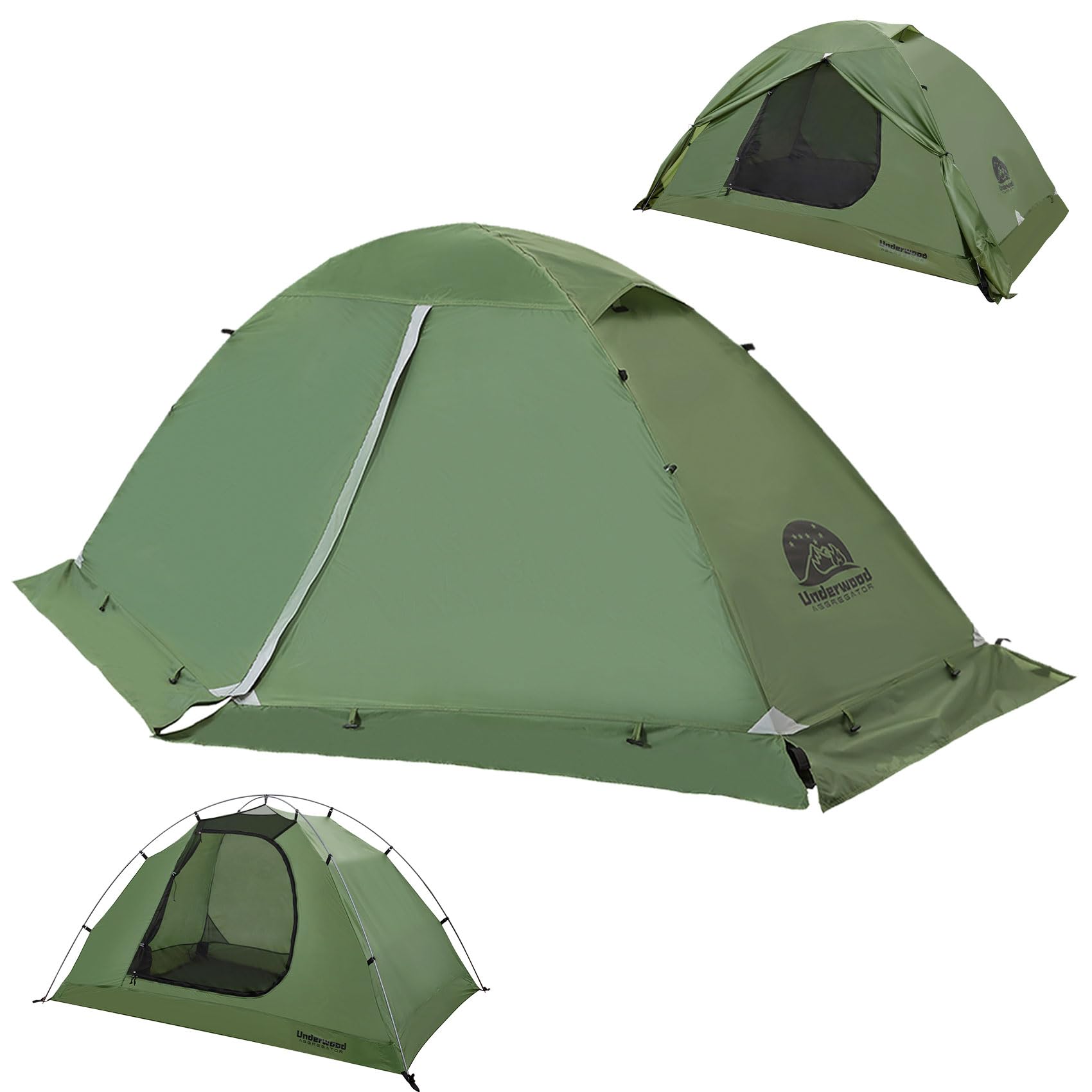
Underwood 4-Season 2P
Key Features
- Seasons: 4 season
- Floor size: 86.6 x 59.1 in
- Packed weight: 5.7 lb
- Waterproof rating: PU 5000 mm
- Price: Budget
Cold-weather camping asks different things of a tent, and this one is built for it: a PU 5000 mm coating, a fly that reaches low on the walls, and a small volume that two bodies warm quickly. On a frosty night that is the difference between a tent you are glad to be in and one you are enduring.
The floor is genuinely wide at 59.1 inches and 86.6 long, so two adults fit with gear between them, and the single door’s vestibule takes packs and boots out of the weather. The aluminum frame clips together in the usual way, and the interior has a light hook and a mesh panel for the warmer end of the season.
The cost is weight and air. At 5.7 pounds packed it is the heaviest tent in this group, and you will feel it on any approach longer than a few miles. A tent this sealed also condenses, so keep both roof vents open even when it is cold and wipe the inner down in the morning. In hard cold the pole sections can freeze together, which is worth drying and separating before you pack them.
For late-season trips, winter overnights and cold, wet campsites where warmth matters more than pack weight, it does a job none of the summer tents here can do. It is a cold-weather shelter, not an expedition tent, and treating it that way keeps it useful.
Pros
- PU 5000 mm coating
- Keeps warmth in cold conditions
- Wide 59.1-inch floor
- Low fly shields wind and spindrift
Cons
- Heaviest tent here at 5.7 lb
- Condensation needs venting
We recommend this Underwood for cold-weather trips where warmth and coverage matter more than pack weight; at 5.7 pounds it is a shelter for short carries.
How We Tested These Two-Person Tents
We started with spec sheets on roughly 40 two-person tents and cut anything that couldn’t fit two 25-inch pads side by side, weighed more than the category average, or charged a premium without delivering on it. Ten made the list, and we’ve lived with them for nine months — weekend trips about twice a month, a few nights of weather nobody forecast, and one long afternoon in a backyard where each tent went up twice.
Weight only counts if it’s honest, so I put every tent on a kitchen scale packed and dry with stakes and guylines included, then compared my number to the manufacturer’s. Each one also went into a 40-liter pack for a real carry, where I noted how it rode and how much room it left for food and layers. Setup got timed solo, once in daylight and again at dusk with a headlamp, watching for snagged pole sleeves, fly tension after the first hour, and how the whole process went with cold hands.
Inside, I laid out two wide pads and two overnight packs and checked where shoulders brushed the walls, whether I could sit up to pull on a fleece, and whether the vestibules actually swallowed a pack. For rain, each fly got ten minutes under a hose and then a night of real weather; I looked for sagging, water pooling on the roof, and any spot where the fly pressed against the inner tent and wicked through. After every trip I rechecked floors for abrasion, along with zippers, stake loops, and seam tape, since durability is the one thing you can’t judge on day one. Value came last: what came in the bag, and whether the price bought lighter fabric or just a nicer stuff sack.
How to Choose a Two-Person Backpacking Tent
The most useful decision you make before you shop is how much weight you will trade for space and a second door; almost everything else about a two-person tent follows from that.
Start With Weight, Then Split It
Published weights are rarely the number that ends up on your back. Look for the packed weight and the minimum trail weight: the gap between them is stakes, footprint and stuff sacks, and it can approach a pound. Then split it. A five-pound tent is two and a half pounds per person, which is a different proposition from a five-pound solo shelter.
Under about four pounds packed is comfortable for two people on multi-day trips; five and a half is a short-carry or car-camp weight. Decide who carries the poles and who carries the body before you buy, and check the packed length against your pack: a 20-inch sack lies along the back panel, never in a side pocket.
Floor Width Decides Whether Two People Fit
A two-person label covers everything from 45 to 60 inches of floor width, and that number is the whole experience. Two regular 20-inch pads need roughly 42 inches with no gap; two 25-inch wide pads need 52 or more before anyone touches a wall.
Below 50 inches you are in generous-solo territory, and a 45-inch floor is really one person plus gear. Measure your pads before you order, keeping in mind that a wider floor also means more fabric to carry and more fly to pitch.
One Door or Two
Two doors with two vestibules are the biggest livability upgrade in this category. Each sleeper gets an exit and a porch, so packs, boots and wet shells stay out of the sleeping space and nobody climbs over anyone at night. The cost shows up as a little extra fabric and weight, and sometimes a step up in price.
Couples who do not mind a single entry can save both. Two friends sharing will be much happier with two doors, and a single vestibule shared between two packs fills up fast in wet weather.
Read the Waterproofing Numbers, Not the Season Label
Hydrostatic head tells you more than three-season or four-season printing on the box. A 1200 to 1500 mm fly copes with steady rain; 3000 mm and up is what we look for in a tent that will see real weather, and 5000 mm on the floor is a bonus. Check for taped seams and a fly that reaches low on the walls, because a skimpy fly is where wind-driven rain gets in whatever the coating says.
Treat a budget four-season label as a cold-weather tent rather than an expedition shelter. It usually means a fuller fly and a higher coating, not poles built to shed a foot of snow.
Pitch, Pack Size and Condensation
Freestanding designs with clips go up faster than sleeves and let you move the tent after it is built. Fixed corner pockets are the small detail that makes a solo pitch possible in wind, and color-coded clips save time in the dark on the first night of a trip.
Ventilation matters as much as coating. A mesh inner and high vents are what keep condensation off your sleeping bag on a still, cold night, and both are worth checking before you fall for a headline waterproof rating.
Frequently Asked Questions
Do I need a separate footprint?
Not always, but it is cheap insurance for the floor. A footprint protects the groundsheet from abrasion and stops ground water wicking through. Two tents here include one: the Naturehike Mongar 2 and the Star Trail.
If yours does not, a cut-down sheet of Tyvek or polycro from a hardware store does the same job for very little and weighs a few ounces.
How do I stop condensation soaking my sleeping bag?
Pitch where air moves rather than in a hollow, leave the high vents open even when it is cold, and keep the inner mesh door closed with the fly vent clear. Cooking inside makes it far worse, quite apart from the carbon monoxide risk.
If the inner walls are wet in the morning, wipe them down before you pack so the moisture does not travel with you and soak the rest of the load.
Should I buy a two-person tent if I mostly camp alone?
Often, yes. A two-person shelter gives you room for a pack, boots and a bit of dignity for roughly a pound over a solo tent, and it is there when someone comes with you. The Star Trail is the one here to look at for that, since it keeps the weight penalty smallest.
If you never share and count every ounce, size down instead.
Final Verdict
The tent we recommend for most people is the Naturehike Mongar 2. Two doors, two vestibules, 3000 mm coatings on both fly and floor and a footprint in the bag make it the most complete two-person shelter here, and its weight is a fair price for that comfort on weekend and moderate-mileage trips.
If you are counting ounces instead, the Star Trail saves more than two pounds and asks you to baby the fabric. If your trips are short and your budget is tight, the Clostnature gives you the widest floor in this group for the least commitment.